Basement waterproofing options and costs in Hintonburg
In Hintonburg, Ontario, homeowners usually start with a problem they can see—dampness, musty odours, efflorescence, or water seeping after heavy spring rain—then discover the source is often outside the basement wall. Local housing demand is high here because Hintonburg’s older street fabric and the surrounding Toronto market include many homes built before modern waterproofing details became standard, which makes failed drainage and deteriorated membranes more common. With a city-profile population of 7,844 (Statistics Canada, 2021 Census), the neighbourhood is compact, and exterior work often has to be planned around tight lot lines, mature landscaping, and additions.
Toronto-area soil conditions—mixed glacial till and clay with pockets of dense clay—matter for cost. Clay can hold water and exert lateral pressure, while freeze–thaw cycles in Ontario can widen small defects. That’s why some “same-looking” leaks end up as very different scopes: one house may need exterior excavation and a full drainage replacement, while another may be better served by interior perimeter drainage and a sump. In Hintonburg, we also see especially frequent demand around the central blocks near Wellington/Strachan-style main-road access routes where driveways are narrow and backyards are cramped.
Below is a practical comparison of the most common approaches contractors use in Hintonburg, along with typical cost ranges. Use it to sanity-check your quote before you compare line items.
| Method |
What It Addresses |
Disruption Level |
Durability |
Price Range |
| Exterior excavation + new membrane + drainage tile |
Stops water at the source; replaces failing weeping tile/drainage and rebuilds the drainage plane behind the foundation |
High (excavation, landscaping restoration) |
Long-term (typically best match for active water pressure) |
$7,000–$25,000 |
| Interior perimeter drain channel + sump pit |
Collects seepage that gets through cracks/cold joints and relieves hydrostatic pressure |
Medium (basement work) |
High when paired with proper discharge and grading |
$3,500–$15,000 |
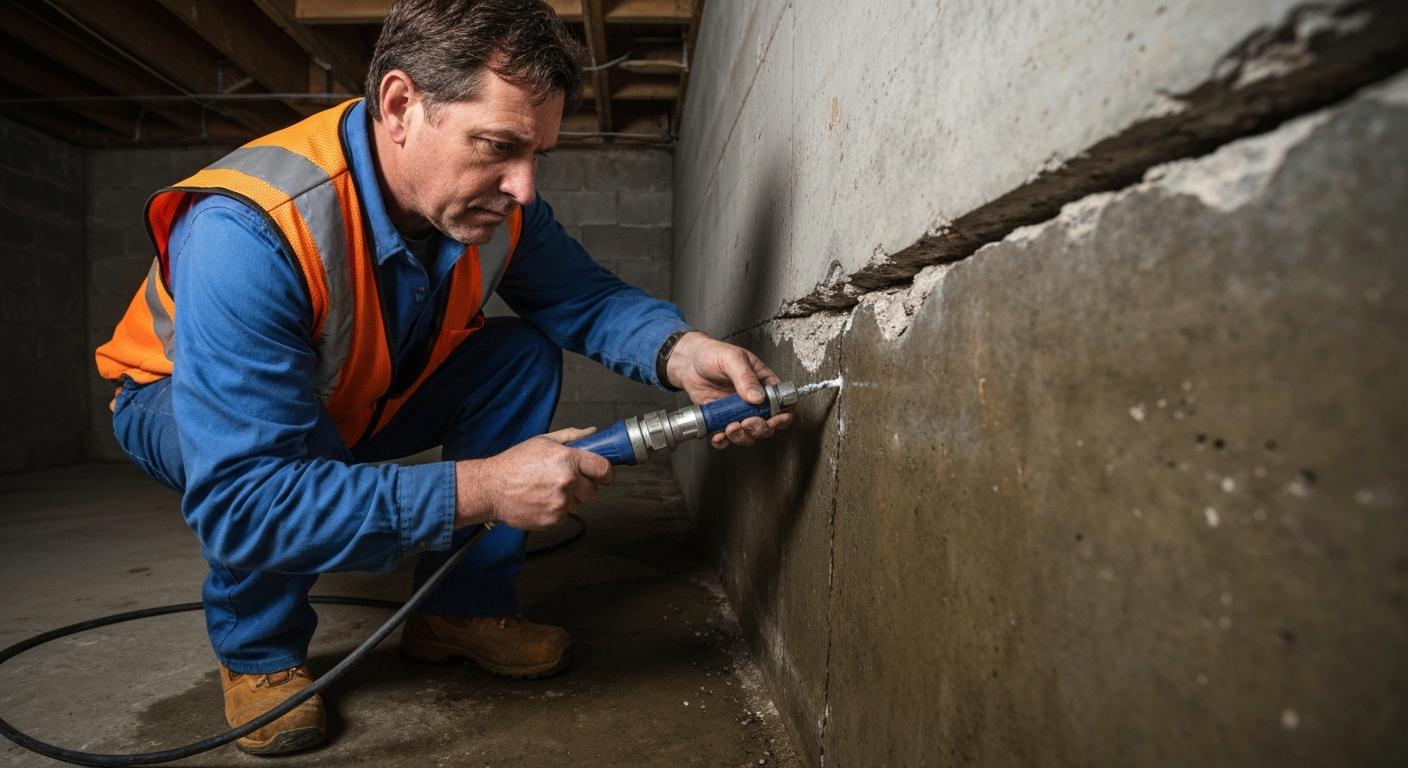
| Foundation crack injection (epoxy or polyurethane) |
Targets isolated cracks; epoxy for structural/otherwise stable cracks, polyurethane for active leaks |
Low to Medium (minor concrete drilling/patching) |
Moderate to High depending on crack type and pressure |
$600–$3,000 |
| Sump pump installation (primary + battery backup) |
Prevents basement flooding during high water events; backup reduces risk during power interruptions |
Medium (cutting/drilling, discharge routing) |
High (system-based resilience) |
$800–$3,500 |
| Window well drain installation |
Reduces water accumulation at egress wells; addresses localized exterior seepage |
Medium (excavation around wells) |
Moderate to High when tied into drainage correctly |
$900–$3,200 |
| Lot re-grading / downspout extension |
Redirects roof runoff away from foundation and reduces surface infiltration |
Low to Medium (yard work) |
Moderate (works best when drainage is already mostly functional) |
$900–$4,500 |
Prices are estimates only and vary by project scope, site access and material selection.
What affects the price of waterproofing in Hintonburg
In Toronto and across Ontario, you can easily see the same “waterproofing” problem priced 30–50% apart between contractors. The gap usually isn’t from the waterproofing product itself—it’s from site conditions and the completeness of the solution. In the Hintonburg area, the biggest separations from the national average come from three local drivers: soil type, water table behaviour, and freeze–thaw cycling. Mixed glacial till and clay pockets can trap water and expand during freeze–thaw, which increases lateral pressure on basement walls and accelerates crack growth. When the water table runs high in wet seasons, sump runtime rises and sometimes requires higher-capacity pumps, more discharge planning, or additional drain lines.
Concrete examples we see in Hintonburg: (1) homes with older original clay weeping tile or early plastic drains often have partial collapse or blockages, which turns a “small” leak into a full drainage replacement scope—pushing work toward the $7,000–$25,000 exterior range; (2) poured concrete walls can respond well to targeted crack injection when cracks are stable—keeping some projects closer to the $600–$3,000 crack repair band; and (3) tight urban access (shared driveways, decks, or landscaping along one side) can add labour for excavation and restoration even when the waterproofing itself is straightforward. Freeze–thaw also matters: small defects that might not drip in dry weather can become active leak paths after several freeze cycles, changing the chosen method.
If you’re comparing quotes, ask whether they’re treating the water pathway (drainage plane and discharge), not just patching the symptom. That’s typically where the biggest swings in price happen.
| Price Factor |
Why It Matters |
Cost Impact |
| Interior vs. exterior approach — interior is less disruptive but addresses symptoms |
Interior systems manage water after entry; exterior addresses the source and lateral pressure |
Interior often saves upfront; exterior can be higher but more complete (can shift thousands) |
| Foundation type — poured concrete vs. block vs. stone vs. ICF |
Crack behaviour and how water travels differ by wall system |
Block and stone frequently need drainage complements; poured may accept targeted injection more often |
| Soil type — clay expands more than sand, adding pressure |
Clay retains moisture and creates higher hydrostatic/lateral forces |
More reinforcement of drainage and membrane details; higher labour and materials |
| Crack type and length — hairline vs. structural horizontal cracks |
Active leaks and structural cracks require different materials and sometimes engineer input |
Structural conditions can add engineering and may move scope toward higher cost ranges |
| Sump pump backup system — battery or water-powered backup needed |
Ontario spring storms can coincide with short outages; backup reduces flooding risk |
Adds equipment and install time; typically increases system cost |
| Access — landscaping, decks, or driveways must be removed for exterior |
Excavation around obstructions increases labour and restoration scope |
Can add significant cost even when exterior waterproofing area is small |
| Weeping tile age — original tile (60+ years) may be completely failed |
Old drainage often clogs or collapses, causing widespread seepage |
Often changes plan from localized work to full drainage replacement |
| Mould or efflorescence remediation required before sealing |
Sealing over contamination can trap moisture and worsen indoor air issues |
Remediation adds prep time and materials |
Permits & regulations in Ontario
In Ontario, many basement waterproofing-related tasks can be treated as renovations, but the type of work determines whether a building permit is typically required. In general terms, foundation excavation and any work that changes the foundation structure or modifies drainage at the lot line often requires a building permit. Structural crack repairs—especially horizontal cracks in block walls or signs the wall has shifted—commonly need a structural engineer’s assessment to confirm whether you’re dealing with movement, not just water passage. If underpinning or other structural measures are recommended, that’s another indicator that permits and engineered documentation are involved.
Sump pump installations are also a “check first” item. If the discharge ties into municipal storm or sanitary systems, you’ll typically need municipal approval for the connection and discharge method. Even when discharge is routed to a surface location, contractors should still follow local drainage requirements to avoid pushing water toward neighbours.
For Hintonburg homeowners, here’s a practical verification sequence: (1) Ask for the contractor’s Ontario licence/registration details and confirm it through the appropriate Ontario business/contractor registry channel they provide; (2) request a certificate of insurance (general liability, and professional/contractor coverage where applicable) and read the effective dates; (3) ask for WSIB/WCB clearance/coverage proof—then verify the clearance letter is current; and (4) if structural repairs are proposed, confirm they provide (or coordinate) engineering support for the scope before work starts.
When a contractor can’t show current coverage or won’t clarify permits/discharge approvals up front, treat it as a red flag.
Interior vs exterior waterproofing — what does Hintonburg need?
The decision is about where the water problem is solved. Exterior waterproofing means excavating around the foundation, installing a proper drainage layer (often new drainage tile), applying a waterproof membrane system, then backfilling and restoring grading. This permanently targets the source of water entry and reduces the lateral pressure that Toronto’s mixed clay soils can exert during saturated seasons and freeze–thaw cycles. Interior waterproofing, such as perimeter drains, sump pits, and sump pumps, is different: it’s designed to manage water after it has entered the basement and to relieve hydrostatic pressure from inside.
In Hintonburg, poured concrete basements can sometimes seal well when the leak path is isolated—so crack injection can be a cost-effective option when cracks are stable. By contrast, block foundations often need interior drainage as a practical complement, because water can track through mortar lines and cold joints even when the wall looks “fine.” For chronic seepage or basement flooding after heavy rain, sump pump systems become the backbone. Because Ontario power interruptions can happen during storms and spring flooding events, adding a backup (commonly battery backup) can be the difference between a dry day and a messy cleanup.
Here’s a realistic pricing example to illustrate when the extra expense is justified: if your quote suggests $7,000–$25,000 for exterior work because the original weeping tile is likely failed and the clay backfill is holding water, that higher cost can prevent repeat interior flooding cycles and reduce future crack activity. If instead your inspection shows a small, active crack with minimal surrounding seepage, a targeted crack repair at $600–$3,000 may be the smarter first step—especially when the contractor also recommends downspout extension or re-grading to reduce new runoff from reaching the foundation.
| Method |
Best For |
Addresses Source? |
Disruption |
Lifespan |
Price Band |
| Full exterior excavation + membrane |
Active seepage with high lateral pressure, failed exterior drainage, or recurring dampness across multiple wall runs |
Yes |
High |
Long-term (system replacement) |
$7,000–$25,000 |
| Interior French drain + sump system |
Chronic seepage, clogged/unknown exterior drainage, or homes where exterior excavation isn’t feasible |
Partially (manages entry) |
Medium |
High when discharge and maintenance are correct |
$3,500–$15,000 |
| Crack injection — epoxy (structural) |
Stable cracks in poured concrete where the primary issue is water migration through a defined gap |
No (water is redirected/blocked at the crack) |
Low to Medium |
Moderate to High for stable conditions |
$600–$3,000 |
| Crack injection — polyurethane (active leak) |
Active seepage where material needs to react in the presence of water |
No (treats leak path) |
Low to Medium |
Moderate (depends on ongoing pressure and crack movement) |
$800–$3,000 |
| Interior drain channel only (no sump) |
Light seepage where water can be captured and managed without frequent pump cycling |
No (water collection, not full pressure relief) |
Medium to Low |
Moderate (varies with water levels) |
$1,500–$6,000 |
| Re-grading + downspout extensions |
Surface-water-driven wet spots, especially near corners and along downspout discharge points |
No (reduces incoming water) |
Low to Medium |
Moderate (works best with functioning drainage) |
$900–$4,500 |
How to choose a waterproofing contractor in Hintonburg
Choosing the right contractor matters as much as the method. Start with licensing and worker protection: ask for proof of Ontario licence/registration where applicable, general liability insurance, and WSIB/WCB coverage. Practically, you can verify by (1) checking the contractor’s stated licence/registration information against the relevant Ontario registry path they provide or can reference; (2) requesting an up-to-date certificate of insurance and confirming the effective dates and named insured; and (3) asking for the WSIB/WCB clearance letter or proof of coverage—then verify it hasn’t expired.
Next, get 2–3 itemised written quotes. You want a labour + materials breakdown, including what’s included in excavation, membrane system, drainage tile, disposal, and interior drainage parts (pipe, sump basin, discharge line, backup equipment if quoted). Avoid comparisons based on a single “lump sum” number—waterproofing scope differences are often hidden in exclusions like landscaping restoration, concrete patching depth, or whether the quote includes permits and protected discharge approvals.
Warranty and payment schedule are where homeowners protect themselves. A workmanship warranty should be clearly stated (length, what it covers, and how claims are handled). Confirm whether the product manufacturer warranty applies and if it’s transferable to future owners. For payment, never allow more than 10–15% upfront; hold back a portion until the job is complete and inspected. Finally, insist on a start date and completion timeline in writing, because excavation and cure times can’t be rushed in freezing temperatures.
- They perform a site assessment (outside grading, downspouts, interior leak map), not just a quick look.
- They classify crack type (hairline vs active/structural) before proposing injection materials.
- They explain where discharge goes (daylight, approved location, or discharge routing) and who approves it.
- They include disposal and restoration in the scope (where applicable to your method).
- They list exact products/systems (membrane type, drainage components, backflow prevention).
- They provide an itemised quote for labour and materials, not only a total price.
- They state whether a permit is required and whether they pull it.
- They include a sump backup option (battery/water-powered) if you have power-risk conditions.
- They describe prep requirements for efflorescence/mould remediation before sealing.
- They state warranty terms in writing, including coverage and claim process.
- They schedule cure times and winter-safe sequencing for Ontario freeze–thaw.
- They limit upfront payment and use a final holdback until walkthrough completion.
Red flags in Hintonburg include: quoting “one-size-fits-all” without mapping leak sources, skipping discussion of discharge/disposal approvals, refusing to provide WSIB/WCB proof or a current insurance certificate, offering injection for every leak regardless of crack activity, or asking for large upfront payments (well beyond 10–15%) before any materials are staged.
Frequently asked questions — waterproofing in Hintonburg
How do I know if a foundation crack is serious?
In Hintonburg and across Ontario, a crack is “serious” when it shows signs of movement or active water flow, not just when it looks wide. Hairline vertical cracks can sometimes be minor, especially in poured concrete, but structural concerns rise with horizontal cracks, step cracks in block, or cracks that widen after freeze–thaw or heavy rain. Another practical clue is moisture: dampness, mineral staining, or water at the crack during spring storms suggests a water pathway that needs a targeted fix. If you see recurring seepage along multiple spots or water behind finished walls, contractors typically treat it as an ongoing hydrostatic/pressure issue. A good inspection will also consider whether failed weeping tile or clogged drains are likely. If the leak is isolated and stable, crack repair often lands in the $600–$3,000 band; if the crack indicates movement or widespread drainage failure, the scope usually expands.
How much does foundation crack repair cost in Hintonburg?
Typical foundation crack repair in Hintonburg ranges from about $600–$3,000, depending on the crack length, whether it’s an active leak, and whether additional prep is required. Epoxy injection is often used for stable, non-moving cracks, while polyurethane is used when water is actively weeping through the crack. Cost also changes if the contractor needs extra drilling ports for longer runs, or if there’s efflorescence/mould that must be remediated before sealing. In Ontario’s freeze–thaw climate, small defects can become active over a few winters, so a “minor” crack can still require a more complete leak-path treatment if water is present during wet seasons. The most accurate pricing comes from an itemised quote that identifies the crack location(s), injection type, and whether they’re addressing surface water (like downspouts) to stop the problem from coming back.
Do I need a sump pump in Hintonburg?
You may need a sump pump if your basement experiences recurring seepage during wet periods, if interior drains routinely fill, or if you have a history of basement flooding. In Hintonburg, clay-heavy backfills and higher local water behaviour in many Toronto-area neighbourhoods can raise lateral pressure and increase water levels during spring rain and snowmelt. A sump pump becomes especially relevant when an interior perimeter drain system is installed to relieve hydrostatic pressure, or when exterior drainage is failing or inaccessible. If you do get a sump, ask about backup power: battery backup can be worth it in Ontario because short outages can occur during storm conditions. For some homes, homeowners only need localized drainage improvements, and the sump isn’t necessary. But when water is persistent, skipping the sump often just delays the next wet season. Sump pump installations commonly fall in the $800–$3,500 band, and the total increases when backup is included.
How does Hintonburg's soil affect my foundation?
Hintonburg sits in the broader Toronto area where soils are often a mix of glacial till and clay, with pockets of dense clay that hold water against foundations. Clay is prone to swelling when saturated, which can increase lateral pressure on basement walls. During Ontario’s freeze–thaw cycles, trapped moisture expands and contracts, widening small defects in concrete and block mortar lines. Over time, that can turn a hairline crack into an active leak path, especially around cold joints, tie holes, and areas where older drainage has failed. Soil effects show up in patterns: if water increases after heavy rain or in spring, it often points to drainage and pressure rather than a one-off plumbing issue. Homes with older original weeping tile can be particularly vulnerable because the drainage pathway may be clogged or partially collapsed. That’s why matching the waterproofing method to soil conditions is key—interior systems manage water after entry, while exterior excavation and membrane drainage plane repairs address the source and pressure.
Do I need a permit for foundation work in Ontario?
Often, yes—depending on what you’re doing. In Ontario, foundation excavation, changes to lot drainage that affect how water is managed near the foundation, and structural crack repairs frequently require a building permit. If the work involves anything that could be considered structural (for example, assessment-driven repairs for horizontal cracks in block walls or potential movement), contractors typically need engineering support and the permit process becomes more likely. Sump pump installations also require careful checking: if discharge connects to storm or sanitary sewer systems, municipal approval is typically required for the connection method. If you’re just doing minor exterior surface improvements (like downspout extensions) that don’t alter drainage infrastructure, permits may not apply, but you should still ask. For Hintonburg homeowners, the best approach is to ask the contractor to state whether a permit is required for your exact scope and who will pull it. Use itemised quotes and written confirmation, and verify the contractor’s WSIB/WCB coverage and liability insurance before work starts.
How long does waterproofing last?
Waterproofing longevity depends on the method and whether the underlying water source is solved. Exterior waterproofing (excavation, new membrane, and new drainage tile) is typically designed as a long-term solution because it addresses water at the drainage plane and reduces lateral pressure from clay soils during Ontario freeze–thaw. Interior systems can last many years too, but they’re designed to manage water after entry; if the exterior drainage is still failing, you may see more frequent maintenance needs (and the sump relies on ongoing performance). Crack injection can last a long time when cracks are stable and properly treated, but active leaks connected to ongoing pressure may recur if the pressure source remains. The most useful way to estimate life expectancy is to match the scope to the leak pattern you have right now, then use warranties to protect workmanship. As a rule of thumb, targeted crack repair in the $600–$3,000 range can be very effective for isolated leaks, while full exterior work in the $7,000–$25,000 range is usually selected when there’s widespread drainage failure or higher pressure conditions. Always confirm warranty terms in writing.