Basement waterproofing options and costs in Scarborough Village
In Scarborough Village, basement waterproofing decisions usually start with the question you can feel during wet weeks: is the problem coming from outside pressure or from water that’s already migrated into the foundation? With a population of 16,724 (Statistics Canada, 2021 Census), Scarborough Village sits in the Toronto region where contractors see the same patterns again and again—especially in older housing areas where original drainage was never meant to handle today’s saturated seasons. Many post-war homes in the GTA rely on early weeping tile systems that can fail over decades, and once that drainage clogs, seepage shifts from occasional dampness to recurring efflorescence and sump activations.
Toronto’s glacial till and clay pockets can hold water against foundations and expand when saturated. Combine that with freeze–thaw cycles that gradually widen concrete or block defects, and you get active leaks forming at the same weak points: cold joints, tie holes, and cracks that started as “hairlines.” The cost is also influenced by the local market—dense lots, deck and landscaping removals for excavation, and the labour required to work around additions or tight driveways. Demand is especially high around older neighbourhood pockets closer to established commercial corridors where access is limited and basements are a common homeowner concern.
Below are the most common waterproofing methods used in Scarborough Village, along with what they target, the disruption you should expect, and the typical price bands—then we’ll break down the key cost drivers next.
| Method |
What It Addresses |
Disruption Level |
Durability |
Price Range |
| Exterior excavation + new membrane + drainage tile |
Primary water entry from soil pressure; replaces failed weeping tile and installs membrane system |
High (yard excavation, temporary shoring/backfill, restoring landscaping) |
Long-term when installed to the wall and tied into drainage |
$7,000 – $25,000 |
| Interior perimeter drain channel + sump pit |
Water that enters through cracks/cold joints; relieves hydrostatic pressure at the floor perimeter |
Moderate (cutting floor edge and removing select finishes) |
Very good for chronic seepage when paired with proper discharge |
$3,500 – $15,000 |
| Foundation crack injection (epoxy or polyurethane) |
Isolated leaks; polyurethane for active seepage, epoxy for stable cracks |
Low (drill/patch at crack line; minor interior surface repairs) |
Good for the right crack type and preparation |
$600 – $3,000 |
| Sump pump installation (primary + battery backup) |
Controls collected groundwater during rain/spring thaw; backup reduces risk during outages |
Moderate (sump pit excavation and electrical work) |
High when maintained and discharged correctly |
$800 – $3,500 |
| Window well drain installation |
Localized water entry at egress windows; reduces pooling against the foundation wall |
Low to moderate (window well excavation/drain connection) |
Good for targeted problems |
$1,000 – $4,500 |
| Lot re-grading / downspout extension |
Surface water management to reduce water load on the foundation |
Low (earthwork and downspout changes) |
Moderate (depends on correct grading and ongoing maintenance) |
$600 – $3,500 |
Prices are estimates only and vary by project scope, site access and material selection.
What affects the price of waterproofing in Scarborough Village
In the Toronto area, including Scarborough Village, it’s common to see the same “waterproof the basement” request produce quotes that differ by 30–50%. The reason isn’t usually the contractor’s quality—it’s the site variables. The three biggest separators from the national average are soil type, water table conditions, and freeze–thaw. In clay-heavy neighbourhood pockets, saturated soil expands and exerts lateral pressure on foundation walls, often turning previously dormant cracks into active seepage over a few winters. When the water table is high or the weeping tile has failed, sump run times increase and drainage detailing must be more robust.
These regional conditions also influence contractor availability and how quickly materials and specialized crews can be scheduled. In Scarborough Village, access constraints—tight side yards, decks, and working below deck footings—can push labour time up quickly, especially for exterior excavation. Meanwhile, interior-only work is often less disruptive but still requires careful diagnosis to ensure you’re not just managing the symptom while the source pressure continues.
Here are a few practical examples we see locally. If your home is on dense clay and the original drainage is older (often 60+ years in some post-war homes), exterior membrane work can land closer to the higher end of the $7,000–$25,000 band because excavation and drainage replacement are unavoidable. If the leak is isolated and the foundation crack is stable, crack injection may stay nearer the $600–$3,000 range—sometimes avoiding the need for a full drainage install. And if you need a sump pump with battery backup for spring storms, budget from the $800–$3,500 band for controls and power resilience, especially during thaw periods when groundwater rises fast.
| Price Factor |
Why It Matters |
Cost Impact |
| Interior vs. exterior approach — interior is less disruptive but addresses symptoms |
Exterior stops the water at the source; interior manages water after it enters |
Interior often costs less upfront; exterior can cost more but reduce recurrence |
| Foundation type — poured concrete vs. block vs. stone vs. ICF |
Different materials crack differently and accept different repair strategies |
Poured concrete may seal well with targeted injection; block often needs drainage complement |
| Soil type — clay expands more than sand, adding pressure |
Saturated clay increases lateral pressure on walls and floors |
Clay-heavy sites push designs toward membrane/drainage or full perimeter drainage |
| Crack type and length — hairline vs. structural horizontal cracks |
Active leaks and structural cracking change preparation and scope |
Structural or long crack repairs raise material and labour demands |
| Sump pump backup system — battery or water-powered backup needed |
Hydrostatic water control is time-sensitive during storms |
Backup adds cost but materially reduces outage risk |
| Access — landscaping, decks, or driveways must be removed for exterior |
Excavation around obstructions increases labour and restoration |
Exterior excavation can be the largest swing factor in dense lots |
| Weeping tile age — original tile (60+ years) may be completely failed |
Failed drainage means water can’t relieve pressure |
Replacement can push exterior work toward the upper band |
| Mould or efflorescence remediation required before sealing |
Sealers and membranes won’t adhere well over contamination |
Additional remediation time/materials can add several thousand dollars |
Permits & regulations in Ontario
In Ontario, waterproofing work can be either straightforward or permit-sensitive depending on what you’re changing. In most cases, foundation excavation, structural crack repair, and changes to lot drainage (for example, altering how water leaves the property) typically require a building permit. If you’re adding or rerouting a sump pump discharge that connects to the storm or sanitary sewer system, you’ll need municipal approval because the drainage connection must meet local requirements.
For structural crack repair—especially horizontal cracks in block walls, major step cracks, or signs the foundation has moved—an engineer’s assessment is often required to determine whether the work is purely water-sealing or whether underpinning or other structural measures are necessary. Many homeowners assume all crack repairs are the same; in practice, the permitting and assessment path changes when a crack looks structural rather than just leaking.
How to verify your contractor in Scarborough Village: (1) confirm the company’s Ontario licence/registration status through provincial resources; (2) ask for a current certificate of liability insurance and verify the coverage is active for the job dates; (3) ask for WSIB/WCB clearance or proof of coverage (and keep the paperwork for your records). For structural scopes, ask whether the contractor maintains engineering support for assessments and whether that’s included or added as a separate cost. Verifying these items before signing avoids delays and helps ensure the installation meets the right standard.
Interior vs exterior waterproofing — what does Scarborough Village need?
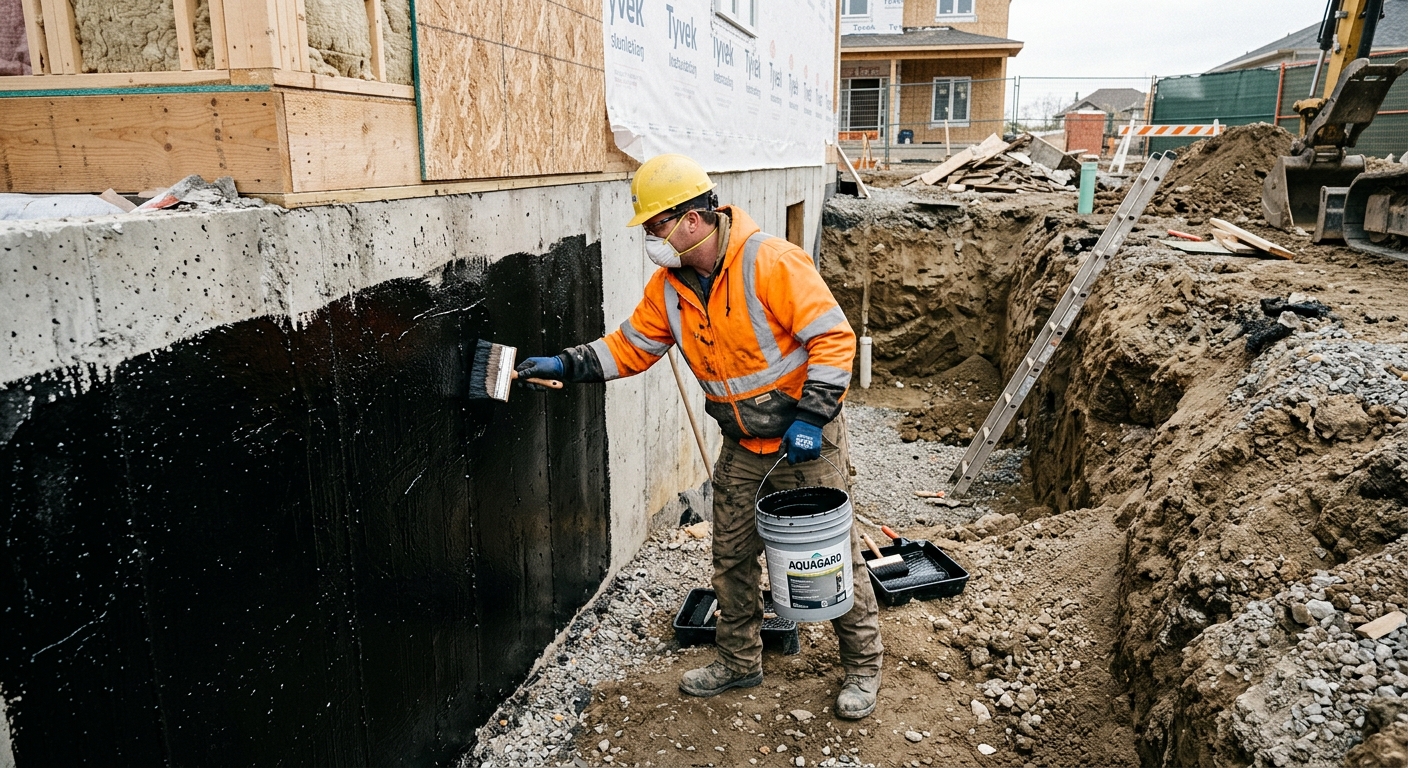
The difference is simple: exterior waterproofing removes the water at its source by excavating to the foundation, applying membrane, replacing or adding proper drainage tile, and then reintroducing controlled backfill. Interior waterproofing accepts that water will enter and focuses on collecting and redirecting it with a perimeter drain channel, sump pit, and sump pump. In Scarborough Village, that matters because Toronto’s mixed glacial till and clay pockets hold and pressurize water against foundations. Exterior approaches generally cost more, but they directly address hydrostatic pressure at the wall. Interior approaches cost less and are less invasive, but they don’t stop the pressure—so if the source conditions remain untreated, the system must perform reliably over time.
For foundation type, poured concrete walls often respond well to crack injection when the crack is stable, and that can be a practical complement to interior drainage. Block foundations, on the other hand, frequently benefit from interior perimeter drainage as a practical safety net, especially when original weeping tile has failed or the surrounding soil is consistently saturated.
Ontario’s spring thaw is also a key driver for sump pump strategy. If you’re using a sump, pairing the system with a battery backup can prevent basement water issues during brief outages—when groundwater levels rise quickly.
For example, if you’re seeing active seepage along one corner and the rest of the wall is dry, crack injection might fit in the $600–$3,000 range. But if you discover widespread weeping tile failure and wall seepage tied to saturated clay, interior perimeter drainage and sump work can reach $3,500–$15,000; in those scenarios, spending toward the $7,000–$25,000 exterior band may be justified to reduce recurrence.
| Method |
Best For |
Addresses Source? |
Disruption |
Lifespan |
Price Band |
| Full exterior excavation + membrane |
Homes with high lateral pressure, failed drainage, or chronic exterior seepage |
Yes |
High (yard excavation, grading, restoration) |
Long-term |
$7,000 – $25,000 |
| Interior French drain + sump system |
Basements with recurring seepage where exterior access is limited |
No (manages water after entry) |
Moderate (floor perimeter work) |
High if pump/discharge are correctly designed |
$3,500 – $15,000 |
| Crack injection — epoxy (structural) |
Stable cracks where there’s no active flow |
Partly (seals the pathway) |
Low |
Good for the right crack condition |
$600 – $3,000 |
| Crack injection — polyurethane (active leak) |
Active seepage through cracks or joints |
Partly (seals the pathway) |
Low |
Good when prepped properly and paired with drainage if needed |
$600 – $3,000 |
| Interior drain channel only (no sump) |
Intermittent dampness with limited water volume |
No |
Moderate |
Variable (depends on gravity discharge) |
$2,000 – $9,000 |
| Re-grading + downspout extensions |
Surface-water problems causing localized wet walls or pooling |
Yes (reduces water load from surface sources) |
Low |
Moderate (requires maintenance) |
$600 – $3,500 |
How to choose a waterproofing contractor in Scarborough Village
Choosing a waterproofing contractor in Scarborough Village starts with proof, not promises. First, verify the contractor’s Ontario licensing/registration status (and keep a reference number if one is listed). Next, request a current certificate of liability insurance showing coverage dates and ensure it matches your property address and estimated start window. For worker protection, ask for WSIB/WCB clearance or proof of coverage; reputable companies provide it without delay and explain what it covers.
Then get 2–3 itemised written quotes. You want a labour and materials breakdown so you can see exactly what’s included: membrane system type, drain tile material, sump basin model, discharge method, and any interior prep work. Carefully check exclusions—do they include permit pulls (if required), disposal of excavated soil, and restoration of landscaping/deck steps? Ask whether they include the final backfill and compaction details, not just “we’ll regrade.”
Warranty matters in Ontario’s freeze–thaw climate. Look for a workmanship warranty length and understand whether the warranty covers labour only or both labour and materials. Also confirm whether the warranty is transferable if you sell. Payment schedule is another key point: never agree to pay more than about 10–15% upfront; hold back remaining payments until the job is substantially complete and you’ve received documentation. Get a written timeline with a start date target and completion estimate so you can plan around access constraints.
- Ask for a site visit and written moisture/water pathway diagnosis, not just a standard “dry basement” quote.
- Confirm whether the scope includes permit pulls and inspections if needed.
- Require itemised line items (membrane, drainage tile, sump, pump model, discharge method, restoration).
- Verify liability insurance certificate and request WSIB/WCB clearance/proof.
- Check that the contractor can explain product compatibility with your foundation material (poured concrete vs. block).
- Ask about crack injection selection: epoxy for stable cracks vs. polyurethane for active leaks.
- Request details on disposal and backfill/compaction method after excavation.
- Confirm discharge routing and whether it connects to storm/sanitary only with approvals.
- Ask for warranty: workmanship length, material manufacturer warranty, and transferability.
- Ensure payment terms keep holdback until completion and cleanup verification.
- Get a written start date, weather contingency plan, and completion window.
- Make sure the crew provides photos during prep and after membrane/drain placement before backfill.
Red flags in Scarborough Village include: a quote that bypasses site access realities (“we’ll excavate anywhere” without a plan), refusing to provide WSIB/WCB proof or insurance documentation, only offering a single blanket solution even when seepage indicates multiple pathways, skipping engineered assessment language when cracks appear structural, and demanding a large deposit (well over 10–15%) before any material delivery or site preparation is complete.
Frequently asked questions — waterproofing in Scarborough Village
How do I know if a foundation crack is serious?
In Scarborough Village and across Ontario, the “seriousness” of a crack depends on behaviour and geometry, not just size. A hairline vertical crack can be less urgent, but changes over seasons, widening after heavy rain, or seepage with active dampness suggests water is using that pathway. Be especially cautious with horizontal cracks in block walls, step cracks that keep progressing, or cracks accompanied by bowing and new interior mortar loss. Also note patterns: leaks concentrated at tie holes, cold joints, or corners often point to water pressure and failing drainage. If you see efflorescence, recurring wetness, or floor-edge pooling, treat it as more than cosmetic. For structural concerns, Ontario often requires an engineer’s assessment before sealing to confirm whether underpinning or related work is needed.
How much does foundation crack repair cost in Scarborough Village?
For isolated foundation crack repairs in Scarborough Village, pricing typically falls into the $600 – $3,000 band, depending on the number of crack locations, crack length, and whether the leak is active. Stable cracks may be sealed with epoxy injection, while active leaks generally require polyurethane injection because it expands and seals flowing water pathways. Costs can rise if there’s extensive prep needed to remove failing coatings, significant surface restoration, or multiple cracks that indicate more than a single defect. If your inspections show chronic seepage from failed drainage tile or multiple weak points, crack injection might become a “part” of a larger scope rather than the whole solution. In those cases, interior perimeter drainage/sump work commonly starts around the $3,500 – $15,000 range or exterior solutions can move into the $7,000 – $25,000 band.
Do I need a sump pump in Scarborough Village?
A sump pump isn’t automatic, but it’s often the right tool when groundwater levels rise and water repeatedly enters below grade in Scarborough Village. If you have chronic seepage, recurring wetness after spring thaw, or pooled water along the basement perimeter, a sump system is frequently recommended because it keeps the floor edge dry and reduces hydrostatic pressure at the base. Ontario’s freeze–thaw cycles and the Toronto region’s clay-and-till water retention can cause delayed responses—water may appear after heavy rains or thawing rather than immediately. If you already have a sump, adding battery backup is a practical upgrade for reliability during outages. For homeowners, think in terms of frequency and volume: intermittent dampness may be managed with targeted drainage improvements, while consistent water collection generally justifies a properly designed sump and discharge plan with the right approvals.
How does Scarborough Village's soil affect my foundation?
The soil in the Toronto region—including Scarborough Village—is often a mix of glacial till and dense clay pockets. That matters because clay can hold water against foundation walls and expand when saturated, increasing lateral pressure. Over time, that pressure can worsen cracks, especially at cold joints and tie holes, and freeze–thaw can widen small defects into pathways for seepage. Many older basements show symptoms that don’t always start as obvious exterior wall failure: clogged or partially collapsed drainage systems can lead to dampness, efflorescence, and even basement flooding even when the exterior wall looks intact. Local conditions also affect excavation time and restoration cost—tight lots and landscaping make it harder to correct exterior drainage quickly, which is why some projects start with interior perimeter drainage while planning for longer-term exterior solutions when feasible.
Do I need a permit for foundation work in Ontario?
Often, yes—but it depends on scope. In Ontario, foundation excavation, structural crack repair, and changes to lot drainage typically require a building permit. If your sump pump discharge connects to the storm or sanitary sewer, municipal approval is generally required because the routing must meet local requirements. For structural cracks (for example, horizontal cracks in block walls or signs of movement), an engineer’s assessment is commonly needed to decide whether structural intervention is necessary. For homeowners in Scarborough Village, the best approach is to ask your contractor to spell out which permits apply to your specific work in writing before construction starts. You can also verify your contractor’s documentation: keep copies of the contractor’s licensing/registration reference, liability insurance certificate, and WSIB/WCB proof. This helps avoid delays once the permit/inspection phase begins.
How long does waterproofing last?
With correct diagnosis and installation in Ontario’s freeze–thaw climate, waterproofing can last many years, and exterior systems are typically designed for long service life. Interior drainage and sump systems can also perform long-term, but their lifespan depends heavily on continued pump operation, discharge reliability, and whether the source water pressure is actually being managed. Crack injection can last for years when the crack condition is stable (epoxy) or actively leaking (polyurethane), but if the underlying drainage problem remains—such as failed weeping tile causing consistent lateral pressure—new or adjacent leakage can develop. For Scarborough Village homeowners, expect performance to hinge on site preparation and system compatibility (membrane to wall, drainage tile to proper outlets, and clean sealing surfaces). A strong workmanship warranty and a clear maintenance plan—like checking discharge lines and pump performance—are often the difference between “it worked for a season” and “it holds for the long run.”