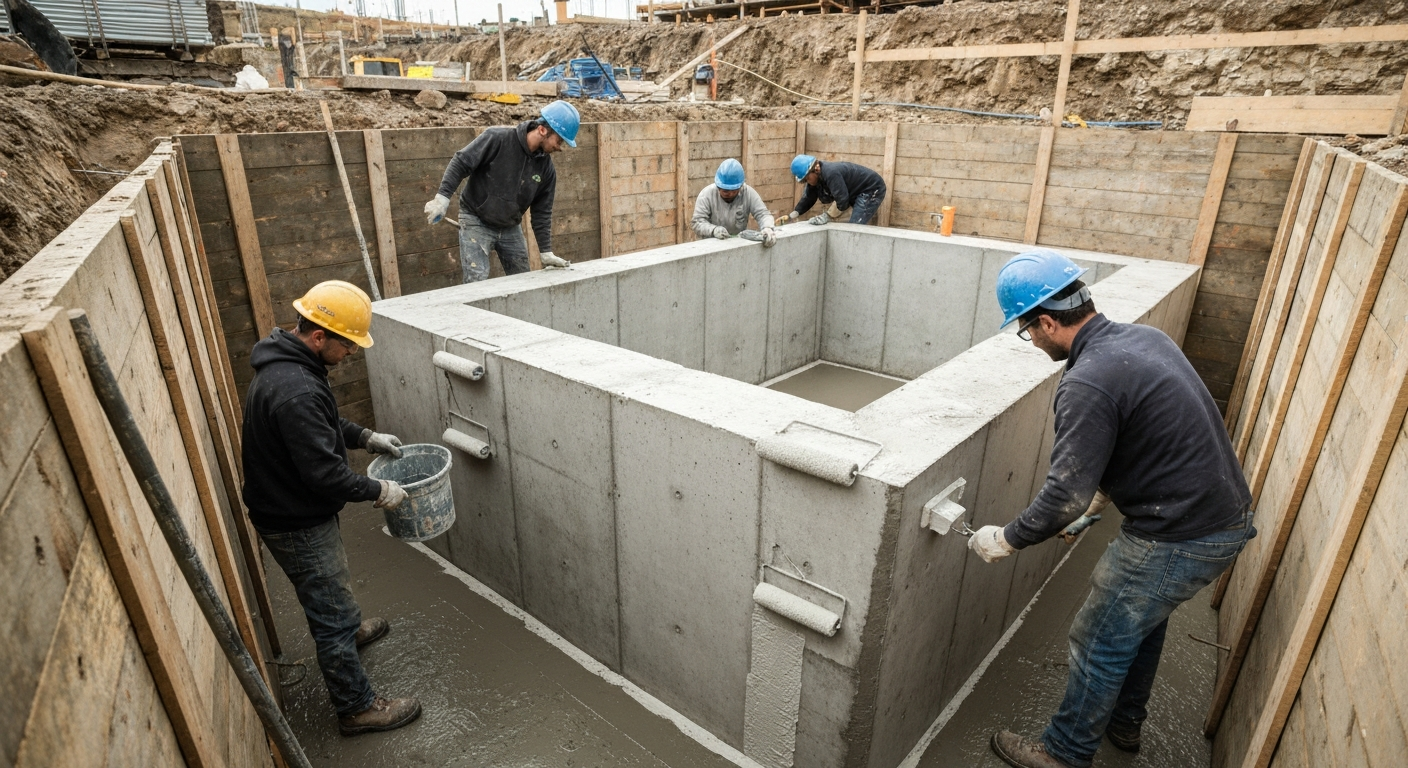
Basement waterproofing options and costs in Dearborn
In Dearborn, Ontario, choosing a waterproofing plan starts with how and where water is getting into your basement—because the “fix” changes depending on whether the problem is hydrostatic pressure pushing through the wall, drainage failure around the foundation, or a specific crack path. Dearborn’s smaller local population (1,605 people, Statistics Canada, 2021 Census) means contractor availability can be tighter than in the core GTA, and that can affect scheduling and mobilization costs. It also matters that many nearby Toronto-area homes were built in the post-war to 1960s–1970s era, when early tar-and-paper systems and older weeping tile were common; those systems frequently fail with age, especially in clay-heavy pockets that hold water against foundations.
Toronto’s freeze–thaw cycles are a cost driver: what looks like a hairline crack in early winter can open, move slightly, and become an active leak after a few seasons. At the same time, mixed glacial till and dense clay can create lateral pressure on foundation walls, increasing the risk of seepage through cold joints, tie holes, and cracks. If your basement has interior dampness, efflorescence, or floor-level seepage without obvious exterior wall failure, that often points to clogged or collapsed weeping tile and aged drainage rather than a single “broken wall.” In Dearborn’s higher-demand pocket around the Elderslie Road / Britannia Road area, and similar older infill lots, homeowners commonly want exterior solutions—but tight access and landscaping can push projects toward targeted interior systems when the exterior is too disruptive or excavation is limited.
The table below compares the most common waterproofing routes and their typical costs in the Dearborn / Toronto market, so you can line up quotes against the right scope before hiring.
| Method |
What It Addresses |
Disruption Level |
Durability |
Price Range |
| Exterior excavation + new membrane + drainage tile |
Stops water at the source by re-building the waterproofing assembly and improving perimeter drainage |
High (excavation, landscaping restoration, disposal) |
Long-term (often 25+ years when installed correctly) |
$7,000–$25,000 |
| Interior perimeter drain channel + sump pit |
Collects seepage after it enters; reduces hydrostatic water in the basement |
Medium (cutting floor perimeter, limited demolition) |
High (depends on sump discharge capacity and maintenance) |
$5,500–$12,500 |
| Foundation crack injection (epoxy or polyurethane) |
Seals cracks to stop leakage; epoxy is typically for stable cracks, polyurethane for active leaks |
Low to medium (interior access drilling) |
Moderate to long-term (performance depends on crack movement) |
$600–$3,000 |
| Sump pump installation (primary + battery backup) |
Controls water discharge during heavy rain and spring saturation |
Low (minor interior work) |
High (backup reduces outage risk) |
$1,400–$4,000 |
| Window well drain installation |
Prevents surface water build-up and seepage at basement window areas |
Low to medium (excavation around window well) |
Moderate to high (depends on grading and overflow path) |
$900–$3,200 |
| Lot re-grading / downspout extension |
Moves roof and surface water away from foundation to reduce water load |
Low to medium (topsoil and landscaping work) |
Variable (often needs periodic maintenance) |
$1,200–$6,500 |
Prices are estimates only and vary by project scope, site access and material selection.
What affects the price of waterproofing in Dearborn
In Dearborn and across the wider Toronto region, it’s not unusual to see quotes for the “same” basement waterproofing idea vary by 30–50%. The main reason is that waterproofing isn’t a single product—it’s an engineered system matched to soil behavior, drainage capacity, and foundation age. Pricing also reflects how crews can safely work in tight urban lots, where decks, raised patios, shared driveways, and landscaping restrict excavation. Where some homeowners get an interior solution quickly, others need full excavation and membrane replacement because the water pressure is persistent and the original drainage has failed.
Three local drivers typically separate Toronto-area costs from the national average: soil type, water table conditions, and freeze–thaw. Dense clay-heavy soils expand when saturated and can exert lateral pressure on foundation walls, turning small defects into active leaks over a few winters. In areas with higher effective water tables, sump pumps run more often and require properly sized discharge lines and (commonly) backup power. Freeze–thaw cycles widen small pathways in concrete and block foundations and stress old mortar and weeping tile connections. In coastal BC you often see quick saturation from heavy rain when drainage fails; in Toronto’s inland freeze zone, the “pulse” of water followed by freezing can make repairs more labour-intensive because details must be sealed and protected for winter performance.
Concrete examples we see in Dearborn: replacing failed exterior drainage around a basement wall with poor access can push an exterior project toward the higher end of the $7,000–$25,000 range, especially when hand-digging is required near decks or steps. Conversely, a stable, non-moving hairline crack with clean edges may allow an injection-only fix in the $600–$3,000 band, avoiding full excavation—while an actively weeping crack often requires polyurethane injection plus a drainage upgrade to stop recurrence. Also, if efflorescence or mould staining is present, many contractors need remediation and drying time before sealing, which increases labour and material costs.
| Price Factor |
Why It Matters |
Cost Impact |
| Interior vs. exterior approach — interior is less disruptive but addresses symptoms |
Exterior targets the source (hydrostatic pressure and water entry), while interior manages water after it enters |
Interior often 30%–60% less than exterior on comparable homes |
| Foundation type — poured concrete vs. block vs. stone vs. ICF |
Wall movement and typical leak paths differ; block and older mortar need different detailing |
Block/older walls can increase prep and drainage work by 10%–30% |
| Soil type — clay expands more than sand, adding pressure |
Saturated clay increases lateral pressure and worsens crack activity over freeze–thaw |
Higher risk often adds drainage/membrane scope (+$2,000–$8,000) |
| Crack type and length — hairline vs. structural horizontal cracks |
Structural movement requires assessment; non-moving cracks can be sealed more reliably |
Structural cases can add engineering/extra repair (+$1,500–$10,000) |
| Sump pump backup system — battery or water-powered backup needed |
Power outages and high spring loads can overwhelm a single pump |
Backup commonly adds $600–$1,800 to the system |
| Access — landscaping, decks, or driveways must be removed for exterior |
More removal and restoration increases labour and disposal |
Can shift the job upward by $1,500–$6,000+ |
| Weeping tile age — original tile (60+ years) may be completely failed |
Collapsed or clogged tile means more soil water reaches the wall |
Often triggers full drainage replacement (+$3,000–$12,000) |
| Mould or efflorescence remediation required before sealing |
Sealers won’t bond well on active moisture and salts; drying time is essential |
Typically adds $500–$3,500 depending on severity |
Permits & regulations in Ontario
In Ontario, many foundation and drainage-related changes may require a building permit, depending on what you’re doing and how it affects structural safety and lot grading. In practice, foundation excavation, structural crack repair, and modifications to lot drainage typically fall under permit requirements because they can impact the building’s support system and how water is managed around it. Sump pump installations also frequently need municipal approval when they connect to a storm or sanitary sewer system—contractors should confirm this before scheduling rough-in.
For structural crack repair—especially horizontal cracks in block walls, major step cracking, or signs of movement—an assessment by a structural engineer is often required. If the engineer recommends underpinning, helical piles, or other structural interventions, the project will generally involve additional approvals. When you’re comparing quotes in Dearborn, ask whether the contractor has engineering support for structural repairs, and confirm they carry liability insurance and WSIB/WCB coverage for the workers they send to your home.
Step-by-step verification for homeowners:
- Ask for the contractor’s Ontario business licence number (if applicable) and the trade licence info they rely on for the scope.
- Request a current certificate of liability insurance naming you as an additional insured for the project period.
- Request WSIB/WCB clearance documentation (or the appropriate coverage proof) before work starts.
- If structural repair is proposed, ask for the engineering process: who assesses, what report is used, and what the engineer signs off on.
- Confirm the permit plan in writing: which tasks require permits, who pulls them, and whether any inspections are included.
Typically, minor interior sealing with injection for small, non-moving cracks may not trigger permitting by itself, but if there’s excavation, grading, discharge tie-ins, or any structural involvement, assume a permit is likely until the contractor confirms otherwise in writing.
Interior vs exterior waterproofing — what does Dearborn need?
Exterior waterproofing and interior waterproofing solve different parts of the water problem. Exterior work—full excavation, new membrane, new perimeter drainage tile, and proper backfill—addresses the source by reducing hydrostatic pressure and intercepting groundwater before it reaches your foundation wall. It’s the most permanent approach, but it costs more and creates more landscape disruption, which matters in Dearborn’s tight lots where decks, walkways, and driveways can be close to the foundation.
Interior systems—perimeter drain channels, sump pits, and sump pump discharge—manage water after it enters the basement. They’re less invasive and can be a smart option when exterior access is difficult or when the main need is to stop recurring seepage during spring saturation and wet fall cycles. However, interior solutions do not stop the wall from experiencing water pressure; they prevent that water from collecting and causing dampness and flooding. That distinction is important in Toronto’s freeze–thaw environment, because water that repeatedly intrudes and freezes can expand existing pathways.
In Dearborn, poured concrete walls often respond well to properly assessed crack injection for stable cracks because the wall itself tends to seal better when movement is not the issue. Block foundations, especially older ones with mortar deterioration, often need interior drainage as a practical complement, even if some cracks can be injected. For sump pumps, backup is increasingly valuable during Ontario spring flooding when outages can coincide with peak loads; a battery backup or water-powered backup can reduce the chance of backup pump failure during the worst hours.
Here’s a realistic “when the price difference makes sense” example: if your exterior wall has failing perimeter drainage and weeping tile, full exterior excavation can land around the $7,000–$25,000 band. If you only do an interior perimeter drain and sump, the budget might be closer to the mid-range interior costs (often notably lower), but if the exterior water source remains, you may still need to maintain the sump and potentially upgrade capacity later. When the source is clearly exterior drainage, paying for exterior detailing usually prevents repeat basement issues.
| Method |
Best For |
Addresses Source? |
Disruption |
Lifespan |
Price Band |
| Full exterior excavation + membrane |
Chronic seepage, high lateral pressure from clay, and failed weeping tile where excavation access allows |
Yes |
High |
25+ years when properly installed |
$7,000–$25,000 |
| Interior French drain + sump system |
Basements with dampness or seepage where exterior work is constrained or landscaping removal is undesirable |
Partially (manages water after entry) |
Medium |
Long-term with correct pump sizing and discharge |
$5,500–$15,000 |
| Crack injection — epoxy (structural) |
Non-moving cracks where the structure is stable |
Yes (for the crack path) |
Low to medium |
Moderate to long-term |
$1,000–$3,000 |
| Crack injection — polyurethane (active leak) |
Active weeping leaks where water is still finding the path |
Yes (for the active leak path) |
Low to medium |
Good when paired with drainage/sump as needed |
$600–$2,500 |
| Interior drain channel only (no sump) |
Light dampness or intermittent seepage where gravity drainage is sufficient |
No (manages after entry) |
Medium |
Limited by discharge conditions |
$3,500–$10,000 |
| Re-grading + downspout extensions |
Surface water issues where foundation wetting is driven by roof runoff or poor grading |
No (reduces water load) |
Low to medium |
Variable; benefits can be maintained with periodic checks |
$1,200–$6,500 |
How to choose a waterproofing contractor in Dearborn
Choosing the right contractor in Dearborn is less about catchy guarantees and more about verification, transparency, and the ability to match the solution to your foundation and drainage conditions. Start by verifying Ontario coverage and credentials in a way you can document. Ask for their liability insurance certificate (and confirm it covers your project dates). Then request WSIB/WCB clearance documentation before work begins—this helps protect you if a worker is injured on site. For licensing, ask what licences apply to the specific scope (excavation, concrete repair, drainage/sump work, and any structural crack repairs) and confirm their trade coverage matches the work they’re quoting.
Next, get 2–3 itemised written quotes. You want a labour + materials breakdown, not a single lump-sum number, and you want to see the scope of what’s included: prep, cutting, disposal, pump and check valve details, discharge route, backfill material, and restoration. Make sure a permit pull is included or clearly excluded (with who is responsible for pulling it). Confirm that product selections are named (membrane type, drainage pipe grade, discharge piping size, pump model and backup approach) so the quotes are truly comparable.
For warranty, ask for both workmanship and product/manufacturer warranty terms, and whether the warranty is transferable to a future buyer. Payment should be tied to progress: never pay more than 10–15% upfront; keep a holdback until the job is complete and inspected. Finally, insist on a written start date and completion estimate so you can plan around the disruption, especially if exterior excavation will require landscaping removal and restoration.
- Request certificate of insurance and ensure coverage dates match your scheduled work.
- Verify WSIB/WCB clearance before the first day on site.
- Ask which Ontario permits (if any) are required and who will pull them.
- Require a written site plan: where drainage will go, and where discharge will be directed.
- Insist on itemised labour and materials (no “allowances” that can change the price later).
- Confirm disposal is included for excavated soil and construction debris.
- Ask what backfill material will be used and whether it includes the right drainage characteristics.
- Confirm pump specs: discharge line routing, check valve, pit sizing, and backup power method.
- Ask how cracks will be assessed (stable vs active) before injection products are selected.
- Get warranty details in writing: workmanship length, product coverage, exclusions, and transferability.
- Review the payment schedule and keep a holdback until clean-up and testing are complete.
- Ask for an estimated timeline and milestones (demo, membrane install, drainage tie-in, inspection).
Red flags to watch for in Dearborn include contractors who (1) propose injection without diagnosing whether the crack is active or structural, (2) quote exterior work without explaining access limitations and restoration scope, (3) avoid discussing sump discharge direction and municipal approval where needed, (4) provide a warranty only verbally, and (5) request large upfront payments (well over 10–15%) before any work starts.
Frequently asked questions — waterproofing in Dearborn
How do I know if a foundation crack is serious?
In Dearborn, a crack’s “seriousness” is usually about movement and water behavior—not just width. Look for clues like active seepage (wetness, mineral staining, or damp patches) after spring rains, widening after freeze–thaw seasons, or a crack that changes along its path. Horizontal cracks in block walls, pronounced step cracking, or cracks with noticeable vertical displacement are more concerning for structural stability. If you’re seeing recurring water at the same spot every year, it’s also a sign the crack is acting as a water pathway rather than a static cosmetic issue. If your contractor is recommending injection, they should first assess whether the crack is stable (often more suitable for epoxy) or actively leaking (often better matched with polyurethane). For isolated leaking cracks, repairs commonly fall in the $600–$3,000 band, but structural situations can require engineering first.
How much does foundation crack repair cost in Dearborn?
Foundation crack repair costs in Dearborn depend on whether the crack is stable or actively leaking, the wall material, and how many feet/locations need injection. For typical interior crack injection work, homeowners often see pricing that fits the $600–$3,000 band for straightforward repairs—especially when access is easy and the leak path is limited. If the crack is longer, multiple cracks are involved, or there’s additional prep to address surface cleaning and drying, the job trends toward the upper end of that range. If the situation looks structural (for example, significant horizontal cracking), you may first need an engineer assessment and possibly more extensive repair beyond injection-only. A good contractor will itemise labour, injection materials, and any required remediation so you can compare quotes properly.
Do I need a sump pump in Dearborn?
You may need a sump pump if your basement has recurring seepage or flooding after heavy rain and spring saturation, especially in areas where clay holds water against the foundation. In Toronto-region freeze conditions, water management matters because seepage can repeatedly freeze and expand pathways. A perimeter drain system that collects water and discharges it reliably is often the practical solution when weeping tile is failing or inaccessible to repair. That said, not every damp basement needs a sump: if you only have light dampness and gravity discharge is feasible, some homes can start with interior drain channel approaches. When outages are a concern and your basement is vulnerable during peak water events, many contractors recommend battery backup or water-powered backup. Sump pump installations with backup commonly land around the $1,400–$4,000 range in the Dearborn / Toronto market.
How does Dearborn's soil affect my foundation?
Dearborn’s surrounding Toronto-area geology includes glacial till and many pockets of dense clay. Clay expands when saturated and can exert lateral pressure on foundation walls, which is why cracks can become more active after wet periods and freeze–thaw cycles. Clay-heavy conditions also reduce the speed at which water drains away from the foundation, increasing the likelihood of seepage through cold joints, tie holes, and small defects. If your original perimeter drainage (weeping tile) is older or partially collapsed, the soil can keep pushing moisture against the basement even when the exterior doesn’t show dramatic wall failure. That’s why matching the waterproofing method matters: exterior membrane and drainage upgrades are often prioritized when water pressure is source-driven, while interior drainage and sump systems are often used when exterior access is constrained or the main issue is ongoing seepage after entry.
Do I need a permit for foundation work in Ontario?
In Ontario, permits are commonly required when you excavate around the foundation, make changes to lot drainage, or undertake structural crack repair that could affect safety or support. Sump pump installations can also require municipal approval if the discharge ties into storm or sanitary systems. If the crack repair involves structural concerns—like horizontal cracks or major step cracks—an engineer’s assessment is often part of the process, and that can trigger additional approval steps. For homeowners in Dearborn, the most reliable approach is to ask the contractor to confirm in writing what requires a permit for your specific scope and who will pull it. Before work starts, verify the contractor’s Ontario compliance documentation (liability insurance and WSIB/WCB coverage) so you’re protected while the project proceeds through any required inspections.
How long does waterproofing last?
“How long it lasts” depends on what was solved. Exterior waterproofing that includes proper excavation, membrane detailing, new drainage tile, and correct backfill is designed for long service life—often 25+ years when installed correctly and paired with maintained downspouts and grading. Interior systems typically last well, but their effectiveness depends on pump reliability, discharge routing, and keeping the drainage components functional. Crack injection can last a long time when the crack is stable; however, if water continues to enter through another pathway or the crack remains actively moving, recurrence can happen within a few seasons. For example, if you solve a single active leak crack with injection only, you can see reliable results for years—but if the surrounding drainage is failing, the basement may still accumulate moisture. In Dearborn’s freeze–thaw climate, routine inspection of sump function and surface grading is part of making waterproofing last.