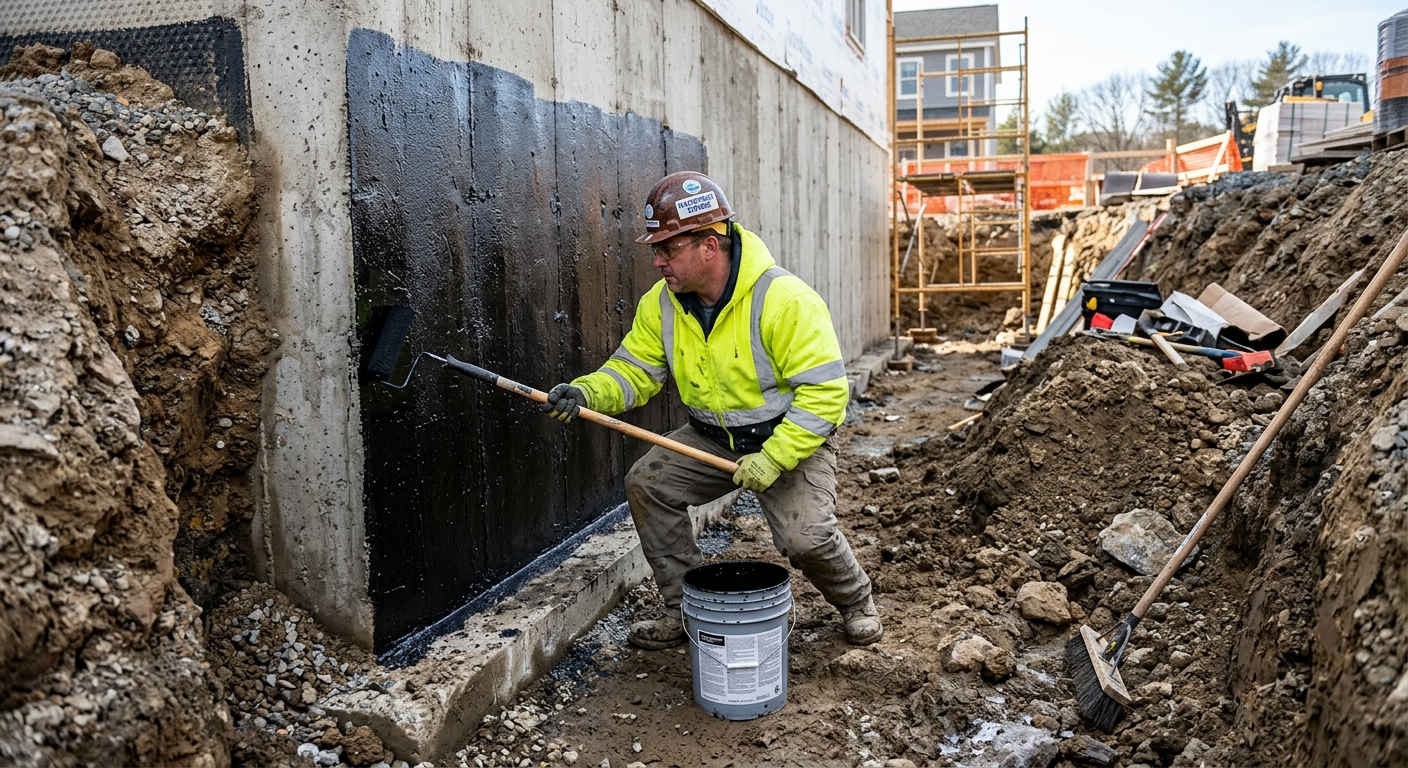
Basement waterproofing options and costs in Vanier
Basement waterproofing in Vanier, Ontario is a common homeowner project because so many properties sit on clay-heavy ground near a relatively high local water table. In a community of about 17,000 people (Statistics Canada, 2021 Census), you’ll notice an older building mix along certain streets where original weeping tile and tar-based systems were installed decades ago—often before modern drainage details were standard. When those early systems fail, you can get recurring dampness, efflorescence, and spring-melt basement flooding that keeps coming back even after surface cleaning.
In the Ottawa economic region, pricing is shaped by clay expansion during freeze-thaw and the resulting hydrostatic pressure on foundation walls. Excavation and drainage repair are also labour-intensive because removing landscaping, managing heavy clay spoil, and disposing of it properly can add time and cost. Contractors are busiest in and around areas where older homes and mature lots are common—especially near the Vanier Village/low-lying residential pockets where downspouts often discharge close to the foundation.
Broadly, homeowners choose either full exterior excavation (to stop water at the source) or interior systems (to manage water after it enters). For smaller issues like localized weeping-tile failure or hairline cracking, interior work can be the most cost-effective path. For active seepage with repeated freeze-thaw impact, exterior drainage plus membrane is frequently the long-term solution—though it’s the higher-ticket option. Use the table below to compare typical methods, what they address, disruption level, and realistic price bands for Vanier in 2026.
| Method |
What It Addresses |
Disruption Level |
Durability |
Price Range |
| Exterior excavation + new membrane + drainage tile |
Stops bulk water at foundation wall; replaces failed weeping tile; reduces hydrostatic pressure |
High (excavation along perimeter, landscaping removal, backfill) |
High (membrane + perimeter drainage) |
$9,000–$45,000 |
| Interior perimeter drain channel + sump pit |
Collects seepage near foundation and safely discharges it away |
Medium (access through basement floor, wall channel work) |
Medium to high (depends on how well exterior grading is corrected) |
$6,000–$20,000 |
| Foundation crack injection (epoxy or polyurethane) |
Seals cracks; epoxy for stable cracks, polyurethane for active leaks |
Low (drilling/port work; interior wall access) |
Medium to high (best when combined with proper drainage) |
$600–$3,000 |
| Sump pump installation (primary + battery backup) |
Prevents water build-up in the sump during spring melt and heavy rains; backup mitigates power interruption risk |
Low to medium (breakout at floor; plumbing/electrical tie-in) |
High (especially with backup for extended outages) |
$2,200–$3,500 |
| Window well drain installation |
Prevents water intrusion around basement egress points |
Medium (excavation around window well) |
Medium to high (depends on routing and grading) |
$1,200–$4,000 |
| Lot re-grading / downspout extension |
Improves runoff direction away from foundation; reduces water near wall |
Low to medium (minor landscaping changes) |
Medium (best as a complement to drainage) |
$900–$6,500 |
Prices are estimates only and vary by project scope, site access and material selection.
What affects the price of waterproofing in Vanier
In Vanier, two contractors can price the “same” waterproofing issue 30–50% apart because the real job is rarely just one repair—it’s the combination of water management, wall condition, and site access. In practice, one quote may include only a crack seal, while another includes drainage correction, sump discharge upgrades, and disposal of clay spoil. Those differences add up quickly in the Ottawa economic region, where clay-rich soils and a relatively high water table increase the chance that small failures turn into repeat seepage after spring melt and heavy rain.
Three drivers most strongly separate Ottawa-area costs from the national average: soil type, water table, and freeze-thaw cycles. Clay-heavy ground expands during freeze-thaw and exerts lateral pressure on foundation walls, which can widen cracks over time—especially around corners and wall-floor joints. High local groundwater conditions also mean sump systems run longer, so discharge routing and pump sizing become more important. Where grading is poor or drainage is clogged, hydrostatic pressure rises and pushes water through weak points in poured concrete or block foundations. (In much of Ontario and adjacent regions, this means older weeping tile—often 60+ years old—may be completely failed rather than “partially working.”)
Here are a few concrete Vanier examples that change costs: if your downspouts drain toward the foundation, correcting runoff with re-grading and extensions may reduce the scope, often keeping interior work closer to the $6,000–$20,000 band. If exterior excavation is needed to replace collapsed weeping tile on multiple sides, pricing more often moves toward the $9,000–$45,000 range because the contractor must manage heavy clay removal and re-backfill. A homeowner with an older poured-concrete wall that’s otherwise sound may need only crack injection in the $600–$3,000 band—while a block foundation with active seepage usually benefits from interior drainage, sometimes plus a sump pump installation in the $2,200–$3,500 range.
| Price Factor |
Why It Matters |
Cost Impact |
| Interior vs. exterior approach — interior is less disruptive but addresses symptoms |
Interior works manage water after entry; exterior reduces water pressure at the source |
Interior often saves on landscaping disruption, but may not fully prevent future seepage |
| Foundation type — poured concrete vs. block vs. stone vs. ICF |
Different wall materials respond differently to cracking, seepage paths, and sealing methods |
Block and stone often require more detailed drainage; poured concrete may respond well to targeted injection |
| Soil type — clay expands more than sand, adding pressure |
Clay holds water and swells during freeze-thaw, increasing lateral loads on the wall |
Can raise excavation and waterproofing expenses by 25–50% versus better-draining ground |
| Crack type and length — hairline vs. structural horizontal cracks |
Active leaks and horizontal structural cracking often require additional assessment and may change scope |
Structural repairs typically increase labour, materials, and engineering involvement |
| Sump pump backup system — battery or water-powered backup needed |
Spring outages can leave a sump without power when seepage demand is highest |
Backup adds cost, but reduces risk of basement flooding after power interruption |
| Access — landscaping, decks, or driveways must be removed for exterior |
Exterior jobs require continuous perimeter access and clean working space |
Major removals and restoration can push the project toward the upper part of the excavation range |
| Weeping tile age — original tile (60+ years) may be completely failed |
Old tile frequently collapses or is silted, making “repair” ineffective |
Replacement is usually more time-consuming than partial fixes |
| Mould or efflorescence remediation required before sealing |
Moisture and salts can prevent membrane/seal systems from bonding effectively |
Remediation can add days and specialized materials before sealing can proceed |
Permits & regulations in Ontario
In Ontario, foundation excavation, structural crack repair, and changes to lot drainage typically require a building permit, because they can affect building safety and how water is managed around the foundation. If your sump pump plan involves connecting discharge lines to municipal storm or sanitary systems, municipal approval is often required (and the contractor should know the local process). For structural crack repair—such as horizontal cracks in block walls or major step cracks—an assessment by a structural engineer is commonly needed to determine whether underpinning or other structural work is required.
Before signing, verify the contractor carries (1) liability insurance, (2) WSIB/WCB coverage for workers, and (3) the appropriate engineering support for structural repairs if the scope includes structural elements. For non-structural interior waterproofing—like perimeter drain channel work, sump pit installation, and crack injection on stable cracks—permits may still be required depending on how the work touches drainage connections and how the municipality classifies the project, so it’s best to confirm with your contractor and your permit office.
Step-by-step homeowner checklist in Vanier:
- Ask for the contractor’s Ontario business contact and confirm the correct licence/registration details (many waterproofing trades are subcontracted under related classifications).
- Request a certificate of insurance and ensure it includes liability coverage relevant to construction work.
- Ask for WSIB/WCB clearance documentation for their workers (or confirmation they are registered and in good standing).
- If structural repairs are mentioned, ask whether they will bring in engineering, and request the engineer’s role in writing.
- Confirm whether a building permit and/or municipal approval is included in the proposal.
Interior vs exterior waterproofing — what does Vanier need?
The fundamental difference is whether you stop water at the foundation or manage it after it gets in. Exterior waterproofing—full excavation along the foundation perimeter, new membrane, new drainage tile, and careful backfill—targets the source by reducing hydrostatic pressure. It’s the most permanent approach, but it costs more and creates more disruption because landscaping, walkways, and sometimes driveways must be removed and restored.
Interior waterproofing—typically a perimeter drain channel and sump pit with a sump pump—addresses water entry by collecting seepage and discharging it away. It’s less invasive and is often a practical first step when exterior access is limited, the landscaping is mature, or the homeowner wants to control costs. However, interior work doesn’t eliminate hydrostatic pressure on the wall itself, so in clay-heavy Vanier conditions with freeze-thaw cycles, you usually improve results by also correcting grading and downspout discharge.
In Vanier, foundation type matters. Poured concrete walls often respond well to targeted crack injection when the wall is stable, because seals can be installed into properly cleaned crack pathways. Block foundations more commonly benefit from interior drainage as a complement to any sealing because water can track through joints and block seams. For seepage tied to failed weeping tile, interior-only solutions can still help, but many homeowners ultimately choose exterior work if water keeps returning after spring melt.
Price-wise, consider a basement where the issue is active seepage from a few cracks plus minor dampness. Crack injection may land in the $600–$3,000 band, often making it hard to justify the full excavation budget immediately. But if there’s recurring water during heavy rain or you’re seeing efflorescence along multiple wall bays, the exterior approach—often in the $9,000–$45,000 band—can be justified because it replaces the drainage system and membrane, reducing long-term pressure rather than chasing symptoms.
Because Ontario homeowners can experience power interruptions during spring storms, many reliable sump setups include backup. A battery backup or water-powered backup protects against pump downtime when seepage demand is highest, which is especially relevant in Ottawa’s seasonal freeze-thaw pattern.
| Method |
Best For |
Addresses Source? |
Disruption |
Lifespan |
Price Band |
| Full exterior excavation + membrane |
Failed weeping tile, ongoing hydrostatic pressure, multiple seepage points |
Yes |
High (perimeter excavation and landscaping disruption) |
Long-term (often decades when installed correctly) |
$9,000–$45,000 |
| Interior French drain + sump system |
Interior dampness, limited exterior access, recurring seepage |
Partially (manages water after entry) |
Medium (floor and wall channel work) |
Medium to long-term with proper discharge and pump maintenance |
$6,000–$20,000 |
| Crack injection — epoxy (structural) |
Stable cracks with no active water flow |
No (treats pathway at crack, assumes drainage is addressed) |
Low (interior drilling and patching) |
Medium to long-term when cracks are stable |
$600–$3,000 |
| Crack injection — polyurethane (active leak) |
Active seepage and minor flowing cracks |
No (stops water at crack, assumes exterior pressure is addressed over time) |
Low to medium (may require more prep) |
Medium (best paired with drainage correction) |
$800–$3,500 |
| Interior drain channel only (no sump) |
Light seepage that can be managed without frequent pumping |
No |
Medium (floor channel work) |
Limited (depends on gravity discharge and water conditions) |
$3,000–$10,000 |
| Re-grading + downspout extensions |
Surface water running toward foundation; seasonal puddling |
Sometimes (reduces water at source) |
Low to medium (minor landscaping disruption) |
Medium (needs maintained grading and clean eavestroughs) |
$900–$6,500 |
How to choose a waterproofing contractor in Vanier
Choosing the right contractor in Vanier starts with verification, not promises. First, confirm Ontario licensing/registration information for the business you’re hiring, and make sure they can show liability insurance and WSIB/WCB coverage in writing. To check insurance, ask for a certificate of insurance naming you as an additional insured where appropriate and verify coverage limits for construction work. For WSIB/WCB, request current clearance or proof of coverage and ensure it matches the company doing the work (not just a related business entity). If the scope includes structural crack repair, ask how engineering support is handled—who assesses, who designs, and whether their recommendations are included in the proposal.
Next, request 2–3 itemised written quotes with a labour and materials breakdown. “Itemised” should show what’s included for excavation depth, membrane type, drainage tile components, pump model and discharge piping, disposal of clay spoil, and restoration of landscaping. A common reason quotes differ is exclusions: permit pull, engineering, backfill, pump discharge tie-in, or disposal can be left out of cheaper bids. Make sure the proposal states what isn’t included.
Warranty matters for waterproofing. Look for a workmanship warranty length and confirm whether any product/manufacturer warranty is separate and how it applies to your installation. Also ask if warranties are transferable if you sell. For payment, never pay more than 10–15% upfront; use a holdback until the job is complete and all performance checks are done. Get the start date and a realistic completion timeline in writing.
- Ask for insurance certificate and confirm liability coverage applies to foundation/excavation work.
- Confirm WSIB/WCB clearance for the workers who will be on site.
- Verify the contractor’s Ontario registration/licence details for the trade/business.
- Require 2–3 itemised quotes (labour + materials, not lump sum).
- Confirm whether the quote includes permit pull and inspections if required.
- Ensure disposal is included (heavy clay spoil can be a major cost driver).
- Check if the sump pump includes primary pump plus battery backup where recommended.
- Ask how discharge will route (distance from foundation, routing constraints, tie-in rules).
- Review crack injection method selected (epoxy for stable cracks vs polyurethane for active leaks).
- Confirm prep requirements for mould/efflorescence before sealing (don’t skip remediation).
- Ask who backs workmanship and whether product warranties are tied to your jobsite.
- Use payment terms: 10–15% max upfront, holdback until completion and cleanup.
Red flags to watch for in Vanier: vague scopes that don’t mention drainage tile replacement or disposal; quotes that omit sump discharge routing details; no proof of WSIB/WCB coverage or insurance; pressure to pay large deposits (above 10–15%); and guarantees that claim “one cure fits all” without an inspection of weeping tile condition, grading, and crack activity.
Frequently asked questions — waterproofing in Vanier
Will basement waterproofing affect my property value in Vanier?
In Vanier and across the Ottawa region, waterproofing can help protect property value because it reduces the risk of recurring dampness and spring-melt flooding. Buyers often see visible efflorescence, odours, or a history of water events as a red flag, especially for older homes where original weeping tile may be silted or collapsed. While waterproofing itself doesn’t automatically “increase value,” it can make the home more insurable and more marketable when documentation (photos, scope details, and warranties) is available. A practical approach is to match the solution to the cause—interior systems can be a strong first step, while exterior drainage and membrane in clay-heavy conditions can reduce recurrence.
What drainage issues are most common in Vanier homes?
The most common issues in Vanier are failed or blocked weeping tile systems, poor downspout discharge, and grading that allows surface water to run toward the foundation. Clay-rich soils hold water and swell during freeze-thaw cycles, which increases lateral pressure and can widen cracks over time. Many older basements also show symptoms like efflorescence along wall seams and damp corners, which often points to hydrostatic pressure paths rather than a single pinhole leak. If you’re seeing water during spring melt or heavy rain, that’s usually consistent with a drainage issue combined with Ottawa’s repeated freeze-thaw.
How do I choose a waterproofing contractor in Vanier?
Start by verifying the contractor’s Ontario registration/licensing details, liability insurance, and WSIB/WCB coverage. Ask for documents before any work begins, and confirm the certificates match the company performing the job. Next, get 2–3 itemised written quotes with labour and materials breakdowns and clear inclusions—especially disposal of clay spoil, permit pull (if applicable), and sump pump discharge routing. Review the scope for exclusions; a cheap quote can quickly climb if it doesn’t include drainage tile replacement or backup pump requirements. Finally, ask about warranties and whether workmanship coverage is backed separately from product warranties.
What is a battery backup sump pump and do I need one in Vanier?
A battery backup sump pump is a secondary pump system that runs when the power is off, helping prevent basement flooding during outages. In Vanier, battery backups are particularly relevant in spring when heavy rain and melt can drive peak seepage demand, and power interruptions (though not daily) can still happen during storms. If your plan includes an interior perimeter drain and sump, consider backup if you’re worried about water rising while the basement pump can’t run. Pricing for sump installations (primary + backup where selected) typically sits in the $2,200–$3,500 band, depending on system configuration and discharge requirements.
How much does basement waterproofing cost in Vanier?
Typical Vanier pricing depends on whether you’re solving a localized crack issue or replacing drainage and membrane systems. Foundation crack repair/injection is often the lowest-cost option, commonly in the $600–$3,000 range depending on crack length and whether the injection is epoxy or polyurethane. Interior waterproofing with perimeter drainage and sump work often falls in the $6,000–$20,000 band. If your home needs full exterior excavation and new membrane plus drainage tile, budgets commonly range from $9,000–$45,000 due to excavation, clay spoil disposal, and restoration. Exact cost also depends on access, foundation type, and whether mould/efflorescence remediation is required.
Interior vs exterior waterproofing — which is better?
“Better” depends on where the water pressure is coming from and how your basement behaves during spring melt. Exterior waterproofing is usually the most complete option in Ottawa’s clay-and-freeze-thaw conditions because it reduces hydrostatic pressure at the source with membrane and new drainage tile; it’s also the most disruptive, often within the $9,000–$45,000 range. Interior waterproofing is typically less invasive and is excellent for managing seepage after entry (often $6,000–$20,000), particularly when exterior access is limited. For poured concrete, stable cracks can sometimes be addressed with injection (often $600–$3,000), while block foundations frequently need interior drainage as a complement. In many Vanier basements, the best outcome comes from combining appropriate drainage corrections with either interior or exterior waterproofing based on site constraints.