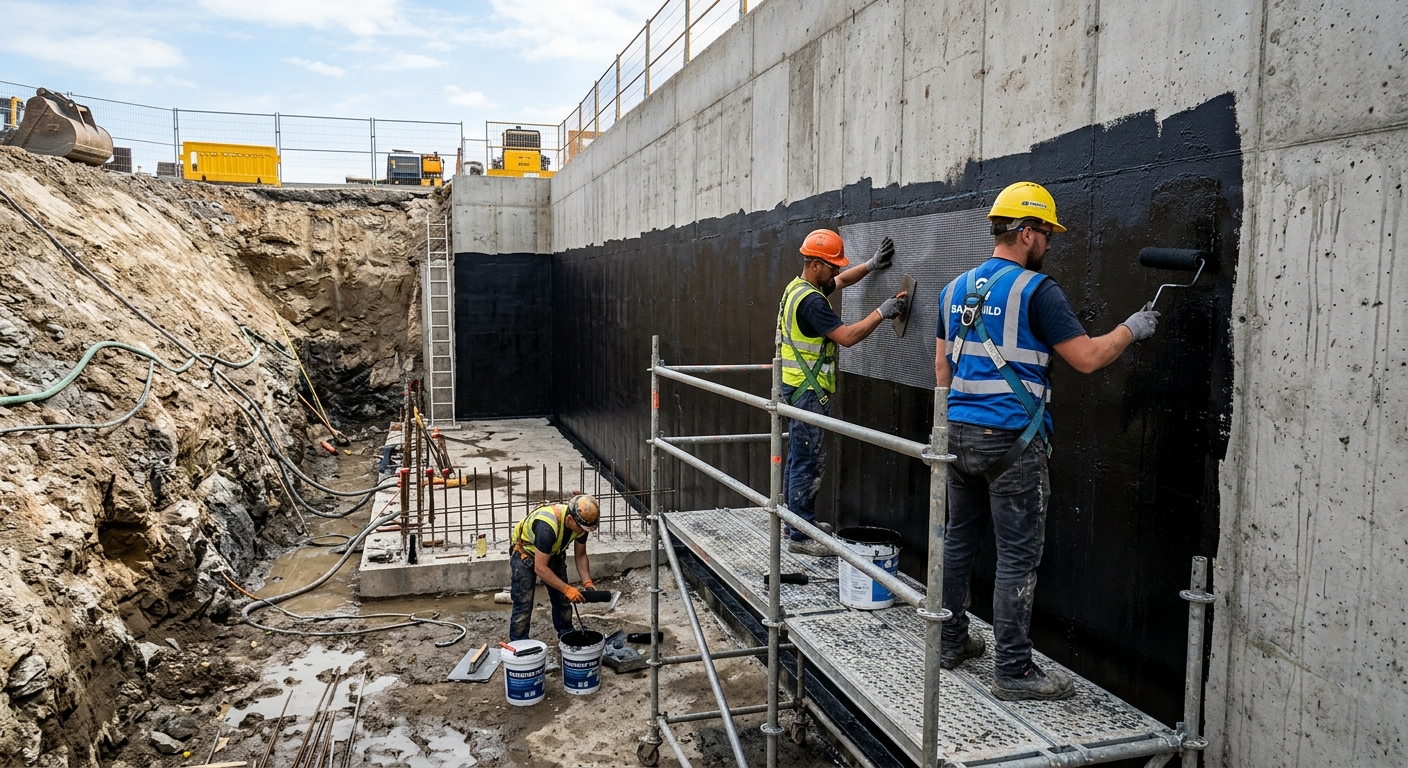
Basement waterproofing options and costs in Vickers Park
In Vickers Park, choosing the right basement waterproofing method starts with understanding how water behaves against your foundation. With a local population of 4,317 residents (Statistics Canada, 2021 Census), there are plenty of established crews and suppliers serving the Toronto area, but availability can swing during peak spring wet weather. Just as important: many homes here are older, and that matters because older basements are more likely to have failing original drainage systems and aged water-stop materials. In Toronto’s housing stock, it’s common to see post-war and 1960–1980s homes where original clay weeping tile or early plastic drains are partially collapsed or clogged—so water builds up at the wall, turns small defects into active leaks, and shows up as seepage, efflorescence, or periodic flooding.
Toronto-area freeze–thaw cycles also affect pricing. Minor cracks that look “stable” in late fall can widen after the winter, meaning contractors often recommend combining targeted repairs with drainage improvements. Access constraints in tight urban lots—especially around additions, deck footings, or shared driveways—can push projects toward the higher end of the exterior bands. For many Vickers Park homeowners, the trade is especially in demand along the older residential corridors near the St. Clair/Christie area where basements are frequently finished and interior work may need to be coordinated with flooring removals.
Below is a practical comparison of options, typical disruption, and where costs usually land before you see a site-specific quote.
| Method |
What It Addresses |
Disruption Level |
Durability |
Price Range |
| Exterior excavation + new membrane + drainage tile |
Hydrostatic pressure at foundation wall; water entry through perimeter and cold joints; failing/absent weeping tile |
High (excavation, landscaping restoration) |
High (source control when done correctly) |
$7,000 – $25,000 |
| Interior perimeter drain channel + sump pit |
Water that enters through cracks and cold joints; chronic dampness; interior seepage |
Medium (floor/foundation wall access along perimeter) |
Medium to High (depends on wall condition and pump selection) |
$3,500 – $15,000 |
| Foundation crack injection (epoxy or polyurethane) |
Isolated cracks/voids; stopping seepage through active leaks |
Low to Medium (localized drilling and patching) |
Medium to High (best when combined with proper drainage) |
$600 – $3,000 |
| Sump pump installation (primary + battery backup) |
Managing groundwater accumulation and reducing hydrostatic flooding risk |
Low to Medium (pit excavation, discharge line, power work) |
Medium (high when paired with reliable backup) |
$800 – $3,500 |
| Window well drain installation |
Water and melting snow pooling around basement egress windows |
Low (targeted excavation around window well) |
Medium to High (if grading and weeping/drainage are maintained) |
$1,200 – $4,500 |
| Lot re-grading / downspout extension |
Redirecting surface water away from foundation; reducing perimeter saturation |
Low to Medium (minor landscape work) |
Low to Medium (works best when drainage is already adequate) |
$1,000 – $6,000 |
Prices are estimates only and vary by project scope, site access and material selection.
What affects the price of waterproofing in Vickers Park
In Vickers Park and the broader Toronto region, quotes for the same “basement leak” can differ by 30–50% because contractors price risk: how likely the water is to be coming from the perimeter wall versus failing interior drainage, how accessible the foundation is, and how much concrete/block work is needed once they open up the area. Nationally, the biggest drivers are consistent, but Ontario’s soil and freeze–thaw make them show up differently—and that’s where Toronto-area costs often separate from the national average.
Three factors most often explain the jump: (1) soil type, (2) water table, and (3) freeze–thaw. In the Toronto area, many lots sit on mixed glacial till and clay pockets that can hold water and expand when saturated. That expansion increases lateral pressure on foundation walls and worsens seepage paths at cold joints, tie holes, and cracks. When freeze–thaw cycles repeat, small voids widen and turn intermittent dampness into active leaking over a few winters—so exterior excavation plus membrane and drainage tile can sit nearer $7,000 – $25,000 if source control is needed. Meanwhile, interior solutions often fall closer to the $3,500 – $15,000 band when the goal is to capture and pump water after it enters.
Two concrete examples from Vickers Park: if a basement shows efflorescence after heavy rain and you can’t see any functional weeping tile at the perimeter, excavation-driven membrane/drainage usually costs more—but it prevents repeated freeze–thaw damage. On the other hand, if leakage is confined to a short run of crack near a utility penetration and the rest of the wall is dry, crack injection can be dramatically cheaper because the contractor limits demolition and focuses on isolated defects.
| Price Factor |
Why It Matters |
Cost Impact |
| Interior vs. exterior approach — interior is less disruptive but addresses symptoms |
Exterior targets the water entry point; interior manages water after it enters |
Interior can be ~30–70% less disruptive, but may not reduce wall pressure |
| Foundation type — poured concrete vs. block vs. stone vs. ICF |
Different crack patterns and water paths; block joints often need more drainage management |
Poured concrete with stable, isolated cracks can lower costs; block may increase scope |
| Soil type — clay expands more than sand, adding pressure |
Saturated clay increases lateral pressure during cold months |
More active leaks and higher likelihood of needing exterior or robust drainage |
| Crack type and length — hairline vs. structural horizontal cracks |
Horizontal/step movement suggests bigger risk; often needs engineering assessment |
Structural repairs raise labour and engineering costs |
| Sump pump backup system — battery or water-powered backup needed |
Reduces risk from spring power outages and pump downtime |
Backup adds cost but can prevent repeat flooding |
| Access — landscaping, decks, or driveways must be removed for exterior |
Hand-digging and restoring hardscapes increase labour |
Exterior projects swing upward when space is tight |
| Weeping tile age — original tile (60+ years) may be completely failed |
Collapsed/clogged drains lead to constant saturation |
Complete replacement increases excavation and drainage material costs |
| Mould or efflorescence remediation required before sealing |
Sealers and membranes don’t bond well to contaminated or wet surfaces |
May add testing/cleaning and drying time |
Permits & regulations in Ontario
In Ontario, foundation excavation, structural crack repair, and changes to lot drainage typically require a building permit. If your contractor plans to address structural concerns—like horizontal cracks in block walls, significant movement/step cracking, or work that could affect load paths—an engineer’s assessment is usually needed to determine whether underpinning or other structural measures are required. Also note that sump pump installations that connect into the storm or sanitary sewer system generally require municipal approval. The exact approvals can vary by the discharge route and how your lot ties into existing drainage, so a good contractor will clarify this before pricing.
What typically does not require a permit: small, localized crack injection for clearly non-structural, isolated leaks; targeted window well re-grading for surface diversion (without major excavation that changes drainage patterns); and installing a sump where discharge is routed in the intended, allowed manner per the project plan. However, because drainage routing is the key trigger, the “doesn’t require a permit” part hinges on the discharge method and any changes to municipal tie-ins.
To verify a contractor in Vickers Park, start with their Ontario licence details and then request (1) a current certificate of insurance showing liability coverage, (2) WSIB/WCB clearance for the workers who will be on-site, and (3) any engineering support documentation if structural work is in scope. Most of this can be checked through the contractor’s documentation you receive, and many items can be verified through publicly accessible online registries. Always confirm the dates and project address match your job.
Interior vs exterior waterproofing — what does Vickers Park need?
The fundamental difference is source control versus water management. Exterior waterproofing means full excavation, new membrane, new drainage tile, and backfill—so you address the water entry point at the foundation perimeter. It costs more and requires yard disruption, but it’s the most direct way to reduce hydrostatic pressure and ongoing freeze–thaw stress. Interior waterproofing (perimeter drain channel, sump pit, and sump pump) captures water after it enters; it’s less invasive, often faster to restore finishes, and commonly used when access is limited in Toronto lots. The trade-off is that interior systems don’t prevent lateral pressure from acting on the wall.
For Vickers Park basements, poured concrete walls often respond well to crack injection when leaks are isolated and the drainage around the house is working. For block foundations, interior drainage is frequently needed as a practical complement because water paths can travel through mortar joints and block cores. In both cases, sump pump backup systems matter in Ontario because spring flooding and late-winter storms can coincide with short outages; battery or water-powered backup helps keep the system running when the main power is down.
Here’s a real pricing justification example: if an inspection shows a short, active seep at a single crack and the rest of the perimeter is dry, crack injection plus a sump can be far more cost-effective than excavation. But if the basement repeatedly floods during heavy rains and you find failing weeping tile, exterior waterproofing can be worth the higher end of the $7,000 – $25,000 range to stop recurrence that would otherwise force repeated interior interventions in future winters.
| Method |
Best For |
Addresses Source? |
Disruption |
Lifespan |
Price Band |
| Full exterior excavation + membrane |
Chronic seepage/flooding; failing weeping tile; high water pressure against walls |
Yes |
High |
Long (when drainage and backfill are engineered properly) |
$7,000 – $25,000 |
| Interior French drain + sump system |
Interior water management; tight access lots; dampness from perimeter leaks |
No (manages water after entry) |
Medium |
Medium to Long (depends on pump reliability and discharge) |
$3,500 – $15,000 |
| Crack injection — epoxy (structural) |
Stable, non-moving cracks where water is minimal or sealed after preparation |
Partly (stops paths in the crack) |
Low to Medium |
Medium to Long (best with good drainage) |
$600 – $3,000 |
| Crack injection — polyurethane (active leak) |
Active seepage through cracks that show moisture flow |
Partly (seals active leakage routes) |
Low to Medium |
Medium to Long (short-term success requires longer-term drainage) |
$600 – $3,000 |
| Interior drain channel only (no sump) |
Light seepage; where gravity drainage to an existing drain area is feasible |
No |
Medium |
Short to Medium (risk increases when water levels rise) |
$1,800 – $7,500 |
| Re-grading + downspout extensions |
Surface water issues; puddling near the foundation; minor dampness |
Yes for surface water contribution |
Low to Medium |
Short to Medium (depends on ongoing maintenance) |
$1,000 – $6,000 |
How to choose a waterproofing contractor in Vickers Park
Choosing the right waterproofing contractor in Ontario starts with proof, not promises. Ask for their Ontario licence details, a certificate of insurance (liability coverage), and WSIB/WCB clearance for workers who will be on your property. In practice, homeowners in Vickers Park should request these documents before work begins and verify the clearance covers the relevant period. Then, confirm they carry enough liability coverage for excavation and interior demo work, especially where basements are finished and access requires careful handling.
Next, get 2–3 itemised written quotes. You want a line-by-line labour and materials breakdown—not a single lump sum—so you can compare whether the price includes excavation, disposal, membrane/board selection, sump pump model, discharge routing, and patch/restore work. Carefully read exclusions: Is concrete drilling and crack prep included? Is permit pulling included (if required for drainage routing or structural scope)? Is backfill and compaction included at the correct elevations? Are you paying extra for drying time, mould remediation, or testing?
Warranty should be specific: workmanship warranty length, product/manufacturer warranty coverage, and whether the warranty is transferable if you sell your home. Payment scheduling matters too: never pay more than 10–15% upfront, and hold back the final payment until the job is complete and surfaces are restored per the agreed scope. Finally, ask for a written start date and a completion estimate that matches the required drying and curing windows.
- Request proof of Ontario licence/credentials and confirm it’s current.
- Verify WSIB/WCB clearance for all workers on-site.
- Obtain a certificate of insurance showing liability coverage and jobsite details.
- Get 2–3 itemised quotes with labour + materials (no “all-in” black boxes).
- Ask what testing or inspection they do before pricing (camera inspection, moisture mapping, crack assessment).
- Confirm whether permit pulling is included where needed for drainage/structural scope.
- Ask if disposal is included for demo and excavation spoils.
- Clarify pump specs: discharge route, check valve, and backup type (battery vs water-powered).
- Require the foundation crack injection method to match the crack behaviour (epoxy vs polyurethane).
- Check warranty wording for workmanship and product separately, including transferability.
- Confirm payment schedule (target 10–15% max upfront; holdback until completion).
- Get the timeline in writing, including curing/drying and restoration steps.
Watch for red flags: contractors who refuse to provide itemised scopes; vague warranty terms (“up to one year”) with no product details; quoting an exterior job without discussing access constraints and grading/drainage details; recommending sump installation without explaining discharge routing and backup; and leaving out permits/engineering triggers for structural crack concerns.
Frequently asked questions — waterproofing in Vickers Park
What is a weeping tile and does my Vickers Park home have one?
A weeping tile is a perimeter drainage system installed at or near the foundation footing to collect groundwater and direct it to a sump or discharge point. In many older Toronto-area homes, the original clay weeping tile or early plastic drains are now partially collapsed or clogged, especially where clay-heavy soils hold water and where freeze–thaw has repeatedly widened small defects. In Vickers Park, it’s common to find basement dampness, efflorescence, or periodic seepage that points to failing or incomplete drainage rather than obvious wall failure.
To check if you have it, start with your mechanical drawings or prior renovation notes, then look for evidence during interior work (a drain line connection, old access openings, or a visible perimeter drain). A contractor may also do a camera inspection of accessible drain lines. If the system is missing, crushed, or disconnected, homeowners typically need interior drainage and a sump (often within $3,500 – $15,000 depending on scope) or exterior drainage reconstruction where access allows.
Can I waterproof my basement in winter in Vickers Park?
Yes, you can often waterproof in winter in Vickers Park, but your options may be narrower and timing matters. Interior crack injection and sump/pump-related work can be performed when temperatures are manageable and the work area can be kept warm enough for drilling, bonding, and curing products. However, exterior excavation and membrane work is more limited when soil is frozen and surface conditions make grading/backfill difficult.
In Toronto’s freeze–thaw climate, delays can matter because freeze cycles widen minor defects in concrete or block foundations. If you see active leaking or frequent damp patches, winter interior solutions can be a practical stop-gap while planning larger source-control work for spring. For example, foundation crack repair typically falls in the $600 – $3,000 band, and sump pump installation is commonly within $800 – $3,500. A good contractor will also confirm discharge routing and ensure the system can handle rapid spring melt water.
What is the difference between waterproofing and damp-proofing?
Damp-proofing generally refers to coatings and practices meant to resist minor moisture in low-pressure conditions. It may reduce surface dampness, but it typically doesn’t handle hydrostatic pressure well once groundwater builds up against the foundation. Waterproofing is broader: it includes addressing water entry paths, improving drainage (interior and/or exterior), and capturing water in a controlled way using drains and pumps.
In Vickers Park, where mixed glacial till and clay pockets can hold water and expand when saturated, damp-proofing alone often isn’t enough if your weeping tile has failed or if cracks/cold joints are actively leaking. You can end up treating symptoms repeatedly—especially after winter freeze–thaw cycles. A proper assessment should separate “surface moisture” from “active seepage,” then match the method: exterior excavation and drainage tile for source control, or interior perimeter drains and sump systems to manage water after it enters. Many interior waterproofing projects fall within $3,500 – $15,000, which reflects the need for drainage capacity and durable materials.
Will basement waterproofing affect my property value in Vickers Park?
Often, yes—especially when it’s documented and backed by a credible scope and warranty. In a Vickers Park home market influenced by Toronto’s age profile and frequent freeze–thaw impacts, buyers value proof that seepage or flooding risks were addressed. A well-installed system can reduce issues like odours, efflorescence, and usable-space loss, and it can protect finished basements from recurring damage.
However, the value impact depends on whether the waterproofing matches the water source. Interior-only systems can be effective for managing leaks, but if the underlying drainage at the perimeter is failing due to collapsed weeping tile, buyers may still worry about recurrence. That’s why exterior source control can sometimes justify the higher end of the $7,000 – $25,000 band when chronic seepage is proven.
Your best move is to keep the paperwork: itemised invoices, photos during work, pump specs, discharge routing details, and warranty transferability language. Those documents are usually what convert waterproofing into measurable buyer confidence.
What drainage issues are most common in Vickers Park homes?
The most common drainage issues in Vickers Park are perimeter-related: failing weeping tile or disconnected drains, clogged or partially collapsed old drainage lines, and surface water that’s not redirecting away from the foundation. Because Toronto lots often include clay pockets that hold water, saturation can persist for weeks after heavy rain, increasing lateral pressure on foundation walls. Freeze–thaw then worsens small cracks and cold joints, which is why homeowners often notice the problem more during or after winter.
In practice, you’ll see these patterns: damp concrete and efflorescence (salt deposits) near corners, seepage at tie holes and penetrations, and occasional flooding during spring melt. Another frequent issue is window wells that trap melting snow and runoff, pushing water down toward egress openings. If downspouts discharge too close to the house, the exterior water load increases even when the foundation is otherwise stable.
Depending on the cause, solutions range from re-grading and downspout extensions to full interior drainage and sump systems. Many interior waterproofing jobs land in the $3,500 – $15,000 band, while localized crack repair can be closer to $600 – $3,000 when the problem is isolated.
How do I choose a waterproofing contractor in Vickers Park?
Start by verifying the basics: the contractor’s Ontario licence credentials, liability insurance, and WSIB/WCB coverage (ask for the actual certificates/clearance letter and check the dates). Then get 2–3 itemised written quotes with labour and materials breakdowns, including whether disposal, drying time, permit pulling, and restoration are included. For Ontario, structural crack concerns may require an engineer’s assessment before structural repair decisions are made, and sump discharge to municipal systems typically needs approval.
Next, insist that the scope matches the water source. If the contractor suggests only damp-proofing when you’ve got recurring seepage, that’s a mismatch for the Toronto-area freeze–thaw and clay pressure reality. For pricing, compare apples to apples: an interior perimeter drain plus sump can fall around $3,500 – $15,000, while exterior excavation plus membrane and drainage tile is more likely in the $7,000 – $25,000 range when access allows.
Finally, review warranty terms (workmanship and product separately), confirm whether warranties are transferable, and keep upfront payments to about 10–15%, holding back until the project is complete.