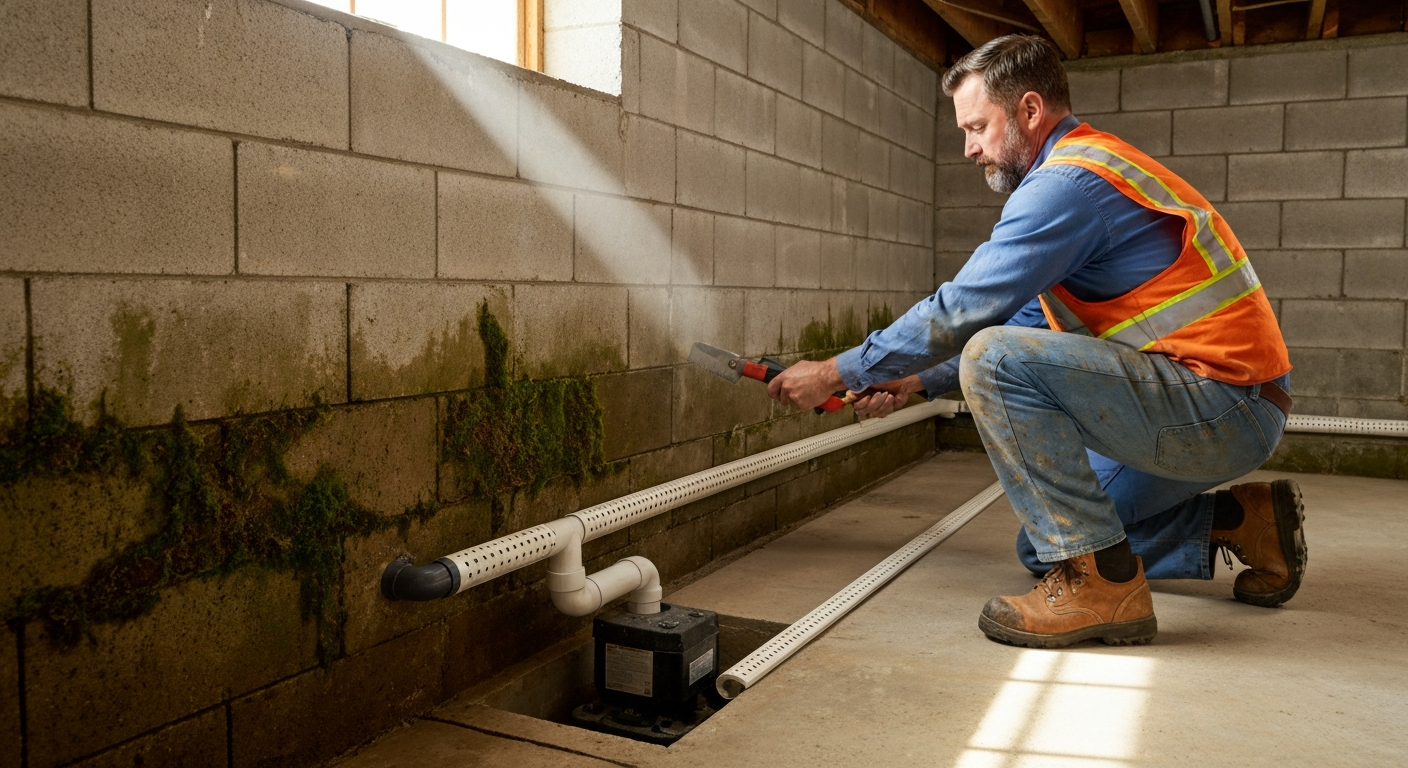
Basement waterproofing options and costs in The Beaches
In The Beaches, Ontario, basement waterproofing usually starts with a site-specific diagnosis because water doesn’t behave the same way from street to street. With a population of 21,567 in the area, many homeowners are dealing with repeat issues—especially in neighbourhoods where older homes sit close to mature trees and long-established landscaping. Two local realities drive what we recommend: first, Toronto’s freeze–thaw cycles turn small defects into active pathways, and second, many post-war basements have drainage systems that are now past their prime. In practical terms, older clay weeping tile (often 60+ years old) can be partially collapsed or clogged, leading to damp foundations, efflorescence, and musty odours before you ever see a major wall failure.
Toronto-area pricing and scheduling also reflect tougher access. In pockets of The Beaches near the lakefront and in tighter lots off main lanes (where decks, raised patios, and narrow driveways are common), exterior excavation can require hand-digging around additions or working near deck footings. Labour and machinery time add up quickly. Where lateral soil and high water pressure are likely, contractors lean toward exterior excavation plus a modern membrane and drainage tile. Where the issue is chronic seepage from failing weepers, interior perimeter drainage and a sump system often becomes the cost-effective solution.
Below is a clear comparison of common methods you’ll see in The Beaches quotes, including typical disruption and price ranges.
| Method |
What It Addresses |
Disruption Level |
Durability |
Price Range |
| Exterior excavation + new membrane + drainage tile |
Hydrostatic pressure at foundation wall; failing original drainage; water entry at cold joints and cracks |
High (excavation, landscaping restoration) |
Long-term when installed to spec; typically 20+ years |
$12,500 – $23,500 |
| Interior perimeter drain channel + sump pit |
Water that already enters; keeps walls drier; reduces efflorescence and damp basements |
Moderate (interior floor cutting) |
Very good when combined with proper pumping and discharge location; typically 15–25 years |
$5,500 – $12,000 |
| Foundation crack injection (epoxy or polyurethane) |
Isolated leaking cracks (epoxy for structural stability; polyurethane for active leaks) |
Low to moderate |
Depends on crack type and movement; typically 10–20 years |
$650 – $2,800 |
| Sump pump installation (primary + battery backup) |
Chronic seepage and spring runoff; reduces risk during outages and pump failure |
Moderate (pit excavation; minor finishing) |
Strong protection when discharge is correct; typically 15+ years for pump system |
$1,200 – $4,000 |
| Window well drain installation |
Surface water entry from window wells; overflow during heavy rain and snowmelt |
Moderate (window well excavation/adjustment) |
Good when slopes and discharge are correct; typically 10–20 years |
$850 – $2,600 |
| Lot re-grading / downspout extension |
Redirects roof runoff and surface water away from foundation |
Low to moderate (minimal demolition) |
Good if grading doesn’t settle; typically 5–10 years |
$650 – $3,800 |
Prices are estimates only and vary by project scope, site access and material selection.
What affects the price of waterproofing in The Beaches
In The Beaches (Toronto), it’s common to see quotes for the “same” basement problem land 30–50% apart once you compare the real scope. The gap comes down to three drivers that separate local costs from the national average: soil type, water table, and freeze–thaw. Toronto sits over mixed glacial till and clay soils, and many blocks have dense clay that holds water against foundations. When that clay saturates, it can expand during freeze–thaw and exert more lateral pressure on foundation walls—worsening cracks over a few winters and increasing the need for a drainage + membrane approach rather than a quick patch.
Water table conditions matter because they directly affect pumping requirements. When the ground stays wet for longer, sump systems may run more frequently and discharge must be planned carefully. On top of that, access constraints in older, established lots can add significant labour; hand-digging around additions or below deck footings pushes exterior excavation higher.
Two practical examples we see often in The Beaches: (1) a leaking basement tied to failed weeping tile usually costs less with interior perimeter drainage and a sump pit (often in the $3,500–$15,000 band for interior work), but if exterior excavation is feasible and you can replace the drainage tile and membrane, that source control typically shifts the budget to the exterior range of about $7,000–$25,000. (2) if the crack is structural (horizontal or step cracks), injection alone may not be sufficient; you might need engineer-led structural repair, increasing the total. Meanwhile, a straightforward window well water pathway can sometimes be corrected with grading and a well drain for a smaller budget.
| Price Factor |
Why It Matters |
Cost Impact |
| Interior vs. exterior approach — interior is less disruptive but addresses symptoms |
Exterior stops water at the source; interior manages water after entry |
Interior often saves labour and restoration; exterior can cost significantly more but is more complete |
| Foundation type — poured concrete vs. block vs. stone vs. ICF |
Crack behaviour and wall permeability differ by system |
Block/stone often needs more drainage detail; poured concrete may be suitable for crack injection plus drainage |
| Soil type — clay expands more than sand, adding pressure |
Clay saturation increases hydrostatic and lateral pressure |
Higher risk of repeat leaks increases material and design labour (membrane + drainage) |
| Crack type and length — hairline vs. structural horizontal cracks |
Movement cracks may require different strategies and engineered assessment |
Structural repair can add engineering/underpinning cost beyond injection |
| Sump pump backup system — battery or water-powered backup needed |
Spring moisture and outages can coincide during heavy runoff events |
Adds equipment and wiring work; typically pushes total toward the upper sump band |
| Access — landscaping, decks, or driveways must be removed for exterior |
More excavation hours and restoration trades |
Exterior work often increases by thousands when demolition/disposal/repaving are required |
| Weeping tile age — original tile (60+ years) may be completely failed |
Clogged tile can cause sideways saturation and recurring leaks |
Replacement scope increases labour, excavation time, and drainage material |
| Mould or efflorescence remediation required before sealing |
Sealing over contamination can trap moisture and worsen odours |
Extra drying, cleaning, and sometimes specialized remediation adds cost |
Permits & regulations in Ontario
In Ontario, many waterproofing and foundation-adjacent scopes cross into “permit-trigger” work—especially when you’re modifying drainage routes, making structural repairs, or disturbing the foundation area beyond cosmetic sealing. Typically, foundation excavation and any work that changes how water is directed around the house (re-grading with significant soil movement, installing or altering drainage connections, and replacing drainage tile) usually requires a building permit. If the project includes sump pump work where the discharge ties into storm or sanitary infrastructure, municipal approval is commonly required as well.
For structural crack repair—particularly horizontal cracks in block walls, major step cracks, or any cracks that suggest movement—a structural engineer’s assessment is often required to determine whether underpinning or other structural reinforcement is needed. Before you approve a contractor, confirm they provide engineering support for structural scopes, along with proper liability insurance and WSIB/WCB coverage (as applicable).
Here’s a homeowner-friendly verification process in The Beaches. First, ask for their Ontario licence documentation and the certificate of insurance showing liability coverage. Second, request proof of WSIB/WCB clearance or exemption documents before work begins. Third, for permit-dependent jobs, ask whether they pull the building permit and what trades they coordinate. Finally, for any structural evaluation, request the engineer’s sign-off details and ensure the scope matches what the permit would cover.
Interior vs exterior waterproofing — what does The Beaches need?
The key difference in The Beaches is that exterior waterproofing addresses the source of water entry, while interior waterproofing manages water after it finds a path. Exterior waterproofing typically means full excavation along the foundation, surface and crack prep, a proper membrane system, replacement of drainage tile, and controlled backfill. This is the most permanent route because it reduces hydrostatic pressure against the wall. It’s also the most disruptive: landscaping and hardscaping often need to be removed and rebuilt.
Interior waterproofing—perimeter drain channels, a sump pit, and a sump pump—doesn’t stop water from reaching the wall. Instead, it intercepts seepage and reduces interior dampness, efflorescence, and flooding risk. In Toronto’s freeze–thaw climate, interior systems still perform well when designed correctly, especially when combined with basement crack injection for isolated leaks.
In The Beaches specifically, many basements sit in mixed clay and till conditions where lateral pressure increases when soil is saturated. Poured concrete walls often respond well to crack injection when paired with drainage improvements, but block foundations and older drainage systems frequently need interior drainage as a practical complement—even when exterior work isn’t feasible due to decks or constrained access. Because spring runoff can overwhelm interior solutions if power is lost, budget for a backup system. A battery backup helps during short outages; it can be a worthwhile add-on in a region where wet cycles and power disturbances can occur during storms.
Example: if exterior excavation and membrane replacement might land in the $12,500–$23,500 range for a typical constrained urban lot, a combined interior perimeter drain and sump system may be closer to $5,500–$12,000. The cheaper option isn’t “lesser”—it’s often correct when access makes exterior excavation unrealistic. But if the root cause is consistently high lateral pressure from long-failed weeping tile, the exterior solution can be the one that prevents repeat foundation repairs.
| Method |
Best For |
Addresses Source? |
Disruption |
Lifespan |
Price Band |
| Full exterior excavation + membrane |
High water pressure, recurring seepage, failing weeping tile, and clay-saturated backfill |
Yes (stops water entry) |
High (excavation + restoration) |
20+ years when installed to spec |
$12,500 – $23,500 |
| Interior French drain + sump system |
Chronic seepage, interior dampness, efflorescence, or homes where exterior access is limited |
No (captures water after entry) |
Moderate (floor cutting and finishes) |
15–25 years with proper maintenance |
$5,500 – $12,000 |
| Crack injection — epoxy (structural) |
Structural, stable cracks in poured concrete where movement has been controlled |
Limited (seals the crack, not the overall pressure problem) |
Low to moderate |
10–20 years for stable cracks |
$600 – $2,000 |
| Crack injection — polyurethane (active leak) |
Active seepage through hairline or moving cracks |
Limited (targets the pathway, not the full hydrostatic source) |
Low to moderate |
10–20 years depending on movement and prep |
$700 – $2,800 |
| Interior drain channel only (no sump) |
Mild dampness or intermittent seepage where water volume is low |
No |
Moderate (interior channel + drain route) |
10–15 years if conditions stay consistent |
$3,500 – $8,500 |
| Re-grading + downspout extensions |
Surface water and roof runoff problems with no major crack leakage |
Yes (reduces surface water entry) |
Low to moderate |
5–10 years (can degrade if soil settles) |
$650 – $3,800 |
How to choose a waterproofing contractor in The Beaches
Choosing the right waterproofing contractor in The Beaches starts with verification, not promises. In Ontario, ask for their evidence of licensing (where applicable for their scope), liability insurance, and WSIB/WCB coverage. To check each: (1) for licensing, request the contractor’s business details and registration information and confirm it matches what’s advertised; (2) for liability insurance, request a current certificate of insurance naming you as applicable and showing active coverage; and (3) for WSIB/WCB, ask for clearance or exemption documentation before any excavation begins. A reputable contractor won’t hesitate—if they do, treat it as a red flag.
Next, get 2–3 itemised written quotes. You want a breakdown of labour and materials (membrane type, drain tile or drain system components, pump model, and disposal/restoration allowances), not a single “lump sum.” Read exclusions line-by-line: Are permits included? Is disposal included? Who handles engineer drawings if the crack is structural? A clear scope is also where you confirm warranty terms.
Warranty should include both workmanship and product/manufacturer warranty. Ask whether the workmanship warranty is transferable if you sell the home. Payment schedule matters too: never pay more than 10–15% upfront; keep a holdback until the job is fully complete and cleaned up. Finally, get the start date and completion estimate in writing, including contingencies for weather and curing times.
- Request a site walkthrough and written diagnosis of likely water entry routes (weeping tile failure, cracks, window wells, or surface runoff).
- Insist on an itemised scope: membrane system, drainage tile specs, filter fabric, sump model, and discharge method.
- Confirm permit responsibility in writing (what’s included, what’s not, and timeline impacts).
- Verify insurance and WSIB/WCB clearance before excavation starts.
- Ask who supplies and installs backup power (battery or water-powered backup) if a sump system is included.
- Check whether crack injection prep includes surface cleaning and correct injection port spacing.
- Confirm disposal and restoration allowances (soil hauling, concrete/floor reinstatement, landscaping topsoil).
- Review warranty length separately for labour and products.
- Ask if warranty is transferable to a future homeowner.
- Ensure the discharge location is appropriate (not just “to the yard”) and doesn’t create new seepage points.
- Ask for the pump performance plan: alarm, float settings, and power outage strategy.
- Get a schedule: start date, curing times, and date-based milestones—not only “as soon as possible.”
Red flags we see in The Beaches: contractors who refuse to put the discharge location and permit responsibilities in writing; quotes that don’t separate labour vs materials; warranty language that only covers product and not workmanship; promises of “one-size-fits-all” solutions (especially crack injection without addressing drainage); and requests for large upfront payments beyond 10–15% before any work is done.
Frequently asked questions — waterproofing in The Beaches
How does The Beaches's soil affect my foundation?
In The Beaches, many lots sit over glacial till and dense clay pockets. Clay holds water against foundation walls, so when the soil saturates in spring or during repeated rain, it can increase hydrostatic pressure laterally. During freeze–thaw cycles, that saturated clay can expand, which may widen small defects in concrete and block foundations. The result is often seepage through cold joints, tie holes, and cracks that look minor at first but become active after a few winters. If your original weeping tile is decades old, it may be partially clogged, meaning water builds up instead of draining away. That’s why homeowners sometimes see dampness and efflorescence before any obvious wall failure. (Statistics Canada, 2021 Census)
Do I need a permit for foundation work in Ontario?
In Ontario, many foundation-related waterproofing scopes typically require a building permit, especially when you excavate near the foundation, alter drainage routes, or perform structural crack repairs that could affect load paths. Sump pump installations that connect to storm or sanitary systems often require municipal approval as well, so you should confirm discharge routing before work begins. Generally, minor, cosmetic sealing may not trigger a permit, but anything that changes how water is managed around the foundation or involves structural repair usually does. For The Beaches homeowners, the safest approach is to ask your contractor: “Which permit(s) are you pulling, and what exactly is covered?” A solid contractor will list the permit process in the quote and coordinate engineer input if structural cracks are present.
How long does waterproofing last?
Longevity depends on which system you choose and whether the water source is actually addressed. Exterior waterproofing (membrane + drainage tile) installed correctly in clay-heavy Toronto soils is designed for long service life—often 20+ years in typical residential applications. Interior systems (perimeter drains and a sump) can also last 15–25 years, but their performance depends on pump reliability and correct discharge. Crack injection can last 10–20 years when the crack is properly prepped and the movement is stable; active leaks may require polyurethane injection and careful monitoring. If failing weeping tile is the root cause and it remains in place, interior solutions may still work, but you can get repeated dampness cycles. As a planning reference, interior waterproofing/weeping tile projects often fall within $3,500–$15,000, while exterior excavation and membrane work is commonly $7,000–$25,000.
Can I waterproof my basement from the inside only?
Yes, many The Beaches basements can be improved from the inside when the main problem is seepage into the basement rather than surface runoff overwhelming the exterior drainage system. Interior waterproofing usually involves a perimeter drain channel and a sump pit/pump to intercept water after it enters. This can be less disruptive and often more affordable when exterior excavation is constrained by decks, driveways, or narrow lots. That said, interior work does not remove the external hydrostatic pressure against the wall, so if your lateral water pressure is high due to failing exterior drainage or saturated clay backfill, interior-only solutions may not be enough to prevent worsening over time. In those cases, combining interior drainage with targeted crack injection—and considering exterior drainage replacement when feasible—tends to be the most reliable strategy.
What causes foundation cracks in The Beaches?
In The Beaches, common drivers are soil moisture changes and freeze–thaw. Dense clay expands when saturated, exerting lateral pressure on foundation walls. Over winters, repeated freeze–thaw can widen small defects in poured concrete and block foundations, turning hairline cracks into active leaks. Another frequent cause is drainage failure: when older weeping tile clogs (sometimes decades old), water doesn’t drain away and instead builds up near the foundation, increasing stress at cold joints and around tie holes. Poor surface grading or downspouts that discharge too close to the house can also keep the foundation area continually wet. The pattern matters—random hairline cracks may be different from horizontal step cracks suggesting structural movement, which may require an engineer review before injection.
How do I compare waterproofing quotes?
Comparing waterproofing quotes in The Beaches is easiest when you force apples-to-apples scopes. Start by asking each contractor for an itemised breakdown (labour vs materials) and confirm what’s included: permit pull responsibility, disposal, and restoration. Compare the specific method: exterior excavation + membrane + drainage tile versus interior perimeter drain + sump system, and whether crack injection is included as a separate line item. Watch for missing details: pump model and discharge method for sump systems, membrane type and drainage tile route for exterior work, and crack injection type (epoxy for structural stability vs polyurethane for active leaks). A realistic price check: exterior work often sits around $7,000–$25,000, while interior waterproofing can be roughly $3,500–$15,000 depending on access and drainage replacement needs. Finally, confirm warranties (workmanship vs product), and that liability insurance and WSIB/WCB clearance are current.