Basement waterproofing options and costs in Carleton Place
In Carleton Place, getting the basement dry usually starts with picking the right waterproofing strategy for your foundation and how water is getting in. With 41.0% of homes built before 1981 (Statistics Canada, 2021 Census), many basements are dealing with aging exterior systems—failed tar-and-paper style barriers, older weeping tile, and drainage that no longer works as intended. That matters because once water finds a crack, tie-hole, or joint, clay-rich soils common across Eastern Ontario can hold moisture and apply additional pressure during wet periods and freeze-thaw cycles, driving costs up when exterior drainage must be rebuilt.
In the Kingston–Pembroke economic region, pricing can swing because soil type and groundwater conditions are the main cost drivers. When the water table is high, interior systems must run longer and often need sump pump upgrades; when drainage is inadequate, exterior excavation and new drainage tile become necessary to truly relieve hydrostatic pressure. Labour availability also tightens seasonally—many contractors prioritize projects in the drier stretch of late summer/early fall, so scheduling can affect where crews and machinery are allocated, especially near active neighbourhoods like Downtown Carleton Place and the river-adjacent residential areas.
To help you compare like-for-like, the table below summarizes common options, what each method addresses, and typical cost ranges for this tier in Carleton Place. Use it as a baseline before you request a detailed, itemised quote that matches your foundation type and access constraints.
| Method |
What It Addresses |
Disruption Level |
Durability |
Price Range |
| Exterior excavation + new membrane + drainage tile |
Source of water entry by replacing failed exterior waterproofing and drainage |
High (excavation, temporary landscaping disruption) |
Long-term (often 20+ years when installed to spec) |
$12,000–$25,000 |
| Interior perimeter drain channel + sump pit |
Water after it enters; reduces hydrostatic pressure impact on interior surfaces |
Medium (floor/wall cutting near perimeter) |
Good (typically 10–20 years depending on discharge/drainage) |
$4,000–$10,000 |
| Foundation crack injection (epoxy or polyurethane) |
Seals cracks to stop seepage pathways (epoxy for stable cracks, polyurethane for active leaks) |
Low to medium (small access points, surface preparation) |
Variable (often 5–15+ years depending on crack movement and system choice) |
$800–$1,800 |
| Sump pump installation (primary + battery backup) |
Manages collected groundwater to prevent flooding during high water events |
Low to medium (pit/cabinet and routing) |
Very good with backup (reduced risk during outages) |
$900–$2,200 |
| Window well drain installation |
Controls surface water at egress points and reduces seepage into window openings |
Low to medium (local excavation around window well) |
Good (often 10–15 years with cleanout access) |
$1,200–$2,900 |
| Lot re-grading / downspout extension |
Stops roof runoff and directs it away from foundation |
Low (minor landscaping disruption) |
Moderate (can last years if maintained) |
$750–$2,200 |
Prices are estimates only and vary by project scope, site access and material selection.
What affects the price of waterproofing in Carleton Place
In Carleton Place and across the Kingston–Pembroke region, two homeowners can receive quotes for “the same” problem that differ by 30–50% because the hidden drivers are soil and groundwater—not just the basement symptoms you can see. Ontario-wide, the national average often assumes average conditions; our region can require more extensive drainage work because clay-heavy soils hold water, saturate backfill, and expand during freeze-thaw. That combination increases lateral pressure on foundation walls and can worsen cracks over time, which is why repair scope and testing matter.
Practically, the three most consistent cost separators are soil type, water table, and freeze-thaw. Clay soils common across Eastern Ontario expand during freeze-thaw and add pressure, so a contractor may recommend exterior excavation and membrane rather than relying only on interior measures. When groundwater is higher, sump systems need better discharge routing and often backup power, which increases the price within the $4,000–$10,000 interior waterproofing / weeping tile band and pushes some jobs toward the exterior $12,000–$25,000 band. By contrast, if your lot drains well and downspouts are correctly routed, we can sometimes limit the work to re-grading and a targeted sump or crack repair.
Here are a few local examples that change cost in Carleton Place: (1) older weeping tile that’s broken or clogged can force exterior excavation if the interior perimeter drain is only “catching” water; (2) a poured-concrete wall with hairline, non-moving cracks may only need injection around tie holes (often closer to the $800–$1,800 crack repair band); (3) block walls with wider joints frequently need interior drainage plus sealing because water paths persist behind the wall.
We also see scope differences because labour and access constraints affect excavation hours—tight side yards, decks, and driveways can increase removal and restoration costs even when the materials are the same.
| Price Factor |
Why It Matters |
Cost Impact |
| Interior vs. exterior approach — interior is less disruptive but addresses symptoms |
Interior systems manage water after it enters; exterior reduces water pressure at the source |
Interior can be lower (often $4,000–$10,000), but exterior can be required when walls are actively weeping or drainage fails (often $12,000–$25,000) |
| Foundation type — poured concrete vs. block vs. stone vs. ICF |
Wall material determines how water travels and how well it responds to sealing |
Poured concrete often responds better to crack injection; block often needs interior drainage complement |
| Soil type — clay expands more than sand, adding pressure |
Clays saturate and expand during freeze-thaw, increasing lateral pressure |
Higher likelihood of exterior excavation and stronger membrane/drainage specs |
| Crack type and length — hairline vs. structural horizontal cracks |
Stable cracks can be sealed; structural movement needs deeper assessment |
Hairline repairs may fit crack repair band (often $800–$1,800); structural issues increase scope and may add engineered work |
| Sump pump backup system — battery or water-powered backup needed |
High-water events and spring outages increase risk of interior flooding |
Backup can increase sump scope within the $900–$2,200 installation band |
| Access — landscaping, decks, or driveways must be removed for exterior |
Exterior work requires machinery room and restoration trades |
Can move the same design from the lower to upper range, especially when restoration is complex |
| Weeping tile age — original tile (60+ years) may be completely failed |
Failing tile may force replacement, not just cleaning |
Often increases to the exterior band when drainage can’t be corrected from inside |
| Mould or efflorescence remediation required before sealing |
Moisture staining and salts indicate active moisture and need cleanup before coating/injection |
Extra preparation labour can increase interior system time and materials |
Permits & regulations in Ontario
In Ontario, foundation excavation and most meaningful foundation waterproofing work that affects structure and drainage typically requires a building permit. In Carleton Place, homeowners should expect permits when the project involves foundation excavation/exterior foundation repairs, structural crack repair that can affect load paths, and changes to lot drainage that alter how water is managed around the foundation.
Specific work that usually DOES require a permit includes: (1) structural crack repair for significant horizontal cracks in masonry/block walls or suspected structural movement; (2) underpinning or any work that changes foundation support; and (3) exterior excavation that reworks the foundation wall and drainage system. Sump pump installations can also require municipal approval depending on how the discharge connects—if discharge ties into the storm or sanitary system, approvals are typically needed before you connect.
For homeowners, structural crack repair often triggers an engineer review. A qualified structural engineer may need to assess whether the cracks are purely moisture-related or indicate movement, and whether underpinning or additional stabilization is needed. Verify your contractor provides engineering support for structural repairs when applicable, and ensure they carry liability insurance and WSIB/WCB coverage.
Step-by-step, verify the contractor in Ontario: (1) check their licence/credentials using the online registry or the trade oversight pathway they provide; (2) request a current certificate of liability insurance and confirm the dates and coverage limits; (3) ask for WSIB/WCB clearance (or proof of registration/exemption where applicable) and check that it’s active; (4) confirm who pulls the permit (and whether it’s included in the quoted scope) before work starts; and (5) keep copies of all documents with your contract.
Interior vs exterior waterproofing — what does Carleton Place need?
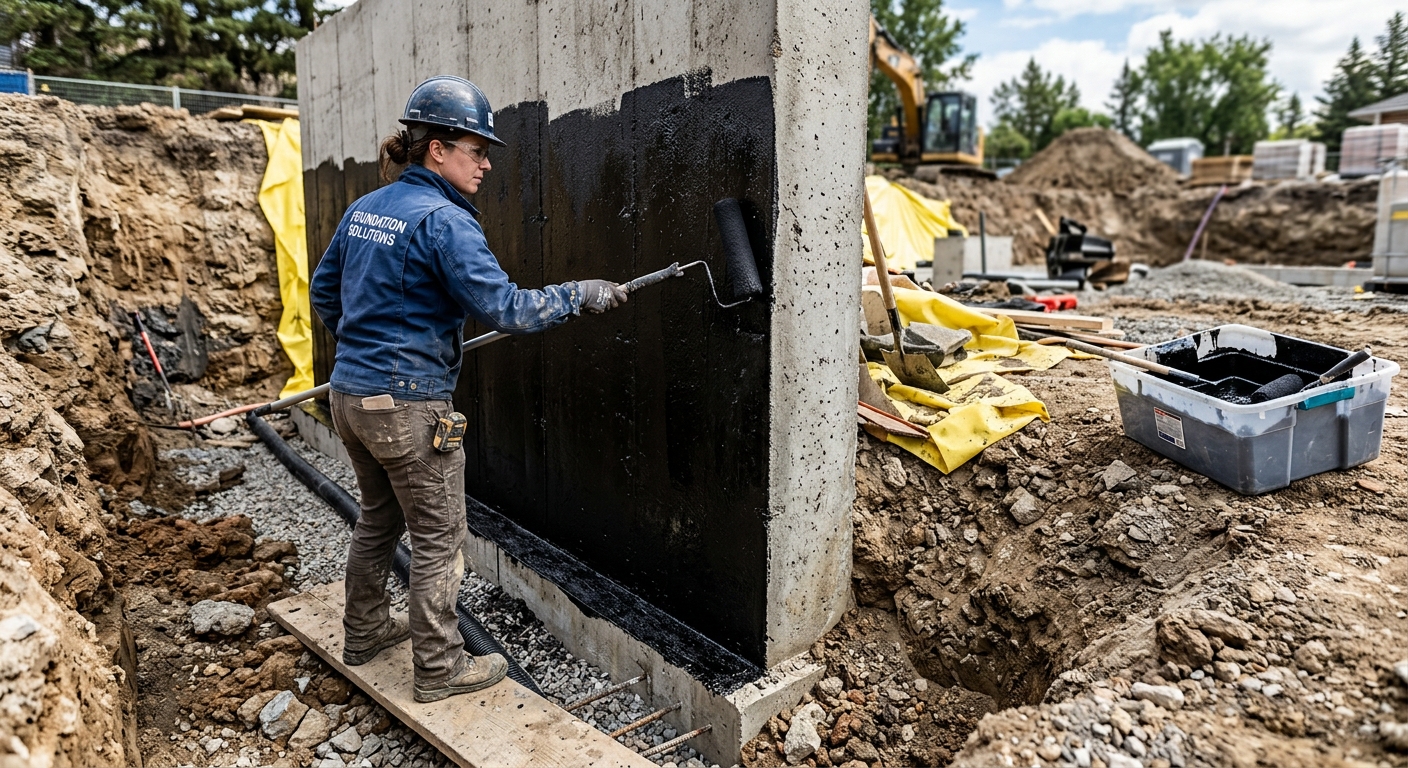
The fundamental difference is that exterior waterproofing targets the water at the source, while interior waterproofing manages water after it has entered the basement. Exterior waterproofing involves full excavation, new membrane, new drainage tile, and backfill—so it permanently reduces the hydrostatic pressure and the chance that water will keep finding cracks and joints. That’s why it’s the most complete option, but it also costs more and creates more landscape disruption.
Interior waterproofing typically uses a perimeter drain channel, a sump pit, and a sump pump to collect and discharge water that penetrates through cracks, tie holes, or weak joints. It can be less invasive, often fitting better when exterior access is limited (driveways, mature landscaping, or tight side yards). However, interior systems don’t stop the wall from being exposed to pressure; they rely on the pump capacity and drainage to keep floors dry.
In Carleton Place’s Eastern Ontario conditions—clay-rich soils, seasonal freeze-thaw, and frequent saturation after wet spells—exterior solutions are often justified when seepage is widespread, when older weeping tile is clearly failed, or when interior drainage has already been overwhelmed. For poured concrete walls, many homeowners see strong results from crack injection paired with a proper drainage plan; for block foundations, interior perimeter drainage is often a practical complement because block mortar joints and micro-paths can persist.
As a real-world example: if you have active seepage across multiple sections of an exterior wall, an exterior program may land in the $12,000–$25,000 band. In contrast, a targeted interior perimeter drain plus sump can fall in the $4,000–$10,000 band, but only if the leakage points are limited and the discharge/outlet strategy is correct.
Because Ontario spring flooding and outages happen, consider sump pump backup. A battery or water-powered backup reduces the “worst-case” risk during power interruptions—especially important when groundwater inflow spikes after a thaw.
| Method |
Best For |
Addresses Source? |
Disruption |
Lifespan |
Price Band |
| Full exterior excavation + membrane |
Widespread seepage, failed weeping tile, persistent hydrostatic pressure |
Yes (source of water entry) |
High |
20+ years (when installed correctly) |
$12,000–$25,000 |
| Interior French drain + sump system |
Limited exterior access or as a complement to sealing |
No (manages after entry) |
Medium |
10–20 years (depends on pump/discharge) |
$4,000–$10,000 |
| Crack injection — epoxy (structural) |
Stable, non-moving cracks where water entry is through fixed pathways |
Partial (seals pathways at the crack) |
Low to medium |
5–15+ years depending on crack stability |
$800–$1,800 |
| Crack injection — polyurethane (active leak) |
Active seepage that needs an expanding, flexible seal |
Partial (seals active pathways) |
Low to medium |
5–15 years (best when paired with drainage strategy) |
$800–$1,800 |
| Interior drain channel only (no sump) |
Light seepage and where gravity discharge is feasible |
No (manages after entry) |
Medium |
Often shorter without sump capacity/reliability |
$2,000–$6,500 |
| Re-grading + downspout extensions |
Runoff-driven dampness, surface water near foundation |
Yes (reduces water reaching foundation) |
Low |
Multi-year (needs maintenance) |
$750–$2,200 |
How to choose a waterproofing contractor in Carleton Place
Choosing the right waterproofing contractor in Carleton Place comes down to verification and clarity. Start by confirming Ontario coverage and competence: ask for their Ontario licensing/credentials (as applicable to their trade and the scope), current liability insurance, and proof of WSIB/WCB coverage. How to check: (1) request a certificate of insurance and verify it’s current and lists the proper insured party; (2) confirm WSIB/WCB clearance or registration status with a recent document; and (3) ensure the quote clearly indicates who is pulling any required permits and inspections.
Next, get 2–3 itemised written quotes. You want labour and material breakdowns (not a single lump sum), including excavation/restoration, membrane/drainage components, discharge routing, and pump specifications if a sump is proposed. Scope matters: read exclusions like “no mould remediation,” “no repairs to discharge lines,” or “disposal not included,” because those items often shift final cost. Also ask for the warranty details—workmanship warranty length, product/manufacturer warranty, and whether the warranty transfers if you sell your home.
Payment schedule should be conservative. Never pay more than 10–15% upfront; use holdback until the work is complete and tested (for example, after the sump is commissioned and checked, or after the interior drain system is verified). In writing, confirm the project timeline with a start date and an estimated completion date, so you can plan around seasonal moisture conditions.
- Verify Ontario licensing/credentials relevant to the scope.
- Confirm liability insurance is active and ask for the certificate.
- Check WSIB/WCB clearance/coverage status with current documents.
- Request 2–3 itemised quotes with labour and materials separated.
- Ask whether permits are included and who pulls them.
- Confirm disposal and site restoration (topsoil, sod/stone/driveway repair).
- Ensure the drainage plan includes discharge routing and outlet approval.
- Match crack repair type to crack behaviour (epoxy vs polyurethane logic).
- Ask for pump model specifications and discharge pipe sizing if a sump is included.
- Ask about sump backup options for power interruptions.
- Review warranty: workmanship term, product term, and transferability.
- Use a payment schedule with small deposit and holdback until completion.
Red flags in Carleton Place include: contractors who won’t provide written scope and permit responsibility; quotes that change significantly after excavation without documented cause; vague warranty wording (“lifetime” without specifics); lack of proof of WSIB/WCB or liability insurance; and dismissing drainage and groundwater discharge design (for example, promising to “seal it” without addressing weeping tile failure or sump discharge).
Frequently asked questions — waterproofing in Carleton Place
Do I need a sump pump in Carleton Place?
Sump pumps are often the right risk-control tool in Carleton Place when water is entering often enough that interior drainage can’t reliably keep up by gravity alone. In the Kingston–Pembroke region, clay-rich soils and seasonal freeze-thaw can increase saturation and seepage after wet periods, so a sump helps manage collected groundwater. If you already see floor drain gurgling, recurring dampness after storms, or water pooling near the perimeter, a sump system may be recommended alongside an interior perimeter drain. Budget-wise, sump pump installation with appropriate controls commonly falls in the $900–$2,200 band, and when combined with interior perimeter drainage it can land in the $4,000–$10,000 range. We also often recommend battery backup on high-water systems, because outages during spring conditions increase the consequence of pump failure.
How does Carleton Place's soil affect my foundation?
In Carleton Place, soil moisture retention is a major waterproofing driver. Much of Eastern Ontario is clay-heavy, which means the soil holds water and can expand when saturated and during freeze-thaw cycles. That expansion can increase lateral pressure against foundation walls and widen existing cracks and joints in poured concrete or block. When original weeping tile systems are older (and many homes pre-date modern drainage upgrades—41.0% built before 1981, Statistics Canada, 2021 Census), water can exploit weak points and create chronic seepage. In practical cost terms, heavier clay and poor drainage often push projects toward exterior excavation and new membrane/drainage tile in the $12,000–$25,000 band, while better-draining sites sometimes allow interior solutions to stay closer to the $4,000–$10,000 range.
Do I need a permit for foundation work in Ontario?
In Ontario, many foundation-related waterproofing and drainage changes require a building permit—especially when excavation is involved, when structural crack repair is significant, or when you change lot drainage patterns. In Carleton Place, homeowners should expect permits for excavation that reworks the foundation, for structural repairs where an engineer may be needed, and for drainage/discharge changes that involve connecting to storm or sanitary systems (municipal approval is typically required for those connections). What often does not require a permit is relatively minor surface work that doesn’t alter foundation drainage or structural elements—like installing downspout extensions or basic re-grading—though you should confirm with your contractor and municipal process. The key is to ask the contractor to specify in writing which permits apply to your scope and who pulls them. If structural work is involved, make sure they can support the engineering assessment and document liability coverage and WSIB/WCB status.
How long does waterproofing last?
Basement waterproofing lifespan depends on whether you addressed the source of water entry or only managed water after it enters. Exterior waterproofing—excavation, membrane, and new drainage tile—typically provides long-term performance when installed correctly, often 20+ years. Interior perimeter drain and sump systems generally manage water well, but their lifespan is more dependent on pump capacity, discharge routing, and whether wall entry points keep worsening due to continued hydrostatic pressure. Crack injection can be durable, but it depends on crack stability; stable cracks sealed with epoxy may last longer, while actively moving cracks treated with polyurethane need a correct drainage strategy to reduce repeat leakage. For budgeting, exterior projects commonly align with the $12,000–$25,000 band, while interior systems commonly align with the $4,000–$10,000 band, reflecting differences in how fully the root cause is resolved.
Can I waterproof my basement from the inside only?
Yes, interior-only waterproofing can work in Carleton Place when the main issue is limited seepage that can be managed with a perimeter drain channel and sump system, or when exterior access is too difficult to excavate. For example, if you have localized wall seepage or dampness near perimeter areas, an interior approach may control water and protect finishes. However, interior work does not stop hydrostatic pressure from acting on the wall; it collects and redirects water after it enters. That matters in clay-rich soils and during freeze-thaw—if the exterior drainage system and weeping tile are failed, wall entry can continue, increasing reliance on pumps and increasing long-term risk. A common approach is combining crack injection (epoxy for stable cracks or polyurethane for active leaks, often near the $800–$1,800 band) with interior drainage. For widespread exterior wall seepage, the more complete fix is usually exterior waterproofing in the $12,000–$25,000 band.
What causes foundation cracks in Carleton Place?
Foundation cracks in Carleton Place are commonly caused by moisture and freeze-thaw movement, soil pressure, and the age-related performance of older foundations. In this area, clay-rich soils can hold water, saturate backfill, and expand during winter cycles, which puts stress on poured concrete and block foundations and can widen hairline cracks over time. Another frequent contributor in older homes is failing original drainage—when weeping tile clogs or breaks, water accumulates near the foundation and exploits weak points like tie holes and joints. Homes built before 1981 (Statistics Canada, 2021 Census) are particularly likely to have drainage systems that are no longer functioning as intended. Cracks also depend on stress type: hairline vertical cracks are often less concerning than significant horizontal or step cracks that suggest structural movement. If your crack pattern looks “structural,” ask for an engineer assessment before sealing so you don’t mask an underlying movement issue.