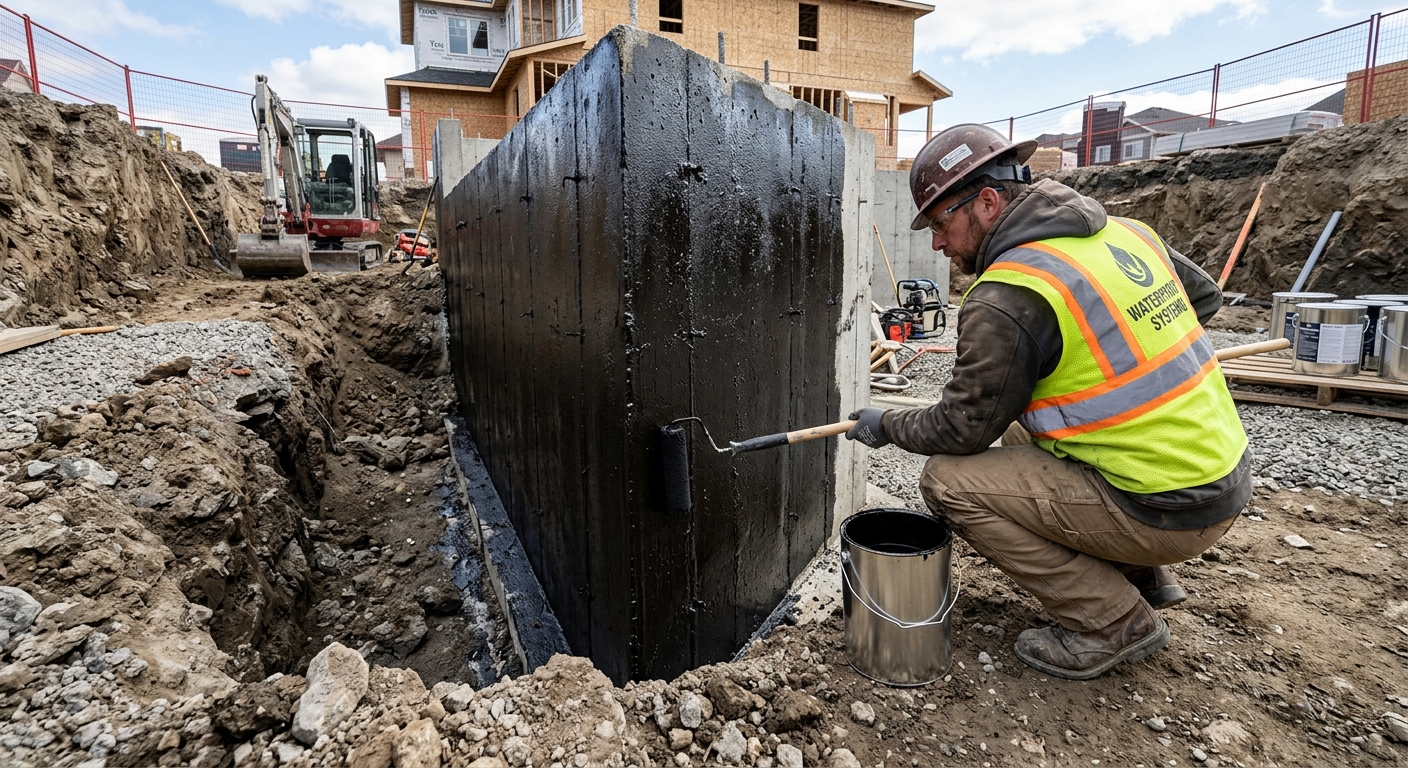
Basement waterproofing options and costs in Kingsville
Kingsville homeowners typically face basement moisture because of the same two forces: seasonal groundwater changes and freeze–thaw stress on older foundations. In Kingsville, more than half of homes were built before 1981, which matters because early damp-proofing and weeping tile systems were often limited compared with today’s full drainage approach. With time, clogged or failed weeping tile and hairline cracking let water find a path, especially when the water table rises in wet stretches.
In the Windsor–Sarnia corridor, soil type and drainage capacity are usually the cost drivers. Much of Essex and Lambton county has fine-textured, poorly drained soils that can keep moisture against foundation walls and increase hydrostatic pressure. That’s why contractors commonly design systems around footing drains and lateral load control—more planning goes into exterior excavation in tight lots, and more checks go into interior drainage when access is constrained.
Demand is especially steady around the older, denser pockets near the downtown core and along established residential streets where landscaping and driveways make exterior excavation harder. You’ll also see higher call volumes after spring thaw and heavy rain events, when seepage problems become obvious and sump pump retrofits are in high demand.
Below is a practical comparison of the most common basement waterproofing methods Kingsville owners are quoted for, and what they generally address.
| Method |
What It Addresses |
Disruption Level |
Durability |
Price Range |
| Exterior excavation + new membrane + drainage tile |
Water entry at the foundation wall (source control) + captures groundwater before it reaches the wall |
High (excavation, backfill, landscaping restoration) |
Long-term when properly detailed for frost-resistant backfill and drainage |
$12,000–$25,000 |
| Interior perimeter drain channel + sump pit |
Water after it enters (collects seepage and relieves hydrostatic pressure inside) |
Medium (interior demolition along perimeter) |
Good, especially when paired with new drainage management outdoors |
$8,000–$18,000 |
| Foundation crack injection (epoxy or polyurethane) |
Crack pathways (epoxy typically targets non-moving structural cracks; polyurethane targets active leaks) |
Low to medium (minor surface prep) |
Moderate to good depending on whether the crack is active and how water pressure behaves |
$600–$2,500 |
| Sump pump installation (primary + battery backup) |
Discharges collected water to prevent floor flooding and reduce back-up risk during power interruptions |
Low to medium (drilling, pit install, discharge line routing) |
Good when sealed properly and maintained; backup improves resilience |
$1,800–$4,500 |
| Window well drain installation |
Water intrusion near egress windows and clogged side drains; reduces splash-in and seepage |
Low to medium (excavation around window well) |
Good when discharge routing and weeping media are done correctly |
$1,200–$3,800 |
| Lot re-grading / downspout extension |
Diverts roof water and improves flow away from the foundation to reduce seepage triggers |
Low (light access and surface work) |
Variable—best as a supporting fix, not the only waterproofing |
$900–$2,600 |
Prices are estimates only and vary by project scope, site access and material selection.
What affects the price of waterproofing in Kingsville
In Kingsville and the wider Windsor–Sarnia region, homeowners can see pricing swing by roughly 30–50% for what looks like the “same” basement job. The difference usually isn’t the product—it’s the site conditions and the engineering choices needed to manage water pressure in local soils.
Three main drivers separate regional costs from a broader Ontario average: soil type, water table behaviour, and freeze–thaw. Clay-heavy or poorly drained soils can expand during freeze–thaw and push laterally against foundation walls, worsening cracks over time. When groundwater levels are higher, sump systems run longer and require larger discharge routing and often more robust drain piping. In areas with poor original drainage, contractors may find that weeping tile is partially or fully failed, which increases the amount of water that must be collected. In markets with older housing stock (common across Kingsville—home age is the norm), contractors also spend more time diagnosing whether leaks are active, static, or both, especially in poured concrete and block foundations.
Here are a few concrete examples of what changes price in Kingsville: (1) A basement with multiple active seepage points may add crack injection labour and extra drainage interception, moving the project from a lower-range interior drain estimate into the upper band (for example, the interior approach band of $8,000–$18,000). (2) If exterior excavation is needed but a deck or driveway sits right over the foundation line, the job often climbs toward the exterior band $12,000–$25,000 because of demolition and restoration. (3) If drainage failures are limited to downspout discharge and shallow grading, costs can stay much closer to the smaller re-grading support range.
Older homes built before 1981 are more likely to have weeping tile that’s aging or clogged, which affects how much water the system must handle—and that directly influences labour time, pipe runs, and the type of sump setup you’ll be recommended.
| Price Factor |
Why It Matters |
Cost Impact |
| Interior vs. exterior approach — interior is less disruptive but addresses symptoms |
Exterior targets the source; interior targets collected seepage after it enters |
Interior can be ~25% to 50% less than exterior when exterior access is difficult |
| Foundation type — poured concrete vs. block vs. stone vs. ICF |
Different crack behaviour and sealing methods; block joints may leak differently |
Block and stone often require more drainage detailing, adding labour |
| Soil type — clay expands more than sand, adding pressure |
Freeze–thaw in clay increases lateral pressure and worsens crack pathways |
More robust drains and crack management can raise the job cost |
| Crack type and length — hairline vs. structural horizontal cracks |
Active leaks and horizontal movement change the repair system and documentation needed |
Structural/active cracks often push pricing toward higher bands |
| Sump pump backup system — battery or water-powered backup needed |
Improves resilience during power interruptions in wet seasons |
Backup can add several thousand dollars depending on pump type |
| Access — landscaping, decks, or driveways must be removed for exterior |
Exterior excavation drives labour and restoration scope |
Deconstruction/rebuild can be a major driver toward the top of exterior pricing |
| Weeping tile age — original tile (60+ years) may be completely failed |
Failed tile means more groundwater must be captured and routed differently |
May increase excavation and drainage pipe quantities |
| Mould or efflorescence remediation required before sealing |
Moisture chemistry needs treatment so sealers and membranes bond correctly |
Additional prep and drying steps increase labour duration and materials |
Permits & regulations in Ontario
In Ontario, many foundation-related waterproofing tasks can require a permit because they involve excavation, drainage alterations, or structural work. Typical examples of work that often requires a permit include: (1) exterior foundation excavation that changes grading and drainage, (2) structural crack repair when the scope includes work beyond surface sealing—especially for horizontal cracks in block walls or signs of movement, and (3) changes to lot drainage patterns, including redirecting downspouts in a way that modifies how stormwater is handled on-site.
Also note that sump pump installations that discharge to a storm system (or that connect/alter drainage ties) commonly require municipal approval. If the plan includes routing discharge safely and legally, the contractor should confirm the approval path before work starts.
For structural crack repairs—particularly where there are larger step cracks, bowing indications, or horizontal movement—an engineer’s assessment is often needed to decide whether underpinning or other structural measures are required. A reputable Kingsville contractor will be able to explain whether the situation is structural, provide engineering support when required, and carry liability insurance plus WSIB/WCB coverage.
How a homeowner verifies it (step-by-step): (1) Ask for the contractor’s Ontario licence/registration details (and the company’s business number if applicable). (2) Request a current certificate of insurance for liability coverage. (3) Ask for WSIB/WCB clearance or evidence of active coverage. (4) Confirm in writing whether a permit pull is included in the quote and who is responsible for submitting it.
Interior vs exterior waterproofing — what does Kingsville need?
Interior and exterior waterproofing both help, but they treat different parts of the problem. Exterior waterproofing—full excavation, new membrane, and new drainage tile—addresses the source by preventing groundwater from reaching the foundation wall. It’s the most permanent fix when you have workable access, but it costs more and temporarily disrupts landscaping, patios, or driveways.
Interior waterproofing—perimeter drain channels, sump pit, and sump pump—doesn’t stop water from pushing through the wall; instead, it captures and manages water after it enters. It’s often less disruptive and faster to install, which is why it’s commonly recommended when excavation access is tight or when additions complicate outdoor work. That said, in Windsor–Sarnia’s freeze–thaw cycle, interior-only systems can still need careful crack management because recurring pressure can worsen pathways over time.
Given Kingsville’s older housing stock (55.7% of homes built before 1981), crack injection and drainage retrofits are frequent. Poured concrete walls often respond well to properly selected crack injection (especially where leakage is occurring through specific cracks rather than widespread seepage). Block foundations are more likely to benefit from an interior drainage complement because mortar joints and block cores can channel moisture differently.
Power reliability matters in spring flooding and wet thaws. A sump pump with battery backup helps prevent flooding when outages occur, and many Kingsville homeowners prefer backup when basement finishing is already in place. As a dollar example, if the exterior solution is quoted near $12,000–$25,000 but the leak is limited to one or two active cracks plus localized seepage, an interior drain approach (often $8,000–$18,000) may be justified to achieve a safe outcome without major excavation. If you have widespread seepage, heavy hydrostatic pressure, or repeated foundation failures, the higher exterior investment is more often the right long-term value.
| Method |
Best For |
Addresses Source? |
Disruption |
Lifespan |
Price Band |
| Full exterior excavation + membrane |
Widespread seepage, high groundwater risk, and when exterior access is practical |
Yes (prevents water reaching wall) |
High |
Long-term when designed for frost-resistant backfill and proper drainage |
$12,000–$25,000 |
| Interior French drain + sump system |
Basements with leaks after water enters, limited exterior access, or partial excavation constraints |
No (manages water after entry) |
Medium |
Good with quality pipe slopes, discharge routing, and pump maintenance |
$8,000–$18,000 |
| Crack injection — epoxy (structural) |
Non-moving structural cracks where water movement is limited or secondary |
Partially (seals pathway) |
Low to medium |
Moderate to long-term if crack is truly stable |
$600–$2,500 |
| Crack injection — polyurethane (active leak) |
Active seepage through cracks, especially during wet seasons |
Partially (seals pathway under pressure) |
Low to medium |
Good when the system stops active flow and pressure is controlled |
$900–$3,200 |
| Interior drain channel only (no sump) |
Light seepage where gravity discharge is feasible and elevations allow |
No |
Medium to low |
Variable—depends on discharge route and ability to handle heavy inflow |
$5,500–$11,000 |
| Re-grading + downspout extensions |
Roof runoff and surface water issues as a contributing cause |
No (reduces triggers) |
Low |
Variable—best as supportive work alongside drainage/waterproofing |
$900–$2,600 |
How to choose a waterproofing contractor in Kingsville
Start by verifying the basics, because waterproofing failures are usually documentation failures as much as workmanship issues. In Ontario, ask for the contractor’s current Ontario business registration/licence details, a certificate of liability insurance, and WSIB/WCB clearance or active coverage proof. How to check: (1) look for the company’s listing/registry information online, (2) verify the insurance certificate is current and matches the legal entity doing the work, and (3) confirm WSIB/WCB coverage is active for the people who will be on your job site.
Next, get 2–3 itemised written quotes. You want a labour + materials breakdown, not a lump sum. Make sure the scope clearly states what’s included: permit pull (if required), excavation/disposal, pipe quantities, filter fabric and drainage stone, any crack injection products, and restoration allowances for floors, insulation, and landscaping. A good quote will also list exclusions such as unexpected foundation conditions found during excavation.
Warranty matters. Ask for the workmanship warranty length and what it covers (for example, rework labour if seepage occurs through a repaired pathway). Also request the manufacturer/product warranty details and whether it’s transferable to future owners. If the quote includes a sump pump, verify the brand and warranty terms.
Payment schedule: never allow large prepayments. A common best practice is keeping upfront payments around 10–15%, with the remainder held back until completion and cleanup are confirmed. Finally, insist on a written timeline: proposed start date, duration, and completion estimate, with allowances for seasonal weather and cure times for membranes or injection systems.
- Request proof of liability insurance (current date and correct company name).
- Confirm WSIB/WCB coverage with clearance evidence before work starts.
- Ask whether the contractor pulls permits or lists “permits included” in the quote.
- Get an itemised scope: excavation, drainage tile/pipe, membrane, stone, fabric, and discharge routing.
- Ensure crack injection type is matched to crack behaviour (epoxy vs polyurethane).
- Clarify disposal: soil removal and debris handling should be listed.
- Ask how they manage cold-weather work (insulation, backfill details, frost protection).
- Verify pump specs if installing a sump: discharge size, check valve, and alarms.
- Ask about backup: battery or water-powered backup and its warranty.
- Confirm how they restore interior finishes (and what “patch only” vs “make good” means).
- Review warranty length and coverage wording in writing (not just “lifetime” claims).
- Use a payment schedule with a holdback until final inspection and documentation are complete.
Red flags in Kingsville: (1) vague scope language like “waterproofing as needed” without specifying methods, (2) refusing to provide insurance/WSIB/WCB proof or documentation, (3) selling exterior excavation when leaks appear localized and stable, without explaining why, (4) claiming one-size-fits-all crack injection without checking whether cracks are active, and (5) asking for most of the payment upfront before any site prep or permit steps.
Frequently asked questions — waterproofing in Kingsville
What drainage issues are most common in Kingsville homes?
In Kingsville, the most common basement drainage complaints tend to show up after spring thaw and heavy rain: seepage along foundation joints, damp patches at the perimeter floor, and water pooling near the lowest wall sections. Many older homes built before 1981 rely on aging or clogged weeping tile, so groundwater pressure finds the easiest paths—often through mortar joints in block walls or through cracks that have widened slightly with freeze–thaw. Landscaping and roof runoff also contribute: if downspouts discharge too close to the foundation or if grading has settled over time, surface water can funnel toward the basement wall.
Contractors in the Windsor–Sarnia corridor commonly respond by combining exterior drainage corrections (where access allows) with interior perimeter drains and sump retrofits. In Statistics Canada terms, Kingsville has 7,015 homeowner households (Statistics Canada, 2021 Census), and that homeowner demand is a big reason these drainage and sump upgrades are so frequent.
How do I choose a waterproofing contractor in Kingsville?
Start with documentation and specificity. In Ontario, you should verify the contractor’s proof of liability insurance and WSIB/WCB coverage, and ensure their scope and method are itemised in the quote (labour plus materials), not just a single price. Ask whether a permit is needed for excavation, discharge routing, or structural crack repairs, and confirm who pulls it. A good Kingsville contractor will also explain whether your situation calls for interior drainage, exterior waterproofing, or both, based on foundation type and whether leaks appear active during wet periods.
Then compare apples to apples: look at details like drainage pipe routing, discharge line design, sump pump model, and whether crack injection is epoxy or polyurethane. If you’re getting quotes, it’s normal for interior systems to land around the interior band of $8,000–$18,000, while exterior projects often fall in the exterior band of $12,000–$25,000 depending on access and excavation scope.
What is a battery backup sump pump and do I need one in Kingsville?
A battery backup sump pump is a secondary power system that helps the pump continue running for a limited time during power outages. In Kingsville, this matters because spring flooding and wet thaws can coincide with storms, and outages can turn a “manageable seepage” scenario into emergency water buildup if the primary power goes out. A backup typically runs when electricity fails, buying you time to restore power and preventing the sump from becoming overwhelmed.
Whether you “need” it depends on your basement use and leak history. If you have finished rooms, a history of floor water during heavy storms, or you already run a primary sump often, backup is usually a practical upgrade. If you rarely have water and the discharge route is well-designed, some homeowners choose to omit backup initially. Either way, discuss run-time expectations and confirm the pump selection matches local inflow.
How much does basement waterproofing cost in Kingsville?
Basement waterproofing cost in Kingsville typically depends on whether you’re controlling water from the outside (exterior) or managing it after it enters (interior). Exterior excavation + membrane + drainage tile projects commonly sit around $12,000–$25,000, especially when access requires removing decks, driveways, or landscaped areas. Interior perimeter drains and sump systems are often quoted around $8,000–$18,000, with the final number influenced by how many walls leak, how much floor perimeter needs demolition, and how complex the discharge routing is.
Smaller scopes—like foundation crack repair—can be far less, commonly $600–$2,500 depending on crack type and length. Always treat the estimate like a range: in Essex/Lambton-area soils, groundwater and freeze–thaw can increase drainage demands if the water table stays high during wet stretches.
Interior vs exterior waterproofing — which is better?
“Better” depends on where the water is getting in and how much water pressure you’re dealing with. Exterior waterproofing is best for long-term source control: it excavates, installs membrane and new drainage tile, and prevents groundwater from reaching the foundation wall. The trade-off is higher cost and more disruption. Interior waterproofing is often the better first choice when excavation access is limited or when you need a solution that relieves pressure right away—perimeter drains and sump systems collect seepage and reduce indoor flooding risk.
In Kingsville’s older housing stock and freeze–thaw conditions, many basements benefit from interior drainage plus crack management, especially for block walls where mortar joints can channel moisture. If your leakage is widespread and clearly linked to groundwater pressure against the wall, exterior systems in the $12,000–$25,000 range can be the more complete solution. If the problem is limited to a few active pathways or localized seepage, interior options around $8,000–$18,000 can deliver strong results without full excavation.
Why is my basement leaking in Kingsville?
Most basement leaks in Kingsville come down to one (or a combination) of these: groundwater intrusion, crack/joint pathways, and runoff that overwhelms nearby drainage. Fine-textured soils and seasonal water-table rises can keep moisture against foundation walls for longer periods. Freeze–thaw then widens existing cracks and stresses joints, especially in older concrete and block foundations—so leaks often become obvious in spring after thaw and heavy rain.
Another common cause is failed or clogged weeping tile. If the original drainage system is past its service life, it can stop relieving groundwater pressure and shift the leak indoors. Roof downspouts that discharge too close to the foundation can also overwhelm grading and push surface water toward the basement wall.
If you’re seeing active seepage after storms, start by identifying where water shows up (wall, corner, floor joint, or window wells). That will help determine whether crack injection, interior drainage, sump upgrades, or a full exterior approach is the most appropriate fix.