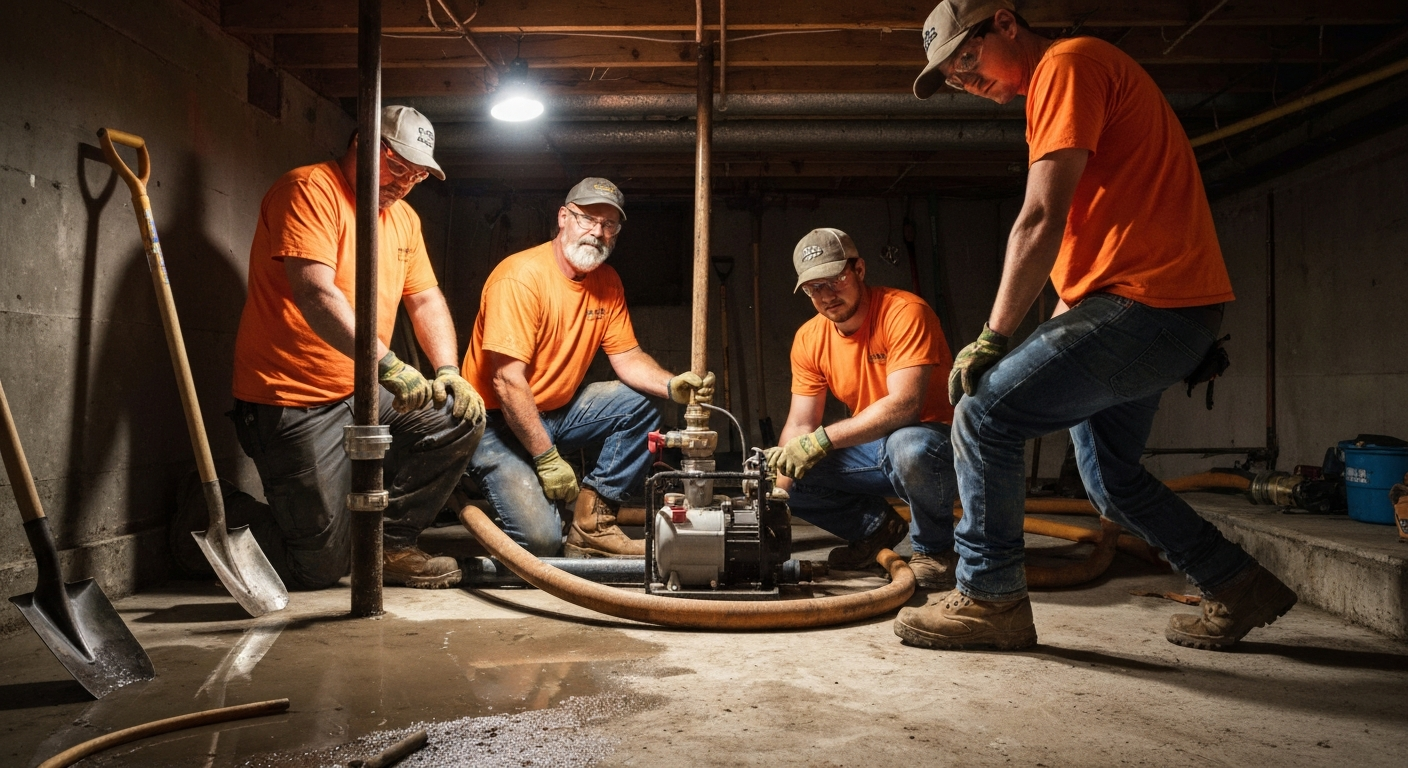
Basement waterproofing options and costs in Tillsonburg
Tillsonburg homeowners usually start shopping for waterproofing after they notice damp drywall corners, musty smells, or water after spring melt—problems that are common in this part of the London economic region. With 49.3% of homes built before 1981 (Statistics Canada, 2021 Census), many basements are still dealing with original or outdated weeping tile, older tar-and-paper style approaches, and foundation drains that have quietly failed over decades. As water pathways clog and expand, contractors often find that a “minor leak fix” can quickly turn into full remedial drainage and foundation stabilization work.
Cost in Tillsonburg is also shaped by local soil and Ontario freeze-thaw. Clay-rich, poorly draining ground can hold water, then shrink and swell with wet/dry cycles, increasing lateral pressure on foundation walls. During Ontario’s freeze-thaw, trapped moisture freezes and widens foundation cracks, which drives up labour time for crack repair and increases the need for either exterior waterproofing or a properly designed interior drainage system with a sump pit. In tighter neighbourhoods near downtown and older pockets of East Tillsonburg, excavation access and landscaping removal are often what push pricing toward the upper end.
Below is a practical comparison of common options you’ll see in Tillsonburg quotes, including typical price bands for this tier. Use it to sanity-check whether the scope matches the problem.
| Method |
What It Addresses |
Disruption Level |
Durability |
Price Range |
| Exterior excavation + new membrane + drainage tile |
Stops water at the source by replacing failed drainage and waterproofing the foundation exterior |
High (excavation, landscaping restoration, disposal) |
Long-term when paired with properly installed drainage |
$12,000–$25,000 |
| Interior perimeter drain channel + sump pit |
Collects seepage after it enters; reduces hydrostatic pressure at the floor perimeter |
Medium (partial interior demolition, mess control required) |
Strong performance with correct pump sizing and discharge routing |
$8,000–$18,000 |
| Foundation crack injection (epoxy or polyurethane) |
Seals cracks; epoxy for dry/structural cracks, polyurethane for active leaks |
Low to medium (surface prep, localized repairs) |
Good when crack type is correctly matched to material and drainage is handled |
$600–$2,500 |
| Sump pump installation (primary + battery backup) |
Prevents water accumulation and basement flooding during power interruptions |
Low to medium (pit excavation, discharge routing) |
Higher reliability with backup system |
$1,500–$3,500 |
| Window well drain installation |
Manages localized water intrusion around egress windows |
Low (localized exterior work or interior adjustments depending on design) |
Good for targeted seepage when tied into proper drainage |
$1,200–$2,900 |
| Lot re-grading / downspout extension |
Moves surface water away from foundation; reduces the “rain load” on drainage |
Low (grading changes, eavestrough downspout upgrades) |
Moderate (depends on long-term maintenance) |
$900–$3,200 |
Prices are estimates only and vary by project scope, site access and material selection.
What affects the price of waterproofing in Tillsonburg
In Tillsonburg and across the London economic region, it’s not unusual to see quotes for the “same” basement leak range 30–50% apart. The difference is usually in site conditions and how much of the water pathway is actually being corrected, not just how a crack or damp spot is sealed. In Ontario, the three biggest cost drivers that often separate regional pricing from the national average are soil type, water table behaviour, and freeze-thaw.
Clay-rich, poorly draining ground is common in parts of this region, and it expands and contracts with wet/dry cycles. That movement can widen existing cracks over time, so a contractor may need to budget for both crack repair and drainage upgrades rather than a single membrane patch. When the local water table sits relatively high—especially after heavy rains and rapid snowmelt—interior systems can require larger sump capacity and more labour for proper discharge routing. Freeze-thaw then adds pressure by widening small foundation cracks; if the original weeping tile is original or near-original (often 60+ years), it may be completely failed or collapsed, raising excavation scope for exterior work or increasing interior excavation for drainage channels.
In Tillsonburg, two common cost examples show up repeatedly: (1) a bungalow with a deeper basement and limited side-yard access typically lands near the upper end of interior work (for instance, closer to $8,000–$18,000) because jackhammering and controlled demolition take longer; (2) a home with surface water tracking down to the foundation (missing downspout extensions or poor grading) may reduce the required waterproofing scope when corrected, sometimes keeping costs closer to smaller upgrades (like $900–$3,200 for re-grading and downspouts) alongside targeted sealing. Meanwhile, older foundations built before the early 1980s can mean more frequent failure points around weeping tile connections, which adds labour before any sealing steps start.
| Price Factor |
Why It Matters |
Cost Impact |
| Interior vs. exterior approach — interior is less disruptive but addresses symptoms |
Exterior addresses water at the source; interior manages water after entry |
Often increases by thousands when excavation is required (exterior commonly $12,000–$25,000) |
| Foundation type — poured concrete vs. block vs. stone vs. ICF |
Crack patterns and how walls move changes the waterproofing method |
Poured concrete often supports crack injection + targeted drainage; block may require more interior drainage detailing |
| Soil type — clay expands more than sand, adding pressure |
Clay retains moisture and increases lateral pressure on foundations |
Higher likelihood of needing drainage upgrades alongside sealing |
| Crack type and length — hairline vs. structural horizontal cracks |
Structural movement needs a different plan than cosmetic sealing |
Structural evaluation and more labour can move costs toward higher bands |
| Sump pump backup system — battery or water-powered backup needed |
Reduces flood risk during outages in spring and during heavy weather |
Adds cost (typical pump scope may sit around $1,500–$3,500 depending on backup) |
| Access — landscaping, decks, or driveways must be removed for exterior |
Tight access can increase excavation time and restoration costs |
Can push exterior jobs toward the upper end in low-access lots |
| Weeping tile age — original tile (60+ years) may be completely failed |
Collapsed tile changes how much excavation and replacement is needed |
Higher scope and longer schedules |
| Mould or efflorescence remediation required before sealing |
Sealers and membranes don’t bond well over active contamination |
Extra prep steps can add days and cost, especially with widespread staining |
Permits & regulations in Ontario
In Ontario, certain waterproofing and drainage tasks cross into “work that typically requires a permit,” especially when you’re modifying the building envelope near the foundation or changing drainage patterns around it. In most cases, foundation excavation, repair of structural cracks, and changes to lot drainage (for example, substantial re-grading or altering how water leaves the site) are commonly handled under the permit process. Sump pump installations that connect to municipal sewer systems typically require municipal approval before the discharge is tied in.
For structural crack repair—such as horizontal cracks in block walls, major step cracks, or any sign the wall has shifted—an assessment by a qualified structural professional is often needed first. The goal is to confirm whether the waterproofing scope is enough or whether underpinning or additional structural work must be included. Before you sign, ask whether the contractor has access to engineering support and whether the job plan references the engineer’s recommendations.
To verify a contractor in Tillsonburg, start with (1) Ontario licensing/registration info via the province’s contractor registry or the relevant trades registry listed by your contractor; (2) your certificate of insurance—request a current COI showing liability coverage; and (3) WSIB/WCB clearance documentation (the clearance letter or evidence of coverage). Make sure the COI and WSIB/WCB proof match the legal company name on the quote and contract, and keep copies for your records.
Interior vs exterior waterproofing — what does Tillsonburg need?
The key difference is where the water is controlled. Exterior waterproofing involves excavating around the foundation, installing new waterproofing membrane and drainage tile, then backfilling and restoring landscaping. Done correctly, it stops water at the source and reduces the hydrostatic pressure that drives seepage. The trade-off is cost and disruption: excavation in a tight lot near older neighbourhoods can mean more labour, more disposal, and more restoration.
Interior waterproofing (perimeter drain channel and a sump pit with a properly sized sump pump) manages water after it enters the basement. It reduces pooled water and can lower pressure at the floor edge, but it doesn’t eliminate the pressure on the wall itself the way exterior systems do. For Tillsonburg’s clay-rich soils and Ontario freeze-thaw, interior systems can still work very well—especially when paired with proper crack repair and ensuring downspouts and grading keep surface runoff away from the foundation.
In practice, poured concrete walls often respond well to crack injection (because you can match material to crack behaviour and then manage water entry around it). Block foundations often benefit from interior perimeter drainage as a practical complement, particularly if exterior access is limited or if the existing weeping tile is unknown or clearly failed. Because spring flooding and power interruptions are a real concern, backup protection is worth discussing: a primary sump pump with a battery backup helps during outages, while exterior discharge routing needs to be designed to avoid re-entering water into the foundation.
Example: if you’re seeing dampness along one wall line and inspection shows failed footing drainage, a full exterior dig may land in the $12,000–$25,000 range. If, however, you have localized seepage and clear evidence the main entry is at the perimeter floor, an interior perimeter drain approach may be justified around $8,000–$18,000. But if there’s widespread exterior water pressure from high water table conditions, interior-only solutions can cost you more in the long run through higher pump run times and repeated crack widening.
| Method |
Best For |
Addresses Source? |
Disruption |
Lifespan |
Price Band |
| Full exterior excavation + membrane |
Homes with active seepage from outside, failed weeping tile, and signs of hydrostatic pressure |
Yes (stops water at the foundation exterior) |
High (excavation and landscape restoration) |
Long-term when tied to properly functioning drainage |
$12,000–$25,000 |
| Interior French drain + sump system |
Basements with seepage and limited exterior access or where owners want less disruption |
No (manages water after entry) |
Medium (interior demo and pump installation) |
Very good with correct pump sizing and discharge |
$8,000–$18,000 |
| Crack injection — epoxy (structural) |
Dry or non-active structural cracks where water isn’t actively running |
Partial (seals pathways; still needs drainage strategy) |
Low (localized prep) |
Good when crack movement is stable and matched to material |
$600–$2,500 |
| Crack injection — polyurethane (active leak) |
Cracks with active seepage or damp flow |
Partial (seals active pathways; still improves overall conditions) |
Low to medium (surface access and prep) |
Good for active leaks when drainage and crack type are correctly diagnosed |
$800–$3,000 |
| Interior drain channel only (no sump) |
Small seepage issues where gravity discharge is feasible and volumes are low |
No (collects water inside) |
Medium to low (localized demolition) |
Moderate (depends on discharge and daily conditions) |
$4,000–$9,500 |
| Re-grading + downspout extensions |
Surface water management contributing to dampness and efflorescence |
Yes (reduces how much water reaches the foundation) |
Low (minor excavation and landscaping touch-ups) |
Moderate (requires occasional maintenance) |
$900–$3,200 |
How to choose a waterproofing contractor in Tillsonburg
Start by confirming the contractor is set up to work safely and legally in Ontario. Ask for their certificate of insurance and make sure the coverage limits are current and active. For WSIB/WCB, request the clearance letter or proof of coverage directly—don’t rely on verbal assurances. If the contractor performs work that requires specific licensing under Ontario trade rules, verify the correct business name on the quote matches what you find on the applicable Ontario registry for that trade.
Then get 2–3 itemised written quotes that break down labour and materials. A good quote lists what’s being removed, what’s being installed (membrane/drain tile/pumps/crack injection materials), how discharge will be routed, and what’s included in disposal and backfill. Confirm whether the contractor handles permits (if required) or coordinates the paperwork for you. Look for clear exclusions: for example, repairs to drywall, flooring replacement, sump discharge line tie-ins, or restoring landscaping to its original grade level.
Warranty matters in waterproofing. Ask for the workmanship warranty length, what manufacturer warranties apply to the products, and whether warranties are transferable if you sell your home. Discuss the payment schedule too: for most residential projects, keep deposits conservative—commonly no more than 10–15% upfront—then hold back payment until key milestones are complete (rough-in inspections, pump testing, and final documentation).
Finally, insist on a written start date and completion estimate. In Tillsonburg’s spring freeze-thaw window, weather and curing times can impact schedules; reputable contractors plan around that and communicate delays before they happen.
- Verify the contractor’s business name matches the insurance and any registry listings.
- Request a current COI showing liability insurance.
- Ask for WSIB/WCB clearance proof (clearance letter or coverage evidence).
- Insist on an itemised quote (labour vs materials, not one lump number).
- Confirm whether disposal/soil removal is included.
- Confirm permit responsibility: what the contractor pulls vs what the homeowner pulls.
- Ask how discharge will be handled (avoid re-entry; specify routing).
- Check that sump pump specs match your basement layout (pit size, float switch, discharge line size).
- Require pump testing and documentation before close-in.
- Ask whether they include backup power (and what type) if you’re near spring melt risk.
- Get warranty details in writing: workmanship, product, and transferability.
- Do not approve payment terms that require large upfront cash (keep to 10–15% maximum upfront).
Red flags we see in the Tillsonburg market: (1) a contractor who promises a “one-size-fits-all” fix without inspecting drainage pathways; (2) quotes that skip mention of sump discharge routing or backup power when pump work is proposed; (3) vague scope language like “apply membrane” without specifying drainage tile replacement or crack preparation; (4) no WSIB/WCB proof or outdated insurance certificates; and (5) warranties that aren’t specific about coverage length and workmanship/product limits.
Frequently asked questions — waterproofing in Tillsonburg
Do I need a sump pump in Tillsonburg?
It depends on how water is getting into your basement and whether it’s capable of draining by gravity. In Tillsonburg, many homes sit on clay-rich, poorly draining ground where the water table can rise after heavy rains and rapid snowmelt. When that happens, an interior perimeter drain may fill quickly and a sump pump becomes the reliable “engine” that keeps the floor perimeter dry. If you’re seeing recurring dampness, rising water lines, or water around multiple perimeter sections, plan on a sump as part of the solution. If quotes are proposing only crack injection, ask how they’ll manage bulk water—sometimes you’ll see sump scopes in the $1,500–$3,500 range, especially when backup is included. Also ask about power: spring conditions can coincide with outages, so a battery backup can be a worthwhile add-on.
How does Tillsonburg's soil affect my foundation?
Tillsonburg foundations are commonly affected by soils that hold water longer. Clay-heavy ground can absorb moisture, then shrink when it dries and swell when it re-wets, pushing and pulling against foundation walls over time. That movement can worsen existing cracks, and Ontario’s freeze-thaw cycles add another stressor by trapping moisture in small openings, then freezing and expanding it. You’ll often see this as hairline crack widening, damp corners, or efflorescence that appears seasonally. If your home is from the period when original weeping tile was installed or used in early systems—many pre-1981 homes are still in this category—drains can be clogged or collapsed, turning “slow seepage” into higher-volume seepage. The fix isn’t only sealing; it’s typically pairing crack repair with drainage upgrades so the soil no longer feeds water pressure.
Do I need a permit for foundation work in Ontario?
In Ontario, permit needs vary by the type of work and the extent of excavation or drainage changes. Foundation excavation and foundation crack repairs that touch structural elements (for example, major step cracks or horizontal cracks) are commonly handled under permit processes. Sump pump systems that discharge to municipal sewer systems also require municipal approval before you connect. For your Tillsonburg project, the best approach is to ask the contractor to specify what permits they will pull (or coordinate) and what the homeowner must handle. A reputable waterproofing contractor will explain the steps clearly and provide documentation. Before signing, verify the contractor has engineering support where structural assessment is required, and confirm they carry liability insurance and WSIB/WCB coverage. If the quote doesn’t mention permits at all, ask direct questions—“Is a permit required for this scope, and will you manage it?”
How long does waterproofing last?
When waterproofing is designed for the actual cause of water entry and installed with correct drainage, performance can last many years—often the lifespan of the system itself rather than just a single season. The longevity depends on soil behaviour (especially clay shrink/swell), whether the weeping tile or exterior drainage is truly restored, and whether the sump and discharge routing work reliably during heavy rain and spring melt. Interior solutions can be extremely effective, but they typically rely on an active drainage pathway and dependable pump operation; if pump size or discharge routing isn’t right, water can return during peak periods. Exterior systems are generally the most permanent approach because they address water at the foundation exterior, commonly in the $12,000–$25,000 band. Regardless of option, ask for written warranty terms for workmanship and product, and ensure you receive close-in photos and documentation of pump testing where applicable.
Can I waterproof my basement from the inside only?
Yes, many Tillsonburg basements can be improved from the inside—especially when the main problem is seepage at the perimeter floor and exterior access is limited. Interior perimeter drains and a sump pit manage water after it enters, which reduces pooled water and can help control musty odours and damp drywall. Interior-only work is usually less disruptive than exterior excavation and can fit budgets in the $8,000–$18,000 range depending on size and conditions. However, interior solutions do not remove hydrostatic pressure on the foundation wall in the same way exterior systems do, so they must be paired with proper crack diagnosis and, where needed, crack injection matched to crack behaviour. If you have evidence of high hydrostatic pressure or widespread exterior failure, an exterior approach may be the more durable long-term fix. A good contractor will recommend the approach after inspecting drainage pathways, crack types, and signs like efflorescence patterns.
What causes foundation cracks in Tillsonburg?
In Tillsonburg and the London region, foundation cracks commonly come from soil moisture cycling, freeze-thaw movement, and drainage failure around the foundation. Clay-rich soils can expand when wet and contract when dry, exerting lateral pressure on basement walls and widening existing cracks over time. During Ontario’s freeze-thaw, trapped moisture freezes, expands, and pushes crack openings wider, especially if the crack is actively wet. Older homes—many built before 1981—are more likely to have failing or original drainage systems, which increases the amount of water available to seep and freeze. Cracks can also result from settlement or structural movement; horizontal cracks in block walls and major step cracks should be assessed for structural implications before you seal anything. The right remedy depends on the crack type: epoxy injection often suits stable/dry structural cracks, while polyurethane is typically used where there’s active seepage.