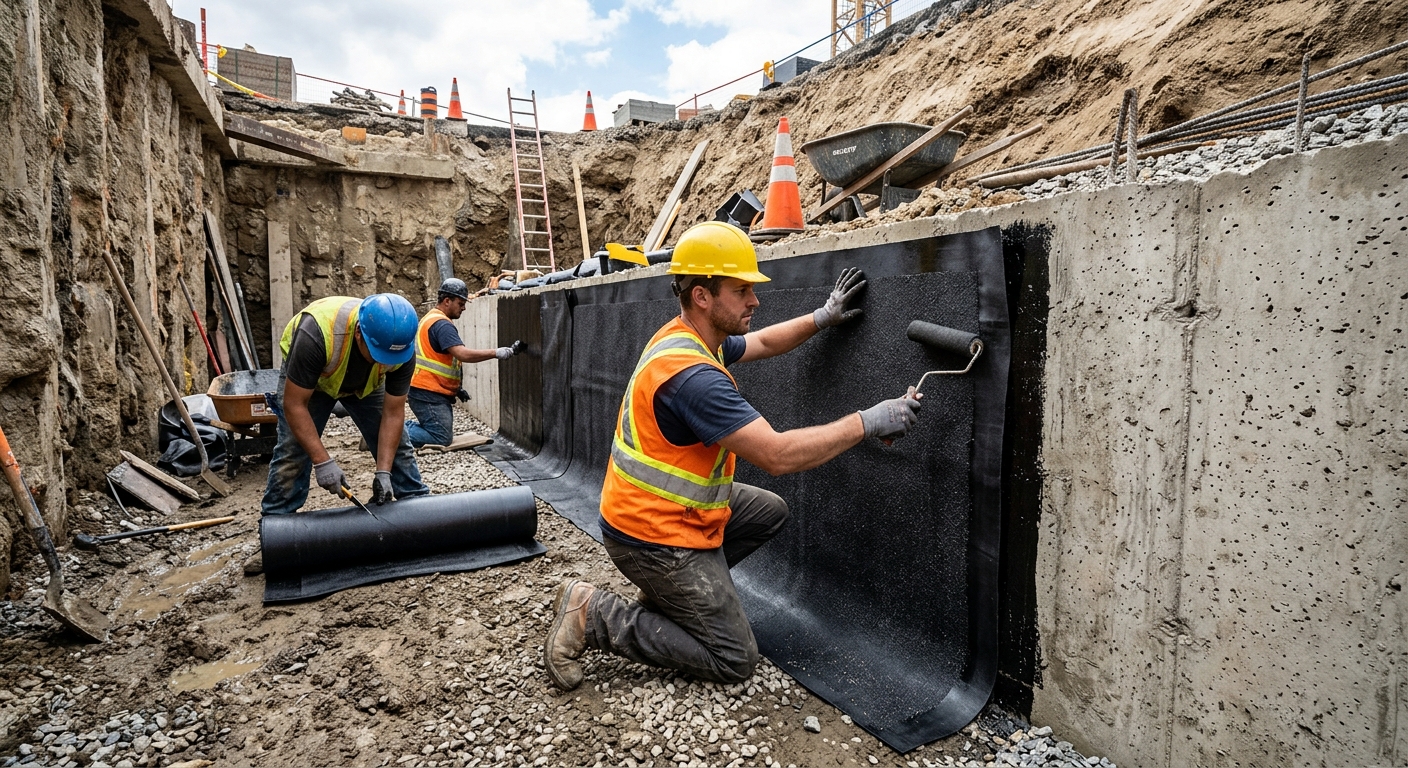
Basement waterproofing options and costs in Oakridge
In Oakridge, homeowners typically look at waterproofing options in a predictable sequence: first stop water entry, then manage any water that does arrive, and finally protect finishes once the basement is dry again. With Oakridge’s population at 13,845 (Statistics Canada, 2021 Census), there’s consistent demand for contractors across the GTA, especially where tight lots limit exterior access. In the 1960–1980s and post-war housing stock common around Toronto, original systems (like early plastic drains or older clay weeping tile) were often installed for different soil and groundwater conditions than what owners see today—so failure is frequent even when walls don’t look “broken.”
Toronto-area freeze–thaw cycles also matter for cost: small defects that start as damp patches can widen into active seepage after a few winters, which may change the scope from crack repair alone to full perimeter drainage. Costs can rise when excavation is constrained by decks, additions, or shared driveways common in dense neighbourhoods—contractors often need more hand-digging and careful backfilling around footings.
In Oakridge, work is especially in demand in older pockets with long-standing weeping tile—many homeowners notice ongoing dampness, efflorescence, and “mysterious” sump discharge during spring melt and heavy rain events. The next step is matching the symptoms to the right method, which is why comparing options side-by-side helps. Review the table below to see typical addresses, disruption, durability, and price bands for common approaches in the Toronto market.
| Method |
What It Addresses |
Disruption Level |
Durability |
Price Range |
| Exterior excavation + new membrane + drainage tile |
Hydrostatic pressure and water entry through the foundation perimeter; replaces failed weeping tile; adds membrane system and proper discharge |
High (excavation, landscaping restoration, disposal) |
15–25 years (often longer with correct backfill and drainage) |
$7,000 – $25,000 |
| Interior perimeter drain channel + sump pit |
Bulk water after it enters; collects seepage at the floor/wall joint; reduces basement flooding risk |
Medium (floor saw-cutting and jackhammering) |
10–20 years (depends on drain function and pump maintenance) |
$3,500 – $15,000 |
| Foundation crack injection (epoxy or polyurethane) |
Isolated leaks through cracks; restores continuity and stops active seepage when used correctly |
Low to Medium (surface prep, small drilling pattern) |
5–15 years (varies by crack type and wall movement) |
$600 – $3,000 |
| Sump pump installation (primary + battery backup) |
Reduces failure risk during power outages or heavy inflow; controls water level in the sump pit |
Low to Medium (pit work, discharge line, electrical) |
8–15 years (pump life); backup extends resilience |
$800 – $3,500 |
| Window well drain installation |
Water from landscaping/grade entering window wells; reduces mould and water staining around basement bedrooms |
Medium (excavation around window well) |
10–15 years |
$1,200 – $6,500 |
| Lot re-grading / downspout extension |
Redirects roof and surface runoff away from foundation to reduce seasonal water pressure |
Low (topsoil/stone work) |
3–10 years (depends on maintenance and soil settling) |
$900 – $4,500 |
Prices are estimates only and vary by project scope, site access and material selection.
What affects the price of waterproofing in Oakridge
In Oakridge and the broader Toronto region, two contractors can quote the “same” basement leak differently because the real drivers are site conditions, access, and the type of water problem—not the description on your call sheet. It’s common to see variations of 30–50% across Toronto-area jobs because excavation time, disposal, and engineering-level decision-making (for crack repair or drainage design) can change dramatically between homes.
Three factors separate regional pricing from the national average: soil, water table, and freeze–thaw. In Oakridge, many properties sit on mixed glacial till and dense clay pockets that hold water and expand when saturated; that lateral pressure worsens crack activity. When freeze–thaw cycles repeat through winter, minor defects can open wider—often turning “dry most of the year” into recurring seepage. In areas with a higher effective water table, sump operation increases and interior drainage systems require correctly sized sumps, piping, and discharge routes to manage higher inflow.
Here are a few concrete examples we see locally. If your weeping tile is original (often 60+ years) and partially collapsed or clogged, exterior excavation may be the only way to restore perimeter drainage correctly—pushing many projects into the $7,000 – $25,000 exterior band. If instead you already have decent exterior grading but the basement still shows efflorescence at a specific floor edge, an interior perimeter drain + sump can sometimes land in the $3,500 – $15,000 range, because we’re addressing water after it enters rather than digging around the entire perimeter. Conversely, isolated hairline cracks with active seepage may be treated with targeted injection within the $600 – $3,000 band, which is why crack type and length matter. That same local foundation age often correlates with higher frequency of failing drainage, which changes how much work is needed before sealing.
| Price Factor |
Why It Matters |
Cost Impact |
| Interior vs. exterior approach — interior is less disruptive but addresses symptoms |
Exterior stops source hydrostatic pressure; interior manages collected water after entry |
Can shift cost by several thousand dollars; exterior typically higher |
| Foundation type — poured concrete vs. block vs. stone vs. ICF |
Crack behaviour and sealing compatibility vary by foundation material |
Block and older stone often need more drainage-oriented solutions |
| Soil type — clay expands more than sand, adding pressure |
Clay saturation increases lateral wall pressure and can defeat “light” fixes |
Higher excavation and/or drainage sizing effort |
| Crack type and length — hairline vs. structural horizontal cracks |
Structural movement may require engineering/underpinning before sealing |
Targeted injection stays lower; structural work raises total cost |
| Sump pump backup system — battery or water-powered backup needed |
Power interruptions during spring melt can quickly overflow basements |
Adds equipment and installation labour to interior systems |
| Access — landscaping, decks, or driveways must be removed for exterior |
More hand-digging, more restoration, more disposal |
Often the biggest swing in excavation quotes |
| Weeping tile age — original tile (60+ years) may be completely failed |
Old drains are frequently clogged/collapsed, requiring replacement or full re-route |
Exterior drainage replacement increases scope |
| Mould or efflorescence remediation required before sealing |
Sealing over active moisture contamination can lead to odours and reoccurrence |
May add cleaning, drying time, and specialty materials |
Permits & regulations in Ontario
In Ontario, certain foundation and drainage-related work typically requires a building permit, especially where you’re altering structural elements or changing how water is managed at the lot line. In most Oakridge projects, foundation excavation and re-waterproofing that involves exposing and rebuilding parts of the foundation perimeter commonly fall under permit requirements. Structural crack repair is another area where permits are frequently required—particularly when you’re dealing with horizontal cracks, major step cracks in block walls, or any sign of structural movement that may call for underpinning or engineered repairs. Sump pump installations that discharge to municipal systems (storm or sanitary) usually require municipal approval before connection.
Step-by-step for homeowners: first, ask your contractor to provide their permit plan and confirm who pulls the permit (you or they), and whether engineering sign-off is included for structural crack cases. Next, verify licensing and coverage before work starts. Check the Ontario online registry for the contractor’s relevant business licensing/registration details, then request a current certificate of insurance (liability) showing adequate coverage for your address. For WSIB/WCB coverage, ask for their clearance letter or proof of account standing, and confirm the coverage applies to the employees doing the waterproofing scope. For anything involving engineering assessment, verify the contractor names how engineer support is obtained and how it will be documented in writing.
If a contractor avoids permits, can’t show insurance/WSIB documentation, or won’t discuss engineering triggers for structural cracks, treat that as a major warning sign in Ontario’s insured-work environment.
Interior vs exterior waterproofing — what does Oakridge need?
The fundamental difference between exterior and interior waterproofing is “where the fix lives.” Exterior waterproofing means full excavation, new membrane, new drainage tile, and proper backfill—so you’re addressing the source of water entry and reducing hydrostatic pressure at the wall. It’s more expensive and disruptive because excavation is time-consuming and landscaping restoration is part of the real cost. Interior waterproofing typically includes a perimeter drain channel and a sump pit/pump—so you manage water after it enters the basement, without stopping the soil water pressure at the exterior wall itself.
In Oakridge’s Toronto climate and soil conditions (mixed till with dense clay pockets and freeze–thaw cycles), exterior solutions tend to perform best where the effective water pressure is persistent or where older drainage systems have failed. However, full excavation can be prohibitive on tight lots, under decks, or where additions limit access—so interior systems become the practical option for chronic seepage. Poured concrete walls often respond well to the right sequence of crack injection (especially when movement is minimal), while block foundations often need interior drainage as a practical complement because mortar joints and block interfaces can pass water even when the wall looks intact.
Power resilience matters too. Ontario basements can see rapid inflow during spring melt, and outages—while not constant—are frequent enough that a battery backup for a sump pump is worth discussing when you’re already in the “interior system” budget range. For example, an exterior job might land in the $7,000 – $25,000 range, but if your symptoms are limited to one area and your site doesn’t allow excavation, interior waterproofing can be a justified trade-off—often in the $3,500 – $15,000 band when we design the drain slope, sump size, and discharge correctly.
| Method |
Best For |
Addresses Source? |
Disruption |
Lifespan |
Price Band |
| Full exterior excavation + membrane |
Persistent seepage, high lateral pressure, failing weeping tile, chronic dampness across multiple walls |
Yes |
High |
15–25 years |
$7,000 – $25,000 |
| Interior French drain + sump system |
Basement flooding risk, clogged weeping tile, limited exterior access, chronic seepage at perimeter |
No (controls water after entry) |
Medium |
10–20 years |
$3,500 – $15,000 |
| Crack injection — epoxy (structural) |
Non-moving, water-retaining cracks where the wall plane is stable |
Partially (stops paths through the crack) |
Low |
5–15 years |
$600 – $2,500 |
| Crack injection — polyurethane (active leak) |
Active seepage through cracks where water is currently passing |
Partially (stops active path) |
Low to Medium |
5–15 years |
$800 – $3,000 |
| Interior drain channel only (no sump) |
Minor seepage/dampness where gravity discharge or limited collection is workable |
No |
Medium |
5–12 years |
$1,800 – $6,500 |
| Re-grading + downspout extensions |
Surface water issues, seasonal wet spots near perimeter, improper roof runoff management |
Helps reduce entry (not a full seal) |
Low |
3–10 years |
$900 – $4,500 |
How to choose a waterproofing contractor in Oakridge
When you’re hiring waterproofing help in Oakridge, the best quotes come from contractors who can show proof—not just promise. Start by verifying Ontario coverage and risk management. Request a current certificate of liability insurance (with your address listed or clearly covering your project) and confirm the policy is active for the work being performed. For WSIB/WCB, ask for a clearance letter or proof of account standing for the trades involved; don’t accept verbal assurances. If the contractor is proposing structural crack work, confirm they have engineering support available and can document recommendations in writing.
Next, get 2–3 itemised written quotes. You want a breakdown of labour, materials, and what’s included for disposal, patching, and drainage discharge. Avoid lump-sum quotes that don’t describe whether they’re replacing weeping tile, installing a membrane system, or adding a sump pit and discharge line. Read the scope carefully for exclusions: Is mould remediation included if efflorescence is present? Is permit pulling included? Is the landscaping restoration allowance specified for exterior work? Confirm warranty details: workmanship warranty length (often several years), manufacturer warranty on membranes/drain components, and whether warranties transfer if you sell the home.
For payment, never pay more than 10–15% upfront. Hold back a portion until the job is complete and tested (for interior drains, that often includes water testing or demonstrating proper discharge). Also secure the timeline in writing—start date and a completion estimate—so delays don’t leave your basement open longer than necessary.
- Ask for a site visit and written moisture/crack assessment plan, not just a quick pricing call.
- Confirm whether the contractor will test discharge flow (not just install piping).
- Verify permit responsibility in writing (who pulls, what’s included).
- Request insurance certificate and WSIB/WCB clearance letter before any work starts.
- Ensure the quote lists specific products: membrane type, drainage board, drain pipe size, sump model.
- Confirm disposal and restoration are included or priced as separate line items.
- Check whether cracks will be assessed for movement (especially for block walls).
- Ask what happens if additional cracking or failing drainage is uncovered during excavation.
- Confirm warranty terms for workmanship and whether they’re transferable to new owners.
- Make sure a maintenance recommendation is provided (pump testing interval, backup checks).
- Use a payment schedule with small deposits and a final holdback until completion.
- Get a written start/finish schedule and weather/curing considerations for sealants.
Red flags in Oakridge: a quote that skips inspection and directly recommends full excavation; promises of “one-and-done” waterproofing without discussing sump/power or drainage discharge; no written scope for disposal/landscaping restoration; refusal to provide insurance/WSIB documentation; and warranty language that only covers materials (not labour) or won’t specify length and transferability.
Frequently asked questions — waterproofing in Oakridge
How does Oakridge's soil affect my foundation?
Oakridge foundations often face challenging soil behaviour because Toronto-area properties can sit on mixed glacial till with dense clay pockets. Clay holds water when saturated, and during freeze–thaw it can expand and exert lateral pressure against basement walls. That pressure can worsen small defects—hairline cracks, cold joints, and mortar interfaces—so a seep that looks minor can become an active leak over a few winters. If you’re seeing efflorescence or damp patches along the perimeter, it’s commonly tied to hydrostatic pressure rather than a single “broken” spot. In practical terms, that’s why we match solutions to drainage failures: exterior excavation with membrane and drainage tile is often the most complete source control, while interior perimeter drains and sump systems can be the right approach when excavation access is limited.
Do I need a permit for foundation work in Ontario?
In Ontario, permit needs depend on what you’re doing. Foundation excavation and changes to lot drainage often require a building permit, and structural crack repair—particularly for horizontal cracks in block walls or signs of movement—commonly triggers additional requirements such as engineer assessment. Sump pump installations that connect to the municipal storm or sanitary sewer also typically require municipal approval. For Oakridge homeowners, the easiest way to confirm is to ask the contractor to state: (1) whether they pull permits or you do, (2) what specific items require a permit, and (3) whether engineering sign-off is included when structural triggers appear. If a contractor won’t discuss permits or can’t clearly identify permit-triggering tasks in the written scope, that’s a red flag.
How long does waterproofing last?
How long waterproofing lasts depends on the system and whether water entry is truly controlled. Exterior waterproofing (full excavation, membrane, and drainage tile) is built for longer-term performance—often 15–25 years—because it targets hydrostatic pressure at the source. Interior systems manage water after it enters, so longevity typically falls in the 10–20 year range when the drain slope is correct and the sump pump is maintained. Crack injection can be durable too, but it’s the most condition-dependent option: if the crack is active and keeps moving, sealing performance can shorten; if it’s stable, injection can last longer. As a reference point for Oakridge projects, exterior work commonly sits in the $7,000 – $25,000 band, while interior perimeter drainage and sump solutions often land in the $3,500 – $15,000 band—each reflects different long-term control.
Can I waterproof my basement from the inside only?
Yes, you can waterproof from the inside only in many Oakridge cases—especially when exterior access is constrained by decks, landscaping, additions, or shared driveways. Interior waterproofing usually uses a perimeter drain channel and a sump pit/pump to collect seepage and lower hydrostatic pressure at the basement floor. It’s effective for chronic dampness and seasonal seepage when the source water still exists outside the wall. What interior work won’t do is stop lateral soil pressure from acting on the foundation itself, so you may still see movement-related crack issues if the crack is structural. If you have active leaks at a specific crack, targeted injection can sometimes be combined with an interior drainage plan. For comparison, interior approaches typically cost less than full exterior excavation, often within the $3,500 – $15,000 band depending on scope.
What causes foundation cracks in Oakridge?
In Oakridge, foundation cracks are commonly tied to soil expansion and freeze–thaw movement, especially where dense clay holds water around the foundation. As moisture saturates the soil, clay can expand and increase lateral pressure against foundation walls; during cold periods, freeze–thaw cycles can widen existing micro-cracks in concrete and block foundations. Settlement can also contribute, particularly in older homes where drainage around the perimeter has been compromised and original weeping tile or early drains are partially clogged. The key is identifying crack type: hairline vertical cracks may be more manageable; horizontal cracks, major step cracking, or cracks that change over time can indicate structural movement and need a more careful approach. That’s why contractors should assess before recommending injection—epoxy for stable cracks or polyurethane for active seepage—rather than assuming one treatment fits all.
How do I compare waterproofing quotes?
Comparing quotes is easier when you force the scope into the same categories. In Oakridge, ask each contractor for an itemised breakdown: excavation vs interior work, membrane/drainage components, sump pit and pump model (including backup if offered), crack injection type, and disposal/restoration allowances. Confirm what’s excluded (mould remediation, permit pulling, engineering support, and landscaping restoration limits). Make sure each quote specifies discharge location and method for sump systems, and whether testing/water demonstration is included. Compare warranties separately: workmanship warranty length, manufacturer warranty, and whether warranties transfer to a new owner. Finally, check the number itself against the local bands—exterior excavation commonly sits around $7,000 – $25,000, while interior perimeter drainage and sump solutions are often $3,500 – $15,000—so you can spot when a “low” price is actually leaving out critical steps.