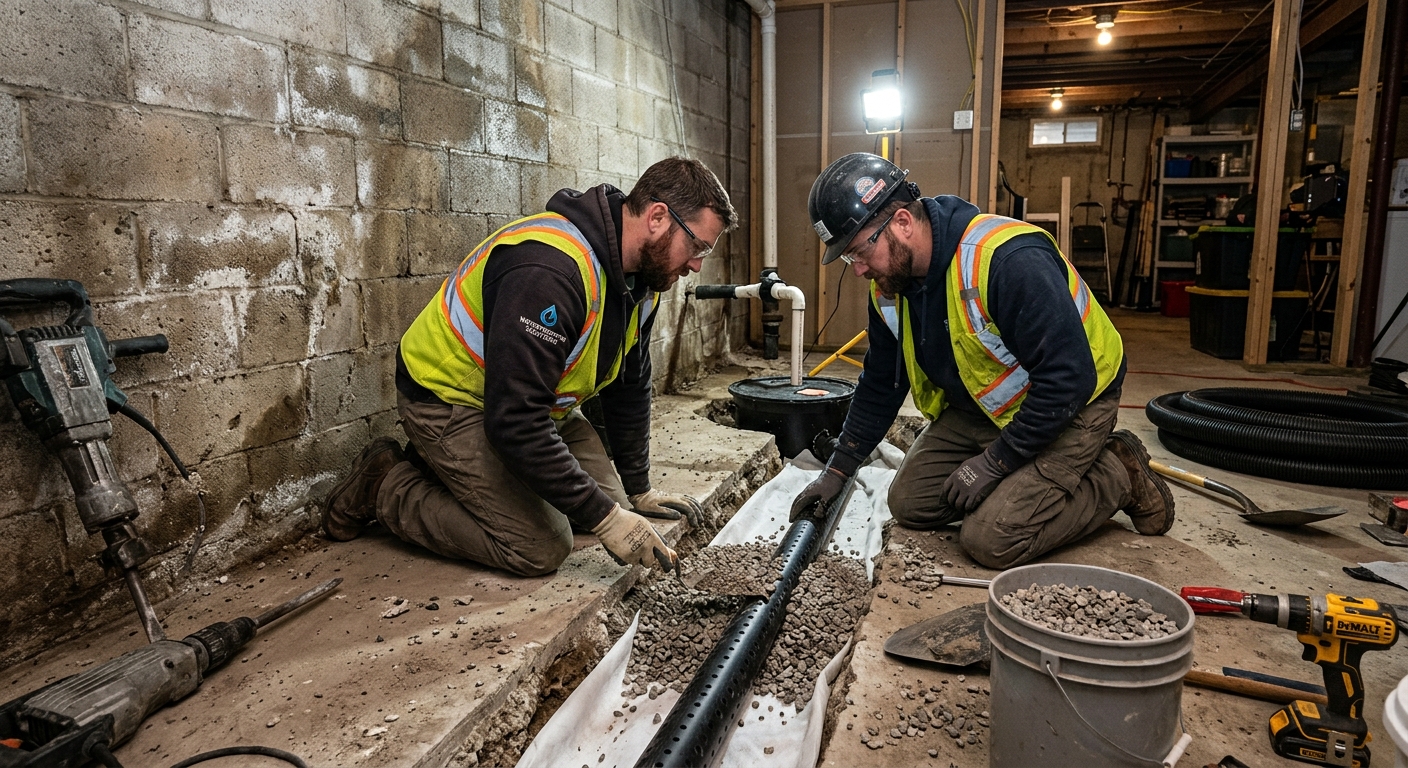
Basement waterproofing options and costs in Weston-Pellam Park
Basement waterproofing in Weston-Pellam Park typically comes down to stopping water at the source (exterior waterproofing) or managing it after entry (interior waterproofing). In this part of Toronto’s GTA, many homes were built and serviced during eras when original membranes, tar-and-paper systems, and early clay weeping tile were the norm. That matters because damaged or clogged drains often show up as damp walls, efflorescence, and “mystery” seepage—sometimes long before you see obvious wall failure. With Weston-Pellam Park’s population at 11,098 people (Statistics Canada, 2021 Census), there’s also steady demand for trades that understand tight lot access, landscaping constraints, and older foundation systems common in the Toronto region.
Toronto’s mixed glacial till and clay soils hold water and swell when saturated, which increases lateral pressure on foundation walls. Add frequent freeze–thaw cycles and small defects—cold joints, tie holes, and fine cracks—can widen over a few winters. That’s why exterior excavation projects often cost more in Weston-Pellam Park, not just for materials, but for labour and disposal where crews must hand-dig around additions or work near deck footings and shared driveways. Conversely, interior drainage and sump work is usually faster and less disruptive, but it’s best suited when you’re dealing with persistent seepage that continues to enter despite the wall being otherwise intact.
In Weston-Pellam Park, basement moisture concerns are especially common around older pockets of the neighbourhood where original weepers have aged out and drainage laterals have become partially blocked. From there, homeowners usually compare the options below—starting with exterior drainage and moving through targeted interior solutions.
| Method |
What It Addresses |
Disruption Level |
Durability |
Price Range |
| Exterior excavation + new membrane + drainage tile |
Water entry at the foundation, lateral hydrostatic pressure, failing weeping tile |
High (excavation, backfill, landscape restoration) |
High (source control; typically long service life with correct installation) |
$7,000 – $25,000 |
| Interior perimeter drain channel + sump pit |
Seepage that gets past the wall; captures water and relieves hydrostatic pressure |
Medium (cutting floor perimeter, plumbing, finishing repairs) |
Medium to high (depends on pump selection and sealing details) |
$3,500 – $15,000 |
| Foundation crack injection (epoxy or polyurethane) |
Isolated leaks at cracks and joints; stops water movement through cold joints/tie holes |
Low to medium (surface prep; localized drilling) |
Medium (polyurethane for active leaks; epoxy when movement is not present) |
$600 – $3,000 |
| Sump pump installation (primary + battery backup) |
Water accumulation control during wet seasons and power interruptions |
Low to medium (pit work + discharge plumbing) |
Medium to high (backup reduces risk during outages) |
$800 – $3,500 |
| Window well drain installation |
Bulk water entry and pooling around basement windows |
Low to medium (excavation at window, grading corrections, small drainage) |
Medium (effective when paired with proper downspouts and landscaping) |
$1,200 – $4,500 |
| Lot re-grading / downspout extension |
Directs roof runoff away from foundation; reduces recurring saturation |
Low (surface work, minor disruption) |
Low to medium (depends on how much water was entering through the wall) |
$800 – $3,800 |
Prices are estimates only and vary by project scope, site access and material selection.
What affects the price of waterproofing in Weston-Pellam Park
In Weston-Pellam Park and across the Toronto region, waterproofing quotes for the “same basement leak” can vary by roughly 30–50% because the real problem is rarely just one crack or one wet spot. Contractors may propose different root-cause solutions—source control via exterior drainage and membrane, or symptom management via interior drains and sump pumping. The difference is even more pronounced when you factor in Toronto’s mixed glacial till and clay soils, where dense clay can hold water against foundations, increasing lateral pressure on basement walls. Freeze–thaw then amplifies the damage: small voids and mortar or concrete weaknesses expand and re-open season after season.
Relative to a national average, three local drivers separate regional costs: soil type, water table behaviour, and freeze–thaw cycling. Clay-heavy soils expand when saturated and can worsen cracks over time, which increases labour for crack preparation and sometimes requires repeated leak-mapping. In Toronto, higher local water tables in many neighbourhoods translate into longer sump run times and stronger drainage design—often influencing whether you need a battery backup or higher-capacity pump. By contrast, in drier soil or where drainage is still functioning, scopes can be narrower and less expensive.
Two concrete Weston-Pellam Park examples: (1) a basement with damp walls plus efflorescence after heavy spring rains usually means the failed drainage pathway is still feeding water—adding interior perimeter drain work or exterior repairs. (2) a single active crack at a corner may be injectable only, which can keep the job closer to the foundation crack repair band of about $600–$3,000 rather than jumping into full excavation.
If access is tight—common near additions, decks, or landscaped front yards—excavation can require hand-digging and more restoration, pushing projects toward the upper range of exterior excavation at $7,000–$25,000. If the wall is mostly intact and the water is simply collecting, interior waterproofing often fits better in the $3,500–$15,000 band.
| Price Factor |
Why It Matters |
Cost Impact |
| Interior vs. exterior approach — interior is less disruptive but addresses symptoms |
Interior systems manage water after entry; exterior systems address the entry point and hydrostatic pressure |
Interior often 30–60% lower than full exterior excavation depending on access and sealing needs |
| Foundation type — poured concrete vs. block vs. stone vs. ICF |
Different substrates respond differently to membranes, sealing, and crack repair methods |
Poured walls may seal well with injection; block often needs drainage/damp-proofing complements |
| Soil type — clay expands more than sand, adding pressure |
Saturated clay increases lateral pressure and can keep leaks active through the seasons |
May increase scope (more drainage, tougher sealing, sometimes exterior work) |
| Crack type and length — hairline vs. structural horizontal cracks |
Hairline vertical cracks may be localized; horizontal/step cracks can indicate movement |
Structural assessment can add cost; more labour for longer injection routes |
| Sump pump backup system — battery or water-powered backup needed |
Power outages during spring wet spells can turn a small seep into a large flood |
Battery backup typically adds a noticeable but worthwhile premium |
| Access — landscaping, decks, or driveways must be removed for exterior |
Exterior excavation requires more demolition and reinstatement |
Can push exterior projects toward the top of the $7,000–$25,000 range |
| Weeping tile age — original tile (60+ years) may be completely failed |
Aged drainage pathways collapse, clog, or separate from laterals |
Often increases the likelihood of needing full drainage replacement |
| Mould or efflorescence remediation required before sealing |
Sealing over contaminated surfaces can fail and trap moisture |
May add remediation steps before membranes/crack sealing |
Permits & regulations in Ontario
In Ontario, some basement waterproofing-related work does require permits, particularly when the scope affects structure or changes how water is managed on the property. Foundation excavation, structural crack repair where there’s potential structural impact, and changes to lot drainage are commonly tied to permit requirements. If a sump pump installation includes connections or modifications that route discharge to the storm or sanitary system, municipal approval is typically required before work proceeds. For homeowners in Weston-Pellam Park, it’s smart to plan for permit lead times, especially in spring when schedules tighten.
Structural crack repair is a common “grey area.” Where you’re dealing with major horizontal cracks in block walls, step cracks, or signs of movement, an assessment by a structural engineer is often necessary to determine whether underpinning, helical piers, or other structural measures are needed—not just sealing. At that point, your contractor should be coordinating engineering support for structural repairs, along with liability insurance and WSIB/WCB coverage.
What typically does not require a permit: interior crack injection for localized leakage where there’s no structural change; installing a sump pit and pump where discharge methods stay within acceptable property drainage practices (your contractor should still confirm); and localized window well drainage where it doesn’t alter municipal connections.
To verify contractor compliance in Weston-Pellam Park, start by: (1) checking Ontario licensing/registration details via the contractor’s public listing or appropriate provincial registry pages, (2) requesting a certificate of insurance and confirming it includes general liability and appropriate endorsements, (3) obtaining proof of WSIB/WCB clearance or coverage status, and (4) asking for documentation that clarifies permit responsibility—who pulls permits and what’s included in the scope.
Interior vs exterior waterproofing — what does Weston-Pellam Park need?
The core difference is simple: exterior waterproofing addresses the source of water entry, while interior waterproofing manages water after it reaches the basement. Exterior work involves excavation along the foundation, installing a continuous waterproof membrane, and replacing/adding proper drainage tile before backfilling. That approach can be more expensive and disruptive, but it can dramatically reduce hydrostatic pressure against walls—important in Toronto where mixed glacial till and clay often trap water. Interior waterproofing—such as a perimeter drain channel, sump pit, and sump pump—collects seepage through the floor perimeter and relieves pressure from inside. It’s often less invasive, but it doesn’t stop hydrostatic pressure at the wall itself.
In Weston-Pellam Park, poured-concrete walls often respond well to targeted crack injection when leakage is localized and the crack isn’t actively moving, because concrete can be sealed effectively once the water path is identified. Block foundations, meanwhile, frequently benefit from interior drainage as a practical complement; block can be more prone to moisture migration through mortar joints and micro-voids, so capturing water at the perimeter can be the safest way to protect finished spaces.
Because spring in Ontario brings heavy rainfall and rapid freeze–thaw swings, sump pump reliability matters. A backup system (commonly battery backup) helps prevent a small rise in water from turning into a significant flood during short outages.
Here’s a typical cost logic example: if your issue is one active corner crack, injection in the $600–$3,000 band may be justified. If, however, you have recurring dampness after heavy rain plus efflorescence across multiple wall sections, exterior excavation may be the only long-term way to reduce entry—often in the $7,000–$25,000 range—because the failed drainage pathway keeps re-feeding moisture.
| Method |
Best For |
Addresses Source? |
Disruption |
Lifespan |
Price Band |
| Full exterior excavation + membrane |
Chronic seepage, high water pressure, failed weeping tile, recurring dampness despite interior work |
Yes (source control) |
High |
Long (properly installed systems can last many years) |
$7,000 – $25,000 |
| Interior French drain + sump system |
Water that collects along perimeter, damp walls/floors, failing drainage weepers where exterior access is difficult |
Partially (relieves pressure, doesn’t block wall entry) |
Medium |
Medium to long with correct pump sizing and sealing |
$3,500 – $15,000 |
| Crack injection — epoxy (structural) |
Non-moving cracks where leakage is localized and the crack movement risk is low |
Yes for that specific water path |
Low |
Medium to long when movement is controlled |
$600 – $2,500 |
| Crack injection — polyurethane (active leak) |
Cracks with active flow or where minor movement is expected from freeze–thaw/settlement |
Yes for that specific water path |
Low |
Medium to long for active-leak conditions |
$700 – $3,000 |
| Interior drain channel only (no sump) |
Minor seepage, well-controlled water amounts, or interim solution during evaluation |
No (still allows some wall pressure) |
Medium |
Shorter if water volumes increase |
$2,500 – $8,500 |
| Re-grading + downspout extensions |
Surface water runoff issues, pooling near downspouts, early-stage moisture |
No (reduces intake but doesn’t seal foundation) |
Low |
Low to medium (only as good as drainage stays maintained) |
$800 – $3,800 |
How to choose a waterproofing contractor in Weston-Pellam Park
Choosing the right waterproofing contractor in Weston-Pellam Park starts with verification, not brochures. In Ontario, you should confirm three things before signing: proper licensing/registration (as applicable for the contractor’s scope), general liability insurance, and WSIB/WCB clearance or coverage. How to check: ask for a certificate of insurance and verify the coverage details and expiry date; request WSIB/WCB clearance documentation or proof of coverage; and confirm the contractor’s public registration details online (and that the company name matches the paperwork you receive). If the scope includes structural crack work or engineer-directed repairs, ask whether they coordinate engineering support and can provide documentation that aligns with the structural scope.
Next, get 2–3 itemised written quotes—not one lump-sum. A good quote breaks out labour and materials (membrane system, drainage tile, pump model, piping, disposal, restoration allowances). Read the exclusions: what’s not included (e.g., excavation beyond a certain depth, removing mature landscaping, patching drywall, or any permit fees). Ask whether permit pull is included and whether disposal of excavated material is part of the price. Make sure warranty terms are clear: workmanship warranty length, product/manufacturer warranty coverage, and whether the warranty is transferable to future owners.
For payment schedule, never pay more than about 10–15% upfront, and hold back a portion until the job is complete and deficiencies are corrected. Finally, insist on a written start date and a completion estimate.
- Ask for their inspection checklist: dye test, crack mapping, drain camera/inspection (where applicable).
- Confirm the sump pump model and pit size, including discharge line route and check valves.
- Get a written scope that specifies membrane type and drainage tile installation method.
- Require clear listing of what’s included for excavation, backfill, and restoration.
- Ask who is pulling permits (and what permits are required for your scope).
- Verify disposal/haul-away is included for excavated soils and old materials.
- Check warranty: workmanship duration, product warranty, and transferability.
- Confirm engineering involvement for structural crack patterns and what they do if movement is detected.
- Review pump backup plan (battery vs. other) if you’re prone to power interruptions.
- Ensure they explain the expected discharge destination and approvals if needed.
- Require the quote to specify restoration allowance (flooring, baseboards, patching, landscaping).
- Use a payment schedule that limits upfront deposits to 10–15% and retains holdback until close-out.
Red flags we often see around waterproofing in Weston-Pellam Park: contractors who refuse to map leak paths and propose “one-size-fits-all” membrane or only interior patching; quotes that don’t list pump specs or warranty terms; vague language about permits/disposal; asking for large upfront payments (beyond 10–15%); and no proof of WSIB/WCB clearance or insurance matching the company doing the work.
Frequently asked questions — waterproofing in Weston-Pellam Park
What drainage issues are most common in Weston-Pellam Park homes?
In Weston-Pellam Park, the most common issues tend to be clogged, collapsed, or disconnected weeping tile and older perimeter drains—especially in homes where drainage paths are decades old. Because the Toronto area has mixed glacial till and dense clay pockets, saturated soil can hold water against foundation walls and increase seepage along cold joints, tie holes, and fine cracks. Homeowners also frequently notice dampness after heavy spring storms, along with efflorescence on poured concrete or block. If downspouts discharge too close to the foundation or grading has settled, surface runoff can overwhelm aged drainage and show up as window well pooling or perimeter wetting.
How do I choose a waterproofing contractor in Weston-Pellam Park?
Start with verification: ask for a current certificate of insurance and proof of WSIB/WCB coverage/clearance, and confirm their registration details through Ontario’s public information resources. Then request 2–3 itemised quotes that break down labour and materials (membrane/drainage tile, pump model, piping, disposal, and restoration allowances), rather than a single lump sum. Make sure the scope clarifies exclusions, whether permits are included, and how they’ll address the specific water path—like failed weepers, an active crack, or window well pooling. Finally, compare warranty details (workmanship length, product coverage, and transferability). If you’re dealing with a typical crack-only fix, you may see quotes near the $600–$3,000 band; if you’re being pushed to exterior work, you should see why the entry source is being addressed.
What is a battery backup sump pump and do I need one in Weston-Pellam Park?
A battery backup sump pump is a secondary pump system that kicks in during a power outage, helping keep the sump from overfilling when the primary pump can’t run. In Weston-Pellam Park and the broader Ontario region, spring wet weather can coincide with short outages, and a flooded basement can happen quickly once water levels rise. If your basement regularly collects water during heavy rain, has a history of flooding, or you rely on a sump to manage chronic seepage, a battery backup is often worth the added reliability. That said, a backup isn’t a substitute for correcting the water entry pathway when the problem is continuous hydrostatic pressure—so the best fit depends on whether you’re doing interior drainage only or combining it with source-control measures.
How much does basement waterproofing cost in Weston-Pellam Park?
Typical costs in Weston-Pellam Park fall into several practical bands. Foundation crack repair via epoxy or polyurethane injection is commonly in the $600–$3,000 range, especially for isolated leaks where the crack is mapped and prepped correctly. Interior waterproofing with a perimeter drain channel and sump pit often lands around the $3,500–$15,000 band depending on basement size, wall/floor conditions, and finishing repairs. If your situation requires full excavation for source control—new membrane and drainage tile—exterior waterproofing excavation commonly ranges from $7,000–$25,000. Your final number depends heavily on access (hand-digging around landscaping or additions), soil behaviour, and whether weeper drainage is fully failed or partially functioning.
Interior vs exterior waterproofing — which is better?
“Better” depends on the water path. Exterior waterproofing is best when you need source control: full excavation, a continuous membrane, and new drainage tile reduce hydrostatic pressure against the foundation—important in Toronto’s clay-heavy pockets that hold water and worsen freeze–thaw cracks. Interior waterproofing is better when you’re managing water that already entered: perimeter drain channels and sump systems capture seepage and reduce basement wetness with less disruption. In Weston-Pellam Park, we often see poured-concrete walls paired with targeted crack injection when leaks are localized, while block foundations frequently require an interior drainage complement. If exterior excavation is impractical due to tight access, interior solutions may still perform well—especially when paired with a properly designed sump system and backup.
Why is my basement leaking in Weston-Pellam Park?
Basement leaks in Weston-Pellam Park usually come from water entering through the foundation system during wet periods, then finding a path along cracks, joints, tie holes, or areas where drainage has failed. Toronto’s freeze–thaw cycles can widen small defects over time, turning hairline cracks into active leaks. Dense clay soils can stay saturated longer, increasing lateral pressure and keeping seepage “alive” even after short dry spells. Many older homes also suffer from partially collapsed or clogged weeping tile, which prevents water from being carried away as it was intended. If you’re also seeing efflorescence, it often points to moisture movement through the wall or along the interior perimeter, meaning the solution should address drainage and sealing—not just surface patching.