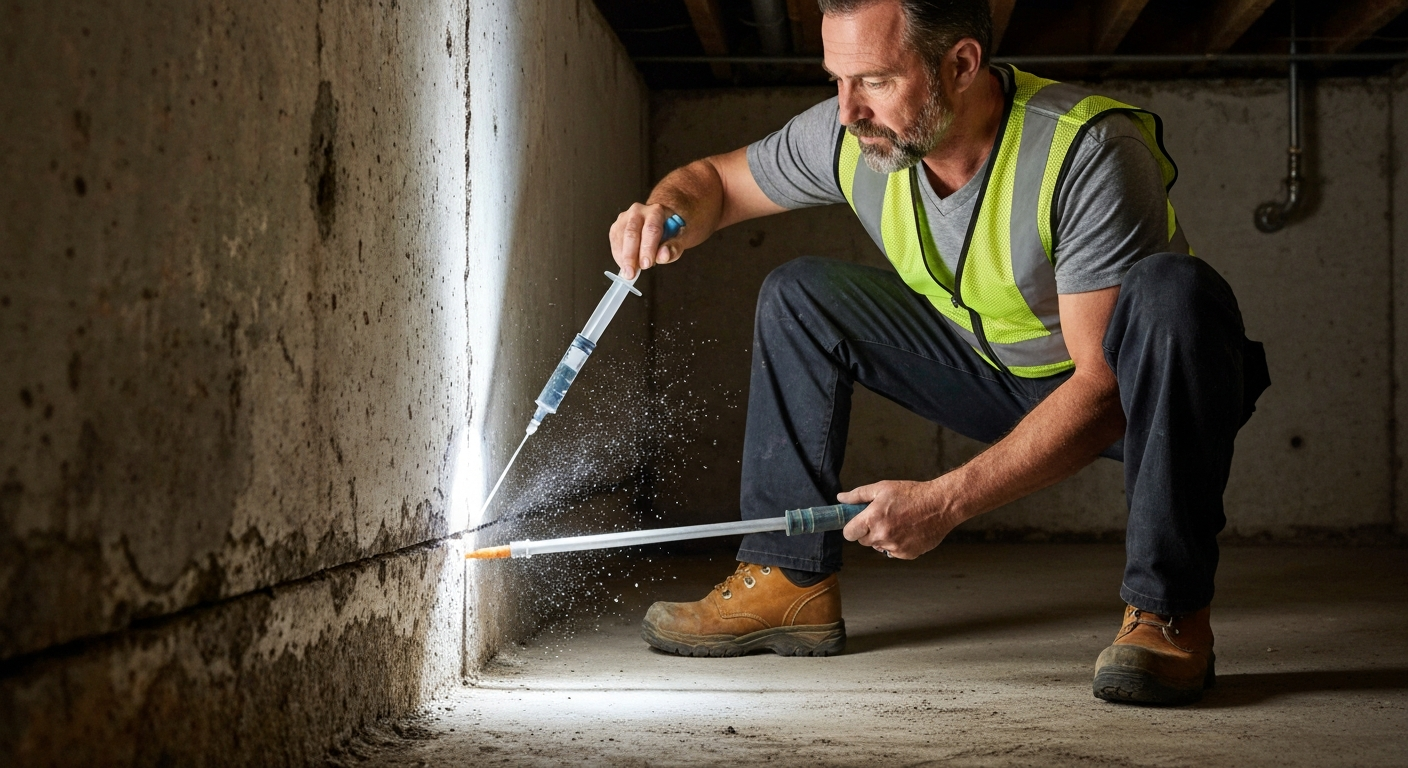
Basement waterproofing options and costs in York University Heights
York University Heights, Ontario is a classic place where basement waterproofing decisions come down to how water behaves around older foundations. With a local population of 27,593 (Statistics Canada, 2021 Census), you’ll see steady demand for both exterior and interior work—especially on post-war and 1960–1980s homes that commonly have ageing drainage systems. Many of these properties still rely on older clay weeping tile or early drains that have partially collapsed or clogged, which can mean damp basements, efflorescence, and recurring seepage even when exterior walls look “fine.”
Toronto-area pricing is also shaped by access and climate. Mixed glacial till and clay soils can hold water against foundation walls, and freeze–thaw cycles expand small defects in concrete and block walls, turning hairline cracks into active leaks after a few winters. In tight York University Heights lots—near busy streets or with decks, driveways, and additions—excavation and hand-digging often drive labour costs upward, which is why contractors typically price exterior work with a stronger range than interior solutions.
In York University Heights, work is especially in demand around the York University area and adjacent neighbourhoods where lots are older and drainage upgrades are frequently triggered by interior moisture complaints. If you’re trying to compare options quickly, start with the table below—then we can narrow the right scope based on whether the water is entering through cracks, cold joints, wall-to-floor transitions, or failing weeping tile.
| Method |
What It Addresses |
Disruption Level |
Durability |
Price Range |
| Exterior excavation + new membrane + drainage tile |
Lateral hydrostatic pressure; exterior water entry; failing weeping tile |
High (excavation, landscaping disruption) |
High (source control) |
$7,000–$25,000 |
| Interior perimeter drain channel + sump pit |
Water after it enters; foundation wall seepage and floor-level moisture |
Medium (interior cutting) |
Medium–High (depends on wall condition) |
$3,500–$15,000 |
| Foundation crack injection (epoxy or polyurethane) |
Isolated cracks and cold joints (epoxy for structural/very stable cracks; polyurethane for active leaks) |
Low (targeted repairs) |
Medium–High (best when water pathway is correctly identified) |
$600–$3,000 |
| Sump pump installation (primary + battery backup) |
Chronic seepage control during high water periods; reduces downtime from power outages |
Low–Medium (pit + discharge routing) |
Medium–High (improved with backup) |
$800–$3,500 |
| Window well drain installation |
Water intrusion at egress windows; localized pooling and seepage |
Low–Medium |
Medium |
$1,200–$4,500 |
| Lot re-grading / downspout extension |
Surface water diversion away from foundation; reduced ponding near weeping tile lines |
Low (light ground work) |
Low–Medium (works best with drainage systems in good condition) |
$500–$4,000 |
Prices are estimates only and vary by project scope, site access and material selection.
What affects the price of waterproofing in York University Heights
In York University Heights and the broader Toronto region, two companies can quote the “same” basement leak and still land 30–50% apart. That’s because waterproofing is driven by what’s happening at the water source, not just the symptoms you can see during a walkthrough. A basement that’s damp in spring can require a different scope than one with active crack seepage after a heavy rain—plus the labour effort changes quickly when access is tight.
The three biggest cost drivers that separate local pricing from a national average are soil type, water table, and freeze–thaw. Mixed glacial till and dense clay pockets in this area hold water against foundation walls; when saturated and then cooled during winter, freeze–thaw cycles can widen cracks and stress joints. High water pressure also increases sump run times and demands larger drainage capacity when interior systems are used. By contrast, when a neighbourhood has better drainage away from the foundation—or a house with newer drainage lines—the work can be more straightforward.
Here are a few real-world examples of what changes the price in York University Heights. First, if your weeping tile is original (often 60+ years old), interior perimeter drainage may still be needed, and exterior excavation becomes more likely to fully address the source—pushing a typical exterior excavation + membrane range toward $7,000–$25,000. Second, if seepage is localized to a single cold joint or a stable crack, targeted injection can keep costs closer to the $600–$3,000 crack repair band. Third, if mould or efflorescence remediation is needed before any sealing, additional labour and drying time can add days and cost.
| Price Factor |
Why It Matters |
Cost Impact |
| Interior vs. exterior approach — interior is less disruptive but addresses symptoms |
Exterior targets the water entry point; interior manages water after entry |
Exterior can add large excavation/disposal costs; interior often comes in lower |
| Foundation type — poured concrete vs. block vs. stone vs. ICF |
Different materials crack and seal differently; block often needs more drainage support |
Block and irregular conditions usually increase scope |
| Soil type — clay expands more than sand, adding pressure |
Saturated clay increases lateral pressure and worsens cracks over freeze–thaw cycles |
More pressure often means exterior membrane/drainage upgrades |
| Crack type and length — hairline vs. structural horizontal cracks |
Horizontal cracks may indicate movement and need engineered assessment |
Structural repairs can quickly exceed simple injection pricing |
| Sump pump backup system — battery or water-powered backup needed |
Reduces downtime during spring flooding or local power interruptions |
Usually adds cost but prevents failure during outage |
| Access — landscaping, decks, or driveways must be removed for exterior |
More removal and hand-digging increases labour and restoration |
Can widen exterior price range significantly |
| Weeping tile age — original tile (60+ years) may be completely failed |
Failed tile increases backfill saturation and seepage pathways |
May shift from “patch” repairs to full drainage replacement |
| Mould or efflorescence remediation required before sealing |
Sealers won’t bond well over contaminated surfaces; moisture must be managed first |
Adds remediation labour and drying time |
Permits & regulations in Ontario
In Ontario, foundation excavation, structural crack repair, and changes to lot drainage often require a building permit, depending on scope and how the work affects structural elements or drainage to nearby services. In York University Heights, many homeowners notice that permit requirements come up when a contractor proposes more than basic sealing—especially if there’s significant concrete removal, modifications near the foundation perimeter, or any drainage tie-in that changes how water is handled on the property.
Typically, foundation crack repair that is purely cosmetic or uses low-impact materials may not trigger the same permitting path, but structural repairs—for example, addressing horizontal cracks in block walls or any suspected movement—commonly require additional review. For sump pump installations, municipal approval may be needed when discharge connections relate to storm or sanitary infrastructure, so don’t assume “plug-and-play” routing is permitted. When cracks could indicate structural movement, a structural engineer’s assessment is often required to confirm whether underpinning or other structural work is necessary.
To verify a contractor in Ontario step-by-step, start with their Ontario licence (use the appropriate provincial registry for the trade you’re hiring). Next, request a certificate of insurance and confirm it includes general liability and sufficient limits for excavation and water management work. Then check WSIB/WCB clearance by requesting a current clearance letter (not an old certificate). Finally, for structural or engineering-involved scopes, confirm who provides the engineering support and that liability coverage aligns with that work.
Interior vs exterior waterproofing — what does York University Heights need?
The fundamental difference is that exterior waterproofing is designed to prevent water from entering in the first place, while interior waterproofing controls water after it gets in. Exterior work typically involves full excavation, new waterproofing membrane, replacement drainage tile, and properly planned backfill—so it targets the source of hydrostatic pressure. It’s significantly more expensive and disruptive, but when soil is clay-heavy and holds water against foundation walls, exterior systems are the closest thing to a permanent fix.
Interior systems—like a perimeter drain channel, sump pit, and sump pump—manage water that bypasses exterior defenses due to cold joints, tie holes, cracks, or degraded weeping tile. In York University Heights, where many basements are in post-war and 1960–1980s homes, interior solutions are often a practical complement, especially when exterior access is constrained by decks, shared driveways, or additions. Poured concrete walls generally respond well to correctly selected crack injection, while block foundations often benefit from interior drainage because mortar joints and seams can be more water-path-prone over time.
Sump pump backup systems matter here because spring and high-water periods can coincide with local outages and sustained pumping needs. A battery backup can reduce the chance of a full shutdown during an outage, and it’s often a worthwhile upgrade when you’re already investing in an interior system.
For a concrete price example: if you’re dealing with active seepage along a single crack path, crack injection might land in the $600–$3,000 band and avoid the disruption of excavation. If, however, your basement has chronic dampness across multiple wall sections and signs of failed weeping tile, the exterior approach commonly sits in the $7,000–$25,000 range—because it replaces the drainage capacity and reduces the lateral pressure that keeps returning the problem.
| Method |
Best For |
Addresses Source? |
Disruption |
Lifespan |
Price Band |
| Full exterior excavation + membrane |
Chronic seepage, clay-heavy soils, failing weeping tile, high water pressure |
Yes |
High (excavation + landscaping restoration) |
High (when drainage and backfill are done correctly) |
$7,000–$25,000 |
| Interior French drain + sump system |
Water enters through walls/floor perimeter; exterior access is limited |
No (manages water after entry) |
Medium (floor cutting and pit installation) |
Medium–High (depends on pump and drainage performance) |
$3,500–$15,000 |
| Crack injection — epoxy (structural) |
Stable cracks with minimal active flow where structure is confirmed |
Partial (seals pathway; doesn’t replace failed drainage) |
Low |
Medium–High (best with correct crack assessment) |
$600–$3,000 |
| Crack injection — polyurethane (active leak) |
Active weeping cracks and cold joint seepage |
Partial (seals active pathway; may still need drainage for pressure issues) |
Low |
Medium |
$600–$3,000 |
| Interior drain channel only (no sump) |
Mild seepage and localized dampness where gravity drainage works |
No |
Medium (still requires interior demo) |
Lower (can struggle when water levels rise) |
$2,000–$8,000 |
| Re-grading + downspout extensions |
Surface runoff near the foundation; visible ponding after rain |
Helps prevent added water; doesn’t fix failed below-grade drains alone |
Low |
Low–Medium (works best with functioning drainage) |
$500–$4,000 |
How to choose a waterproofing contractor in York University Heights
Start by verifying Ontario compliance and worker coverage the same way you’d verify a contractor for any basement project—because waterproofing failures are often about workmanship and moisture pathways, not just materials. Ask for a copy of their Ontario licence for the trade performing the work, then request a certificate of general liability insurance and confirm dates and coverage limits. For WSIB/WCB, don’t accept screenshots—ask for the contractor’s current clearance letter so you can see that coverage is active for the workers doing the job.
Next, get 2–3 itemised written quotes with labour and materials broken out (membrane type, drainage tile, pump model, disposal/restoration allowances). A lump sum number alone is a red flag in waterproofing, because scopes expand after excavation or after crack testing reveals active flow. Read the scope carefully for what’s excluded: permit pull included or not, disposal and cartage included, restoration of landscaping, and whether mould/efflorescence remediation is part of the base price.
On warranty, confirm workmanship warranty length and whether it’s transferable if you sell the home. Also ask whether there is a manufacturer warranty for membranes/pumps and how long it lasts. For payment, keep it controlled: never pay more than 10–15% upfront, and use a holdback until the job is complete and cleaned up properly. Finally, lock in a timeline in writing—start date, milestones (excavation, membrane install, backfill), and completion estimate.
- They identify water entry pathways (cracks, cold joints, wall-to-floor, failed weeping tile), not just “install a pump.”
- They include excavation access notes (hand-digging, deck/driveway removal, restoration allowance).
- They list exact products (membrane system, drainage tile specs, filter fabric, sealants/injection materials).
- They perform or document moisture/crack assessment before recommending the scope.
- They provide an itemised breakdown of labour, materials, and disposal/cartage.
- They state whether permits are included and who pulls them (if required for your scope).
- They confirm sump discharge routing and any municipal approval requirements.
- They specify pump model and whether backup power (battery/water-powered) is included.
- They give a workmanship warranty in writing, including start/end dates and exclusions.
- They include restoration scope (topsoil/seed/sod, grading, and downspout testing).
- They won’t pressure you into paying big deposits; they accept milestone-based billing.
- They show WSIB/WCB clearance letter and liability insurance before signing.
Red flags in York University Heights include: no written scope or measurements, vague warranty language (“up to X years” without workmanship details), missing insurance/WSIB documents, quotes that jump directly to interior-only solutions without checking weeping tile condition or crack pathways, and contractors who won’t discuss backup power options for sums in spring high-water periods.
Frequently asked questions — waterproofing in York University Heights
Interior vs exterior waterproofing — which is better?
In York University Heights, “better” depends on whether the problem is mainly source water or water that’s already entered the basement. Exterior waterproofing (excavation + membrane + new drainage tile) addresses the hydrostatic pressure at the foundation and is usually the most complete approach when clay-heavy soils or failing weeping tile are involved—often falling in the $7,000–$25,000 band. Interior waterproofing (perimeter drain, sump pit, sump pump) is less disruptive and can be effective for chronic seepage or when access is limited, commonly in the $3,500–$15,000 range. If you can’t rule out high lateral pressure, many homes benefit from combining crack injection with a properly designed drainage system rather than relying on one method alone.
Why is my basement leaking in York University Heights?
Leaking basements in York University Heights are usually caused by water finding a pathway through cracks, cold joints, tie holes, or at the wall-to-floor perimeter—often made worse by freeze–thaw cycles. Mixed glacial till with clay pockets can hold water against foundation walls, increasing lateral pressure when the soil saturates. A very common driver here is ageing drainage below grade: original clay weeping tile or early drains can be partially collapsed or clogged, so water backs up and shows up indoors as dampness, efflorescence, or recurring seepage. If you’re seeing dampness along corners or recurring wetting after spring rains, the cause is frequently below-grade drainage performance rather than a single surface issue like a clogged downspout.
How do I know if a foundation crack is serious?
Not all cracks are equal. Hairline vertical cracks can sometimes be movement related rather than an active water issue, but in Ontario freeze–thaw, even small defects can become active leaks if water is getting into them. A “serious” crack typically shows signs of ongoing movement (widening over time, displacement, or a straight horizontal crack in a block wall). Efflorescence, dampness, or water weeping from the crack line after rain or snowmelt also suggests an active pathway that needs attention. In York University Heights, if you have step cracking, horizontal cracking, or multiple connected cracks, it’s smart to have the condition assessed before just injecting—structural crack repair may require an engineering review depending on your foundation type and the pattern.
How much does foundation crack repair cost in York University Heights?
Foundation crack repair cost in York University Heights depends on whether the crack is stable, active, and how many metres/points need injection. For many isolated cracks, homeowners typically see pricing in the $600–$3,000 band. Epoxy injection is commonly used for stable, structural-type sealing where movement is not actively progressing, while polyurethane may be chosen for active leaks because it can expand as it bonds to wet concrete or masonry. If your cracks indicate movement or require structural assessment or additional repair beyond injection, the total can rise. The best way to estimate accurately is to get an itemised quote that includes how the contractor determines whether the crack is structural vs active leakage.
Do I need a sump pump in York University Heights?
You may need a sump pump if water is entering consistently and you want controlled drainage during high water periods. In York University Heights, clay-heavy soils and seasonal saturation can raise water levels enough that passive interior drains (without a sump) can struggle, especially in spring when seepage peaks. A sump pump also helps manage water at the perimeter drain line when interior systems are installed. Many homeowners also choose battery backup to reduce the risk of basement flooding during power interruptions or prolonged high-water events. If you’re already in the $3,500–$15,000 interior waterproofing range, asking whether backup is included—or can be added—is often worth it because pump failure is one of the common causes of repeat moisture problems.
How does York University Heights's soil affect my foundation?
Soil impacts waterproofing more than many homeowners expect. In the Toronto region around York University Heights, mixed glacial till and dense clay pockets can hold water against foundation walls. When that clay saturates and then freezes, freeze–thaw cycles can widen small cracks and stress joints, increasing the chance that hairline defects turn into active leaks over a few winters. Clay also contributes to lateral pressure on foundation walls, which is why exterior excavation plus membrane and drainage tile is often recommended when the source water pressure is the problem. If the below-grade drainage is older or partially failed, the soil can’t drain away effectively, so moisture shows up inside as damp walls, efflorescence, or seasonal pooling. This is also why contractors assess weeping tile age and overall drainage before selecting an approach.