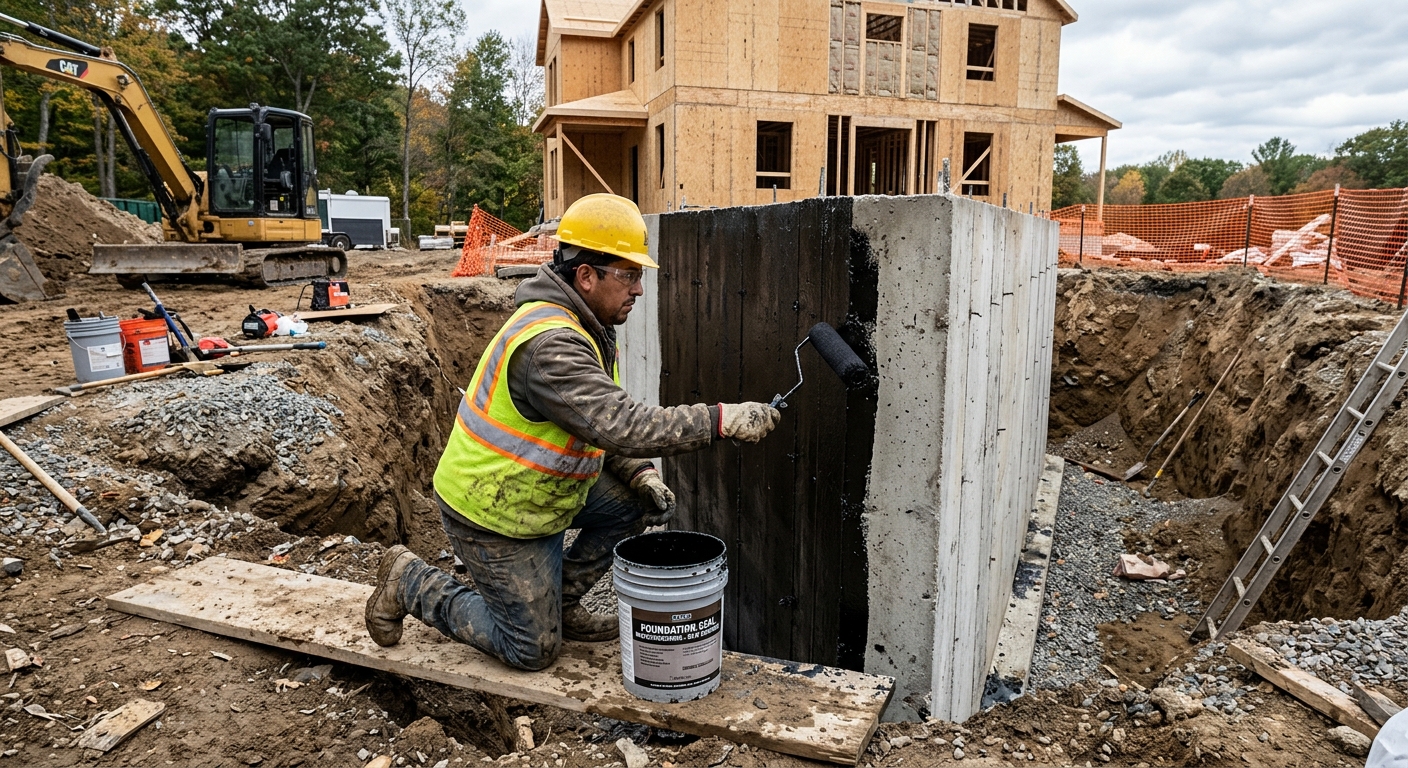
Basement waterproofing options and costs in Niagara-on-the-Lake
In Niagara-on-the-Lake, basement waterproofing usually starts with figuring out where the water is coming from—groundwater pressure, a failed weeping tile system, roof runoff oversaturating backfill, or a crack that’s acting like a straw. With 38.1% of homes in the broader local profile built before 1981, many basements in older single-detached houses were originally protected with simpler membranes and weeping tile that can fail after decades. That’s why exterior work (excavation and drainage) is still common, but interior systems are also frequent—especially where owners want to limit demolition around finished basements.
Costs in the Hamilton–Niagara Peninsula region can run higher than the national “average” because clay and silty clay subsoils can hold moisture and expand during Ontario’s freeze–thaw cycle, increasing lateral pressure on foundation walls and making repair timelines longer. Local hydrogeology also points to water tables often roughly 2–4 m below grade, with perched water in shallow fill layers—so deeper basements or poor lot drainage can mean more sump run time and more robust drainage stone and membrane systems. Contractor availability also matters: when multiple trades are needed (excavation, concrete repair, drain routing), scheduling can add labour hours and coordination time. You’ll see especially strong demand in established neighbourhoods near King Street and Queen Street corridors, where lots tend to be older and landscape access is tight.
Below is a practical comparison of typical basement waterproofing methods and what they target, to help you align your quote with what Niagara-on-the-Lake basements commonly experience.
| Method |
What It Addresses |
Disruption Level |
Durability |
Price Range |
| Exterior excavation + new membrane + drainage tile |
Primary water entry from groundwater; hydrostatic pressure at the wall |
High (excavation, landscaping restoration) |
Long-term (often best source control) |
$12,000 – $25,000 |
| Interior perimeter drain channel + sump pit |
Water that enters the basement after it bypasses exterior protection |
Medium (floor cutting along perimeter) |
Good (depends on drainage stone, discharge, and pump reliability) |
$8,000 – $18,000 |
| Foundation crack injection (epoxy or polyurethane) |
Cracks that allow seepage/flow; restores watertightness where possible |
Low to Medium (surface prep and access) |
Variable (epoxy for non-moving cracks; polyurethane for active leaks) |
$600 – $1,800 |
| Sump pump installation (primary + battery backup) |
Controls recurring seepage and reduces risk during power interruptions |
Low to Medium (pit + discharge lines) |
Strong when paired with correct discharge and backup |
$1,800 – $4,200 |
| Window well drain installation |
Surface water around basement windows; wet window wells and localized seepage |
Low (localized excavation) |
Good (depends on correct grading and discharge routing) |
$2,000 – $6,000 |
| Lot re-grading / downspout extension |
Redirects roof runoff away from foundation; improves site drainage |
Low to Medium (yard work) |
Moderate (best as prevention or as part of a larger system) |
$3,500 – $9,000 |
Prices are estimates only and vary by project scope, site access and material selection.
What affects the price of waterproofing in Niagara-on-the-Lake
Even when two homeowners request the “same” basement waterproofing work, quotes across the Hamilton–Niagara Peninsula region and Ontario can differ by 30–50%. In practice, contractors price for the real conditions: how deep they must excavate, what the soil behaves like once it’s disturbed, whether your drainage routes are feasible, and how much diagnostic work is required to identify active leaks versus humidity or condensation.
The three biggest cost drivers that separate regional pricing from the national average are soil type, water table, and freeze–thaw. In many Hamilton–Niagara Peninsula pockets, clay-heavy subsoils expand during freeze–thaw and can worsen cracks over time. That often means either more extensive exterior membrane and drainage stone assemblies, or a more complete interior system to manage intermittent seepage. Meanwhile, higher or perched groundwater—commonly referenced as roughly 2–4 m below grade—can increase sump run time and require correct discharge routing and pump sizing. Contrast that with homes where drainage is already functional: you may only need a targeted crack repair (within the $600 – $1,800 band) rather than a full rework.
Concrete Niagara-on-the-Lake examples I see frequently: (1) a finished basement with ceramic tile and a longer perimeter often pushes interior perimeter drain costs toward the top of the $8,000 – $18,000 band due to floor removal and restoration. (2) homes with deeper basements in wet cohesive soils typically require more robust excavation and disposal logistics, bringing exterior projects closer to the $12,000 – $25,000 band. (3) if weeping tile is original and fully failed (older housing stock), interior-only work can control water but won’t reduce hydrostatic pressure—so you should expect a stronger recommendation for source control when access allows.
| Price Factor |
Why It Matters |
Cost Impact |
| Interior vs. exterior approach — interior is less disruptive but addresses symptoms |
Interior manages water after entry; exterior aims to stop it at the wall |
Exterior often costs more, but may reduce long-term rework |
| Foundation type — poured concrete vs. block vs. stone vs. ICF |
Repair methods and crack behaviour differ by material |
Block and older stone often need more interior drainage focus |
| Soil type — clay expands more than sand, adding pressure |
Clay can swell during freeze–thaw and increase lateral wall stress |
More robust membrane/drainage may be required |
| Crack type and length — hairline vs. structural horizontal cracks |
Active leaks and structural movement change the repair approach |
Structural cases can trigger higher labour and engineering |
| Sump pump backup system — battery or water-powered backup needed |
Prevents failures during power outages during spring/wet periods |
Can add to sump system cost; reduces risk |
| Access — landscaping, decks, or driveways must be removed for exterior |
Excavation depends on how much can be safely disturbed |
Restoration and time can increase totals |
| Weeping tile age — original tile (60+ years) may be completely failed |
Failed tile means exterior water can’t be drained away |
More extensive drainage restoration is often recommended |
| Mould or efflorescence remediation required before sealing |
Sealers and membranes won’t bond properly to active contamination |
Additional prep and controlled cleaning may be needed |
Permits & regulations in Ontario
In Ontario, several basement waterproofing-related scopes can require a building permit—especially when you’re changing how water is managed around the foundation or when structural elements are involved. Typical work that often requires a permit includes foundation excavation that modifies drainage conditions, structural crack repair where major repairs are proposed (for example, for horizontal cracks in block walls or indications of structural movement), and changes to lot drainage that alter how runoff is directed. If a sump pump discharge connects into a municipal system (storm or sanitary), that typically needs municipal approval before any connection is made.
For cracks that may be structural—commonly larger step cracks, widening horizontal cracks, or signs of differential movement—an engineer’s assessment is often required to confirm whether underpinning or other structural work is needed. Reputable contractors build this into their process, including engineering support on structural recommendations.
How to verify an Ontario contractor (Niagara-on-the-Lake homeowners can do this quickly): (1) check the contractor’s Ontario licence/registration status using the appropriate online registry for their business category; (2) request a certificate of insurance and verify it includes liability coverage for your project dates; (3) confirm WSIB/WCB clearance documentation is current; and (4) for structural crack scenarios, ask whether they carry engineering support and whether they’ll coordinate any engineer involvement you may need.
Interior vs exterior waterproofing — what does Niagara-on-the-Lake need?
The fundamental difference is that exterior waterproofing (full excavation, new membrane, new drainage tile, and proper backfill) addresses the water at its source by reducing hydrostatic pressure against the foundation wall. It tends to be the most permanent approach, but it costs significantly more and requires disruption to the front or backyard landscaping. Interior waterproofing (perimeter drain channel, sump pit, sump pump) manages water after it reaches the basement; it’s less invasive, but it doesn’t stop pressure from building up behind the wall.
In Niagara-on-the-Lake’s clay-influenced Hamilton–Niagara Peninsula market, I generally expect interior systems to perform best as either a practical solution where exterior access is limited (hard landscaping, driveways, or constrained side yards) or as a complement to targeted crack injection. Poured concrete walls often respond well to crack injection where the crack is stable; for active leakage or moving cracks, polyurethane-based injection is usually more appropriate. Block foundations, by contrast, can allow water pathways through mortar joints and micro-cracks—so interior drainage frequently becomes the reliable control layer, even when exterior work is partially available.
Consider a homeowner example: if you’re getting localized seepage near a single crack run, a crack injection within the $600 – $1,800 band may be justified—especially if exterior grading/downspouts are corrected. But if you have recurring wetting across multiple walls and floor corners with a higher groundwater season, interior perimeter drainage can move you into the $8,000 – $18,000 band because the work needs to capture more water and route it to a correctly designed sump.
Spring flooding and power interruptions matter in Ontario. If your basement relies on a sump pump during heavy rain or high water table periods, a backup system helps maintain control when electricity is down, reducing freeze-thaw damage from temporarily unmanaged seepage.
| Method |
Best For |
Addresses Source? |
Disruption |
Lifespan |
Price Band |
| Full exterior excavation + membrane |
Recurring groundwater seepage, multiple wall wetting, sites with poor drainage access |
Yes (primary source control) |
High (excavation and landscaping restoration) |
Long-term when installed and backfilled correctly |
$12,000 – $25,000 |
| Interior French drain + sump system |
Basements with water entering despite limited exterior access; active seepage on perimeter |
No (manages water after entry) |
Medium (perimeter floor work) |
Good with correct pump sizing and discharge |
$8,000 – $18,000 |
| Crack injection — epoxy (structural) |
Stable, non-moving cracks in poured concrete where leakage is minimal |
Partly (stops water pathway if crack is stable) |
Low to Medium (surface prep and ports) |
Longer when the crack isn’t actively moving |
$600 – $1,800 |
| Crack injection — polyurethane (active leak) |
Active seepage through cracks or areas with ongoing moisture pressure |
Partly (treats pathways as water appears) |
Low to Medium (access and injection) |
Good for active leak management when correctly selected |
$600 – $1,800 |
| Interior drain channel only (no sump) |
Minor dampness and low-volume seepage where pump control is not required |
No (collects water after entry) |
Low to Medium |
Limited where water volume is higher |
$4,500 – $9,500 |
| Re-grading + downspout extensions |
Wet exterior soil, roof runoff saturating foundation backfill, prevention |
Yes (reduces contributing water source) |
Low to Medium (yard adjustments) |
Moderate (depends on ongoing maintenance) |
$3,500 – $9,000 |
How to choose a waterproofing contractor in Niagara-on-the-Lake
Start by verifying the essentials: Ontario licensing/registration for the contractor category they claim, liability insurance (ask for a certificate and ensure it covers the specific scope and job site dates), and WSIB/WCB clearance for worker coverage. When you ask for proof, don’t accept screenshots—request current documentation. For homeowners in Niagara-on-the-Lake, this is also where you confirm the contractor understands local wet-season risks around clay-heavy soils and freeze–thaw impacts, not just generic “dry basement” marketing.
Next, get 2–3 itemised written quotes with a clear labour + materials breakdown (not a single lump sum). A strong quote separates excavation or interior demo work from drainage stone, geotextile, membrane systems, sump components, backfill, and disposal. Ask whether a permit is required and whether it’s included: permit pull, inspections, and any municipal discharge approvals are common project surprises if not spelled out.
Review warranty terms. You want a workmanship warranty length, plus the manufacturer’s warranty on membranes or sealing products. Confirm whether warranties are transferable if you sell the home. On payment, never pay more than about 10–15% upfront and use a holdback until final completion—especially for exterior work where backfill and restoration quality matter. Get a timeline in writing with a start date, concrete completion milestones, and weather-based contingency (Ontario spring can delay excavation and drying schedules).
- Ask for proof of liability insurance and confirm coverage dates match your project.
- Request WSIB/WCB clearance documentation and verify it’s current.
- Confirm which permits are required and whether the contractor will pull them.
- Get an itemised scope: demo, disposal, drainage materials, membrane, pumps, and restoration.
- Clarify exclusions (e.g., mould remediation, concrete re-pouring, engineering assessments).
- Confirm discharge route for sump water (where it goes, and whether approvals are needed).
- Ask about diagnostic steps: moisture mapping, dye testing, camera inspection, or crack type assessment.
- Require a workmanship warranty with a defined start date and length.
- Confirm manufacturer warranty details for the specific products used.
- Ask whether warranties are transferable to future homeowners.
- Use a conservative payment schedule: small deposit, then progress payments, holdback on completion.
- Get start/completion timelines and how delays from wet clay conditions will be handled.
In Niagara-on-the-Lake, common waterproofing contractor red flags include: promising “one-price” results without inspecting crack behaviour; pushing exterior excavation when no water pathway diagnosis was done; offering a sump pump with no discharge plan or no backup discussion; dismissing permit or municipal approval needs for sump connections; and providing warranties that are vague (no written workmanship coverage or no manufacturer product names).
Frequently asked questions — waterproofing in Niagara-on-the-Lake
How do I choose a waterproofing contractor in Niagara-on-the-Lake?
Choose a contractor based on proof, process, and a clear scope—especially in Ontario’s freeze–thaw season where clay soils can worsen cracks over time. Start by confirming Ontario licensing/registration for their work category, requesting a current certificate of liability insurance, and verifying WSIB/WCB clearance. Then insist on itemised quotes (labour + materials), including whether permit pull or municipal approvals are required. In Niagara-on-the-Lake projects, a “dry basement” solution should be tied to diagnosis: crack type, seepage pathways, and whether exterior drainage is failing. If a quote assumes a generic exterior membrane without discussing drainage tile discharge or backfill requirements, be cautious. Price can vary, so compare real scopes—exterior excavation often lands around $12,000 – $25,000, while interior solutions are commonly within $8,000 – $18,000.
What is a battery backup sump pump and do I need one in Niagara-on-the-Lake?
A battery backup sump pump is a secondary power system that keeps your primary sump running during a power outage. In Niagara-on-the-Lake, backup becomes important when spring wet periods overlap with the occasional outage risk—because unmanaged seepage can freeze at the wrong time, damage finishes, and worsen cracks. A battery backup is also valuable when your interior perimeter drain and sump pit are the main control for recurring seepage. Whether you “need” one depends on your leak pattern, how quickly water rises, and whether you already rely on a sump to prevent overflow. If your basement has a history of morning shutdowns during heavy rain, or if you store valuable items in the basement, backup is usually worth the added cost. Many homeowners choose sump installs in the $1,800 – $4,200 band, especially when backup is part of the design.
How much does basement waterproofing cost in Niagara-on-the-Lake?
Basement waterproofing cost in Niagara-on-the-Lake depends on where the water enters, how much excavation is required, and how extensive the drainage system needs to be. For source control, exterior excavation with a new membrane and drainage tile typically falls in the $12,000 – $25,000 range. If access is limited or you’re managing water after entry, interior perimeter drainage and a sump pit commonly lands in the $8,000 – $18,000 range. Targeted repair like foundation crack injection is often lower, commonly around $600 – $1,800, when cracks are stable and properly identified. If your situation includes sump pump install and backup planning, add-ons can commonly sit within the $1,800 – $4,200 band for the pump package. Because 38.1% of local homes are built before 1981, older weeping tile and membrane failures can push projects toward the higher end—so the best cost estimate comes after an on-site assessment.
Interior vs exterior waterproofing — which is better?
Exterior waterproofing is usually “better” for permanent source control because it reduces hydrostatic pressure against the foundation wall by replacing or restoring membrane and drainage tile systems. However, it’s more disruptive: full excavation, more labour hours, and landscaping restoration. Interior waterproofing is often the right practical choice when exterior access is limited or when leaks are mainly managed after entry. Interior systems (French drain/perimeter drain channel + sump) can be very effective, but they don’t stop pressure from building behind the wall—so you typically focus on reliable pump control and correct discharge. In Niagara-on-the-Lake, homeowners with poured concrete walls may benefit from crack injection as part of an interior plan when cracks are stable; block foundations often need interior drainage as a practical complement. A good quote will explain why a particular approach fits your foundation and clay-heavy soil behaviour during freeze–thaw, rather than selling the same package to every home.
Why is my basement leaking in Niagara-on-the-Lake?
Most basement leaks in Niagara-on-the-Lake come from water finding a pathway: failed or undersized weeping tile, surface water and roof runoff oversaturating backfill, groundwater pressure pushing through cracks, or a combination. The Hamilton–Niagara Peninsula region’s clay and silty clay subsoils can hold moisture and expand during freeze–thaw, stressing foundation walls and worsening crack openings over time. Local hydrogeology often places water tables roughly 2–4 m below grade, and perched water can occur in shallow fill layers—especially where soils are poorly drained. Older housing stock is also a factor: with many homes dating before 1981, it’s common to find aging drainage systems and deteriorated sealing details. If you’re seeing wetness along the perimeter near the floor line, interior perimeter drainage may be the symptom solution; if you see active seepage through specific cracks or widespread dampness, the source may be hydrostatic pressure, and you should discuss whether exterior membrane and drainage restoration is warranted.
How do I know if a foundation crack is serious?
Crack seriousness comes down to type, behaviour, and location—not just width. A crack that is stable and only allowing minor dampness may be suitable for injection, while cracks that show horizontal displacement, increasing width, or signs of movement can indicate structural concern. In Niagara-on-the-Lake, freeze–thaw can aggravate existing cracks, and clay-heavy soils can exert lateral pressure—so a crack that looks “small” today can become more active over seasons. Practical indicators include: step cracking that grows or repeats, water seepage that returns after drying, cracks around corners that show staining or recurring efflorescence, and bowing or doors/windows that suddenly misalign. For larger structural cracks, an engineer’s assessment is often needed to determine whether underpinning or other structural work is required. For typical injection work, you may see costs in the $600 – $1,800 range—but the key is confirming whether the crack is actively leaking or structurally moving first.