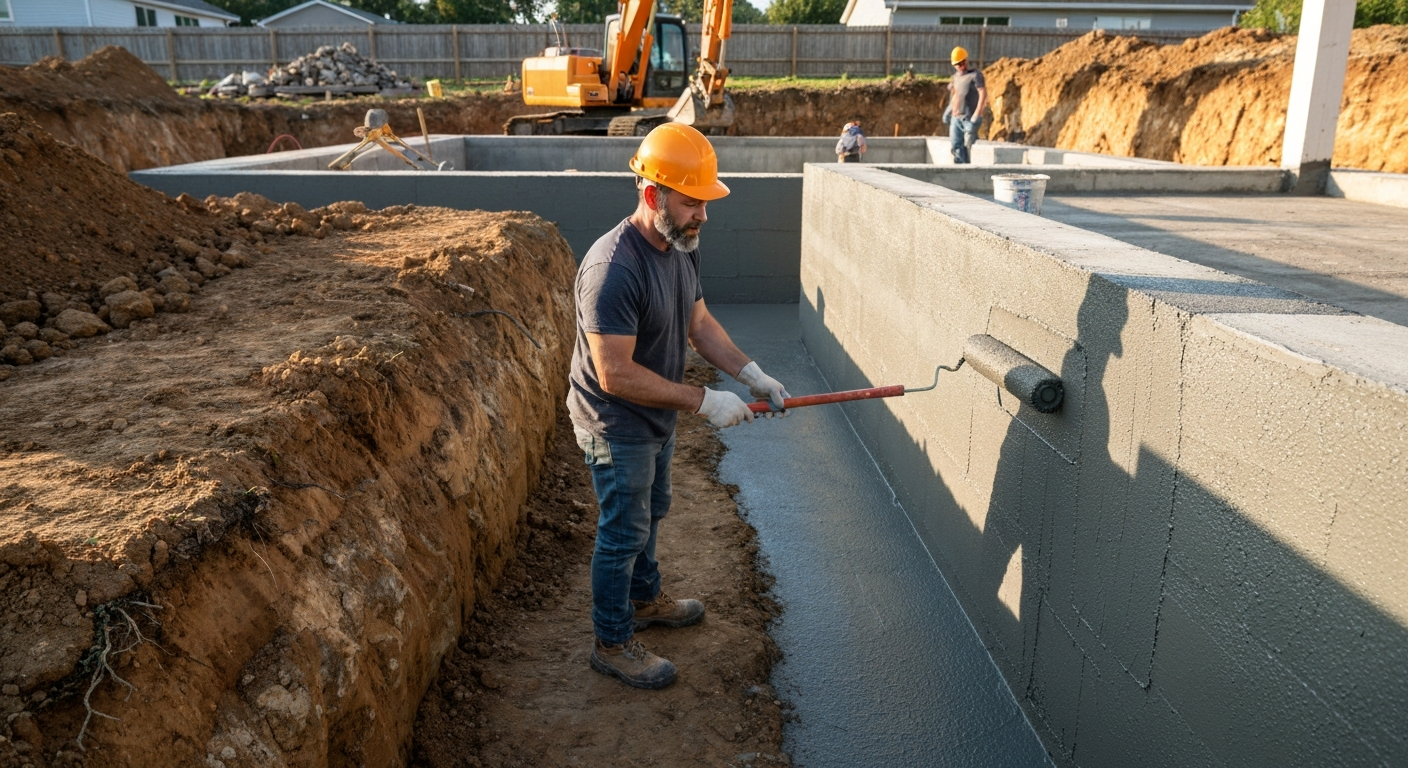
Basement waterproofing options and costs in Downsview-Roding-CFB
In Downsview-Roding-CFB, homeowners typically have three “tracks” for basement waterproofing: correcting the water source from the outside, managing water after it enters through the perimeter, or fixing isolated entry points like cracks and failed penetrations. With a population of 35,052 (Statistics Canada, 2021 Census), the area mirrors much of Toronto’s older, owner-occupied stock—especially post-war and 1960–1980s homes—where original weeping tile or early drainage systems are often partially collapsed, clogged, or missing sections. That matters because many leaks are not caused by brand-new exterior wall failures; they’re frequently driven by aged drainage, cold joints, tie holes, and freeze–thaw widening small defects over several winters.
Toronto-area waterproofing costs are shaped by mixed glacial till and clay soils that hold water and expand when saturated, creating lateral pressure on foundations. Combine that with local freeze–thaw cycles and you can see why minor cracks can become active seepage, turning into interior dampness, efflorescence, and basement flooding. Labour availability can also affect pricing in demand-heavy pockets like Downsview and the wider area around Allen Road/Canadian Tire Centre corridor (access and site constraints are common in dense lots and near additions), where exterior excavation is frequently harder and more expensive.
Below are common options with the typical range you’ll see for Downsview-Roding-CFB projects, then we’ll break down what moves the price up or down.
| Method |
What It Addresses |
Disruption Level |
Durability |
Price Range |
| Exterior excavation + new membrane + drainage tile |
Lateral soil/water pressure; bulk water entry; failed exterior drainage; replaces compromised membrane and weeping tile |
High (excavation, grading, landscaping/driveway impacts) |
High (source-control when properly installed) |
$7,000 – $25,000 |
| Interior perimeter drain channel + sump pit |
Water that enters through cracks/weeper failures; intercepts seepage before it spreads |
Medium (floor saw-cutting, perimeter work, restoration) |
Medium to High (depends on drainage design and sump reliability) |
$3,500 – $15,000 |
| Foundation crack injection (epoxy or polyurethane) |
Isolated crack leaks; seals pathways at cold joints/tie-hole pathways when targeted correctly |
Low to Medium (minor surface opening and cleanup) |
Medium (epoxy) to Medium-High (polyurethane for active moisture) |
$600 – $3,000 |
| Sump pump installation (primary + battery backup) |
Chronic seepage and higher water-table periods; protects against outages and spring flooding surges |
Low to Medium (pit excavation, plumbing, electrical) |
High (when paired with proper perimeter drainage) |
$800 – $3,500 |
| Window well drain installation |
Surface water entry around egress wells; helps manage downspout/grade-related water |
Low to Medium (yard/window well access) |
Medium (works best with proper site grading) |
$1,000 – $5,000 |
| Lot re-grading / downspout extension |
Redirects roof runoff; reduces hydrostatic saturation around foundation |
Low (minor excavation and landscaping) |
Low to Medium (best as a supplement) |
$600 – $3,000 |
Prices are estimates only and vary by project scope, site access and material selection.
What affects the price of waterproofing in Downsview-Roding-CFB
In Downsview-Roding-CFB, it’s common to see quotes for what sounds like the “same” waterproofing job swing by 30–50% across the Toronto market. Part of that is because many basements fail for multiple reasons at once—failed weepers plus a crack plus grading problems—so contractors price different scopes rather than identical labels. Another driver is how each company assesses site conditions like clay saturation and the practical limits of excavation in tight lots, where decks, fences, and additions can force hand-digging or smaller working space.
Three local factors separate regional costs from the national average: soil type, water table conditions, and freeze–thaw. In Toronto, mixed glacial till and dense clay pockets expand when saturated, increasing lateral pressure on foundation walls and worsening crack activity. During winter freeze–thaw cycles, small defects expand and become active leak paths, which can turn “crack sealing” into “crack + drainage + sump” work. High water-table periods also increase pump run time and may require a more robust sump setup (including backup).
Two concrete cost examples from Downsview-Roding-CFB: (1) a home with old, partially collapsed clay weeping tile often needs interior perimeter drainage and a sump—interior systems typically fall into the $3,500 – $15,000 band, while trying to fix only a single crack may leave the hydrostatic problem untouched; (2) if exterior excavation is blocked by a shared driveway/covered walkway or you’re working near deck footings, excavation can push the job toward the upper end of the $7,000 – $25,000 exterior range due to extra labour and restoration.
In short, the same symptom (water in the basement) can cost very different amounts depending on whether the contractor is truly controlling the source or only collecting what leaks—so the next table shows the biggest quote variables.
| Price Factor |
Why It Matters |
Cost Impact |
| Interior vs. exterior approach |
Interior often manages water after entry; exterior addresses the source and hydrostatic pressure |
Interior is usually cheaper and less disruptive; exterior can add major excavation/restoration costs |
| Foundation type |
Poured concrete often seals better; block and older assemblies may require more drainage and targeted sealing |
Block or stone with seepage paths often increases labour and need for perimeter capture |
| Soil type |
Clay holds water and expands in freeze–thaw, increasing wall pressure |
Clay-heavy sites often need stronger drainage and more robust detailing |
| Crack type and length |
Hairline cracks may be cosmetic; horizontal/stepped or long cracks can indicate active movement |
Active or structural cracks usually require more prep and possibly engineering/extra work |
| Sump pump backup system |
Battery backup protects during outages common during spring wet periods |
Adding backup typically increases the project, but reduces flood risk |
| Access |
Landscaping, decks, and driveways can significantly affect excavation time and restoration |
Tight access often raises labour and disposal/restoration costs |
| Weeping tile age |
Original drainage (often 60+ years) may be completely failed or partially blocked |
Failed weepers commonly require replacement exterior work or interior drainage augmentation |
| Mould or efflorescence remediation required before sealing |
Moisture management needs to precede sealing; contaminated areas must be cleaned |
Remediation adds time, materials, and can delay sealing steps |
Permits & regulations in Ontario
In Ontario, the work involved in basement waterproofing can range from straightforward restoration to regulated structural or drainage changes. In general, foundation excavation, structural crack repair (especially where there’s any indication of movement), and changes to how lot drainage directs water typically require a building permit. If you’re connecting sump discharge to a municipal sewer system (storm and/or sanitary), municipal approval is normally required because it affects how runoff is managed on public infrastructure.
For structural crack repair—think horizontal cracks in block walls or major step cracks—plan on an engineer’s assessment more often than not. The goal is to determine whether underpinning, helical piles, or other structural measures are required before any sealing or drainage work is finalized. A reputable contractor should be able to explain whether the scope is “waterproofing only” or “water + structural investigation,” and whether engineering support is part of the process.
To verify an Ontario contractor in Downsview-Roding-CFB, take these steps: (1) check the contractor’s licence/registration through the appropriate Ontario registry or licensing pathway they claim; (2) request a certificate of insurance (liability) and confirm it’s current for your address; (3) confirm WSIB/WCB coverage for the company and ensure it aligns with the workers who will be on site; and (4) ask for a clearance letter or proof of coverage showing they are in good standing. For anything structural, verify they document the engineer’s findings and that responsibilities are clearly stated in writing.
Interior vs exterior waterproofing — what does Downsview-Roding-CFB need?
The fundamental difference is that exterior waterproofing permanently targets the source—by excavating around the foundation, installing or replacing membrane systems and drainage tile, then backfilling—so water has a defined path away from the walls. Interior waterproofing does not stop hydrostatic pressure from acting on the foundation; instead, it manages water that enters by capturing it at the perimeter using a drain channel and (commonly) a sump pit with a sump pump.
In Downsview-Roding-CFB, mixed glacial till and dense clay pockets make water retention a common problem, and freeze–thaw can widen small defects each winter. That usually means exterior control is best when you’re dealing with chronic water pressure or widespread drainage failure—especially when exterior weeping tile is clogged or collapsed. Interior systems, on the other hand, are often the practical first choice when excavation is constrained by decks, driveways, or tight side yards, or when you need to address long-standing seepage without major landscape disruption. For example, poured concrete walls often respond well to targeted crack injection plus interior capture, while block foundations frequently benefit from a more complete perimeter drainage strategy because seepage can travel through joints and masonry voids.
Sump pump backup systems matter in Ontario because power interruptions can happen during late-winter storms and spring wet spells. A battery backup can keep the pump running long enough to prevent a basement from filling if power drops while the clay remains saturated.
A realistic dollar example: if your assessment shows failed drainage and lateral pressure, an exterior project typically sits in the $7,000 – $25,000 band. If instead the issue is primarily localized seepage with manageable access, an interior perimeter drain and sump often fits in the $3,500 – $15,000 band, making it the better value—provided the contract includes crack/tie-hole sealing and proper discharge planning.
| Method |
Best For |
Addresses Source? |
Disruption |
Lifespan |
Price Band |
| Full exterior excavation + membrane |
Chronic seepage/flooding, failed exterior drainage, high water-pressure clay sites where excavation is feasible |
Yes |
High |
High when detailed and backfilled correctly |
$7,000 – $25,000 |
| Interior French drain + sump system |
Basements with recurring moisture; sites with limited excavation access; clay-heavy retention where exterior work is difficult |
No (manages water entry after it happens) |
Medium |
Medium to High with correct design and pump selection |
$3,500 – $15,000 |
| Crack injection — epoxy (structural) |
Cracks that are not actively moving and where the goal is structural sealing and moisture barrier |
Limited (seals pathway, not hydrostatic source) |
Low to Medium |
Medium (depends on crack stability and prep) |
$600 – $3,000 |
| Crack injection — polyurethane (active leak) |
Active seepage cracks and joints with ongoing moisture; stop-flow where movement or pressure exists |
Limited (seals pathway, helps manage active entries) |
Low to Medium |
Medium-High when applied to the correct leak type |
$600 – $3,000 |
| Interior drain channel only (no sump) |
Light moisture, intermittent seepage, or short-term stabilization where water volumes are low |
No |
Medium to Low |
Lower than a full sump system during high-water periods |
$2,000 – $8,000 |
| Re-grading + downspout extensions |
Surface water overflow symptoms; minor dampness tied to roof runoff around the perimeter |
No (supplements) |
Low |
Low to Medium (best when paired with drainage) |
$600 – $3,000 |
How to choose a waterproofing contractor in Downsview-Roding-CFB
Choosing the right waterproofing contractor in Downsview-Roding-CFB is mostly about proof, not promises. Start by verifying Ontario coverage: request the contractor’s certificate of insurance for liability and confirm it’s active for your project. Ask for proof of WSIB/WCB coverage for the company and the individuals who will be working on your site. Then confirm they carry the appropriate licensing/registration for the scope they’re proposing (especially where structural assessment or permit work may be involved). Don’t accept “we’re covered” without paperwork—look at the dates and confirm the policy matches the named business.
Next, get 2–3 itemised written quotes, not lump sums. You want labour and materials broken out (excavation/disposal, membrane/drainage components, sump components, crack injection product and quantity, and restoration). Read exclusions carefully: is permit pulling included, is debris disposal included, and what’s included for landscape restoration if exterior excavation is required? A clear scope should explain how they’ll locate the leak path, how they’ll address failing drainage versus isolated cracks, and how discharge is planned.
Warranty matters too. Look for a workmanship warranty length and whether the product/manufacturer warranty is included. Ask if warranties are transferable if you sell the home. For payment, never pay more than 10–15% upfront; hold back a portion until the work is complete and inspected. Finally, get a start date and a completion estimate in writing so you can confirm labour planning and material lead times.
- Request proof of liability insurance and confirm coverage is current.
- Verify WSIB/WCB clearance or coverage evidence before work begins.
- Ask for an Ontario permit responsibility statement (who pulls permits, if needed).
- Get itemised pricing for excavation, drainage tile, membrane, sump components, and restoration.
- Confirm disposal and dump fees are included (especially for exterior jobs).
- Require a written scope showing how discharge is managed (and whether municipal approval is needed).
- Ask how they determine whether to use epoxy vs polyurethane injection.
- Check whether they include crack preparation steps (surface prep, cleaning, and proper injection points).
- Request details on sump pump model and backup system (battery type, run capacity, and controls).
- Ask what “failure” looks like and how they’ll respond if water still appears after the first season.
- Ensure warranty terms are written and tied to workmanship and specific installed materials.
- Confirm payment schedule: small deposit only, remaining balance held until completion.
Red flags to watch for: (1) contractors who won’t show insurance/WSIB/WCB documents; (2) “one-size-fits-all” proposals that skip a drainage assessment in clay-heavy Downsview-Roding-CFB basements; (3) vague scope language like “we’ll waterproof it” with no method breakdown or product quantities; (4) no written warranty details; and (5) requests for large upfront payments or refusal to put timelines in writing.
Frequently asked questions — waterproofing in Downsview-Roding-CFB
How do I choose a waterproofing contractor in Downsview-Roding-CFB?
Start with documentation. In Ontario, verify the contractor’s liability insurance certificate and WSIB/WCB coverage (ask for clearance or current proof). Then compare 2–3 itemised written quotes so you can see labour and materials separately—especially for membrane/drainage, sump components, or crack injection quantities. For Downsview-Roding-CFB, insist the scope matches local realities: mixed glacial till with dense clay pockets, freeze–thaw cycles, and the likelihood of failing older drainage systems in post-war homes. If the contractor proposes only crack sealing when your weeping tile appears clogged or collapsed, that mismatch can cost more later. A strong quote will also state what permits are included, and what happens if water persists after the first wet season.
What is a battery backup sump pump and do I need one in Downsview-Roding-CFB?
A battery backup sump pump is a secondary pumping system that runs during power outages. In Downsview-Roding-CFB, it can be worth it because spring melt and heavy rain periods can coincide with outages, and once clay remains saturated, water can build quickly in a perimeter drain. Typical sump pump installations can fall in the $800 – $3,500 range depending on whether you’re adding primary pump only or primary plus backup, and how complex the discharge and wiring are. Whether you “need” it depends on how often you see water, whether you have a reliable battery backup plan for your home’s basement use, and whether your interior system is designed to handle run time. If you’ve had flooding during past outages, that’s a strong reason to include backup.
How much does basement waterproofing cost in Downsview-Roding-CFB?
Costs vary based on whether you’re correcting the source from the outside or managing water after it enters. Exterior waterproofing (excavation, new membrane, and new drainage tile) commonly lands in the $7,000 – $25,000 band due to access limitations, excavation time, and landscaping/driveway restoration. Interior waterproofing (perimeter drain channel and sump pit) often ranges from $3,500 – $15,000 when the work is contained, though it can climb with extensive interior prep, mould remediation, or difficult floor conditions. Foundation crack repair via injection is frequently lower, often in the $600 – $3,000 band for isolated areas. If you’re unsure which band applies, ask for an assessment that distinguishes failing drainage/seepage paths from isolated cracks, then match the method to the cause rather than the symptom.
Interior vs exterior waterproofing — which is better?
Exterior waterproofing is usually “better” for long-term source control because full excavation allows a membrane and drainage tile system to redirect water before it presses on the foundation. That said, it’s also more disruptive. In Downsview-Roding-CFB, excavation can be expensive where decks, driveways, and tight lot lines restrict access, pushing exterior projects toward the upper portion of the $7,000 – $25,000 range. Interior waterproofing is often the practical best choice when you need to limit disruption, or when the failure is primarily internal seepage related to aged drainage systems. Interior systems commonly fit within $3,500 – $15,000 and can be very effective when designed with proper perimeter drainage and sump capacity. The “best” answer is the one matched to soil/clay pressure, water entry points, and your ability to excavate externally.
Why is my basement leaking in Downsview-Roding-CFB?
Basement leaks in Downsview-Roding-CFB are often driven by a combination of clay water retention and freeze–thaw widening defects over time. Mixed glacial till and dense clay pockets can hold water against foundation walls, increasing lateral pressure and turning small cracks, tie holes, and cold joints into active seepage paths. Many older post-war homes also have original weeping tile or early drains that are partially failed—leading to dampness, efflorescence, and in some cases flooding—without obvious exterior wall collapse. If you’re seeing water near window wells or along specific wall runs, surface drainage (roof runoff and grade) may be contributing too. A good contractor will diagnose whether you have a drainage failure, a localized crack, or both—because the fix changes dramatically between sealing one crack and rebuilding drainage to reduce hydrostatic pressure.
How do I know if a foundation crack is serious?
Crack “seriousness” depends on movement indicators and the crack type, not just size. In Ontario and especially in Toronto’s freeze–thaw climate, hairline cracks can expand over winters, but active horizontal or stepped cracking can suggest movement or pressure that shouldn’t be treated as purely cosmetic. Ask a contractor to evaluate: whether the crack is widening seasonally, whether there are signs of seepage (tide-like wetness, dampness trails, efflorescence), whether doors/windows are sticking, and whether the crack is in a perimeter area associated with water flow. For isolated, stable cracks, injection repair is often a targeted fix and can fall in the $600 – $3,000 band. If it’s a suspected structural issue, Ontario practice typically involves a structural engineer’s assessment before sealing, and that’s what you should insist on for horizontal/major step cracks.