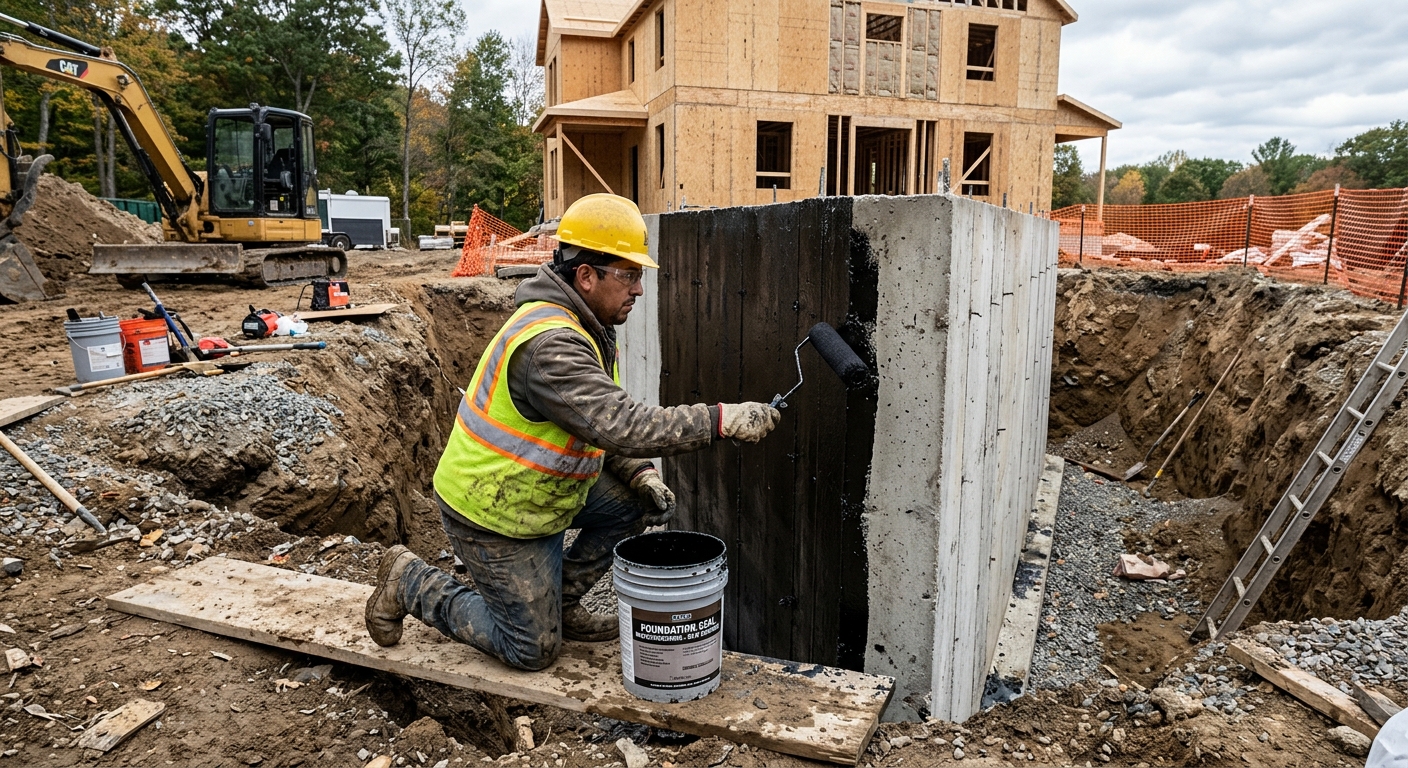
Basement waterproofing options and costs in Oakwood Village
In Oakwood Village, basement waterproofing usually comes down to managing Toronto’s mix of glacial till and clay soils, plus the kind of seasonal freeze–thaw damage that turns minor cracks into active seepage. With 21,210 residents in the area (Statistics Canada, 2021 Census), you’ll find strong competition among contractors—but pricing still varies widely because many jobs are constrained by tight lots, existing landscaping, and older drainage systems.
One reason projects feel “all over the map” is housing age. In Toronto’s post-war and 1960–1980s homes, original clay weeping tile or early plastic drains are often partially collapsed or clogged. That leads to interior dampness, efflorescence, and basement flooding long before exterior wall damage looks dramatic. Freeze–thaw then widens small defects in concrete and block foundations, especially around cold joints, tie holes, and cracks—so water finds the path of least resistance.
In Oakwood Village’s higher-demand pockets—particularly near the more mature residential streets where older weeping tiles are common—homeowners often call after the first serious spring thaw. At that point, contractors need to decide quickly whether an exterior excavation and membrane is the best long-term fix, or whether interior drainage and a sump approach is more realistic given access and cost. A good quote will explain which water-entry pathways are active (cracks, tie holes, window wells, or failed weepers), then match the method to the soil/water conditions and the foundation type.
Below is a practical comparison of common options and typical price bands for Oakwood Village, Ontario—then you can align those ranges with the scope shown in itemized proposals.
| Method |
What It Addresses |
Disruption Level |
Durability |
Price Range |
| Exterior excavation + new membrane + drainage tile |
Primary source water entry; lateral soil and water pressure against foundation |
High (excavation, landscape disruption, backfill) |
Long-term when properly detailed |
$7,000 – $25,000 |
| Interior perimeter drain channel + sump pit |
Water that enters through cracks/joints; collects and routes to sump |
Medium (interior cutting, concrete removal) |
Very durable with good sump sizing and discharge |
$3,500 – $15,000 |
| Foundation crack injection (epoxy or polyurethane) |
Isolated crack leaks; stops seepage path |
Low (localized drill-injection) |
High for correctly selected product and crack condition |
$600 – $3,000 |
| Sump pump installation (primary + battery backup) |
Ongoing seepage management and pump resilience during outages |
Low to medium (pit excavation and routing) |
High when backup and check valves are correctly installed |
$800 – $3,500 |
| Window well drain installation |
Surface water entering around window wells and weeping paths |
Low to medium (localized excavation around wells) |
Moderate to high with proper grading and coverings |
$1,200 – $4,500 |
| Lot re-grading / downspout extension |
Reduces external water load; directs runoff away from foundation |
Low (surface work) |
Moderate (depends on maintenance and soil settle) |
$900 – $5,000 |
Prices are estimates only and vary by project scope, site access and material selection.
What affects the price of waterproofing in Oakwood Village
In Oakwood Village and the broader Toronto economic region, quotes for the “same” waterproofing problem can swing by 30–50% because contractors price for site conditions, access, and how much of the water pathway they can actually correct. A basic interior drainage/sump scope may look similar between homes, but excavation depth, concrete thickness, sump discharge distance, and whether the existing drainage is already clogged can change labour time dramatically. Exterior work also varies because digging next to driveways, additions, and mature trees takes longer and increases protection/repair costs.
Three local drivers consistently separate regional costs from the national average: soil type, water table behaviour, and freeze–thaw. Clay-heavy pockets in the region expand when saturated, exerting more lateral pressure on foundation walls and worsening crack movement over time. In areas with higher local water tables, sump run times increase and contractors may recommend primary plus battery backup to keep the system working during spring power interruptions. Finally, Ontario’s freeze–thaw cycles widen small defects in concrete and block foundations; repairs that would last longer in stable climates can fail sooner if the root water entry is not controlled.
Concrete examples from Oakwood Village: if you have a partially failed weeping tile that’s still discharging near the foundation, exterior excavation + membrane can cost closer to $7,000 – $25,000 because tie-in and replacement depth matter. If the issue is mainly localized seepage through a few cracks, foundation crack injection may be far lower—often aligning with $600 – $3,000—especially when the cracks are stable and product selection (epoxy vs polyurethane) matches the leak behaviour. Conversely, homes with heavy interior efflorescence typically need more preparation than “just sealing,” pushing costs toward the upper end of interior waterproofing bands like $3,500 – $15,000.
These are why an accurate site assessment—especially around cold joints, tie holes, and drainage condition—is essential before you compare prices across contractors.
| Price Factor |
Why It Matters |
Cost Impact |
| Interior vs. exterior approach — interior is less disruptive but addresses symptoms |
Exterior corrects the water entry source; interior manages water after it enters |
Interior can be 40–70% less, but depends on how far water penetrates and whether drainage already failed |
| Foundation type — poured concrete vs. block vs. stone vs. ICF |
Crack movement and detailing differ; block often needs interior drainage as a practical complement |
Block and older stone can add prep and labour for crack sealing/detailing |
| Soil type — clay expands more than sand, adding pressure |
Clay expansion increases hydrostatic and lateral pressure on walls |
Often pushes you toward exterior membrane/drainage or stronger interior management |
| Crack type and length — hairline vs. structural horizontal cracks |
Active leak cracks require different products and more detailed injection planning |
Structural or long horizontal cracks can increase engineering and repair scope |
| Sump pump backup system — battery or water-powered backup needed |
Reduces risk during spring flooding/power interruptions |
Typically adds a measurable line item to sump installations |
| Access — landscaping, decks, or driveways must be removed for exterior |
More demolition/protection increases labour and restoration |
Can add thousands, especially on tight lots |
| Weeping tile age — original tile (60+ years) may be completely failed |
Collapsed/clogged drains require replacement rather than tie-ins |
Replacement depth and extent can push exterior projects toward the upper band |
| Mould or efflorescence remediation required before sealing |
Water damage must be addressed before coatings or sealants bond reliably |
Preparation work can increase duration and material usage for interior scopes |
Permits & regulations in Ontario
In Ontario, certain waterproofing-related work typically requires a permit, especially when excavation affects foundations or when you’re changing drainage connections. In general terms, foundation excavation, structural crack repair that could be considered part of structural remediation, and changes to lot drainage commonly require permit approvals. If you’re installing a sump pump and connecting discharge to the storm or sanitary sewer system, you should expect municipal approval requirements and coordination—your contractor should confirm the exact application path before work begins.
For structural crack repair—particularly horizontal cracks in block walls or any step cracks that raise a concern about movement—a structural engineer’s assessment is often required. That assessment determines whether you need underpinning or additional structural measures, not just sealing. When contractors provide only “a sealant” without evaluating movement, the repair may fail after the next freeze–thaw cycle.
How a homeowner in Oakwood Village can verify the contractor’s coverage step-by-step: (1) Confirm the contractor is properly licensed/registered as required for the work type in Ontario (use the relevant online registry for contractor status). (2) Ask for a current certificate of insurance (COI) showing liability coverage, and request to see the named insured matching the company on your quote. (3) Request WSIB/WCB clearance or coverage documentation where applicable, and ensure it’s current for the date of work. (4) For any structural component, ask whether they include engineering support and whether they can provide engineer letters/reports as needed for permitting. (5) Verify that the written scope clearly states whether permits, inspections, and discharge approvals are included—or who is responsible.
Interior vs exterior waterproofing — what does Oakwood Village need?
Exterior waterproofing and interior waterproofing both help, but they solve different problems. Exterior waterproofing means full excavation, new membrane, new drainage tile, and careful backfilling—so it aims to stop water from reaching the foundation in the first place. It’s the most permanent source-control approach, but it’s also the most disruptive: landscaping removal, deck/sideyard considerations, and longer timelines are common on tight Oakwood Village lots.
Interior waterproofing manages water after it enters the basement. Typical methods include a perimeter drain channel, a sump pit, and a sump pump (often with battery backup). This can be less invasive and less weather-dependent than full excavation, but it does not eliminate hydrostatic pressure against the wall itself—so crack movement and efflorescence can continue unless the entry points are also addressed.
In Oakwood Village’s Toronto climate and soil conditions—clay-heavy pockets, higher seasonal saturation, and frequent freeze–thaw—poured concrete walls often respond well to targeted crack injection when the cracks are stable, because properly selected injection products can restore water-tightness. Block foundations, on the other hand, frequently benefit from interior drainage as a practical complement because block joints and movement patterns can keep generating localized seepage. Where seepage is chronic (frequent dampness or recurring spring water), a sump pump with backup becomes a “risk-management” decision, not just equipment.
Price-wise, the gap can be substantial. If you’re dealing with a single active seep through a few cracks, injection may align with $600 – $3,000. If you instead have widespread lateral water pressure and failing drainage around the perimeter, an exterior membrane approach may fall within $7,000 – $25,000. The higher cost is justified when you’re treating the real source—failed exterior drainage and clay-driven pressure—rather than chasing symptoms inside.
| Method |
Best For |
Addresses Source? |
Disruption |
Lifespan |
Price Band |
| Full exterior excavation + membrane |
Widespread water entry, clay-driven lateral pressure, chronically wet basements |
Yes |
High |
Long-term when detailed correctly |
$7,000 – $25,000 |
| Interior French drain + sump system |
Chronic seepage, failing weepers when exterior access is limited |
No (manages water after entry) |
Medium |
Very durable with correct pump sizing and discharge routing |
$3,500 – $15,000 |
| Crack injection — epoxy (structural) |
Stable cracks where structural movement is minimal and water-tightness is needed |
Yes for that crack pathway |
Low |
Long service life when the crack is stable and cleaned/prepped |
$600 – $3,000 |
| Crack injection — polyurethane (active leak) |
Active seepage cracks where water is present at the time of repair |
Yes for that crack pathway |
Low |
High for active leaks when properly selected and installed |
$600 – $3,000 |
| Interior drain channel only (no sump) |
Occasional moisture and low-volume seepage where pump capacity is not required |
No |
Medium |
Moderate; depends on discharge method and grade |
$2,500 – $9,500 |
| Re-grading + downspout extensions |
Surface runoff problems and minor wetting near grade |
Partial (reduces external loading) |
Low |
Moderate (maintenance matters) |
$900 – $5,000 |
How to choose a waterproofing contractor in Oakwood Village
Start by verifying Ontario requirements and real coverage—not just a website claim. Ask for the contractor’s Ontario licence/registration status (and use the online registry to confirm it matches the company name), plus a current certificate of insurance showing liability coverage. For jobsite safety, request WSIB/WCB clearance or coverage documentation and confirm it’s valid for the work period. If they’re proposing structural-related repairs (common when cracks suggest movement), confirm they have engineering support available and can provide documentation appropriate for permitting/assessment.
Next, request 2–3 itemised written quotes. The best quotes break labour and materials separately (excavation scope, membrane/drainage tile supplies, pump and check valves, sump pit construction, disposal/restoration, and any restoration allowances). A lump-sum estimate without a breakdown makes it hard to compare apples to apples. Read the exclusions carefully: Is disposal included? Is permit pulling included or is it homeowner responsibility? Are restoration costs (sod, paving, deck side panels) covered if exterior excavation is required?
Warranty matters too. Confirm the workmanship warranty length in writing, whether product/manufacturer warranties are included, and whether those warranties are transferable if you sell your home. For payment, a safe approach is never paying more than 10–15% upfront and holding back the remainder until the job is complete and cleanup is verified. Finally, get a start date and a completion estimate in writing so spring scheduling doesn’t turn into extended uncertainty after excavation begins.
- Confirm Ontario licensing/registration matches the legal company name on the quote.
- Ask for a certificate of insurance (COI) and verify coverage is active for the job dates.
- Request WSIB/WCB clearance/coverage documentation.
- Get engineering/structural assessment support in writing when cracks may indicate movement.
- Insist on an itemised scope (labour + materials) rather than a single lump sum.
- Confirm whether permits are included and which permits are required.
- Verify disposal and spoil removal are included (especially for exterior excavation).
- Ask how discharge from a sump pump will be routed and whether approvals are needed.
- Review product specs: membrane type, drainage tile, check valves, and any backup system.
- Confirm warranty: workmanship duration, product warranty details, and transferability.
- Agree on a payment schedule with a holdback until final inspection/cleanup.
- Ask for a timeline and weather contingency plan for freeze–thaw and spring thaw.
Red flags to watch for in Oakwood Village: contractors who promise “one-size-fits-all” waterproofing without assessing drainage/soil conditions; quotes that ignore the condition of existing weeping tile or discharge routing; warranties that are vague (“up to X years”) without workmanship terms; schedules that avoid giving start/completion dates in writing; and payment requests that exceed 10–15% upfront before any on-site assessment or permit steps are completed.
Frequently asked questions — waterproofing in Oakwood Village
Can I waterproof my basement in winter in Oakwood Village?
Yes, many waterproofing repairs can be done in winter in Oakwood Village, but it depends on what’s being repaired. Interior crack injection and interior drain/sump work are often more feasible when temperatures are low, because they don’t require full perimeter excavation. Exterior excavation can be delayed because frozen soil increases labour time, complicates backfill, and makes it harder to detail membranes and drainage tile properly. Ontario’s freeze–thaw cycle is exactly why winter repairs should be planned carefully: you want the system to be complete and watertight before spring thaw ramps up. If your quote is recommending interior work first and exterior later, ask the contractor to explain the order of operations and how they’ll protect exposed surfaces until exterior work is possible.
What is the difference between waterproofing and damp-proofing?
In Ontario, “damp-proofing” generally means reducing moisture through coatings or partial measures when water pressures are low. “Waterproofing” typically addresses active water entry and higher pressure conditions—like seepage through cracks, joints, or failed drainage—using systems such as drainage tile, sump pits, membranes, and correct crack injection products. In Oakwood Village’s Toronto region, clay-heavy soils can hold water and expand during freeze–thaw, increasing lateral pressure and making damp-proofing insufficient when the basement is already experiencing efflorescence or seasonal flooding. That’s why homeowners who see repeated dampness after heavy spring rains often end up needing interior perimeter drains and sump systems, which typically align with $3,500 – $15,000 depending on scope and access.
Will basement waterproofing affect my property value in Oakwood Village?
Often, yes—especially when the work is documented and addresses an ongoing moisture issue that buyers can notice. In Oakwood Village and the Toronto area, basements that show efflorescence, musty odours, or past flooding history can reduce perceived value even if the house is otherwise well kept. A properly installed waterproofing system (with clear photos, written warranties, and a complete scope) helps demonstrate that the moisture risk is managed, not ignored. Exterior source-control work can be a strong selling point when access is available and the problem is tied to failing weeping tile and clay-driven pressure. Interior drainage and a sump system also add value when the cause is clear and the discharge and backup are correctly planned. If you’re comparing budgets, remember a targeted repair like crack injection at $600 – $3,000 can be valuable when the issue is isolated—but chronic wetting usually calls for a broader system.
What drainage issues are most common in Oakwood Village homes?
The most common issues in Oakwood Village homes are usually tied to older drainage systems and how they perform during spring saturation. In many 1960–1980s neighbourhood homes, original clay weeping tile or early plastic drains are partially collapsed or clogged, which leads to interior dampness, white efflorescence from salts, and—when water levels rise—basement flooding. Freeze–thaw then widens small defects in poured concrete and block foundations, creating new seepage pathways through cold joints, tie holes, and cracks. A second common issue is window well water loading when downspouts or grading direct runoff toward the foundation instead of away. Less dramatic but frequent problems include clogged or inadequate downspouts and poor lot grading that keeps surface runoff at the foundation wall.
How do I choose a waterproofing contractor in Oakwood Village?
Choose a contractor the way you’d choose a specialist: verify Ontario coverage and competence, then demand clarity in the quote. In Oakwood Village, ask for the contractor’s Ontario licensing/registration status and confirm it through the online registry. Request a certificate of insurance (liability COI) and WSIB/WCB documentation, and confirm they’re current for the planned work dates. Then compare written quotes that are itemised—labour and materials—so you can see what’s included (permits, disposal, discharge routing, restoration). Make sure the scope addresses the real water entry pathway: failed weeping tile, active crack leakage, window well inflow, or chronic seepage requiring sump redundancy. Finally, review warranty terms: workmanship length, product/manufacturer warranty details, and whether warranties are transferable for future buyers.
What is a battery backup sump pump and do I need one in Oakwood Village?
A battery backup sump pump is a secondary power system that keeps the sump running during power outages, particularly during spring flooding events when seepage increases. In Oakwood Village, adding backup is often a smart risk-management choice because spring thaw can coincide with local grid disruptions and because power loss means water can rise in the basement faster than you can respond. Whether you “need” it depends on your risk profile: if you already have frequent seepage, a history of spring water, or you rely on the sump as your primary protection, backup becomes more than an upgrade. It’s also worth discussing check valves and discharge routing to prevent backflow. Battery backup is typically included or added within sump-related pricing in the general range of $800 – $3,500, depending on system design and whether additional electrical components are required.