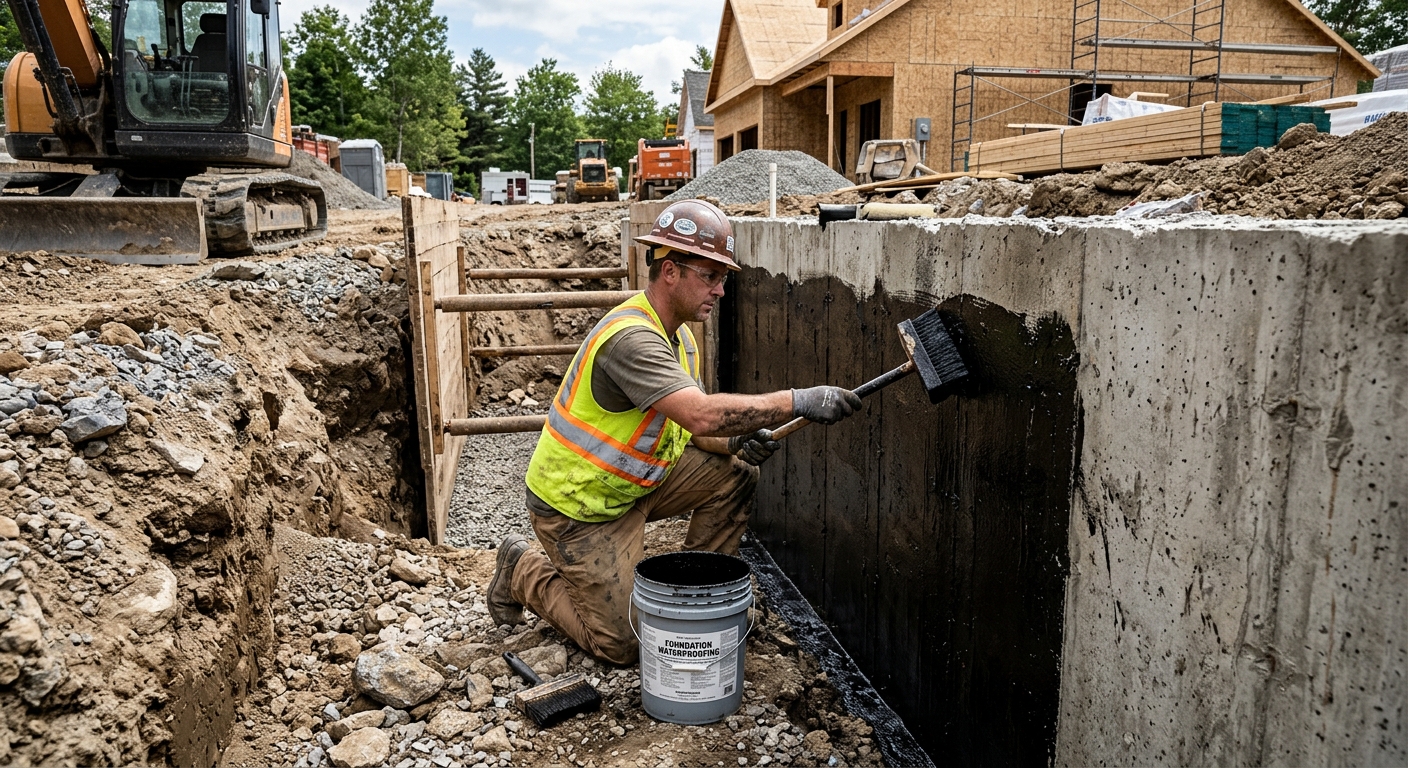
Basement waterproofing options and costs in Niagara
Niagara homeowners deal with basement moisture year-round, but the real pressure shows up after heavy rain and during spring melt. In Niagara’s Hamilton–Niagara Peninsula area, clay and silty clay pockets can hold water against foundation walls, and that matters because many basements were built before modern waterproofing membranes and reliable drainage upgrades. In fact, Niagara has a meaningful older-home base—Statistics Canada reports the region’s population at 31,180 (Statistics Canada, 2021 Census)—and that typically means more homes have original, aging weeping tile systems that no longer carry water away reliably.
When contractors price waterproofing here, they’re not just pricing materials—they’re pricing excavation time and drainage complexity. With regional water tables often roughly 2–4 m below grade (and perched water in shallow fill), deeper basements can trigger longer sump run times and more robust stone-and-membrane systems. Freeze–thaw cycles then widen existing cracks, so work that looks “cosmetic” (like patching) can become expensive later if the underlying water pathway isn’t addressed. Because demand is steady in older neighbourhoods, trades are especially busy around St. Catharines’ older pockets and in areas close to the QEW corridor where lot drainage and re-grading are common add-ons.
Below is a practical comparison of common options you’ll see in Niagara quotes, so you can match the method to the symptom you have and the disruption you can handle.
| Method |
What It Addresses |
Disruption Level |
Durability |
Price Range |
| Exterior excavation + new membrane + drainage tile |
Primary water entry by restoring exterior waterproofing and bulk-water drainage; installs new weeping tile and proper backfill |
High (excavation, landscape removal, deck/patio and driveway adjustments) |
Long-term (often 20+ years with proper detailing and backfill) |
$12,000–$25,000 |
| Interior perimeter drain channel + sump pit |
Water that enters through cracks/weepage pathways; collects and pumps it away |
Medium (interior excavation in basement; floor drain/utility coordination) |
Good (typically 15+ years when maintained and sealed properly) |
$8,000–$18,000 |
| Foundation crack injection (epoxy or polyurethane) |
Stops seepage through cracks; epoxy for stable, non-moving cracks; polyurethane for active leaks |
Low (controlled holes/ports; minimal demolition) |
Variable (excellent for the right crack type; often 10–20 years) |
$600–$1,800 |
| Sump pump installation (primary + battery backup) |
Prevents interior flooding and reduces hydrostatic pressure damage during high-water periods |
Low to Medium (pit excavation and electrical coordination) |
High when backup is included; protects during outages |
$1,800–$4,200 |
| Window well drain installation |
Directs rainwater and seepage away from basement window openings |
Low to Medium (minor exterior digging or exterior liner changes) |
Good (often 10–15 years with clean out access) |
$1,000–$3,500 |
| Lot re-grading / downspout extension |
Reduces surface water infiltration that overwhelms older or partially failed drainage |
Low (usually no excavation beyond near-grade work) |
Moderate (performance depends on soil settlement and maintenance) |
$600–$3,000 |
Prices are estimates only and vary by project scope, site access and material selection.
What affects the price of waterproofing in Niagara
In Niagara and across the Hamilton–Niagara Peninsula region, you can see quotes for the “same” basement waterproofing scope that differ by 30–50%—even when the contractor uses similar materials—because the real drivers are site conditions and how water behaves in your soil. The biggest separators from the national average are (1) soil type, (2) water table, and (3) freeze–thaw effects. Clay-heavy pockets common in parts of Ontario hold moisture and can expand during freeze–thaw, increasing lateral pressure on foundation walls and accelerating crack growth. In Niagara, where water tables can sit roughly 2–4 m below grade and perched water may occur in shallow fill, interior systems can require larger sump pits and longer-run controls, while exterior systems may require deeper, more robust excavation and drainage stone. By contrast, regions with more free-draining soils often need less excavation and smaller drainage volumes.
Weather and housing age also tighten the labour cost picture. Older housing stock (and, frequently, older weeping tile) is common in the same places where many basements are deeper and drainage is marginal. That’s why “just patching” a crack can be more expensive later: if the water pathway continues, you end up paying twice. As a ballpark, homeowners often start with interior waterproofing/weep-ing tile repairs in the $8,000–$18,000 range, but if excavation reveals chronically wet clay around the perimeter, exterior excavation + membrane/drainage tile can move toward the $12,000–$25,000 band.
Concrete Niagara examples that shift cost up or down: a basement with active seepage after every spring thaw often needs polyurethane injection plus a sump upgrade; a property with decks or interlocking around the foundation perimeter usually adds labour and disposal; and a home on well-draining grade with long downspout extensions may reduce the need for exterior excavation by improving surface run-off management first.
| Price Factor |
Why It Matters |
Cost Impact |
| Interior vs. exterior approach — interior is less disruptive but addresses symptoms |
Interior works after water enters; exterior reduces water entry by restoring the perimeter system |
Typically interior is $3,000–$10,000 lower, but can fail to fully control hydrostatic pressure in wet soils |
| Foundation type — poured concrete vs. block vs. stone vs. ICF |
Crack patterns and sealing behavior differ; block often requires interior drainage as a practical complement |
Block and stone can add labour for detailing and crack mapping ($1,000–$5,000) |
| Soil type — clay expands more than sand, adding pressure |
Expanding clay increases wall stress and crack reopening risk |
More robust drainage stone/backfill and deeper excavation can add $2,000–$8,000 |
| Crack type and length — hairline vs. structural horizontal cracks |
Horizontal/structural cracks may need engineer assessment and different repair strategy |
Can swing cost by $600–$3,000+ depending on injection vs. additional structural work |
| Sump pump backup system — battery or water-powered backup needed |
Backup protects during spring flooding and short power outages |
Often adds roughly $600–$1,800 to a sump installation total |
| Access — landscaping, decks, or driveways must be removed for exterior |
Excavation time rises with removals and careful re-installation |
Removal and disposal can add $1,000–$7,000 |
| Weeping tile age — original tile (60+ years) may be completely failed |
Collapsed or disconnected tile means water won’t be captured effectively |
Exterior drainage rebuild becomes more likely (+$4,000–$15,000 depending on depth) |
| Mould or efflorescence remediation required before sealing |
Sealers and membranes don’t bond well over contaminated or wet masonry without prep |
Prep and remediation can add $500–$3,000 |
Permits & regulations in Ontario
In Ontario, foundation excavation and many foundation-related repairs typically require a building permit—especially work that changes the structure or the way the site manages water. In practice, permits are commonly required for: significant foundation crack repair (particularly when cracks suggest structural movement), excavation and re-waterproofing that changes exterior drainage at the foundation line, and changes to lot drainage (like re-grading that affects how water leaves the property). Sump pump installations may also require municipal approval depending on where discharge goes; connecting discharge to storm or sanitary systems generally triggers review.
For structural crack repair, a structural engineer’s assessment is often required for major horizontal cracks in block walls or signs of movement. The engineer’s findings determine whether you simply inject cracks or whether underpinning/other structural measures are needed before waterproofing can safely “hold.” Always confirm the contractor has engineering support for structural repairs (not just a generic “we do foundation work”), and that they carry liability insurance and WSIB/WCB coverage where applicable.
How a Niagara homeowner verifies compliance, step-by-step: (1) Ask for the contractor’s business information and licence details, then look up the Ontario licence/credentials in the appropriate online registry; (2) Request a certificate of insurance and confirm it includes liability coverage—never accept a verbal confirmation; (3) Ask for WSIB/WCB clearance or coverage proof; (4) Confirm the written scope states whether a permit will be pulled and by whom; (5) If structural work is mentioned, ask which licensed engineer will provide the assessment and if their report will be included in the file.
Interior vs exterior waterproofing — what does Niagara need?
Niagara basements usually fail for one of two reasons: water enters through the foundation envelope, or water enters and then can’t be controlled quickly enough. Exterior waterproofing—full excavation, new membrane, and new drainage tile—targets the source. When water is blocked at the wall and captured by exterior weeping tile, hydrostatic pressure drops and interior dampness often improves long-term. The trade-off is cost and disruption: exterior work requires landscape removal and careful backfill/compaction, and in clay-heavy areas it can demand more excavation because saturated soils are slower and heavier to handle.
Interior waterproofing—perimeter drain channel, sump pit, sump pump—manages water after it enters. It’s less invasive and often costs less upfront, but it doesn’t stop the hydrostatic pressure from pushing on the wall itself. In Niagara’s Hamilton–Niagara Peninsula market, that’s why wall type matters: poured concrete walls often respond well to targeted crack injection (when cracks are stable), while block foundations frequently need interior drainage as a practical complement because block joints and hairline seep paths can remain active through freeze–thaw cycles.
Backup matters too. Ontario’s spring flooding and occasional power interruptions are exactly when a battery backup (or equivalent backup) prevents mop-up cycles and keeps the system from failing at the worst time. For example, a homeowner who chooses interior drainage and sump pumping around $8,000–$18,000 may still need an added exterior component if the water table and clay pressure are high. The additional spend is justified when exterior excavation reveals persistent wet clay and poor perimeter drainage—pushing the project toward the $12,000–$25,000 exterior band.
| Method |
Best For |
Addresses Source? |
Disruption |
Lifespan |
Price Band |
| Full exterior excavation + membrane |
Wet clay soils, frequent seepage, deeper basements, and homes where exterior drainage has failed |
Yes (primary water entry) |
High |
20+ years |
$12,000–$25,000 |
| Interior French drain + sump system |
Moderate seepage, finished basements where exterior access is limited, or as a complement to crack work |
No (manages water after entry) |
Medium |
15+ years (with proper maintenance) |
$8,000–$18,000 |
| Crack injection — epoxy (structural) |
Stable, non-moving cracks in poured concrete where leakage is minor-to-moderate |
Partially (seals crack pathway if stable) |
Low |
10–20 years |
$600–$1,800 |
| Crack injection — polyurethane (active leak) |
Active seepage, moving microcracks, and crack water that shows during thaw or storms |
Partially (seals active pathway) |
Low |
10–20 years (often better for active leakage) |
$800–$2,200 |
| Interior drain channel only (no sump) |
Light dampness where gravity drainage is feasible and water volumes are low |
No |
Medium |
Variable (depends on site drainage) |
$4,500–$10,000 |
| Re-grading + downspout extensions |
Surface-water-driven leaks near window wells or at corners after storms |
Indirect (reduces entry, not foundation pressure) |
Low |
5–10+ years (maintenance dependent) |
$600–$3,000 |
How to choose a waterproofing contractor in Niagara
Choosing the right waterproofing contractor in Niagara comes down to proof, not promises. Start with Ontario licensing/credentials: ask for the contractor’s registration details and check them using the relevant online registry for your trade category. Next, request a certificate of liability insurance and confirm the policy is current and includes the scope you’re hiring for (excavation work and interior demolition can carry different risks). For WSIB/WCB coverage, ask for clearance or proof of coverage before work begins—especially if crews will enter occupied basements and do excavation or cutting.
Then get 2–3 itemised written quotes. A good quote breaks labour and materials separately (membrane and drainage components, stone, pipe, sump pit components, crack injection materials, disposal, and any restoration). Scope clarity is everything in waterproofing: confirm what’s excluded (e.g., removal of landscaping not specified, replacement of stairs, tile restoration, or any engineering fees), whether permits are included, and if disposal and hauling are covered or billed separately. Warranty matters too: insist on the workmanship warranty length, product/manufacturer warranty details, and whether the warranty is transferable if you sell your home. For payment, don’t pay more than 10–15% upfront; use progress payments tied to milestones, and hold back until the job is complete and cleaned up. Finally, ask for an agreed start date and a completion estimate in writing so you’re not left waiting through peak spring scheduling.
- Ask for proof of Ontario licensing/registration before booking dates.
- Request current liability insurance documentation (with company name matching the quote).
- Verify WSIB/WCB clearance or active coverage before anyone starts work.
- Get itemised quotes: labour vs. materials vs. disposal vs. restoration.
- Confirm whether permits will be pulled and who pays for permit fees.
- Confirm discharge location for any sump discharge (and whether approvals are needed).
- Require a written scope map of where water is expected to be corrected.
- Ask which method matches your crack type (epoxy for stable vs. polyurethane for active leaks).
- Check whether sump system includes backup (and what happens during outages).
- Ask about warranty: workmanship length, product warranty, and transferability to new owners.
- Ensure the quote states what happens with landscaping and exterior surfaces.
- Use a payment schedule that keeps 10–15% withheld until after inspection and cleanup.
Red flags I see in Niagara: “lump-sum” quotes with no written scope map, no proof of WSIB/WCB or current liability insurance, pressure to pay most of the job upfront, vague waterproofing claims like “we’ll seal it” without diagnosing water pathways, and skipping backup planning for sump systems in spring flooding conditions.
Frequently asked questions — waterproofing in Niagara
Why is my basement leaking in Niagara?
In Niagara, basement leaks are commonly caused by a combination of clay-heavy soils and seasonal freeze–thaw that widen existing cracks, then allow water entry during spring rain and melt. Many older homes also have original or failing weeping tile, so groundwater that sits higher in the ground during parts of the year can’t drain away properly. If you’ve noticed dampness after storms, along corners or wall-floor junctions, it often points to water migrating through small pathways rather than a single “failed patch.” Because water tables in the Hamilton–Niagara Peninsula region can be roughly 2–4 m below grade (and sometimes perched in shallow fill), deeper basements are especially prone to recurring seepage until exterior drainage details are corrected.
How do I know if a foundation crack is serious?
Not all foundation cracks signal structural movement, but the pattern matters. Hairline vertical cracks can be cosmetic or moisture-related, especially if they appear after freeze–thaw and don’t widen further. More serious are horizontal cracks, step cracks on block walls, or cracks that show signs of displacement (out-of-plane shifting) and keep growing across seasons. Efflorescence (white mineral staining), active dripping after heavy rain, or dampness patterns that track the crack are practical warning signs that water is entering through the pathway. In Niagara, clay expansion can reopen microcracks repeatedly, so “monitoring only” can end up costing more. If you’re seeing signs consistent with structural movement, plan for an engineer assessment before choosing injection alone.
How much does foundation crack repair cost in Niagara?
Foundation crack repair in Niagara typically lands in the $600–$1,800 range for standard injection work, depending on the number of ports, depth, and whether the crack is stable or actively leaking. Epoxy injection often suits stable, non-moving cracks; polyurethane is commonly used when leaks are active and water is still finding a path through. If the crack is part of a larger issue—such as failed exterior drainage or significant water pressure—crack repair is still useful, but it may need to be paired with interior drainage or sump upgrades. For example, homeowners often start with crack injection and then add a sump/pit solution if the dampness returns after spring melt.
Do I need a sump pump in Niagara?
A sump pump is often needed when water levels in the Hamilton–Niagara Peninsula region rise high enough that interior drainage alone can’t keep up, especially in clay-heavy soils or deeper basements. If you get recurring dampness, puddling, or musty odours in the same areas during spring or after heavy rain, a sump system is frequently the practical “control” layer. Many contractors also recommend battery backup because power interruptions can coincide with heavy rainfall events. Pricing commonly places sump pump installations in the $1,800–$4,200 range depending on whether you include primary-only or primary plus backup. If you’re planning waterproofing, confirm where the sump discharge goes and whether approvals are required under Ontario/municipal rules.
How does Niagara's soil affect my foundation?
Niagara’s foundation performance is strongly tied to soil behaviour. In the Hamilton–Niagara Peninsula region, clay and silty clay subsoils can retain moisture and expand during freeze–thaw cycles, which increases lateral pressure on foundation walls. That can worsen cracks over time and make recurring seepage more likely. Clay-heavy pockets can also slow drainage, meaning water stays near the foundation longer, raising the likelihood you’ll need more robust exterior drainage stone and membrane detailing—or a properly sized interior system with a sump. Because water tables can commonly be roughly 2–4 m below grade (with perched water in some shallow fill layers), the risk isn’t uniform across neighbourhoods, and a site visit that checks grading, drainage flow paths, and basement depth is essential before selecting a waterproofing method.
Do I need a permit for foundation work in Ontario?
In Ontario, many foundation-related scopes typically require a building permit, especially when work involves excavation at the foundation line, structural crack repair that may affect stability, or changes to lot drainage. Sump pump installations can also trigger approvals if discharge connects to storm or sanitary services, and municipalities often require review. The safest approach in Niagara is to ask your contractor to specify exactly what permits they will pull (and which items are excluded) in the written scope. For major crack situations, an engineer’s assessment is often required first so the permit and repair strategy match the actual risk. Before signing, verify the contractor will handle the permit process or clearly list it as homeowner responsibility, and confirm they carry liability insurance and WSIB/WCB coverage.