Basement waterproofing options and costs in Country Hills West
Country Hills West, Ontario sits in the Toronto market where mixed glacial till and dense clay pockets are common. That matters because clay-heavy soil can hold water and expand during freeze–thaw, increasing lateral pressure on foundation walls and turning small defects into active seepage. In a community of about 6,615 residents (Statistics Canada, 2021 Census), many basements are in older housing stock, including post-war and 1960–1980s homes where original clay weeping tile or early drainage systems are often partially collapsed or clogged. When those drains fail, homeowners typically see damp corners, efflorescence, and interior seepage that doesn’t always match an obvious exterior wall crack.
Toronto-area pricing is shaped by urban lot access—hand-digging around additions, working near deck footings, or dealing with shared driveways—plus how frequently contractors are booked in high-demand neighbourhoods. In Country Hills West, where basements often sit close to finished landscaping and driveways, exterior excavation is frequently the most disruptive and the costliest option. That’s why many homeowners start with targeted interior drainage and sump work to control water quickly, then decide on whether to pursue full exterior membrane and drainage tile for a more permanent source-control fix.
Below are the most common waterproofing approaches contractors propose in the area, along with what each method typically addresses, how much disruption to expect, and realistic Ontario price bands. Use this table as a baseline, then ask for a detailed scope before comparing quotes.
| Method |
What It Addresses |
Disruption Level |
Durability |
Price Range |
| Exterior excavation + new membrane + drainage tile |
Primary water entry from hydrostatic pressure; installs a new drainage path and membrane barrier |
High (excavation along foundation, landscaping removal/replacement) |
Long-term (often 20+ years with correct backfill and drainage) |
$7,000 – $25,000 |
| Interior perimeter drain channel + sump pit |
Controls seepage after it enters by collecting water at the footing and pumping it away |
Medium (interior floor/finish work along perimeter) |
Long-term (commonly 15–25 years depending on pump and maintenance) |
$3,500 – $15,000 |
| Foundation crack injection (epoxy or polyurethane) |
Targets isolated cracks: epoxy seals non-moving cracks; polyurethane for active leaks and water paths |
Low (minor drilling; localized patching) |
Medium to long-term (depends on whether water pressure is addressed) |
$600 – $3,000 |
| Sump pump installation (primary + battery backup) |
Reliable pumping during spring rain and during outages; reduces basement flooding risk |
Low to medium (pit excavation; electrical work) |
Medium to long-term (best with backup power and routine checks) |
$800 – $3,500 |
| Window well drain installation |
Water intrusion at egress window wells; reduces pooling and lateral seepage |
Low to medium (window well access and grading adjustments) |
Medium to long-term (depends on outlet connection and ongoing maintenance) |
$900 – $4,000 |
| Lot re-grading / downspout extension |
Moves roof runoff away from the foundation; reduces ongoing water load on walls |
Low to medium (surface work; vegetation and stone adjustments) |
Short to medium-term unless combined with drainage repair |
$900 – $5,000 |
Prices are estimates only and vary by project scope, site access and material selection.
What affects the price of waterproofing in Country Hills West
In Country Hills West and across the Toronto region, homeowners can see waterproofing quotes that swing by 30–50% for what appears to be the “same” basement problem. The difference usually comes down to how contractors interpret the source of water—whether it’s just a symptom on the interior or an active hydrostatic pressure issue driven by soil and water management. In practical terms, Toronto jobs are separated from the national average by three drivers: local soil type (especially clay), water table and drainage capacity, and freeze–thaw cycles that worsen small cracks over time.
Clay-heavy soils common around the GTA expand during freeze–thaw and exert more lateral pressure against foundation walls. That can turn hairline cracking into active seepage after a few winters, which is one reason crack injection might be priced as a targeted repair (for isolated leaks) or bundled into a wider drainage plan. High local water loads also mean longer sump run times; when exterior drainage is failing, interior systems may need more capacity and better outlet details, pushing projects from the lower end toward the mid-range of typical costs. In older neighbourhood housing, failing weeping tile—sometimes the original system installed decades ago—can be so clogged that interior drainage becomes necessary even if walls look “mostly fine.”
Concrete examples from Country Hills West: (1) a homeowner with dense clay and a partly collapsed drain line often needs exterior excavation priced in the $7,000 – $25,000 range, while (2) a second-floor addition blocking access might force an interior-first strategy in the $3,500 – $15,000 band. (3) Conversely, a straight run of downspouts and poor grading fixed early can keep costs closer to the $900 – $5,000 surface-work range, especially when there’s no active crack path.
| Price Factor |
Why It Matters |
Cost Impact |
| Interior vs. exterior approach — interior is less disruptive but addresses symptoms |
Interior systems collect and manage water after entry; exterior systems reduce water pressure at the source |
Interior typically cheaper up front, but ongoing risk can keep total cost higher over time |
| Foundation type — poured concrete vs. block vs. stone vs. ICF |
Crack behaviour and how water finds paths differ by wall type |
Poured walls may respond well to crack injection; block foundations often need complementary interior drainage |
| Soil type — clay expands more than sand, adding pressure |
Clay retains moisture and expands during freeze–thaw, increasing lateral load |
More robust drainage/membrane details can move projects toward the higher bands |
| Crack type and length — hairline vs. structural horizontal cracks |
Active or structural movement requires different treatments than small, stable cracks |
Horizontal/structural cracks usually increase labour and may require engineering and/or more extensive work |
| Sump pump backup system — battery or water-powered backup needed |
Backup reduces flooding risk during outages |
Commonly adds cost but can prevent expensive remediation if power is lost during wet spring periods |
| Access — landscaping, decks, or driveways must be removed for exterior |
Urban lots increase demolition and restoration time |
Access constraints can push exterior work toward the upper $7,000 – $25,000 range |
| Weeping tile age — original tile (60+ years) may be completely failed |
Failed drains shift the problem to higher water pressure and more interior seepage |
Often turns “repair” into “replace and re-route,” increasing scope |
| Mould or efflorescence remediation required before sealing |
Moisture contamination must be controlled prior to sealing and finishing |
Remediation labour/materials can add days and cost before waterproofing systems are closed up |
Permits & regulations in Ontario
In Ontario, certain waterproofing-adjacent work requires permits, while some tasks typically don’t. As a homeowner in Country Hills West, you’ll usually need a permit for foundation-related excavation and structural crack repairs that involve substantial intervention, as well as for changes that affect lot drainage and how water leaves the property. If you’re installing a sump system that includes any connection plan to municipal services (storm or sanitary), you must obtain the appropriate municipal approval—contractors commonly handle this, but you should still confirm it in writing.
Structural crack repair is a key decision point. If the crack pattern suggests movement—especially major horizontal cracks in block walls or step cracks that indicate possible structural impact—an engineer’s assessment is often required to determine whether underpinning or additional structural work is necessary before waterproofing can be relied on. A good waterproofing contractor will either (a) have engineering support for structural repairs or (b) clearly coordinate with an engineer and document the plan.
To verify contractor compliance step-by-step: first, ask for their certificate of insurance and check it includes liability coverage for the work scope. Second, ask for WSIB/WCB clearance documentation where applicable and review the clearance letter or account details provided. Third, verify they hold the correct Ontario licence/registration for the activities they’re performing—using the relevant online registry for trades in Ontario and matching the company name on the quote to the name on the licence/clearance. Finally, confirm the permit plan in the contract: what will be pulled, by whom, and what inspections are scheduled.
Interior vs exterior waterproofing — what does Country Hills West need?
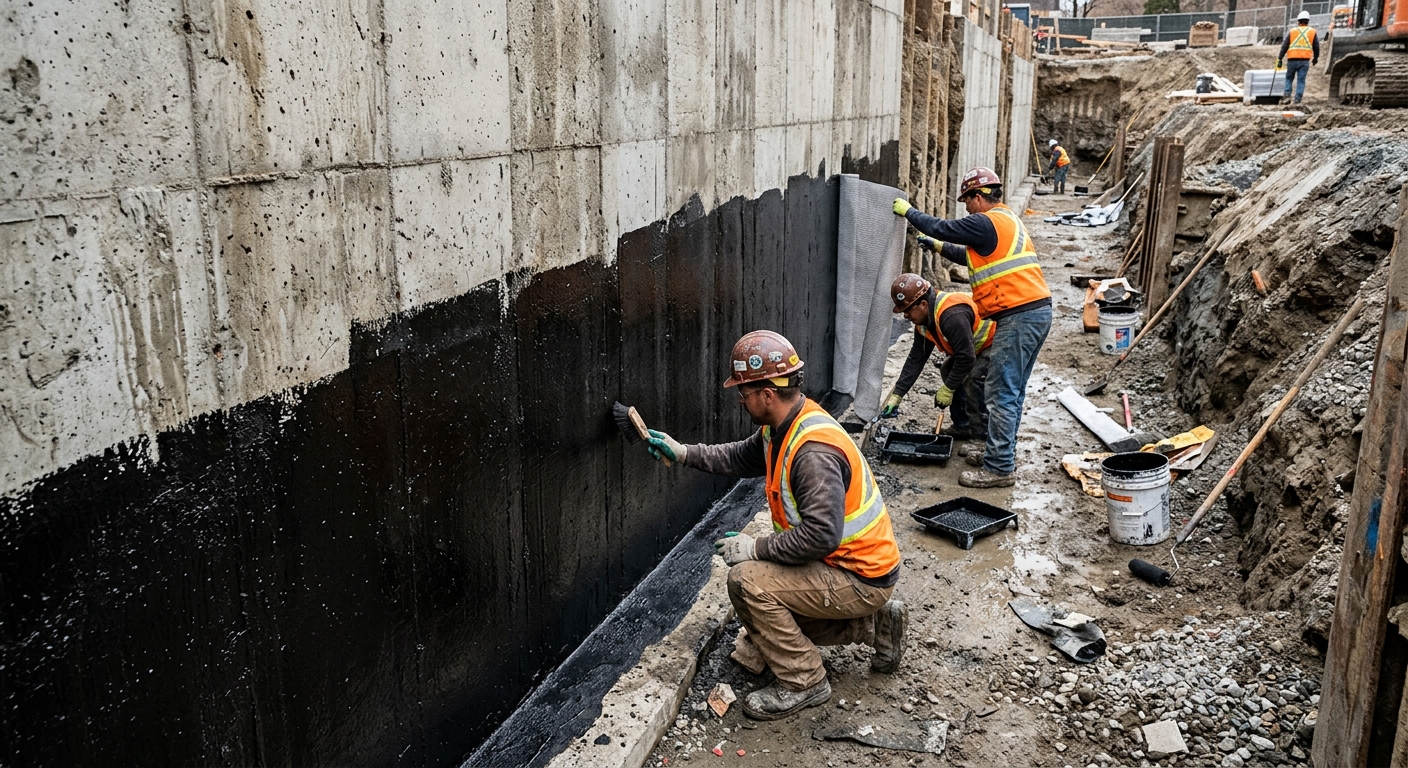
The fundamental difference is source control versus water management. Exterior waterproofing—full excavation, new membrane, and new drainage tile—addresses where water pressure enters by reducing hydrostatic load against the foundation wall. It’s more expensive and disruptive because it involves excavation and backfilling along the foundation perimeter, plus landscaping restoration. Interior waterproofing—perimeter drain channel, sump pit, and a sump pump—collects water after it enters through cracks, tie holes, or cold joints and moves it away. Interior work is often less invasive, but it doesn’t eliminate the pressure pushing against the wall in freeze–thaw conditions.
In Country Hills West, where mixed glacial till and dense clay can retain moisture and expand during winter cycles, exterior solutions usually win when the weeping tile is failing and the site has chronic lateral water pressure. For many post-war basements with poured concrete walls, crack injection often helps stabilize isolated pathways; however, if you’re seeing repeated seepage after wet seasons, exterior drainage and membrane typically provide a more complete fix. For block foundations, the practical reality is that walls can be more variable in how water finds routes, so interior drainage frequently becomes the stabilizing complement even when crack work is done.
Sump pump backup matters in Ontario because power interruptions can occur during stormy spring periods when basements are at highest risk. A battery backup (or water-powered backup, where designed) reduces the chance of a full loss even if you can’t intervene immediately.
Where the price difference is justified: if exterior excavation is feasible, moving from a $3,500 – $15,000 interior-first plan to the $7,000 – $25,000 exterior option can be worth it when there’s a confirmed failed weeping tile and active seepage paths. But if the issue is localized and roof runoff/grading is the driver, re-grading and downspout extensions can prevent repeat moisture load at a much lower cost, sometimes avoiding the need for full excavation.
| Method |
Best For |
Addresses Source? |
Disruption |
Lifespan |
Price Band |
| Full exterior excavation + membrane |
Chronic seepage driven by hydrostatic pressure; failed weeping tile; clay-heavy sites |
Yes (primary water source) |
High (excavation and restoration) |
20+ years with proper backfill and drainage |
$7,000 – $25,000 |
| Interior French drain + sump system |
Basements with active seepage; interior control when exterior access is limited |
No (manages water after entry) |
Medium (perimeter floor/finish work) |
15–25 years with a maintained pump and backup |
$3,500 – $15,000 |
| Crack injection — epoxy (structural) |
Non-moving or stabilized cracks where water is not actively flowing under pressure |
Partial (seals a known pathway) |
Low (localized drilling and patching) |
Long-term if the crack is stable and pressure is managed |
$600 – $2,500 |
| Crack injection — polyurethane (active leak) |
Active leaks where water is moving through cracks/tie holes |
Partial (seals active pathway but may still require drainage control) |
Low (localized drilling) |
Medium to long-term, especially paired with drainage |
$900 – $3,000 |
| Interior drain channel only (no sump) |
Light seepage or low water load where gravity discharge is feasible and dependable |
No (collects water after entry) |
Medium (perimeter work) |
Shorter if water load increases; depends on outlet and season |
$2,000 – $8,000 |
| Re-grading + downspout extensions |
Surface runoff issues; dry basements with dampness tied to roof water |
Yes (reduces water load) |
Low to medium (surface work and minor excavation) |
Medium-term unless drainage system and grading are maintained |
$900 – $5,000 |
How to choose a waterproofing contractor in Country Hills West
Choosing the right waterproofing contractor in Country Hills West starts with verifying credentials and documenting what you’re buying. In Ontario, ask for the company’s Ontario licence/registration details (for the type of work they’ll do), liability insurance, and WSIB/WCB clearance. To check: (1) look for the licence/registration in the relevant online registry and ensure the company name on the quote matches exactly; (2) request a certificate of insurance and confirm it’s current and covers the specific scope; and (3) ask for WSIB/WCB clearance documentation (or proof of coverage where applicable) and review the letter/account details provided.
Next, get 2–3 itemised written quotes. You want a breakdown of labour and materials (membrane type, drainage tile spec, pump model, discharge method), not a single lump number. Carefully read exclusions: disposal of excavated soil, restoration of landscaping and egress window wells, permit pulling responsibilities, and whether crack injection includes prep, crack sealing, and patching. Confirm warranty terms: workmanship warranty length, product/manufacturer warranty coverage, and whether the warranty transfers if you sell the home. For payment, do not pay more than 10–15% upfront; hold back a meaningful portion until completion and cleanup are done. Finally, get a written start date and completion estimate, and require a clear scope for what “substantial completion” means.
- Ask for a photo-based moisture map or defect survey before quoting.
- Confirm whether the scope includes crack prep, cleaning, and correct injection method.
- Require a written discharge plan (where sump water goes) and any municipal approvals.
- Check that the quote specifies pump capacity and backup type (battery vs water-powered).
- Confirm excavation depth and backfill plan (especially around deck footings and additions).
- Ask whether disposal and restoration are included or billed separately.
- Get the warranty in writing: workmanship + product, and transferability to new owners.
- Request pump testing/commissioning and that alarms are included where relevant.
- Verify the crew leads and supervisors are identified and scheduled.
- Confirm permits/engineering responsibility for structural crack scenarios.
- Use progress milestones and holdback tied to milestones, not just “start/finish.”
- Make sure the contract includes cleanup standards and debris removal expectations.
Red flags common in waterproofing contractors around Country Hills West include: quoting without inspecting interior moisture patterns and exterior drainage, offering crack injection as a “universal fix” despite repeated seepage, vague discharge instructions for sump water, refusing to provide insurance/WSIB/WCB clearance or a written scope, and pushing for large upfront deposits without a holdback plan.
Frequently asked questions — waterproofing in Country Hills West
Can I waterproof my basement in winter in Country Hills West?
Yes, you can often waterproof a basement in winter in Country Hills West, but the best approach depends on what you need done. Interior work (perimeter drain installation, sump pit work, and crack injection) can usually proceed when access is indoors, even when the exterior soil is frozen. Exterior excavation and membrane replacement are usually limited by frost depth and safety, and scheduling can shift toward late winter or spring thaw when soil can be excavated cleanly. If your issue is active seepage, interior solutions are commonly used to control water now, then a full exterior plan can be booked for better excavation conditions. For cost planning, many winter projects that stay interior typically land closer to the $3,500 – $15,000 band rather than the higher disruption of exterior work.
What is the difference between waterproofing and damp-proofing?
In Ontario basements, waterproofing is designed to control water entry under conditions of hydrostatic pressure—think seepage through cold joints, cracks, or failing drainage systems—often using drainage paths, membranes, and (where needed) sump pumps. Damp-proofing generally refers to treatments intended to resist minor moisture and condensation rather than ongoing water pressure. In the Toronto area’s freeze–thaw climate, a damp-proof solution can sometimes slow symptoms but won’t reliably stop recurring seepage if lateral soil pressure is pushing water against the foundation. That’s why contractors in Country Hills West often recommend a drainage assessment first, especially for older post-war homes where weeping tile and early drains may have partially failed.
Will basement waterproofing affect my property value in Country Hills West?
It can. Homebuyers in Country Hills West and the wider Toronto region tend to price in basement reliability because moisture concerns affect usability, insurance comfort, and future renovation plans. A documented waterproofing project—with clear scope, warranties, and pump/testing records—often improves confidence, particularly if you previously dealt with efflorescence, recurring seepage, or sump operation during wet seasons. Exterior source-control work can be more persuasive when the cause is confirmed (for example, failed weeping tile and clay-heavy soil pressure), while interior systems are still valuable as long as they’re engineered correctly and maintained. Even when you start with interior work (often in the $3,500 – $15,000 range), ongoing performance plus transfer documentation can strengthen buyer confidence.
What drainage issues are most common in Country Hills West homes?
The most common issues are interior seepage driven by external water pressure, failed or clogged weeping tile, and surface runoff that isn’t properly directed away from the foundation. In Toronto-area neighbourhoods with many 1960–1980s basements, original drainage often ages out—partially collapsed tile, blocked lines, or outlets that no longer function. Dense clay pockets hold water and expand during freeze–thaw, increasing lateral pressure and widening cracks over winters. Add to that access limitations in tight lots, where downspouts may dump too close to the foundation or landscaping changes can interrupt drainage. As a result, homeowners frequently see damp walls near tie holes and cold joints, efflorescence, and occasional flooding events rather than a single clear “one wall” failure.
How do I choose a waterproofing contractor in Country Hills West?
Start with proof of compliance: ask for Ontario licence/registration details, a current liability insurance certificate, and WSIB/WCB clearance documentation where applicable. Then compare itemised quotes with a clear scope—labour and materials listed separately—so you can see what’s included (permit pulls, disposal, restoration, and backup pump choice). Make sure the contractor explains the source of water and matches it to the method, rather than pushing one solution for every case. For example, isolated crack injections might fit a $600 – $3,000 repair band, while chronic seepage tied to clay pressure often needs a full drainage plan. Finally, confirm warranty length, workmanship and product coverage, and whether warranties transfer to a future buyer.
What is a battery backup sump pump and do I need one in Country Hills West?
A battery backup sump pump is a secondary pumping system designed to keep removing water during a power outage. In Ontario, spring flooding risk and storm conditions can cause brief outages right when basements are most vulnerable. In Country Hills West, if you already have a sump system—or you’re installing one due to consistent seepage—battery backup is often recommended for risk reduction. You’ll typically see add-on pricing reflected in the sump installation range (commonly $800 – $3,500 depending on pump type and backup configuration). You may be able to skip backup if seepage is infrequent and you have strong early-warning/monitoring habits, but for recurring dampness or previous flooding events, backup systems can prevent a costly cleanup and restore confidence in the waterproofing outcome.