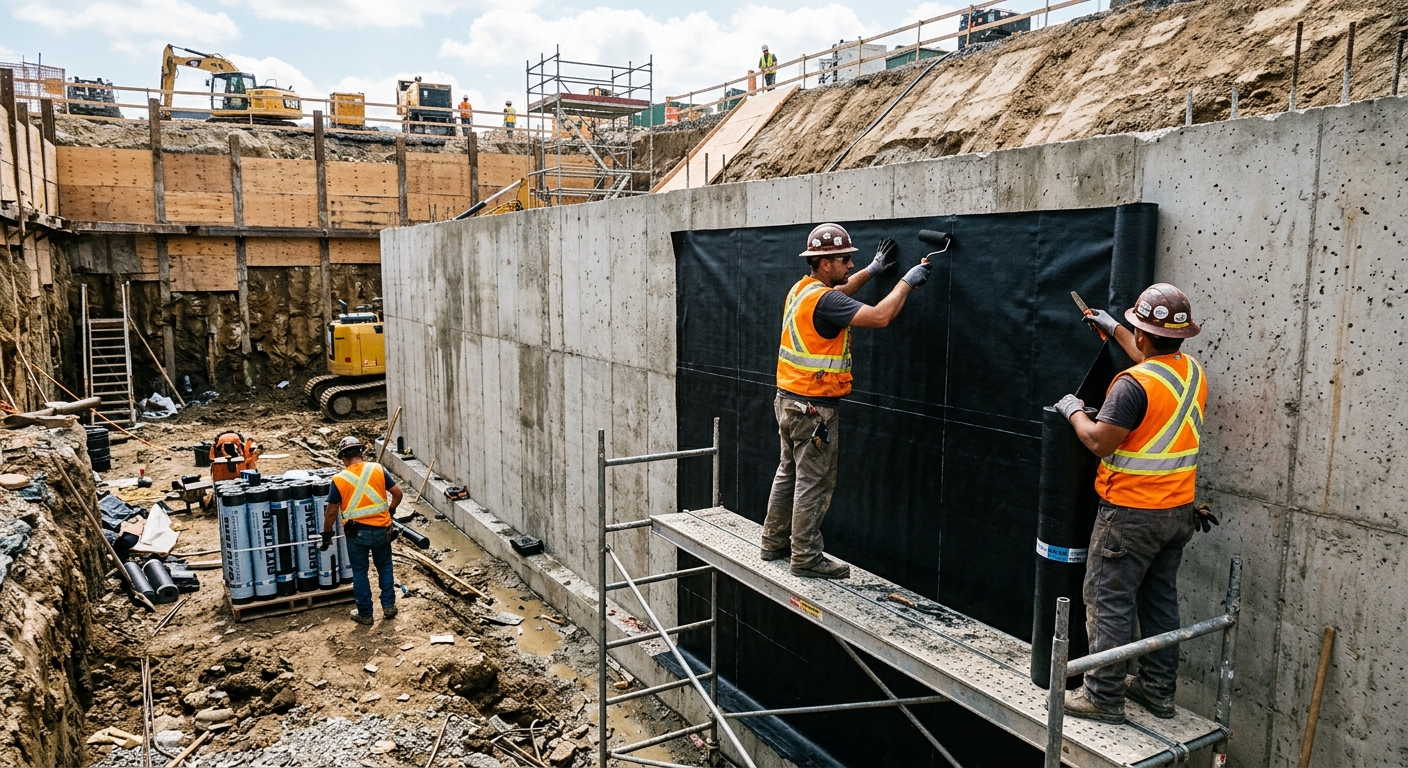
Basement waterproofing options and costs in New Toronto
Basement waterproofing in New Toronto is usually about managing water that has already found paths through foundation cracks, tie holes, or failing drains—and then stopping the source where it makes economic sense. With a population of 11,463 in 2021 (Statistics Canada, 2021 Census), New Toronto is a small pocket of the broader Toronto market, where contractor availability is strong but access constraints on tight urban lots are common. That’s one reason bids can swing: even when the problem looks similar, the “fix” can shift from a symptom-control interior system to a full exterior solution.
Toronto’s freeze–thaw cycles and mixed glacial till and clay soils are hard on older waterproofing assemblies. In many post-war and 1960–1980s homes, the original weeping tile and outer drainage were designed for a different groundwater condition; once clay backfill saturates and drains clog, water pressure and seepage can become frequent. In neighbourhood pockets close to dense infill and mature lots (including parts of the Etobicoke-style built-up corridors adjacent to New Toronto), exterior excavation demand is especially high because crews often must work around decks, side drives, and landscaped edges.
Below are the most common approaches contractors use, with typical cost bands for New Toronto projects. Use this as a comparison framework before you request itemised quotes and confirm the scope, disposal, and permit responsibilities.
| Method |
What It Addresses |
Disruption Level |
Durability |
Price Range |
| Exterior excavation + new membrane + drainage tile |
Lateral groundwater pressure; water entry through exterior foundation perimeter; failing/obsolete drainage |
High (excavation, landscaping restoration) |
Long-term when drainage and backfill are detailed correctly (often 15–25+ years) |
$7,000 – $25,000 |
| Interior perimeter drain channel + sump pit |
Active seepage inside perimeter; water diversion once it enters the basement |
Medium (floor cutting along perimeter) |
Good when sump discharge, venting, and maintenance are addressed (often 10–20 years) |
$3,500 – $15,000 |
| Foundation crack injection (epoxy or polyurethane) |
Isolated cracks: epoxy for structural stability; polyurethane for active leaks |
Low to medium (drilling and surface prep) |
Can be very durable for the correct crack type and prep (commonly 5–15+ years) |
$600 – $3,000 |
| Sump pump installation (primary + battery backup) |
Frequent seepage or higher water tables; reduced risk during outages |
Medium (pit excavation, electrical work) |
Strong protection when backup is included and discharge lines are properly routed (often 10–20+ years) |
$800 – $3,500 |
| Window well drain installation |
Water pooling and seepage at egress/window areas |
Low to medium (small excavation and regrading at window) |
Moderate to good when discharge is extended away from foundation (often 8–15+ years) |
$1,000 – $4,000 |
| Lot re-grading / downspout extension |
Surface water management: roof runoff and yard drainage that migrates toward foundation |
Low to medium (topsoil work, extensions) |
Moderate; depends on soil settle and maintaining slope (often 5–10+ years) |
$900 – $6,500 |
Prices are estimates only and vary by project scope, site access and material selection.
What affects the price of waterproofing in New Toronto
In New Toronto, two contractors can quote the same “visible” symptom—wet walls or a damp basement—but you’ll often see differences of 30–50% because the scope needed to address root causes isn’t identical. Waterproofing is highly site-specific. The three biggest drivers that separate Toronto-region costs from the national average are soil type, water table behaviour, and freeze–thaw damage. Mixed glacial till and clay pockets in the Toronto area can hold water against foundations and expand when saturated, which increases lateral pressure on walls and worsens defects over a few winters. In many areas, higher local water tables also mean sump run times and drainage sizing matter, not just “put a pump in.”
Freeze–thaw then turns small defects into active pathways. Hairline cracks that might seem stable in late summer can widen with ice formation and cycling, pushing seepage through tie holes and cold joints. Neighbourhoods with older drainage—like original clay weeping tile installations from decades ago—often require more labour because drains are clogged, crushed, or partially collapsed.
Concrete examples from New Toronto pricing: (1) If your job is mostly “fix surface water” with re-grading and downspout extensions, you may land closer to the lower end of the $7,000 – $25,000 exterior band only if access forces larger excavation; otherwise, it can stay near the mid-range of simple drainage work. (2) If you’re dealing with a failed perimeter system and need interior perimeter drains plus a sump, many homes land in the $3,500 – $15,000 interior weeping tile range. (3) A horizontal crack scenario—especially in block or with evidence of movement—can change expectations for injection alone and increase the assessment and repair scope.
| Price Factor |
Why It Matters |
Cost Impact |
| Interior vs. exterior approach — interior is less disruptive but addresses symptoms |
Exterior addresses the source; interior manages water after entry |
Interior can be materially cheaper (often several thousand), but may not resolve hydrostatic pressure at the wall |
| Foundation type — poured concrete vs. block vs. stone vs. ICF |
Different failure modes and sealing behaviour |
Poured concrete often performs better with targeted crack injection; block frequently needs interior drainage as a practical complement |
| Soil type — clay expands more than sand, adding pressure |
Saturated clay increases lateral pressure on walls and shifts more water into cracks |
Can push you toward exterior membranes/drainage or stronger sump/pipe sizing |
| Crack type and length — hairline vs. structural horizontal cracks |
Some cracks are actively leaking; some indicate movement |
Structural or horizontal cracks can require engineering assessment and additional repairs beyond injection |
| Sump pump backup system — battery or water-powered backup needed |
Ontario outages and spring flooding risk |
Adds cost but reduces the chance of backup failure during power interruptions |
| Access — landscaping, decks, or driveways must be removed for exterior |
Urban lots in Toronto often limit excavation space |
Removal/restoration can add thousands to exterior work compared to straightforward backyard access |
| Weeping tile age — original tile (60+ years) may be completely failed |
Older drainage systems clog or collapse |
If drainage is beyond salvage, replacement becomes the real scope (higher labour/materials) |
| Mould or efflorescence remediation required before sealing |
Moisture-related materials can compromise coatings and create indoor air issues |
Pre-remediation increases timeline and labour before waterproofing products can be applied |
Permits & regulations in Ontario
In Ontario, foundation excavation, structural crack repair (where the work may affect load paths), and changes to lot drainage typically require a building permit depending on the exact scope. Sump pump installations that connect to the storm or sanitary sewer often need municipal approval and must be done in line with local discharge rules. For structural crack repair—especially horizontal cracks in block walls or cracks that suggest movement—an engineer’s assessment is commonly required to confirm whether underpinning or other structural remediation is necessary before sealing or membranes are installed.
As a homeowner in New Toronto, start by asking the contractor to outline the permit triggers in writing. Work that often does require a permit can include: foundation wall repairs treated as structural, exterior excavation that alters drainage and affects the foundation perimeter, and any work that modifies service connections (such as discharge routes for pumps) where municipal approval is needed. Work that often does not require a permit can include: surface-level crack injection for clearly non-structural, isolated leaks where the foundation is not being structurally altered; window well drainage improvements confined to the window area where you’re not changing building services; and routine downspout extensions or re-grading that doesn’t involve structural excavation or service modifications.
Then verify the contractor’s Ontario compliance step-by-step: (1) confirm the contractor’s business licence/registration details through the appropriate online listings; (2) request a certificate of insurance (liability) showing current coverage; (3) ask for WSIB/WCB clearance evidence before work starts; and (4) for structural scopes, confirm they provide (or arrange) engineering support and include it in the proposal. Never sign a contract that doesn’t align the scope with the approvals required.
Interior vs exterior waterproofing — what does New Toronto need?
The key difference is source control versus symptom management. Exterior waterproofing—full excavation, a new membrane system, new drainage tile, proper backfill, and restoration—targets where water enters the system. It’s the most complete solution, but it’s significantly more expensive and disruptive because it involves excavation around the foundation. Interior waterproofing—perimeter drain channel, sump pit, and sump pump—captures water after it gets into the basement. It’s usually less invasive, but it doesn’t remove hydrostatic pressure acting on the wall.
In New Toronto’s clay-heavy pockets and freeze–thaw environment, exterior work often becomes the better value when you have chronic seepage, high water tables, or evidence that the perimeter drainage is compromised (collapsed/clogged weeping tile, persistent damp corners, or repeated efflorescence). For poured concrete walls, targeted crack injection can be a strong complement because the wall’s sealing behaviour with the right product is often more predictable. For block foundations, interior drainage frequently becomes the practical complement because block can be more difficult to fully seal from the outside when the wall and mortar joints have aged and settled.
Sump pump backup matters locally because spring conditions can raise water levels quickly, and Ontario power interruptions do occur during severe weather. A primary pump with battery backup (or a water-powered backup where appropriate) reduces the chance that a short outage becomes a basement flooding event.
Where does the price difference make sense? For example, a full exterior excavation project may fall within the $7,000 – $25,000 band, which is justified when the current drainage system is failing and the foundation shows ongoing seepage. If you’re seeing localized leaks and the wall is otherwise stable, an interior approach (often $3,500 – $15,000) may control water effectively without the cost and disruption of excavation.
| Method |
Best For |
Addresses Source? |
Disruption |
Lifespan |
Price Band |
| Full exterior excavation + membrane |
Chronic seepage, high water table behaviour, failed perimeter drainage, clay pressure against walls |
Yes |
High |
15–25+ years when detailed correctly |
$7,000 – $25,000 |
| Interior French drain + sump system |
Interior dampness with manageable entry points; failing weeping tile where exterior access is limited |
No (captures water after entry) |
Medium |
10–20 years with proper pump/discharge maintenance |
$3,500 – $15,000 |
| Crack injection — epoxy (structural) |
Non-active or stabilized cracks where structural integrity needs restoration |
Partial (seals crack pathways) |
Low |
5–15+ years depending on crack behaviour |
$600 – $3,000 |
| Crack injection — polyurethane (active leak) |
Active seepage through cracks where water is still moving through the concrete |
Partial (stops active leakage pathways) |
Low to medium |
5–12+ years; best when leak source is isolated |
$600 – $3,000 |
| Interior drain channel only (no sump) |
Light seepage where gravity drainage is sufficient; limited water accumulation |
No |
Low to medium |
Typically shorter if water levels rise seasonally |
$2,000 – $7,500 |
| Re-grading + downspout extensions |
Surface-water-driven dampness; gutters overflowing; weak grading toward foundation |
Yes for surface sources |
Low to medium |
5–10 years (depends on settlement and maintenance) |
$900 – $6,500 |
How to choose a waterproofing contractor in New Toronto
Choosing the right waterproofing contractor in New Toronto starts with proof, not promises. For Ontario jobs, verify three things: Ontario licensing/registration as applicable, liability insurance, and WSIB/WCB coverage. Ask for (1) a certificate of insurance (liability) with the contractor named and coverage limits shown; (2) a WSIB clearance certificate or WCB equivalent that confirms coverage for workers; and (3) the contractor’s registration details and ability to pull permits if required by the scope. If they can’t provide documents quickly, treat that as a red flag.
Next, request 2–3 itemised written quotes. You want a breakdown of labour and materials, not a single lump sum. Specifically ask what’s included in the scope: permit pull (if applicable), disposal/transport fees for excavation spoils, pump and discharge components, membrane/product brand, excavation limits, and what landscaping restoration looks like. Make sure exclusions are clearly stated—especially “hidden conditions” like crushed weeping tile, saturated clay that expands after excavation, or mould remediation that must happen before sealing.
Warranty matters locally because freeze–thaw and clay pressure can test repairs. Look for a workmanship warranty length, the product manufacturer warranty terms, and whether the warranty is transferable to future owners. Payment schedule should be conservative: never more than 10–15% upfront, and hold back a meaningful portion until completion and walkthrough.
Finally, insist on a written start date and completion estimate, plus weather considerations—Ontario rain and thaw periods can affect excavation scheduling and membrane application timing.
- Ask for itemised labour + material costs (not only “waterproofing price”)
- Confirm whether a permit is required and who pulls it
- Verify liability insurance certificate is current and includes your address project location
- Confirm WSIB/WCB clearance or proof of coverage before work begins
- Request product names (membrane, drainage board, crack injection system) and documentation
- Require a written scope showing exact crack areas, lengths, and crack type assumptions
- Clarify disposal: where soil/old drainage debris is taken and whether fees are included
- Confirm sump discharge route (and approvals if it connects into municipal services)
- Ask if a battery backup (or water-powered backup) is included when a sump is installed
- Get a clear warranty: workmanship duration, product warranty duration, and transferability
- Agree on holdback terms and inspection steps at substantial completion
- Ensure the quote includes restoration: grading, sod/seed, and any deck/driveway reinstatement
Red flags in New Toronto: contractors who (1) refuse to discuss permit triggers, (2) quote a full exterior price without clarifying disposal/restoration or excavation limits, (3) offer sump systems without any backup plan, (4) insist injection alone will fix active seepage without testing leak pathways, or (5) skip documentation for insurance/WSIB/WCB and rush you toward large upfront deposits.
Frequently asked questions — waterproofing in New Toronto
Do I need a permit for foundation work in Ontario?
In Ontario, permits depend on the exact scope. Foundation excavation and many foundation wall repairs—especially when treated as structural—typically require a building permit. If the work changes lot drainage in a way that impacts how water is routed, permits and approvals are often involved. Sump pump installations that connect discharge to storm or sanitary services usually require municipal approval. In New Toronto, the most practical step is to ask your contractor to list which tasks need permits and who handles the permit process. Don’t rely on a verbal “no permit” answer. Request the written scope and confirm, up front, whether crack repairs are classified as structural and whether engineering assessment is needed for horizontal or step cracks.
How long does waterproofing last?
Basement waterproofing longevity depends on whether the solution controls the source of water or only manages it after entry. Exterior systems with proper membrane detailing and new drainage tile often last 15–25+ years when backfill, slope, and drainage discharge are done correctly. Interior systems like perimeter drains and sump pumps typically provide 10–20 years of service, depending on pump condition, discharge routing, and how clay saturation behaves during spring freeze–thaw cycles. Crack injection can be long-lasting—often 5–15+ years—when the crack type matches the product (epoxy for stable cracks, polyurethane for active leaks). As a benchmark for Ontario pricing discussions, a sump and drainage approach may fall within the $3,500 – $15,000 interior range, but its lifespan is tied to maintenance and backup reliability.
Can I waterproof my basement from the inside only?
Yes, in many New Toronto basements you can waterproof from the inside only, but it’s usually best for symptom control when exterior access is difficult or when the water entry is localized. Interior perimeter drains, sump pits, and pumps capture water after it enters and reduce pooling and seepage that causes efflorescence and damp walls. However, interior work doesn’t remove hydrostatic pressure pressing on the foundation wall. In clay-heavy Toronto areas with freeze–thaw pressure, relying solely on inside methods can still leave wall movement or recurring moisture at the same entry points, especially if the original weeping tile has failed. If you do go inside-only, ensure the scope includes a sump pump with a reliable backup option. For reference, interior perimeter + sump projects often land in the $3,500 – $15,000 band.
What causes foundation cracks in New Toronto?
Foundation cracks in New Toronto are commonly driven by soil movement and freeze–thaw expansion, not just “bad concrete.” Mixed glacial till and clay pockets can hold water; when that soil saturates and freezes, expansion increases lateral pressure on foundation walls. Over time, small pathways around cold joints, tie holes, and control points can become active leaks. Post-war and 1960–1980s homes with older drainage systems may also experience more water against the foundation because original weeping tile can clog or partially fail. In poured concrete, some cracks may be stable and respond well to injection; in block or when you see horizontal or step cracking, you may need an engineer assessment before sealing. Crack cause matters because it changes whether epoxy or polyurethane injection is appropriate and whether exterior drainage upgrades are required.
How do I compare waterproofing quotes?
Compare quotes on scope clarity, not just the total price. Ask each contractor to itemise labour and materials and to specify exactly what they will do: which walls/floors are addressed, what crack lengths are included, whether they replace failed drainage, and what products they use for membrane/drainage/crack injection. Confirm whether disposal and restoration are included, and whether permits (if needed) are part of the price. Pay attention to exclusions: many quotes exclude mould remediation or structural engineering, which can add cost later. For New Toronto, also compare how they handle water table risk and freeze–thaw: do they size a sump properly and include backup? If one quote includes an interior sump system around $3,500 – $15,000 while another proposes full exterior excavation closer to $7,000 – $25,000, you should understand whether the difference is access, drainage replacement, or addressing the true source.
How long does basement waterproofing take in New Toronto?
Timelines vary with the method and site access, but most homeowners can expect: crack injection jobs can often be completed in a day or two depending on the number of cracks and prep work; interior perimeter drain channel work typically takes several days to a week, plus pump/electrical coordination; and exterior excavation generally takes longer because excavation, membrane application, drainage installation, inspections, and full backfill/restoration are sequential. In New Toronto, weather can affect schedule—spring thaw and heavy rain can slow excavation and delay membrane work because saturated clay behaves differently and can complicate clean installation. If permits are required for foundation work, factor permit lead times into the start date. Ask the contractor for a written start date and completion estimate tied to weather and inspection milestones.