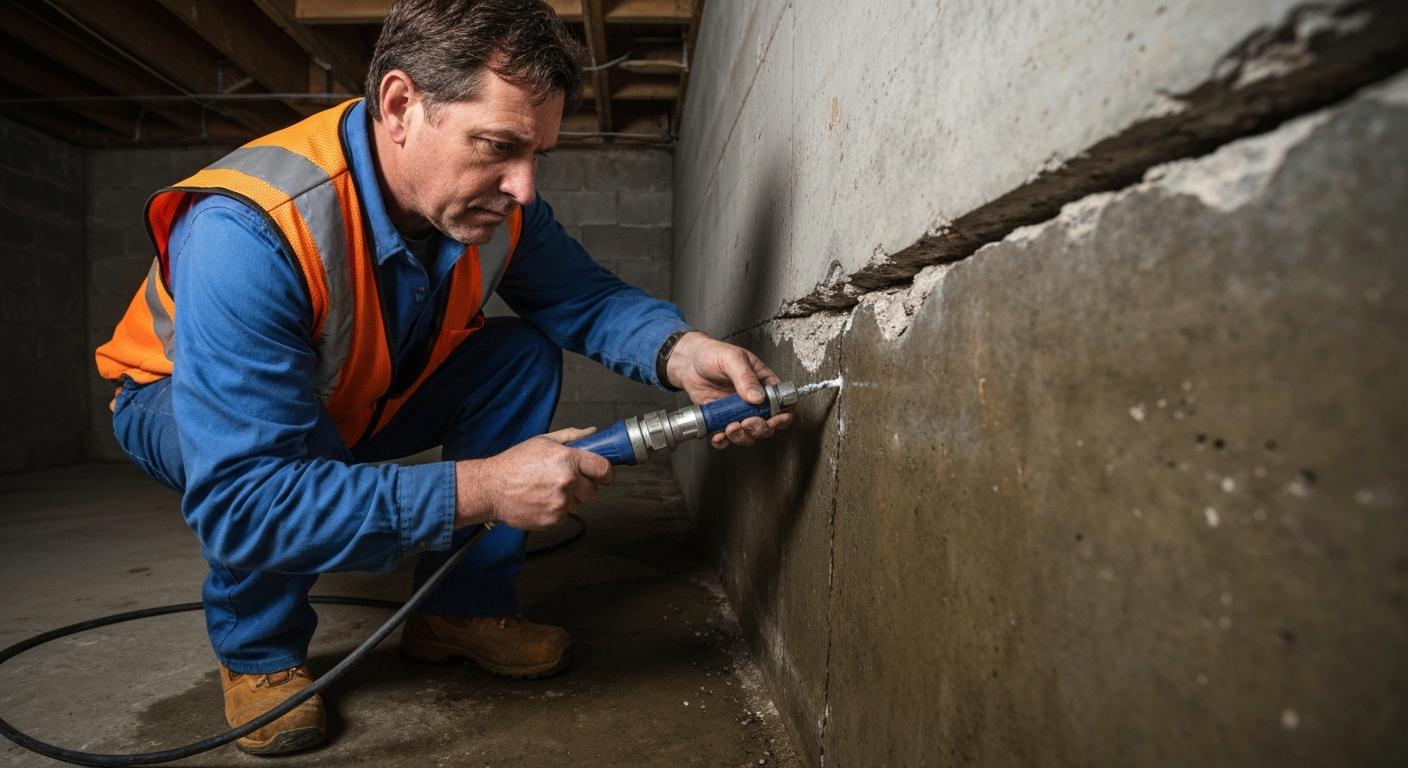
Basement waterproofing options and costs in Richmond
In Richmond, basement waterproofing is usually driven by older drainage systems, clay-rich soil conditions, and Ottawa’s repeated freeze-thaw cycles. With a local population of 4,055 (Statistics Canada, 2021 Census), you’ll notice a smaller contractor pool than Toronto, so scheduling can tighten during spring melt when many homes see the same problem. Many Richmond basements were built with early-generation waterproofing approaches and weeping tile systems; when these original components fail, water finds the easiest path through wall joints, cracks, or around floor edges. Ottawa-area clay can also swell with moisture and worsen existing movement, turning dampness into active seepage after winter freeze events.
Cost can vary widely because foundation waterproofing is not one “product,” it’s a system choice based on where water enters and how hydrostatic pressure behaves at your site. Where exterior excavation is required, contractors must remove landscaping, dig through heavy clay, and replace drainage and backfill—this typically sits in the upper portion of the regional range, with exterior excavation alone commonly quoted at $9,000–$45,000 for a typical detached home. If your main issue is interior seepage during spring melt, interior perimeter drainage and a sump can be more targeted, typically aligning with $6,000–$20,000 for interior waterproofing and weeping-tile-style solutions. For smaller, localized problems—such as a crack that’s letting in water—crack injection may be the right first step, often far less than a full excavation.
Below are common options Richmond homeowners use, with the disruption level and price bands that match the Ottawa economic region’s clay and freeze-thaw realities—then you can compare which method fits your symptoms.
| Method |
What It Addresses |
Disruption Level |
Durability |
Price Range |
| Exterior excavation + new membrane + drainage tile |
Stops the source by renewing the waterproof barrier and replacing the perimeter drainage system |
High (landscaping removal, excavation, regrading) |
Long-term (commonly 15–25+ years when properly detailed and backfilled) |
$15,000–$45,000 |
| Interior perimeter drain channel + sump pit |
Captures water after it enters and relieves hydrostatic pressure inside the basement |
Moderate (floor saw-cut/drain channel, sump pit) |
Long-term (often 10–20 years; depends on pump maintenance and battery/backup choice) |
$8,000–$20,000 |
| Foundation crack injection (epoxy or polyurethane) |
Seals cracks; polyurethane targets active leaks, while epoxy suits sealed/structural-type leakage control |
Low (small openings; minimal floor-wall demolition) |
Medium to long-term (commonly 5–15 years depending on crack movement and injection type) |
$600–$3,500 |
| Sump pump installation (primary + battery backup) |
Keeps water level controlled during spring melt, power flickers, and heavy rain events |
Low to moderate (pit, discharge line, electrical work) |
Long-term (10–15 years for pumps; backup depends on battery servicing) |
$2,800–$4,500 |
| Window well drain installation |
Prevents water and runoff from pooling around below-grade windows |
Low to moderate (excavation at window well only) |
Medium to long-term (often 8–15 years with proper gravel/drainage and grading) |
$1,200–$4,000 |
| Lot re-grading / downspout extension |
Directs roof and surface water away so the foundation doesn’t get over-saturated |
Low (often no structural demo) |
Medium (2–7 years; can last longer if drainage stays maintained) |
$900–$6,000 |
Prices are estimates only and vary by project scope, site access and material selection.
What affects the price of waterproofing in Richmond
In Richmond, quotes for the same basement waterproofing problem can differ by roughly 30–50% across the Ottawa region and Ontario because contractors price risk differently—especially when dealing with clay-heavy soils, buried drainage failures, and freeze-thaw-driven foundation movement. A waterproofing “fix” becomes more expensive when you need to excavate through compacted clay, remove hard landscaping, or replace weeping tile that has collapsed or silted up over decades. Even when the visible symptoms look identical (damp walls, efflorescence, spring seepage), the water-entry path and the amount of hydrostatic pressure can change the scope.
Three regional drivers separate Ottawa economic-region costs from the national average: clay-heavy soils, a relatively high local water table, and freeze-thaw cycles. Clay holds water and expands, increasing lateral pressure on foundation walls and widening micro-cracks. When freeze-thaw repeats, those cracks can turn from “surface dampness” into active seepage. High water tables also raise sump run times and can force more robust pump and discharge planning. Where exterior grading and drainage are clogged, hydrostatic pressure rises and pushes water through weak points in poured concrete or block walls.
Two practical examples from the Richmond market: first, a home with older weeping tile (often decades old) and a basement perimeter that stays damp even after storms typically needs interior drainage, which tends to land in the $6,000–$20,000 interior waterproofing band instead of a simple patch. Second, if your yard slopes toward the house or downspouts discharge near the foundation, modest re-grading and downspout extensions might stay closer to the lower end—often $900–$6,000—but only if the weeping tile isn’t already failed. If the exterior drainage system is collapsed, excavation and new membrane work commonly moves into the $15,000–$45,000 exterior range.
Bottom line: older housing stock plus Ottawa’s climate means many jobs start as “symptom control,” then need more complete system work once access and drainage conditions are confirmed.
| Price Factor |
Why It Matters |
Cost Impact |
| Interior vs. exterior approach — interior is less disruptive but addresses symptoms |
Interior methods manage water after entry; exterior methods renew the barrier and drainage path |
Interior often costs 40–70% less than full exterior excavation (depending on access) |
| Foundation type — poured concrete vs. block vs. stone vs. ICF |
Crack behaviour and water pathways differ by material and detailing |
Poured concrete with stable cracks may be cheaper to inject; block often needs complementary interior drainage |
| Soil type — clay expands more than sand, adding pressure |
Swelling clay increases lateral pressure during freeze-thaw and after heavy rain |
Clay sites can raise waterproofing costs by about 25–50% versus better-draining soil |
| Crack type and length — hairline vs. structural horizontal cracks |
Active leaks and structural movement require different materials and sometimes engineering review |
Structural horizontal cracks can push scope from injections into more extensive repair |
| Sump pump backup system — battery or water-powered backup needed |
Spring events and outages can turn a working sump into an emergency |
Backup adds cost, but reduces risk during power interruptions |
| Access — landscaping, decks, or driveways must be removed for exterior |
Exterior work depends on excavation space and safe disposal/compaction |
Better access can keep you near the low-to-mid end; restricted access can add thousands |
| Weeping tile age — original tile (60+ years) may be completely failed |
Collapsed/silted tile increases exterior excavation and drainage replacement scope |
Failed original tile often shifts the project toward the higher exterior band |
| Mould or efflorescence remediation required before sealing |
Sealers don’t bond well when salts and moisture are actively present |
Remediation adds labour time and may require additional drying steps |
Permits & regulations in Ontario
In Ontario, foundation excavation, structural crack repair, and changes to lot drainage typically require a building permit, particularly when the work affects structural elements, changes how loads are handled, or alters drainage in a way that impacts surrounding systems. For many homeowners in Richmond, the “waterproofing” label can make it seem optional, but permits often come into play when contractors disturb foundations, floors at the perimeter, or discharge lines connected to municipal infrastructure.
Sump pump installations can also require municipal approval when the discharge connection is made to the storm or sanitary sewer. If your sump discharge plan changes where the water goes (or how it ties into municipal services), ask the contractor to confirm what permits/approvals are required before starting. For structural crack repair—especially horizontal cracks in block walls or major step cracks—an engineer’s assessment is often necessary to confirm whether underpinning or additional structural work is needed.
To verify a contractor in Ontario, take a step-by-step approach: (1) ask for their WSIB/WCB coverage and confirm the status certificate; (2) request their certificate of liability insurance and ensure the coverage amount and dates are current; (3) for structural-related scopes, verify they have engineering support (or partner with an engineering consultant) and that they can provide documentation; and (4) check any required provincial licensing/registration through the appropriate Ontario registry sources. Finally, insist your contract lists who pulls the permit (or whether it’s included) and what work is contingent on approvals.
Interior vs exterior waterproofing — what does Richmond need?
The fundamental difference is that exterior waterproofing addresses the source of water entry by excavating around the foundation, installing new exterior membrane protection, and renewing perimeter drainage and backfill. Interior waterproofing, by contrast, manages water after it enters by collecting it with a perimeter drain channel and discharging it via a sump pump. In Richmond’s Ottawa-region clay soils and freeze-thaw climate, interior systems often perform very well when exterior drainage has failed or when landscaping access makes excavation expensive; however, they do not relieve the hydrostatic pressure pushing on the wall itself.
So which approach fits Richmond? If you have poured concrete walls with stable, non-moving cracks and you can see that the water path is limited, crack injection and targeted interior drainage can be a cost-effective combination. For block foundations, interior drainage is frequently the practical complement because water can track through block joints and mortar flaws. In either case, sump pump backup matters: during spring melt, power outages can coincide with peak inflow, and a battery backup (or other approved backup approach) helps prevent a “working system” from becoming a wet basement event.
Here’s a concrete price example: if the same home has active seepage at perimeter cracks, an exterior excavation and drainage replacement might land in the $15,000–$45,000 range, while an interior perimeter drain channel plus sump typically sits in the $8,000–$20,000 band. Exterior work can be justified when the weeping tile is collapsed, grading directs water toward the foundation, or you want the longest-term source-control outcome. Interior work is often justified when access is tight, when the basement is currently usable, or when the foundation is structurally sound but overwhelmed by interior water entry during spring and heavy rain.
| Method |
Best For |
Addresses Source? |
Disruption |
Lifespan |
Price Band |
| Full exterior excavation + membrane |
Collapsed/failed perimeter drainage, recurring spring flooding, source control needed |
Yes |
High (excavation, landscaping removal, regrading) |
15–25+ years |
$15,000–$45,000 |
| Interior French drain + sump system |
Interior seepage, higher water table conditions, exterior access limited |
No (relieves pressure after entry) |
Moderate (floor saw-cut, sump pit, discharge line) |
10–20 years |
$8,000–$20,000 |
| Crack injection — epoxy (structural) |
Cracks that are stable or primarily allow seepage without ongoing movement |
Partial (seals crack pathway) |
Low (small entry ports) |
5–15 years |
$600–$2,500 |
| Crack injection — polyurethane (active leak) |
Active weeping or flowing leaks where the crack is still “moving” water |
Partial (seals active pathways) |
Low (ports plus specific surface prep) |
5–12 years |
$900–$3,500 |
| Interior drain channel only (no sump) |
Light dampness or intermittent seepage with reliable gravity drainage |
No |
Low to moderate |
3–10 years |
$6,000–$12,000 |
| Re-grading + downspout extensions |
Surface-water-driven dampness where roof runoff is the main contributor |
No (reduces water load) |
Low |
2–7 years |
$900–$6,000 |
How to choose a waterproofing contractor in Richmond
Choosing the right contractor in Richmond starts with verifying coverage and competence, not just the lowest number. In Ontario, ask for three documents before you sign: (1) liability insurance certificate (confirm current dates and coverage limits); (2) WSIB/WCB clearance or coverage documentation (for workers involved in the project); and (3) any engineering/structural support credentials if structural crack repair or anything beyond typical sealing is proposed. If a contractor can’t provide these promptly, treat it as a major warning sign.
Next, get 2–3 itemised written quotes—not lump sums. A good quote breaks down labour and materials (excavation, membrane, drainage tile, pump components, discharge line, disposal, and restoration). Confirm what’s excluded: soil disposal, permit fees, saw-cutting, removal of landscaping, patching and finishing, and any required drying/efflorescence remediation. Ask whether the contractor pulls permits and how they handle inspections; don’t assume it’s included.
Warranty matters twice: workmanship warranty length (and what events void it), product/manufacturer warranty terms, and whether the warranty transfers to future homeowners. For payment schedule, never pay more than 10–15% upfront; hold back a portion until the job is complete and verified. Finally, get a start date and completion estimate in writing, and request a clear plan for how they’ll protect your basement during early-season start dates or spring melt conditions.
- Request proof of current liability insurance (certificate with dates and coverage amount).
- Request WSIB/WCB clearance or coverage confirmation for all workers involved.
- Ask who pulls permits and whether permit costs are included in the quote.
- Get an itemised scope: labour, materials, disposal, and restoration/patching listed separately.
- Confirm the waterproofing system type (membrane type, drainage tile specification, backfill plan) not just “waterproofing.”
- Verify whether sump pump installation includes alarm, check valve, and backup option.
- Ask how they handle active leaks (use of polyurethane injection where appropriate, not “epoxy for everything”).
- Require a plan for correcting poor grading/downspout discharge before sealing.
- Confirm warranty terms: workmanship length, exclusions, and transferability.
- Agree on a payment schedule with a small deposit and a holdback until final walkthrough.
- Ask for start/completion dates and a schedule that accounts for freeze-thaw and curing times.
- Request a site-access plan: protection of landscaping/driveways, dust control, and safe excavation measures.
Red flags in Richmond include: a quote that recommends “exterior waterproofing” without assessing the actual water-entry points; no discussion of your weeping tile condition or discharge plan; missing or unverifiable WSIB/WCB and insurance documents; a warranty that only covers materials (not workmanship) or can’t be transferred; and a scope that excludes soil disposal and then changes price after excavation begins.
Frequently asked questions — waterproofing in Richmond
Why is my basement leaking in Richmond?
In Richmond and the wider Ottawa area, the most common causes are a failed or silted weeping tile system, clogged foundation drainage, and clay-rich soils that hold water and exert pressure during freeze-thaw cycles. When the ground stays saturated from spring melt or heavy rain, water can move through weak points—cracks, joint areas, or the perimeter of the slab—showing up as damp walls, efflorescence, or pooling near floor edges. If your basement was finished long ago, leaks can be hidden until late winter or early spring. Also, if downspouts discharge too close to the foundation or grading slopes toward the house, you can increase the water load at the perimeter. (Statistics Canada, 2021 Census)
How do I know if a foundation crack is serious?
A crack is more concerning when it’s horizontal in block walls, widens over time, or is accompanied by ongoing seepage, bulging, or water staining that returns after storms. In Ontario freeze-thaw climates, hairline cracks can also worsen as water freezes and expands inside small pathways, so “it’s always been there” doesn’t mean it’s harmless. Watch for fresh mortar separation on block, stepped cracks that keep progressing, or water weeping around the crack line. If you’re seeing active moisture, plan for crack injection type selection (often polyurethane for active leaks). For structural-style cracks, an engineer’s assessment may be required to decide on further structural repair before sealing.
How much does foundation crack repair cost in Richmond?
For Richmond homeowners, foundation crack repairs are usually among the smaller waterproofing line items because the work is targeted—however, final pricing depends on crack length, access, whether it’s actively leaking, and how much surface prep is needed. As a realistic band for the Ottawa economic region, crack repair often falls around $600–$3,000 for typical injection work, with higher end quotes common when multiple runs of crack or active-leak conditions require more ports and specific materials. If the crack is active and you need injection suited for leaking pathways, your project may land closer to the upper portion of that range. Always budget for diagnosis if the contractor must determine whether you’re dealing with movement or just water migration.
Do I need a sump pump in Richmond?
You may need a sump pump if your basement experiences water during spring melt, heavy rain, or when water levels in the yard rise enough that interior drainage can’t keep up by gravity. In the Ottawa economic region, repeated freeze-thaw cycles and clay soils can increase inflow, and a sump helps maintain a controlled basement floor water level. Many homes are fine with perimeter drainage alone when seepage is light and intermittent, but if you see recurring dampness that turns to pooling, a sump is often the practical solution. For added risk control, consider a backup system (commonly battery backup) because power disruptions can happen around major spring weather. Sump installations with a primary pump and backup commonly price in the $2,200–$3,500 band, with complete installed totals depending on discharge and electrical details.
How does Richmond's soil affect my foundation?
Richmond’s Ottawa-region clay-rich soils are a major driver of waterproofing cost and performance. Clay retains moisture and can swell when it becomes saturated, increasing lateral pressure against foundation walls. During Ottawa’s freeze-thaw cycles, trapped moisture can expand and widen existing micro-cracks, which can turn minor seepage into more noticeable leaks. Clay also holds water longer after storms, so even repairs that work briefly can underperform if the perimeter drainage is still failing. That’s why contractors in this region often recommend matching the repair method to the site: exterior membrane and new drainage tile when the source and hydrostatic pressure are high, or interior perimeter drains and sump when access or exterior conditions prevent full excavation.
Do I need a permit for foundation work in Ontario?
Often, yes. In Ontario, foundation excavation, structural crack repair, and changes to lot drainage typically require a building permit, and sump pump discharge connections to storm or sanitary services may require municipal approval. Structural crack work—especially horizontal cracks or anything suggesting structural movement—commonly triggers an engineering assessment requirement before structural measures are undertaken. For Richmond homeowners, the easiest verification step is to ask the contractor to specify: (1) whether a permit is required for your exact scope, (2) who pulls it, and (3) what documentation they will provide afterward. Don’t rely on verbal assurances; ensure the permit responsibility is clearly written in your contract.