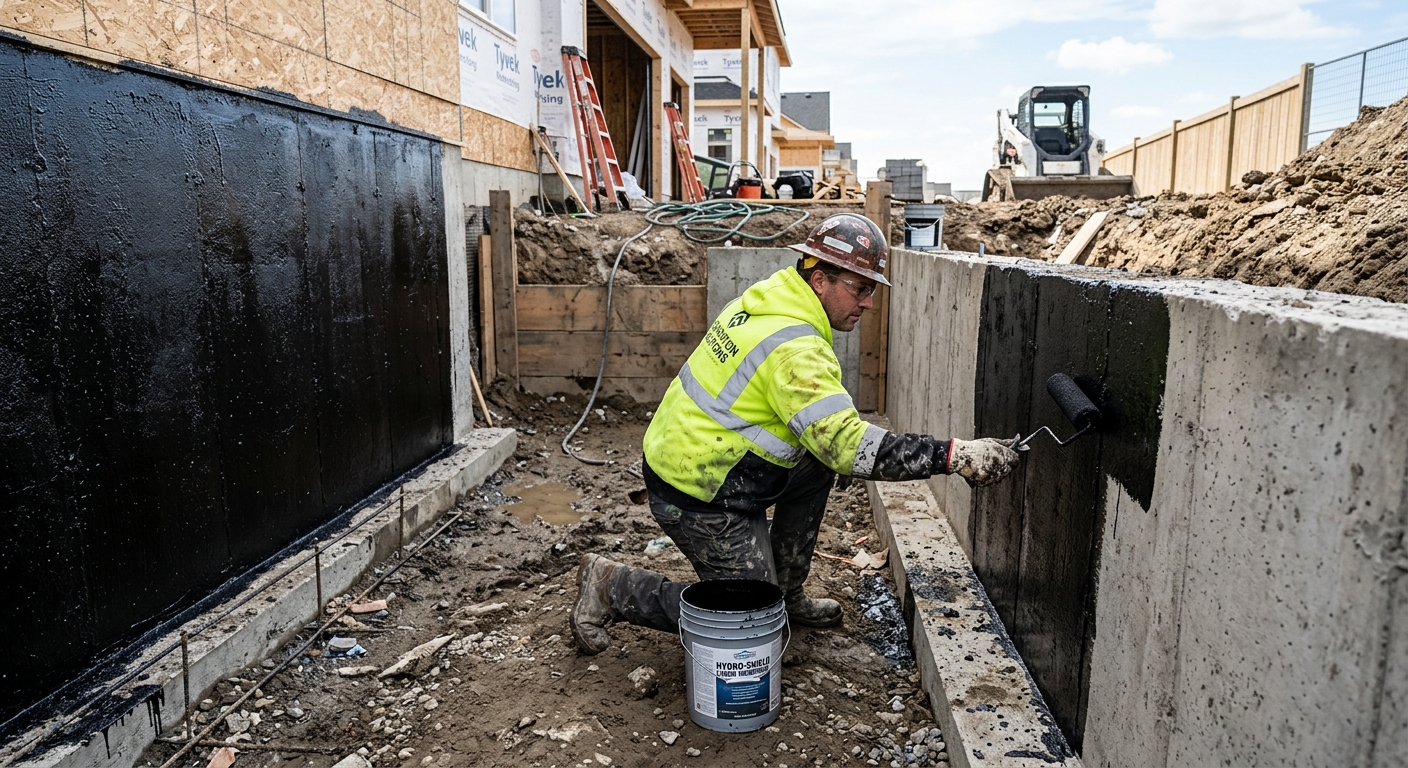
Basement waterproofing options and costs in Corso Italia-Davenport
In Corso Italia-Davenport, homeowners typically start by noticing dampness, efflorescence, or water pooling after heavy spring rains or thaws. From there, the right fix depends on where the water is coming from—around the foundation perimeter, through specific cracks/cold joints, or from failing weeping tile/drainage that can’t relieve lateral soil pressure. With a population of 14,133 in Corso Italia-Davenport (Statistics Canada, 2021 Census), the area has a mix of older post-war houses and mid-century builds that often have original drainage systems now past their best years.
In Toronto’s clay-and-glacial-till landscape, saturated backfill can push against foundation walls, and freeze–thaw cycles can turn hairline defects into active leaks over a few seasons. That’s why pricing can move quickly: exterior excavation requires hand-digging around decks, fences, and tight driveways, while interior work focuses on capturing water and managing it with a sump system. Contractors are especially busy in the Davenport Road and surrounding pockets where lots are older, drainage is less predictable, and basements are frequently used as finished living space—so owners want solutions that reduce disruption without compromising performance.
Below is a practical cost comparison of the most common waterproofing scopes in the Toronto tier. Use it to sanity-check quotes and then confirm details like access, drainage condition, and whether the contractor is addressing the water path—not just the symptom.
| Method |
What It Addresses |
Disruption Level |
Durability |
Price Range |
| Exterior excavation + new membrane + drainage tile |
Water entry from the exterior; high lateral pressure; failing perimeter drains |
High (yard excavation, landscaping restoration) |
Long-term (typically decades with proper installation) |
$7,000–$25,000 |
| Interior perimeter drain channel + sump pit |
Water that migrates past walls; chronic seepage; reducing hydrostatic pressure inside |
Medium (interior floor cutting and restoration) |
Long-term with quality sump and backups |
$3,500–$15,000 |
| Foundation crack injection (epoxy or polyurethane) |
Isolated cracks and cold-joints causing localized leakage |
Low to medium (access to crack line) |
Good for selected crack types and depths |
$600–$3,000 |
| Sump pump installation (primary + battery backup) |
Relieves incoming groundwater; protects finished basements during power loss |
Low to medium (pit excavation and minor interior work) |
High when paired with proper discharge routing |
$800–$3,500 |
| Window well drain installation |
Surface water entry at windows; pooling against basement openings |
Low to medium (excavation near window wells) |
Moderate to high (depends on outlet/discharge) |
$1,200–$4,800 |
| Lot re-grading / downspout extension |
Redirects stormwater away from foundation; reduces wet soil around walls |
Low (surface work) |
Moderate (best as a complement to drainage repairs) |
$1,000–$5,500 |
Prices are estimates only and vary by project scope, site access and material selection.
What affects the price of waterproofing in Corso Italia-Davenport
In Corso Italia-Davenport and across the Toronto region, two quotes for the “same” basement leak can differ by 30–50% because waterproofing is driven by subsurface conditions—access, soil behaviour, and how much of the original drainage has failed—not just by what you can see on the wall. Even within the GTA, contractors price differently when they anticipate excavation constraints, higher labour time for hand-digging, or additional drainage components due to persistent water table behaviour.
The three biggest cost drivers that separate local region pricing from a national average are soil type, water table, and freeze–thaw. In Toronto’s glacial till and clay pockets, clay expands when saturated and exerts lateral pressure against foundation walls; that can worsen cracks around tie holes and cold joints. Where water tables are higher or drainage is clogged, sump systems must run longer and the discharge path and liner details become more complex. Freeze–thaw then enlarges minor defects, increasing labour and material needs for proper crack treatment—especially when repeated seasonal wetting turns hairline issues into active leaks.
Concrete examples that commonly change pricing in Corso Italia-Davenport:
- Homes with older original weeping tile (often 60+ years) can have completely failed lines—adding exterior excavation scope can move a project from the interior band (down around $3,500–$15,000) toward exterior rates (up around $7,000–$25,000).
- Tight side yards or additions that sit over deck footings can require more labour time for hand-digging, bringing exterior costs toward the top half of the $7,000–$25,000 exterior band.
- If efflorescence or mouldy, wet substrate is present before sealing, contractors typically need remediation first to keep coatings from failing later—adding time before membranes or sealants go on.
On the flip side, isolated leaks with a clearly defined crack line can often stay in the foundation crack repair range ($600–$3,000) when the crack type matches the selected injection method.
| Price Factor |
Why It Matters |
Cost Impact |
| Interior vs. exterior approach — interior is less disruptive but addresses symptoms |
Exterior stops water at the source; interior manages water after entry |
Interior often runs lower, but recurring seepage can increase total cost if exterior is truly needed |
| Foundation type — poured concrete vs. block vs. stone vs. ICF |
Different wall systems respond differently to crack movement and moisture migration |
Block and older systems may require more drainage and crack treatment; poured may be more straightforward for targeted injections |
| Soil type — clay expands more than sand, adding pressure |
Clay saturation increases lateral pressure and can widen cracks repeatedly |
More robust drainage/membrane details are typically required; costs skew higher in clay pockets |
| Crack type and length — hairline vs. structural horizontal cracks |
Not all cracks can be injected; structural movement may need engineered work |
Structural cracks can push scope beyond basic injection into engineer-led solutions |
| Sump pump backup system — battery or water-powered backup needed |
Power interruptions during spring wet periods can cause basement flooding |
Backup options add cost but reduce risk; typically shifts toward higher-end sump scopes |
| Access — landscaping, decks, or driveways must be removed for exterior |
Excavation time and restoration materials vary with site constraints |
Tight urban lots can increase excavation labour and restoration expenses |
| Weeping tile age — original tile (60+ years) may be completely failed |
Failed lines require replacement or major tie-in upgrades |
Can turn a “minor fix” into full perimeter drainage work |
| Mould or efflorescence remediation required before sealing |
Sealing over damp/contaminated surfaces can lead to coating failure |
Remediation and drying extend timeline and add labour/materials |
Permits & regulations in Ontario
In Ontario, some foundation and drainage work may require a building permit, especially when you’re altering structural elements, changing how water is managed at the lot line, or making significant changes to drainage that affects runoff behaviour. In most cases, foundation excavation and structural crack repair—particularly when cracks indicate potential movement—are the types of work that typically require permits. If the scope includes changes that affect how water is directed (for example, certain sump discharge routing or connection details), municipal approval may also be required.
For structural crack repair (such as major horizontal cracks in block walls or step cracks that suggest movement), it’s common to need a structural engineer’s assessment to determine whether underpinning or other structural support is needed before waterproofing proceeds. A reputable contractor should clearly state whether they have engineering support available for structural scopes, and they should carry liability insurance and WSIB/WCB coverage for their crews.
For Corso Italia-Davenport homeowners, a practical verification process looks like this:
- Ask the contractor for their Ontario business details and check their licensing/registration information through the appropriate online registry pages they reference in their quote.
- Request a current certificate of insurance (liability) and confirm it matches the legal entity on the contract.
- Ask for WSIB/WCB clearance or proof of coverage for workers and subcontractors used on your site.
- If structural repair is in scope, ask for the engineer’s letter/report and whether the permit will be pulled (by the contractor or your authorized agent, per the permit process).
- Confirm in writing what is included: permit fees, drawings/engineering, and inspection scheduling.
Interior vs exterior waterproofing — what does Corso Italia-Davenport need?
The fundamental difference is straightforward: exterior waterproofing addresses the source by fully excavating around the foundation, installing a proper membrane, reconnecting or replacing drainage tile, then backfilling and restoring the grade. Interior waterproofing—such as a perimeter drain channel, sump pit, and sump pump—manages water after it has entered the basement. In Toronto’s clay-heavy pockets, where saturated soil can add hydrostatic and lateral pressure, interior solutions often work best as a practical complement or when exterior access is limited or cost-prohibitive. However, exterior is typically the more complete fix when the perimeter drainage has failed or the wall waterproofing system has reached the end of its service life.
Because poured concrete foundations generally seal better with targeted crack injection, many Corso Italia-Davenport homes with localized seepage can see strong results from crack injection plus interior capture. Block foundations, by contrast, often benefit from interior drainage as a reliable “pressure management” layer, particularly when weeping tile lines are clogged or partially collapsed. Either way, Ontario’s winter freeze–thaw cycles mean that water entry pathways can re-open each season, so a plan that accounts for ongoing moisture is essential.
Sump pump backup systems matter locally because spring flooding can coincide with power interruptions. A battery backup reduces the risk of water rising during short outages, buying time until power returns—often the difference between minor seepage and a costly cleanup.
Dollar-wise, interior work can be the justified choice when you need results fast and access is constrained: an interior perimeter drain plus sump system often lands around $3,500–$15,000. If inspections show failing exterior drainage and persistent lateral pressure, upgrading to exterior waterproofing can be worth it despite the disruption, typically $7,000–$25,000, because it targets the entry point instead of repeatedly managing it from the inside.
| Method |
Best For |
Addresses Source? |
Disruption |
Lifespan |
Price Band |
| Full exterior excavation + membrane |
Chronic leaks, failed weeping tile, heavy clay pressure, widespread dampness |
Yes (source-focused) |
High |
Decades with correct drainage and backfill |
$7,000–$25,000 |
| Interior French drain + sump system |
Intermittent seepage, unknown drainage condition, finished basement constraints |
No (water is managed after entry) |
Medium |
Long-term with quality sump, discharge routing, and backups |
$3,500–$15,000 |
| Crack injection — epoxy (structural) |
Non-moving cracks or stable cracks in poured concrete where leakage is limited |
Partial (targets a specific pathway) |
Low |
Good when the crack movement is minimal |
$600–$3,000 |
| Crack injection — polyurethane (active leak) |
Cracks actively weeping or with movement where flexibility is required |
Partial (targets pathway while accommodating minor movement) |
Low to medium |
Good for active, compatible cracks |
$900–$3,000 |
| Interior drain channel only (no sump) |
Minor seepage, short-term dampness capture, limited risk of deep water |
No |
Medium |
Moderate (depends on water conditions) |
$2,500–$9,500 |
| Re-grading + downspout extensions |
Surface runoff issues, pooled water near foundation, seasonal damp zones |
Yes for surface water pathways |
Low |
Moderate (best combined with drainage repairs if needed) |
$1,000–$5,500 |
How to choose a waterproofing contractor in Corso Italia-Davenport
Start with verification, because waterproofing failures are often documentation failures as much as installation issues. For Ontario coverage, confirm the contractor’s liability insurance is current and matches the company name on your agreement. Then ask for WSIB/WCB proof or a clearance letter showing coverage for workers who will be on your site. In Corso Italia-Davenport, where exterior work can involve excavation near utilities and shared access routes, you also want to ensure subcontractors are covered—not just the head contractor.
Next, get 2–3 itemised written quotes. You want labour and materials separated (membrane type, drainage tile spec, sump components, disposal/restoration) rather than one lump sum number. Also insist the scope includes or excludes key items explicitly: permit pull responsibility, engineering support if structural cracks are involved, debris disposal, and what floor/landscape restoration will look like at the end.
Warranty should be spelled out with two layers: workmanship warranty length and what the manufacturer warranty covers for the products used. Confirm whether warranties are transferable if you sell the home. Payment scheduling should protect you—never pay more than 10–15% upfront, and keep a holdback until the job is complete and your final walkthrough confirms the defects list is closed. Finally, request a start date and completion estimate in writing so you can plan around spring thaw periods and indoor usability.
- Ask for the project scope in writing with clear “included/excluded” lists.
- Confirm exterior excavation depths and disposal handling are specified (where applicable).
- Require a photo report or inspection notes (crack mapping, drainage checks).
- Check insurance: certificate of liability matches the legal entity on the contract.
- Confirm WSIB/WCB clearance for workers/subcontractors.
- Ask whether a permit is required for your scope and who pulls it.
- Verify engineering support is available for structural crack scenarios.
- Get warranty terms in writing: workmanship + product/manufacturer, and transferability.
- Review the sump pump plan: discharge route, check valve details, and backup choice.
- Ask about drying time and cure times before sealing coatings or membranes.
- Request an itemised materials list (not “approved equal” language without specs).
- Use a payment schedule with ≤ 10–15% upfront and a final holdback.
Red flags to watch for: a contractor who won’t provide itemised pricing; vague scoping that doesn’t mention disposal, restoration, or discharge routing; no proof of WSIB/WCB or liability coverage; a warranty that’s only verbal; or promises that ignore Ontario realities like freeze–thaw movement and the need for backup sump protection during spring wet periods.
Frequently asked questions — waterproofing in Corso Italia-Davenport
How do I choose a waterproofing contractor in Corso Italia-Davenport?
Choose a contractor who (1) identifies the water path and explains the “why,” not just the “what,” and (2) can back their work with proper insurance and coverage. In Ontario, ask for a current liability insurance certificate and proof of WSIB/WCB clearance for workers, then verify the company details match your contract. Get 2–3 itemised quotes so you can compare membrane/drain specifications and restoration scope. In Corso Italia-Davenport, also confirm whether the contractor is addressing clay-and-freeze–thaw driven pressure (often requiring drainage capture) versus just sealing visible spots. A legitimate quote will align with local cost bands—for example, exterior waterproofing often sits in the $7,000–$25,000 tier when full excavation is needed.
What is a battery backup sump pump and do I need one in Corso Italia-Davenport?
A battery backup sump pump is an additional power source (battery + pump controller) that kicks in when the main power fails. In Ontario, spring thaws and heavy rain events can create high inflow, and outages—while not constant—are enough to justify protection when you finish your basement or store valuables below grade. In Corso Italia-Davenport, where clay soils can hold water and keep hydrostatic pressure elevated, backup helps prevent the sump from becoming ineffective during short power interruptions. Whether you “need” one depends on your basement use and history of previous outages during wet periods, but many homeowners opt for backup to reduce flooding risk. Typical sump-and-backup scopes often fall into the $800–$3,500 band.
How much does basement waterproofing cost in Corso Italia-Davenport?
Costs vary based on whether you stop water at the source (usually exterior) or manage water after it enters (often interior drainage). For Corso Italia-Davenport, common local ranges are: interior waterproofing/perimeter drainage often falls around $3,500–$15,000; exterior excavation with new membrane and drainage tile is commonly $7,000–$25,000; isolated foundation crack repairs typically land in the $600–$3,000 range when the leak is localized. If a sump pump is part of the plan, installation (including backup options) often fits within $800–$3,500. Your final number can change with site access (tight lots, decks, driveways), soil/water conditions, and whether remediation (mould/efflorescence) must happen before sealing.
Interior vs exterior waterproofing — which is better?
“Better” depends on what’s causing the leak. Exterior waterproofing—full excavation, new membrane, and repaired/replaced drainage tile—usually offers the best source control when perimeter drainage has failed or when clay backfill is pushing on walls under high water conditions. Interior waterproofing manages water after entry using a perimeter drain channel, sump pit, and sump pump, which can be less disruptive and more practical if excavation access is limited. In Corso Italia-Davenport’s Toronto soil conditions (glacial till with clay pockets and freeze–thaw movement), exterior often makes the most sense for chronic or widespread seepage. If the issue is localized, crack injection (for compatible crack types) plus interior capture can be a smarter cost-effective route. Where exterior excavation isn’t needed, interior work in the $3,500–$15,000 tier may achieve the goal without paying for full excavation in the $7,000–$25,000 tier.
Why is my basement leaking in Corso Italia-Davenport?
Basement leaks here commonly come from three local realities: saturated clay soils, high seasonal groundwater/lateral pressure, and freeze–thaw widening small defects. Many older homes have drainage systems that have partially collapsed or clogged—so water can’t relieve pressure through original weeping tile or early drains. Leaks can also appear at cold joints, tie holes, and cracks that become active during thaw cycles. If you see efflorescence, it often suggests moisture migrating through masonry or concrete. If only one area leaks—like near a specific wall segment or window opening—you may be dealing with a localized pathway (often addressed with crack injection or a window well drain). A contractor should map seepage patterns and confirm whether the fix should be exterior, interior drainage, or targeted crack repair.
How do I know if a foundation crack is serious?
Not all cracks are equal. Hairline cracks that are stable and dry most of the time may be treatable with targeted injection, while structural movement indicators are more serious. In Ontario, pay extra attention to horizontal cracks in block walls, step cracks that appear to “move,” or cracks that are actively weeping during rain or thaw events—these often mean ongoing water pressure and/or movement. For Corso Italia-Davenport homeowners, the clay-and-freeze–thaw combination can enlarge small issues over time, so repeating leakage is a red flag. Ask for a crack assessment: whether the crack is active, if it shows displacement, and what injection material (epoxy for stable conditions versus polyurethane for active leaks) is appropriate. Isolated repairs typically fall in the $600–$3,000 band, but major structural concerns may require engineering review before waterproofing proceeds.