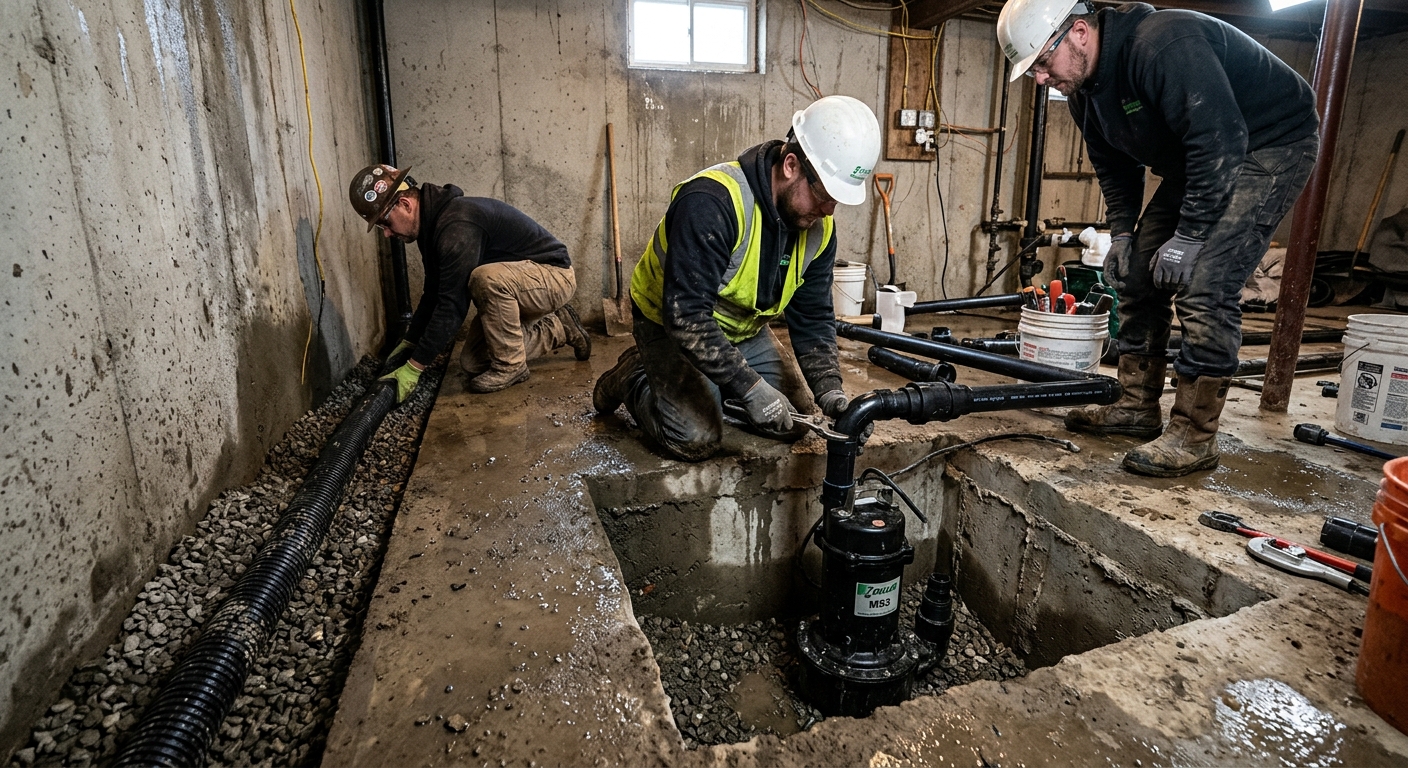
Basement waterproofing options and costs in Guelph
Guelph homeowners usually start with one question: “What’s the most reliable way to stop water, not just the symptoms?” With 43.7% of homes built before 1981 (Statistics Canada, 2021 Census), it’s common to see older basements with original tar-and-paper waterproofing that has aged, plus weeping tile systems that are well past their service life. In the Kitchener–Waterloo–Barrie area, contractors price projects around soil and water movement: clay-heavy pockets can hold water and increase hydrostatic pressure, while freeze-thaw cycles can widen existing foundation cracks and turn small seepage into noticeable wet walls in spring.
Cost and availability also change with how hard it is to excavate and remove soil—if access is limited by a deck, tight side yard, or mature landscaping, exterior work costs more and may require staging. That’s why trades are especially in demand around West Guelph and the older neighbourhoods closer to the Speed River corridors, where lot grading and drainage issues show up more often during heavy spring rains.
To compare apples-to-apples, the table below summarizes the most common waterproofing approaches, the problems they target, the disruption you should expect, and the typical price bands for Guelph. Use it to narrow down your options before you request an itemised quote.
| Method |
What It Addresses |
Disruption Level |
Durability |
Price Range |
| Exterior excavation + new membrane + drainage tile |
Primary water entry at foundation walls; lowers hydrostatic pressure with proper drainage |
High (excavation, soil removal, landscaping restoration) |
High to very high when installed correctly with proper backfill and drainage |
$7,000–$15,000 |
| Interior perimeter drain channel + sump pit |
Collects seepage after it enters; reduces floor and wall dampness |
Medium (floor/edge access, sump excavation) |
Medium to high; depends on crack sealing and pump/backup reliability |
$6,000–$20,000 |
| Foundation crack injection (epoxy or polyurethane) |
Stops leakage paths; epoxy is best for stable cracks, polyurethane targets active leaks |
Low to medium (minor surface prep, access at crack) |
Medium to high; best results when paired with drainage control |
$1,200–$3,000 |
| Sump pump installation (primary + battery backup) |
Moves collected water away during wet seasons and power interruptions |
Low to medium (pit cutting, discharge routing) |
High when paired with proper discharge and an effective backup system |
$900–$3,600 |
| Window well drain installation |
Controls water pooling at window wells and reduces seepage into finished basements |
Low to medium (excavation around wells) |
Medium; effectiveness depends on grading and existing wall conditions |
$1,200–$2,800 |
| Lot re-grading / downspout extension |
Improves surface water management to reduce water load on foundation |
Low (external yard work) |
Low to medium alone; higher value when paired with drainage and sealing |
$1,100–$3,200 |
Prices are estimates only and vary by project scope, site access and material selection.
What affects the price of waterproofing in Guelph
In Guelph and the broader Kitchener–Waterloo–Barrie corridor, two quotes for the “same” basement leak can differ by 30–50% because the scope is rarely identical: some contractors only manage water after it enters, while others address the source with drainage upgrades and exterior correction. Labour availability and excavation difficulty also vary street-to-street—properties with tight side access, mature trees, or finished landscaping require more careful staging and hauling.
Across Ontario, the three biggest cost drivers that separate local pricing from the national average are soil type, water table and freeze-thaw. Clay-heavy soils common in parts of Ontario can expand during freeze-thaw and exert higher lateral pressure on foundation walls, which can worsen cracks over time and require both crack repair and drainage. High water table conditions increase sump run times and push sump capacity requirements, meaning more electrical work and sometimes backup. By contrast, regions that don’t experience as many freeze-thaw cycles may see fewer crack-related rebuild costs.
In Guelph, real examples that raise the budget include replacing or upgrading failing weeping tile that may have been installed decades ago and discovering footing-edge deterioration once excavation begins. Another cost lever is finished basements: if there’s drywall and flooring, interior solutions often require careful removal and restoration. On the other hand, if the issue is isolated to a single perimeter section or you’re mainly upgrading downspouts and re-grading, costs can stay closer to the lower end of the market (for example, a smaller exterior drainage correction versus full exterior excavation). For many homeowners, interior perimeter drainage and sump upgrades commonly land in the mid band (around $6,000–$20,000), while true exterior excavation projects typically start higher (around $7,000–$15,000) due to excavation, disposal, and restoration.
| Price Factor |
Why It Matters |
Cost Impact |
| Interior vs. exterior approach — interior is less disruptive but addresses symptoms |
Exterior addresses the water entry point; interior manages water after entry |
Exterior often adds excavation, soil removal and landscaping restoration costs |
| Foundation type — poured concrete vs. block vs. stone vs. ICF |
Different walls respond differently to sealing and crack repair methods |
Block and older assemblies may need more detailed drainage and crack mapping |
| Soil type — clay expands more than sand, adding pressure |
Clay can increase hydrostatic pressure and accelerate crack growth |
More extensive drainage and sealing measures can be required |
| Crack type and length — hairline vs. structural horizontal cracks |
Active or structural cracks need different materials and sometimes engineering |
Structural or longer crack work increases labour and material quantity |
| Sump pump backup system — battery or water-powered backup needed |
Backup reduces risk during spring storms and power interruptions |
Backup adds equipment, wiring and verification testing |
| Access — landscaping, decks, or driveways must be removed for exterior |
Excavation depth and working room determine labour and restoration cost |
Removing/repairing hardscapes can add major scope |
| Weeping tile age — original tile (60+ years) may be completely failed |
Old drainage fails, forcing water to enter through seams and cracks |
May require replacement and improved bedding/backfill |
| Mould or efflorescence remediation required before sealing |
Moisture-contaminated areas must be cleaned and dried appropriately |
Can add remediation hours before waterproofing can begin |
Permits & regulations in Ontario
In Ontario, foundation excavation, structural crack repair, and changes to lot drainage typically require a building permit. If you’re sealing or repairing foundation components in a way that affects structural performance—or if the work involves underpinning or other structural measures—expect permit involvement and, often, a structural engineer’s assessment. For sump pump installations that connect to the storm or sanitary sewer, municipal approval is commonly required, because discharge location and routing can affect local infrastructure and permitted drainage pathways.
What often DOES require a permit can include: excavation near a foundation with membrane and drainage tile replacement, interior drain/sump work when it changes drainage discharge or touches protected structural components, and any structural crack repair where there are signs of movement (for example, significant horizontal or step cracking). What typically does NOT require a permit is limited cosmetic improvement or small surface crack patching that does not alter drainage and does not involve structural repair scope; however, most true waterproofing crack injection jobs that are tied to active seepage should be clarified in writing.
Step-by-step in Guelph to verify a contractor’s credentials: (1) Ask for their Ontario licence information and confirm through the appropriate online business registry and any available trade listings; (2) request a certificate of insurance showing general liability and, if applicable, engineering or specialty coverage; (3) verify WSIB/WCB coverage—ask for the clearance letter or proof of coverage; (4) for structural repairs, confirm whether they have engineering support and that the engineer will provide any required assessment/report; and (5) ensure the quote references what permits will be pulled (or who will handle the process) before any work starts.
Interior vs exterior waterproofing — what does Guelph need?
Exterior waterproofing and interior waterproofing treat water differently. Exterior systems require full excavation and install a new waterproofing membrane plus drainage tile, then backfill in a controlled way to reduce the water load against the foundation wall. It’s the most permanent solution for water entry, but it’s also the most expensive and disruptive because landscaping must be opened and restored. Interior waterproofing—typically a perimeter drain channel, sump pit, and sump pump—does not stop hydrostatic pressure from building on the wall; instead, it captures water after it enters and helps keep the basement dry.
For Guelph, that choice is heavily influenced by how your basement is built and how water behaves around your property. Poured concrete walls often respond well to targeted crack injection (especially when cracks are stable), and interior drainage can be a practical complement if exterior excavation is constrained. Block foundations are more likely to show a wider variety of leakage paths at mortar joints and block voids, so many homeowners need an interior drainage system to manage the volume between spring rains and freeze-thaw cycles—even if some crack sealing is included.
Also, Ontario’s power reliability matters during spring flooding. A sump pump with a reliable backup (often battery backup) reduces the risk of water backflow during outages, which is a common concern after heavy rain events.
In practical terms, if you’re looking at full exterior excavation versus an interior perimeter drain approach, the price difference is easiest to justify when there’s recurring spring seepage and access allows excavation. If access is limited, interior systems can still perform very well—but they cost less upfront and focus on containment. A typical exterior project usually sits around $7,000–$15,000, while a combined interior perimeter drain and sump approach is commonly in the $6,000–$20,000 band depending on how many walls and how much restoration is needed.
| Method |
Best For |
Addresses Source? |
Disruption |
Lifespan |
Price Band |
| Full exterior excavation + membrane |
Recurring seepage where exterior water entry is suspected and excavation access is available |
Yes (primary water entry) |
High |
Long-term with correct drainage/backfill |
$7,000–$15,000 |
| Interior French drain + sump system |
Basements with wet floors/walls, especially where exterior excavation is impractical |
No (it captures and manages water after entry) |
Medium |
High when pump, discharge, and backup are correctly sized |
$6,000–$20,000 |
| Crack injection — epoxy (structural) |
Stable, non-moving cracks in poured concrete where the leak has been identified |
Partial (seals pathways) |
Low to medium |
Medium to high for stable cracks |
$1,200–$3,000 |
| Crack injection — polyurethane (active leak) |
Active weeping/seeping cracks, including joints where flexibility is needed |
Partial (seals active pathways) |
Low to medium |
Medium to high when paired with drainage control |
$1,200–$3,000 |
| Interior drain channel only (no sump) |
Light seepage situations where water volumes are low and a sump is not needed |
No (manages minor entry) |
Medium to low |
Medium; may not handle heavier spring volumes |
$4,500–$9,500 |
| Re-grading + downspout extensions |
Surface-water runoff issues contributing to dampness |
No (reduces water load) |
Low |
Low to medium alone |
$1,100–$3,200 |
How to choose a waterproofing contractor in Guelph
Start by verifying Ontario compliance and coverage, because waterproofing is both a building-envelope and liability issue. Ask each contractor for (1) their Ontario registration/licence details relevant to their trade scope, (2) a certificate of general liability insurance (ensure the policy is current and the work address is covered), and (3) WSIB/WCB proof of coverage. In Ontario, you’re looking for a clearance letter or equivalent proof that they have coverage for their workers—don’t accept “we’ll add it later.”
Next, get 2–3 itemised written quotes, not just a lump-sum number. An itemised quote should break out labour, materials (membrane, drainage tile, sump components, discharge piping), disposal/hauling, and any restoration. Scope clarity matters: confirm what’s excluded (mould remediation, structural engineering, concrete removal limits, landscaping rebuild quality, permit fees) and whether the contractor will pull the permit or you’ll need to.
Warranty should be clear and specific: workmanship warranty length, what it covers (leaks, settlement, rework), whether products carry a separate manufacturer warranty, and whether either warranty is transferable if you sell. Payment matters too—never pay more than 10–15% upfront, and request a holdback until completion and cleanup are finished. Finally, insist on a start date and estimated completion timeline in writing, including key weather dependencies for excavation and curing.
- Request their certificate of insurance and confirm the work address is included.
- Verify WSIB/WCB coverage with clearance documentation, not verbal assurances.
- Ask if they carry engineering support for structural crack concerns.
- Get an itemised quote with line-by-line labour and materials.
- Confirm whether permits are included and who is responsible for pulling them.
- Clarify drainage discharge routing (and approvals if applicable).
- Specify sump pump details: basin size, check valves, alarm, and backup type.
- Ask what happens if additional cracks or deterioration are discovered during excavation.
- Confirm foundation crack injection product selection (epoxy vs polyurethane) based on crack condition.
- Review warranty terms in writing: length, coverage, and exclusions.
- Set a payment schedule with a holdback at completion.
- Require a written timeline including weather/curing and restoration sequencing.
Red flags I see too often in the Guelph market: vague scopes (“we’ll waterproof the basement”), no itemised breakdown, no clear permit/discharge plan, warranties that only cover materials (not labour), and contractors who recommend a sump pump as a universal fix without discussing drainage, crack mapping, or backup power.
Frequently asked questions — waterproofing in Guelph
How do I know if a foundation crack is serious?
In Guelph (and across Southern Ontario), seriousness comes down to crack behaviour and location, not just width. Hairline vertical cracks can be non-structural, but horizontal cracks in block or stepped cracks that “open” after freeze-thaw or during spring storms are more concerning. Check whether the crack extends, shows offset at steps, or is accompanied by active seepage (wetness, mineral staining, or efflorescence). If you notice water following the crack after heavy rain, plan for sealing, and often interior drainage, because pressure is moving through the crack path. If you suspect structural movement, Ontario typically requires a more formal assessment—ask your contractor whether an engineer review is included before injection or any underpinning-related work is proposed.
How much does foundation crack repair cost in Guelph?
Typical foundation crack repair in Guelph often falls around $1,200–$3,000, depending on how many cracks, how long they are, and whether the crack is stable or actively leaking. Epoxy injection (often used for stable cracks) and polyurethane injection (often used where there’s active leakage) change both material choice and prep time, which affects labour. If remediation is needed first—such as cleaning mouldy areas, drying efflorescence, or addressing a wet perimeter path—the total can rise. Also note that crack repair alone doesn’t solve hydrostatic pressure; if water keeps arriving, homeowners may still need an interior perimeter drain or sump to keep the basement dry between spring storms and freeze-thaw cycles.
Do I need a sump pump in Guelph?
You may need a sump pump if you get recurring seepage, wet floors, or water pooling near the perimeter—especially when the basement experiences spring spikes. In Guelph, the soil and drainage conditions can cause higher water pressure during freeze-thaw, and that often means you’re collecting water you can’t stop from entering with injection alone. A sump system is also commonly recommended when an interior drain will be installed, because it gives you reliable water removal even when the water level outside rises. Costs for sump installation typically start around $900–$3,600, and homeowners who worry about power interruptions may choose a backup system, which is wise for spring flooding conditions. A thorough site assessment should confirm discharge location and whether approvals are needed for routing.
How does Guelph's soil affect my foundation?
Guelph properties can vary a lot, but in Southern Ontario, clay-heavy soils are common enough that they matter for waterproofing design. Clay tends to hold water and swell during freeze-thaw, which can increase lateral pressure against foundation walls and worsen cracks over time. That same water retention also increases the need for drainage improvements and can extend the period when basements feel damp during seasonal transitions. If you have older drainage (or no effective downspout management), the water load on the foundation rises and interior systems like perimeter drains and sumps work harder. Because 43.7% of homes in the local area were built before 1981 (Statistics Canada, 2021 Census), many are more likely to have dated drainage details, so it’s common to see weeping tile upgrades discussed alongside any crack or leak repairs.
Do I need a permit for foundation work in Ontario?
Ontario rules commonly involve permits when foundation excavation, structural crack repair, or changes to lot drainage are part of the work. In Guelph, permit expectations are especially likely if contractors are installing or replacing exterior drainage systems, doing excavation close to the foundation, or carrying out structural-related repairs tied to stability concerns. Sump pump installations that connect to the storm or sanitary sewer often need municipal approval because discharge must follow approved routing. To protect yourself, ask your contractor in writing what permits they will pull, which work requires approval, and whether an engineer is needed for structural cracks. Before work begins, verify the contractor provides liability insurance and WSIB/WCB coverage (and obtain any clearance letter they can provide).
How long does waterproofing last?
When installed and maintained correctly, exterior waterproofing is generally the longest-lasting approach because it addresses water entry at the foundation. Interior systems can also last many years, but they’re dependent on pump reliability and ongoing drainage performance. In the Kitchener–Waterloo–Barrie corridor, freeze-thaw and soil moisture cycles mean homeowners should expect performance to be seasonal—especially if drainage is borderline. A properly installed exterior membrane and drainage tile system typically provides long-term results, while interior drains and sumps should be checked periodically (pump function, discharge path, and backup). If your situation includes active seepage, pairing crack sealing with drainage management matters. For reference, repair and drainage solutions vary widely; homeowners often spend around $7,000–$15,000 for exterior excavation projects, while interior perimeter systems frequently land in the $6,000–$20,000 range depending on how much is addressed beyond symptoms.