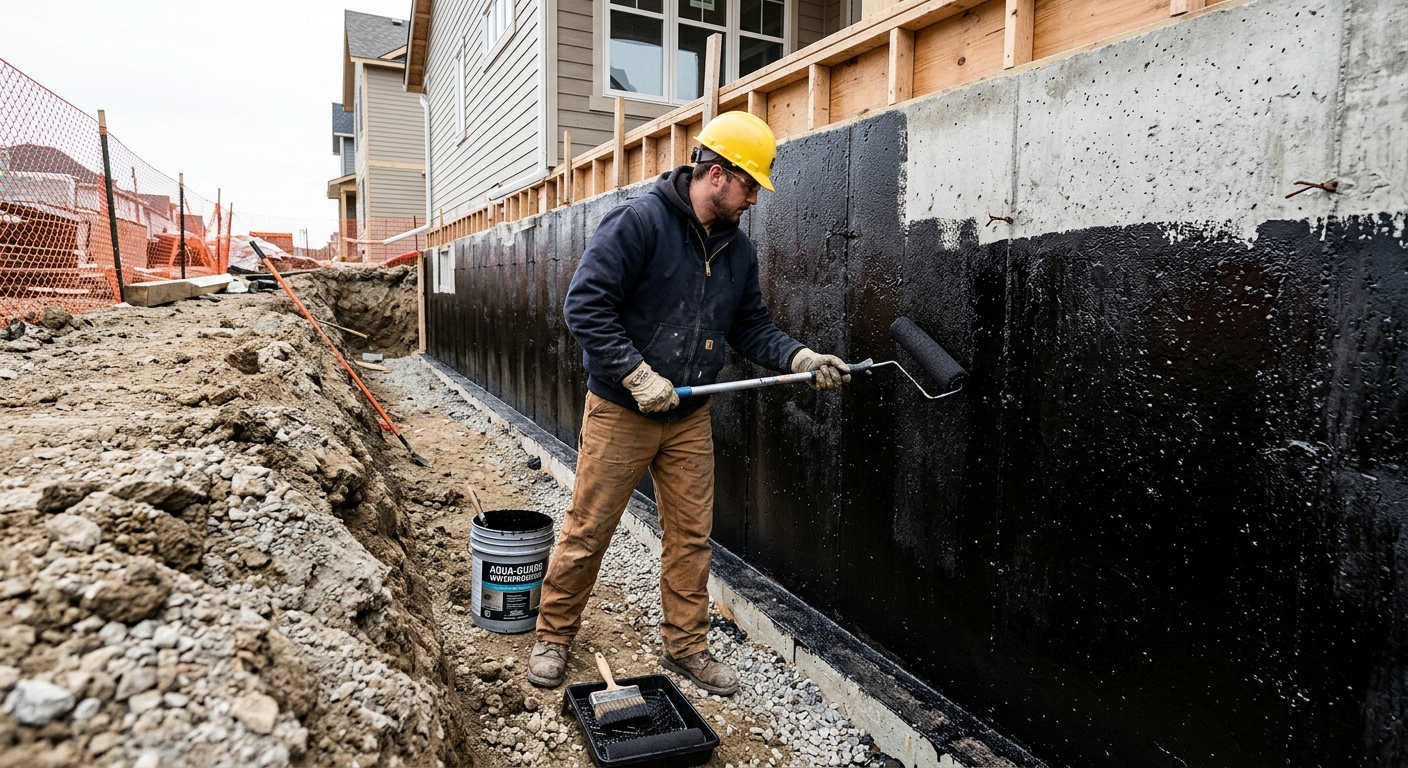
Basement waterproofing options and costs in Birchcliffe-Cliffside
In Birchcliffe-Cliffside, choosing the right basement waterproofing method starts with understanding how water behaves around Toronto-area foundations. With a 2021 population of 22,291 (Statistics Canada, 2021 Census), this neighbourhood sits among dense, older residential blocks where lots are tighter and access can directly affect excavation and labour time. Just as importantly, Toronto’s housing mix includes many pre-1980 and mid-century homes, where original drainage systems (clay weeping tiles or early plastic drains) often age out and become clogged. When that happens, moisture finds the path of least resistance—through cold joints, tie holes, cracks, and areas around older additions—rather than through a single “obvious” failure point.
Costs in the Toronto market also rise and fall with site conditions. Mixed glacial till and clay soils in the area can hold water and expand during freeze–thaw, increasing lateral pressure against foundation walls and turning hairline cracks into active leaks over a few winters. In tight Birchcliffe-Cliffside streets—especially near deck footings, walkouts, and shared driveways—contractors frequently have to hand-dig, work in sections, and carefully match excavation to keep slopes stable.
In practice, exterior work is most in demand in the flatter parts near the edges of the Bluffs corridor and other low-slope pockets where water doesn’t shed quickly. That demand is why many homeowners end up comparing exterior excavation plus drainage replacement to interior perimeter drainage plus sump solutions. Use the table below to match the method to what’s actually happening around your foundation.
| Method |
What It Addresses |
Disruption Level |
Durability |
Price Range |
| Exterior excavation + new membrane + drainage tile |
Lateral water pressure, failing weeping tile, seepage at walls and footer line |
High (excavation, landscaping restoration, re-grading) |
Long-term (source control when drainage is properly rebuilt) |
$7,000 – $25,000 |
| Interior perimeter drain channel + sump pit |
Chronic seepage through cracks/cold joints after it enters the basement |
Moderate (cutting floor, limited wall disturbance, cleanup) |
High (if sump discharge and back-up are planned) |
$3,500 – $15,000 |
| Foundation crack injection (epoxy or polyurethane) |
Isolated leak paths; chooses epoxy for structural cracks, polyurethane for active seepage |
Low (surface cleaning, ports, targeted patching) |
Targeted (best when the main water source is controlled) |
$600 – $3,000 |
| Sump pump installation (primary + battery backup) |
Power-interruption risk and water removal during heavy spring saturations |
Low to moderate (excavation at sump location, electrical work) |
High (backup adds real-world resilience) |
$800 – $3,500 |
| Window well drain installation |
Surface water entering through window wells and pooling around egress areas |
Low to moderate (works near exterior wall openings) |
Moderate to high (depends on grading and downspout control) |
$1,000 – $4,500 |
| Lot re-grading / downspout extension |
Surface runoff management; reducing the amount of water reaching the foundation |
Low to moderate (soil reshaping, minor landscaping) |
Moderate (pair with drainage when seepage is from hydrostatic pressure) |
$1,200 – $6,000 |
Prices are estimates only and vary by project scope, site access and material selection.
What affects the price of waterproofing in Birchcliffe-Cliffside
Homeowners in Birchcliffe-Cliffside often notice that two contractors quote very different numbers for the “same” basement problem—sometimes 30–50% apart. In Toronto, that gap usually comes from how each quote defines the source of water and how fully the solution matches local soil and drainage reality. Even when the symptoms look identical (damp walls, efflorescence, water on the floor), the cause can be different: failing weeping tile, blocked discharge, hydrostatic pressure from saturated clay, or isolated crack leak paths that require targeted injection.
Three drivers separate Toronto-area costs from the national average: soil type, water table, and freeze–thaw. Mixed glacial till and clay-heavy pockets can expand during freeze–thaw, increasing lateral pressure and widening defects over time—especially around cold joints and old repair patches. Where groundwater is higher and backfill stays saturated, sump systems run more often, requiring larger pumps, better discharge routing, and sometimes battery backup. In heavy-drainage-failure scenarios, excavation work becomes more labour-intensive because contractors must install drainage and membranes correctly—not just “cover” a leak.
Concrete examples from Birchcliffe-Cliffside: (1) If a clay-rich yard holds water against the foundation, exterior membrane and drainage replacement can land in the mid-to-upper exterior band, around $7,000 – $25,000, because excavation and disposal expand the scope. (2) If the main issue is a localized crack with no significant exterior water contribution, crack injection is frequently closer to $600 – $3,000—but only when inspection shows the rest of the perimeter isn’t under hydrostatic pressure. (3) In basements with older tile and partially collapsed drains, interior perimeter drainage plus sump often becomes the practical middle ground, commonly ranging from $3,500 – $15,000 depending on floor cutting and sump discharge complexity.
| Price Factor |
Why It Matters |
Cost Impact |
| Interior vs. exterior approach — interior is less disruptive but addresses symptoms |
Exterior controls the water source; interior manages water after it enters |
Interior often saves on landscaping disruption, while exterior is costlier but more source-focused |
| Foundation type — poured concrete vs. block vs. stone vs. ICF |
Different wall materials crack and seep differently; repairs match the substrate |
Poured concrete can be successfully sealed with injection when cracks are isolated; block often needs perimeter drainage for practical results |
| Soil type — clay expands more than sand, adding pressure |
Clay saturation increases lateral pressure and can worsen crack activity |
Clay-heavy sites typically increase both investigation time and the need for full drainage upgrades |
| Crack type and length — hairline vs. structural horizontal cracks |
Structural movement may require engineered assessment beyond simple injection |
Longer or structural cracks increase labour and sometimes require additional structural work |
| Sump pump backup system — battery or water-powered backup needed |
Spring runoff and heavy storms can stress power reliability |
Adding backup increases equipment and wiring costs, but reduces failure risk during outages |
| Access — landscaping, decks, or driveways must be removed for exterior |
Excavation around decks/driveways can require more labour and careful reinstatement |
Limited access can push exterior quotes toward the upper end of the band |
| Weeping tile age — original tile (60+ years) may be completely failed |
Old drainage often collapses or clogs, raising the scope to full replacement |
Failed tile can turn “targeted” work into full perimeter drainage reconstruction |
| Mould or efflorescence remediation required before sealing |
Sealers can’t perform well over contaminated, chalky surfaces or active microbial growth |
Pre-treatment adds time and specialized materials |
Permits & regulations in Ontario
In Ontario, certain basement waterproofing activities are straightforward and do not always need municipal involvement, while other work commonly triggers permitting. As a contractor, I generally treat foundation excavation, structural crack repair that may affect load paths, and changes to lot drainage as permit-sensitive items. If your project involves digging near the foundation, altering drainage routes, or changing how water leaves your property, you should expect that a building permit may be required—particularly when work touches foundation elements or involves plumbing/drain connections that could affect municipal servicing.
Sump pump installations also commonly need approval if the pump discharge ties into storm or sanitary systems. Even when a discharge line runs to a weeping tile connection or a permitted outlet, the routing and connection method matter. For structural crack repair—especially horizontal cracks in block walls, significant step cracking, or cracks that show signs of movement—an assessment by a structural engineer is often required to determine whether underpinning or other structural measures are needed before waterproofing proceeds. Verify that the contractor has engineering support available for structural scenarios, along with liability insurance and current WSIB/WCB coverage.
To verify a contractor in Birchcliffe-Cliffside: first, check their Ontario business/registration information through the appropriate online channels for licensing status. Next, ask for a current certificate of insurance (liability) and confirm coverage is active for the project dates. Then request WSIB/WCB clearance—typically provided as an official clearance letter or proof of coverage. Finally, insist on written scope language that clarifies whether permits are included, who pulls them, and what is excluded.
Interior vs exterior waterproofing — what does Birchcliffe-Cliffside need?
The fundamental difference between exterior and interior waterproofing is source control versus water management. Exterior waterproofing requires full excavation along the foundation, then the installation of new membrane and new drainage tile (often with proper filter fabric and backfill handling). Done correctly in Toronto’s clay-heavy pockets, this reduces hydrostatic pressure at the wall—meaning the basement doesn’t have to “fight” water every spring. Interior waterproofing—perimeter drain channel, sump pit, and a sump pump—does not stop pressure at the wall; instead, it collects and removes water after it enters, which is why it’s often faster and less disruptive.
In Birchcliffe-Cliffside, freeze–thaw cycles can widen minor defects and turn marginal seepage into ongoing dampness, while saturated clay can exert real lateral pressure against foundation walls. That’s why poured concrete foundations often respond well to a targeted crack injection plan when the leak is isolated and the perimeter isn’t under persistent pressure. Block foundations, on the other hand, frequently benefit from interior drainage as a complement, because moisture can migrate through multiple pathways and mortar joints—making “one crack fix” less reliable.
Sump pump selection matters in this region. Battery backup (or another approved backup strategy) can reduce losses during outages that occasionally coincide with intense spring storms and localized flooding. If your basement history includes short-duration flooding during wet spells, backup is usually worth the added cost; if you only have intermittent dampness without water accumulation, the solution may be more modest.
As a realistic dollar example: homeowners choosing full exterior excavation may spend around $7,000 – $25,000, which is justified when the drainage system is failing and the yard holds water against the wall. If inspection shows the primary issue is active seepage along a perimeter after it enters, interior perimeter drainage and sump planning often lands in the $3,500 – $15,000 range—saving landscaping while still addressing chronic seepage.
| Method |
Best For |
Addresses Source? |
Disruption |
Lifespan |
Price Band |
| Full exterior excavation + membrane |
Persistent seepage from perimeter, failed weeping tile, clay backfill holding water |
Yes |
High |
Long-term when drainage is rebuilt correctly |
$7,000 – $25,000 |
| Interior French drain + sump system |
Chronic water after entry, clogged or inaccessible exterior drainage, finished basements where excavation is impractical |
No (manages after entry) |
Moderate |
High with proper pump discharge and backup |
$3,500 – $15,000 |
| Crack injection — epoxy (structural) |
Structural cracks where the crack is stable and not actively flowing |
Partial (seals crack pathway) |
Low |
Good for stable, isolated cracks |
$600 – $3,000 |
| Crack injection — polyurethane (active leak) |
Active seepage, pinhole leaks, damp concrete where water is still moving through |
Partial (stops leak path) |
Low |
Good for active leak control when paired with drainage strategy |
$600 – $3,000 |
| Interior drain channel only (no sump) |
Light seepage only, where water can be routed without needing active pumping |
No |
Moderate |
Moderate (depends on water volumes and discharge route) |
$1,500 – $7,500 |
| Re-grading + downspout extensions |
Surface runoff problems, minor dampness, gutter discharge directed toward foundation |
No (reduces incoming water) |
Low to moderate |
Moderate (often needs drainage reinforcement if clay saturation persists) |
$1,200 – $6,000 |
How to choose a waterproofing contractor in Birchcliffe-Cliffside
Choosing a waterproofing contractor in Birchcliffe-Cliffside should be less about sales confidence and more about verifiable coverage, a clear scope, and realistic waterproofing sequencing. Start with Ontario compliance checks. Ask for proof of liability insurance (certificate of insurance showing active coverage) and WSIB/WCB clearance or proof of coverage for the relevant trade activities. Then confirm licensing/registration information using the appropriate Ontario registry pages, and don’t accept “we’re not required” as an answer when the scope includes foundation excavation, drainage plumbing connections, or structural crack repair that may require engineered input.
Next, get 2–3 itemised written quotes. “Itemised” matters: you want labour and materials broken down (membrane type, drainage components, disposal/haul costs, sump components, pumps, discharge routing, and any floor/landscape restoration). For permits, ask directly: is a permit pull included, or is it excluded? If excluded, who will coordinate it, and what documentation is provided? Also ask what’s not included—mould remediation, efflorescence cleaning, engineer review, or restoration beyond baseline re-topping/seed—so you can compare apples to apples.
Warranty should be specific: workmanship warranty length and product/manufacturer warranty terms, and whether warranties are transferable if you sell the home. Payment schedule is another tell: never pay more than 10–15% upfront, and hold back funds until the job is complete and functional tests are done (for sump systems, verify pump activation and backup operation). Finally, request a written start date and a completion estimate.
- Ask for Ontario liability insurance certificate and verify it matches the work dates.
- Request WSIB/WCB clearance letter or proof of coverage before work starts.
- Confirm whether permits are included (and which specific permits apply).
- Insist on an inspection report describing leak pathways and likely water source.
- Get an itemised quote (materials, labour, disposal/haul, restoration allowances).
- Clarify exclusions: mould remediation, engineer assessment, eavestrough/downspout rework.
- Confirm membrane and drainage system specifications (components and placement details).
- For interior work, verify discharge routing and sump location plan.
- Ask about backup strategy for sumps and what backup is included.
- Review warranty: workmanship duration, product warranty, and transferability.
- Use a payment schedule with a maximum 10–15% deposit and holdback until completion.
- Get start date and completion estimate in writing with site access assumptions.
Red flags in Birchcliffe-Cliffside include: vague scopes that “treat dampness” without identifying water source, quotes that skip evaluation of failed weeping tile age, promises of waterproofing without sump backup discussion when flooding is history, no mention of how discharge will be handled (especially near municipal connections), and pressure to pay large deposits before any measurements, permits, or prep work are confirmed.
Frequently asked questions — waterproofing in Birchcliffe-Cliffside
How long does basement waterproofing take in Birchcliffe-Cliffside?
In Birchcliffe-Cliffside, timelines depend heavily on whether the job is exterior or interior. Exterior excavation often takes longer because we’re removing landscaping, digging to foundation height, rebuilding drainage and installing membrane, then restoring soil and surface finishes; a typical exterior project can run several days to a few weeks depending on access and restoration scope. Interior work is usually faster because it focuses on the interior perimeter—installing a drain channel and sump pit—then reconnecting discharge and repairing finishes. If your project is limited to foundation crack injection, it’s commonly quicker, often within a couple of days for inspection, port drilling, injection, and patching (commonly budgeted in the $600 – $3,000 band). Weather, concrete cure times, and permit requirements can also shift schedules in Ontario.
What is a weeping tile and does my Birchcliffe-Cliffside home have one?
A weeping tile is the under-drain system around many older foundations that collects groundwater and directs it to a discharge point. In Toronto-area homes built mid-century, it may be clay tile, while some later builds use early plastic drains. Your home may still have it even if it’s clogged or collapsed—symptoms often include damp walls, efflorescence, and basement floor moisture during wet seasons rather than obvious wall failures. Because Birchcliffe-Cliffside has a mix of post-war and older houses, it’s common to see original drainage that’s partially failed, especially near tie-ins, older additions, or areas where roots and silt collect. A proper inspection (and sometimes camera checks) determines if the weeping tile is functioning, needs replacement, or should be bypassed with interior drainage.
Can I waterproof my basement in winter in Birchcliffe-Cliffside?
Yes, but “winter waterproofing” usually means different things in Ontario. Exterior excavation in freezing conditions is often constrained—digging, membrane detailing, backfill placement, and drainage performance can be harder when soil is frozen or saturated, and timing can affect curing. Interior waterproofing is often more feasible because it relies on controlled indoor work: perimeter drain installation, sump pit excavation (within reason), crack injection, and membrane coatings where appropriate. Crack injection can frequently be done in winter if the cracks and surfaces can be prepared properly, and interior systems like a sump with backup can reduce risk during spring melt. If you’re planning exterior work, many homeowners schedule the bulk excavation for late winter thaw or spring, while handling interior preparations now. Costs still depend on access and how much frozen soil removal is required.
What is the difference between waterproofing and damp-proofing?
Damp-proofing is meant to reduce minor moisture penetration and is often used for light seepage or general humidity control. Waterproofing is designed to handle active water entry or ongoing seepage routes—especially during heavy rainfall and spring runoff—by using membranes, proper drainage systems, and engineered crack sealing. In Birchcliffe-Cliffside and across Ontario’s freeze–thaw climate, small defects can become active leaks over several winters, so damp-proofing alone may not last when clay soils expand and exert lateral pressure. For example, an interior perimeter drain and sump system is “water management” that can control actual water accumulation, while an exterior membrane plus drainage tile is source control when the weeping tile or backfill drainage has failed. When quotes vary, it’s usually because one scope treats dampness while the other addresses hydrostatic pressure.
Will basement waterproofing affect my property value in Birchcliffe-Cliffside?
Generally, yes—especially when waterproofing comes with documentation, warranties, and a solution that addresses the real water source. In a neighbourhood like Birchcliffe-Cliffside, buyers often look for evidence that dampness and flooding risks are controlled, since moisture can impact finishes, insulation, and long-term maintenance costs. Waterproofing that includes a clear drainage plan (for example, new drainage tile or a properly discharged interior sump) can strengthen buyer confidence because it reduces the chance of future leaks during Ontario’s freeze–thaw seasons and spring saturation. While no contractor can guarantee a specific resale increase, projects are often more persuasive when backed by itemised receipts, photos, and a workmanship warranty. If you’re budgeting, owners frequently compare interior solutions in the $3,500 – $15,000 range to exterior work in the $7,000 – $25,000 range—where the higher investment tends to be more compelling when it fixes the source.
What drainage issues are most common in Birchcliffe-Cliffside homes?
The most common drainage problems in Birchcliffe-Cliffside typically involve older or failing perimeter drainage, poor downspout management, and saturated clay conditions that increase hydrostatic pressure. Many homes show signs tied to historic weeping tile systems that are clogged, partially collapsed, or disconnected—leading to seepage through cracks, cold joints, tie holes, and areas near older foundation modifications. Another frequent issue is surface runoff: downspouts that discharge too close to the foundation, undersized eavestrough routing, or areas where grading directs water back toward the wall. Freeze–thaw cycles then widen minor cracks, and the seepage path becomes more active over time. Where discharge is unclear or sump pumps run without proper backup, owners can also see intermittent flooding during peak spring wet spells. A targeted inspection usually identifies which pathway is driving your basement’s symptoms.