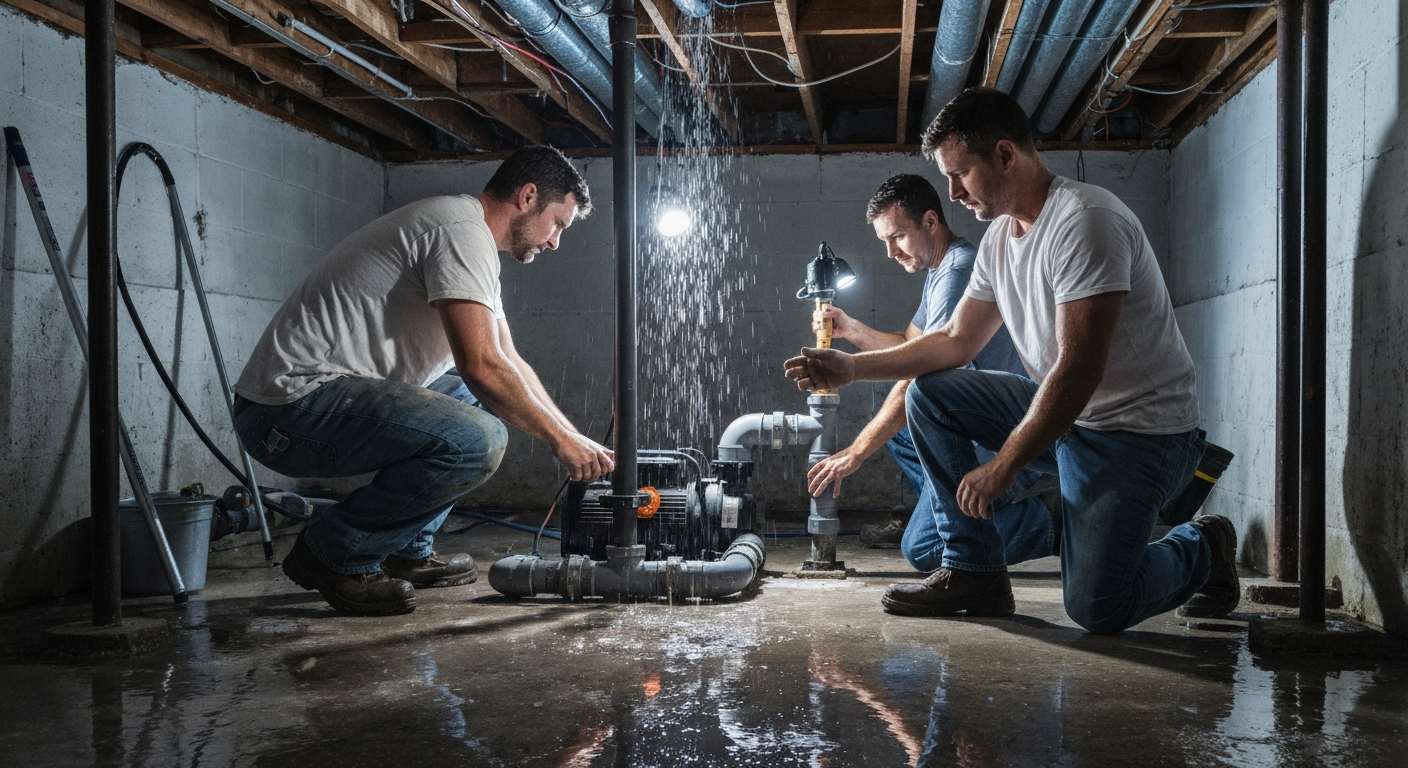
Basement waterproofing options and costs in University Downs
In University Downs, Ontario, waterproofing decisions usually start with one question: is the water coming from outside (hydrostatic pressure) or is it already inside the wall system (failed weepers, weeping-tile collapse, or crack seepage). With a population of 4,036 people (Statistics Canada, 2021 Census), this community is small enough that many trades service multiple nearby Toronto-area neighbourhoods—so turnaround can be good when the weather is stable, but site access issues can still affect schedules.
Cost also tracks closely with housing age. Many basements in the wider Toronto area were built before modern membranes and later drainage upgrades became common; those older assemblies are more likely to have failed tar-and-paper systems and corroded or clay-based weeping tile that’s now partially blocked. In University Downs, mixed glacial till and dense clay pockets can hold water against foundations. During freeze–thaw cycles, small defects can widen, pushing seepage paths through cold joints, tie holes, and cracks.
Contractors often see extra demand in the University Downs / “Highway 7” and adjacent townhouse-and-semi communities where yards are compact and excavation is tight. That makes exterior excavation more expensive (hand-digging, protection of decks/driveways, and disposal), even when the underlying solution is the same: new membrane and drainage tile at foundation level.
Below is a practical comparison of the most common options, typical disruption, and what they usually cost in this city tier.
| Method |
What It Addresses |
Disruption Level |
Durability |
Price Range |
| Exterior excavation + new membrane + drainage tile |
Source water entry by reducing hydrostatic pressure; replaces failing weeping/footing drainage |
High (excavation, landscaping restoration) |
High (often the most complete system) |
$7,000–$25,000 |
| Interior perimeter drain channel + sump pit |
Water that bypasses the wall; collects seepage and pumps it away |
Medium (interior floor work) |
Medium–High (depends on wall condition and maintenance) |
$3,500–$15,000 |
| Foundation crack injection (epoxy or polyurethane) |
Isolated cracks and active leak paths through concrete or masonry |
Low–Medium (small drilling/patching) |
Medium–High (best when paired with drainage) |
$600–$3,000 |
| Sump pump installation (primary + battery backup) |
Relieves chronic seepage and reduces flood risk during spring thaws or power interruptions |
Low–Medium (pit + discharge routing) |
Medium–High (system quality matters) |
$1,200–$5,000 |
| Window well drain installation |
Surface water pooling around egress windows; reduces direct inflow |
Low–Medium (excavation at window perimeter) |
Medium (improves symptoms; not a full system) |
$800–$2,800 |
| Lot re-grading / downspout extension |
Stops runoff from concentrating near foundation; improves gutter discharge and slope |
Low (limited landscaping) |
Low–Medium (best for mild cases) |
$600–$4,500 |
Prices are estimates only and vary by project scope, site access and material selection.
What affects the price of waterproofing in University Downs
Even when homeowners describe the same leak, waterproofing quotes in the Toronto region can vary by 30–50%. The main reason is that contractors price risk and access: how hard it is to reach the foundation, what materials and drainage must be replaced (not just “sealed”), and how much test-and-troubleshooting is needed to find the true water path. In University Downs, three local drivers—soil type, water table, and freeze–thaw—tend to push costs away from the national average when compared with drier or more uniform sites.
First, soil: Toronto-area mixed glacial till often includes pockets of dense clay that expand when saturated, increasing lateral pressure on basement walls and worsening seepage through cracks and cold joints. Second, water: higher local water tables in many neighbourhoods can increase sump run times and require more robust drainage and discharge planning. Third, freeze–thaw: Ontario winters repeatedly expand small defects in concrete and masonry, turning hairline cracks into active leak routes over a few seasons.
Concrete examples that commonly raise or lower cost in University Downs: (1) a home with dense clay and a partially failed weeping tile may require exterior excavation plus new membrane, which typically moves projects toward the higher end of exterior waterproofing (often aligned with the $7,000–$25,000 band); (2) if the leak is limited to a few vertical cracks with stable surfaces, injection may be the right first step and land closer to the $600–$3,000 foundation crack repair band; (3) if interior signs like efflorescence or persistent dampness indicate a drainage system failure, contractors often recommend interior perimeter drainage and sump, usually within the $3,500–$15,000 range depending on labour, length of wall, and pump requirements.
Availability also matters: in busy spring wet-weather periods, schedules tighten and can affect labour staging, while tight lots can force hand-digging and slower cure times for coatings and backfill compaction.
| Price Factor |
Why It Matters |
Cost Impact |
| Interior vs. exterior approach — interior is less disruptive but addresses symptoms |
Exterior reduces hydrostatic pressure at the source; interior manages water after entry |
Exterior can be roughly 2× to 3× interior for comparable basements due to excavation and restoration |
| Foundation type — poured concrete vs. block vs. stone vs. ICF |
Wall material affects how cracks move and what waterproofing bonds best |
Poured concrete often responds well to injection; block often needs interior drainage as a practical complement |
| Soil type — clay expands more than sand, adding pressure |
Saturated clay increases lateral load against walls and drives seepage through defects |
Clay-heavy sites can increase drainage scope and require stronger membrane/detailing |
| Crack type and length — hairline vs. structural horizontal cracks |
Structural movement may require engineering and stabilization, not just sealing |
Horizontal/step movement typically increases cost via assessment and potentially underpinning |
| Sump pump backup system — battery or water-powered backup needed |
Backup prevents flooding during outages common in spring storms or grid stress |
Adds material and electrical work; can shift interior jobs upward within the band |
| Access — landscaping, decks, or driveways must be removed for exterior |
Urban lots often require demolition and careful restoration |
Can add thousands, especially where hand-digging is required near slab edges/deck footings |
| Weeping tile age — original tile (60+ years) may be completely failed |
Old tile collapses and clogs, forcing water to find new pathways |
May convert a “small patch” plan into full drainage replacement |
| Mould or efflorescence remediation required before sealing |
Sealers and membranes may not adhere over active contamination |
Increases prep labour and requires proper drying time before waterproofing products |
Permits & regulations in Ontario
In Ontario, some basement waterproofing work requires municipal approval or a building permit, while other items typically do not. In general terms, foundation excavation, structural crack repair, and changes to lot drainage that affect how water moves at or away from the property often fall under permitting requirements. If you’re installing or modifying drainage connections that tie into municipal storm or sanitary sewers, you should expect municipal approval requirements.
For structural issues, especially major horizontal cracks in block walls or step cracking that suggests movement, a structural engineer’s assessment is commonly needed to determine whether underpinning or other structural work is required. That can affect both scope and timelines. When you’re evaluating contractors, ask whether they provide engineering support for structural repairs and whether their team carries proper liability insurance and WSIB/WCB coverage for workers.
Step-by-step: (1) Ask the contractor for the company’s Ontario business details and confirm they’re eligible to perform the scope. (2) Request a certificate of insurance showing liability coverage that matches the work being proposed. (3) Ask for WSIB/WCB clearance (or provide evidence of coverage) before work starts. (4) If the work includes structural crack repairs or modifications that could trigger permits, have the contractor outline who pulls the permit and what documents they’ll submit.
Do this in writing, before you pay any deposit, so you’re not coordinating permits after the fact.
Interior vs exterior waterproofing — what does University Downs need?
Exterior waterproofing and interior waterproofing solve different problems. Exterior waterproofing—full excavation, new membrane, new drainage tile, and backfill—addresses the source by reducing hydrostatic pressure before water reaches your foundation. It costs more and creates more disruption because crews must excavate around the perimeter and restore landscaping, but it’s the most direct way to keep water out.
Interior waterproofing—perimeter drain channel, sump pit, and sump pump—works after water has entered the basement. It’s typically less invasive, but it doesn’t stop pressure against the wall itself; it reduces the risk of water accumulation and floor-level flooding by collecting seepage and pumping it away. In University Downs, where Toronto-area soils can include dense clay pockets that hold and expand with saturation, interior systems often perform best when paired with crack sealing (for isolated leaks) and when the pump is sized correctly for run-time and discharge conditions.
Foundation type matters. Poured concrete walls often respond well to crack injection (especially when the crack is the path of entry and the wall movement is limited). Block foundations frequently benefit from interior drainage because water can travel through mortar joints and pores even when surface crack sealing is done. Either way, plan for power interruptions: spring thaws and storms can coincide with short outages, so a backup system (battery or equivalent) is worth considering if you’ve had any history of sump cycling or basement dampness during outages.
Where the price difference is justified: if your exterior weeping tile is likely failed (cracked, clogged, or original), homeowners may be better served by exterior solutions in the $7,000–$25,000 range rather than repeated interior fixes that keep managing symptoms (sometimes $3,500–$15,000) but allow ongoing wall pressure. If the leak is isolated and your drainage is otherwise functioning, a targeted crack repair can be more cost-effective, often aligning with the $600–$3,000 band.
| Method |
Best For |
Addresses Source? |
Disruption |
Lifespan |
Price Band |
| Full exterior excavation + membrane |
Chronic seepage, failed perimeter drainage, or dense clay sites with higher water pressure |
Yes |
High |
Long (system-level) |
$7,000–$25,000 |
| Interior French drain + sump system |
Basements that are damp or prone to flooding, especially when excavation is difficult |
No (mitigates after entry) |
Medium |
Medium–Long with quality pump and maintenance |
$3,500–$15,000 |
| Crack injection — epoxy (structural) |
Non-active cracks where the wall is stable and water entry is limited |
Sometimes (depends on whether it’s the entry path) |
Low–Medium |
Medium–Long if movement is resolved |
$600–$2,200 |
| Crack injection — polyurethane (active leak) |
Active seepage from cracks and cold joints where water is currently moving through |
Sometimes (targets the leak path) |
Low–Medium |
Medium (often paired with drainage) |
$800–$3,000 |
| Interior drain channel only (no sump) |
Light seepage or intermittent dampness where discharge is manageable |
No |
Medium–Low |
Short–Medium without sump capacity |
$2,000–$6,500 |
| Re-grading + downspout extensions |
Surface water runoff issues, minor dampness near window wells or corners |
No (redirects) |
Low |
Low–Medium |
$600–$4,500 |
How to choose a waterproofing contractor in University Downs
Start by confirming the contractor’s ability to work legally and safely in Ontario. Ask for their liability insurance certificate (so you’re protected if there’s property damage), and request WSIB/WCB clearance for their workers before work begins. If structural repairs are on the table, confirm they can coordinate engineering support and that their plan includes proper assessment—especially for major horizontal cracks or step movement. In University Downs, where access can be tight along walkways and driveways, insurance and worker coverage are non-negotiable because excavation and restoration work increases the risk of incidental damage.
Next, get 2–3 itemised written quotes. You want a breakdown of labour and materials (membrane, drainage tile, pumps, discharge lines, disposal), not just a lump sum. Ask what’s excluded: permit pull (if required), disposal/haul-away, concrete patching limits, restoration scope (sod, topsoil, stone), and whether they’ll address window well grading. A clear scope should also list measurements (perimeter length, wall footage, crack footage) and how they’ll verify results—such as water tests or inspections after drying.
Warranty matters. Look for a workmanship warranty length and ask whether the product manufacturer warranty is included and whether it’s transferable if you sell the home. Payment schedule: never pay more than 10–15% upfront; use a holdback until completion and cleanup. Finally, request a written start date and completion estimate.
- Request proof of liability insurance (certificate showing coverage limits).
- Verify WSIB/WCB clearance before work starts.
- Ask whether permits are required for your specific scope and who pulls them.
- Confirm engineering involvement for structural crack scenarios.
- Insist on an itemised quote: labour vs. materials vs. disposal vs. restoration.
- Check that the scope identifies discharge method (where water goes) and routing.
- Ask what happens if water conditions don’t improve after the first phase.
- Clarify whether mould/efflorescence remediation is included or excluded.
- Verify pump specifications if you’re getting a sump (capacity, float system, backup plan).
- Ensure the quote states the warranty terms (workmanship + product).
- Avoid contractors who ask for large upfront deposits or won’t hold back.
- Get a schedule in writing (start date, expected duration, cure/drying windows).
In University Downs, red flags include: vague scope language like “seal the foundation” without describing drainage or crack entry paths; refusal to provide insurance/WSIB documentation; quotes that ignore access realities (decks/driveways) but still price exterior work like a full open yard; no mention of freeze–thaw detailing or membrane compatibility with clay backfill; and warranties limited to “cosmetic” finishes while the waterproofing components are not covered.
Frequently asked questions — waterproofing in University Downs
Do I need a sump pump in University Downs?
You may need a sump pump if you get recurring dampness, water pooling after spring rains, or evidence that drainage is failing (wet floors near perimeter, musty odours, or previous basement flooding). In University Downs and the broader Toronto region, mixed glacial till with dense clay pockets can hold water against foundations, which often increases seepage during freeze–thaw cycles. If your weeping tile is old or partially clogged, interior perimeter drainage plus a sump is frequently the reliable way to control water after it enters. As a reference point, interior waterproofing with a sump system often falls in the $3,500–$15,000 range depending on wall length and excavation inside. If you’re worried about outages during spring storms, ask about backup options—adding a battery backup typically increases the pump system portion of the budget.
How does University Downs's soil affect my foundation?
University Downs sites commonly sit on mixed glacial till, with many pockets of clay that retain water. Clay saturation matters because clay can expand when it’s wet, increasing lateral pressure on basement walls. During Ontario’s repeated freeze–thaw cycles, that pressure can widen cracks and push water through cold joints, tie holes, and minor defects. The result is often interior dampness and efflorescence—not always a dramatic exterior wall failure. If your basement walls are poured concrete, crack injection can be effective when the crack is the main entry path. If your foundation is block, water can track through mortar joints, making interior drainage (a perimeter drain plus sump) more practical. In some cases, re-grading and downspout extensions may help a runoff problem, but they won’t fix hydrostatic pressure from saturated clay if the drainage system is failing.
Do I need a permit for foundation work in Ontario?
In Ontario, permit requirements depend on the exact scope. Typically, foundation excavation, structural crack repair, and changes to lot drainage that impact how water is handled may require a building permit. If you’re connecting a drainage system in a way that involves municipal storm or sanitary sewers, municipal approval is usually needed as well. For structural concerns—such as major horizontal cracks in block walls—an engineer’s assessment is commonly required to determine whether underpinning or other structural work is necessary. To verify the right path in University Downs, ask your contractor to specify: what permits they’ll pull, who applies, and which documents are required. Before signing, also confirm the contractor’s insurance and WSIB/WCB clearance, because permitting and access coordination are tightly linked to who is responsible for the work.
How long does waterproofing last?
Service life depends on the method and how the root cause is handled. Exterior waterproofing systems—new membrane and drainage tile—often last the longest because they reduce hydrostatic pressure at the foundation. Interior solutions generally manage water after entry, so their longevity depends on sump performance, drain cleanliness, and whether cracks keep re-opening due to ongoing pressure. Crack injection can last many years when the wall is stable and the crack is the active entry path, but it’s not a replacement for drainage if the site water conditions are worsening. As a practical planning reference, full exterior approaches usually sit in the $7,000–$25,000 band and are designed as system-level solutions, while interior perimeter drainage and sump projects often land in the $3,500–$15,000 band for ongoing seepage control. Regardless of method, keep maintenance simple: clear discharge lines, monitor sump alarm/backup systems, and address small changes early.
Can I waterproof my basement from the inside only?
Yes—sometimes inside-only waterproofing is the best or only feasible option, especially when excavation is difficult or the source of water is mainly entering through known cracks and interior pathways. In University Downs, interior perimeter drainage (and often a sump pit) can manage chronic seepage caused by failing weeping tile or minor wall defects, and it typically involves less landscape disruption than full excavation. However, interior methods don’t reduce hydrostatic pressure against the wall itself; they reduce flooding risk after water gets in. That’s why results depend on your foundation type and the true water path. For example, poured concrete walls often respond better to crack injection when cracks are isolated, while block foundations commonly benefit from interior drainage as a complement. If you’re choosing an inside-only plan, ask the contractor how they’ll confirm whether exterior drainage is also compromised, and whether they recommend re-grading/downspout changes as part of the solution.
What causes foundation cracks in University Downs?
Foundation cracks in University Downs are usually driven by a combination of soil movement, moisture conditions, and freeze–thaw cycling. Dense clay pockets can expand and contract as they saturate and dry, putting stress on basement walls. When freeze–thaw repeats through multiple winters, small defects can widen and become active leakage paths. Other common contributors are settlement differences, aging materials, and water finding routes through cold joints and tie holes—especially in older basements where original drainage systems (like early weeping tile) are partially clogged or collapsed. If you have hairline vertical cracks, injection may be appropriate depending on stability and water activity. If you see major horizontal cracks or step cracking in block walls, treat it as a higher-risk scenario and ask for an engineer assessment before sealing. Contractors should explain whether they’re addressing movement or only sealing entry points, and that distinction affects both cost and long-term performance.