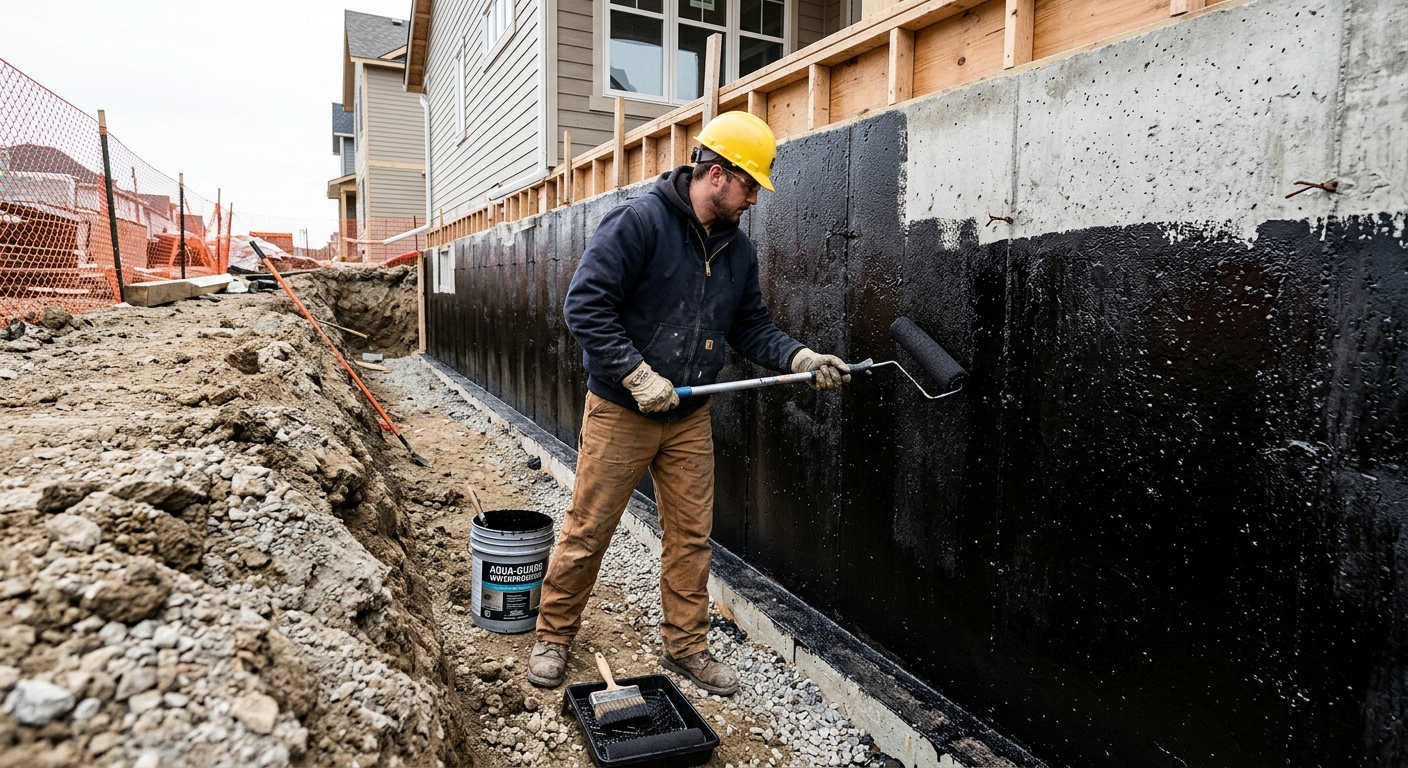
Basement waterproofing options and costs in College Heights
In College Heights, Ontario, basement waterproofing decisions usually start with a simple question: is the water coming from outside (hydrostatic pressure) or from inside (condensation and localized seepage)? With a population of 5,476 (Statistics Canada, 2021 Census), the local housing mix is a big factor—College Heights and the surrounding Toronto region include many post-war and 1960–1980s homes where original systems such as tar-and-paper coatings and older weeping tile often don’t perform the way they did at installation. Toronto’s mixed glacial till and clay pockets can hold water against foundations, then expand during freeze–thaw, which turns small cracks, tie holes, and aging mortar joints into active leak paths. That’s why costs can swing even when homeowners describe the “same” wet wall—access constraints, soil moisture, and the age/condition of drainage systems change what it takes to fix the problem for good.
In practical terms, contractors see the highest demand for exterior work and interior drain retrofits in older neighbourhood pockets close to busy main roads and where lots are tighter, so excavation must be carefully staged around decks, driveways, and additions. For some basements, a targeted interior perimeter drain plus sump is the best fit because it’s less invasive; for others, exterior excavation with a new membrane and drainage tile is the only solution that actually reduces water pressure at the source. The section below compares common methods, their typical disruption, and what homeowners generally pay in College Heights as part of a fully scoped waterproofing plan.
| Method |
What It Addresses |
Disruption Level |
Durability |
Price Range |
| Exterior excavation + new membrane + drainage tile |
Water entry at foundation by relieving hydrostatic pressure with new drainage and continuous waterproofing coverage. |
High (excavation, landscaping/driveway restoration) |
Long (commonly 15–25 years with correct backfill and drainage) |
$7,000–$25,000 |
| Interior perimeter drain channel + sump pit |
Captures seepage after it enters and directs it to sump, reducing water in the basement. |
Medium (cutting perimeter slab/wall line, cleanup) |
Medium–long (commonly 10–20 years depending on conditions) |
$3,500–$15,000 |
| Foundation crack injection (epoxy or polyurethane) |
Stops isolated crack leakage; epoxy for structural/low-water cracks, polyurethane for active water flow. |
Low–medium (minor surface prep; localized patching) |
Medium (often 5–15 years; best when paired with drainage) |
$600–$3,000 |
| Sump pump installation (primary + battery backup) |
Prevents basement flooding during heavy rain/spring melt and maintains pumping during outages. |
Low–medium (electrical work; pit installation) |
Long (with proper maintenance; backups extend risk coverage) |
$800–$3,500 |
| Window well drain installation |
Reduces water pooling around egress/window wells that can seep inward. |
Low–medium (excavation at windows; grading adjustments) |
Medium–long (commonly 10–15 years if discharge is maintained) |
$1,200–$4,000 |
| Lot re-grading / downspout extension |
Improves site drainage so roof/grade water moves away from the foundation. |
Low–medium (small excavation; landscaping touch-ups) |
Medium (can fail if soil returns to saturation or drains clog) |
$1,500–$6,500 |
Prices are estimates only and vary by project scope, site access and material selection.
What affects the price of waterproofing in College Heights
In College Heights and across the Toronto economic region, it’s common to see quotes for the “same” basement leak that differ by 30–50%. The main reason is that waterproofing is not one product—it’s a system designed around soil behaviour, water movement, and the condition of drainage components. Compared with national averages, three Ontario-region drivers separate regional costs: soil type, water table behaviour, and freeze–thaw. Clay-heavy soils common around parts of Ontario (and Toronto’s glacial till mix) expand when saturated, which increases lateral pressure on foundations and worsens cracking over time. High local water tables in many neighbourhoods increase sump run times and raise the amount of drainage work needed. Freeze–thaw then widens defects in concrete and block foundations, so small cracks and failed tie holes can turn into active leaks within a few winters.
Concrete examples from College Heights: a homeowner with a backyard deck and narrow access often pays more for exterior excavation because we may need hand-digging and staged restoration—so exterior work that might otherwise be closer to the middle of the $7,000–$25,000 band can push higher. Another common driver is older, partially collapsed weeping tile: if the original drainage is clogged or broken (which is frequent in 1960–1980s homes), interior-only work may look cheaper in the $3,500–$15,000 range, but it may require added sump capacity or repeated maintenance. By contrast, a basement that’s mostly dry aside from one localized crack may be a better fit for targeted crack repair in the $600–$3,000 range—especially when paired with proper downspouts and re-grading that keeps surface water out.
Contractor availability also plays in late fall and spring. When everyone is chasing freeze–thaw damage, scheduling, material lead times, and crew planning can shift pricing. The key is matching the method to the actual water path—not just the visible damp spot.
| Price Factor |
Why It Matters |
Cost Impact |
| Interior vs. exterior approach — interior is less disruptive but addresses symptoms |
Interior systems manage water after it enters; exterior systems reduce water entry by treating the source. |
Exterior typically costs more (often the largest swing, up to the high end of $7,000–$25,000). |
| Foundation type — poured concrete vs. block vs. stone vs. ICF |
Crack behaviour and sealing strategy vary; block and older masonry often need drainage complements. |
Poured concrete can be cheaper for sealing; block usually raises overall scope for drainage and crack treatment. |
| Soil type — clay expands more than sand, adding pressure |
Clay saturation increases lateral pressure and intensifies seepage through joints. |
More aggressive exterior membrane and drainage detailing may be required (higher total labour/material). |
| Crack type and length — hairline vs. structural horizontal cracks |
Horizontal/structural cracks can indicate movement; they require evaluation before choosing repair. |
May trigger engineer review and broader repair scope, raising cost significantly. |
| Sump pump backup system — battery or water-powered backup needed |
Backup reduces flood risk during power outages common during spring storms. |
Adds cost but often prevents catastrophic basement damage; can move projects toward the $800–$3,500 band upper end. |
| Access — landscaping, decks, or driveways must be removed for exterior |
Hard-to-reach areas increase labour time and restoration requirements. |
Can push exterior work toward the high end of the exterior excavation pricing band. |
| Weeping tile age — original tile (60+ years) may be completely failed |
Old drains can be clogged, broken, or improperly connected, causing water to back up. |
Often forces replacement scope or increases interior pumping requirements. |
| Mould or efflorescence remediation required before sealing |
Active moisture can keep returning; sealing over contamination can shorten system life. |
May add steps (drying, cleaning, controlled remediation) that increase total cost and timeline. |
Permits & regulations in Ontario
In Ontario, some waterproofing-related work typically requires a permit, while other tasks often do not. In general, foundation excavation, structural crack repair, and changes that affect lot drainage (such as re-routing downspouts so they discharge differently, or modifying a drainage outlet pathway) commonly trigger permit or municipal approval requirements depending on the exact scope. If the job includes sump pump connections to municipal storm or sanitary infrastructure, municipal approval is usually required—especially where any connection involves plumbing/sewer systems. For structural crack repair—particularly horizontal cracks in block walls or major step cracks—an assessment from a structural engineer is often needed to determine whether underpinning or other structural work is required. A good contractor will clearly state whether their scope is “seal only” or “structural investigation + repair” and will coordinate engineering support where necessary.
Before signing, a homeowner in College Heights should verify three things step-by-step: (1) Ontario licensing/credentials for the contractor (look for the correct business listing and trade coverage on the relevant provincial/service registry and any posted registration numbers), (2) liability insurance certificates showing the correct business name and valid coverage dates, and (3) WSIB/WCB clearance letter or account documentation demonstrating the contractor is in good standing. Request these documents in writing before work begins, then match the names and addresses on the certificates to the contract. For structural repair scopes, ask for proof of engineering support (engineer letter/report) and confirm it’s included in the quote.
If you want, tell me what’s leaking (wall crack, floor seam, window well, or corner) and whether you have a sump already—I can outline which permits/approvals commonly come up for that exact situation.
Interior vs exterior waterproofing — what does College Heights need?
The fundamental difference is source control versus water management. Exterior waterproofing—full excavation, new membrane, new drainage tile, and backfill—treats where water enters by reducing hydrostatic pressure at the foundation. It’s usually more expensive and disruptive because it requires excavation and landscaping restoration, but it’s the most direct “fix it at the source” approach for Toronto-area conditions like clay pockets, higher near-surface moisture, and freeze–thaw-driven crack movement. Interior waterproofing—perimeter drain channel, sump pit, and sump pump—does not stop hydrostatic pressure on the wall; instead, it captures water after it gets past the wall and directs it away. In College Heights, interior systems are often the best choice when exterior access is difficult (decks, driveways, tight side yards) or when the leak path appears localized and manageable.
For poured concrete walls, crack injection often seals better when paired with proper drainage. For block foundations, interior drainage frequently plays a bigger role because water can migrate through block joints more persistently, even when surface sealing is applied. If your basement sees spring melt or heavy rain, sump pump backup systems matter—power interruptions during storms can turn a “wet wall” into active flooding quickly. Backup also matters if your basement has had recurring seepage that keeps the sump running hard.
Where the price difference is justified: if you’re facing chronic seepage across multiple walls and you suspect failed original weeping tile, an exterior system can move you toward the $7,000–$25,000 band and may prevent repeated interior interventions. If the problem is a single active crack with limited seepage, crack injection in the $600–$3,000 range plus grading and downspout correction can be the smarter spend—often avoiding a costly excavation when the source is more manageable.
| Method |
Best For |
Addresses Source? |
Disruption |
Lifespan |
Price Band |
| Full exterior excavation + membrane |
Chronic dampness, multiple-wall seepage, or confirmed exterior water pressure (often with failed older drainage). |
Yes |
High |
15–25 years |
$7,000–$25,000 |
| Interior French drain + sump system |
Hard-to-excavate lots, localized seepage that needs capture/relief, or clay pressure where exterior isn’t feasible. |
Not directly |
Medium |
10–20 years |
$3,500–$15,000 |
| Crack injection — epoxy (structural) |
Non-active or low-water cracks where sealing and structural stability are the priority (often in poured concrete). |
Partial (seals the path, but doesn’t reduce external pressure) |
Low–medium |
5–15 years |
$600–$3,000 |
| Crack injection — polyurethane (active leak) |
Active leaks with flowing water through cracks or joints (commonly tie holes and moving micro-paths). |
Partial (stops the active channel, but outside pressure may still push) |
Low–medium |
5–12 years |
$600–$3,000 |
| Interior drain channel only (no sump) |
Light seepage that can be managed without frequent pumping (rare in higher water table pockets). |
No |
Medium |
5–12 years |
$1,800–$7,500 |
| Re-grading + downspout extensions |
Surface-water driven dampness (gutters/discharge aimed toward foundation) and minor basement moisture complaints. |
Yes for surface water |
Low–medium |
3–10 years |
$1,500–$6,500 |
How to choose a waterproofing contractor in College Heights
Choosing a waterproofing contractor in College Heights is mostly about proving they can deliver the right system—not just the cheapest-looking bid. Start with Ontario licensing/credentials: confirm the contractor’s trade/business registration is legitimate and matches the company name on your contract. Next, verify liability insurance by requesting a certificate of insurance and ensuring it lists you/your property as appropriate where required by your agreement, and that the coverage is active for the project period. Finally, check WSIB/WCB: request the clearance letter or proof of account standing so you’re not exposed if an injury occurs on site.
Then get 2–3 itemised written quotes. You want a breakdown that separates labour from materials and clearly lists what’s included (excavation limits, membrane type, drainage tile size/layout, disposal, electrical for pump, and any restoration). Avoid lump-sum quotes that don’t show scope—waterproofing costs in the Toronto region can swing because the “system” changes with access and site conditions. Also verify warranty: ask for the workmanship warranty length, whether product/manufacturer warranties apply to the exact installation method, and whether warranties are transferable if you sell the home. Payment schedules matter: never pay more than 10–15% upfront; hold back a portion until the final walkthrough and documentation are complete. Also insist on a written start date and completion estimate; spring melt and winter curing timelines affect when sealing and restoration can safely happen.
- Request insurance certificate and confirm policy dates match your project timeline.
- Ask for WSIB/WCB clearance letter before work begins.
- Get a written scope with drawings or a marked-up plan of work areas.
- Confirm whether a permit is required and whether the contractor will pull it.
- Require line-item pricing for excavation, drainage tile, membrane, backfill, and disposal.
- Clarify exclusions: landscaping restoration, egress/handrail adjustments, and concrete reinstatement.
- Specify sump pump model, discharge route, and whether backup (battery/water-powered) is included.
- Ask what happens if the leak source is worse than expected (change-order terms).
- Verify crack injection material type (epoxy vs polyurethane) and the injection method.
- Ask for drying/cleaning steps if mould or efflorescence is present before sealing.
- Get warranty details in writing: length, coverage, and what maintenance is required.
- Use a payment schedule with a holdback until completion and documentation are provided.
Red flags for College Heights waterproofing contractors include: refusing to provide insurance/WSIB proof; quoting with vague language like “waterproofing” without method details; skipping site assessment (no inspection of crack pattern, weeping tile status, or discharge direction); offering only paint/sealer over active moisture; and demanding large upfront payments (more than 10–15%) without a signed completion plan.
Frequently asked questions — waterproofing in College Heights
What is a weeping tile and does my College Heights home have one?
Weeping tile (also called foundation drain tile) is a perimeter drainage system installed around the foundation to collect groundwater and redirect it to a sump or outlet. In many older Toronto-area homes—especially post-war and 1960–1980s builds—you’ll often find an original clay weeping tile or early plastic drain that has been partially clogged or collapsed over time, even if the exterior wall looks “fine.” In College Heights, whether you have one usually depends on the age of the home and what was done during renovations. A contractor can often confirm by checking records, locating the discharge point, and performing an inspection of the sump/outlet area. If you have damp corners, efflorescence, or recurring sump activity, that’s frequently a sign the drainage system is failing. Typical interventions can range from targeted crack repair (about $600–$3,000) up to full interior drainage and sump work ($3,500–$15,000).
Can I waterproof my basement in winter in College Heights?
In College Heights, winter waterproofing is possible, but it’s often limited to certain steps. Freeze–thaw and cold temperatures can affect curing, membrane performance, and how well surface sealing bonds to concrete or masonry. Exterior excavation in winter is usually impractical because soil is frozen and backfill cannot be compacted correctly, which can compromise drainage. Interior work may still be done if the contractor can control drying conditions and use products rated for cold application (and if the basement is clear of active flooding). For systems that require sump pumps and interior drains, those can sometimes be installed when access is safe and concrete cutting is feasible. However, sealing over active moisture is a common mistake—if water is still migrating, you’ll need capture and drainage first. If you’re planning work during winter, expect a tighter scope (often sump/crack measures, then completion in warmer months), and be prepared for scheduling differences that influence overall cost in the Toronto region. If a full exterior project is needed, it typically aligns better with spring or summer staging, closer to the $7,000–$25,000 exterior band.
What is the difference between waterproofing and damp-proofing?
Damp-proofing is meant to resist minor moisture—think low-risk seepage or condensation control—usually using coatings that slow moisture transmission without treating hydrostatic pressure. Waterproofing, on the other hand, is designed to manage or prevent water intrusion under conditions like high groundwater pressure, wet clay soils, and freeze–thaw-driven crack widening. In College Heights (Ontario’s Toronto region), clay-heavy pockets and periods of higher water saturation can create true lateral pressure on foundation walls. That’s why damp-proofing alone often fails on basements that show persistent seepage along seams, recurring wet floors, or efflorescence that returns after dry spells. In practical homeowner terms: if your basement has active leaks, damp-proofing usually becomes “symptom control” while a true waterproofing system involves drainage (interior perimeter drain with sump, or exterior membrane and drainage tile) plus crack/joint treatment. Crack injections—epoxy or polyurethane—can help where leaks are isolated, generally within $600–$3,000, but for chronic wet basements you may need interior drainage and sump systems in the $3,500–$15,000 range or exterior excavation/membrane if exterior source control is required.
Will basement waterproofing affect my property value in College Heights?
Yes—typically in a positive way—because waterproofing reduces risk. In College Heights and the wider Toronto market, buyers increasingly want evidence that moisture problems were diagnosed correctly and addressed with a proper system, not just a quick surface fix. A completed waterproofing project with documentation (scope, product details, pump specifications, and warranty) can help demonstrate that the basement is stable and less likely to flood during spring melt and heavy rain. That said, the value impact depends on how complete the solution is. Interior-only drainage can still be valuable if it’s matched to the actual water path (for example, capturing seepage through a failing interior route), but it may not fully eliminate source pressure if exterior conditions are the root cause. Exterior waterproofing generally provides stronger “source control” assurance, though it’s more disruptive and more expensive. If your seller disclosure includes a true, system-level repair plan—often supported by warranties and maintenance recommendations—it tends to strengthen buyer confidence. Pricing in the Toronto region commonly ranges from sump-related work ($800–$3,500) up to full exterior projects ($7,000–$25,000), and the more comprehensive the system, the more confidence buyers often have.
What drainage issues are most common in College Heights homes?
The most common drainage issues in College Heights basements usually relate to how water moves through soil and older drainage systems. Given the region’s mixed glacial till and clay pockets, water can build up against foundation walls and increase lateral pressure. Many homes also have older weeping tile or early plastic drains that are clogged, partially collapsed, or disconnected, leading to dampness, efflorescence, and basement flooding rather than a dramatic “wall failure.” Freeze–thaw then widens small defects, turning hairline cracks, tie holes, and floor-wall seams into active leak channels over a few winters. Other frequent problems include poor surface grading (downspouts discharging toward the foundation), failing window wells that trap water, and sump discharge paths that freeze or discharge incorrectly. Homeowners often notice water in corners, along specific wall segments, or after heavy rain followed by cold nights. The best response depends on whether the issue is primarily surface water (often improved by re-grading/downspout extensions around $1,500–$6,500) or below-grade hydrostatic pressure requiring sump and drainage upgrades (commonly $3,500–$15,000).
How do I choose a waterproofing contractor in College Heights?
Start by confirming the contractor can prove eligibility and responsibility: verify Ontario licensing/registration where applicable, request a certificate of liability insurance, and obtain WSIB/WCB clearance (or proof of account standing) before any work begins. Next, get 2–3 itemised written quotes, with labour and materials broken out. Avoid vague “waterproofing” scopes—ask exactly what method is proposed for your water path (exterior excavation + membrane, interior drain channel + sump, crack injection type, and whether backup pumping is included). In College Heights, access constraints and older drainage systems change costs quickly, so your scope should state what will be removed and restored, what disposal is included, and whether permits are required for the specific work. Choose contractors who explain the diagnosis and propose the right system rather than only selling a single product. Finally, check warranty terms: workmanship coverage length, product/manufacturer warranty conditions, and whether warranties transfer if you sell. If you’re comparing budgets, remember that sump pump work may be around $800–$3,500, while exterior waterproofing can reach $7,000–$25,000 when excavation and source control are needed.