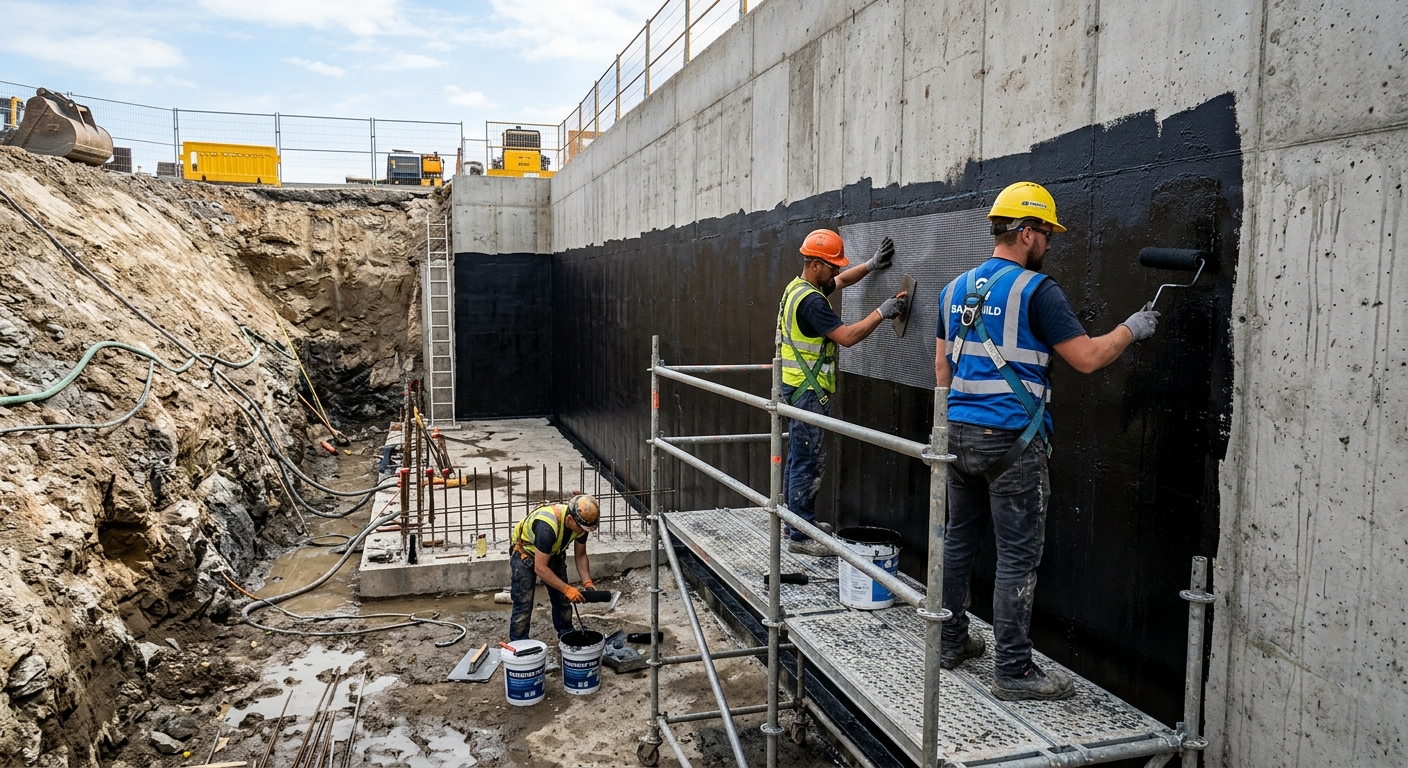
Basement waterproofing options and costs in High Park North
In High Park North, Ontario, basement waterproofing needs to start with the water source: groundwater pressure through cracks, failed weeping tile, or surface water that finds a path toward the foundation. This neighbourhood’s housing mix matters—homes built before 1980 are far more likely to have original, now-corroded or clogged drainage systems, and even “dry” basements can slowly turn damp as freeze–thaw expands micro-cracks. With a 2021 population of 22,162 in the area covered by the local profile (Statistics Canada, 2021 Census), there’s also a steady pipeline of trades working in the Toronto growth belt, which keeps competitive pricing for standard scopes but can raise costs when access is tight and excavation must be hand-digged.
Toronto-area waterproofing is shaped by mixed glacial till and clay pockets that hold water against foundation walls. When the soils saturate, they expand and increase lateral pressure; combine that with freeze–thaw cycles and you get seepage through cold joints, tie holes, and cracks that look small in dry weather. That’s why contractors in High Park North often price exterior excavation and membrane work higher than interior-only approaches, especially where original weepers have failed and where water tables drive sump pump run times.
We see particularly high demand around the High Park North edges where lots back onto ravines/greenspace and where downspouts and grading are inconsistent—water has more opportunities to pool near foundations. The good news is you can often target the right fix: exterior drainage and membrane for chronic pressure, or interior drainage/sump for ongoing seepage where excavation is impractical. Use the table below to compare common methods and typical ranges.
| Method |
What It Addresses |
Disruption Level |
Durability |
Price Range |
| Exterior excavation + new membrane + drainage tile |
Lateral water pressure, failed weeping tile, seepage routes through wall/floor transitions |
High (yard excavation, landscaping rework) |
10–25+ years (site-dependent; best source control) |
$7,000–$25,000 |
| Interior perimeter drain channel + sump pit |
Water that enters from cracks/joints after it penetrates; lowers hydrostatic pressure at floor perimeter |
Medium (interior floor saw-cuts or partial removal) |
8–20 years (depends on pump and discharge routing) |
$3,500–$15,000 |
| Foundation crack injection (epoxy or polyurethane) |
Isolated cracks; polyurethane for active leaks, epoxy for stable/hairline gaps |
Low to Medium |
5–15 years (best for selected crack types) |
$600–$3,000 |
| Sump pump installation (primary + battery backup) |
Chronic seepage; protects against spring flooding and pump downtime during outages |
Low to Medium |
Primary: 7–12 years; backup extends service life during failures |
$800–$3,500 |
| Window well drain installation |
Bulk water intrusion at egress points; reduces dampness behind window wells |
Medium (excavate around window wells) |
6–15 years |
$1,200–$4,200 |
| Lot re-grading / downspout extension |
Surface water management to keep runoff away from foundation |
Low to Medium |
2–10 years (rework if soils settle) |
$1,000–$5,000 |
Prices are estimates only and vary by project scope, site access and material selection.
What affects the price of waterproofing in High Park North
Even when two homeowners describe the “same” leak, quotes across Toronto can swing by roughly 30–50%. In High Park North, the biggest causes are site constraints (tight lots, landscaping, deck footings), the type of foundation and drainage that already exists, and whether the contractor must address source water pressure or just manage water after it enters. That’s why a national average can feel misleading: Ontario’s freeze–thaw cycles and clay-heavy soils create failure patterns that are more expensive to correct than in milder or sandier regions.
Three drivers separate Toronto-area costs from the national average: soil type, water table, and freeze–thaw. Mixed glacial till and dense clay pockets expand when saturated, pressing outward on foundation walls and worsening cracks over time. High water tables in many areas increase sump pump run times and the volume of drainage work required; in older neighbourhood pockets, clogged or partially collapsed weeping tile forces contractors to install more robust interior drainage. Meanwhile, repeated freeze–thaw widens small defects in concrete and block foundations, turning hairline issues into active leaks—so an “injection-only” quote can grow if additional seepage routes are found during work.
Concrete examples from High Park North: (1) If you have a post-war house with original clay weeping tile, exterior membrane + drainage tile can land closer to the $7,000–$25,000 exterior band because the crew must confirm the line condition and reconnect properly. (2) If you only see dampness at the perimeter during storms and the floor is concrete, interior perimeter drains and a sump pit typically fit the $3,500–$15,000 band, keeping cost down by working from inside.
| Price Factor |
Why It Matters |
Cost Impact |
| Interior vs. exterior approach — interior is less disruptive but addresses symptoms |
Exterior source control stops water before it reaches the wall; interior manages after entry |
Exterior can be ~2x–4x higher due to excavation and membrane |
| Foundation type — poured concrete vs. block vs. stone vs. ICF |
Crack repair method and likelihood of seepage differ by wall system |
Block and older stone often need more drainage work |
| Soil type — clay expands more than sand, adding pressure |
Clay saturation increases lateral pressure against the foundation |
Higher excavation/disposal and stronger drainage design may be required |
| Crack type and length — hairline vs. structural horizontal cracks |
Active vs stable cracks determine epoxy vs polyurethane and whether engineering is needed |
Structural concerns can add testing, engineer review, and repair scope |
| Sump pump backup system — battery or water-powered backup needed |
Backup protects during outages that can coincide with spring surges |
Often adds incremental cost but reduces risk of basement flooding |
| Access — landscaping, decks, or driveways must be removed for exterior |
More removal and reinstatement increases labour and scheduling complexity |
Can push the project from mid-range to upper-range pricing |
| Weeping tile age — original tile (60+ years) may be completely failed |
Partially collapsed or clogged drains change the drainage strategy |
Replacement/repair often moves the job toward exterior scope pricing |
| Mould or efflorescence remediation required before sealing |
Sealers should not go over ongoing moisture contamination |
Adds cleaning/controlled-dry requirements before waterproofing products |
Permits & regulations in Ontario
In Ontario, foundation excavation, structural crack repair, and changes to lot drainage typically require a building permit. If the project includes connecting a sump pump discharge to the storm or sanitary sewer, municipal approval is commonly needed (and requirements can vary by location and tie-in method). For structural crack repair—especially horizontal cracks in block walls, major step cracks, or signs of movement—an assessment by a structural engineer is often required to determine whether underpinning or additional structural work is necessary.
For homeowners in High Park North, a practical way to verify your contractor’s compliance is to check coverage and documentation before work starts. Step-by-step: (1) Ask the contractor for their Ontario business/contractor registration details and any required licence information for the type of work they’re doing. (2) Request a Certificate of Insurance showing general liability coverage with liability limits appropriate to the job scope. (3) Confirm WSIB/WCB clearance: obtain either a clearance letter or current status documentation in the manner the province allows, and ensure the letter lists the correct legal entity name. (4) For structural scopes, ask who provides the engineer assessment and whether they carry engineering support documentation.
What generally requires a permit: excavating near foundations for waterproofing improvements, structural crack repairs where movement could be involved, and modifications that alter how runoff is managed at the property line. What often does not require a permit: straightforward interior sump installation not involving sewer tie-ins, minor downspout extensions, and localized crack injection when it is non-structural—however, your contractor should confirm in writing based on your exact conditions.
Interior vs exterior waterproofing — what does High Park North need?
The fundamental difference in High Park North is source control versus water management. Exterior waterproofing—full excavation, new membrane, and new drainage tile with backfill—targets the water before it reaches the foundation wall. It’s the most permanent option, but it costs more and requires yard disruption. Interior waterproofing—such as a perimeter drain channel, sump pit, and sump pump—typically starts after water has already found entry routes through cracks or joints. It’s less invasive and usually faster to schedule, but it doesn’t relieve the hydrostatic pressure against the foundation wall itself.
In Toronto’s freeze–thaw climate with clay pockets and variable water table conditions, the decision often depends on foundation type and what’s failing. Poured concrete walls tend to seal better with properly applied crack injection when cracks are stable, so interior work may be enough if seepage is isolated. Block foundations more commonly need interior drainage as a practical complement because mortar and block capillary action can create multiple seepage paths. If you’re dealing with chronic dampness that worsens in spring, a properly designed sump system becomes critical—especially where power outages can overlap with flooding during heavy rains and rapid freeze–thaw transitions.
For example, if an interior drainage + sump approach fits within the $3,500–$15,000 band, it may be justified when excavation is constrained by decks or shared driveway access. But if your weeping tile is largely failed and you’re seeing basement seepage after heavy storm events, the added cost of exterior excavation + membrane (often in the $7,000–$25,000 range) can be worth it because it reduces recurrence by addressing water pressure at the source rather than chasing new seepage spots from the inside.
| Method |
Best For |
Addresses Source? |
Disruption |
Lifespan |
Price Band |
| Full exterior excavation + membrane |
Chronic seepage, failed weeping tile, clay-driven lateral pressure, active water table conditions |
Yes |
High (excavation, backfill, landscaping reinstatement) |
10–25+ years |
$7,000–$25,000 |
| Interior French drain + sump system |
Interior dampness, perimeter seepage, sump management during spring cycles |
No (manages after entry) |
Medium (floor saw-cuts/partial removal) |
8–20 years |
$3,500–$15,000 |
| Crack injection — epoxy (structural) |
Stable hairline or non-moving cracks in poured concrete where water entry is limited |
Partial (seals the crack path) |
Low |
5–15 years |
$600–$3,000 |
| Crack injection — polyurethane (active leak) |
Active weeping or pressure-driven leaks where the crack is still moving slightly |
Partial (seals active path) |
Low to Medium |
5–12 years |
$800–$3,000 |
| Interior drain channel only (no sump) |
Light to moderate seepage controlled by gravity with reliable discharge routing |
No (manages after entry) |
Medium |
3–10 years |
$1,500–$7,500 |
| Re-grading + downspout extensions |
Surface-water driven dampness; minor pooling near foundation |
Yes (surface source control only) |
Low to Medium |
2–10 years |
$1,000–$5,000 |
How to choose a waterproofing contractor in High Park North
Choosing a waterproofing contractor in High Park North is mostly about verifying competence, not just the lowest price. Start with Ontario requirements: ask for proof of the contractor’s licensing/registration relevant to the scope, a current Certificate of Insurance (general liability, with correct legal business name), and WSIB/WCB clearance (a letter or confirmation showing they’re in good standing for your project). Then check you’re getting those documents for the contractor you’ll actually pay, not a referral company that only sends labour.
Get 2–3 itemised written quotes that break labour and materials separately—especially for membrane system components, drainage tile/pipe specification, discharge method, pump model, and any required interior demolition. Ensure the scope is clear on exclusions: what happens if additional cracks are found, whether permit pull is included (and who applies), how disposal is handled, and whether landscaping reinstatement is included after exterior excavation.
Warranty matters. Ask for the workmanship warranty length, whether it applies to the specific system installed (not just “basic labour”), how product/manufacturer warranties work, and whether warranties are transferable to future owners. For payment scheduling, avoid large deposits—never pay more than 10–15% upfront, and hold back a portion until the job is complete and cleaned up. Finally, demand a timeline in writing with a start date, staged milestones (e.g., excavation and membrane inspection points), and a realistic completion estimate.
- Ask for WSIB/WCB clearance for the exact contractor entity on the invoice.
- Confirm general liability insurance and request the certificate before signing.
- Get proof of licence/registration relevant to the scope (and the correct legal name).
- Require an itemised quote (labour vs materials) rather than a lump-sum only.
- Verify permit pull responsibilities in writing (who applies and what’s included).
- Ask how they handle disposal of excavated soil and demolition debris.
- Confirm discharge route for sump pumps (and approvals if connecting to services).
- Match crack injection product to crack type (epoxy for stable, polyurethane for active).
- Request written drainage details: pipe sizing, slope, filter fabric, backfill mix.
- Clarify warranty terms: workmanship duration, exclusions, and transferability.
- Use a payment schedule with a 10–15% upfront cap and a holdback until complete.
- Get the start date and finish estimate in writing, including weather contingencies.
Red flags we commonly see in High Park North include: (1) a quote that recommends exterior excavation without first assessing existing weeping tile condition or drainage discharge; (2) promising “one-size-fits-all” sealing instead of diagnosing crack type and likely water pathways; (3) missing insurance/WSIB documentation or providing outdated clearance; (4) minimal scope language that doesn’t address exclusions, disposal, or permits; and (5) demanding a large upfront payment to “secure materials” with no holdback tied to completion.
Frequently asked questions — waterproofing in High Park North
What is the difference between waterproofing and damp-proofing?
In High Park North, waterproofing and damp-proofing get used interchangeably in casual conversation, but they’re not the same standard. Damp-proofing generally aims to reduce minor moisture through surfaces and can be suitable for occasional dampness, but it doesn’t reliably handle hydrostatic pressure when the water table rises and clay soils expand. Waterproofing is intended to form a barrier and drainage system that manages pressure and directs water away from foundation components. For example, if you’re seeing wetting at the perimeter after spring storms, you’re usually looking at interior drainage/sump work (often within the $3,500–$15,000 band for perimeter drain + sump scope), or exterior excavation + membrane if source control is the priority (commonly $7,000–$25,000). A good contractor will inspect cracks, joint conditions, and drainage performance before choosing the correct approach.
Will basement waterproofing affect my property value in High Park North?
Basement waterproofing can support resale value in High Park North because it reduces the risk signals buyers care about: damp smells, efflorescence, recurring seepage, and basement flooding. While no one can guarantee a specific dollar increase, having documented work (photos, system specs, and transferable warranties) typically improves buyer confidence—especially in Toronto’s homes where freeze–thaw and older drainage systems can turn small issues into active leaks over several winters. Repairs that match the water source (for instance, adding new drainage tile and membrane when exterior seepage pressure is the driver) usually make a stronger case than cosmetic sealing alone. If you choose interior perimeter drainage and a sump, keep detailed records of pump model, backup plan, and discharge routing. For chronic problems, investing within the $3,500–$15,000 interior band can be a practical step toward a more sellable, healthier basement—provided the underlying drainage plan is sound.
What drainage issues are most common in High Park North homes?
The most common drainage issues we see in High Park North come from a combination of older drainage systems, clay-heavy soil pockets, and surface water that finds the foundation over time. Many post-war and 1960–1980s homes have original weeping tile or early drainage that has partially collapsed or clogged, causing interior dampness and efflorescence rather than obvious wall failures. Freeze–thaw cycles then widen hairline cracks and push water through cold joints, tie holes, and mortar lines. Another frequent problem is poor lot grading or downspout discharge that runs too close to the foundation, leading to pooling during storms. In some cases, window wells contribute to localized water intrusion. The fix might range from re-grading/downspout extensions (often $1,000–$5,000) to interior drainage and sump work (commonly $3,500–$15,000) or exterior excavation + membrane (often $7,000–$25,000) when the water source is outside the wall assembly.
How do I choose a waterproofing contractor in High Park North?
Choosing the right contractor in High Park North starts with verification and clear scope. Ask for itemised written quotes with labour and materials separated, and confirm permit responsibilities in writing (especially if there’s any tie-in work that may require municipal approval). Then verify the contractor’s Ontario compliance: request proof of licensing/registration relevant to the work, a current Certificate of Insurance, and WSIB/WCB clearance for the exact legal entity on the invoice. You should also see a workmanship warranty in writing and understand how product warranties work for the specific system being installed. Avoid contractors who offer vague “sealing” without diagnosing crack type and water pathway. During freeze–thaw, the wrong product (or skipping drainage) can turn a temporary stopgap into repeat calls in a few seasons. A good contractor will explain whether your situation fits interior drainage, crack injection, or the exterior excavation + membrane option and why.
What is a battery backup sump pump and do I need one in High Park North?
A battery backup sump pump is a secondary power system that can keep the pump running during a power outage when the primary electrical supply fails. In High Park North, it’s most relevant when you get heavy spring rains and rapid freeze–thaw transitions—those events can cause both water surges and occasional power interruptions. If your basement is prone to seepage or you already notice water accumulating quickly during storms, backup reduces the chance that the sump chamber fills beyond capacity. Many homeowners add a backup system as part of the sump install package, which commonly falls within the $800–$3,500 band depending on the system and site specifics. Do you “need” one? If you’ve had past outages during storms, if you’re installing a new sump system for recurring seepage, or if you’re trying to protect valuable finishes, backup is often the sensible risk-reduction step.
How much does basement waterproofing cost in High Park North?
Basement waterproofing cost in High Park North depends on whether the solution is source control (exterior) or water management (interior), plus access constraints and how failed the drainage already is. Typical ranges for this tier are: exterior waterproofing (excavation) at about $7,000–$25,000, interior waterproofing/weeping tile-style interior drainage and sump at roughly $3,500–$15,000, foundation crack repair injection at $600–$3,000, and sump pump installations at $800–$3,500. Some add-ons—like window well drainage or re-grading/downspout extensions—can fall outside those core bands depending on scope. Quotes vary because Toronto’s clay-heavy soils can increase lateral pressure and because freeze–thaw can enlarge defects over time, revealing more repair needs once work begins. A reliable contractor will diagnose first, then quote the right scope rather than upselling the most disruptive option.