Basement waterproofing options and costs in Greater Napanee
Basement waterproofing in Greater Napanee usually starts with one practical question: where is the water entering—at the wall/wall-floor junction, through cracks, around basement windows, or through clogged/failed drainage systems. With 73.7% of local dwellings being single-detached and a large share of older housing stock (64.2% of homes built before 1981), many basements here were originally protected with older membranes and weeping tile that are now prone to failure. That matters because once water finds a path through a tie hole, joint, or hairline crack, clay-rich soils in Eastern Ontario can hold onto moisture and expand during saturated freeze-thaw cycles, increasing hydrostatic pressure against foundation walls.
In the Kingston–Pembroke economic region, the soil and groundwater conditions are a primary cost driver. When water tables run high, interior systems often need more robust sump and discharge planning; when the drainage tile is broken or missing, contractors are typically pushed toward exterior excavation and full drainage replacement. Labour availability can also affect pricing during spring work windows, when crews are busy addressing both wall seepage and foundation drainage retrofits in older neighbourhoods. In Greater Napanee, areas with mature streetscapes and more constrained lot lines—like portions of downtown and older residential pockets closer to the bay—often see higher disruption costs because access limits how efficiently crews can excavate, re-grade, and manage backfill.
Below is a clear comparison of common approaches and what they typically solve, so you can match the scope to your symptoms before calling for an itemised quote.
| Method |
What It Addresses |
Disruption Level |
Durability |
Price Range |
| Exterior excavation + new membrane + drainage tile |
Stops water at the source; replaces failed weeping tile and improves perimeter drainage |
High (yard excavation, landscaping disruption, re-grading) |
High (designed for long-term hydrostatic conditions) |
$12,000–$25,000 |
| Interior perimeter drain channel + sump pit |
Captures seepage after it enters; reduces floor and wall wetness |
Medium (interior floor work, limited demo) |
Medium to high (depends on crack sealing and drainage performance) |
$4,000–$10,000 |
| Foundation crack injection (epoxy or polyurethane) |
Seals cracks; epoxy targets non-moving/structural cracks, polyurethane handles active leaks |
Low to medium (access to crack line, minor interior/exterior openings) |
Medium (best when paired with drainage control) |
$800–$1,800 |
| Sump pump installation (primary + battery backup) |
Controls groundwater once it reaches the sump; backup reduces risk during outages |
Low to medium (pit/circuit work; limited demo) |
Medium to high (system reliability matters) |
$900–$2,200 |
| Window well drain installation |
Manages water around egress windows; reduces pooling and seepage |
Medium (small exterior excavation and window-well adjustments) |
Medium to high (works well with proper grading and weep control) |
$1,500–$4,000 |
| Lot re-grading / downspout extension |
Reduces surface water load; directs roof runoff away from foundation |
Low (no major excavation; landscaping touch-ups) |
Low to medium (often part of a combined plan) |
$1,000–$3,500 |
Prices are estimates only and vary by project scope, site access and material selection.
What affects the price of waterproofing in Greater Napanee
You can see 30–50% differences between quotes for what appears to be the same basement waterproofing job across the Kingston–Pembroke region and Ontario in general. The biggest reason is that waterproofing is highly site-specific: contractors price for soil conditions, water movement, foundation age and access constraints—not just the materials. National averages often assume “average” groundwater and average accessibility, but in Eastern Ontario the clay-rich soils and seasonal freeze-thaw cycles can increase seepage pathways and widen joints over time. When water tables are elevated, sump systems run longer and may require more pumping capacity and better discharge routing. On the other end of the spectrum, homes with better lot grading and functioning downspout drainage can see interior-only solutions perform reliably.
In Greater Napanee, two local examples commonly push costs higher. First, homes built before 1981 are more likely to have original weeping tile that is clogged, disconnected, or missing—meaning interior drains alone may not fully stop wall seepage during spring saturation. Second, poured concrete and block foundations respond differently: poured concrete often benefits from targeted crack injection when water entry is limited to cracks, while block foundations frequently need interior perimeter drainage as a practical complement because water can track through block cores and mortar joints. It’s also common for excavation to be more expensive when decks, mature trees, or narrow side yards limit access, which is why exterior excavation work often lands nearer the upper end of the region’s $12,000–$25,000 band.
Conversely, when your issue is localized—like a single active crack line or a failing window well—costs can fall near the $800–$1,800 crack repair range or interior perimeter solutions around $4,000–$10,000. The trick is matching the repair method to how water is getting in, then confirming the drainage plan can handle seasonal loading.
| Price Factor |
Why It Matters |
Cost Impact |
| Interior vs. exterior approach — interior is less disruptive but addresses symptoms |
Exterior stops hydrostatic pressure at the foundation; interior manages water after entry |
Interior can be ~lower upfront; exterior often costs more but targets the source |
| Foundation type — poured concrete vs. block vs. stone vs. ICF |
Different crack/joint behaviour and different water paths through the wall system |
Block often needs interior drainage; poured concrete may respond well to injection + sealing |
| Soil type — clay expands more than sand, adding pressure |
Clay holds water and increases lateral pressure on walls during saturation |
Higher risk of repeated leakage if drainage isn’t upgraded; increases scope and materials |
| Crack type and length — hairline vs. structural horizontal cracks |
Active/structural movement changes the correct injection material and labour |
Structural conditions can require engineering/extra work; longer cracks raise material and time |
| Sump pump backup system — battery or water-powered backup needed |
Ontario power outages during spring flooding can disable primary pumps |
Backup adds cost but reduces the “no pump” risk during peak moisture periods |
| Access — landscaping, decks, or driveways must be removed for exterior |
Excavation efficiency and restoration complexity drive labour hours |
Often the difference between a mid-range and high-range quote |
| Weeping tile age — original tile (60+ years) may be completely failed |
Failed tile means water will bypass interior capture during heavy spring loads |
May force exterior replacement or combined interior + targeted sealing |
| Mould or efflorescence remediation required before sealing |
Sealing over contamination can trap moisture and worsen indoor air issues |
Can add remediation labour and materials before waterproofing proceeds |
Permits & regulations in Ontario
In Ontario, permits and approvals are commonly tied to drainage changes, structural crack work, and how you manage runoff once you add or modify systems. For Greater Napanee homeowners, foundation excavation, structural crack repairs, and changes to lot drainage typically require a building permit. If the plan includes connecting a sump pump discharge to municipal storm or sanitary services, municipal approval is often required before that connection is made. The exact requirements depend on your municipality’s servicing approach and the discharge method, so it’s worth asking your contractor to outline the proposed connection and permit path in writing.
For structural crack repair—especially horizontal cracks in block walls or major step cracks—an assessment by a structural engineer is often needed to confirm whether underpinning, wall stabilization, or other structural measures are required before sealing. A reputable contractor should tell you early whether the work is purely waterproofing (sealing/management) or whether it could become structural remediation.
To verify licensing and coverage, use a simple homeowner workflow: (1) ask for the contractor’s business details and licence/registration information as applicable, (2) request a certificate of liability insurance showing active coverage and the correct company name, (3) confirm WSIB/WCB coverage status (and provide clearance/coverage documentation when available), and (4) for structural-adjacent work, confirm they either employ engineering support or partner with an engineer and will provide documentation for permit files. Before work starts, keep copies of these documents in your records and ensure the scope and exclusions align with what was approved.
Interior vs exterior waterproofing — what does Greater Napanee need?
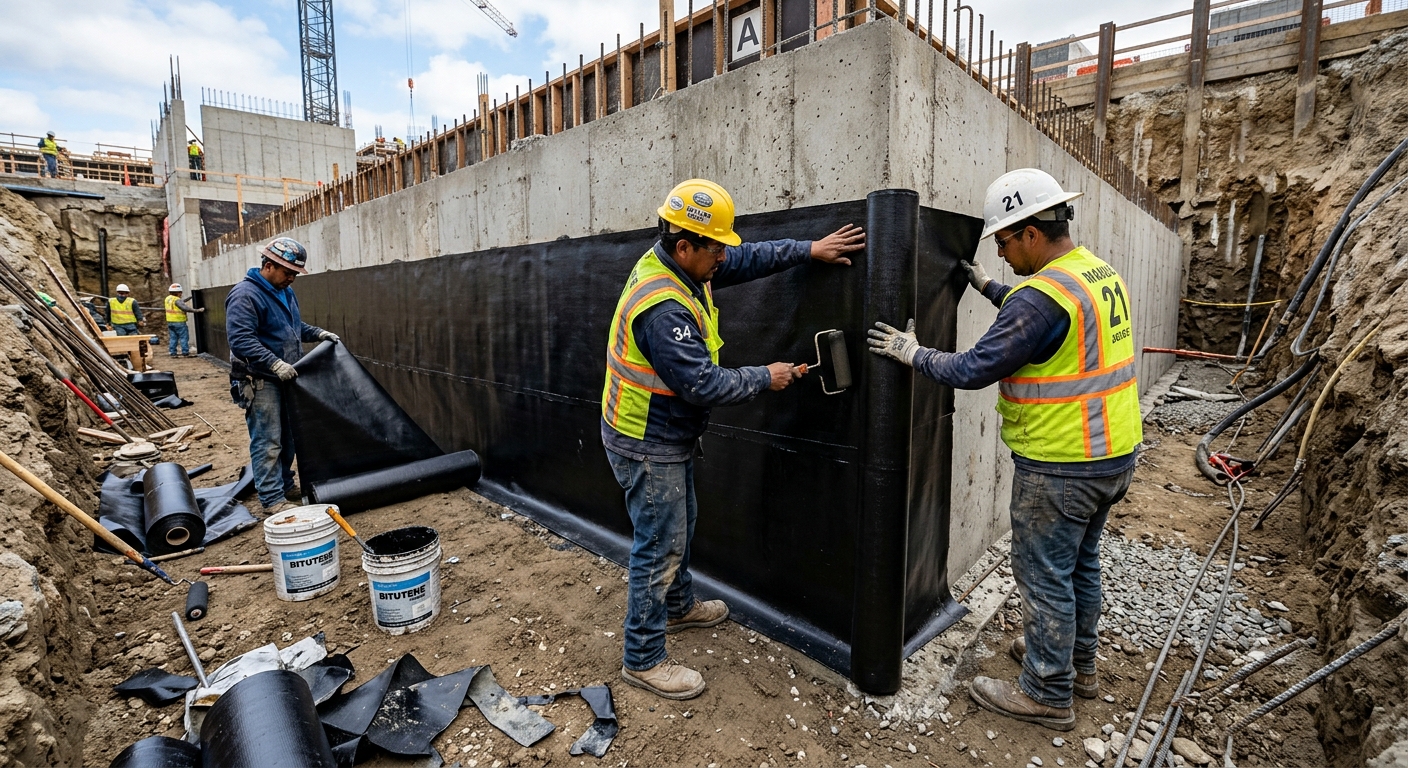
The fundamental difference is where the solution targets water. Exterior waterproofing involves full excavation, foundation membrane installation, new drainage tile, and backfill—so it addresses the water source by reducing/redirecting hydrostatic pressure before water reaches your walls and slab. It costs more and requires yard disruption, but it often offers the most permanent control when weeping tile is failed or when clay-rich soils keep saturating the backfill during spring melt.
Interior waterproofing—perimeter drain channel plus a sump pit and pump—captures water after it enters the basement and keeps floors and lower walls drier. It is less invasive and can be more practical when exterior access is limited (deck footprints, narrow side yards, mature plantings) or when the homeowner’s goal is to stop active seepage without landscaping restoration. However, interior systems don’t stop hydrostatic pressure at the wall; they manage the consequences. That means interior work is strongest when paired with crack sealing.
In Greater Napanee, this usually comes down to foundation type and how water is entering. Poured concrete walls often seal well with crack injection when the leakage pathway is concentrated along crack lines; polyurethane is typically chosen when the crack is actively leaking. Block foundations frequently benefit from interior perimeter drainage as a practical complement because water can track through mortar joints and block cores. For Ontario spring flooding and occasional power interruptions, a sump pump backup (battery backup or an alternate backup method) is a smart add-on—especially where clay soils keep feeding the sump for days.
As a dollar example, if your main issue is limited to an active crack line plus minor sealing, you might be able to stay near the $800–$1,800 crack repair band, and then add a sump for $900–$2,200 if needed. But if your original weeping tile is failed and spring saturation is driving persistent seepage, exterior work can be justified because it replaces the drainage path and can land in the $12,000–$25,000 range—often less than repeated “patch-and-dry” cycles.
| Method |
Best For |
Addresses Source? |
Disruption |
Lifespan |
Price Band |
| Full exterior excavation + membrane |
Widespread seepage, failed weeping tile, clay-backfill pressure, long-term control |
Yes |
High |
High |
$12,000–$25,000 |
| Interior French drain + sump system |
Localized wall seepage, limited exterior access, chronic dampness |
No (manages after entry) |
Medium |
Medium to high |
$4,000–$10,000 |
| Crack injection — epoxy (structural) |
Non-moving or stabilized cracks in poured concrete (and some structural-condition cases) |
Partial (seals the pathway) |
Low to medium |
Medium |
$800–$1,800 |
| Crack injection — polyurethane (active leak) |
Active weeping through cracks where water is still finding a path |
Partial (seals the pathway) |
Low to medium |
Medium (best with drainage control) |
$800–$1,800 |
| Interior drain channel only (no sump) |
Light seepage where gravity drainage is sufficient and basement floor elevations allow |
No |
Medium |
Lower to medium |
$3,000–$7,000 |
| Re-grading + downspout extensions |
Surface-water issues and minor wetting after rain or snowmelt |
Yes for surface water (not hydrostatic groundwater) |
Low |
Low to medium |
$1,000–$3,500 |
How to choose a waterproofing contractor in Greater Napanee
Choosing the right contractor matters as much as the product. Start by verifying Ontario coverage and compliance: ask for proof of liability insurance (a current certificate of insurance that lists the correct legal business name), confirm WSIB/WCB clearance or coverage status, and make sure their staff can work safely on excavation and basement interiors. You should also confirm they’re willing to provide documentation for the specific scope you’re hiring for—especially if there’s structural-adjacent crack repair or if you’re connecting a sump discharge to municipal services.
Next, request 2–3 itemised written quotes—not a single lump sum. A good quote breaks labour and materials (excavation, membrane, drainage tile, pump pit components, discharge routing, crack prep and injection materials). Read the exclusions carefully: is disposal included, is re-grading included, are permit fees and permit pulls included or extra, and what happens if a weeping tile line is completely failed and needs replacement?
Warranty quality is also a decision factor. Look for a workmanship warranty length and a separate product/manufacturer warranty for membranes, drainage components, and injection materials when applicable. Confirm whether the warranty is transferable if you sell your home.
For payment, avoid paying the majority upfront. A common safe structure is keeping upfront deposits around 10–15% and holding back the remainder until key milestones are complete and the site is cleaned and graded. Finally, ask for a start date and completion estimate in writing so spring work windows and curing times are planned.
- Ask for an itemised scope with quantities (linear feet of drains/tile, number of cracks injected, excavation limits).
- Confirm whether the contractor will inspect for mould/efflorescence and remediate before sealing.
- Require the discharge plan: where the sump pump water goes and how it avoids backing up toward the foundation.
- Check that the quote distinguishes “crack sealing” from “full waterproofing/drainage correction.”
- Verify liability insurance and that the certificate is current.
- Confirm WSIB/WCB coverage status and request proof/clearance documentation.
- Ask for warranty terms in writing (workmanship duration and product coverage).
- Confirm backup pump approach for outages (battery or alternative backup), especially for spring saturation.
- Check how excavation spoils and old tile debris are disposed of (included or extra).
- Ask who pulls permits (and whether it’s included in the quote if required).
- Get a schedule that includes curing time for membranes/injection products.
- Confirm final restoration expectations: grading, topsoil, and landscaping/finish repairs.
Red flags in Greater Napanee typically include: quoting only an interior “dry-it-up” system when seepage appears during spring saturation, refusing to document insurance/coverage, offering a waterproofing warranty that only covers materials (not labour), saying “all cracks are the same” without discussing active vs non-active leaks, and giving a lump-sum price with no mention of permits, disposal, discharge routing, or exclusions.
Frequently asked questions — waterproofing in Greater Napanee
How much does basement waterproofing cost in Greater Napanee?
In Greater Napanee, basement waterproofing typically falls into a few common scope bands. Interior waterproofing (like a perimeter drain channel with sump pit) often lands around $4,000–$10,000, while foundation crack repairs for a targeted crack line are commonly priced around $800–$1,800. If your home needs exterior excavation—especially when the original weeping tile is failed or the clay-rich backfill is adding pressure—exterior work often ranges from $12,000–$25,000. Costs can vary because older homes (64.2% built before 1981) are more likely to have aged drainage systems and multiple leakage pathways. Contractors also price for access constraints, disposal, and whether a backup sump system is included during long spring wet cycles.
Interior vs exterior waterproofing — which is better?
“Better” depends on where the water enters and how much hydrostatic pressure your foundation is experiencing. Exterior waterproofing (excavation, new membrane, and new drainage tile) generally addresses the source by reducing groundwater pressure before it reaches the basement wall. It’s also the most disruptive, commonly within $12,000–$25,000. Interior systems—perimeter drains and sump pumps—manage water after it enters and are less invasive, often around $4,000–$10,000. In Greater Napanee’s Kingston–Pembroke conditions, clay-heavy soils and freeze-thaw can keep feeding seepage during spring, so interior solutions work best when paired with correct crack sealing and when exterior access is limited. Many homeowners end up choosing a combined plan: targeted crack injection plus interior drainage and sump control.
Why is my basement leaking in Greater Napanee?
Basement leaks in Greater Napanee are usually caused by a combination of moisture pathways and seasonal loading. Common drivers include failed or clogged weeping tile, seepage through foundation cracks and joints, and surface water that doesn’t drain away from the foundation during spring snowmelt and heavy rain. In the Kingston–Pembroke region, clay-rich soils hold water and expand when saturated, which can increase lateral pressure on foundation walls and worsen cracks over time. Freeze-thaw cycles can widen existing joints in older poured concrete or block foundations. If your basement is most wet after prolonged rain, clogged roof downspouts or poor lot grading may be contributing. If it’s worst during spring thaw and high groundwater periods, interior drainage and a correctly sized sump (with backup) are often the practical solution—after identifying whether exterior drainage is also required.
How do I know if a foundation crack is serious?
A crack may be more serious if it changes over time, runs horizontally (especially across block walls), widens seasonally, or is accompanied by signs like water seepage, bowing, or repeating efflorescence. Hairline cracks without active water typically respond well to sealing and monitoring. But active leaks usually indicate a continuing water pathway, where the “wrong” injection product can fail. In Ontario, we also watch for cracks that line up with a leaking joint or tie hole, because water can track behind surfaces. If you see ongoing dampness along a crack line, or if the crack appears after winter thaw, treat it as active. For structural-condition cracks (not just cosmetic), an engineer assessment is often recommended before major repairs so you don’t simply seal over a stability issue.
How much does foundation crack repair cost in Greater Napanee?
Foundation crack repair in Greater Napanee commonly prices based on length, crack type, and whether the leak is active. For many homeowners with a manageable number of crack locations, the regional band for crack repair is typically $800–$1,800. Costs can be higher when access is tight, when prep work is extensive, or when multiple cracks require injection. Epoxy is generally used where cracks are not moving (often more structural-context), while polyurethane is chosen for active leaks that require the material to expand and seal ongoing moisture movement. If your crack is part of a larger drainage problem—like failed weeping tile feeding the entire perimeter—crack injection alone may not be enough, so budget planning should consider interior drainage or exterior drainage replacement as needed.
Do I need a sump pump in Greater Napanee?
You may need a sump pump in Greater Napanee if you have groundwater seepage that reaches the floor or sump area, especially during spring snowmelt when water tables rise and pumping cycles increase. Interior perimeter drains often require a sump to collect and discharge captured water. If your basement stays damp or you see water pooling along the perimeter, a sump system is commonly recommended as part of a $4,000–$10,000 interior waterproofing scope. Many homeowners also add battery or alternate backup because Ontario spring events can coincide with power outages—so the pump can still run when primary power is interrupted. If your issue is only minor surface-water wetting after rain, re-grading and downspout extensions may be sufficient, but if the problem persists during high groundwater periods, a sump becomes the practical control method.