Basement waterproofing options and costs in Timmins
Timmins homeowners typically start with a simple question: “What will actually stop the water?” The answer depends on how the moisture is getting into the basement—through the exterior waterproofing system, through failed drainage/weep passages, or through cracks and joints that have opened under freeze–thaw movement. In Timmins, it matters that many homes are older: 71.7% of dwellings were built before 1981, and that housing stock often relies on original damp-proofing and aging weeping tile that can’t keep up once clogs, collapse, or grading issues develop. With homeowner households making up 67.0% of households (Statistics Canada, 2021 Census), a lot of work is retrofit-focused rather than new-build, which pushes demand for re-excavation, drainage reconstruction, and interior drainage solutions.
In the Northeast, contractor pricing is influenced by more than just materials. The region’s continental freeze–thaw cycles can widen existing cracks and joints, turning minor seepage into active seepage within a few seasons. Soil pockets that hold water against foundation walls increase hydrostatic pressure, so drainage design and excavation depth can be major cost drivers. Because Timmins has a large proportion of older basements and poured concrete/early masonry foundations, you’ll often see the trade in higher demand around older residential pockets such as the east-end and near downtown where lots are developed and access can be tight.
Below is a practical comparison of common waterproofing methods you’ll see in Timmins, including realistic disruption and cost ranges.
| Method |
What It Addresses |
Disruption Level |
Durability |
Price Range |
| Exterior excavation + new membrane + drainage tile |
Primary water entry by stopping seepage at the foundation and restoring drainage to relieve hydrostatic pressure |
High (yard removal, excavation, backfill, landscaping reinstatement) |
Long-term when drainage is correctly designed and installed |
$9,000 – $20,000 |
| Interior perimeter drain channel + sump pit |
Water that has entered; collects it at the perimeter and pumps it away |
Medium (basement floor cutting, removal of finishes) |
High (depends on pump quality, discharge routing, and correct basin sizing) |
$4,000 – $12,000 |
| Foundation crack injection (epoxy or polyurethane) |
Seepage through cracks/joints—epoxy for typically non-moving cracks; polyurethane for active leakage |
Low to Medium (minimal interior disturbance) |
Good to High when the crack type is correctly matched to the resin |
$400 – $1,200 |
| Sump pump installation (primary + battery backup) |
Prevents basement flooding during high-water periods and power outages |
Low to Medium (minor floor/wall work, discharge routing) |
High (backup is a major reliability upgrade) |
$900 – $3,000 |
| Window well drain installation |
Bulk water and spring thaw runoff around egress windows |
Low to Medium (exterior/entry area access) |
Medium to High (depends on correct grading and discharge) |
$1,200 – $3,500 |
| Lot re-grading / downspout extension |
Reduces surface water that flows toward the foundation and footing |
Low to Medium (yard work, minor removals) |
Variable (best as a complement to drainage and waterproofing repairs) |
$2,000 – $6,000 |
Prices are estimates only and vary by project scope, site access and material selection.
What affects the price of waterproofing in Timmins
In Timmins and across Ontario’s Northeast, it’s common to see quotes for the “same” waterproofing job land 30–50% apart. The reason is that waterproofing isn’t one product—it’s a system. A contractor may be pricing symptom control (interior drainage) versus source control (exterior membrane and new drainage), and they may be assuming very different starting conditions for soil, water management, and foundation condition. Even when work sounds identical on paper, the excavation depth, how clogged or collapsed the existing weeping tile is, and whether freeze–thaw has opened cracks significantly can swing the final price.
The three biggest regional cost separators from the national average are soil type, water table/groundwater behaviour, and freeze–thaw. Clay-heavy or fine-grained soils can swell when saturated and exert lateral pressure on foundation walls, worsening cracks over time; meanwhile, higher local water levels mean longer pump run times and larger sump infrastructure. Freeze–thaw then expands that movement in winter, pulling apart joints and driving water pathways deeper. In older housing stock like many pre-1981 basements (Statistics Canada, 2021 Census), original damp-proofing and early drainage practices were often minimal, so failures tend to appear together: weeping tile issues, seepage, and sometimes moisture-related deterioration that needs cleanup before sealing.
In Timmins, a typical example is a homeowner who has only minor dampness: a crack injection project might fit closer to the $400–$1,200 band. But if inspection shows active leakage plus failed perimeter drainage that’s forcing water toward the footing, the same property can quickly move into the interior waterproofing range of $4,000–$12,000—or, where source control is required, exterior excavation can reach $9,000–$20,000 due to excavation and cold-weather work planning.
| Price Factor |
Why It Matters |
Cost Impact |
| Interior vs. exterior approach — interior is less disruptive but addresses symptoms |
Interior systems manage water after it enters; exterior systems stop water at the wall and restore drainage/relief |
Interior often lower upfront; exterior can cost more but is more complete when hydrostatic pressure is the driver |
| Foundation type — poured concrete vs. block vs. stone vs. ICF |
Porosity, joint behaviour, and how cracks open varies by type |
Block and older masonry often require more drainage and crack strategy; poured concrete may respond better to targeted injection |
| Soil type — clay expands more than sand, adding pressure |
Saturated fine-grained soils increase lateral pressure on walls and foundations |
Higher pressure systems typically need stronger drainage design and sometimes exterior source control |
| Crack type and length — hairline vs. structural horizontal cracks |
Structural movement changes what can be safely sealed and what may need engineered evaluation |
Active/structural cracks can expand scope, adding assessment and deeper remediation |
| Sump pump backup system — battery or water-powered backup needed |
Reduces risk during spring flooding and power interruptions |
Often adds meaningful cost but prevents the “pump failed, basement flooded” scenario |
| Access — landscaping, decks, or driveways must be removed for exterior |
Excavation and equipment access drive time, restoration, and disposal needs |
Restricted access can push labour and reinstatement costs upward |
| Weeping tile age — original tile (60+ years) may be completely failed |
Failed tile allows continuous wetting against the wall |
Often upgrades the project from small repairs to full drainage replacement |
| Mould or efflorescence remediation required before sealing |
Sealers often won’t perform properly on contaminated surfaces |
Adds cleaning, PPE, and sometimes additional drying time |
Permits & regulations in Ontario
In Ontario, many basement waterproofing and foundation-related projects require a building permit, especially when the work changes structural components or drainage patterns around the property. Typical items that often do require a permit include: foundation excavation near a footing, repairs involving structural crack locations (particularly horizontal cracking in block walls), and work that modifies how surface water or lot drainage directs runoff toward or away from the foundation. If you’re installing drainage changes that affect discharge routing, or adding a sump system that ties into municipal systems, you should expect municipal approval requirements before connecting.
For structural crack repair, especially where cracks may indicate movement (e.g., major step cracks or structural horizontal cracks), an assessment by a structural engineer is often needed to determine whether underpinning or other structural measures are required before waterproofing proceeds. A reputable contractor should be comfortable coordinating engineering support and should carry liability insurance and WSIB/WCB coverage for the work crews on site.
How to verify in Timmins: (1) check the contractor’s Ontario business/labour licensing records through the applicable provincial registry channels, (2) request a current certificate of insurance showing liability coverage and confirm it includes the work scope, (3) ask for proof of WSIB/WCB coverage (clearance letter or proof number), and (4) keep copies of these documents with your contract and permit application details.
Interior vs exterior waterproofing — what does Timmins need?
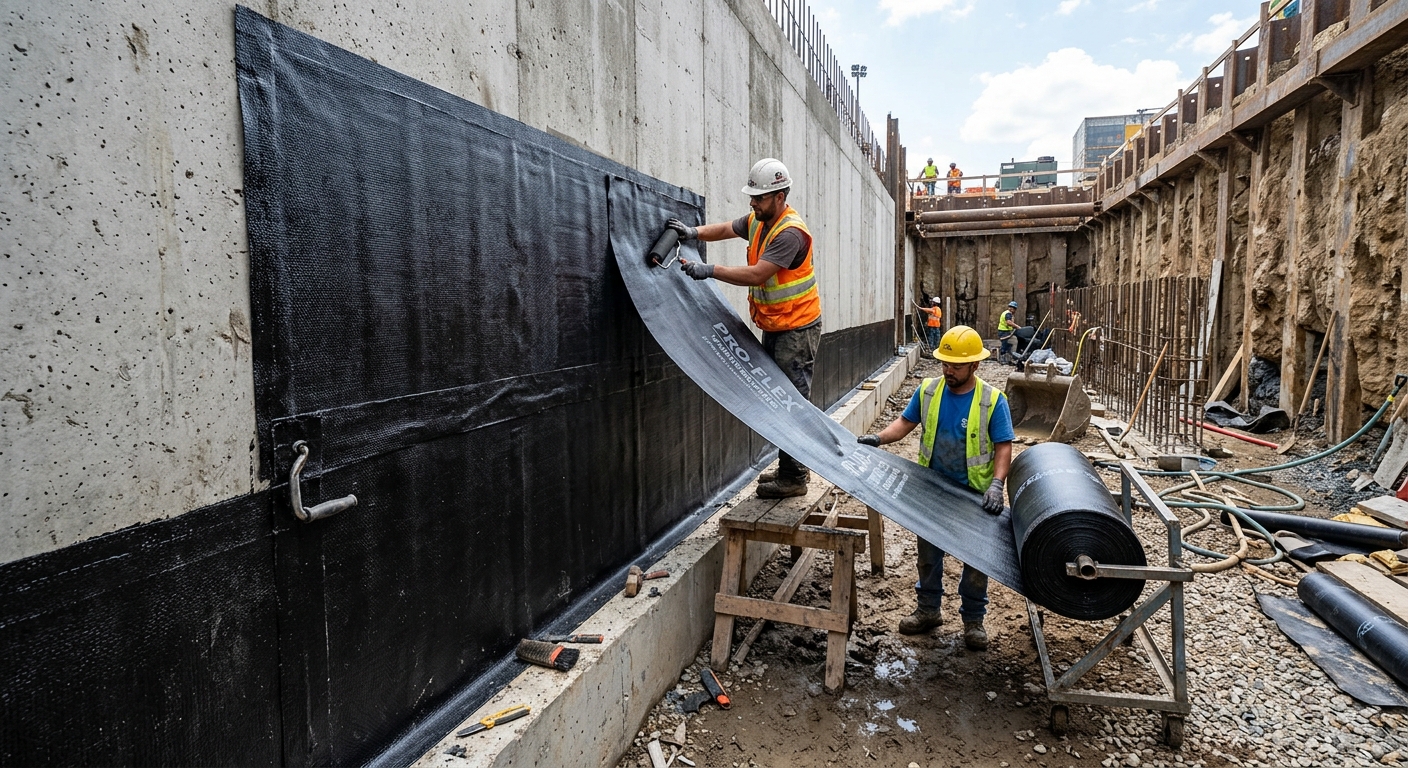
The fundamental difference is source control versus water management. Exterior waterproofing involves full excavation, new membrane, renewed drainage tile, and engineered backfill—so it permanently addresses where water is entering. It costs more and creates more yard disruption, but it can be the best long-term solution when older drainage systems have failed or when hydrostatic pressure is actively pushing water through the foundation wall. Interior waterproofing—typically a perimeter drain channel, sump pit, and sump pump—collects water after it enters and safely removes it from the basement. It’s usually less invasive and less disruptive, but it doesn’t relieve pressure against the wall in the same way exterior work does.
In Timmins, that matters because the winter freeze–thaw cycle can widen cracks, and long wet seasons can keep pressure against the foundation. Poured concrete walls often respond well when the main issue is crack-driven seepage—crack injection (when matched to the crack behaviour) can be a targeted fix. Block foundations frequently benefit from interior drainage as a practical complement, particularly if mortar joints or block seams have been letting moisture in for years. If you’re seeing recurring seepage after heavy spring melt, interior systems plus a properly sized sump pump—and often backup—can be a smart risk-reduction step.
To make the difference real: if your basement issue is limited to a few active cracks and no evidence of broad perimeter wetting, crack injection can fall in the $400–$1,200 band. But if you’re dealing with full perimeter dampness after wet weather and signs of hydrostatic pressure, you’re often comparing $4,000–$12,000 for interior perimeter drainage versus $9,000–$20,000 for exterior excavation + membrane. In those cases, the higher cost is usually justified because the exterior approach reduces future pressure, not just pump workload.
| Method |
Best For |
Addresses Source? |
Disruption |
Lifespan |
Price Band |
| Full exterior excavation + membrane |
Frequent wet basements, signs of hydrostatic pressure, or failed original drainage/water management |
Yes |
High (yard disruption, excavation, reinstatement) |
Long-term when drainage is correctly designed |
$9,000 – $20,000 |
| Interior French drain + sump system |
Basements that are actively wet after spring melt or heavy rain when exterior access is limited |
No (manages water after entry) |
Medium (floor cuts, sump basin installation) |
High with proper pump sizing and discharge planning |
$4,000 – $12,000 |
| Crack injection — epoxy (structural) |
Typically non-moving cracks in poured concrete where seepage follows a defined crack path |
Mostly (stops crack-driven water entry) |
Low to Medium (access holes, limited surface prep) |
Good to High when crack stability is confirmed |
$400 – $1,200 |
| Crack injection — polyurethane (active leak) |
Active seepage where the crack is still moving or water is under pressure |
Mostly |
Low to Medium |
Good (often paired with drainage improvements) |
$600 – $1,500 |
| Interior drain channel only (no sump) |
Light seepage, intermittent moisture, and when a sump isn’t feasible |
No |
Medium to Low (depends on floor removal requirements) |
Medium (performance can be limited during high-water events) |
$2,000 – $6,000 |
| Re-grading + downspout extensions |
Surface water problems: gutter discharge near the foundation, poor grading, pooling at corners |
Indirect (reduces water reaching foundation) |
Low to Medium |
Variable; best with drainage/waterproofing repairs if failing systems exist |
$2,000 – $6,000 |
How to choose a waterproofing contractor in Timmins
Start with verification. For Ontario work in Timmins, confirm the contractor’s business legitimacy and that they can legally perform the scope you’re hiring for. Next, ask for a current certificate of liability insurance and review the dates and coverage amount; it should match the type of job (excavation and foundation work versus interior-only drainage). Finally, request proof of WSIB/WCB coverage (often provided as a clearance letter or proof document). If they can’t provide these items promptly, that’s a serious warning sign because basement waterproofing is labour-intensive and involves excavations, concrete cutting, and electrical connections for sump pumps.
Then get 2–3 itemised written quotes. You want line items for labour, excavation/disposal, membrane and drainage materials, pipe sizes and discharge method, and specific crack injection products (epoxy vs polyurethane) rather than a single lump-sum number. Read exclusions carefully: is permit pulling included (when required), is landscape restoration included, and is old tile removal/disconnection included? Also ask about warranty structure: workmanship warranty length, product/manufacturer warranty coverage, and whether warranties are transferable if you sell the property.
Payment matters. Never pay more than 10–15% upfront for materials and scheduling; hold back a portion until the job is complete and verified. Get the timeline and key milestones (site readiness, excavation, membrane install, backfill, interior finish restoration) in writing with a start date and estimated completion.
- Ask what inspection steps they’ll take (e.g., crack mapping, water source identification, drainage evaluation).
- Confirm they provide an itemised quote (labour + materials, not lump sum).
- Check liability insurance certificate is current and includes waterproofing/foundation work.
- Verify WSIB/WCB clearance/proof before work begins.
- Ask whether a permit is required for your specific scope and whether they coordinate it.
- Request details on disposal of excavated soil and how discharge is handled.
- Confirm which crack injection resin they’ll use and why (epoxy vs polyurethane).
- Check how they manage hydrostatic pressure (drain tile, sump basin sizing, discharge distance).
- Review the warranty: workmanship duration, product warranty, and transferability.
- Ensure the sump pump plan includes backup strategy if spring melt/high water is expected.
- Agree on a payment schedule with holdback until punch list completion.
- Get start date, weather-related contingency language, and completion estimate in writing.
Red flags in Timmins include: contractors who can’t clearly explain whether the problem is source water versus interior seepage; quotes that only mention “sealing” cracks without assessing drainage; vague warranty terms (“we guarantee it”) without durations and product specifics; refusal to provide WSIB/WCB and liability documentation; and pressure to pay most of the cost up front before excavation or pump discharge work is completed.
Frequently asked questions — waterproofing in Timmins
How much does foundation crack repair cost in Timmins?
In Timmins, foundation crack repair typically depends on whether the crack is active (still leaking) and how much length needs treatment. For many homeowners, crack repair alone lands in the $400–$1,200 band, especially when it’s a limited number of non-structural cracks in poured concrete that can be properly prepped and injected. If the crack is active seepage, polyurethane is often required, which can push the cost upward versus epoxy on stable, non-moving cracks. Pricing also changes with access and the number of injection ports, plus whether there’s need for surface cleaning and efflorescence removal before injection. Because Timmins has a heavy freeze–thaw cycle, it’s important to choose the right material for the crack behaviour to avoid repeat seepage.
Do I need a sump pump in Timmins?
Many Timmins basements benefit from a sump pump when water levels rise during spring melt, heavy rain, or after long wet stretches—especially if you have interior perimeter drainage or evidence of recurring seepage. A sump pump isn’t automatically required for every damp basement; if the issue is isolated crack leakage, crack injection may solve it without the pump system. However, if interior inspections show water collecting at the perimeter, a sump pump becomes the practical last line of defence. For reliability during Ontario power interruptions, ask about backup options; sump pump installation including primary plus battery backup often sits in the $900–$3,000 range. In older homes (many pre-1981), failing drainage practices can cause the “water shows up everywhere” pattern where a sump system is more likely to be recommended.
How does Timmins's soil affect my foundation?
Soil affects foundation waterproofing mainly by controlling how water sits around your footing and how much pressure builds against foundation walls. In Timmins, fine-grained soils and local pockets that retain moisture can hold water against the exterior, which increases hydrostatic pressure and can worsen crack openings over repeated freeze–thaw cycles. When the ground freezes and thaws, movement can enlarge existing weaknesses at joints and cracks, turning slow dampness into active leakage. Soil also impacts excavation and drainage performance—if water can’t move away from the foundation, interior systems must work harder. That’s why contractors in Timmins often price based on drainage design and excavation depth, not just labour. If your basement is worse after spring thaw, it’s a sign that soil moisture and water movement are major contributors.
Do I need a permit for foundation work in Ontario?
In Ontario, permits are commonly required when work changes foundation elements, involves structural crack repair, or alters lot drainage near the foundation. Typical items that often need a permit include foundation excavation close to footings and repairs associated with structural cracking (for example, certain major horizontal or step crack conditions in masonry walls). Sump pump installations may also require municipal approval depending on whether discharge connects to storm or sanitary systems. The safer approach is to ask the contractor upfront: confirm whether your scope needs a building permit and whether they assist with coordinating it. To protect yourself in Timmins, verify the contractor is insured and appropriately licensed/covered (liability insurance and WSIB/WCB proof) and keep copies of the permit documentation as part of your records.
How long does waterproofing last?
Waterproofing longevity depends on whether the work stops the source of water entry or only manages it after it enters. Exterior waterproofing—when membrane and drainage tile are correctly installed—tends to last longer because it reduces hydrostatic pressure at the wall. Interior systems can perform very well for years, but they rely on pump reliability, correct basin sizing, and functioning discharge paths during high-water periods. Crack injection longevity depends on matching the resin to crack behaviour: epoxy for stable, non-moving cracks and polyurethane for active seepage. In Timmins’ climate, freeze–thaw can stress even well-installed systems, especially if surface water management is poor—so re-grading and downspout extensions can be a meaningful complement. If you want durability for older homes (71.7% built before 1981 in the Timmins area), plan on a system that addresses drainage and crack strategy together rather than treating symptoms only.
Can I waterproof my basement from the inside only?
Yes, interior-only waterproofing is often possible, and many Timmins homeowners choose it when exterior access is limited (decks, retaining walls, or tight lots). Interior perimeter drains, sump pits, and sump pumps are effective at keeping the basement dry by collecting water after it enters. That said, interior work doesn’t fully relieve pressure against the foundation wall, so it’s best when the main issue is seepage that can be captured at the perimeter. If inspections show continuous wetting driven by failed exterior drainage or persistent hydrostatic pressure at the wall, an exterior approach may be more effective over the long term even though it costs more. For reference, crack injection may fall around the $400–$1,200 band for targeted repairs, while interior perimeter drain plus sump systems often sit in the $4,000–$12,000 range depending on complexity and finishes.