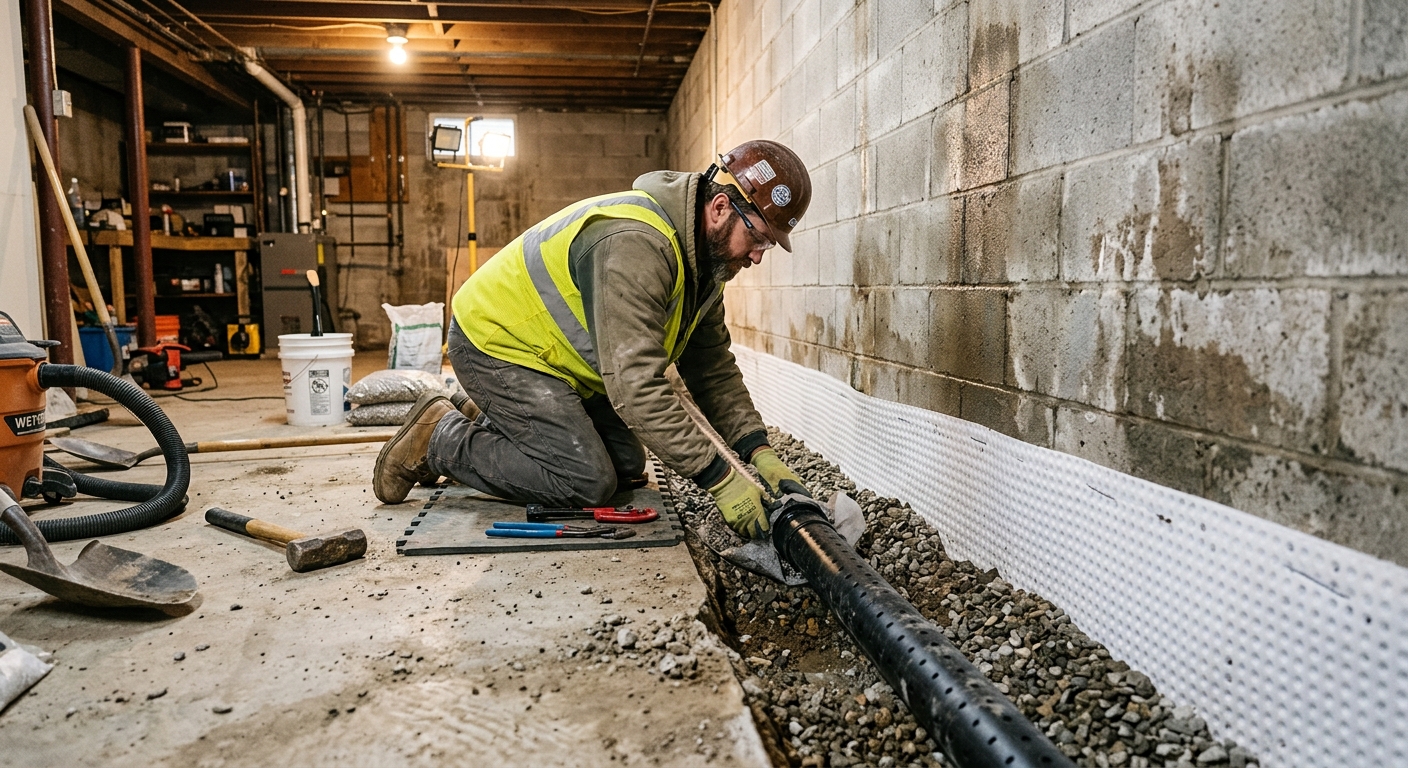
Basement waterproofing options and costs in Port Colborne
Port Colborne homeowners usually start with one question: “Where is the water coming from, and what will it cost to stop it?” The answer depends on whether you’re dealing with bulk water from a higher water table, seepage through cracks, or a drainage system that’s simply worn out. With 80.5% of homes in Port Colborne built before 1981, it’s common to find original or aging waterproofing approaches, including weeping tile that has exceeded its typical service life and may no longer drain effectively. Another local factor is that 72.7% of households in the area own their homes, so many projects are planned for resale risk reduction—meaning contractors are often busy during seasonal dampness and pre-spring inspection windows.
In the Hamilton–Niagara Peninsula economic region, clay and silty clay subsoils can hold moisture and expand during freeze–thaw, increasing lateral pressure on foundation walls and worsening cracks over time. Pricing reflects this reality: more excavation effort, more robust drainage stone, and longer labour days are typical when water is close to grade (often roughly 2–4 m below grade, with perched water possible). Contractors can also be in higher demand around older neighbourhood blocks and where access is tight—one common hotspot is the older residential fabric near the downtown core and adjacent streets with mature landscaping, where exterior excavation requires extra protection and careful backfilling.
Below are the most common waterproofing methods we quote in Port Colborne, with typical price ranges to help you compare proposals and scope.
| Method |
What It Addresses |
Disruption Level |
Durability |
Price Range |
| Exterior excavation + new membrane + drainage tile |
Source water entry by rebuilding the perimeter drainage and waterproofing layer around the foundation |
High (excavation, landscaping restoration) |
Long-term (often best for persistent seepage/high water table) |
$12,000–$25,000 |
| Interior perimeter drain channel + sump pit |
Water after it enters via floor/side seepage; collects and pumps it away |
Medium (floor/trim impact, minor interior demo) |
Good (depends on crack sealing and sump reliability) |
$8,000–$18,000 |
| Foundation crack injection (epoxy or polyurethane) |
Cracks that allow seepage; epoxy for stable cracks, polyurethane for active leakage |
Low to Medium (spot drilling and patching) |
Moderate to Long-term (only as good as crack type diagnosis) |
$600–$1,800 |
| Sump pump installation (primary + battery backup) |
Relieves hydrostatic pressure by pumping collected water; backup protects during power loss |
Medium (pit excavation, basin install, discharge routing) |
Good (improved reliability with backup) |
$1,800–$4,200 |
| Window well drain installation |
Bulk water and seepage at egress window areas; prevents pooling and infiltration |
Medium (excavation around wells) |
Good (when tied into proper discharge) |
$2,000–$5,500 |
| Lot re-grading / downspout extension |
Reduces water at foundation by redirecting roof runoff and correcting surface drainage |
Low to Medium (groundwork) |
Limited to Moderate (best as a supplement) |
$900–$4,000 |
Prices are estimates only and vary by project scope, site access and material selection.
What affects the price of waterproofing in Port Colborne
In Port Colborne and the broader Hamilton–Niagara Peninsula, it’s not unusual for two contractors to quote the “same” basement problem and come in 30–50% apart. That gap usually isn’t because one quote is padded—it’s because the real drivers (how deep they must excavate, whether drainage can be rebuilt, whether the crack is active, and what the water table is doing seasonally) are different from site to site. National averages also don’t fully reflect Ontario’s winter freeze–thaw impacts on cracks, nor our common clay-heavy subsoils that hold moisture and push laterally on foundations as temperatures swing.
Three things most clearly separate Hamilton–Niagara Peninsula costs from the broader national picture: (1) soil type, (2) water table behaviour, and (3) freeze–thaw. In clay-heavy pockets, soils can expand during freezing and worsen existing cracks, which increases labour for crack prep and may demand more robust drainage stone and a stronger membrane system on exterior work. Where water sits higher (commonly a few metres below grade, with perched water in shallow fill), sump run times increase and contractors often add a more reliable sump setup—sometimes including battery backup—to protect during spring events. In older Ontario neighbourhoods (and 80.5% of Port Colborne homes being pre-1981), failing weeping tile is a frequent root cause, which can raise the scope because interior solutions alone won’t stop water pressure from coming through gaps.
Here are a few local examples of how conditions move the price: If you have a poured-concrete wall with hairline cracking and minimal interior seepage, crack injection may keep costs closer to the $600–$1,800 band, especially when exterior grading is corrected. If excavation is blocked by mature trees and a tight lot near older streets, exterior waterproofing can climb toward $12,000–$25,000 because of protection and slower restoration work. And if the sump pit has been undersized for years, switching to a properly sized system with backup can push interior budgets toward $8,000–$18,000 when combined with interior perimeter drainage.
| Price Factor |
Why It Matters |
Cost Impact |
| Interior vs. exterior approach — interior is less disruptive but addresses symptoms |
Exterior targets the source by rebuilding the perimeter system; interior collects water after entry |
Exterior often adds significant excavation/restore labour; interior can be cheaper but may not solve hydrostatic pressure |
| Foundation type — poured concrete vs. block vs. stone vs. ICF |
Different materials crack and leak differently; prep and sealing methods vary |
Poured concrete can be more straightforward for certain crack repairs; block may require more interior drainage and sealing |
| Soil type — clay expands more than sand, adding pressure |
Clay holds moisture and expands during freeze–thaw cycles, increasing lateral wall stress |
Clay sites often need stronger drainage design and may require more robust membrane/exterior detailing |
| Crack type and length — hairline vs. structural horizontal cracks |
Active or structural movement changes the right system (and sometimes requires engineer input) |
Structural cracks typically increase investigation and may raise costs beyond simple injection |
| Sump pump backup system — battery or water-powered backup needed |
Power loss risk during spring flooding can cause backups and basement flooding |
Backup adds equipment and electrical work; often worth it where seepage is recurring |
| Access — landscaping, decks, or driveways must be removed for exterior |
Exterior excavation needs room for safe digging and membrane/drain installation |
Restricted access increases labour time and restoration costs |
| Weeping tile age — original tile (60+ years) may be completely failed |
Old or collapsed tile stops draining and can worsen hydrostatic pressure |
If tile replacement is required, scope expands and interior-only fixes become less effective |
| Mould or efflorescence remediation required before sealing |
Sealers and membranes need sound, properly cleaned surfaces |
Additional prep and remediation can add time and materials before waterproofing begins |
Permits & regulations in Ontario
In Ontario, the scope that involves changing how water is managed around a foundation, making structural repairs, or altering key building systems can trigger permitting. Typically, foundation excavation and exterior waterproofing work that changes drainage patterns, as well as structural crack repair for major cracks, often require a building permit. Where a sump pump discharge is connected or rerouted toward municipal infrastructure (storm or sanitary), municipal approval is usually required. For crack work that is considered structural—such as horizontal cracks in block walls, significant step cracking, or any signs of movement—an evaluation by a structural engineer is often needed to determine whether underpinning or other structural measures are required.
To verify a contractor in Port Colborne, take a step-by-step approach. First, confirm they are properly licensed/credentialed for the work they claim to perform and that their business information is current in relevant provincial listings. Next, ask for a certificate of liability insurance (and ensure the coverage period matches your start date). Then request proof of WSIB/WCB coverage—if they’re using subcontractors, make sure coverage extends to those workers as well. If structural repair is part of the plan, verify they have engineering support in their scope and that they can provide documentation from the engineer. Finally, ask whether permit pulls are included in the written proposal; if they aren’t, request who will pull the permit and what items are included.
When in doubt, request the permit checklist in writing before work begins—good contractors will explain the pathway clearly.
Interior vs exterior waterproofing — what does Port Colborne need?
The fundamental difference is source versus symptom control. Exterior waterproofing—full excavation, new membrane, new drainage tile, and backfill—targets the source by stopping water entry and managing hydrostatic pressure before it reaches the interior. It costs more and requires major landscaping disruption, but it’s often the most reliable fix when you have recurring seepage, high groundwater conditions, or failing perimeter drainage. Interior waterproofing—perimeter drain channel, sump pit, and sump pump—manages water after it enters. It can be less invasive, but it doesn’t eliminate the pressure acting on the foundation wall itself, so performance depends heavily on crack sealing and how well the sump system handles peak flows.
Given Port Colborne’s clay-heavy subsoils and Ontario freeze–thaw cycles, many homes need a careful match between foundation type and method. For poured-concrete walls with cracking and moisture that appears along specific seams, crack injection plus an interior perimeter drain can be a strong, practical combination. For block foundations, water often travels through mortar joints and small openings; interior drainage frequently becomes the most economical way to control seepage while the crack sealing handles active leak points. Because spring flooding and power interruptions can occur during wet weather, we also recommend considering a sump pump backup system so collected water doesn’t overwhelm the sump during outages.
Here’s a realistic dollar example: If you’re choosing between interior perimeter drainage at $8,000–$18,000 and full exterior work at $12,000–$25,000, the extra exterior cost is often justified when water comes from the perimeter consistently (multiple walls, repeated dampness after storms, or evidence of failed weeping tile). If the issue is localized to one crack or a window well, interior or targeted repairs may solve it without the full excavation expense.
| Method |
Best For |
Addresses Source? |
Disruption |
Lifespan |
Price Band |
| Full exterior excavation + membrane |
Persistent seepage, higher groundwater influence, failing perimeter drainage |
Yes |
High |
Long-term (when drainage and backfill are properly rebuilt) |
$12,000–$25,000 |
| Interior French drain + sump system |
Interior moisture, sump-assisted drainage control, sites with limited exterior access |
No (it controls water after entry) |
Medium |
Long-term if cracks are sealed and sump is reliable |
$8,000–$18,000 |
| Crack injection — epoxy (structural) |
Stable cracks where there’s no active movement |
Partly (reduces seepage through the crack path) |
Low to Medium |
Moderate to long-term (depends on correct diagnosis) |
$600–$1,800 |
| Crack injection — polyurethane (active leak) |
Active leaks or cracks that may move slightly with moisture and freeze–thaw |
Partly (reduces active seepage) |
Low to Medium |
Moderate to long-term for active leakage (when surface prep is correct) |
$600–$1,800 |
| Interior drain channel only (no sump) |
Minor dampness events with adequate gravity discharge option |
No |
Medium |
Variable (often less effective in higher water periods) |
$5,500–$12,000 |
| Re-grading + downspout extensions |
Roof runoff management and surface drainage correction |
Yes (for surface water), but not a full foundation solution |
Low to Medium |
Moderate (supplementary) |
$900–$4,000 |
How to choose a waterproofing contractor in Port Colborne
Start by verifying the basics: Ontario licensing/credential for the work, liability insurance, and WSIB/WCB coverage. The practical way to check is to request (1) your contractor’s current credentials number or business profile details, (2) a certificate of insurance showing the policyholder and active dates, and (3) WSIB/WCB clearance documentation that clearly includes their workers and contractors. If they can’t produce these documents quickly, treat it as a sign they’re not set up for professional jobsite responsibility.
Next, get 2–3 itemised written quotes. You want a breakdown by labour and materials, not a lump sum—especially for exterior excavation where the scope often includes disposal, drainage stone quantity, membrane type, and backfill detailing. Read the scope line-by-line: what’s excluded (tree removal, demolition, concrete cutting limits, landscaping restoration level), whether disposal is included, and whether permit pulls are part of the contractor’s responsibilities.
Warranty matters in waterproofing. Ask for the workmanship warranty length and whether it covers labour only or includes materials too. Product/manufacturer warranties can be helpful, but ensure they align with the system being installed. Also ask if the warranty is transferable if you sell the home. For payment schedule, keep it controlled: never pay more than 10–15% upfront, and insist on a holdback until the full scope is complete and tested. Finally, request a written start date and completion estimate—wet seasons can shift timelines in Ontario, so clarity helps.
- Ask for their insurance certificate and confirm coverage dates match your project schedule.
- Request WSIB/WCB clearance for the company (and ask how subcontractors are handled).
- Verify they pull permits when required (or state clearly if homeowner is responsible).
- Insist on a written, itemised quote: labour, excavation, membrane, tile, sump parts, discharge work.
- Check exclusions: disposal, landscaping restoration, concrete patching, and window well details.
- Confirm the drainage design: where the tile discharges and how it avoids backing up.
- Ask what they do if weeping tile is failed or inaccessible (contingency plan in writing).
- Require a crack diagnosis method before injection (epoxy vs polyurethane depends on activity).
- Ask whether they include mould/efflorescence remediation prior to sealing.
- Review warranty terms: workmanship length, product coverage, and transferability to buyers.
- Set a payment plan with 10–15% maximum upfront and a holdback until final walkthrough.
- Get start/completion dates in writing and a weather plan for Ontario wet spells.
Red flags in Port Colborne include contractors who (1) provide a “standard price” without inspecting crack type and water behaviour, (2) won’t explain whether exterior or interior work is addressing the source, (3) skip sump pump backup discussion in recurring seepage basements, (4) cannot produce insurance/WSIB paperwork, or (5) pressure you for large upfront payments or verbal promises instead of itemised scope.
Frequently asked questions — waterproofing in Port Colborne
What causes foundation cracks in Port Colborne?
In Port Colborne, foundation cracks most often relate to soil moisture movement and settlement, especially where clay-heavy subsoils hold water and expand during freeze–thaw cycles. Over time, that movement increases stress at weak points such as corners, wall seams, and joints. Older housing stock is also a factor: with 80.5% of homes built before 1981, many basements have had decades of freeze–thaw and aging drainage systems. When weeping tile fails or becomes undersized, hydrostatic pressure rises and can widen cracks that were previously hairline. Cracks can also develop from poor re-grading or downspout discharge that lets roof runoff saturate backfill near the foundation.
How do I compare waterproofing quotes?
To compare quotes in Ontario (and around Port Colborne), focus on scope, not just the bottom-line number. Ask whether the proposal includes excavation and a new exterior membrane and drainage tile, or if it’s strictly an interior perimeter drain and sump system. In our area, price differences of 30–50% usually reflect how much of the perimeter system is rebuilt and how deep the work must go. For example, a targeted crack repair might land in the $600–$1,800 band if the crack is stable and limited in length, while full exterior waterproofing commonly sits around $12,000–$25,000. Confirm what’s included: disposal, concrete cutting/patching, membrane product type, drainage stone, discharge routing, and any permit pull responsibilities.
How long does basement waterproofing take in Port Colborne?
Timelines vary with foundation type, water conditions, and access. For interior work like a perimeter drain channel and sump setup, many projects take roughly several days to a couple of weeks depending on demo, drying/prep needs, and cure times for crack sealing. Exterior work typically takes longer due to excavation, installation of membrane/drainage tile, inspections, backfill, and landscaping restoration. Ontario wet weather can also slow exterior tasks when the soil is saturated or when temperatures drop below product installation thresholds. If your basement has active leaks, we may prioritize source assessment and immediate controls (like temporary pumping) while final work is scheduled. A good contractor in Port Colborne provides a start date, completion estimate, and a weather contingency plan in writing.
What is a weeping tile and does my Port Colborne home have one?
Weeping tile is the perforated drain system installed around the foundation (typically below the basement floor line) to collect groundwater and relieve hydrostatic pressure. In older Port Colborne homes—especially those built before 1981—many originally had weeping tile, but it may now be clogged, cracked, or disconnected due to age and soil movement. Homeowners can often find signs like past sump installs, older discharge lines, or records from renovations. However, the only reliable answer is an inspection: we look for access points, check discharge routing, and evaluate whether the basement condition matches a failed perimeter system. Even if you do have weeping tile, it might not be functioning properly anymore, and waterproofing plans often need to address that directly.
Can I waterproof my basement in winter in Port Colborne?
Winter waterproofing in Port Colborne is sometimes possible, but it depends on the method and the conditions. Exterior excavation is often restricted by frozen ground, which increases labour time and can complicate membrane and drainage installation quality. Interior solutions are more feasible because work is inside the basement envelope. Still, you must ensure surfaces are clean, sound, and at suitable temperatures for crack injection and coating products. Moisture management is also critical: if active water is present, a contractor may need to control it with pumping and proper ventilation to allow prep work and curing. If your basement is already damp, interior drainage plus crack repairs can help. For exterior source fixes, many homeowners schedule excavation for late winter thaw or spring to ensure better backfill and compaction.
What is the difference between waterproofing and damp-proofing?
Waterproofing is designed to resist water entry and hydrostatic pressure, using systems that manage water movement through drainage layers, membranes, and properly designed sumps. Damp-proofing usually means a lower level of protection—often intended to reduce minor moisture or condensation rather than reliably handle sustained seepage. In Ontario’s freeze–thaw conditions and clay-heavy soils, basements exposed to recurring seepage typically need true waterproofing approaches, not just surface damp-proofing. For instance, if you have repeated wet walls after storms, interior drainage and a sump pump (or exterior membrane plus drainage tile when needed) addresses the underlying water pathway. If you’re seeing active leaks from cracks, crack injection is usually part of the waterproofing plan, whereas damp-proofing alone may not stop the problem.