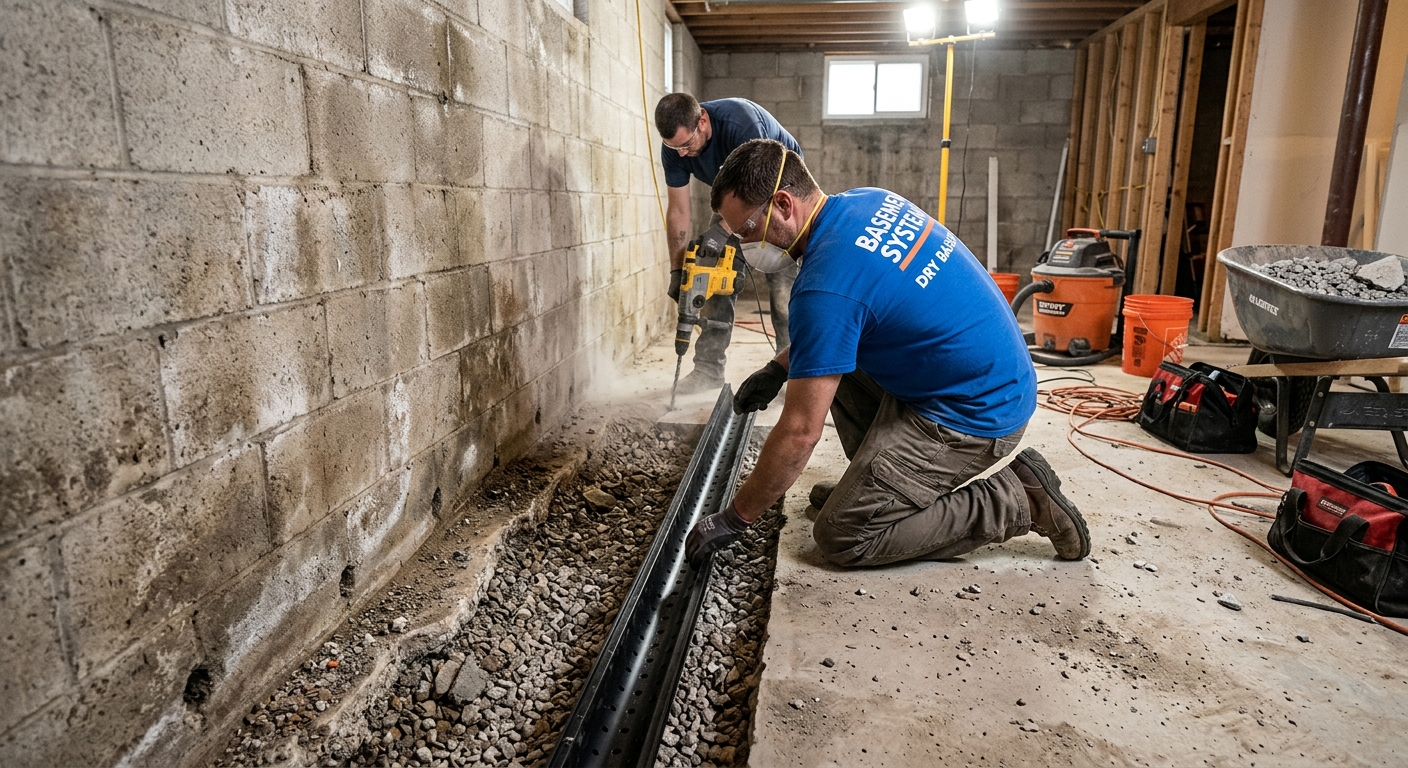
Basement waterproofing options and costs in Etobicoke
Etobicoke homeowners typically run into basement dampness because Toronto’s clay-heavy pockets can hold water against foundations, then expand as freeze–thaw cycles repeat. With a population of about 365,000 in the Toronto economic region (Statistics Canada, 2021 Census), there’s a deep pool of contractors competing on both labour efficiency and material selection—yet not every quote is apples-to-apples. One reason is that many homes in Etobicoke were built before today’s modern drainage standards, when original tar-and-paper systems and early weeping tile were common. As these systems age, collapsed or clogged weepers and failing cold-joint seals become more likely, especially in neighbourhoods with older post-war streets.
Cost also reflects access. In areas with tight lots and finished landscaping—think tree-lined pockets near the Humber corridor—exterior excavation can require removing patios, reworking gardens, or working around deck footings and shared driveways. In contrast, interior solutions can be faster to mobilize, especially when exterior excavation is impractical or when you’re dealing with chronic seepage after a drainage line has partially failed.
Below is a side-by-side comparison of common waterproofing approaches used around Etobicoke, including typical cost ranges so you can map quotes to scope before you sign.
| Method |
What It Addresses |
Disruption Level |
Durability |
Price Range |
| Exterior excavation + new membrane + drainage tile |
Stops water at the source by replacing failed exterior waterproofing and adding drainage to relieve hydrostatic pressure |
High (excavation, landscaping restoration, disposal) |
Long-term when soil/water conditions are correctly designed |
$7,000–$25,000 |
| Interior perimeter drain channel + sump pit |
Captures seepage after it enters and discharges it away from the foundation |
Medium (floor/footing work, minor demolition) |
Very good for chronic seepage, provided sump maintenance is followed |
$3,500–$15,000 |
| Foundation crack injection (epoxy or polyurethane) |
Seals cracks to prevent or reduce active water pathways (product choice depends on crack behaviour) |
Low to medium (drilling/patching, localized repairs) |
Good to long-lasting for correctly identified crack type |
$600–$3,000 |
| Sump pump installation (primary + battery backup) |
Controls groundwater entry by pumping collected water; backup reduces outage risk during wet spring events |
Low to medium (cutting, pit, electrical work) |
Strong performance with proper backup and discharge routing |
$800–$3,500 |
| Window well drain installation |
Keeps water from pooling around basement windows so it doesn’t migrate to walls/floors |
Low to medium (localized exterior/interior adjustments) |
Good for targeted water sources, especially where downspouts/grade issues exist |
$1,200–$4,200 |
| Lot re-grading / downspout extension |
Redirects roof runoff and reduces saturation around the foundation |
Low (earthworks, minor restoration) |
Moderate (depends on sustained grading and surface maintenance) |
$900–$6,500 |
Prices are estimates only and vary by project scope, site access and material selection.
What affects the price of waterproofing in Etobicoke
In Etobicoke and the broader Toronto area, it’s common to see quotes for the same “type” of waterproofing vary by 30–50%. The biggest reason isn’t marketing—it’s that contractors price based on site-specific conditions: how much excavation is truly needed, whether the water problem is active seepage vs. long-term dampness, and what’s required to get the drainage working reliably. A second driver is how labour is deployed. Toronto crews often deal with cramped staging areas, tight turns, and disposal logistics that change the real cost of exterior work.
Three local realities separate regional costs from the national average: soil type, water table, and freeze–thaw. Clay-heavy soils—common in many Toronto-area neighbourhoods—expand when saturated and exert lateral pressure against foundation walls. That pressure can worsen cracks over a few winters, turning hairline defects into active leakage. High water tables in parts of the GTA increase sump run times and expand the scope of interior drainage. Meanwhile, freeze–thaw cycles widen small concrete defects, meaning crack repair might need injection rather than simple surface patching. In addition, older housing stock in Etobicoke often means weeping tile is 60+ years old and may be completely failed, which pushes jobs toward exterior excavation or a more comprehensive interior drainage design.
Concrete examples from typical Etobicoke scenarios: (1) a block foundation with multiple vertical cracks may require interior drainage plus crack injection—often landing around the $3,500–$15,000 range—because the wall itself is porous; (2) a poured-concrete wall with a single localized leak might be addressed with crack injection alone—often within the $600–$3,000 band—if the crack is properly identified and the exterior grade controls the runoff.
| Price Factor |
Why It Matters |
Cost Impact |
| Interior vs. exterior approach — interior is less disruptive but addresses symptoms |
Exterior addresses water at the source; interior manages it after entry |
Exterior can be several times more due to excavation and restoration |
| Foundation type — poured concrete vs. block vs. stone vs. ICF |
Different masonry types move differently and seal at different rates |
Block often needs more interior drainage; poured may respond better to injection when isolated |
| Soil type — clay expands more than sand, adding pressure |
Clay saturation increases hydrostatic and lateral pressure on walls |
Clay-heavy sites can require deeper drainage design and more durable sealing |
| Crack type and length — hairline vs. structural horizontal cracks |
Structural cracks may indicate movement, not just leaking paths |
Structural repair scope can increase costs substantially; isolated cracks are cheaper |
| Sump pump backup system — battery or water-powered backup needed |
Outages during wet spring events can turn minor seepage into damage |
Backup adds cost but reduces risk; often upsells with sump installations |
| Access — landscaping, decks, or driveways must be removed for exterior |
Labour time and restoration materials increase when access is constrained |
Can swing the total by thousands depending on how much must be rebuilt |
| Weeping tile age — original tile (60+ years) may be completely failed |
Failed weepers can mean water is bypassing the foundation drain system |
May require replacement of drainage or expanded interior capture |
| Mould or efflorescence remediation required before sealing |
Sealing over active contamination can lead to repeated failures |
Additional containment, drying time, and chemical remediation add cost |
Permits & regulations in Ontario
In Ontario, foundation excavation, structural crack repair, and changes to lot drainage typically require a building permit. For example, if the work involves major crack repairs on structural elements (especially horizontal cracks in block walls, significant step cracks, or anything suggesting movement), you should expect a permit process and often an assessment from a qualified professional. Sump pump installations that connect to the storm or sanitary sewer usually need municipal approval before discharge—contractors should coordinate this to avoid non-compliant connections.
Not everything needs a permit. Routine interior drainage work limited to installing a perimeter drain channel and sump in a finished basement often still needs permits depending on how electrical work is handled and whether floor/structural elements are altered. However, simple window well drain additions and downspout extensions are commonly treated as drainage improvements that may not trigger the same permitting requirements as structural repairs—your contractor should confirm the exact category of work for your address.
To verify an Ontario contractor in Etobicoke step-by-step: (1) confirm licensing/registration through the provincial contractor registry or licensing channel the contractor claims to hold; (2) request a current certificate of insurance and check that it includes general liability (and that the coverage is valid for the project dates); (3) ask for WSIB/WCB clearance or proof of coverage—look for the clearance letter details and effective dates; and (4) for structural repairs, confirm they can provide engineering support or route you to the appropriate assessment. Always keep copies of these documents with your quote.
Interior vs exterior waterproofing — what does Etobicoke need?
Fundamentally, exterior waterproofing is the “source control” option: it involves full excavation, new membranes, new drainage tile, and carefully designed backfill and grading. Done right, it reduces hydrostatic pressure before water reaches your foundation. The trade-off in Etobicoke is cost and disruption—heavy excavation in clay-heavy, water-sensitive soils and the restoration of driveways, decks, and gardens can push totals toward the top end of the local exterior band.
Interior waterproofing, by contrast, is “after-entry management.” You install a perimeter drain channel and sump pit (and often a primary pump with backup). This approach can be less disruptive because it usually avoids full excavation, but it doesn’t stop the wall from being exposed to moisture. In Toronto’s freeze–thaw climate, interior systems still need to work reliably: if power goes out during wet spring weather and there’s no backup, seepage can become a cleanup job rather than a maintained system.
For Etobicoke’s typical foundation mix, the decision often comes down to foundation type and the likely water source. Poured-concrete walls can seal better with properly selected crack injection when you have an isolated leak path, whereas block foundations frequently remain practical candidates for interior drainage as a complement because moisture can travel through multiple small pathways. If you’re dealing with failing original weeping tile or chronic lateral water pressure from clay saturation, exterior excavation is usually the more definitive solution.
Example: if your exterior access is straightforward and the leak aligns with old weeping tile failure, an exterior excavation project may be justified at $7,000–$25,000. But if you have one localized active crack with minimal wall saturation and good downspout control, a targeted repair may fit in the $600–$3,000 crack injection band—provided the crack type is confirmed and injection is the correct method.
| Method |
Best For |
Addresses Source? |
Disruption |
Lifespan |
Price Band |
| Full exterior excavation + membrane |
Chronic seepage from high lateral pressure, failed drainage tile, or repeated basement flooding |
Yes |
High (excavation and landscaping restoration) |
Long-term when drainage design matches soil and water conditions |
$7,000–$25,000 |
| Interior French drain + sump system |
Clay-saturation seepage, dampness progressing to active leaks, or when exterior access is limited |
No (manages water after entry) |
Medium (floor/footing work) |
Very good with properly sized sump and discharge routing |
$3,500–$15,000 |
| Crack injection — epoxy (structural) |
Cracks that are not actively moving and are suitable for rigid sealing |
Partially (seals a pathway) |
Low to medium (drilling and patching) |
Long-lasting when crack behaviour is stable |
$600–$3,000 |
| Crack injection — polyurethane (active leak) |
Active seepage where the crack may expand and contract under freeze–thaw |
Partially (seals an active pathway) |
Low to medium (localized drilling/patching) |
Good for continuing minor movement when correctly selected |
$600–$3,000 |
| Interior drain channel only (no sump) |
Light dampness or water that can be gravity directed in a controlled layout |
No |
Medium (still typically includes interior channel work) |
Limited if water levels exceed drainage capacity |
$2,000–$9,000 |
| Re-grading + downspout extensions |
Surface runoff issues, pooling near window wells, and drainage failures at the lot line |
Yes (for roof/runoff sources) |
Low (earthworks and minor restoration) |
Moderate (depends on long-term maintenance) |
$900–$6,500 |
How to choose a waterproofing contractor in Etobicoke
Start by confirming Ontario credentials and coverage. Ask for the contractor’s licence/registration information relevant to the work being performed, then verify it using the applicable provincial registry/online lookup. Next, request a current certificate of insurance and confirm it’s active for the project period and includes general liability. For worker protection, obtain WSIB/WCB clearance or proof of coverage—don’t accept “we’re covered” without documentation. Contractors who do structural work should also have access to engineering support when required.
Then get 2–3 itemised written quotes. You want breakdowns for labour and materials (membranes, drainage tile, pumps, backfill, excavation, disposal, and restoration), not a single lump sum. Read exclusions carefully: are permits included, is engineer support included if cracks suggest movement, and is debris disposal/restoration (topsoil, sod, or paving repairs) part of the price? A clear scope matters as much as the total.
Warranty terms should be specific: workmanship warranty length, product/manufacturer warranty details, and whether the warranty is transferable to new homeowners if you sell. For payments, never pay more than 10–15% upfront; hold back a portion until the job is complete and verified. Finally, insist on a written timeline with a proposed start date and completion estimate, plus weather-related contingency planning since excavation and membrane work are schedule-sensitive in Toronto’s shoulder seasons.
- Ask for the water-entry diagnosis method (video camera, dye test, moisture mapping, or crack mapping), not just the repair plan.
- Confirm whether the quote includes permit pulling, inspections, and any municipal discharge approvals for sump routing.
- Require an itemised line for disposal/excavation haul-away (often excluded from cheaper quotes).
- Check the pump specs (capacity and discharge route) and whether a backup system is included when needed.
- Make sure the scope states restoration scope (topsoil, sod, deck/patio repair) and standards.
- Confirm product brands and membrane/drainage system specifications, not “equivalent” descriptions only.
- Ask how they handle efflorescence and mould before sealing (containment, drying time, remediation).
- Look for proof of WSIB/WCB coverage with clearance letter dates.
- Request proof of insurance and verify it covers the full project duration.
- Clarify who restores grade and downspouts after backfill—grading failures are a common recurrence cause.
- Ask whether the warranty is in writing and what constitutes a claim.
- Confirm the timeline includes cure/drying windows for injection and membrane systems.
Red flags in Etobicoke include: (1) vague scopes that don’t define where water is entering; (2) refusing to provide WSIB/WCB or insurance documents; (3) offering to “seal everything with one method” without checking foundation type and crack behaviour; (4) discounting the importance of backup sump power in a wet-spring context; and (5) asking for a large deposit (beyond 10–15%) before any work starts.
Frequently asked questions — waterproofing in Etobicoke
How do I know if a foundation crack is serious?
In Etobicoke, the seriousness of a crack comes down to both pattern and behaviour during wet and freeze–thaw conditions. Hairline vertical cracks can be cosmetic, but horizontal cracks in block walls, step cracks that “stair” across mortar joints, or cracks that widen after spring melt often indicate active water pathways or movement. Look for signs like dampness right at the crack, efflorescence (white mineral deposits), or water staining that repeats after heavy rain. A practical next step is crack mapping and measurement over time; an injection contractor should also check whether you have other symptoms like failing weeping tile or localized pooling near window wells.
How much does foundation crack repair cost in Etobicoke?
For typical isolated crack repair in Etobicoke, homeowners often land in the $600–$3,000 band, depending on crack length, depth, and whether it’s actively leaking. Injection depth and number of injection ports drive labour, and product selection matters: epoxy is generally used for stable, structural-type sealing, while polyurethane is used where water is actively moving through the crack. If the crack is one piece of a larger drainage failure—like clogged original weeping tile—crack injection alone may not solve the root cause, and you may need interior drainage or exterior excavation that moves the project into higher bands such as $3,500–$15,000 for interior perimeter drainage or $7,000–$25,000 for exterior work.
Do I need a sump pump in Etobicoke?
You don’t automatically “need” a sump pump for every damp basement in Ontario, but it becomes a strong recommendation when seepage is chronic or the drainage plan depends on removing water after it enters. In Etobicoke, clay soils and variable water saturation can cause interior drain lines to fill during wet spring periods. If you’re installing an interior perimeter drain channel, a sump is often the practical way to keep the collected water level controlled and protect the basement from repeating wetting. It’s also wise to discuss a backup system—battery or water-powered—because power interruptions during extreme weather can turn a manageable seepage issue into active flooding.
How does Etobicoke's soil affect my foundation?
Etobicoke commonly features mixed glacial till and dense clay pockets that can hold water against foundation walls. When clay becomes saturated, it can exert more lateral pressure and contribute to crack widening during freeze–thaw cycles. That’s why homeowners sometimes see “progressive” leaks: a small crack stays dry for a season, then becomes an active path after wet winters and spring melt. Soil behaviour also affects your drainage strategy. If original weeping tile is old or partially collapsed, water may bypass it and migrate into basement corners, around tie holes, or along floor-to-wall joints. A proper site assessment should include how water is moving—pooling, infiltration, and whether exterior grade and downspouts are feeding the problem.
Do I need a permit for foundation work in Ontario?
In Ontario, permits are commonly required when foundation excavation, structural crack repair, or lot drainage changes are involved. In Etobicoke, if the work includes structural elements—such as major crack repairs in block walls that could indicate movement—expect the process to involve additional review and often engineering support. Sump pump installations that connect to storm or sanitary sewer systems typically need municipal approval. What often doesn’t require the same level of permitting is minor grading, downspout extensions, or localized non-structural improvements—though you should still confirm with the contractor and municipal process for your specific address. Always ask the contractor to specify what permits (if any) are included in your quote.
How long does waterproofing last?
Longevity depends on whether the plan addresses the water at the source or only manages it after entry, and whether the system matches Etobicoke’s clay and freeze–thaw reality. Exterior waterproofing systems that are installed with correct drainage design and durable membranes can last many years, especially when downspouts and grading remain properly maintained. Interior systems—perimeter drains and sump pumps—can also provide long performance when pumps, check valves, and backups are maintained, and when the discharge route stays clear. Targeted crack injection can last a long time if the crack behaviour is stable and the correct product is chosen. If the underlying issue is failing weeping tile or water pooling near window wells, even good workmanship may fail without correcting grade and drainage.