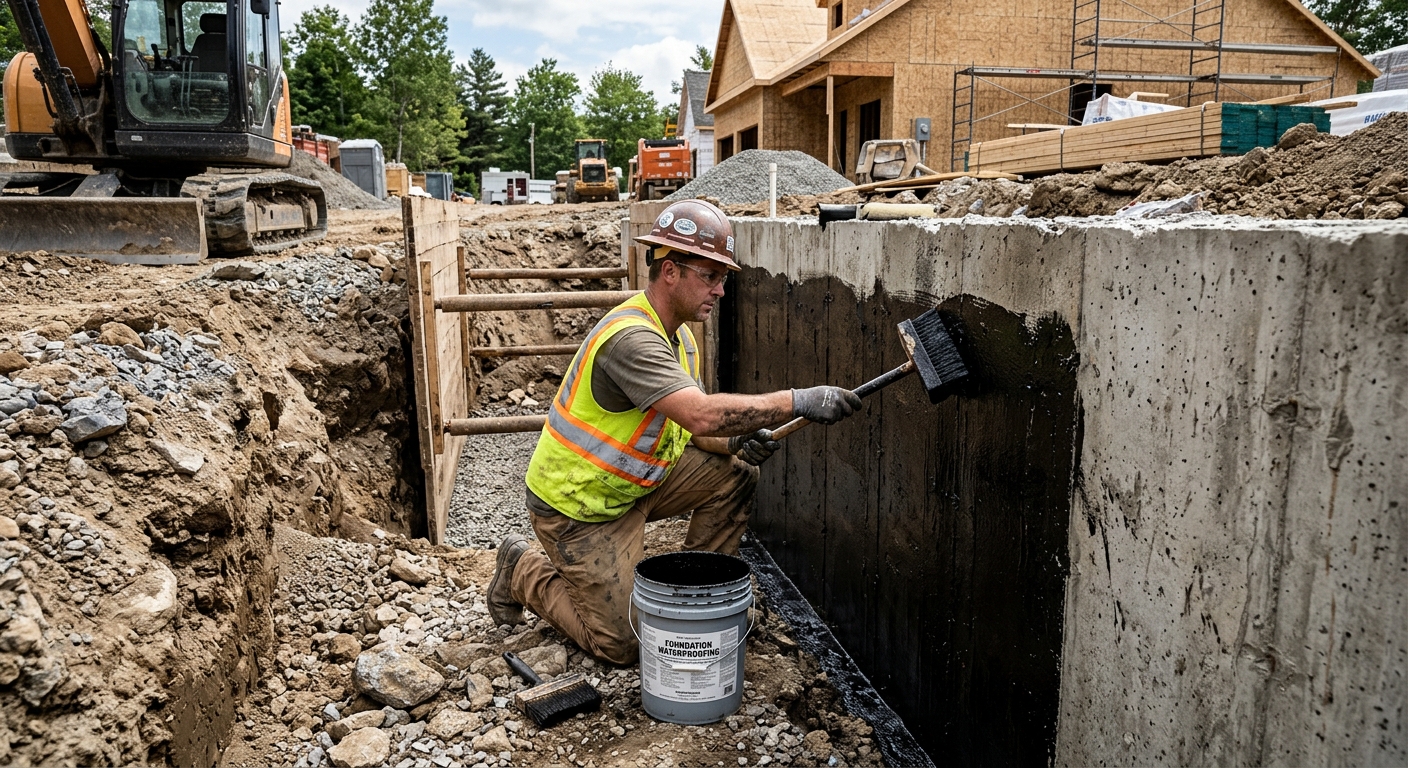
Basement waterproofing options and costs in Regent Park
In Regent Park, basement waterproofing is often the difference between a dry, usable lower level and recurring dampness. With a population of 10,803 in the neighbourhood (Statistics Canada, 2021 Census), the housing mix is busy with older basements and frequent “first-time” owners discovering that their water control system isn’t holding up. Many Regent Park homes date to the post-war and 1960–1980s era, when tar-and-paper style waterproofing and early drainage approaches were common. As those systems age, corroded weeping tile, deteriorated mortar, and widened cold-joint cracks can turn small seepage points into repeated interior moisture problems. That’s why homeowners in Regent Park typically choose between exterior excavation solutions (best for persistent water pressure) and interior systems (best for managing water after it gets through).
Toronto’s mixed glacial till and clay soils hold water and expand during freeze–thaw cycles, increasing lateral pressure on foundation walls and enlarging defects over a few winters. At the same time, contractor availability and access constraints—tight urban lots, landscaping, and deck or driveway work—can raise or lower pricing even for the same “type” of repair. In Regent Park, demand is especially strong near areas with older shared driveways and dense streetscapes where exterior excavation takes longer and disposal/logistics matter.
Below is a practical comparison of common waterproofing methods, what they address, and typical cost ranges so you can use quotes as apples-to-apples when you compare options.
| Method |
What It Addresses |
Disruption Level |
Durability |
Price Range |
| Exterior excavation + new membrane + drainage tile |
Primary source control by removing failed materials and managing hydrostatic water outside the foundation |
High (excavation, backfill, landscaping restoration) |
High (when done with full excavation, proper drainage, and correct backfill) |
$7,000–$25,000 |
| Interior perimeter drain channel + sump pit |
Water that enters through cracks or seepage; captures and pumps it to the exterior |
Medium (basement floor work, minimal yard disturbance) |
Medium to High (depends on wall condition and discharge setup) |
$3,500–$15,000 |
| Foundation crack injection (epoxy or polyurethane) |
Localized leaks by sealing cracks; epoxy for static/structural cracks, polyurethane for active seepage |
Low (small openings, limited interior disruption) |
Medium (excellent for targeted cracks; not a cure-all for high lateral pressure) |
$600–$3,000 |
| Sump pump installation (primary + battery backup) |
Chronic seepage management by pumping collected water; backup reduces risk during outages |
Medium (electrical work, basin/piping, minor floor restoration) |
High (when discharge line and backup are correctly sized) |
$800–$3,500 |
| Window well drain installation |
Bulk water and overflow at window wells; reduces dampness near egress |
Medium (excavation around wells, grading changes) |
Medium to High (good when tied into an effective drainage route) |
$1,200–$5,000 |
| Lot re-grading / downspout extension |
Redirects surface water away from foundation to reduce foundation wetting |
Low to Medium (yard work, downspout changes) |
Low to Medium (best as a first step or complement to membranes/drains) |
$900–$4,500 |
Prices are estimates only and vary by project scope, site access and material selection.
What affects the price of waterproofing in Regent Park
In Regent Park, two homes can receive surprisingly different quotes for the “same” symptom—because the drivers are local. It’s common to see bids vary by about 30–50% across Toronto and the broader Ontario market once you account for excavation difficulty, drainage routing, foundation type, and how much failed drainage infrastructure must be replaced. Exterior work often runs into tight-lot constraints, disposal logistics, and the time it takes to protect landscaping and structures during hand digging.
The three biggest cost separators versus a national average are soil type, water table, and freeze–thaw. Toronto’s clay-heavy pockets can expand during freeze–thaw, pushing laterally on foundation walls and turning small cracks into active leaks. High local groundwater (and slow-draining backfill) increases sump run times and can require higher-capacity pumps, larger discharge piping, and more careful tie-ins. In areas with older drainage—like original clay weeping tile that’s partially collapsed or clogged—contractors may need to uncover and replace significant portions before any membrane or interior system can function as intended.
Here are a few Regent Park examples that move the needle on price: (1) A basement with efflorescence and a failing weeper often requires full interior drainage plus sump work before you can confidently seal, pushing interior budgets toward the $3,500–$15,000 band; (2) a home needing exterior excavation along a shared driveway can push toward the upper end of the exterior $7,000–$25,000 band because of access and reinstatement; and (3) when you have isolated, vertical hairline cracks with clear leak stops, crack injection may keep costs in the lower $600–$3,000 repair range.
These cost differences are also why older housing stock in Regent Park tends to trigger more frequent interventions—failed original drainage and aging block or poured-concrete joints don’t behave consistently, so contractors price for the risk they’ll encounter once they open the walls and floors.
| Price Factor |
Why It Matters |
Cost Impact |
| Interior vs. exterior approach — interior is less disruptive but addresses symptoms |
Interior systems manage water after entry; exterior addresses the source but needs excavation and backfill |
Interior often costs less upfront, but exterior may be higher yet more complete for chronic hydrostatic pressure |
| Foundation type — poured concrete vs. block vs. stone vs. ICF |
Block and older poured concrete often leak through mortar joints or cold joints differently than newer insulated systems |
Block usually increases complexity; stone/older assemblies may require tailored prep and sealing |
| Soil type — clay expands more than sand, adding pressure |
Clay holds water and expands during freeze–thaw, increasing lateral loads and widening defects over time |
Often pushes projects toward membrane + drainage or more robust interior drainage sizing |
| Crack type and length — hairline vs. structural horizontal cracks |
Hairline cracks may be localized; structural/horizontal cracks can indicate movement and require engineering |
Structural cracks can add engineering and possible underpinning, increasing cost substantially |
| Sump pump backup system — battery or water-powered backup needed |
Ontario spring wet periods and localized outages make redundant pumping valuable for long-duration wetting |
Adds cost but reduces the risk of basement flooding during power interruptions |
| Access — landscaping, decks, or driveways must be removed for exterior |
Hand-digging, limited working space, and reinstatement are time drivers |
Exterior can shift significantly higher in dense Regent Park lots |
| Weeping tile age — original tile (60+ years) may be completely failed |
Old drainage often collapses or clogs, reducing flow and increasing water pressure |
May require partial or full drainage replacement, raising interior and exterior costs |
| Mould or efflorescence remediation required before sealing |
Sealers don’t perform reliably on contaminated or actively flaking surfaces |
Can add prep labor and disposal, especially where salts and moisture have been present |
Permits & regulations in Ontario
In Ontario, waterproofing-related work can fall under permitting depending on what you change. In general, foundation excavation, structural crack repair, and changes to how lot drainage is directed often require a permit because they can affect structural conditions, grading/drainage control, or safety. Sump pump installations that connect to a sewer system or require a connection beyond simple discharge routing typically need municipal approval. For structural crack repair—particularly horizontal cracks in block walls or major step cracking—an assessment by a structural engineer is often required to determine whether you’re dealing with movement (and whether underpinning or other structural measures are needed).
For homeowners in Regent Park, the verification process is straightforward if you ask for documents upfront. First, verify the contractor’s licensing information (where applicable) and confirm they can pull or coordinate required permits for the specific scope. Next, ask for a current certificate of insurance (general liability) showing the policy is active for the project dates. Then request proof of WSIB coverage (or applicable coverage documents) for the workers who will be on site. For structural repairs, confirm whether the contractor provides or coordinates engineering support, and ask for the engineer’s recommendation in writing before any crack repair product is selected.
Finally, keep copies of everything: bid, scope, permit correspondence, engineer letters (if needed), and the insurance/coverage paperwork you reviewed. This protects you if conditions differ once excavation begins and also supports your warranty claim.
Interior vs exterior waterproofing — what does Regent Park need?
The fundamental difference between interior and exterior waterproofing is where the solution operates. Exterior waterproofing (full excavation, new membrane, new drainage tile, and properly managed backfill) addresses the source of water entry by reducing or redirecting hydrostatic pressure outside the foundation. It’s more disruptive and expensive, but when done correctly it’s the most permanent “source control” approach. Interior waterproofing (perimeter drain channel, sump pit, sump pump) is designed to capture and manage water after it has entered the basement. It usually costs less and requires less yard work, but it doesn’t eliminate the wall’s exposure to pressure and moisture.
Regent Park’s clay-heavy soils and freeze–thaw cycles often mean water pressure builds behind foundation walls, especially when exterior drainage (or original weeping tile) has failed. If you have poured concrete walls with cracks that are confirmed as non-moving, crack injection is frequently an effective complementary step; epoxy is typically used for static structural cracks, while polyurethane is used for active leaks. For block foundations, water can migrate through mortar joints and voids, so interior drainage plus a sump often becomes the practical complement—even if you also improve exterior surface drainage.
Battery backup is worth considering for sump systems in Ontario because spring wet periods can coincide with localized outages. A basement that fills due to a failed pump is a costly scenario even when the waterproofing components are otherwise sound.
Where does the price difference make sense? If you’re facing recurring seepage and a likely failed drainage route, a move from interior-only solutions in the $3,500–$15,000 range toward exterior excavation in the $7,000–$25,000 range can be justified when the exterior drainage must be replaced anyway or when lateral water pressure is clearly driving the problem. Conversely, if you have isolated active cracks near one corner and the rest of the basement is dry, targeted injection may be more cost-effective than excavation—provided the cracks are truly the primary leak path.
| Method |
Best For |
Addresses Source? |
Disruption |
Lifespan |
Price Band |
| Full exterior excavation + membrane |
Chronic seepage from hydrostatic pressure, failed weeping tile, or high water pressure on clay soils |
Yes (primary source control) |
High (yard excavation and reinstatement) |
Long (often the most durable option) |
$7,000–$25,000 |
| Interior French drain + sump system |
Basements with persistent dampness, older drainage that’s clogged, or homes where yard access is limited |
No (manages water after entry) |
Medium (floor and wall-floor junction work) |
Medium to Long (depends on pump sizing and discharge routing) |
$3,500–$15,000 |
| Crack injection — epoxy (structural) |
Static, structural cracks in poured concrete where movement is not active |
Partially (seals the entry path for that crack) |
Low (small ports and surface restoration) |
Medium to Long (good for non-moving cracks) |
$600–$3,000 |
| Crack injection — polyurethane (active leak) |
Active seepage where water is currently moving through the crack |
Partially (targets active entry points) |
Low (surface access around ports) |
Medium (excellent for specific leaks; pressure can still overwhelm other paths) |
$600–$3,000 |
| Interior drain channel only (no sump) |
Light seepage that can be managed without continuous pumping |
No (still relies on how water is routed) |
Medium (floor work) |
Short to Medium (often limited by inflow rate) |
$2,500–$9,500 |
| Re-grading + downspout extensions |
Surface water management as prevention or a supplement to drainage systems |
Indirect (reduces water near the foundation) |
Low to Medium (yard and eaves work) |
Short to Medium (depends on soil absorption and ongoing maintenance) |
$900–$4,500 |
How to choose a waterproofing contractor in Regent Park
Choosing the right waterproofing contractor in Regent Park starts with verification. In Ontario, confirm they carry valid liability insurance and WSIB/WCB coverage (as applicable) for the trades that will work on your site—don’t rely on “we’re covered” claims. Ask for a current certificate of insurance and check the policy is active, the coverage limits are appropriate, and your address is included as an insured interest where required. For WSIB/WCB, request proof of coverage clearance or documentation that matches the work being performed.
Next, get 2–3 itemised written quotes. Look for a labour-and-material breakdown rather than a single lump sum. A proper quote should spell out: whether exterior excavation includes disposal and backfill materials, whether drainage tile replacement is included (or if it’s only “connect to existing”), and how discharge will be handled. Ask if permits are required and whether the contractor includes permit pulling or coordinates approval work—then list it clearly in the scope.
Warranty matters. Ask for (1) workmanship warranty length and terms, (2) product/manufacturer warranty details, and (3) whether the warranty is transferable if you sell your home. Pay attention to payment schedule too: never pay more than about 10–15% upfront, and hold back a portion until final cleanup and performance checks are complete. Timing should also be in writing: a start date, weather contingencies, and an estimated completion window.
- Ask for their insurance certificate and WSIB/WCB proof before signing.
- Confirm they can explain the cause—not just the symptom—after inspecting seepage points.
- Request a written scope with measurements (linear feet of drains/cracks, number of ports, etc.).
- Verify whether disposal, backfill, and restoration are included in the price.
- Confirm drainage routing (where water goes) and discharge method.
- Ask if they test sump pump operation after install.
- Require an engineering plan when cracks suggest movement.
- Ensure warranty covers workmanship and clarify what voids it.
- Check whether product labels and batch info are provided for traceability.
- Get the permit plan in writing (who pulls it, when, and expected timeline).
- Use an itemised quote format with labour, materials, and allowances separated.
- Avoid “cash discount, no paperwork” offers—insist on contract and documentation.
Red flags to watch for in Regent Park include contractors who: (1) promise “guaranteed dry basements” without assessing soil/water pressure, (2) offer a one-size-fits-all approach (e.g., only crack injection) when weeping tile failure or hydrostatic pressure is likely, (3) skip backup sump discussion despite chronic wet seasons, (4) can’t provide insurance/WSIB/WCB documentation, or (5) provide no written scope for disposal, backfill, or restoration on exterior work.
Frequently asked questions — waterproofing in Regent Park
Can I waterproof my basement from the inside only?
Yes, in many Regent Park basements an inside-only approach can work—especially when exterior excavation is impractical due to decks, driveways, or tight access. Interior systems (like a perimeter drain channel and sump pit) manage water after it enters, which is often sufficient when seepage points are localized or when the foundation is still reasonably sound. Typical interior budgets range from $3,500–$15,000, depending on how much drainage piping is needed and whether a sump pump (plus backup) is included. However, clay soils and freeze–thaw pressure can keep driving water through other weak joints. If you’re dealing with heavy lateral pressure from failed weeping tile, exterior source control may be the more reliable long-term fix.
What causes foundation cracks in Regent Park?
Foundation cracks in Regent Park commonly come from a combination of soil movement and moisture cycling. Mixed glacial till and clay pockets retain water; when that moisture saturates and then freezes, freeze–thaw cycles can widen existing cracks and turn minor defects into active leaks. Age matters too: many homes in the post-war to 1960–1980s era have older drainage infrastructure, so seasonal wetting increases water pressure against poured concrete or block walls. Poor exterior grading or failed downspouts can also raise near-surface moisture levels, increasing expansion pressure. If cracks are horizontal, widening quickly, or show signs of movement, a structural assessment is important before sealing—because injection alone may not address movement.
How do I compare waterproofing quotes?
When comparing Regent Park quotes, treat them like engineering proposals—not just estimates. Ensure each bid clearly describes scope: what’s included for excavation (if exterior), how drainage tile is handled, whether muck/disposal and backfill are included, and exactly how the discharge line will be routed. On interior bids, confirm the plan includes the drain channel layout, sump pit size, pump capacity, and whether backup is included. Ask about remediation prep too: mould or efflorescence usually needs cleaning and surface preparation before any membrane or sealant is applied. Price differences are easier to explain when you see realistic product and labour line items. For reference, interior drainage/sump projects commonly fall in the $3,500–$15,000 range, while full exterior excavation often starts higher, around $7,000–$25,000.
How long does basement waterproofing take in Regent Park?
Timelines vary based on foundation access, how much demolition is needed, and whether the work is interior-only or involves exterior excavation. For interior perimeter drains and sump installs, many projects take several days to about a week, assuming normal access and no unusual obstructions in the basement. Crack injection can be faster—often a short crew schedule over a day or two—because it’s localized work, typically within the $600–$3,000 repair band depending on crack length and number of injection ports. Exterior waterproofing generally takes longer due to excavation, drainage tile replacement, membrane application, and backfill/curing time—often extending into multiple weeks for larger basements, especially where hand-digging and restoration are required. Your contractor should provide a written schedule and weather plan.
What is a weeping tile and does my Regent Park home have one?
A weeping tile is a perimeter drainage system installed around or near the foundation that collects groundwater and routes it away, historically using clay tile or early plastic. Many Regent Park homes from the post-war and later eras likely have some version of it, but it’s common for original tile to be partially collapsed, clogged, or disconnected over time. When it fails, water finds new routes—often through cracks, cold joints, and block mortar—leading to dampness, efflorescence, and sometimes basement flooding during wet seasons. During inspection, contractors typically check visible evidence in the basement, test drainage behavior, and sometimes expose sections to confirm condition. Even if you have old weeping tile, you may still need interior drainage and/or sump backup depending on how well it’s functioning today.
Can I waterproof my basement in winter in Regent Park?
Winter waterproofing is possible in Ontario, but it depends on the method and site conditions. Interior crack injection can sometimes proceed if the basement can be kept at workable temperatures and the surfaces can be prepared properly, yet crews must manage curing and product performance. Exterior excavation is much harder in winter because digging below frost and achieving correct membrane installation/backfill compaction is difficult—especially in clay soils where moisture and freeze conditions change how backfill behaves. In Regent Park, the safest approach is often to handle interior work in colder months when appropriate and reserve exterior source-control excavation for spring to ensure proper backfill and drainage performance. Ask your contractor for a written winter plan that explains limits, curing requirements, and what results you can expect during freeze–thaw periods.