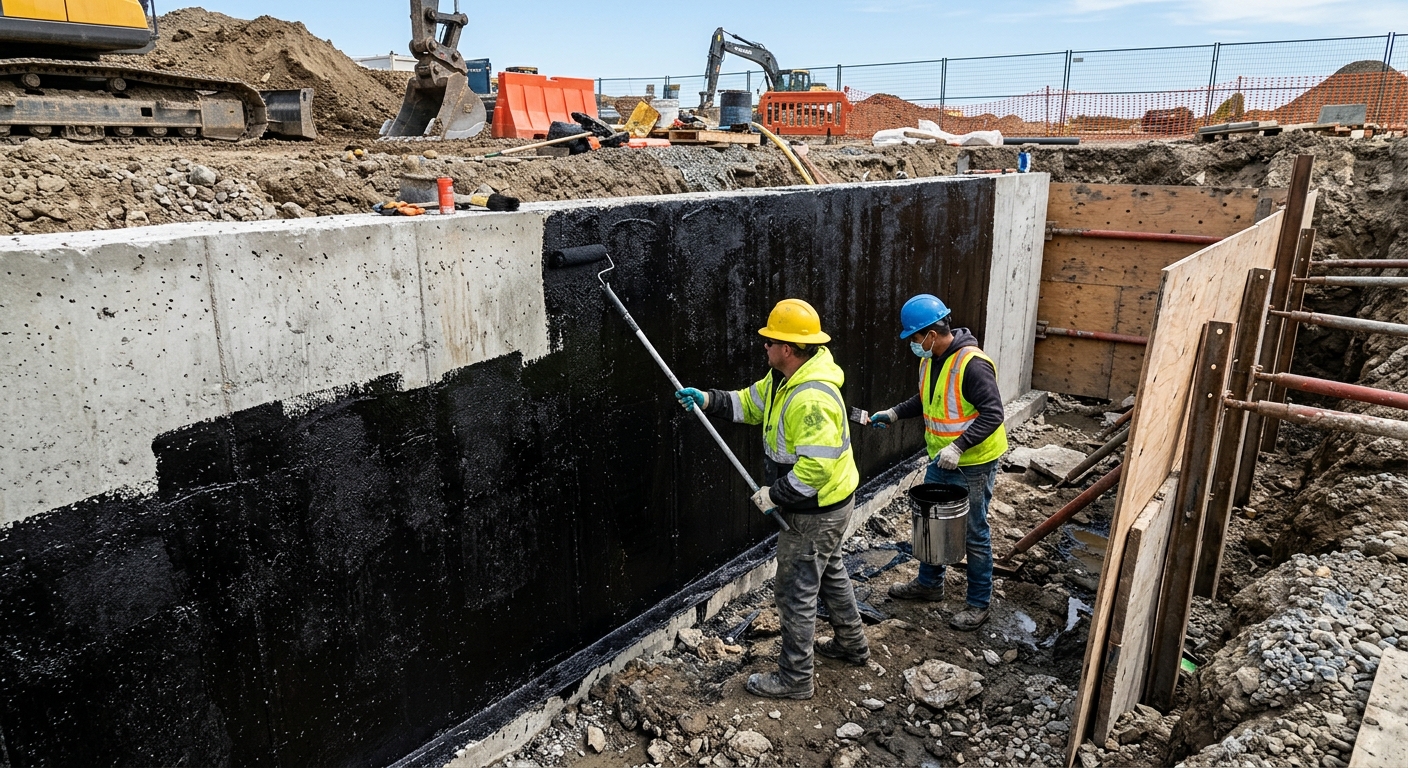
Basement waterproofing options and costs in Centre District
In Centre District, Ontario, basement waterproofing choices usually come down to whether the water is entering through the foundation envelope (best handled from the outside) or is showing up only after it has already migrated inward (often managed with an interior drainage system). While the municipality is small in population terms—Centre District had 1,656 residents in 2021 (Statistics Canada, 2021 Census)—the local housing pattern is typical of Toronto’s older neighbourhood pockets, where many foundations were built long before modern membrane systems. Those homes are far more likely to have failed original weeping tile and aged sealants at cold joints, tie holes, and cracks.
Toronto’s mixed glacial till and clay pockets matter to your budget. Clay holds water and can expand when saturated, increasing lateral pressure and making small defects active during freeze–thaw cycles. That’s why contractors in the Centre District area see higher demand around damp basements and “mystery leaks” in older 1960–1980s homes, especially near heavily built-up streets where access is tight and drainage paths are already constrained.
If you’re near the Don Valley corridor (e.g., along the broader Centre District catchment where lots are often narrower), exterior excavation work is frequently more complex due to driveways, deck steps, and mature landscaping—pushing costs toward the upper end of exterior ranges. The same project can land in very different budgets depending on whether we can excavate for membrane and new drainage tile, or whether we must rely on an interior perimeter drain and sump system. Use the comparison table below to align symptoms with realistic cost ranges before you request bids.
| Method |
What It Addresses |
Disruption Level |
Durability |
Price Range |
| Exterior excavation + new membrane + drainage tile |
Source water entry: hydrostatic pressure at foundation, perimeter seepage, failing weeping tile |
High (excavation, backfill, landscaping/driveway restoration) |
High (system-level waterproofing when installed correctly on clay-heavy sites) |
$10,500–$25,000 |
| Interior perimeter drain channel + sump pit |
Water that has entered: perimeter seepage, damp slab edges, chronic interior wetness |
Medium (floor removal along perimeter, sump pit excavation) |
Medium to high (depends on battery backup and discharge routing) |
$5,000–$14,500 |
| Foundation crack injection (epoxy or polyurethane) |
Targeted leaks: vertical cracks, cold-joint leakage, active seepage paths |
Low (small openings drilled along crack lines) |
Medium to high (best when used as part of a broader drainage plan) |
$600–$3,000 |
| Sump pump installation (primary + battery backup) |
Managing inflow: sump cycling during spring saturation and freeze–thaw events |
Low to medium (pit + discharge line, some floor finishing) |
Medium (improves reliability when backup is included) |
$1,200–$3,500 |
| Window well drain installation |
Water entry near basement windows: saturated window wells and surface overflow |
Medium (excavation around wells, gravel + piping work) |
Medium (good if connected/discharged correctly and not blocked) |
$900–$2,800 |
| Lot re-grading / downspout extension |
Redirecting roof/lot runoff away from foundation to reduce saturation |
Low to medium (soil rework, ties into eaves/downspouts) |
Low to medium (depends on drainage capacity and downspout routing) |
$700–$2,500 |
Prices are estimates only and vary by project scope, site access and material selection.
What affects the price of waterproofing in Centre District
Homeowners in Centre District often find that “the same job” can vary by 30–50% between bids—not because one contractor is taking shortcuts, but because Toronto’s soil and drainage realities are site-specific. Even when the symptoms look identical (efflorescence, musty odours, damp walls), the cause can differ: a partially collapsed weeping tile, water pooling against one side of the foundation, a crack opening during freeze–thaw, or poor downspout routing that keeps backfill saturated.
The three biggest drivers that separate Centre District costs from a national baseline are soil type, water table behaviour, and freeze–thaw. Clay-heavy soils expand during saturation and exert lateral pressure, which can turn hairline cracks into active leaks within a few winters. In neighbourhoods where groundwater sits higher seasonally, sump runtime increases and discharge routing becomes more demanding—meaning more labour and higher equipment reliability requirements (like battery backup). Freeze–thaw cycles also widen minor defects, and that affects how much surface prep and crack-line opening a crew must do before sealing.
Two quick examples that show how local conditions change the price: (1) If your home’s exterior can’t be excavated because of a deck or tight driveway, you may shift from the $10,500–$25,000 exterior excavation range toward a $5,000–$14,500 interior perimeter drain and sump approach—often a better fit for constrained lots. (2) If you’re dealing with a foundation wall that has ongoing active seepage, a targeted crack injection (often $600–$3,000 depending on length) may not be enough by itself unless the drainage problem behind the wall is addressed.
Finally, if mould remediation or heavy efflorescence cleanup is needed before sealing, expect additional labour and drying time. In older Toronto-area homes, that “extra step” is common because moisture paths have been active for years.
| Price Factor |
Why It Matters |
Cost Impact |
| Interior vs. exterior approach — interior is less disruptive but addresses symptoms |
Exterior targets water entry; interior manages water after it enters |
Can swing the quote by roughly 30–50% |
| Foundation type — poured concrete vs. block vs. stone vs. ICF |
Sealing method and failure mode differ by foundation material |
Block often needs complementary interior drainage; poured concrete can respond well to injection |
| Soil type — clay expands more than sand, adding pressure |
Clay saturation increases lateral pressure and crack activity |
Higher excavation and membrane/discharge effort if exterior is feasible |
| Crack type and length — hairline vs. structural horizontal cracks |
Horizontal or structural cracks may indicate movement, not just seepage |
May require engineering review and additional repair scope |
| Sump pump backup system — battery or water-powered backup needed |
Toronto-area spring wet weather plus power interruptions increases risk of backup failure |
Typically adds to the equipment budget, but reduces the chance of basement flooding |
| Access — landscaping, decks, or driveways must be removed for exterior |
Tight urban lots increase labour and restoration scope |
Can move an exterior project toward the upper end of $7,000–$25,000 excavation ranges |
| Weeping tile age — original tile (60+ years) may be completely failed |
Old drainage can be clogged/collapsed, reducing system performance |
Replacement increases excavation and materials time |
| Mould or efflorescence remediation required before sealing |
Sealers and membranes don’t bond well to active contamination |
Adds labour, cleaning, and drying/verification steps |
Permits & regulations in Ontario
In Ontario, waterproofing-related work can fall under the permit umbrella depending on what’s being changed. In most cases, foundation excavation and any structural crack repair that may affect structural integrity (for example, major horizontal cracks in block walls or step cracking that suggests movement) typically requires municipal permitting. If the scope involves changes to lot drainage—like regrading, adding or modifying downspout discharge pathways near the foundation—permits are commonly required as well, particularly when work impacts stormwater management.
Sump pump installations can also trigger approvals. If you’re connecting discharge to a storm or sanitary sewer system, you’ll usually need municipal approval. Even when discharge is not tied into a sewer, contractors should confirm local requirements for where water can legally be routed.
Step-by-step, a homeowner in Centre District can protect themselves:
- Ask the contractor for their Ontario licence/registration details (where applicable) and verify it through the appropriate provincial registry.
- Request a certificate of liability insurance showing coverage for the job address.
- Confirm WSIB/WCB coverage status (clearance letter or equivalent documentation).
- For structural work, ask whether they include an engineer assessment and whether they can coordinate any engineer-required steps.
- Get written confirmation on permit responsibilities: who pulls permits, what drawings/engineering are required, and what inspections will occur.
Finally, don’t pay for structural repairs until you’ve confirmed the permit and engineering assessment path—this is where compliance issues can add time and cost.
Interior vs exterior waterproofing — what does Centre District need?
In Centre District, the fundamental difference is whether you fix the source of water entry or manage the water after it appears. Exterior waterproofing involves full excavation, new membrane application, new drainage tile, and controlled backfill. It targets hydrostatic pressure at the foundation wall, which is why it’s the most complete solution when clay-heavy soils and seasonal saturation are pushing water inward. The trade-off is that exterior work is disruptive—often involving temporary landscape removals and restoration—especially on tight Toronto lots where deck steps, fences, or driveways limit access.
Interior waterproofing—perimeter drain channel, sump pit, and sump pump—addresses symptoms after water enters the basement. It’s typically less invasive, but it does not stop water pressure from acting on the wall itself. In Toronto’s mixed till/clay conditions, that means interior systems are best when cracks are isolated or when the exterior isn’t feasible due to access constraints. Poured-concrete walls often respond well to crack injection as a complement, while block foundations frequently need interior drainage as a practical partner because water can travel through mortar joints and small voids.
Spring flooding risk also matters for equipment. In Ontario, power outages can happen during stormy periods; without backup, a sump system can fail when it’s most needed. Adding a battery backup (or equivalent) improves resilience during heavy rain and freeze–thaw transitions.
Where is the price difference justified? If you’re facing chronic seepage from multiple sides and you can access the exterior, the exterior range ($10,500–$25,000) can be worth it because it tackles the full water-entry path. If the issue is mainly along a single perimeter with manageable crack lengths, you might see better value starting at interior options in the $5,000–$14,500 range, with targeted crack injection where appropriate.
| Method |
Best For |
Addresses Source? |
Disruption |
Lifespan |
Price Band |
| Full exterior excavation + membrane |
Multiple seepage points, clay-heavy saturation, failing weeping tile, chronic dampness |
Yes |
High |
Long (system-level, when properly protected and drained) |
$10,500–$25,000 |
| Interior French drain + sump system |
Limited exterior access, chronic interior water, damp slab edges, older drainage failure |
No (manages inflow) |
Medium |
Medium to high with proper discharge and backup |
$5,000–$14,500 |
| Crack injection — epoxy (structural) |
Non-moving cracks in poured concrete or sound structural areas |
Partially (seals the entry path) |
Low |
Medium to high when cracks are stable |
$600–$3,000 |
| Crack injection — polyurethane (active leak) |
Active seepage through cracks, water under pressure, cold-joint leakage |
Partially (seals the entry path) |
Low |
Medium to high with correct prep and drainage |
$800–$3,000 |
| Interior drain channel only (no sump) |
Light seepage, intermittent dampness, situations where pump routing isn’t required |
No (relies on gravity/outlet) |
Medium |
Shorter to medium (depends on local discharge and inflow) |
$3,500–$9,500 |
| Re-grading + downspout extensions |
Surface water/roof runoff contributing to perimeter saturation |
Yes (reduces incoming water) |
Low to medium |
Low to medium (must be maintained and tied into drainage) |
$700–$2,500 |
How to choose a waterproofing contractor in Centre District
Choosing a contractor in Centre District comes down to proof, not promises. Start by verifying their Ontario licensing/registration details (where required for the work they propose), and then check liability insurance and WSIB/WCB coverage. You want to see a certificate of insurance that includes the job address, and a current clearance letter or equivalent confirmation for WSIB/WCB. If they can’t provide these documents quickly, that’s your first warning sign.
Next, get 2–3 itemised written quotes. You’re looking for a labour + materials breakdown, not a single lump sum. Ask specifically what’s included: permit pulling, excavation limits, disposal, restoration, and whether drainage tile and discharge routing are included. A good scope will call out the method (membrane type, drainage tile material, crack injection product type) and how they’ll verify results (visual checks, moisture conditions, and expected performance during spring saturation).
Warranty matters too. Confirm workmanship warranty length and whether it covers both materials and labour defects. Also ask for the manufacturer warranty details and whether it’s transferable to future owners. For payment schedules, never pay more than 10–15% upfront—hold back until key milestones are complete.
Finally, get a written start date and completion estimate. Waterproofing in Toronto is weather-sensitive; crews may need scheduling windows to protect membranes and allow curing and drying properly.
- Ask for WSIB/WCB clearance documentation and verify the coverage is active.
- Request a current certificate of liability insurance showing the Centre District address.
- Confirm who pulls permits and whether inspections are included in the quote.
- Get an itemised labour/materials list (membrane, tile, pumps, injection materials).
- Clarify disposal and restoration scope (soil haul-off, concrete/asphalt patching, sod/topsoil).
- Confirm how discharge will be routed (distance, elevation, and legal outlet path).
- For sump work, verify primary pump model and whether battery backup is included.
- Ask how they handle mould/efflorescence: cleaning, drying time, and sequencing before sealing.
- Request product data sheets for membranes/drainage and injection materials used.
- Ask about crack prep method and whether they’ll test crack stability when needed.
- Set a payment schedule with milestone-based progress; avoid large upfront deposits.
- Get start and completion dates in writing, including weather contingency language.
Red flags in Centre District include: quotes that only offer “seal it from the inside” without evaluating external water entry; missing or vague warranty terms (especially workmanship duration and what fails are covered); lack of proof of insurance or WSIB/WCB; refusing to provide a detailed scope (disposal, discharge routing, and permit responsibility not specified); and dismissing engineering needs for potential structural cracking while claiming a one-size-fits-all injection solution.
Frequently asked questions — waterproofing in Centre District
How long does basement waterproofing take in Centre District?
In Centre District, Ontario, timelines depend on access, foundation type, and whether you’re doing exterior excavation or interior drainage. Interior perimeter drains plus a sump system typically take several days to a couple of weeks including floor demo, drainage installation, pump setup, and finishing. Exterior work is longer because crews must excavate, install membrane and drainage tile, backfill carefully, and then coordinate restoration—often stretching into 2–4 weeks depending on deck/driveway complexity and cure/drying windows.
Toronto’s freeze–thaw cycles also influence scheduling. Contractors usually avoid sealing and membrane work right before deep freezes because bonding and curing can be compromised. If the quote includes injection only, that can often be completed faster—commonly within a few days—especially when the crack lengths are limited (for example, crack repairs often fall within the $600–$3,000 band depending on scope).
What is a weeping tile and does my Centre District home have one?
A weeping tile is the drainage line around (or near) the basement perimeter designed to collect groundwater and route it to daylight or a discharge point. In older Toronto-area homes, it was sometimes clay tile or early plastic, and over decades it can fail from collapse, root intrusion, sediment buildup, or clogged discharge pathways. Even if the tile exists, it may not function well anymore—so you can still get damp walls, efflorescence, or basement flooding without obvious exterior wall failure.
Whether your home has one depends on when and how it was built and renovated. If you have a sump, you may see evidence of historic drainage tied into it; if you have an older weeper, you might find intermittent drainage smell or damp perimeter patterns. A careful inspection—often including camera inspection of accessible lines—helps determine what you’re working with before spending on membranes or interior-only fixes.
Can I waterproof my basement in winter in Centre District?
Yes, you can sometimes waterproof a basement in winter in Centre District, but it depends on the method. Interior work—like crack injection and interior perimeter drainage/sump system installations—can be performed when indoor temperatures are manageable, because the work happens inside and doesn’t require extensive exterior excavation. Targeted crack injection is often the easiest “winter-suitable” option, especially if moisture is actively entering through a crack and you need to stop it quickly (many crack repairs land in the $600–$3,000 range).
Exterior excavation and membrane work are more limited during cold snaps. Installing membranes and then backfilling requires conditions that protect material performance during curing. Freeze–thaw can also worsen any small defects you haven’t repaired yet. A good contractor will propose a sequence: address the fastest interior entry paths in winter, then schedule exterior drainage upgrades when conditions improve.
What is the difference between waterproofing and damp-proofing?
In Ontario, “damp-proofing” generally refers to measures that reduce moisture transfer through foundations—like basic sealants or light coatings—without necessarily stopping hydrostatic pressure. “Waterproofing” is broader and aims to manage or prevent water intrusion under pressure by combining multiple elements such as drainage tile, membranes, proper backfill drainage, sealing systems, and often a sump pump for inflow management.
In Centre District, the practical difference shows up during spring saturation and freeze–thaw. Homes with clay-heavy soils can build lateral pressure against basement walls; damp-proofing alone may slow symptoms but still allows seepage to continue. If you’re seeing active cracking with moisture, efflorescence, or recurring wet corners, contractors usually recommend a system approach. Interior perimeter drainage with a sump is often positioned as waterproofing for chronic seepage, while exterior membrane + drainage tile targets the source of entry.
Will basement waterproofing affect my property value in Centre District?
Often, yes—but the impact depends on what you install and whether the cause is actually addressed. For Centre District homes, buyers and appraisers typically respond positively when waterproofing is documented with a clear scope: identified entry points, drainage upgrades, and reliable pump/discharge systems where needed. A transferrable workmanship warranty and manufacturer warranties also help because they provide future buyers with reduced uncertainty.
If you only do a cosmetic “fix” (for example, painting over efflorescence or sealing without improving drainage), the underlying issue can return over a few freeze–thaw seasons. Investors know this. On the other hand, a well-documented interior system (often in the $5,000–$14,500 range for perimeter drainage and sump approaches) or a full exterior excavation and membrane solution (commonly $10,500–$25,000 when feasible) can demonstrate that the home has been protected against the water-pressure patterns Toronto sites experience.
What drainage issues are most common in Centre District homes?
Common issues in Centre District and across the Toronto region usually fall into three buckets: failing or clogged weeping tile/drains, poor surface runoff management, and foundation cracks that become active in freeze–thaw. Clay-heavy pockets of soil can hold water against foundation walls, increasing lateral pressure and worsening seepage through cold joints, tie holes, and crack lines. That’s why you often see wet floors near corners or along one perimeter, plus efflorescence that signals recurring moisture.
Another frequent pattern is “works until it rains hard.” Older drainage systems may partially function but can collapse or clog over time, so basement flooding shows up during spring saturation. Finally, tight urban access can lead to downspout discharges that dump closer to the foundation than intended, increasing the chance of perimeter wetness. A site-specific inspection is the best way to determine which of these is driving your problem before choosing between exterior ($10,500–$25,000) and interior ($5,000–$14,500) approaches.