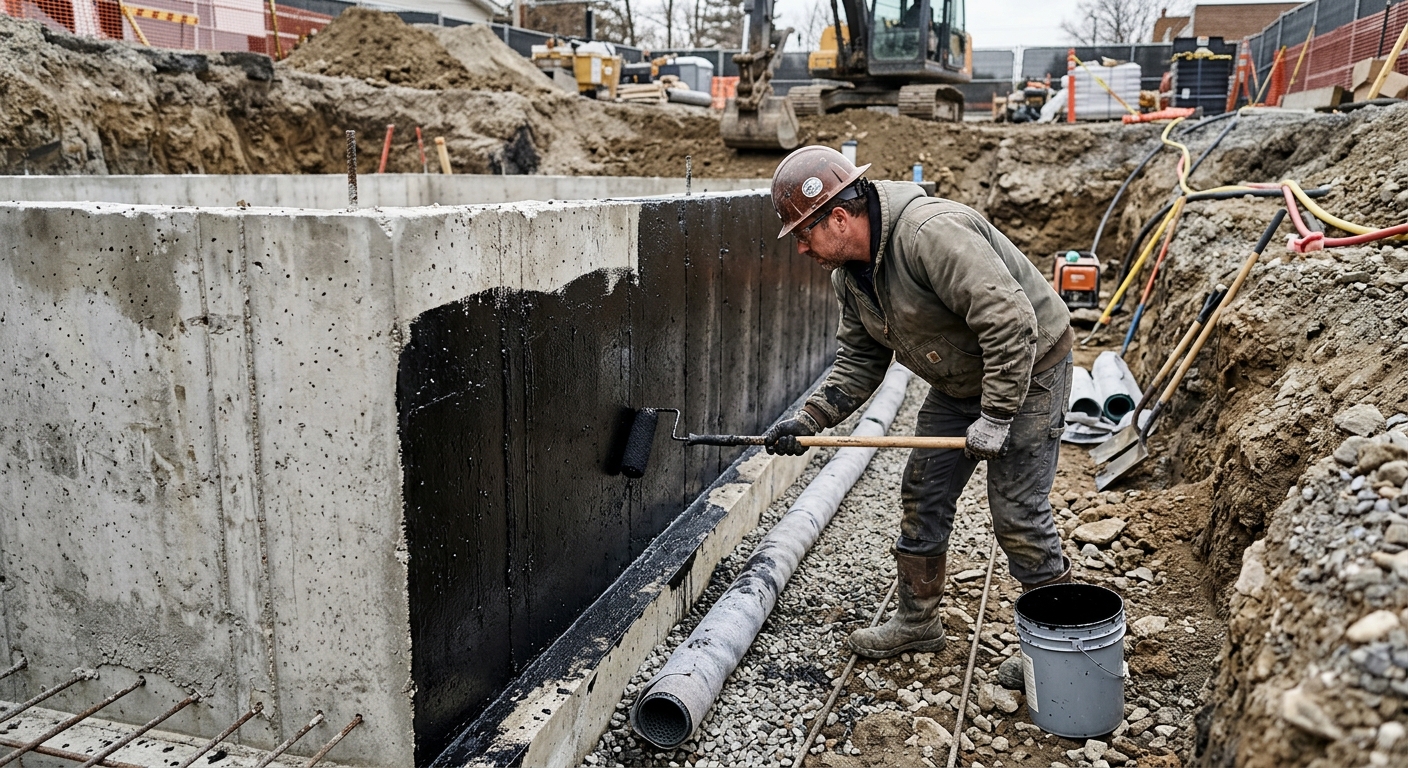
Basement waterproofing options and costs in Greenway-Chaplin
Basement waterproofing in Greenway-Chaplin usually starts with one question: is the water coming from the outside soil pressure, through failing drainage, or from a localized crack that’s opening and closing with Ontario winters? Greenway-Chaplin has a housing mix shaped by older builds—Toronto’s long run of post-war and 1960–1980s homes means many properties still rely on original clay weeping tile or early plastic drains that are now clogged, partially collapsed, or disconnected. With a local population of 14,146 (Statistics Canada, 2021 Census), there’s steady contractor demand in the Greater Toronto Area, especially in neighbourhoods where basements are finished and every spring seep becomes a nuisance.
Costs in Toronto reflect both climate and urban access. Freeze–thaw cycles widen hairline defects, so a “small” crack today can become active seepage in a few winters. At the same time, glacial till and clay pockets hold water against foundation walls, increasing lateral pressure and making exterior excavation more labour-intensive—especially where yards, decks, or tight side passages limit machine access. Contractors in Greenway-Chaplin often see the highest call volume for exterior drainage and membrane work on lower-lying lots near main collector roads and older residential pockets where weeping tiles are most likely to have failed.
Below are the most common waterproofing routes and realistic cost bands for homeowners deciding how to address source water entry versus managing water after it enters. Use this as a starting point before you compare itemized scopes from local contractors.
| Method |
What It Addresses |
Disruption Level |
Durability |
Price Range |
| Exterior excavation + new membrane + drainage tile |
Hydrostatic pressure and water entry through perimeter walls and footing line; replaces failed weeping tile |
High (excavation, site restoration, landscaping/side-yard impacts) |
Long-term when installed correctly; typically the most comprehensive |
$7,000–$25,000 |
| Interior perimeter drain channel + sump pit |
Captures seepage once it enters; reduces water build-up at the wall |
Medium (basement floor and wall/foundation edge work) |
Very effective for chronic seepage; depends on crack condition and drain performance |
$3,500–$15,000 |
| Foundation crack injection (epoxy or polyurethane) |
Localized cracks; stops leakage paths (epoxy for structural/static cracks, polyurethane for active leaks) |
Low to Medium (core drilling/grouting at targeted crack line) |
Good for the right crack type; not a full replacement for failing exterior drainage |
$600–$3,000 |
| Sump pump installation (primary + battery backup) |
Moves collected water away; reduces basement flooding risk during heavy rain or spring water events |
Low to Medium (basement basin and discharge routing) |
High when paired with a properly sized sump + backup |
$800–$3,500 |
| Window well drain installation |
Water entry at basement windows; improves drainage around window wells |
Medium (window well excavation and grating/drain routing) |
Good for targeted moisture sources; longevity depends on overflow routing and slope |
$1,200–$4,800 |
| Lot re-grading / downspout extension |
Surface water management; reduces water pooling near the foundation |
Low to Medium (minor excavation and drainage adjustments) |
Moderate; best as part of a broader drainage plan |
$900–$6,500 |
Prices are estimates only and vary by project scope, site access and material selection.
What affects the price of waterproofing in Greenway-Chaplin
In Greenway-Chaplin, two quotes for what looks like the “same” basement issue can differ by 30–50% because the scope is rarely identical—one contractor may be pricing symptom control (interior drainage), while another is addressing the source (exterior membrane and replacement drainage). In Toronto’s mixed glacial till and clay conditions, soil behaviour and water movement are the difference-makers, not just the labour hours.
The three strongest drivers separating Ontario pricing from a national average are soil type, water table conditions, and freeze–thaw. Clay-heavy pockets expand when saturated and exert lateral pressure against foundation walls, worsening cracks over time. When local water conditions are high, sump pumps run more often and discharge routing becomes more critical, which can push interior systems toward the upper end of the $3,500–$15,000 band. In many older Toronto-area basements, you’ll also see freeze–thaw widen defects in poured concrete and block foundations, turning hairline seep paths into active leaks—so “crack-only” repairs can be less expensive at $600–$3,000 if the leak is isolated, but more costly if water pressure keeps finding new routes.
Concrete examples we see around the city: (1) a home with failing weeping tile behind a 1970s addition often requires both excavation and partial rework of downspout routing, increasing costs beyond typical interior-only work; (2) a basement with efflorescence and damp corners but no exterior access may be best served by an interior perimeter drain plus a properly sized sump, still usually meaning a mid-to-upper interior budget; (3) sites with tight side passages or shared driveways can add labour and disposal charges to exterior excavation.
| Price Factor |
Why It Matters |
Cost Impact |
| Interior vs. exterior approach — interior is less disruptive but addresses symptoms |
Exterior work targets the source of water entry; interior captures and pumps water after entry |
Interior often costs less upfront; exterior can be materially higher but more comprehensive |
| Foundation type — poured concrete vs. block vs. stone vs. ICF |
Repair and sealing methods differ; block may require stronger drainage management and crack strategy |
Material compatibility and labour can move the job up or down within each price band |
| Soil type — clay expands more than sand, adding pressure |
Expanding saturated clay increases hydrostatic and lateral pressure at the wall |
More extensive drainage detailing and membrane performance expectations increase cost |
| Crack type and length — hairline vs. structural horizontal cracks |
Active leak cracks often need flexible injection; structural cracks may require engineering |
Structural assessment and more complex repairs can push pricing higher |
| Sump pump backup system — battery or water-powered backup needed |
Ontario spring and storm events can coincide with power interruptions; backup reduces flood risk |
Adds equipment and commissioning cost; often worth it for finishing and valuables |
| Access — landscaping, decks, or driveways must be removed for exterior |
Excavation is slower and more expensive when machines can’t reach |
Can add days of labour and restore costs, shifting exterior projects significantly |
| Weeping tile age — original tile (60+ years) may be completely failed |
Collapsed or clogged drains may force replacement rather than “tie-in” solutions |
Replacement tiling increases excavation scope and disposal volume |
| Mould or efflorescence remediation required before sealing |
Sealers and membranes don’t perform reliably over contaminated or actively degrading surfaces |
Surface remediation adds labour and materials before waterproofing can proceed |
Permits & regulations in Ontario
In Ontario, foundation excavation, structural crack repair, and changes to lot drainage typically require a building permit, particularly when work affects structural elements or drainage patterns near property lines. Sump pump installations that discharge to the storm or sanitary sewer commonly need municipal approval, and you should ask your contractor to confirm the correct approval path before scheduling. For structural crack repair—such as horizontal cracks in block walls, significant step cracking, or signs of movement—a structural engineer’s assessment is often required to determine whether underpinning or other structural reinforcement is needed.
What typically does not require a permit is limited, non-structural interior work like installing a perimeter drain channel or sump pit when there’s no change to the structure or lot drainage routing beyond approved discharge methods. Crack injection can sometimes fall into the “repair/rehabilitation” category, but if the crack suggests movement, expect engineering involvement. Because rules can vary by scope and how discharge is handled, the best approach is to have the contractor clearly list what triggers permits in your situation.
To verify a contractor in Greenway-Chaplin, start with Ontario licensing/registration through the appropriate provincial registry for their trade category (check their business identity and whether they list an Ontario address). Next, request a certificate of insurance (liability) showing current coverage and ensure it matches the company name on the quote. For worker protection, ask for WSIB/WCB clearance—then verify it’s current. For structural repairs, confirm they carry engineering support or documented access to a structural engineer.
Interior vs exterior waterproofing — what does Greenway-Chaplin need?
The fundamental difference is straightforward: exterior waterproofing addresses the source by excavating around the foundation, installing new membrane, replacing drainage tile/weeping tile, and then re-backfilling and restoring grade. Interior waterproofing manages the water after it has entered by capturing seepage at the foundation line with a perimeter drain channel, sump pit, and sump pump (often with backup). In Toronto’s freeze–thaw climate, interior systems are excellent for chronic seepage and basement wetness, but they don’t eliminate the hydrostatic pressure pressing against the wall itself.
Given Greenway-Chaplin’s mixed glacial till and clay pockets that hold water and expand when saturated, exterior waterproofing tends to be the “best long-term” fix when you have access for excavation and when the original drainage is failing. Poured concrete walls often respond well to targeted crack injection as part of an interior strategy, while block foundations commonly benefit from interior drainage as a practical complement, especially when exterior access is limited. If you see efflorescence and damp seams, that’s frequently a sign the wall is exposed to moisture and that crack injection alone may not be enough.
For sump systems, backup matters. During Ontario spring storms and occasional power interruptions, a battery backup or water-powered backup can prevent the basement from re-flooding while the primary pump is down. In terms of dollars, it can be easier to justify the gap when you’re replacing failed drainage at the footing line. For example, a full exterior excavation and membrane job often sits in the $7,000–$25,000 band; if your home has widespread dampness and long-standing weeping tile failure, that larger spend is usually more defensible than repeatedly treating symptoms with interior measures.
| Method |
Best For |
Addresses Source? |
Disruption |
Lifespan |
Price Band |
| Full exterior excavation + membrane |
Homes with failing exterior drainage, high water pressure, and active seepage along multiple wall sections |
Yes |
High |
Longest when done with correct membrane + drainage tile + backfill detailing |
$7,000–$25,000 |
| Interior French drain + sump system |
Chronic seepage, clogged/failed weeper tile where excavation access is limited, or basement already finished |
No (manages water after entry) |
Medium |
Very good if sump sizing and discharge are correct |
$3,500–$15,000 |
| Crack injection — epoxy (structural) |
Non-moving, dry or static cracks in poured concrete where pressure is limited at that location |
Partial (stops specific crack path) |
Low to Medium |
Good for the right crack conditions |
$600–$3,000 |
| Crack injection — polyurethane (active leak) |
Cracks actively weeping or allowing water movement where flexibility is needed |
Partial (stops specific leak path) |
Low to Medium |
Good where the leak is localized and compatible with crack dynamics |
$900–$3,500 |
| Interior drain channel only (no sump) |
Light seepage that can be gravity managed and where pumpless collection is practical |
No |
Medium to Low |
Moderate; can underperform during heavy spring events |
$2,200–$6,500 |
| Re-grading + downspout extensions |
Surface water pooling near foundation, wetness limited to corners after storms |
Helps reduce external supply; does not fix failing footing drainage |
Low to Medium |
Moderate; best as a supplement |
$900–$6,500 |
How to choose a waterproofing contractor in Greenway-Chaplin
Choosing the right contractor in Greenway-Chaplin is mostly about proof: licensing/registration (as applicable to their trade work), liability insurance, and WSIB/WCB coverage. Start by requesting their Ontario trade information and then confirming it matches the legal business name on your contract. Next, ask for a current certificate of insurance and make sure the coverage is active for the project start date. For worker protection, obtain WSIB/WCB clearance documentation (or the equivalent paperwork they’re required to carry) and check that it’s not expired. If a contractor can’t provide these documents promptly, treat it as a warning sign.
Get 2–3 itemized written quotes rather than one lump-sum. The best quotes break labour and materials out clearly: excavation (if applicable), disposal, membrane system, drainage tile type, sump basin/pump model, discharge route, and restoration. Read the scope carefully for exclusions like: “existing drainage to remain,” “only patching cracks,” or “site restoration not included.” Confirm whether they handle permit pulling (where required), and whether demolition/disposal are included. Also compare warranty terms: workmanship warranty length (often separate from manufacturer product warranties), whether the manufacturer warranty is tied to registration, and whether it’s transferable if you sell the home.
Payment schedule matters. Never pay more than 10–15% upfront; use a holdback until key milestones are complete (inspection of drainage tie-in, membrane continuity, and final restoration). Finally, request a written start date and completion estimate, plus a plan for weather delays, since waterproofing work is sensitive to soil moisture and curing conditions.
- Ask for the exact waterproofing system name and membrane/drainage products proposed.
- Confirm they will map and photograph cracks, seep locations, and efflorescence areas before work begins.
- Request an itemized breakdown of excavation hours, disposal fees, and restoration scope.
- Clarify what is included for window wells, downspouts, and grading (if wetness recurs).
- Confirm whether they use epoxy (static cracks) vs polyurethane (active leaks) based on现场 conditions.
- Check discharge routing for your sump so it matches approved Ontario municipal requirements.
- Verify sump pump model, discharge line size, and basin dimensions for your basement.
- Ask if backup power is included and what type (battery vs water-powered backup).
- Get the warranty in writing, including workmanship term and product warranty registration details.
- Ensure permits (when triggered by scope) are handled and listed in the contract.
- Confirm protection of landscaping and neighbouring areas during excavation.
- Use a clear payment schedule tied to inspections and completion milestones.
Red flags specific to waterproofing in Greenway-Chaplin: contractors who promise “one-size-fits-all” solutions without addressing weeping tile age or soil pressure; quotes that skip disposal/restoration line items for exterior excavation; no mention of engineering support when cracks suggest movement; failure to provide certificate of insurance and current WSIB/WCB clearance; and warranties that only cover products (not workmanship) or have vague exclusions about freeze–thaw or crack movement.
Frequently asked questions — waterproofing in Greenway-Chaplin
What drainage issues are most common in Greenway-Chaplin homes?
In Greenway-Chaplin and the broader Toronto area, the most common pattern is basement dampness or seepage caused by failing perimeter drainage—especially older weeping tile systems that are partially collapsed or clogged. Because Toronto sits on mixed glacial till and dense clay pockets, saturated soils can hold water tight against foundation walls, increasing lateral pressure and making cracks “active” during freeze–thaw cycles. Homeowners also frequently report damp corners near downspouts, interior wall-floor junction moisture, and efflorescence on concrete or block. In some homes, window wells become the weak spot after heavy spring rain, especially when grade around the well is not directing water away.
How do I choose a waterproofing contractor in Greenway-Chaplin?
Start by verifying Ontario documentation: request proof of liability insurance and current WSIB/WCB clearance, and confirm the contractor’s business details match what’s on the quote. Then compare at least 2–3 itemized proposals so you can see labour, materials, disposal, and restoration—not just a single “lump sum.” A good scope will say exactly what they’re fixing (failed drainage tile, crack type, sump sizing) and what they’re excluding (site restoration, permit pulling, discharge routing). Ask about the warranty: workmanship duration and product warranty terms, including whether manufacturer coverage depends on registration. In winter climates like Ontario, insist the plan accounts for freeze–thaw and cures only under suitable conditions.
What is a battery backup sump pump and do I need one in Greenway-Chaplin?
A battery backup sump pump is a secondary power system that keeps your sump operating during power outages. In Greenway-Chaplin, you may not get frequent outages, but spring flooding and heavy storms can increase the odds. A backup system can be a smart insurance policy if you have a finished basement, stored belongings, or a history of water entering during storms. If your interior waterproofing plan includes a sump pit, contractors often price primary-only versus primary plus backup differently, and backup tends to move the budget toward the upper part of the sump range—commonly within $800–$3,500 depending on the battery option and install complexity. If you’re unsure, ask how the contractor will test pump performance and backup transfer time.
How much does basement waterproofing cost in Greenway-Chaplin?
Costs vary based on whether you’re treating a localized leak (crack injection), managing chronic seepage (interior drain/sump), or correcting failed drainage at the source (exterior excavation and membrane). For localized foundation crack work, homeowners often see pricing in the $600–$3,000 band when the scope is limited to a crack line and related surface prep. For interior perimeter drainage and sump solutions, typical budgets fall in the $3,500–$15,000 range depending on basement size, number of problem zones, and whether you add backup power. For exterior excavation and drainage tile replacement plus membrane, many projects land in the $7,000–$25,000 range, especially where access is tight and landscaping restoration is required. The most accurate quote comes after inspection of crack activity, efflorescence, and the condition/age of existing drainage.
Interior vs exterior waterproofing — which is better?
Exterior waterproofing is usually “best” when you can access the foundation and when the water source is coming from outside—think failing weeping tile, high lateral pressure from clay soils, or widespread wall seepage. It permanently addresses water entry by replacing drainage and installing a continuous membrane system. Interior waterproofing is often the better fit when excavation access is limited (finished landscaping, tight side yard, decks/additions) or when you need a practical, less disruptive solution to control water after it enters. In many Toronto-area homes, exterior work can be the higher cost—often within $7,000–$25,000—but it can prevent recurring moisture events. Interior systems commonly fall within $3,500–$15,000. If cracks are localized and not structurally active, targeted injection within $600–$3,000 can be a cost-effective supplement.
Why is my basement leaking in Greenway-Chaplin?
Basement leaks in Greenway-Chaplin are usually the result of water pressure and drainage failure, not a single “mystery” crack. Dense clay pockets in the region can saturate, expanding during freeze–thaw and pushing water against foundation walls. If your original clay weeping tile is clogged or partially collapsed, water may bypass the footing drainage and find the path of least resistance through cold joints, tie holes, or small cracks. Efflorescence and damp seams often point to recurring moisture exposure rather than a one-time event. Another common contributor is surface water pooling because downspouts or grading aren’t directing rain away—then the problem worsens during heavy spring events. A proper inspection should confirm whether the leak is active (needs flexible injection) or static, and whether the exterior drainage system is still functioning.