Basement waterproofing options and costs in Woodstock
Basement waterproofing in Woodstock is a smart move for homeowners because the town sits in the London economic region where many neighbourhoods have clay-rich, poorly draining ground. That matters: 50.4% of homes in the area were built before 1981, and older foundation systems often rely on original tar-and-paper waterproofing and weeping tile that may be partially clogged or have failed over decades. Add Ontario’s freeze-thaw swings, and small cracks can widen as moisture in the wall freezes and expands, letting seepage turn into persistent dampness.
In Woodstock, pricing is also influenced by access and excavation constraints. Lots near mature landscaping, driveways, or lower backyard elevations (common around East/West heritage-residential pockets) can require careful excavation and more labour for backfill, grading, and drainage tie-ins. After heavy rains or rapid snowmelt, hydrostatic pressure can overwhelm older drainage systems—so many jobs end up combining foundation crack repair with drainage upgrades and, in higher-risk situations, sump pump protection.
Because of these realities, the “best” approach depends on whether water is entering through exterior soil contact, through crack pathways, or through interior floor-wall joints. Below are the common options and typical cost bands homeowners in Woodstock use when comparing quotes.
| Method |
What It Addresses |
Disruption Level |
Durability |
Price Range |
| Exterior excavation + new membrane + drainage tile |
Stops water at the source by upgrading the waterproofing boundary and directing groundwater to a proper drain |
High (excavation, landscaping/driveway disturbance, re-grading) |
Long-term when installed with correct slope, membrane detailing and drainage outlet |
$12,000 – $25,000 |
| Interior perimeter drain channel + sump pit |
Intercepts seepage after it enters; reduces hydrostatic pressure at the interior face |
Medium (interior floorwork and limited demolition) |
Very durable with proper pump sizing, discharge piping and maintenance access |
$8,000 – $18,000 |
| Foundation crack injection (epoxy or polyurethane) |
Seals crack pathways; polyurethane targets active leaks while epoxy is for stable cracks |
Low to Medium (drilling/patching; typically no excavation) |
Depends on crack type and whether the underlying pressure source is corrected |
$600 – $2,500 |
| Sump pump installation (primary + battery backup) |
Moves water away during high water events to prevent interior flooding |
Low to Medium (pit excavation and discharge line work) |
Long-lasting with correct discharge routing and backup reliability |
$1,500 – $3,500 |
| Window well drain installation |
Reduces water pooling around basement windows; lowers seepage risk at the window perimeter |
Low to Medium (localized exterior work or interior access depending on design) |
Good for targeted problem windows when outlets and grading are correct |
$1,200 – $3,000 |
| Lot re-grading / downspout extension |
Redirects surface water away from foundation to reduce saturation and pressure buildup |
Low to Medium (grading and minor drainage rework) |
Solid impact when slopes are corrected and downspouts discharge properly |
$1,000 – $4,000 |
Prices are estimates only and vary by project scope, site access and material selection.
What affects the price of waterproofing in Woodstock
Homeowners in Woodstock often see the same basement waterproofing concept priced 30–50% apart across the London economic region because contractors price for real site conditions, not just the “method.” Soil and water behaviour determine how much drainage and excavation is required; the freeze-thaw cycle then dictates how carefully details must be installed to prevent repeat failures.
Three drivers typically separate Ontario costs from a national average. First, soil type: clay-rich, poorly draining ground holds water, then shrinks when dry and swells when wet. Those cycles can exert lateral pressure against basement walls and worsen cracks over time, so repairs may need to include both crack sealing and a drainage strategy. Second, water table and hydrostatic pressure: when the water table runs high during spring melt, sump run times increase and discharge routing becomes more critical, especially if older weeping tile has failed. Third, freeze-thaw: trapped moisture freezes in pores and cracks, expanding and widening defects—meaning labour to locate the leak pathway and prep surfaces can be a major cost difference even when materials are similar.
In Woodstock, two local examples are common. A home with an older foundation and original weeping tile (often the case in pre-1981 neighbourhood stock—again, 50.4% built before 1981) can require both interior drainage and exterior tie-ins to stop the source of hydrostatic pressure. Another cost swing happens where access is limited (tight urban lots), pushing exterior work toward the upper end of the $12,000–$25,000 exterior excavation range. If the project is mostly interior symptom control, you’ll more commonly land in the $8,000–$18,000 interior waterproofing band—especially when excavation can be contained and only targeted wall areas need prep.
| Price Factor |
Why It Matters |
Cost Impact |
| Interior vs. exterior approach — interior is less disruptive but addresses symptoms |
Exterior targets the water entry boundary; interior manages water after it enters |
Exterior can add major excavation/backfill costs; interior often lands lower |
| Foundation type — poured concrete vs. block vs. stone vs. ICF |
Repair methods and crack behaviour differ by material |
Poured concrete may seal better with injection; block often needs perimeter drainage complement |
| Soil type — clay expands more than sand, adding pressure |
Clay moisture cycling increases wall stress and seepage likelihood |
Clay sites typically require stronger drainage detailing and more robust sealing |
| Crack type and length — hairline vs. structural horizontal cracks |
Structural cracks may require engineer input or foundation repair beyond sealing |
Long or horizontal cracks can move scope upward quickly |
| Sump pump backup system — battery or water-powered backup needed |
Ontario power interruptions during severe weather can turn a sump into a risk |
Backup increases material/labour; commonly adds to the sump line item |
| Access — landscaping, decks, or driveways must be removed for exterior |
Exterior waterproofing requires room for excavation and safe backfilling |
Restricted access can raise costs toward the upper exterior band |
| Weeping tile age — original tile (60+ years) may be completely failed |
Collapsed/clogged systems add hydrostatic pressure and require replacement |
Replacement work increases excavation, pipe labour, and outlet upgrades |
| Mould or efflorescence remediation required before sealing |
Sealers and membranes won’t perform well if salts, contamination, or moisture pathways remain |
Additional prep and drying time add cost and scheduling time |
Permits & regulations in Ontario
In Ontario, many basement waterproofing scopes require a building permit because they affect building envelope, drainage, or structural integrity. Typically, foundation excavation and any work that changes how surface or groundwater is managed around the foundation can trigger permitting. Structural crack repair—especially major step cracks, horizontal cracks in block walls, or any work that may require underpinning or structural restraint—often requires an engineer’s assessment to confirm whether the wall needs structural remediation beyond sealing.
Sump pump installations can also require municipal approval if the discharge is connected to storm or sanitary infrastructure. Even when you’re “just adding a pump,” the discharge location, routing, and tie-in method matter for compliance and preventing nuisance flooding to neighbouring properties.
Step-by-step, Woodstock homeowners can verify a contractor properly: (1) confirm the contractor’s Ontario licence/registration status through the appropriate online registry the contractor cites; (2) request a current Certificate of Insurance showing general liability and any applicable endorsement for construction activities; (3) ask for WSIB/WCB clearance (or the contractor’s coverage details) and verify the reference/clearance letter matches the business name; and (4) for structural scopes, confirm the firm has engineering support and that the engineer’s stamp and report are included when required.
Be clear in writing: the quote should state what permits are included and who pulls them. If they won’t answer directly, that’s a red flag.
Interior vs exterior waterproofing — what does Woodstock need?
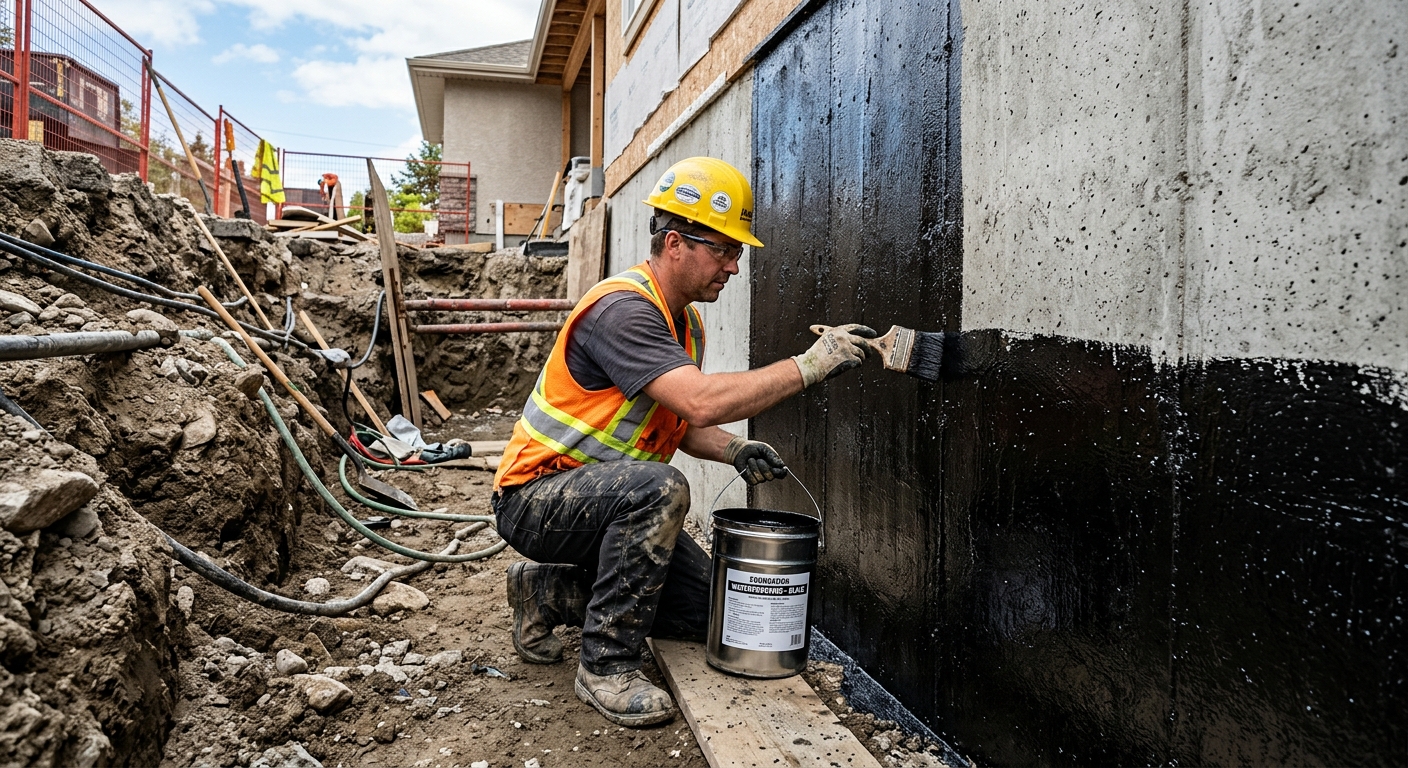
Exterior waterproofing is the “source control” approach. It involves full excavation along the foundation, removal of old materials where needed, then installing a new waterproofing membrane and a properly sloped drainage tile system with a clean outlet. That can be more expensive and more disruptive because excavation, hauling, re-grading, and restoring landscaping are involved. Interior waterproofing, on the other hand, manages the water after it enters. Common systems include a perimeter drain channel, a sump pit, sump pump, and discharge piping. Interior work is usually less invasive, but it doesn’t prevent hydrostatic pressure against the wall itself.
In Woodstock’s London-region conditions—clay-rich soils, shallow water patterns near low-lying areas, and freeze-thaw expansion—exterior waterproofing is best when you want to permanently reduce water entry and you have access for excavation. Interior is often the best fit when excavation access is limited or when the foundation condition suggests that crack sealing plus drainage interception will manage the problem. Poured concrete walls typically take to crack injection well when the crack is stable; for block foundations, interior drainage frequently acts as a practical complement because block joints can continue to seep even after cosmetic sealing.
Ontario power reliability during winter storms and spring events is another reason to discuss backup. If you’re installing a sump, asking for a battery backup (or other approved backup method) isn’t “extra”—it protects against freeze conditions and high-water periods. For example, a homeowner whose issue is mostly interior dampness may choose interior perimeter drainage at $8,000 – $18,000. If inspections show active exterior entry and failed weeping tile, the extra investment to move into the exterior excavation range of $12,000 – $25,000 can be justified because it addresses the boundary and reduces the need for repeated interior interventions.
| Method |
Best For |
Addresses Source? |
Disruption |
Lifespan |
Price Band |
| Full exterior excavation + membrane |
Persistent seepage, evidence of failed exterior drainage, clay-saturated sites |
Yes |
High |
Long-term (typically decades with correct drainage outlet) |
$12,000 – $25,000 |
| Interior French drain + sump system |
Water entering through cracks or wall-floor joints; limited excavation access |
No (it manages water after entry) |
Medium |
Long-term with proper pump selection and maintenance |
$8,000 – $18,000 |
| Crack injection — epoxy (structural) |
Stable, dry-ish cracks in poured concrete or structurally sound walls |
Partial (seals crack pathway when stable) |
Low |
Good when the pressure source is controlled |
$600 – $2,500 |
| Crack injection — polyurethane (active leak) |
Active seepage where water pressure is still present |
Partial (seals pathway but verify water management plan) |
Low to Medium |
Good when paired with drainage and proper crack prep |
$800 – $2,800 |
| Interior drain channel only (no sump) |
Minor seepage that can be gravity-drained; lower risk basements |
No |
Medium |
Moderate—depends heavily on drain routing and water level |
$6,500 – $12,000 |
| Re-grading + downspout extensions |
Surface-water driven issues and early dampness |
Sometimes (reduces boundary saturation) |
Low to Medium |
Good when drainage slopes are maintained |
$1,000 – $4,000 |
How to choose a waterproofing contractor in Woodstock
Start by verifying credentials. In Ontario, ask for proof of liability insurance and WSIB/WCB clearance (or the contractor’s coverage details and the clearance letter). Request the documentation and confirm the business name matches the quote. For licensing/registration, check the contractor’s Ontario licence/registration status through the online registry they provide—don’t rely on verbal reassurance.
Next, get 2–3 itemised written quotes. You want a breakdown that separates labour, excavation/disposal, drainage tile and pipe, membrane or sealant systems, pump and backup components, and any restoration. Avoid lump sums where exclusions are buried. Ask whether permits are included, who pulls them, and whether inspection/engineering support is part of structural scopes. Ensure disposal and trucking are specified for exterior excavation jobs.
Warranty matters: insist on a written workmanship warranty length and confirm the manufacturer/product warranty applies to the installed materials. Ask if the warranty is transferable if you sell your home. Payment schedules should be conservative—typically no more than 10–15% upfront, with a holdback until the job is complete and verified. Finally, request a written timeline with a start date and completion estimate, and ask how wet weather or freeze-thaw disruptions will affect scheduling in Woodstock.
- Provide a site-specific plan (not just a standard brochure) referencing cracking locations and water entry pathways.
- State exactly which walls and floor areas are included, including any “allowances” for hidden conditions.
- Clarify whether the contractor will camera-test existing drains or assess weeping tile condition.
- Confirm the discharge method for sump pumps (and whether it needs municipal approval).
- Specify pipe sizes, drain outlets, and how slope is achieved (especially for interior French drains).
- List pump model/horsepower/float type and whether backup is included.
- Include permit responsibility: “who pulls it” and whether the homeowner pays extra.
- Show disposal/haul-away details for excavation and removed materials.
- Document prep steps for crack injection (surface cleaning, crack opening, and curing requirements).
- Provide warranty details in writing (workmanship, product/manufacturer, and transferability).
- Ask about drying time and moisture testing—don’t seal over damp or contaminated surfaces.
- Use a payment schedule with holdback until punch-list items and final documentation are done.
Red flags I see in Woodstock: contractors who won’t discuss backup sump options for high spring water, quotes that omit discharge routing details, “epoxy for every crack” without identifying active leaks, no written scope or exclusions, and insisting on large upfront deposits without a clear milestone plan.
Frequently asked questions — waterproofing in Woodstock
How long does waterproofing last?
In Woodstock, basement waterproofing can last a long time, but lifespan depends on how well the project matches the cause of water entry. Exterior waterproofing with a proper membrane and drainage outlet is often the most durable because it reduces hydrostatic pressure at the foundation face. Interior systems typically last well when the drain channel and sump are correctly sized and discharge piping is properly routed. Crack injection alone can perform for many years when the crack is stable and the underlying pressure source is controlled—however, if clay-rich soils keep pushing water laterally, injection may only be a partial solution. As a rule of thumb, homeowners should expect “long-term performance” only when drainage and crack pathways are addressed together, and when warranty terms are clearly documented.
Can I waterproof my basement from the inside only?
Yes—many Woodstock homeowners do interior-only waterproofing, especially when access for excavation is limited by landscaping, decks, or driveways. Interior perimeter drains, sump pits, and a properly installed sump pump manage water after it enters the basement, which can be enough for dampness and seepage that’s primarily through cracks or wall-floor joints. Interior solutions often align with the $8,000 – $18,000 band for perimeter drainage and sump systems. That said, if your home has ongoing hydrostatic pressure from failed exterior drainage (common where older weeping tile has failed), interior-only work may become a recurring “maintenance solution.” A good contractor will explain whether interior control is appropriate or whether exterior upgrades are needed to stop the source.
What causes foundation cracks in Woodstock?
Woodstock foundation cracks are often driven by moisture cycling and soil behaviour. The London region has many mixed, clay-rich areas where wetting and drying cause expansion and contraction. During winter and spring, freeze-thaw cycles widen small defects as trapped moisture freezes and expands, and then the contraction/settlement stress re-opens the pathway. Older homes built before 1981 are also more likely to have older waterproofing and drainage systems that can’t handle today’s water patterns as effectively, leading to increased dampness against foundation walls. If you’re seeing horizontal or step cracking, or if cracks are associated with active seepage, it’s important to treat them as more than cosmetic—crack injection may be part of the fix, but the drainage strategy must match the pressure conditions.
How do I compare waterproofing quotes?
Compare quotes like a scope, not like a number. In Woodstock, the same advertised service can differ dramatically based on excavation depth, drainage outlet type, pump specifications, and whether permits or engineering support are included. Ask each contractor for an itemised breakdown: labour vs materials, membrane type, drain tile routing, sump pump model, and whether battery or other backup is included. Confirm what’s excluded: disposal/haul-away, permit fees, restoration, and allowances for hidden conditions. If one quote suggests only crack injection while others include drainage and/or sump systems, ask why—active leaks and hydrostatic pressure require more than sealing alone. A transparent quote should reference the plan for your foundation type (poured vs block) and show how the system will cope with spring melt and freeze-thaw in Ontario.
How long does basement waterproofing take in Woodstock?
Timing depends on whether you’re doing interior work, exterior excavation, or both. Interior perimeter drains and sump systems typically take less time than exterior excavation because the scope is confined to floor and wall lines; however, waterproofing still needs drying and cure time for products like sealants or crack injection systems. Exterior waterproofing can take longer because contractors must excavate, remove old materials where required, install membrane and drainage tile, test the drainage path, and then manage backfill and re-grading. In Woodstock’s freeze-thaw reality, scheduling matters: crews may avoid very cold conditions for certain installation steps, and wet weather after heavy rains can slow excavation and membrane detailing. Your best benchmark is a written timeline with start and completion estimates based on access and weather constraints.
What is a weeping tile and does my Woodstock home have one?
Weeping tile is a drainage system installed around or within the foundation perimeter to collect groundwater and direct it away from the house. In many older Woodstock homes—especially those built before 1981—original weeping tile may still exist, but it can be clogged, crushed, disconnected, or have failed outlets. Clay-rich soils and poor drainage over decades can overwhelm older systems, causing seepage and dampness even if surface grading seems unchanged. You can often identify it by visible discharge points, past drain cleanout locations, or history of basement drainage. A proper assessment may include inspection of accessible cleanouts or evaluation during interior work. If your home doesn’t have functioning weeping tile, contractors may recommend replacing exterior drainage or using an interior perimeter drain and sump to manage groundwater pressure.