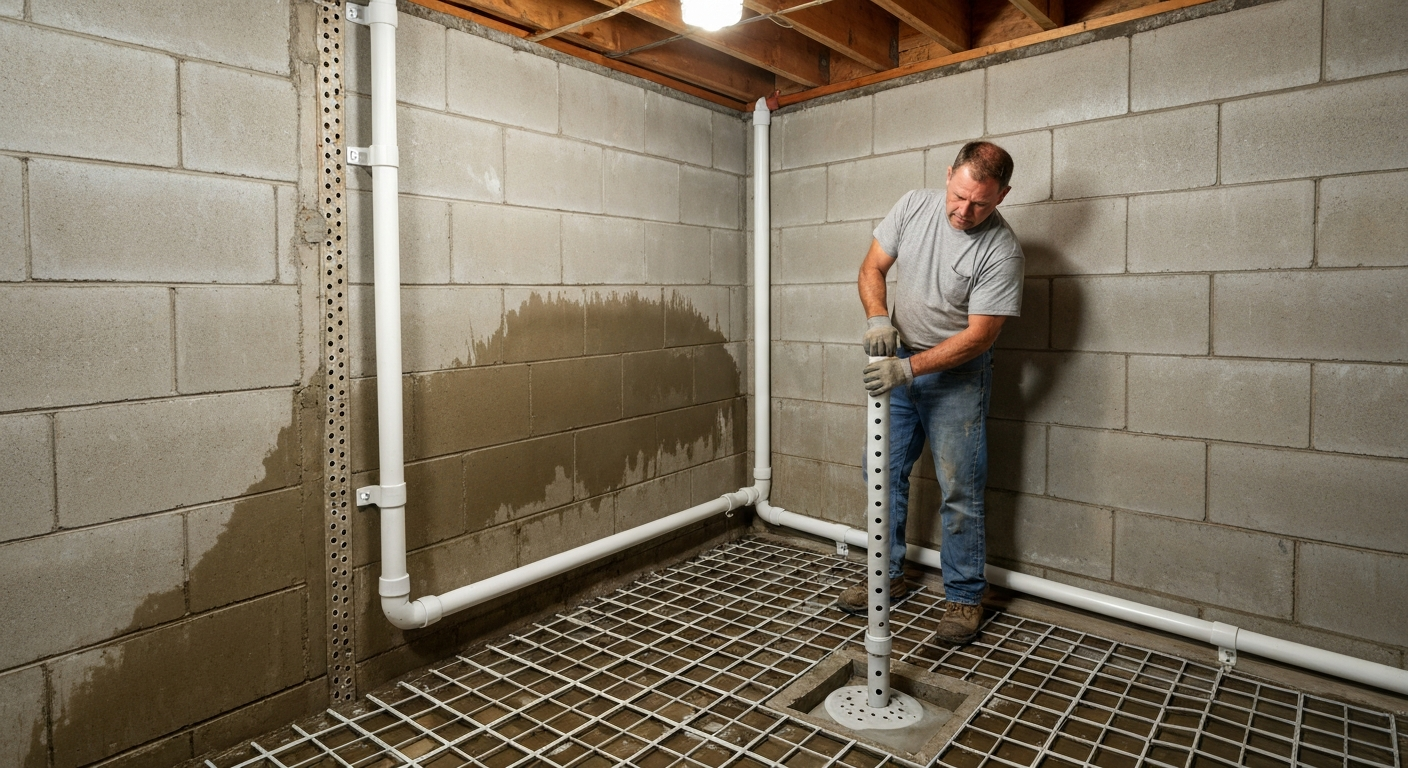
Basement waterproofing options and costs in Powassan
Powassan, Ontario is a small community, but the basement waterproofing issues we see are very typical of Northeastern Ontario’s older housing stock: as water moves through clay- and silt-heavy pockets, it finds weak points at joints, cracks, and failed drainage systems. In Powassan, 60.2% of homes were built before 1981, which means many basements were originally protected with early-generation damp-proofing and have weeping tile that’s now near the end of its service life. With 85.0% of households owning their homes, owners commonly need a durable, “set-it-and-forget-it” solution rather than a short-term patch.
In this Northeast market, pricing is driven by excavation depth, soil conditions, and the need to manage freeze–thaw. When water saturates backfill and then freezes, it expands and can widen existing cracks and mortar joints. That same freeze–thaw cycle can turn a minor weep into a regular seep that shows up only after heavy snowmelt or rain. We also see higher demand in older, established pockets such as the Powassan downtown/core area where driveways, mature landscaping, and tight side access make exterior work more complex.
Below is a practical comparison of common waterproofing approaches you’ll see in Powassan quotes—so you can tell whether a contractor is addressing the water source outside the foundation or only managing symptoms inside the basement.
| Method |
What It Addresses |
Disruption Level |
Durability |
Price Range |
| Exterior excavation + new membrane + drainage tile |
Stops water entry at the foundation wall; replaces failed drainage |
High (excavate around foundation, remove landscaping/deck steps) |
High (best long-term performance when properly designed and backfilled) |
$9,000 – $20,000 |
| Interior perimeter drain channel + sump pit |
Collects water after it enters; reduces hydrostatic pressure on interior finishes |
Medium (small floor cuts; minimal yard disturbance) |
Medium to high (depends on crack sealing and sump reliability) |
$4,000 – $12,000 |
| Foundation crack injection (epoxy or polyurethane) |
Seals cracks to reduce seepage; can stabilize non-moving cracks (epoxy) or active leaks (polyurethane) |
Low to medium (surface prep; localized drilling) |
Medium (works best when combined with drainage control) |
$400 – $1,200 |
| Sump pump installation (primary + battery backup) |
Relieves collected groundwater; backup reduces risk during power interruptions |
Low to medium (minor floor work; electrical tie-in) |
Medium to high (backup improves resilience) |
$900 – $3,000 |
| Window well drain installation |
Reduces rain/snowmelt infiltration around egress windows |
Low to medium (excavation at window well) |
Medium (requires correct routing of discharge) |
$1,000 – $4,000 |
| Lot re-grading / downspout extension |
Moves surface water away from foundation; reduces saturation of backfill |
Low to medium (yard work; grading and/or minor landscaping) |
Low to medium alone; high as a supplement to drainage |
$1,000 – $6,000 |
Prices are estimates only and vary by project scope, site access and material selection.
What affects the price of waterproofing in Powassan
In Powassan, you can see the same basic “waterproof the basement” request land 30–50% apart depending on site conditions and approach. The biggest reason is that contractors in Northeastern Ontario price for what they expect to encounter: excavation and disposal costs, the need to replace failing drainage, and the extra labour tied to cold-weather concrete work and freeze–thaw-related repairs. Many homeowners notice this when comparing an interior drainage quote to an exterior excavation quote—interior can be cheaper upfront, but if the exterior drainage is still failing, water continues to push against the wall and overwhelms interior systems.
The three drivers that most separate Northeast regional costs from the national average are soil type, water table behaviour, and freeze–thaw. Clay- or silty soils can hold water and exert lateral pressure on foundation walls as saturation freezes and expands. That same cycle can widen cracks and mortar joints, making later repairs more involved. In areas with higher localized water saturation after spring melt, sump pumps run more often and may require upgraded discharge routing or battery backup. Where older weeping tile systems have clogged or collapsed, hydrostatic pressure can become continuous, pushing up through floor joints and around penetrations.
Here are a few concrete Powassan examples that shift cost quickly. If your basement walls are older poured concrete with hairline cracks plus blocked weeping tile, you may see crack injection priced closer to $400 – $1,200—but only when paired with proper drainage control. If you need full exterior excavation, membrane, and new drainage tile, budgets commonly land near $9,000 – $20,000 due to excavation depth, tight access, and backfill/compaction labour. Conversely, if the leak is from roof runoff discharged too close to the foundation and grading is clearly wrong, re-grading and downspout changes can reduce water loads with a smaller budget impact than a full excavation.
| Price Factor |
Why It Matters |
Cost Impact |
| Interior vs. exterior approach — interior is less disruptive but addresses symptoms |
Interior systems manage water after it enters; exterior stops entry at the source |
Interior typically lower upfront; exterior often adds excavation, membrane, and drainage replacement costs |
| Foundation type — poured concrete vs. block vs. stone vs. ICF |
Crack patterns and sealing methods vary by wall material |
Poured concrete often responds well to crack injection plus drainage; older block may require more complementary interior drainage |
| Soil type — clay expands more than sand, adding pressure |
Saturated clay increases lateral pressure during freeze–thaw |
Clay-heavy sites can raise labour for drainage design and crack/joint preparation |
| Crack type and length — hairline vs. structural horizontal cracks |
Moving/structural cracks can need investigation before simple sealing |
Structural concerns can add engineering and more invasive repair scope |
| Sump pump backup system — battery or water-powered backup needed |
Backup keeps the basement dry during power interruptions and spring flooding |
Additional equipment and testing can add cost but reduces failure risk |
| Access — landscaping, decks, or driveways must be removed for exterior |
More removal and reinstatement increases labour and disposal |
Tight lots push exterior waterproofing toward the higher end of the range |
| Weeping tile age — original tile (60+ years) may be completely failed |
Collapsed tile often means water is moving differently than expected |
Replacing tile can add excavation and trenching scope |
| Mould or efflorescence remediation required before sealing |
Moisture contamination must be treated so sealants/membranes bond properly |
Health-focused remediation adds labour and materials before waterproofing starts |
Permits & regulations in Ontario
In Ontario, foundation excavation and structural crack repair work often requires a building permit—especially where the scope changes the foundation system, affects supporting elements, or alters lot drainage. If your contractor proposes exterior excavation to install drainage tile and membrane, they should confirm whether a permit is required in your specific situation and coordinate it. Also, sump pump installations that connect discharge to a municipal storm or sanitary sewer typically require municipal approval. Finally, for structural crack repair (such as major horizontal cracks in block walls, significant step cracking, or signs of movement), an assessment by a structural engineer is commonly required to determine whether underpinning or other structural stabilization is needed before sealing and drainage.
Here’s how a Powassan homeowner can verify compliance step-by-step. First, ask for the contractor’s Ontario business information and check they are properly registered for the type of work they’re offering (not just “general contracting”). Second, request a certificate of liability insurance showing you’re covered as a certificate holder for the period of work. Third, verify WSIB/WCB coverage: ask for the current clearance letter or proof of coverage and check dates match your planned start. If engineering is part of the scope, confirm they have access to engineering support and can provide the engineer’s involvement in writing.
Work that typically does not need a permit is basic interior crack sealing when it’s strictly non-structural and doesn’t modify drainage routing—however, your contractor should still confirm based on your wall type and crack condition.
Interior vs exterior waterproofing — what does Powassan need?
The fundamental difference is simple: exterior waterproofing targets the source of water entry, while interior waterproofing controls water after it arrives. Exterior systems involve full or partial excavation around the foundation, then installing a continuous waterproofing membrane and new drainage tile in a designed layout. Done correctly, it dramatically reduces hydrostatic pressure against the wall because water is intercepted outside. The trade-off is cost and disruption: yard excavation, landscaping restoration, and backfill/compaction are major portions of the job.
Interior waterproofing—like a perimeter drain channel, sump pit, and sump pump—reduces water levels at the foundation interior face. It’s usually less disruptive for Powassan homeowners because it often requires only floor access rather than excavation around the perimeter. But interior systems do not truly “stop” water from pressing on the wall; they manage it. That’s why interior drainage works best when combined with correct crack injection and when the sump system is sized for spring melt volumes.
Given Powassan’s older homes (many built before 1981) and typical freeze–thaw, exterior waterproofing tends to be the best long-term choice when weeping tile has failed or when you have repeated seepage during snowmelt. Poured concrete walls often respond better to crack injection paired with drainage control, while older block walls often benefit from interior drainage as a practical complement because joint/void pathways can persist. If you’re experiencing water at multiple points or you have recurring sump overflows, interior-only approaches can fall short.
Where the price difference is justified: if full exterior excavation and drainage runs about $9,000 – $20,000 but your home has continuous seepage after melt and collapsed tile, the exterior approach can eliminate repeat interior interventions. If your issue is localized window well runoff or a grading problem, the gap may not be justified and a smaller re-grading or downspout plan could stabilize conditions.
| Method |
Best For |
Addresses Source? |
Disruption |
Lifespan |
Price Band |
| Full exterior excavation + membrane |
Widespread seepage, failed weeping tile, persistent hydrostatic pressure |
Yes (stops water entry) |
High (yard excavation and restoration) |
Long (typically decades with proper design and compaction) |
$9,000 – $20,000 |
| Interior French drain + sump system |
Interior water accumulation, leaks near wall-floor joints, homes where exterior access is limited |
Mostly (relieves pressure, manages water after entry) |
Medium (floor access, sump pit) |
Medium to long with reliable pump and discharge |
$4,000 – $12,000 |
| Crack injection — epoxy (structural) |
Non-moving cracks in poured concrete or stable masonry where sealing restores watertightness |
Partially (seals pathways in the wall) |
Low to medium (drilling and surface prep) |
Medium to long (best with drainage control) |
$400 – $1,200 |
| Crack injection — polyurethane (active leak) |
Active seepage through cracks, joint movement with ongoing moisture |
Partially (seals active pathways) |
Low to medium (localized drilling and injection) |
Medium (may require repeat work if water pressure persists) |
$600 – $1,800 |
| Interior drain channel only (no sump) |
Very minor dampness where water can be collected without pump reliance |
No (still depends on flow path and conditions) |
Medium (floor work, channel/drain routing) |
Shorter to medium (riskier during peak melt) |
$2,500 – $8,000 |
| Re-grading + downspout extensions |
Surface-water issues and poor lot drainage driving foundation saturation |
Yes (reduces water reaching the foundation) |
Low to medium (yard grading and minor landscaping) |
Medium (depends on maintenance) |
$1,000 – $6,000 |
How to choose a waterproofing contractor in Powassan
Start by verifying credentials in Ontario, because basement waterproofing is part technical, part compliance, and part insurance paperwork. Ask each contractor for (1) their Ontario business registration details, (2) a certificate of liability insurance with the correct policy dates and limits, and (3) WSIB/WCB coverage proof (clearance letter or documentation). Don’t accept “we’re insured” without seeing the documents—have them email you the certificates for your file.
Next, request 2–3 itemised written quotes that separate labour and materials. You want to see scope details like membrane type, drainage tile size and routing, whether disposal and reinstatement are included, and exactly how discharge will be handled. Confirm whether a building permit pull is included (if required) and whether the contractor is handling any approvals for sump discharge routing. A good quote will list exclusions too—such as excavation limitations due to buried utilities, minor surface restoration allowances, or how existing finishes are protected.
Warranty matters: require a workmanship warranty (how many years and what “covered” means) plus the product/manufacturer warranty details. Ask whether the warranty is transferable if you sell the home. Payment schedules should be conservative—never pay more than about 10–15% upfront, and hold back a portion until completion and final cleanup. Finally, insist on timeline terms: start date, stages, curing time for sealing materials, and a completion estimate in writing—especially important for cold-weather concrete and backfill compaction.
- Provide an itemised scope (membrane, tile, pipe bedding, pump model, discharge method)
- List what’s included for disposal, backfill, compaction, and landscaping reinstatement
- Confirm whether a permit is required for your specific scope and who pulls it
- Show pump sizing and whether battery backup is included when requested
- Provide warranty length for labour and the specific product warranties
- Include engineering support wording for structural crack scenarios
- Ask how they verify crack movement before choosing epoxy vs polyurethane
- Confirm how they test drainage (smoke, hose test, or documentation)
- Match quote measurements to the site (length of wall cracks, footage of perimeter drains)
- State protection methods for flooring and utilities during interior work
- Use written payment schedule with retainage/holdback tied to milestones
- Document material batch numbers and pump/equipment specs before installation
Red flags we commonly see around waterproofing in Powassan include: quotes that are “lump sum” without describing drainage routing, no mention of permits/approvals when sump discharge connects to municipal systems, offering a warranty but refusing written terms, requesting large upfront payments, and using vague language like “we’ll figure it out later” for excavation depth, disposal, or pump backup decisions.
Frequently asked questions — waterproofing in Powassan
What causes foundation cracks in Powassan?
In Powassan, foundation cracks are usually a combination of age, water, and freeze–thaw movement. Many local homes were built before 1981, so they often have older wall joints and drainage systems that can’t keep up during spring melt. When fine-grained soils hold water near the foundation, that moisture freezes and expands, which can widen hairline cracks and joints over multiple winters. Settlement can also contribute, especially if the backfill was not well compacted or if downspouts discharge near the footing. Once cracks open, they become pathways for water, which increases deterioration and can lead to mould or efflorescence on interior surfaces.
How do I compare waterproofing quotes?
When comparing Powassan waterproofing quotes, don’t just look at the total price—compare the scope line by line. Ask whether the plan replaces failed weeping tile and installs a drainage system, or whether it only installs interior drainage and a sump. A contractor who mentions exterior excavation and new membrane is addressing the source; one who only offers interior perimeter drains is managing symptoms. Make sure the quotes specify materials (membrane type, tile size, pipe routing), what disposal and reinstatement are included, and whether a permit is part of the work. If one quote says “crack sealing” without describing whether epoxy or polyurethane is appropriate, it may not handle active leakage. For budgeting, you’ll often see exterior projects in the $9,000 – $20,000 range and interior systems in the $4,000 – $12,000 range, but only a properly detailed scope tells you what you’re actually buying.
How long does basement waterproofing take in Powassan?
Timing in Powassan depends on whether you’re doing interior or exterior work and what the weather will allow. Interior waterproofing—like perimeter drainage channel and sump installation—can often be completed faster than exterior excavation because there’s less yard disturbance and less backfill/compaction work. Exterior waterproofing typically takes longer due to excavation depth, handling tight access around mature landscaping, membrane installation, drainage tile layout, and the need to properly backfill and compact in lifts. In winter conditions, schedules may pause for concrete-related steps and for material handling, since performance relies on correct curing and compaction. A reasonable contractor will provide a written schedule with milestones and indicate how long each stage takes rather than giving one vague “we’ll be done soon” date.
What is a weeping tile and does my Powassan home have one?
A weeping tile is a perforated drainage pipe system installed around the foundation (often near the footing) to collect groundwater and direct it away from the basement. Many homes in Powassan from the mid-20th century onward used weeping tile as a key part of their drainage strategy. Because 60.2% of local homes were built before 1981, the chance of having some form of historic drainage is high, but it’s not guaranteed—and it may be clogged, collapsed, or disconnected. You might find evidence in older basements (displaced pipe leads, sump hookups, or trace lines), but the only reliable way to confirm is through a proper assessment: review of prior installation history, inspection openings where safe, and understanding how water appears during melt and rain. If your weeping tile has failed, exterior replacement or a coordinated interior drainage plan is usually needed.
Can I waterproof my basement in winter in Powassan?
Yes, you can often do part of the work in winter in Powassan, but the “what” matters. Interior leak sealing and crack injection can sometimes proceed depending on indoor conditions and material requirements, while exterior excavation and membrane work can be more limited because frozen ground makes excavation harder and can affect backfill and compaction. For spring-focused solutions, many homeowners do interior measures early (like crack injection where appropriate and interior drainage prep) and then schedule exterior drainage replacement when conditions allow proper excavation and compaction. If you have active leaks, addressing the source of water pathways sooner can reduce the damage load on finishes. Any contractor should explain what can be completed immediately, what needs temperature windows, and how they manage cleanup and drying so moisture doesn’t spread during the process.
What is the difference between waterproofing and damp-proofing?
Damp-proofing is generally a lower-performance barrier intended to resist minor moisture, often designed for occasional dampness rather than sustained water pressure. Waterproofing is intended to control water entry and handle conditions that produce hydrostatic pressure—like saturated soils during heavy snowmelt and rain. In Powassan, where freeze–thaw can widen cracks and joints, damp-proofing that worked decades ago may no longer perform, especially with older drainage systems. That’s why homeowners often need true waterproofing measures such as exterior membranes and new drainage tile, or interior perimeter drains with a sump—sometimes paired with crack injection to stop specific pathways. As a budgeting reference, exterior waterproofing commonly falls around $9,000 – $20,000, while interior waterproofing projects often land closer to $4,000 – $12,000, reflecting the difference between stopping water at the source versus managing water after it enters.