Basement waterproofing options and costs in Halton Hills
Halton Hills homeowners usually start by looking at the basement floor and walls—but the right fix depends on where the water is entering. With 62,951 residents and 18,610 homeowner households (Statistics Canada, 2021 Census), basements are a major living space for many families, so dampness and musty odours quickly become a quality-of-life issue. Just as important, Halton Hills has a large share of older housing stock: 46.3% of homes were built before 1981 (Statistics Canada, 2021 Census). In practice, that age group is where we most often see failed early weeping tile, older tar-and-paper style systems, and freeze–thaw damage that turns small cracks into active seepage.
In the Toronto region, waterproofing costs are shaped by mixed glacial till and clay pockets that hold water against foundation walls. When the soil saturates, clay expands and can increase lateral pressure, especially around tie holes and cold joints. Freeze–thaw cycles in spring and early winter also widen defects and stress aged mortar lines. That’s why you’ll often see “it’s fine for a while” symptoms—damp spots, efflorescence, and periodic seepage after heavy rain or melt.
Contractors are especially in demand around Georgetown and other built-up pockets where excavation access is tight near additions, decks, and driveways. In those situations, homeowners often choose a targeted interior system first, then budget for exterior work if inspections confirm lateral water pressure is the root cause.
Below is a practical comparison of common options and typical price ranges in Halton Hills to help you line up apples-to-apples before you request quotes.
| Method |
What It Addresses |
Disruption Level |
Durability |
Price Range |
| Exterior excavation + new membrane + drainage tile |
Primary water entry by reducing hydrostatic pressure at the source (membrane + new weeping tile + filter stone) |
High (excavation, regrading, landscaping restoration) |
Long-term (often 25+ years with correct backfill and drainage) |
$10,000–$25,000 |
| Interior perimeter drain channel + sump pit |
Water after it enters (relieves seepage into a controlled drain/sump) |
Medium (floor/part-wall disturbance; minimal yard disruption) |
Good (commonly 15–25 years depending on pump and maintenance) |
$6,500–$14,500 |
| Foundation crack injection (epoxy or polyurethane) |
Isolated cracks; stops seepage path through the wall (choice depends on crack movement) |
Low (targeted drilling and sealing) |
Moderate to long-term (often 10–20 years; depends on whether crack is active) |
$600–$3,000 |
| Sump pump installation (primary + battery backup) |
Chronic seepage control; maintains performance during outages or power dips |
Low to medium (sump pit excavation and plumbing run) |
Good (battery backup extends reliability; pump life depends on cycles) |
$1,400–$3,500 |
| Window well drain installation |
Water from above-grade sources and overflow around egress windows |
Low to medium (window well disturbance) |
Good (often 10–20 years with proper weep/drain rock) |
$1,200–$3,200 |
| Lot re-grading / downspout extension |
Reduces roof runoff and surface water reaching the foundation |
Low (minor excavation/landscaping) |
Limited (performance depends on ongoing grading and downspout maintenance) |
$800–$4,000 |
Prices are estimates only and vary by project scope, site access and material selection.
What affects the price of waterproofing in Halton Hills
In Halton Hills and across the Toronto region, it’s common to see quotes for the “same” basement problem swing by 30–50% because contractors are often solving different root causes—or working with different site realities. Nationally, many estimates assume generic conditions, but in our area the three biggest separaters from the national average are soil type, water table behaviour, and freeze–thaw intensity. Clay-heavy ground can hold water and expand when saturated, which increases lateral pressure on foundation walls and worsens movement at cracks, tie holes, and joints. When groundwater or perched water levels are higher (common in parts of the GTA), sump pumps run more often and drainage systems need more capacity and better discharge routing.
Toronto-area freeze–thaw cycles are also a cost driver. Small imperfections that might never leak in milder climates expand over a few winters, turning hairline issues into active seepage. That’s why your scope may include crack injection (for isolated leaks) plus interior drainage to catch any remaining flow.
Concrete examples from Halton Hills: (1) Homes with original weeping tile from the pre-1981 era often require replacement of the drainage path; if the tile is clogged or collapsed, we typically expect higher labour time and more material for exterior excavation, pushing exterior work toward the $7,000–$25,000 band. (2) An interior-only plan can be cheaper—often aligning with the $3,500–$15,000 interior weeping tile/underpinning-style range—when the issue is localized seepage and there’s limited access for excavation around decks and additions.
Where older homes (46.3% pre-1981) meet clay soils and freeze–thaw, we frequently see the “cheap patch” risk: if the crack is actively moving or if lateral water pressure is high, sealing without drainage may fail within a few years. That’s when the additional cost of a full exterior approach (or a combined strategy) becomes the justified investment.
| Price Factor |
Why It Matters |
Cost Impact |
| Interior vs. exterior approach — interior is less disruptive but addresses symptoms |
Interior systems manage water after entry; exterior addresses the source by relieving pressure |
Interior can be ~40–70% of the cost; exterior excavation materially increases labour and disposal |
| Foundation type — poured concrete vs. block vs. stone vs. ICF |
Crack behaviour differs; block walls often need an interior drain complement due to seepage pathways |
Poured concrete with stable cracks may reduce complexity; block/stone can increase scope |
| Soil type — clay expands more than sand, adding pressure |
Clay saturation increases lateral pressure against walls and can overwhelm interior-only solutions |
May push you toward exterior excavation and proper backfill drainage strategy |
| Crack type and length — hairline vs. structural horizontal cracks |
Active structural movement requires evaluation; non-structural cracks may be reliably injected |
Structural assessment and possible underpinning can add significant cost |
| Sump pump backup system — battery or water-powered backup needed |
Backup reduces risk during outages; common concern when spring flooding coincides with higher demand |
Adds equipment and labour; often a worthwhile increment for chronic seepage |
| Access — landscaping, decks, or driveways must be removed for exterior |
Excavation in tight lots requires careful demolition, shoring, and restoration |
Access constraints can swing exterior pricing upward |
| Weeping tile age — original tile (60+ years) may be completely failed |
Aged drainage systems can be clogged or collapsed, forcing full replacement and longer runs |
More excavation and material; increased disposal and restoration |
| Mould or efflorescence remediation required before sealing |
Sealers and membranes perform best on clean, properly prepared surfaces |
Prepping and remediation can add time but prevents premature failure |
Permits & regulations in Ontario
In Ontario, certain waterproofing-related tasks can trigger permit requirements, particularly when they affect structural elements or change site drainage. As a rule of thumb for Halton Hills homeowners: foundation excavation and work that involves repairing structural cracks (especially horizontal cracking, major step cracking, or any concern about movement) typically requires a building permit, and a structural assessment is often required before the repair plan is finalized. Also, changes to lot drainage—for example, altering how water is directed away from your foundation—may require approval depending on how and where discharge occurs.
Sump pump installations also commonly require municipal approval when you’re connecting or discharging in a regulated manner (for example, into a storm system). Even when the waterproofing work itself is mainly below grade, the discharge route can be the deciding factor. Always confirm discharge method and any required approvals before the contractor schedules.
Step-by-step: first, ask the contractor what exact scope is permitted and provide their permit responsibility in writing (who pulls it, what drawings/engineer letters are needed, and the timeline). Next, verify they carry liability insurance and WSIB/WCB coverage (as applicable to Ontario). Then check whether they have engineering support for structural repairs—either through their own partner engineer or a third-party engineer they routinely coordinate. Finally, request certificates and keep them with your contract: an up-to-date certificate of insurance and a WSIB clearance letter are key proof points you should be able to review before work starts.
Interior vs exterior waterproofing — what does Halton Hills need?
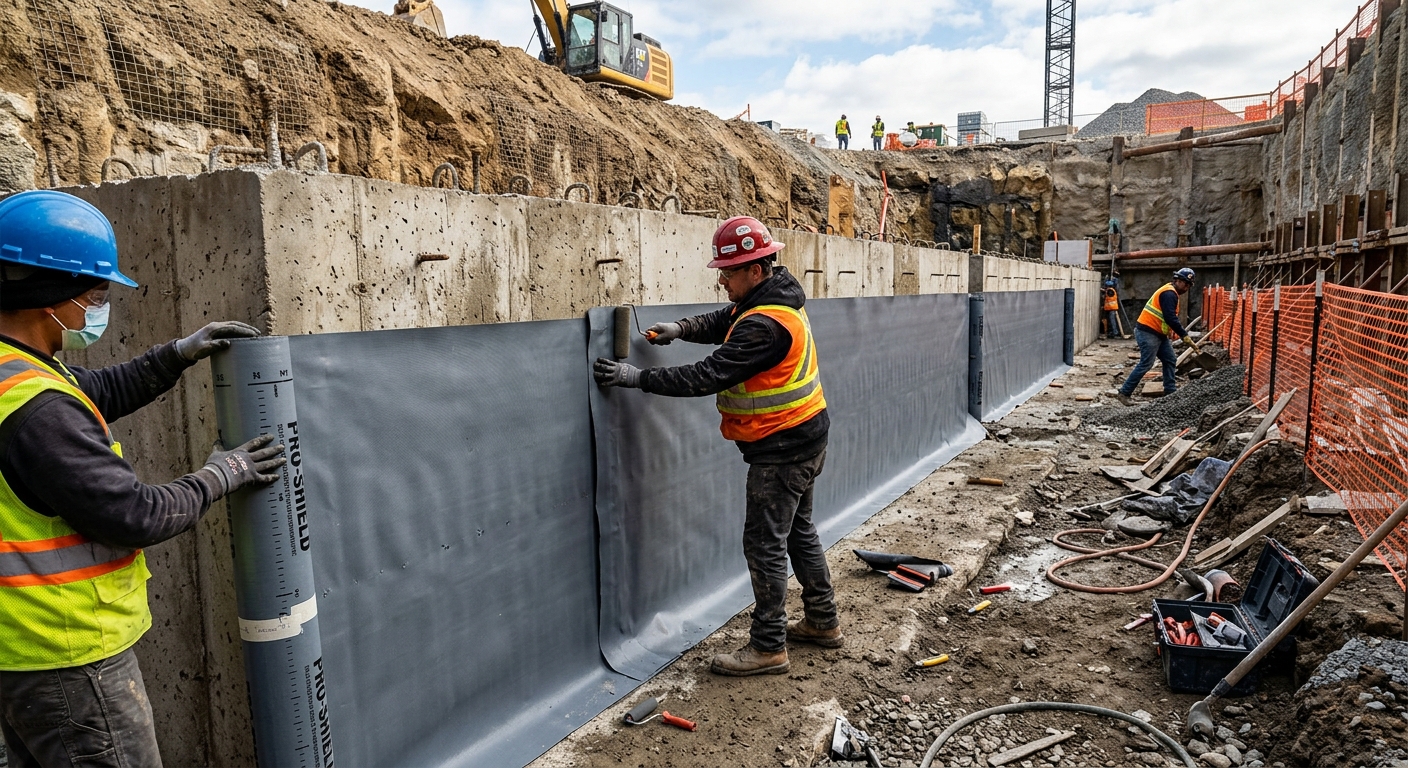
The key difference is where the water is dealt with. Exterior waterproofing involves full excavation, new membrane, drainage tile, and proper backfill—so you’re addressing the water source at the foundation wall and reducing hydrostatic pressure from the outside. The trade-off is cost and disruption: excavation can be labour-intensive and landscaping restoration is typically significant.
Interior waterproofing (perimeter drain channel, sump pit, and sump pump) manages water after it enters the basement. It’s often less invasive and can be ideal when you can’t excavate due to decks, mature landscaping, or tight setbacks. However, interior systems do not stop outward pressure on the wall itself; they control the water you can’t prevent from reaching the interior. In Halton Hills, that distinction matters because clay soils and freeze–thaw cycles can keep a crack “active,” especially in older pre-1981 foundations.
Which option fits best? If you have poured concrete walls with stable, non-moving cracking patterns, crack injection can be effective, particularly when paired with interior drainage. For block foundations or areas showing ongoing seepage, interior drainage is commonly needed as a practical complement—even if exterior work is planned later.
Ontario power reliability during spring flooding is another factor: adding battery backup to a sump pump reduces the risk of interior flooding during outages. If you’re comparing budgets, consider a realistic example: exterior waterproofing often lands in the $10,000–$25,000 range, while a well-planned interior approach with a sump system may be closer to the $6,500–$14,500 band. If inspection shows failed exterior drainage and strong lateral water pressure, paying for exterior work is more likely to prevent repeated seepage cycles—whereas interior-only fixes may cost less upfront but can become recurring maintenance.
| Method |
Best For |
Addresses Source? |
Disruption |
Lifespan |
Price Band |
| Full exterior excavation + membrane |
High water pressure, failed weeping tile, recurring seepage where excavation is feasible |
Yes (at the foundation wall) |
High |
25+ years |
$10,000–$25,000 |
| Interior French drain + sump system |
Chronic seepage where yard access is limited, or as a reliable secondary layer |
No (controls water after entry) |
Medium |
15–25 years |
$6,500–$14,500 |
| Crack injection — epoxy (structural) |
Cracks that are stable with limited movement |
Partial (seals a defect path) |
Low |
10–20 years |
$700–$2,400 |
| Crack injection — polyurethane (active leak) |
Active seepage or cracks with some movement |
Partial (seals a leaking path that may flex) |
Low |
8–18 years |
$900–$3,000 |
| Interior drain channel only (no sump) |
Light seepage or temporary symptoms where grading and discharge can be gravity-fed |
No (controls water after entry) |
Medium (floor work) |
5–12 years |
$3,500–$8,000 |
| Re-grading + downspout extensions |
Surface water issues and roof runoff problems with limited wall leakage |
No (reduces incoming water load) |
Low |
3–10 years |
$800–$4,000 |
How to choose a waterproofing contractor in Halton Hills
Start with the basics: verify the contractor’s Ontario licensing (where applicable to their trade scope), then confirm they carry liability insurance and WSIB/WCB coverage. The practical approach is simple—ask for (1) their certificate of insurance showing they can cover your property and liability, (2) WSIB clearance or WCB proof (depending on their coverage setup), and (3) any engineering documentation if you have structural crack concerns. Don’t accept promises; request the documents and check dates before work begins.
Next, request 2–3 itemised written quotes. You want a labour-and-materials breakdown—not a lump sum. Ask whether the quote includes: permit pull (if required), engineering fees if structural evaluation is needed, excavation and disposal, concrete/asphalt restoration, membrane system components, drainage pipe and stone, and how the discharge is routed.
Read exclusions carefully. Some quotes “assume” patching only and leave out crack preparation, mould remediation, pump alarms, backup power, or required surface prep. Warranty matters too: look for a clear workmanship warranty length, product/manufacturer warranty terms, and whether the warranty is transferable to future owners (important if you sell).
On payment schedule, keep it protective: never pay more than 10–15% upfront. Hold back a portion until the job is complete and you’ve verified performance. Finally, require a timeline with a start date and estimated completion window in writing.
- Ask for their exact waterproofing system spec (membrane type, drain pipe size, backfill and filter material).
- Confirm whether they will replace failed weeping tile or only add interior drainage.
- Require a pre-work moisture map or leak log based on where water actually appears.
- Insist on engineering support if crack patterns suggest movement.
- Check that liability insurance matches the job value and includes coverage for property damage.
- Verify WSIB/WCB clearance and that it’s current (ask for documents).
- Get disposal/restoration included in the quote if exterior excavation is required.
- Ensure the scope states whether mould/efflorescence remediation is included before sealing.
- Confirm sump pump details: primary pump, basin size, float control, and backup type.
- Ask about battery backup testing and alarm/monitoring options for outages.
- Review warranty: workmanship term, exclusions, and whether it transfers on resale.
- Use holdback: retain funds until photos, walkthrough, and close-out documentation are done.
In Halton Hills, common red flags include: quotes that skip a site inspection and rely on “typical basement” assumptions; no written scope of work (especially around discharge and prep); omission of backup power details when you’re installing a sump; warranties that only cover materials and not workmanship; and contractors who ask for large upfront deposits (more than 10–15%) without a clear schedule and milestones.
Frequently asked questions — waterproofing in Halton Hills
What causes foundation cracks in Halton Hills?
In Halton Hills, foundation cracks are usually driven by a combination of soil movement, water pressure, and freeze–thaw. Many homes here were built before 1981 (46.3%), and older foundations often have older drainage strategies that can lead to damp soil around the wall. When clay-heavy soils stay saturated, they can expand during freeze–thaw and exert lateral pressure, turning small cracks at tie holes or cold joints into active leak paths over a few winters (Statistics Canada, 2021 Census). Other triggers include clogged or failed weeping tile, downspouts discharging near the foundation, and minor settling over time.
That’s why we don’t treat all cracks the same. Hairline vertical cracks may be non-structural, while horizontal or step cracks in block walls can indicate movement and should be assessed before any sealing.
How do I compare waterproofing quotes?
To compare quotes in Halton Hills, line them up by scope, not price alone. Ask each contractor to provide an itemised labour/materials breakdown and a clear plan for how they’ll identify the leak source. Key comparisons include: whether they’re addressing exterior water entry (membrane + drainage tile) or managing symptoms (interior drain/sump), whether failed weeping tile is included, and what happens with discharge routing. Also confirm inclusions like permit pull (if required), excavation and disposal, and whether crack injection prep and surface remediation are covered.
If one quote is far lower, it often omits critical steps such as mould/efflorescence remediation, membrane continuity details, or sump backup. A typical price for exterior waterproofing (excavation) can range around $10,000–$25,000, while interior drainage and sump solutions often land closer to $6,500–$14,500. The “right” quote is the one that matches your actual leak mechanism.
How long does basement waterproofing take in Halton Hills?
Timelines vary by method and access. Interior perimeter drain channels and sump pits are often completed faster than exterior projects because there’s no yard excavation around the entire foundation. For many Halton Hills homes, an interior waterproofing install can take about several days to a week depending on how many wall sections are involved and whether concrete/floor removal is extensive.
Exterior excavation usually takes longer due to excavation, foundation prep, membrane and drainage installation, backfill compaction, and restoration. If your job involves replacing long runs of failed drainage tile or working around tight decks and driveways (common in older neighbourhoods), the schedule can extend.
Get the start date and completion estimate in writing, and ask what weather conditions or inspections could cause delays—especially around drainage tie-ins and curing times for crack injection materials.
What is a weeping tile and does my Halton Hills home have one?
A weeping tile is a perimeter drainage system installed around the foundation to collect and redirect groundwater. In many older Halton Hills homes—especially those built before 1981—this may be clay tile or early plastic drains, and it may be partially collapsed or clogged today. Whether yours exists isn’t always obvious from the basement because the drain line is typically below the floor slab and hidden from view.
Homeowners can often infer it from symptoms like recurring dampness or efflorescence that worsens during spring melt, or from past repairs near the perimeter. The most reliable confirmation is an inspection where the contractor checks for existing drain connections, measures discharge, and reviews what’s present in older basement wall areas.
If the weeping tile is failed, you may need replacement alongside membrane work (exterior approach) or a practical interior system with a sump to manage what still enters.
Can I waterproof my basement in winter in Halton Hills?
Yes, it’s often possible to waterproof in winter in Halton Hills, but feasibility depends on the scope. Interior work (like perimeter drains, sump pit installation, and crack injection) is usually workable when temperatures are low because you’re not necessarily excavating outside for long periods. Exterior excavation is more constrained in winter due to frozen soil, safety concerns around digging near footings, and the need for membrane work to be applied under suitable conditions.
Crack injection can be scheduled in cold weather when products can be applied within manufacturer temperature and surface-prep requirements. For interior sump systems, the main concern is maintaining proper drainage discharge routing and making sure components like pumps and backup systems are installed and tested.
If you’re planning a full exterior project, it’s common to target late spring or summer for excavation and backfill. Your contractor should outline a seasonal plan and provide cure/installation conditions in writing.
What is the difference between waterproofing and damp-proofing?
In simple terms, damp-proofing is meant to resist moisture, while waterproofing is designed to prevent water penetration and manage hydrostatic pressure or active seepage. In Ontario basements, damp-proofing alone can be insufficient when you have clay soils, freeze–thaw cycles, and higher groundwater behaviour—conditions that can push water through cracks, tie holes, and cold joints.
For example, a homeowner might apply a coating to the interior and see temporary improvement, but if water continues to enter the wall, the basement can still develop mouldy odours and efflorescence. True waterproofing plans typically include a drainage strategy: exterior membrane and new drainage tile, or an interior perimeter drain plus sump. Costs reflect this difference—basic symptom control can be closer to $3,500–$15,000 depending on what’s included, while exterior excavation and membrane work can be closer to $7,000–$25,000 when source control is required.