Basement waterproofing options and costs in Flemingdon Park
Flemingdon Park, Ontario has a lot of homes in the 1960–1980s range, and that housing age matters: earlier waterproofing systems—especially tar-and-paper layers and weeping tile setups from before modern polymer membranes—often fail after decades of freeze–thaw movement and clogged drainage. With a community population of 21,933 people in the 2021 Census, the Toronto region also has a mature contractor base and competitive labour availability, but access constraints on tight urban lots can still push price up or down fast.
In Toronto’s mixed glacial till and clay pockets, saturated soils can expand during winter freeze–thaw and press laterally against basement walls. That increases the chance that water finds its way through cold joints, tie holes, and cracks—sometimes without obvious exterior wall failure. Many homeowners in Flemingdon Park also deal with older clay weeping tile that is partially collapsed or blocked, leading to interior dampness, efflorescence, and basement flooding rather than clear “wet spots” outside.
Contractors in nearby areas of Flemingdon Park—especially around dense residential pockets near major streets—often see higher demand for exterior excavation because deck/landscaping removals and hand-digging are common. The key is choosing the right solution: exterior systems address the source, while interior drains and sump solutions manage water once it enters. Use the comparison below to align your symptoms and budget with the most appropriate approach, then refine scope during your site assessment.
| Method |
What It Addresses |
Disruption Level |
Durability |
Price Range |
| Exterior excavation + new membrane + drainage tile |
Hydrostatic pressure at the foundation by rebuilding the drainage plane and waterproofing the wall |
High (excavation, landscaping removal, backfill and regrading) |
Long-term (often 20+ years with correct detailing) |
$7,000–$25,000 |
| Interior perimeter drain channel + sump pit |
Water that enters through cracks/cold joints by intercepting and pumping it away |
Moderate (floor covering removal around perimeter, partial interior work) |
Long-term (typically 15+ years depending on pump and discharge) |
$3,500–$15,000 |
| Foundation crack injection (epoxy or polyurethane) |
Localized crack leaks—epoxy for non-moving/seepage-stable cracks, polyurethane for active water |
Low to moderate (small openings; interior access varies by basement layout) |
Medium to long-term (durability depends on crack movement and wall type) |
$600–$3,000 |
| Sump pump installation (primary + battery backup) |
Relief pumping for chronic seepage, high water table seasons, and outage risk |
Moderate (pit excavation, piping, electrical; basement floor/ceiling small impacts) |
Long-term (often 10–15+ years; battery depends on model) |
$800–$3,500 |
| Window well drain installation |
Bulk water intrusion near basement windows, poor grading, and clogged weep pathways |
Low to moderate (excavation around window well; adjustments to covers/gravel) |
Good (usually 10–15+ years if maintained and not buried by regrading issues) |
$1,200–$5,000 |
| Lot re-grading / downspout extension |
Reduces surface water near foundation; addresses direct water loading during storms |
Low (minor excavation/landscaping changes) |
Variable (often 5–10+ years; depends on ongoing maintenance and soil conditions) |
$900–$4,500 |
Prices are estimates only and vary by project scope, site access and material selection.
What affects the price of waterproofing in Flemingdon Park
In Flemingdon Park and the wider Toronto market, it’s common to see quotes for the “same” waterproofing problem vary by 30–50%. That gap usually comes from how each contractor defines scope (what they will actually rebuild), the access constraints of the lot, and the soil/water conditions they uncover during excavation or inspection. Even before product choice, labour rates and schedule availability in the Greater Toronto Area affect turnaround, especially when crews are booked around spring and early fall moisture events.
Three local drivers separate Toronto-area pricing from the national average: soil type, water table and freeze–thaw. Clay-heavy soils expand during freeze–thaw and can exert lateral pressure on foundation walls, worsening cracks over time—meaning a simple “seal it” approach may not be enough. When high local water tables raise the frequency of sump pump run times, contractors must size discharge and drainage properly and may recommend a backup system. In other regions, heavy rainfall and rapid saturation can also overwhelm failed drainage; here, Toronto’s seasonal freeze–thaw turns small defects into active leaks over a few winters.
Concrete examples that commonly move costs up or down in Flemingdon Park: (1) homes with older, partially failed weeping tile often require excavation and replacement to stabilize the drainage plane—pushing projects toward exterior bands like $7,000–$25,000; (2) if symptoms are limited to a few active cracks, injection and targeted drainage can keep you near foundation crack repair ranges like $600–$3,000; (3) if you have interior efflorescence across multiple wall sections, contractors typically expand the approach from spot repair to perimeter drainage/sump, which explains why interior projects can land in the $3,500–$15,000 band rather than a minimal fix.
| Price Factor |
Why It Matters |
Cost Impact |
| Interior vs. exterior approach — interior is less disruptive but addresses symptoms |
Exterior rebuilds the source drainage plane; interior captures water after it enters |
Interior often costs less upfront; exterior can cost more but typically reduces recurrence risk |
| Foundation type — poured concrete vs. block vs. stone vs. ICF |
Crack behaviour and best waterproofing method differ by wall system |
Poured walls often suit injection + perimeter drains; block typically needs stronger interior drainage support |
| Soil type — clay expands more than sand, adding pressure |
Clay saturation increases lateral pressure and can reopen treated cracks |
Clay-heavy sites tend to push scope toward drainage + membranes rather than “seal-only” fixes |
| Crack type and length — hairline vs. structural horizontal cracks |
Moving/structural cracking needs assessment, not just surface sealing |
Structural or long cracks typically increase labour and may require engineering-informed repairs |
| Sump pump backup system — battery or water-powered backup needed |
Ontario spring wet periods can coincide with power risk; backup reduces shutoff time |
Backup adds cost but can prevent overflow during outages when water table is high |
| Access — landscaping, decks, or driveways must be removed for exterior |
Urban lots limit excavation space and increase manual labour |
Decks/driveways removal and restoration can move exterior work substantially higher |
| Weeping tile age — original tile (60+ years) may be completely failed |
Old drains clog or collapse, forcing replacement or major rehab |
Complete failure increases excavation scope and material volume |
| Mould or efflorescence remediation required before sealing |
Active moisture must be addressed; contaminants may require controlled remediation |
Additional remediation steps add time and materials before waterproofing can proceed |
Permits & regulations in Ontario
In Ontario, foundation excavation, structural crack repair, and changes to lot drainage typically require a building permit, especially when work affects structural elements or redirects drainage in a way that may impact neighbours and municipal systems. For sump pump installations that connect to the storm or sanitary sewer, municipal approval is commonly required before any discharge is made. For structural crack repair—such as horizontal cracks in block walls or signs of movement—an engineer’s assessment is often needed to determine whether underpinning, reinforcement, or other structural measures are required before sealing.
As a homeowner in Flemingdon Park, you can protect yourself by verifying that the contractor is set up to do compliant work. Start by checking the contractor’s Ontario licence/registration status through the appropriate online registry for your trade category. Next, request a certificate of insurance (liability) showing current coverage and the project address. For workers on site, confirm WSIB/WCB clearance—either a clearance letter or proof of registration—before work begins.
Ask for these documents and compare them to the quote. A reputable contractor will also explain, in writing, what permits they plan to pull, which items are excluded, and how long permit approval typically takes. If a contractor says “no permits needed” for foundation excavation or major drainage changes without clarifying why, treat that as a red flag and ask how they remain compliant.
Interior vs exterior waterproofing — what does Flemingdon Park need?
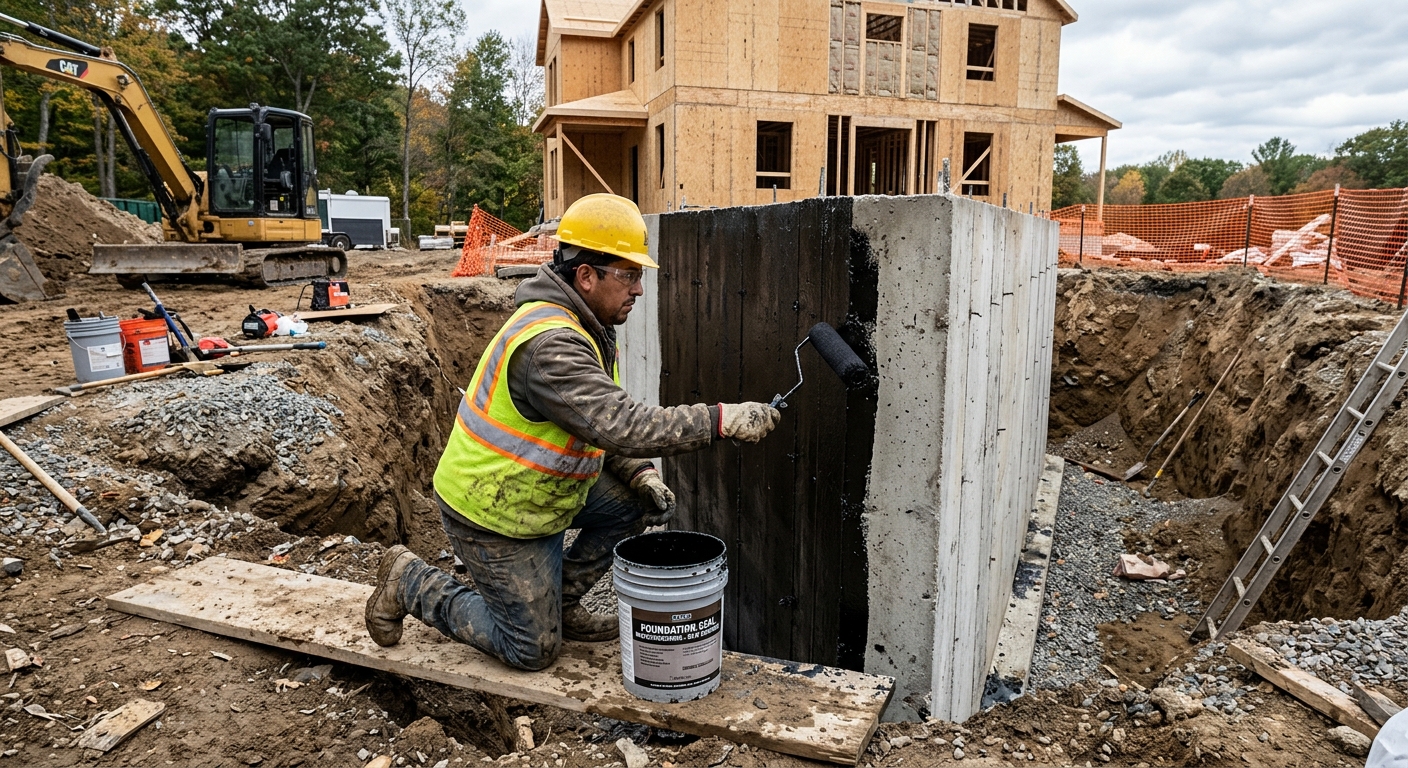
The fundamental difference is that exterior waterproofing targets the source: it involves full excavation, new membrane/waterproofing at the foundation wall, new drainage tile, and backfill. That means water has a clear path to move away from the wall before it builds hydrostatic pressure. The trade-off is disruption—excavation typically requires landscaping removal and careful restoration, and in Flemingdon Park tight lot lines can increase hand-digging and labour.
Interior waterproofing manages water after it enters. Common approaches include an interior perimeter drain channel, sump pit, and sump pump; this reduces floor flooding and dampness, and it can be the best option when exterior access is limited. However, interior systems do not stop water pressure from trying to move through cracks or joints; they relieve the pressure by intercepting the water. For Toronto’s freeze–thaw conditions, that distinction matters: hairline cracks may stay stable for a while, but active leaks through cold joints or moving cracks can keep showing up unless you address the correct pathway.
In Flemingdon Park, poured concrete walls often respond well to crack injection when cracks are non-moving, paired with perimeter drainage to handle seasonal loads. Block foundations frequently benefit from interior drainage as a practical complement because block joints and crack patterns can act like repeated entry points. A realistic decision point: if you’re seeing recurring seepage and efflorescence across multiple wall sections, spending on an interior drain/sump system (commonly within $3,500–$15,000) can be justified to stop the problem, while a “crack-only” injection near $600–$3,000 is usually only appropriate when leaks are isolated and properly diagnosed.
| Method |
Best For |
Addresses Source? |
Disruption |
Lifespan |
Price Band |
| Full exterior excavation + membrane |
Persistent seepage with high water-table pressure and failed/aging exterior drainage |
Yes (source and drainage plane) |
High |
20+ years |
$7,000–$25,000 |
| Interior French drain + sump system |
Chronic dampness or seepage when exterior excavation isn’t feasible |
No (relieves water after entry) |
Moderate |
15+ years (pump-dependent) |
$3,500–$15,000 |
| Crack injection — epoxy (structural) |
Non-moving cracks where water is limited and crack is stable |
Partially (seals the pathway at the crack) |
Low to moderate |
Medium to long-term |
$600–$3,000 |
| Crack injection — polyurethane (active leak) |
Active seepage where water is pushing through the crack |
Partially (seals the pathway) |
Low to moderate |
Medium to long-term (depends on ongoing pressure) |
$700–$3,500 |
| Interior drain channel only (no sump) |
Minor water entry and situations with reliable gravity drainage |
No (relieves water after entry) |
Moderate to low |
10–15 years |
$2,000–$7,500 |
| Re-grading + downspout extensions |
Surface water runoff problems and localized dampness near grade |
No (prevents loading at the wall) |
Low |
5–10+ years |
$900–$4,500 |
How to choose a waterproofing contractor in Flemingdon Park
Start with licensing and compliance checks. Ask for the contractor’s Ontario licence/registration details for the work they’ll perform, then verify it through the relevant online registry. Request a current certificate of liability insurance showing coverage limits and that the policy is active for the project period. Confirm WSIB/WCB clearance (or documentation of registration/coverage) before workers begin. For structural repairs, ensure they have engineering support available or partner with a structural engineer when needed—especially for horizontal cracking or evidence of movement.
Next, get 2–3 itemised written quotes, not a single lump sum. A good quote should break out labour, disposal, excavation/repairs, drainage materials, membrane products, pump models/backup systems, and any permit costs. Read the exclusions carefully: for example, whether backfill and regrading are included, whether sediment control is required, and whether disposal of old weeping tile materials is covered. Verify warranty terms in writing: look for both a workmanship warranty (how long the contractor stands behind labour) and a product/manufacturer warranty (how long the membrane/drainage system materials are covered), and ask if the warranty transfers to a new homeowner.
For payment, avoid large upfront cheques—generally keep upfront payments to no more than 10–15% and agree on a holdback until completion and inspection. Finally, get a timeline with a start date and an estimated completion window, in writing, so you can plan around spring wet periods and basement availability.
- Ask for contractor licence/registration details and verify them online in Ontario
- Request a certificate of liability insurance with the correct address listed
- Confirm WSIB/WCB clearance before any demolition starts
- Require 2–3 itemised quotes (labour + materials breakdown)
- Ensure the scope includes excavation limits, disposal, and restoration (regrading/landscaping)
- Ask whether permit pull is included and who handles it
- Confirm sump discharge route and approvals if connecting to municipal systems
- Match the injection method to leak type (epoxy for non-moving, polyurethane for active leaks)
- Get pump specifications in the quote (including backup type if recommended)
- Confirm warranty length for workmanship and for materials, plus transferability
- Use a payment schedule with a holdback until final walkthrough and receipts
- Ask for a moisture/diagnostic plan (inspection notes, photos, crack mapping)
Concrete red flags to watch in Flemingdon Park: (1) “One-size-fits-all” recommendations without diagnosing clay saturation, crack movement, or drainage condition; (2) refusing to provide WSIB/WCB or insurance documentation; (3) vague scopes that don’t list materials (membrane type, drain tile, pump model, backup system); (4) no written permit plan when excavation or drainage changes are discussed; and (5) pressure to pay large upfront deposits without a contract schedule and defined milestones.
Frequently asked questions — waterproofing in Flemingdon Park
Interior vs exterior waterproofing — which is better?
In Flemingdon Park, “better” depends on where the water is entering and how much pressure the clay soil and Toronto freeze–thaw are creating. Exterior waterproofing (full excavation, membrane, and new drainage tile) usually gives the best long-term source control because it rebuilds the drainage plane before hydrostatic pressure develops. That’s why exterior projects often fall into the $7,000–$25,000 range when excavation and landscaping restoration are included. Interior waterproofing (perimeter drain + sump) is less disruptive and commonly lands in the $3,500–$15,000 band, especially where access is limited. If you’re dealing with recurring seepage across multiple wall sections and high seasonal dampness, many homeowners find interior drainage + sump is the practical first step; for chronic pressure and failed old drainage, exterior is often the most definitive option.
Why is my basement leaking in Flemingdon Park?
Basement leaks in Flemingdon Park typically come from water being forced into weak pathways: cracks, cold joints, tie holes, or failing drainage behind and around the foundation. Toronto’s mixed glacial till and dense clay pockets can hold water against foundation walls; when that soil saturates, it expands through freeze–thaw and increases lateral pressure. That process can turn small defects into active leaks over a few winters, even if the exterior wall looks fine in summer. Another common cause is older clay weeping tile or early plastic drains that are partially collapsed or clogged, which leads to interior dampness, efflorescence, and sometimes flooding. The fastest way to narrow it down is to map leak locations (during damp weather if possible) and confirm whether the source is bulk water near grade or hydrostatic pressure from the soil side.
How do I know if a foundation crack is serious?
Not every crack means structural failure, but you should treat certain crack patterns as “serious” in Ontario basements. In Flemingdon Park, active moisture with ongoing dampness, widening over seasons, or water seepage at a crack typically indicates a pathway for liquid water and often needs more than surface sealing. Horizontal cracks (especially in block walls), step cracking patterns, or cracks that show differential movement are the ones that may require engineering assessment before repair. Simple hairline vertical cracks with no movement and no moisture can sometimes be monitored, but if you see efflorescence, discoloration, or repeated wetness after storms, it’s a strong sign the crack is transmitting water. A contractor should document crack length, location, and whether it’s active, then recommend epoxy for non-moving cracks or polyurethane when water is actively pressing through.
How much does foundation crack repair cost in Flemingdon Park?
For isolated foundation crack repairs in Flemingdon Park, pricing usually depends on crack type (epoxy vs polyurethane), length, and how many injection ports are needed. For many homeowners with localized leaks, costs commonly sit in the $600–$3,000 range for crack injection. If the crack is active and requires polyurethane, or if access is more difficult (finishes, limited space, multiple crack runs), you can see the job price move toward the higher end of that band. If the crack is part of a broader moisture problem—such as failing exterior drainage or multiple wall leaks—crack injection may not be enough on its own and you’ll often need perimeter drainage and/or a sump system. That’s why it’s important to get an itemised scope rather than a “per crack” estimate without confirming the water source.
Do I need a sump pump in Flemingdon Park?
You may need a sump pump in Flemingdon Park if you have chronic seepage, seasonal flooding, or a high water table pattern where interior drains will collect water reliably. Interior systems that include a sump pit are designed for exactly the kind of clay saturation and freeze–thaw-driven moisture pressure seen in Toronto’s neighbourhoods. If moisture is only occasional and limited to grade runoff issues, regrading and downspout extensions might be enough—sometimes at a lower cost than installing pumping. When a sump is recommended, homeowners often choose backup because basement flooding risk rises during spring wet periods and power interruptions are possible. Sump pump installations commonly fall within $800–$3,500, with the higher end reflecting backup systems. The right answer comes from diagnosing whether water is bulk runoff near grade or hydrostatic pressure from around the foundation.
How does Flemingdon Park's soil affect my foundation?
Toronto-area foundations—including homes in Flemingdon Park—are influenced by mixed glacial till and dense clay pockets that can hold water against basement walls. When clay soils saturate, they expand during freeze–thaw and exert lateral pressure on foundation walls, which can worsen existing cracks and create new seepage pathways through cold joints and tie holes. Clay’s ability to retain moisture also means your basement may feel damp for longer periods rather than drying quickly after rain. This soil behaviour is a big reason why exterior drainage improvements (membrane plus drainage tile) can prevent recurrence, while interior-only fixes sometimes need an active sump approach to handle water after it enters. If your weeping tile is older or partially blocked, the soil stays wetter for longer, increasing pressure and pump run times.