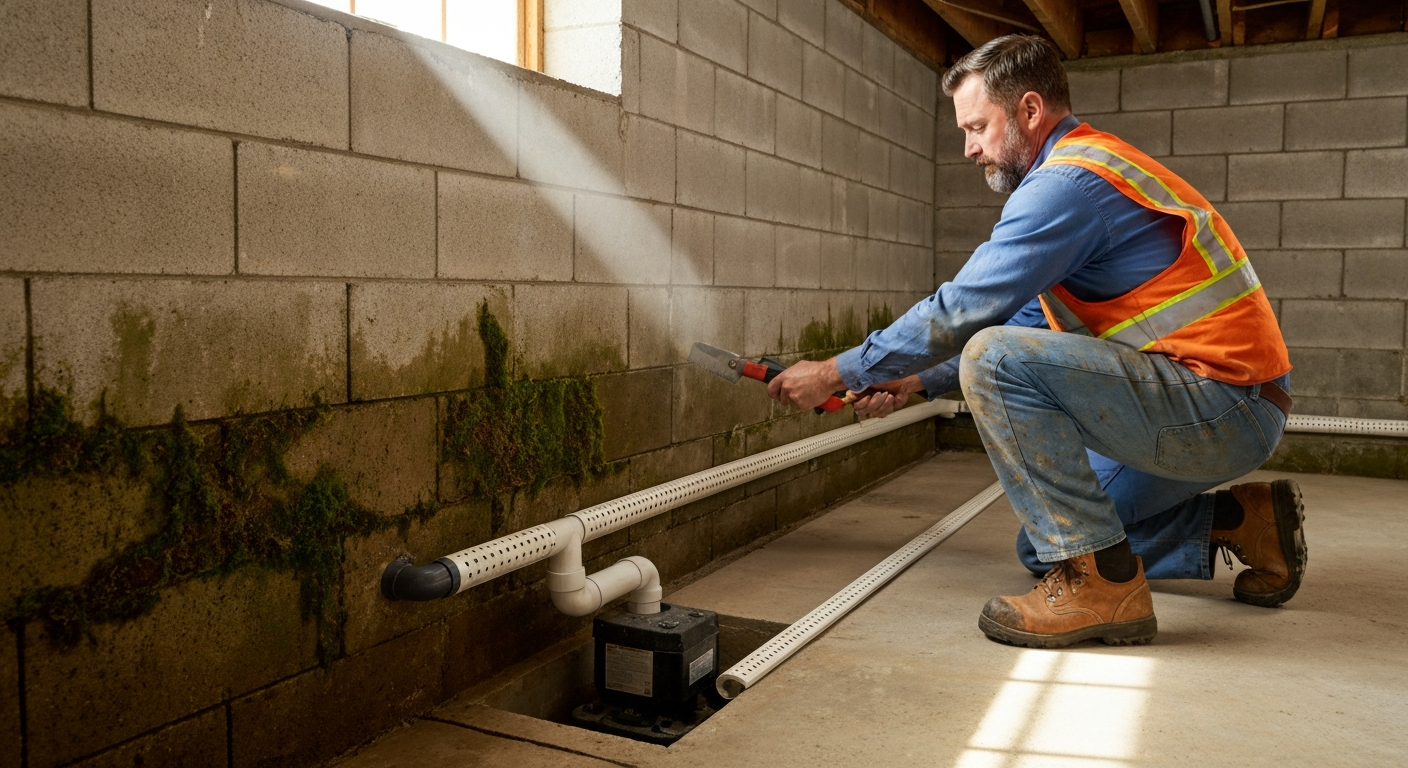
Basement waterproofing options and costs in Humber Summit
Humber Summit, Ontario has a lot of homes tucked into dense lots where water management is everything. With a local population of 12,416 (Statistics Canada, 2021 Census), the area has seen steady homeowner turnover and a clear pattern in basements: dampness and seepage often show up long before there’s any dramatic “wall failure.” That’s especially common in post-war and 1960–1980s housing, where original tar-and-paper systems and early drainage configurations can be decades old. As Toronto’s clay-heavy pockets saturate, freeze–thaw cycles can widen cracks and turn slow weeping into active leaks after a few winters.
In Humber Summit, waterproofing costs are shaped by soil conditions (glacial till and dense clay), higher seasonal water pressure, and access constraints. Contractors may need hand-digging around additions, working around deck footings, or dealing with shared driveways—each can add labour and disposal cost. Demand is especially strong in and around local pockets of older subdivisions where clay soil and aging drainage systems are most likely to be compromised.
The most cost-effective approach depends on whether water is entering through the exterior wall/floor junction, through cracks, or via a failing weeper system. Below is a practical comparison of common options contractors use in the Toronto area, and what homeowners typically budget for exterior versus interior solutions—then you can match your symptoms to the right scope in the table.
| Method |
What It Addresses |
Disruption Level |
Durability |
Price Range |
| Exterior excavation + new membrane + drainage tile |
Stops bulk water at the source; reduces hydrostatic pressure against foundation walls |
High (landscape removal, excavation to footing) |
Long-term when engineered for soil and water pressure |
$12,000 – $25,000 |
| Interior perimeter drain channel + sump pit |
Collects and removes water after it enters; helps with chronic seepage |
Medium (basement floor work, sump pit) |
Very durable with good discharge routing and proper sump sizing |
$6,000 – $15,000 |
| Foundation crack injection (epoxy or polyurethane) |
Targets isolated leaks through cracks; improves watertightness |
Low to Medium (prep/patching; drilling) |
High for the right crack type and correct injection material |
$600 – $3,000 |
| Sump pump installation (primary + battery backup) |
Controls water level and discharge during wet periods/outages |
Medium (pit, plumbing runs, backup integration) |
Strong system performance when backup is included and venting is correct |
$1,200 – $3,500 |
| Window well drain installation |
Reduces water pooling/saturation around basement window openings |
Low to Medium (excavation around window well) |
Good when backfill, slope, and weeper connection are maintained |
$1,500 – $4,500 |
| Lot re-grading / downspout extension |
Redirects surface water away from foundation; reduces ongoing saturation |
Low to Medium (topsoil/finish work) |
Good for as long as grading holds and downspouts remain intact |
$2,000 – $7,500 |
Prices are estimates only and vary by project scope, site access and material selection.
What affects the price of waterproofing in Humber Summit
Homeowners often see wide swings in waterproofing quotes for similar basements across Toronto and Ontario—commonly 30–50%—because the underlying water path and access conditions are rarely identical. Even when the visible problem looks the same (a damp wall or a recurring “corner leak”), the fix can range from targeted crack injection to full exterior excavation with new drainage tile.
In Humber Summit, three local variables typically separate regional costs from the national average: soil type, water table behaviour, and freeze–thaw cycles. Dense clay pockets expand when saturated, which increases lateral pressure on foundation walls and accelerates crack growth. That means a repair that might be “good enough” in sandy areas can become a recurring leak in clay-heavy neighbourhood pockets. In wet seasons, high water conditions can also force sump pumps to run longer—raising the importance of correct discharge routing and, when needed, battery backup. Also, Toronto’s freeze–thaw cycles widen small defects in concrete and block foundations, turning hairline cracks into active leakage routes over a few winters.
Concrete examples from Humber Summit projects: (1) a basement with efflorescence on a poured-concrete wall often responds better to crack injection combined with interior drainage, which can keep budgets near the foundation crack repair band of $600 – $3,000 for the targeted section—then you add a sump system only if monitoring shows recurring water. (2) a blocked or failed original weeping configuration usually triggers interior perimeter drains and sometimes a sump with backup; that can shift the budget toward the interior waterproofing band of $3,500 – $15,000. (3) tight side yards and working near decks or driveways can add labour in both exterior excavation (often $7,000 – $25,000) and interior plumbing runs.
| Price Factor |
Why It Matters |
Cost Impact |
| Interior vs. exterior approach — interior is less disruptive but addresses symptoms |
Exterior reduces hydrostatic pressure at the source; interior manages water after it enters |
Exterior can be 2–4× higher than interior for similar basement sizes |
| Foundation type — poured concrete vs. block vs. stone vs. ICF |
Crack behaviour and sealing methods vary by system |
Block often needs more drainage; ICF can differ in crack leakage patterns |
| Soil type — clay expands more than sand, adding pressure |
Clay saturation increases lateral pressure and crack activity |
May require stronger exterior detailing or more complete interior collection |
| Crack type and length — hairline vs. structural horizontal cracks |
Injection materials and repair scope change with crack severity |
Structural horizontal cracks may require engineering and/or underpinning |
| Sump pump backup system — battery or water-powered backup needed |
Protects against spring storms and outages |
Backup can add meaningful cost but prevents costly finish damage |
| Access — landscaping, decks, or driveways must be removed for exterior |
Excavation and re-installation labour increases |
Access constraints can push exterior projects toward the top end |
| Weeping tile age — original tile (60+ years) may be completely failed |
Older drainage can be clogged, collapsed, or disconnected |
May require removal/replacement or a full interior drainage redesign |
| Mould or efflorescence remediation required before sealing |
Sealers and membranes don’t bond well to active contamination |
Cleaning and mitigation add time and material |
Permits & regulations in Ontario
In Ontario, foundation excavation, structural crack repair that affects load paths, and changes to how lot drainage is directed generally require a building permit. If you’re planning work that impacts the foundation system or involves significant repairs to walls, floors, or structural elements, assume a permit will be required unless the contractor clearly confirms otherwise in writing. Sump pump installations that connect to the storm or sanitary sewer typically need municipal approval before any connection is made.
For structural crack repair—especially horizontal cracks in block walls, major step cracks, or any sign the wall is moving—an assessment by a structural engineer is often required. The engineer’s findings determine whether you’re looking at sealing only (for stable cracks) or additional structural work (like underpinning or other reinforcement) before any waterproofing “finishes” go on.
To verify a contractor in Humber Summit step-by-step, start with the business licence/registration they provide for Ontario work (and their reference to the correct trade scope). Next, ask for a certificate of insurance and verify it includes general liability coverage and reflects the project address. For employment coverage, confirm they carry WSIB/WCB coverage where applicable and provide clearance documentation if requested. Finally, for structural repair work, confirm they have engineering support available in-house or via a partner engineer, not just a general waterproofing crew.
Interior vs exterior waterproofing — what does Humber Summit need?
The fundamental difference is simple: exterior waterproofing (full excavation, membrane installation, new drainage tile, and engineered backfill) addresses water entry at the source, but it’s more disruptive and expensive. Interior waterproofing (perimeter drain channel, sump pit, and sump pump) manages water after it enters—typically with less excavation, less landscaping disruption, and faster access to the work area.
In Humber Summit’s clay-and-till context, water can exert lateral pressure on foundation walls, and freeze–thaw can keep defects “active.” That’s why exterior solutions tend to perform best when you have evidence of recurring hydrostatic pressure—like wall-floor seam seepage, widespread dampness, or consistently high water events. For poured concrete walls, crack injection can be a very effective component when the crack is stable, because these walls often respond well to sealing with the correct resin and preparation. For block foundations, you’ll often see seepage routes around block joints and multiple hairline paths, so interior drainage is commonly a practical complement to stop water from turning into finished-space damage.
Spring flooding and outage risk also matters. A sump pump helps most when discharge is correctly routed and when the system includes a backup plan—battery backup is particularly valuable if power flickers during wet weather. As a realistic budgeting example, if you have a single active crack, crack injection may fit around the foundation crack repair band of $600 – $3,000, but if monitoring shows consistent seepage along the perimeter, pairing it with interior drainage can move the project into the $3,500 – $15,000 range. Exterior excavation can exceed that significantly when access and full drainage replacement are needed, often aligning with the $7,000 – $25,000 band.
| Method |
Best For |
Addresses Source? |
Disruption |
Lifespan |
Price Band |
| Full exterior excavation + membrane |
High lateral water pressure, recurring seepage, failed exterior drainage |
Yes |
High |
10–20+ years when site water conditions are properly engineered |
$12,000 – $25,000 |
| Interior French drain + sump system |
Chronic seepage, damp floors/walls, failing weeper performance |
No (captures water after entry) |
Medium |
10+ years with correct sump sizing, discharge, and maintenance |
$6,000 – $15,000 |
| Crack injection — epoxy (structural) |
Stable cracks where the wall is not actively moving |
Partially (seals leakage path) |
Low |
Long-lasting when crack is stable and surface prep is done |
$600 – $2,500 |
| Crack injection — polyurethane (active leak) |
Cracks with active moisture or minor movement |
Partially (seals and accommodates some movement) |
Low |
Good for active leak conditions when matched correctly |
$900 – $3,000 |
| Interior drain channel only (no sump) |
Light seepage with gravity discharge or short-term/low water conditions |
No |
Medium to Low |
Variable—can be less reliable during heavy seasons |
$3,500 – $8,500 |
| Re-grading + downspout extensions |
Surface water issues and wetting tied to heavy rainfall/snowmelt |
Yes (for surface water routes) |
Low to Medium |
5–10+ years depending on maintenance and slope stability |
$2,000 – $7,500 |
How to choose a waterproofing contractor in Humber Summit
Choosing the right contractor in Humber Summit starts with verification—not just a competitive price. Ask for proof of Ontario licensing where applicable and confirm their general liability insurance certificate matches the project location and dates. For coverage of workers, request WSIB/WCB clearance or confirmation of coverage; contractors that can’t provide documentation usually signal weak administrative controls. Then, get 2–3 itemised written quotes with a labour and materials breakdown (not a single lump sum) so you can compare scopes like-for-like.
Read exclusions carefully: what’s not included in the quote (disposal, permit fees, concrete cutting limits, rebuilding steps/walkways, or mould remediation)? If the job likely needs a permit, confirm whether permit pull and inspection coordination are included. For warranty, look for two parts—workmanship warranty length and the manufacturer product warranty terms. Ask if the warranty is transferable if you sell the home, and what documentation or inspections are required to keep it valid.
For payment schedules, a safe approach is to never pay more than about 10–15% upfront, then use a holdback until key milestones are complete. Finally, insist on timeline commitments in writing: proposed start date, number of working days, and an estimated completion date that accounts for inspection delays and curing times.
- Compare quotes by scope: exact methods (membrane type, drain type, discharge route), not just “waterproofing.”
- Ask how they diagnose water entry: dye testing, monitoring, crack assessment, and drainage checks.
- Confirm whether disposal, restoration, and re-sealing of penetrations are included.
- Require a written plan for exterior backfill and slope if doing excavation.
- Ask what they do if they find collapsed drains or utility conflicts mid-excavation.
- Verify product datasheets and ensure the installer matches product requirements.
- Request references for similar Humber Summit basements (tight access, clay soil, older drainage).
- Check that they carry appropriate liability insurance and can provide WSIB/WCB clearance.
- Confirm warranty covers labour and workmanship, and product warranties are documented.
- Get start/end dates and curing/inspection timeframes in the contract.
- Confirm sump discharge routing (and backup plan) before signing.
- Use milestone payments with holdback for punch-list completion.
Red flags I see in Humber Summit: contractors who skip crack assessment and jump straight to sealing, quotes that don’t specify drainage discharge routing, “lifetime” promises without transferable workmanship terms, no proof of WSIB/WCB or insurance documentation, and lump-sum pricing that excludes disposal/restore/permit coordination without explaining why.
Frequently asked questions — waterproofing in Humber Summit
How long does basement waterproofing take in Humber Summit?
Timing in Humber Summit depends on whether you’re doing exterior excavation or an interior drainage system. Interior work (like perimeter drain channels and sump pits) is often quicker because it avoids backyard and side-yard excavation, but it still involves concrete cutting, prep, drainage line installation, and curing—typically several working days plus drying/patching time. Exterior waterproofing usually takes longer because excavation to footing depth, membrane detailing, new drainage tile placement, and engineered backfill all require more steps, and access can slow production in tight lots. If you’re combining crack injection with interior drainage, add setup and injection scheduling for the crack prep and surface drying. Your contractor should provide a start date and realistic completion estimate in writing, including inspection and material curing windows. For many homes, budgeting time alongside cost—like the $6,000 – $15,000 interior range—helps you plan around schedules.
What is a weeping tile and does my Humber Summit home have one?
A weeping tile is an older foundation drainage system installed around or at the footing level to collect groundwater and direct it away from the foundation. In Humber Summit and across the Toronto area, many post-war and mid-century homes originally had clay weeping tile or early plastic drains, though performance varies because these drains can clog, collapse, or become disconnected over decades. You might still “have one” but see little benefit if it’s failing—often the basement shows damp floors, efflorescence, or recurring seepage during wet spring periods rather than obvious wall damage. To confirm, a contractor may inspect accessible cleanouts, camera the drainage if accessible, or assess crawl/accessible points and basement floor history. If your drainage appears compromised, interior perimeter drains and sump installation can still work even with failed original weeping tile. Many homeowners end up budgeting toward interior waterproofing in the $3,500 – $15,000 band when the original system is no longer reliable.
Can I waterproof my basement in winter in Humber Summit?
Yes, in many cases you can waterproof in winter in Ontario, but it depends on what type of work you’re doing and how your basement behaves. Exterior excavation in winter is more complicated because frozen ground can delay excavation, increase labour time, and limit membrane and backfill placement quality. Interior waterproofing is often more feasible: crack injection, interior drain channel installation, and sump pit work are commonly scheduled when the interior can be kept controlled and dry during prep and sealing. Sump pumps can also be installed before the spring melt so the system is ready when freeze–thaw and water pressure surge. The key is planning: confirm material temperature requirements, ensure proper curing conditions, and make sure any discharge routing won’t freeze or create backup. A good contractor should explain winter constraints openly and may still recommend exterior work for better long-term results once soil conditions improve.
What is the difference between waterproofing and damp-proofing?
Damp-proofing generally means reducing moisture penetration—it’s often a surface-level or barrier approach meant for minor dampness, but it may not reliably handle hydrostatic pressure during heavy wet seasons. Waterproofing is designed to manage water entry routes and, where necessary, actively direct water collection and discharge so that basements stay dry under more demanding conditions. In Humber Summit, where clay soils can saturate and freeze–thaw cycles can widen cracks, dampness can become an active leak over a few winters. That’s why “damp-proofing” alone may not stop recurring seepage, particularly at the wall-floor junctions, cold joints, tie holes, and older drainage failures. Contractors typically move toward interior drainage (sump and perimeter drains) or exterior membrane and drainage tile when the goal is true waterproofing performance. If you’re seeing active seepage or efflorescence, you’ll usually need a scope closer to the interior band of $3,500 – $15,000 or targeted crack repair around $600 – $3,000—not just a basic coating.
Will basement waterproofing affect my property value in Humber Summit?
Basement waterproofing can positively affect property value because it reduces risk and protects finished space from recurring dampness, odours, and mould concerns. In Humber Summit’s older housing stock, buyers often ask about foundation performance and drainage history—particularly if there’s a record of spring wetness or past leaks. A properly documented waterproofing system (with written warranty, product details, and a clear drainage strategy) can improve buyer confidence and shorten due-diligence questions. The value impact is strongest when the scope matches the real water entry path: for example, addressing failing drainage or active cracks rather than only “treating symptoms.” Exterior waterproofing can add more visible reassurance to buyers because it targets water at the source, though it’s typically more expensive; interior solutions still matter when they prevent damage during high water events. Even modest repairs—like correctly matched crack injection within $600 – $3,000—can be valuable when the crack is stable and actively causing seepage.
What drainage issues are most common in Humber Summit homes?
The most common drainage issues in Humber Summit involve recurring seepage triggered by heavy rain, snowmelt, and wet-season clay saturation. Because Toronto-area soils often include glacial till and dense clay pockets, water can press laterally against foundation walls, making cracks around cold joints, tie holes, and the wall-floor seam more active during freeze–thaw. Another frequent cause is aging or failing original drainage systems—clay or early plastic weeping tile that becomes clogged or disconnected, leading to damp floors, efflorescence, and sometimes basement flooding without obvious exterior wall collapse. Home access constraints (tight side yards, decks, and driveways) also mean water management details like downspout routing and grading may be off by small amounts, enough to keep basements wet. Finally, isolated window well problems can contribute—pooling around openings can saturate backfill and find paths through penetrations. A good contractor will identify which of these routes is driving your symptoms before recommending a plan.