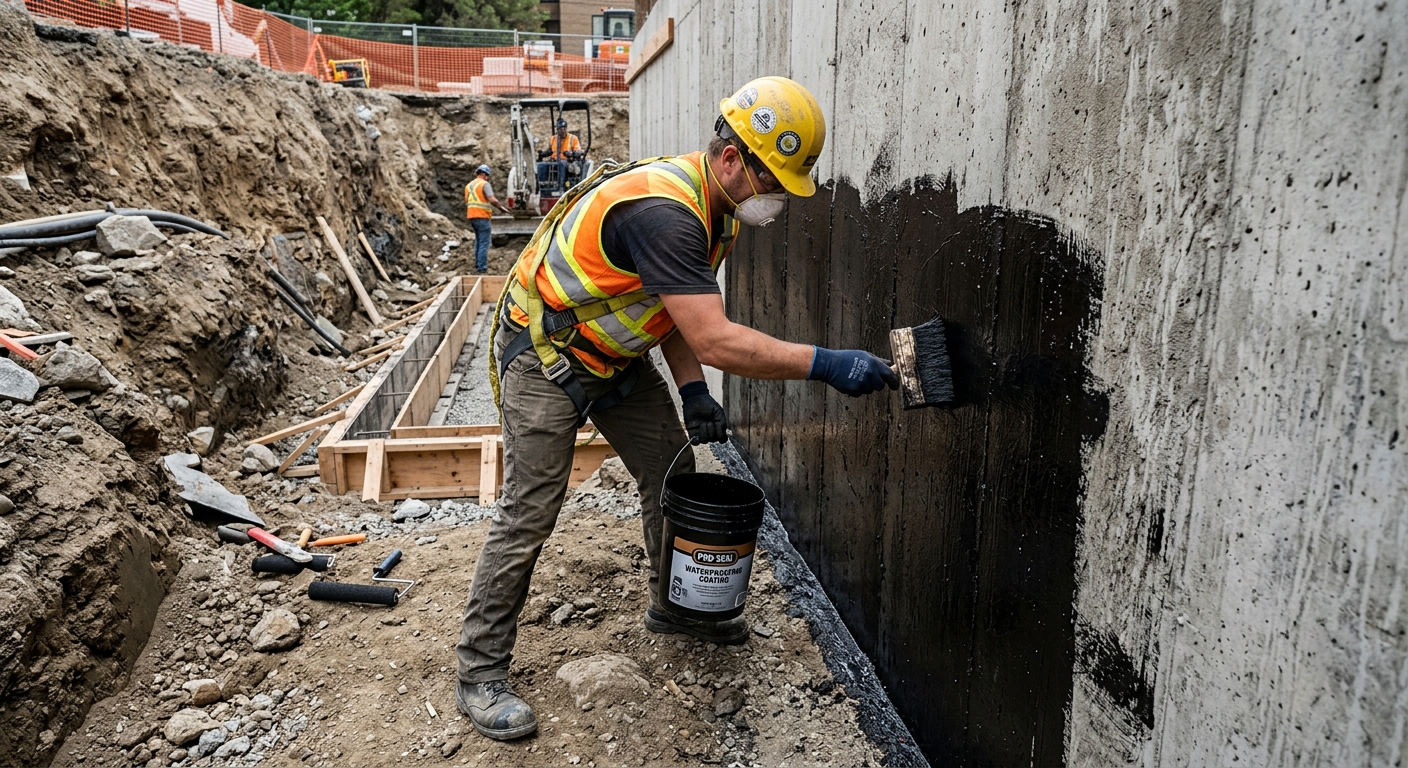
Basement waterproofing options and costs in Lambton Shores
Lambton Shores homeowners typically face basement moisture from the same root causes: seasonal groundwater pressure, older foundation drainage systems, and freeze–thaw opening up weak joints. With 56.9% of homes in the area built before 1981, it’s common to see original tar-and-paper damp-proofing that’s long past its expected performance, plus weeping tile that’s become clogged or disconnected. In 2021, the community included 4,295 homeowner households (81.0% of households own), so there’s a steady local demand for repairs that protect finished basements without turning a small leak into a full gut project.
In the Windsor–Sarnia corridor, your quote is driven heavily by soil and water table conditions. Much of the Lambton and Essex region has fine-textured, poorly drained soils that hold moisture against foundations, which increases seepage risk and hydrostatic pressure. When combined with repeated freeze–thaw cycles, cracks and joints that were “stable” for years can worsen, requiring more comprehensive drainage upgrades.
Trade demand is especially noticeable around Port Franks and the Lake range, where older homes and cottage-style seasonal use can mean basements sit closed up during wet stretches—mould and efflorescence then show up quickly once moisture gets inside. The good news is that most basement problems can be addressed with either an exterior system (source control) or an interior system (symptom control), often paired with targeted crack repair.
Use the table below to compare typical methods and what they address, then match the approach to your foundation type, access limits, and how far water is getting.
| Method |
What It Addresses |
Disruption Level |
Durability |
Price Range |
| Exterior excavation + new membrane + drainage tile |
Source water entry from foundation wall and footing; reduces hydrostatic pressure |
High (excavation, backfill, landscaping restoration) |
Long-term when backfill and drain are installed correctly |
$12,000–$25,000 |
| Interior perimeter drain channel + sump pit |
Water after it enters; captures seepage and relieves pressure at the floor line |
Medium (interior cutting; sump pit and piping) |
Very good for typical seepage with properly sized sump discharge |
$8,000–$18,000 |
| Foundation crack injection (epoxy or polyurethane) |
Sealing cracks to stop seepage pathways (polyurethane for active leaks) |
Low to Medium (minor prep, ports/cleaning) |
Good to excellent depending on crack type and dryness before sealing |
$600–$2,500 |
| Sump pump installation (primary + battery backup) |
Protects against ongoing groundwater entry and power outages |
Medium (pit, discharge lines, electrical work) |
High when paired with proper discharge routing and backup |
$1,800–$4,500 |
| Window well drain installation |
Directs rain/snowmelt away from window wells and prevents water pooling |
Low to Medium (excavation around the well) |
Good when grading and discharge are correct |
$1,200–$3,000 |
| Lot re-grading / downspout extension |
Reduces surface water run-off toward foundation |
Low (site work; minimal interior impact) |
Moderate (works best as part of a larger drainage plan) |
$900–$2,400 |
Prices are estimates only and vary by project scope, site access and material selection.
What affects the price of waterproofing in Lambton Shores
In Lambton Shores and the wider Windsor–Sarnia corridor, it’s not unusual to see quotes for the “same” basement problem vary by 30–50%. That difference usually comes down to how contractors interpret the water source (surface water vs. groundwater), what they include as part of waterproofing (crack sealing only vs. drainage + discharge + backfill), and how difficult the access is on your specific lot. Two homes with similar leak locations can require very different solutions if one sits on poorly drained clay and the other has more free-draining sand.
When you compare local pricing to broader Ontario averages, the main drivers are soil type, water table behaviour, and freeze–thaw. Fine, clay-heavy soils expand and contract through seasonal cycles, which increases lateral pressure on foundation walls and can widen existing cracks over time. In Windsor–Sarnia, elevated groundwater conditions mean sump systems often need longer run-times and properly sized discharge lines—especially after spring thaw. In many older homes (over half built before 1981), weeping tile and exterior drainage are frequently aged or partially failed, and that pushes scope toward re-plumbing or adding an interior perimeter system. A common scenario is interior drainage plus sump at a ballpark in the $8,000–$18,000 range, while a full excavation approach can rise into the $12,000–$25,000 band when excavation, membrane, and new tile are required.
Concrete examples from Lambton Shores: (1) a basement with moisture at the floor-to-wall joint and cloudy sump activity usually needs interior perimeter drainage and often a backup pump, not just crack injection; (2) a home with visible surface runoff staining at window wells typically costs less because re-grading and downspout extensions can be a meaningful portion of the solution; (3) older block foundation sections with step cracks frequently require both crack repair and interior drainage—sealant alone won’t address water pressure.
Bottom line: the more your site behaves like “water is coming from below and behind,” the more you should expect a higher-cost, full drainage solution and longer contractor time for cold-weather detailing.
| Price Factor |
Why It Matters |
Cost Impact |
| Interior vs. exterior approach — interior is less disruptive but addresses symptoms |
Exterior stops the source; interior manages water after it enters |
Exterior can cost ~50%–200% more depending on access and excavation needs |
| Foundation type — poured concrete vs. block vs. stone vs. ICF |
Materials affect crack behaviour, sealing success, and drainage strategy |
Block and stone often require more labour for sealing + drainage coordination |
| Soil type — clay expands more than sand, adding pressure |
Clay retains moisture and exerts greater lateral/hydrostatic pressure |
More robust drainage (often footing drains + sump) increases scope |
| Crack type and length — hairline vs. structural horizontal cracks |
Structural cracks can indicate movement and require more than sealing |
Horizontal/step cracks can add engineering and repair complexity |
| Sump pump backup system — battery or water-powered backup needed |
Protects against outages during spring high-water periods |
Backup typically adds a noticeable cost but reduces failure risk |
| Access — landscaping, decks, or driveways must be removed for exterior |
Exterior work requires excavation and cold-weather backfill preparation |
Removal/replacement can swing the quote significantly |
| Weeping tile age — original tile (60+ years) may be completely failed |
Aged tile may be clogged, broken, or disconnected |
Replacing or supplementing tile increases materials and labour |
| Mould or efflorescence remediation required before sealing |
Moisture and salts must be treated to improve adhesion and indoor air |
Additional prep steps extend labour and add consumables |
Permits & regulations in Ontario
In Ontario, foundation excavation, structural crack repair in certain cases, and changes to lot drainage typically require a building permit. If you’re planning exterior excavation down to the foundation, replacing/connecting drains, or altering discharge routes, a permit pathway is commonly involved because the work affects stormwater management and sometimes building envelope performance. Sump pump installations that connect into the municipal sewer system (storm or sanitary) generally require municipal approval before tie-in—contractors should confirm the correct discharge method for your municipality and provide documentation.
For structural crack repair—particularly horizontal cracks in block walls, major step cracks, or signs of wall movement—a structural engineer’s assessment is often needed to determine whether underpinning or additional structural intervention is required. That assessment protects you, because sealing a crack that’s actively moving won’t stop ongoing movement and may shorten system lifespan. When you get a quote in Lambton Shores, verify the contractor has the right process and support for structural work, plus appropriate liability insurance and coverage consistent with workplace safety requirements (WSIB/WCB).
To verify contractor compliance step-by-step: (1) ask for the contractor’s Ontario business registration details and licensing information (where applicable to the scope), (2) request a current Certificate of Insurance (liability) and review policy limits, (3) request proof of WSIB/WCB coverage or clearance documentation relevant to their trades, (4) for structural work, confirm engineering support is available and identify who will sign off, and (5) confirm whether permits are included in the quote or are an owner-paid allowance.
Interior vs exterior waterproofing — what does Lambton Shores need?
Interior and exterior waterproofing are designed for different realities. Exterior waterproofing means full excavation along the foundation, installing membrane, new drainage tile, and correct backfill/drainage so water can’t reach the wall in the first place. It’s the most permanent source-control method, but it requires more site disturbance and often more time—an important consideration for occupied homes and tighter lots. Interior waterproofing (perimeter drain channel, sump pit, sump pump) captures water after it enters and helps relieve pressure at the foundation/floor transition. It’s less invasive and typically faster, but it doesn’t eliminate hydrostatic pressure against the wall itself.
In Lambton Shores, soil conditions often push homeowners toward systems that manage groundwater reliably. With fine-textured, poorly drained soils and seasonal water-table rise, interior drainage can work very well—especially when paired with crack injection. Poured concrete walls often respond better to crack injection because the crack geometry is usually more consistent, while block foundations frequently benefit from interior drainage as a practical complement; the wall joints and mortar lines can allow seepage even after targeted sealing. Because freeze–thaw cycles can worsen existing pathways, systems that include proper drainage and, when needed, battery backup become more valuable during spring thaw.
A realistic pricing example: if you have localized seepage and a few narrow cracks, a crack injection and interior perimeter drain plan may land around $8,000–$18,000. If inspection confirms the water is pushing through the footing/wall from outside and the exterior drainage system is failing, a full excavation approach in the $12,000–$25,000 band is often justified because it removes the source. If your issue is mostly surface runoff at window wells, re-grading and downspouts may be a smarter first step rather than expensive excavation.
| Method |
Best For |
Addresses Source? |
Disruption |
Lifespan |
Price Band |
| Full exterior excavation + membrane |
Ongoing groundwater pressure, failed exterior drainage, long-term moisture |
Yes |
High |
Many years when discharge and backfill are done correctly |
$12,000–$25,000 |
| Interior French drain + sump system |
Seepage at joints/floor line; access constraints for excavation |
No (manages water after entry) |
Medium |
Long service life with correct pump selection and discharge |
$8,000–$18,000 |
| Crack injection — epoxy (structural) |
Mostly stable, non-leaking cracks or structural repair where moisture is minimal |
Helps stop leakage via crack sealing |
Low |
High if cracks are stable and surface prep is thorough |
$600–$2,500 |
| Crack injection — polyurethane (active leak) |
Active seepage through cracks and joints where water is still moving |
Helps stop leakage via crack sealing |
Low |
High when chosen for active flow and paired with drainage as needed |
$700–$2,800 |
| Interior drain channel only (no sump) |
Light moisture without significant hydrostatic pressure; limited seepage |
No |
Medium to Low |
Moderate—depends on whether water can be effectively managed |
$5,500–$11,000 |
| Re-grading + downspout extensions |
Surface water issues, foundation staining after rainfall/snowmelt |
Partially (reduces surface water reaching foundation) |
Low |
Moderate—must be maintained |
$900–$2,400 |
How to choose a waterproofing contractor in Lambton Shores
Start by verifying credentials that actually protect you. In Ontario, ask the contractor for their liability insurance (and confirm the policy is current and includes work at your address), and request proof of WSIB/WCB coverage or a clearance letter applicable to the trades performing the work. If structural work or engineer sign-off is required, confirm who provides the engineering support and whether the contractor can document it for your file. For waterproofing contractors in Lambton Shores, experience with excavations, cold-weather detailing, and basement air quality issues (mould/efflorescence) is as important as paperwork—because the wrong sequence can trap moisture behind new finishes.
Get 2–3 itemised written quotes that separate labour and materials (membrane type, drainage tile, piping sizes, pump model, discharge method, insulation/backfill, disposal). Make sure the scope is clear: what’s excluded (e.g., landscaping restoration beyond a defined allowance), is a permit included or an allowance, and is spoil/disposal part of the price? Review warranties too: look for a clear workmanship warranty length, the product/manufacturer warranty coverage, and whether warranties are transferable if you sell the property.
Payment schedule matters. Never agree to pay more than about 10–15% upfront. Request a holdback until key waterproofing steps are complete and verified (for example, after membrane/drain installation and before backfill, if exterior work is involved). Finally, ask for a realistic timeline: a start date and completion estimate in writing, with notes on weather and curing times for sealants/membranes in spring freeze–thaw conditions.
- Ask for a site visit and moisture source assessment (surface water vs. groundwater).
- Request an itemised scope: excavation depth, drain type, discharge route, and backfill specification.
- Confirm whether permits are required and whether they’re pulled by the contractor or by you.
- Verify liability insurance is current; record the insurer and policy limits.
- Verify WSIB/WCB clearance or coverage for the workers performing the work.
- Ask who supplies engineering sign-off if cracking indicates potential structural movement.
- Check warranty terms in writing (workmanship and product/manufacturer) and transferability.
- Ensure pump details are included: primary specs, float settings, alarm (if offered), and backup plan.
- Confirm discharge compliance: where it goes, how it’s routed, and what prevents backflow.
- Ask about interior prep requirements (mould cleaning, efflorescence removal, drying time).
- Clarify restoration scope: what gets reinstalled and to what standard (flooring, landscaping, eavestrough tie-ins).
- Keep the payment schedule conservative: small deposit, then progress payments, holdback until completion.
Red flags to watch for in Lambton Shores: (1) a quote that discusses “waterproofing” but doesn’t identify the water source; (2) refusing to itemise materials or omitting discharge details for a sump; (3) promising crack injection will solve active leaks without addressing drainage and hydrostatic pressure; (4) no written warranty for workmanship; and (5) asking for a large upfront payment before key steps are completed.
Frequently asked questions — waterproofing in Lambton Shores
How do I compare waterproofing quotes?
In Lambton Shores, the safest way to compare quotes is to insist on itemised scopes rather than lump sums. Look for line items that show what’s being done (exterior membrane and drainage tile versus interior perimeter drain and sump), the specific materials used, and the discharge route for any sump pump. A second comparison point is whether the quote addresses your likely water source: if moisture increases after spring thaw, you should see a plan for elevated groundwater and hydrostatic pressure, not only surface fixes. Finally, check warranty terms and exclusions. If one quote is dramatically lower, confirm whether it omits critical steps like weeping tile replacement, backfill specification, or proper mould/efflorescence remediation. Price band examples help—interior systems are often in the $8,000–$18,000 range, while full exterior work commonly lands in the $12,000–$25,000 band.
How long does basement waterproofing take in Lambton Shores?
Timing depends on the method. Interior waterproofing with a perimeter drain and sump typically takes several working days, but it can take longer if there’s mould remediation, significant interior cutting, or extensive crack preparation. Exterior waterproofing usually takes longer because excavation, drainage installation, backfill compaction, and membrane curing must be sequenced correctly—plus you’ll need landscaping restoration. In Lambton Shores and the Windsor–Sarnia corridor, spring freeze–thaw can extend schedules because the ground can be intermittently workable and because some materials require suitable temperature and drying conditions. A good contractor will provide a start date and an estimated completion window in writing, along with weather contingencies. If your quote doesn’t include a realistic timeline or doesn’t mention drying/curing and backfill staging, treat that as a planning red flag.
What is a weeping tile and does my Lambton Shores home have one?
A weeping tile is an underground drainage system installed around or alongside the foundation to collect groundwater and direct it to a sump or discharge point. In older Lambton Shores homes—especially those built before 1981—these systems are sometimes present but may be clogged, broken, disconnected, or simply not functioning like they used to. That matters because failing weeping tile can allow groundwater to keep contacting the foundation wall and footing, increasing seepage risk and hydrostatic pressure. You can’t always tell just by looking at the basement walls. Contractors often identify it through foundation access points, past homeowner records, or by locating plumbing during the waterproofing assessment. If your home is in a neighbourhood with older housing stock and limited exterior drainage, it’s common to find “present but failed” tile rather than a truly intact system. (Statistics Canada, 2021 Census)
Can I waterproof my basement in winter in Lambton Shores?
You can often waterproof in winter in Ontario, but feasibility depends on what kind of work is being done. Interior waterproofing—like installing a perimeter drain channel, sump pit, and sump pump—can usually be done year-round if the basement is accessible and conditions allow safe cutting and installation. Exterior excavation is more constrained because frozen ground and cold backfill conditions can complicate excavation, drainage performance, and compaction. Also, sealants and membranes still need proper installation conditions to perform as designed. In Lambton Shores, spring thaw is a known peak time for leaks, so many homeowners schedule exterior work before freeze-up when possible. If winter work is unavoidable, discuss cold-weather detailing, drying time, and how your contractor controls indoor dust and moisture. A reputable contractor will plan around the site and won’t oversell “anytime” exterior excavation.
What is the difference between waterproofing and damp-proofing?
In everyday conversation, people use the terms interchangeably, but there’s a real difference. Damp-proofing is designed to resist moisture penetration under light conditions; it’s often associated with older approaches like basic coatings or limited exterior measures. Waterproofing is a higher-performance system intended to manage water entry under pressure—commonly involving drainage design (weeping tile/footing drains), membrane systems, and/or an interior collection system with a sump pump. In Lambton Shores, with older homes and groundwater behaviour that can rise seasonally, damp-proofing alone may not keep water out once cracks widen and joints loosen from freeze–thaw. That’s why many remedial projects involve interior perimeter drains and sump retrofits, or full exterior excavation when source control is required. If you’re comparing quotes, confirm which category the contractor is actually proposing—damp-proofing without proper drainage is often why basements re-develop moisture.
Will basement waterproofing affect my property value in Lambton Shores?
Yes, it can—especially for buyers who worry about moisture, odours, mould, and finished-basement usability. In a community with a large share of homeowner households (81.0% of households own, Statistics Canada, 2021 Census) and a high proportion of older housing stock (56.9% built before 1981), waterproofing improvements are often viewed as risk reduction. The stronger the solution, the more credible the value signal: a documented interior drainage + sump with backup, or a properly engineered exterior drainage/membrane system with warranties, typically gives buyers confidence. Keep expectations realistic: waterproofing doesn’t “guarantee” an appraisal increase, but it can protect what you already paid for—dry walls, usable space, and fewer future repairs. Ask your contractor for written warranty documentation and a clear summary of what was installed and why, so you can share it during resale.