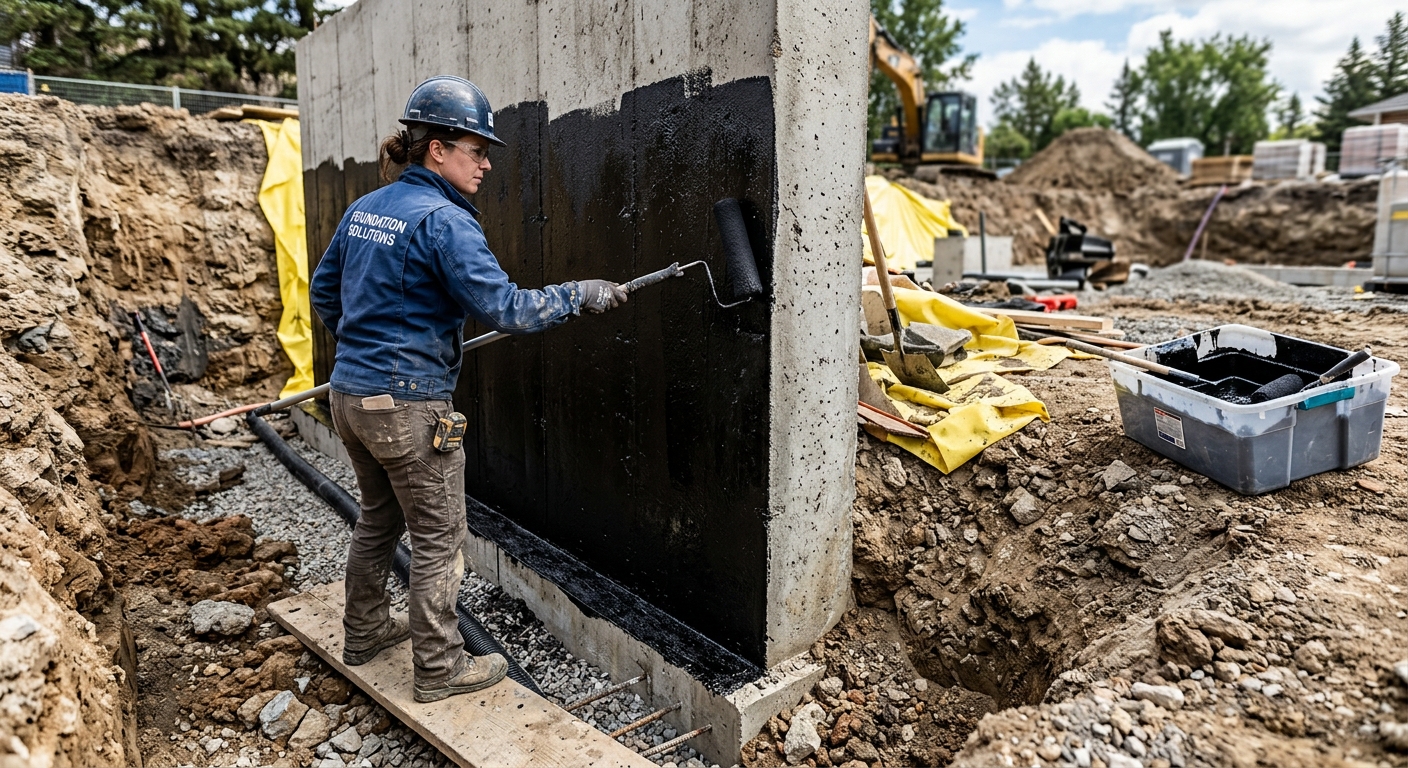
Basement waterproofing options and costs in Bankview
In Bankview, Alberta, basement waterproofing is usually less about “will my foundation fail?” and more about whether water has found a pathway and how reliably it can be diverted before freeze–thaw widens cracks. With a population of 5,125 (Statistics Canada, 2021 Census), Bankview is a small but active market where contractors often focus on older housing stock—homes built decades ago are far more likely to have original tar-and-paper or early membranes paired with corroded or undersized weeping tile. When that drainage ages, seepage turns into recurring dampness, efflorescence, and localized wall leaks.
Calgary-area pricing is shaped by our clay and clay-till soils, which hold water and can expand when saturated, increasing lateral pressure on foundation walls and footings. Add southern Alberta’s freeze–thaw cycles and you get more frequent failure of joints and dormant seepage channels—so the work isn’t just “seal it once,” it’s “fix the water route.” Excavation access is another big driver: urban lots in Bankview often have patios, tight side yards, and landscaping that must be carefully removed and restored, which affects labour time and disposal.
Because of the typical soil conditions and frequent drainage maintenance needs, waterproofing demand is especially strong around inner-city pockets near transit corridors and older streets where weeping tile is commonly past its service life. The right approach depends on whether you’re stopping water at the source (exterior) or controlling it after entry (interior). Use the comparison below to align scope with your basement symptoms.
| Method |
What It Addresses |
Disruption Level |
Durability |
Price Range |
| Exterior excavation + new membrane + drainage tile |
Stops water at the exterior foundation face; replaces failed drainage route |
High (excavate around perimeter; landscaping removal/restoration) |
Long-term when paired with working perimeter drains and proper backfill |
$9,500–$24,500 |
| Interior perimeter drain channel + sump pit |
Collects seepage after it enters; reduces hydrostatic pressure inside |
Medium (floor removal along perimeter; wall surface prep) |
Very effective for clay-saturated conditions when drainage capacity is correct |
$6,000–$14,500 |
| Foundation crack injection (epoxy or polyurethane) |
Seals cracks to reduce seepage pathway; chooses product based on whether it’s active |
Low to medium (surface prep; ports; curing time) |
Best when crack movement is minimal and water is managed |
$800–$1,900 |
| Sump pump installation (primary + battery backup) |
Maintains low water levels during heavy spring storms and power events |
Low to medium (pit excavation; discharge line; minor restoration) |
High reliability when backup is included and discharge is correctly sized |
$1,200–$3,400 |
| Window well drain installation |
Prevents rain/snowmelt from saturating window well walls and leaking in |
Low (targeted excavate; stone backfill and drain lines) |
Good for localized leaks when ties into a functioning drainage route |
$1,000–$2,700 |
| Lot re-grading / downspout extension |
Reduces surface water infiltration near the foundation |
Low to medium (yard work; minor removal/replacement) |
Moderate—works best with gutters/discharge corrected and exterior drainage intact |
$2,000–$6,500 |
Prices are estimates only and vary by project scope, site access and material selection.
What affects the price of waterproofing in Bankview
Even when two homeowners describe the “same” basement leak, waterproofing quotes in Calgary and across Alberta can swing by roughly 30–50% because the scope is rarely identical. One crew may be solving surface water and localized seepage; another may be addressing a failed perimeter drainage system, active foundation crack movement, and interior hydrostatic conditions that only show up during spring melt. Labour rates and material choices also vary, but the biggest cost differences come from how each contractor diagnoses the water source and designs the drainage path.
Three local drivers separate Calgary-area costs from a national average: soil type, water table behaviour, and freeze–thaw. Clay-heavy soils—common across parts of the Prairies—expand when saturated, increasing lateral pressure on foundation walls and widening cracks over time. When water has nowhere to go, you also see higher sump run times in basements that rely on interior collection systems. In older neighbourhoods, original weeping tile may be 60+ years old and partially collapsed; that can turn a slow seep into recurring wall dampness, efflorescence, and musty odours. Freeze–thaw then enlarges joints and channels, making the same repair need rework sooner if the drainage plan is incomplete.
In Bankview specifically, cost can rise if your downspouts discharge too close to the foundation and you also have low-lying landscaping that holds water. It can drop if the leak is clearly window-well driven and your exterior access is open—targeted window well drainage plus re-grading may be enough. Conversely, if you have a poured concrete wall with hairline cracking and good access, crack injection (often paired with improved surface runoff) can be a cost-effective step; if you’re looking at full exterior work, excavation and drainage tile installation are typically where budgets jump—often from the interior band of about “$6,000–$14,500” up into the exterior excavation range of “$9,500–$24,500” depending on perimeter length and restoration.
| Price Factor |
Why It Matters |
Cost Impact |
| Interior vs. exterior approach — interior is less disruptive but addresses symptoms |
Exterior stops water at the source; interior controls it after entry |
Exterior often adds major excavation and restoration labour; interior is usually 40–60% less disruptive |
| Foundation type — poured concrete vs. block vs. stone vs. ICF |
Different wall materials respond differently to crack sealing and drainage design |
Poured concrete cracks often suit injection; block walls may require stronger interior drainage plans |
| Soil type — clay expands more than sand, adding pressure |
Higher saturation increases lateral pressure and seepage risk |
Clay sites can push pricing toward full perimeter drainage and larger sump capacity |
| Crack type and length — hairline vs. structural horizontal cracks |
Active/structural movement changes products and may require engineering |
Structural or active leaks often add engineering time, more ports/holes, and additional repairs |
| Sump pump backup system — battery or water-powered backup needed |
Power reliability matters during spring storms and grid stress |
Backup systems add cost but reduce risk of repeat flooding |
| Access — landscaping, decks, or driveways must be removed for exterior |
Urban access controls excavation speed and restoration scope |
Tight access can increase labour and disposal; open access can lower it |
| Weeping tile age — original tile (60+ years) may be completely failed |
Old drainage can be collapsed or disconnected |
Complete replacement shifts interior-only work into full drainage scope |
| Mould or efflorescence remediation required before sealing |
Active moisture drives biological growth and salt deposits |
Additional prep and drying time can add several days and material cost |
Permits & regulations in Alberta
In Alberta, some waterproofing and foundation-related work commonly requires a permit, especially when you’re altering the foundation, excavation support, or lot drainage patterns. Typically, foundation excavation and work that changes how water is directed around the foundation often triggers permitting requirements. Structural crack repair—particularly for horizontal cracks in block walls, major step cracks, or any sign of movement—usually needs a permit and, more importantly, an engineer’s assessment to confirm whether underpinning or other structural measures are required.
Sump pump installations can also require municipal approval when discharge connects into the storm or sanitary sewer systems, or when a new discharge route is created. Basement waterproofing that is limited to interior sealing and installing a perimeter drain/sump basin may not always trigger the same level of approval as exterior excavation, but you should still confirm with your local building department before work begins.
Here’s a practical step-by-step way a Bankview homeowner verifies a contractor: (1) Ask for their Alberta business licence details and confirm the contractor’s standing through the relevant online registry, (2) request a current certificate of liability insurance—make sure it matches your address/job site and includes adequate coverage—then verify it’s not expired, (3) ask for WSIB/WCB clearance documentation (or applicable proof of coverage status), and (4) for structural repairs, confirm they have engineering support or a defined process for obtaining an engineer review. Don’t rely on verbal promises; request documents before signing.
Interior vs exterior waterproofing — what does Bankview need?
In Bankview, the choice between interior and exterior waterproofing comes down to whether your system needs to stop water at the exterior face or manage water after it enters the basement. Exterior waterproofing involves full excavation around the foundation, new membranes, new drainage tile, and careful backfill—so it targets the source. The trade-off is higher cost and more landscape disruption, especially on lots with patios, mature trees, tight side yards, or limited access for machinery.
Interior waterproofing typically uses a perimeter drain channel, a sump pit, and a sump pump to collect seepage and reduce internal hydrostatic pressure. It’s less invasive, and it can be the best first line of defence when you have limited access or when the leak pathway is already inside the basement. However, interior systems do not remove the pressure acting on the wall; they manage it. For Bankview’s clay-prone soils and freeze–thaw cycles, that means interior drainage must be properly sized and maintained, and it often performs best when paired with crack sealing and improved surface runoff.
Poured concrete walls in Calgary often respond well to crack injection when cracks are stable and primarily a water pathway. Block foundations can be more complex, and many homeowners still benefit from interior drainage even after addressing cracks because block joints and mortar can allow seepage under pressure.
Regarding sump backup: Alberta power reliability can be stressed during spring weather and heavy runoff events, so battery backup or an equivalent backup approach is often worth considering. For a clear budgeting example, if your symptoms are localized and access is tight, interior perimeter drainage with a sump can fall around $6,000–$14,500. If you have widespread exterior failure and the perimeter drains are compromised, full exterior excavation can move you into $9,500–$24,500; the difference is justified when you’re truly removing the exterior water entry route rather than repeatedly controlling it inside.
| Method |
Best For |
Addresses Source? |
Disruption |
Lifespan |
Price Band |
| Full exterior excavation + membrane |
Widespread seepage, failed exterior drainage, persistent hydrostatic pressure |
Yes |
High |
Long-term with correct drainage tile and backfill |
$9,500–$24,500 |
| Interior French drain + sump system |
Interior dampness, localized seepage, limited exterior access |
No (controls water after entry) |
Medium |
Very strong when pump/discharge are sized correctly |
$6,000–$14,500 |
| Crack injection — epoxy (structural) |
Non-moving or mostly stable cracks in poured concrete |
Yes (seals pathway when stable) |
Low to medium |
Good for stable cracks; best with drainage improvements |
$800–$1,600 |
| Crack injection — polyurethane (active leak) |
Cracks with ongoing seepage or pressure-driven leaks |
Yes (seals pathway even with minor movement) |
Low to medium |
Strong for active leakage when crack movement and water pressure are addressed |
$1,000–$1,900 |
| Interior drain channel only (no sump) |
Light seepage where water can be managed without active pumping |
No (collects water after entry) |
Medium |
Moderate; depends heavily on flow capacity and discharge |
$5,000–$10,500 |
| Re-grading + downspout extensions |
Surface water problems near foundation, window-well wetness |
Partially (reduces source near grade) |
Low to medium |
Moderate; performance depends on ongoing maintenance |
$2,000–$6,500 |
How to choose a waterproofing contractor in Bankview
Choosing a waterproofing contractor in Bankview is about more than “lowest price.” Start by verifying they’re properly covered for the work. In Alberta, ask for their liability insurance certificate (confirm coverage, effective dates, and job/address details). For workers, request WSIB/WCB clearance or proof of coverage status before any excavation or interior demolition begins—this protects you from being stuck with liability if an incident occurs on-site.
Next, get 2–3 itemised written quotes—not just a lump sum. Your quote should separate labour and materials and clearly list what’s included: membrane product type, drainage tile size/spec, sump pump model (and whether a discharge line is included), crack injection product (epoxy vs polyurethane), and any restoration scope (concrete floor reinstatement, grading, and landscaping topsoil/seed). Also confirm exclusions: for example, whether disposal fees for heavy clay spoil are included, whether permits are included or billed separately, and whether mould/efflorescence remediation is part of the plan.
Warranty matters. Ask for the workmanship warranty length and whether product/manufacturer warranties apply. Determine if warranties are transferable to future owners, since resale can be impacted by documentation. For payment schedule, never pay more than 10–15% upfront; hold back a portion until the waterproofing is complete and tested/cleaned up.
Finally, timelines should be in writing: ask for a start date and an estimated completion window. Be cautious if the contractor won’t provide specifics on drying time, cure times for injection, and how they’ll manage wet seasons and material lead times in Calgary weather.
- Request their Alberta licence/business details and confirm it before work begins.
- Verify current certificate of liability insurance (matching your address and valid dates).
- Ask for WSIB/WCB clearance/proof of coverage in writing.
- Get 2–3 itemised quotes with labour/material line items.
- Confirm disposal fees for clay spoils are included or clearly excluded.
- Ensure scope lists exact methods (exterior membrane type, tile outlet/discharge design).
- Check whether permits are pulled (and whether that’s included in the quote).
- Ask for product data sheets and warranty terms, not just “we guarantee it.”
- Require a written payment schedule with 10–15% maximum deposit.
- Hold back payment until cleanup and restoration are complete.
- Clarify what happens if water levels are higher than expected during spring melt.
- Make sure the sump plan includes battery backup when power loss is a risk.
Red flags in Bankview: vague scopes (“waterproof the basement” without membrane/drain details), no proof of WSIB/WCB coverage, offering a single solution to all leaks (e.g., injection only) without checking drainage failure, refusing to provide a warranty in writing, or quoting exterior excavation without addressing disposal, access, and restoration realistically.
Frequently asked questions — waterproofing in Bankview
How do I know if a foundation crack is serious?
In Bankview and across southern Alberta, a crack can be a normal shrinkage feature—or a sign of water movement and pressure. Look for “active” indicators: wetness along the crack line, fresh staining, recurring dampness after spring thaw, or cracks that are spreading wider over time. Horizontal cracks in block walls or step cracks that move around masonry are more concerning and often require an engineer assessment before sealing. Also pay attention to context: clay soils can increase lateral pressure when saturated, and freeze–thaw can widen joints. If you have a crack plus efflorescence (white salt deposits) or a history of seepage, treat it as a waterproofing issue, not just a cosmetic one. For stable hairline cracks, epoxy injection is commonly considered; for active seepage, polyurethane may be used.
How much does foundation crack repair cost in Bankview?
Foundation crack repair pricing in Bankview typically depends on crack length, depth, whether the crack is active, and how much surface prep is needed. For many residential cases, injection work falls around the smaller crack repair band of $800–$1,900, with the range shifting based on whether epoxy (often for more stable cracks) or polyurethane (for active leaks) is required. If your crack is paired with recurring wall dampness, a contractor may recommend interior perimeter drainage or improved downspout/grade control alongside injection—those additions can move the total higher, sometimes into interior waterproofing pricing in the $6,000–$14,500 band. The best way to control cost is an inspection that documents crack type, moisture source, and whether injection alone will be sufficient.
Do I need a sump pump in Bankview?
A sump pump is usually warranted when your basement water management relies on collecting seepage during higher seasonal flows—especially during spring melt when clay backfill stays saturated longer. If you’re seeing recurring seepage along the perimeter, water accumulating after storms, or you already have an interior drain that can’t keep up, a sump pump helps maintain a lower water level and prevents repeated wetting. In Bankview’s soils, an interior drainage system paired with a properly sized pump is often the practical solution when exterior excavation isn’t feasible. Many homeowners also consider battery backup during power interruptions, which can happen during severe weather. If you have only light, surface-driven dampness near exterior grade, you may not need a sump; downspout extensions and re-grading can fix the source. That said, if water enters and needs pumping to stay dry, budgeting for sump installation—often $1,200–$3,400 when backup is included—is common.
How does Bankview's soil affect my foundation?
Bankview sits on predominantly clay and clay-till soils, which hold water and expand when saturated. That matters because saturated soil increases lateral pressure on foundation walls and can worsen existing cracks and joints over time. As temperatures swing through southern Alberta freeze–thaw cycles, widened joints can become easier pathways for meltwater and spring runoff. The result is often recurring dampness rather than sudden collapse—efflorescence, musty odours, and localized wall leaks are typical symptoms. Soil condition also affects how well your drainage works: if original weeping tile is old or clogged, water can build up behind or beneath the foundation even when gutters look fine. Sometimes the most cost-effective improvement is to pair waterproofing with correct downspout discharge and drainage capacity, because the soil will keep reacting to how quickly water is removed.
Do I need a permit for foundation work in Alberta?
In Alberta, permits are commonly required when you excavate near the foundation, make changes that affect structural elements, or alter lot drainage in a way that impacts water management. Structural crack repair—especially when cracks suggest movement or involve major horizontal cracking in block—often requires an engineer’s assessment and typically needs a permit as well. Sump pump installations can require municipal approval when discharge connects into the storm or sanitary sewer systems or when a new discharge route is created. Interior-only sealing may not always require the same level of approval, but you should still verify before starting. To confirm, ask your contractor what permits are included and, if needed, request the permit number once pulled. A reputable contractor in Bankview will gladly explain what requires approval and what doesn’t.
How long does waterproofing last?
Waterproofing longevity depends on the system and whether the water source is truly addressed. Exterior waterproofing with new membrane and functioning perimeter drainage is designed for long-term performance, especially in clay-prone Calgary conditions where water saturation cycles repeat. Interior systems can last a long time too, but they manage water after it enters—so ongoing pump reliability and drainage capacity are critical. Crack injection can last years when cracks are stable and water is diverted; however, if the crack is actively moving due to hydrostatic pressure, injection alone may need follow-up with drainage or backup measures. In Bankview’s freeze–thaw climate, small failures compound, so maintenance matters: keep downspouts directing water away, ensure eaves discharge extensions remain clear, and don’t ignore pump alarms. As a ballpark, many homeowners plan on multi-decade exterior performance when done correctly, while interior systems commonly last many years when sump and discharge are dependable.