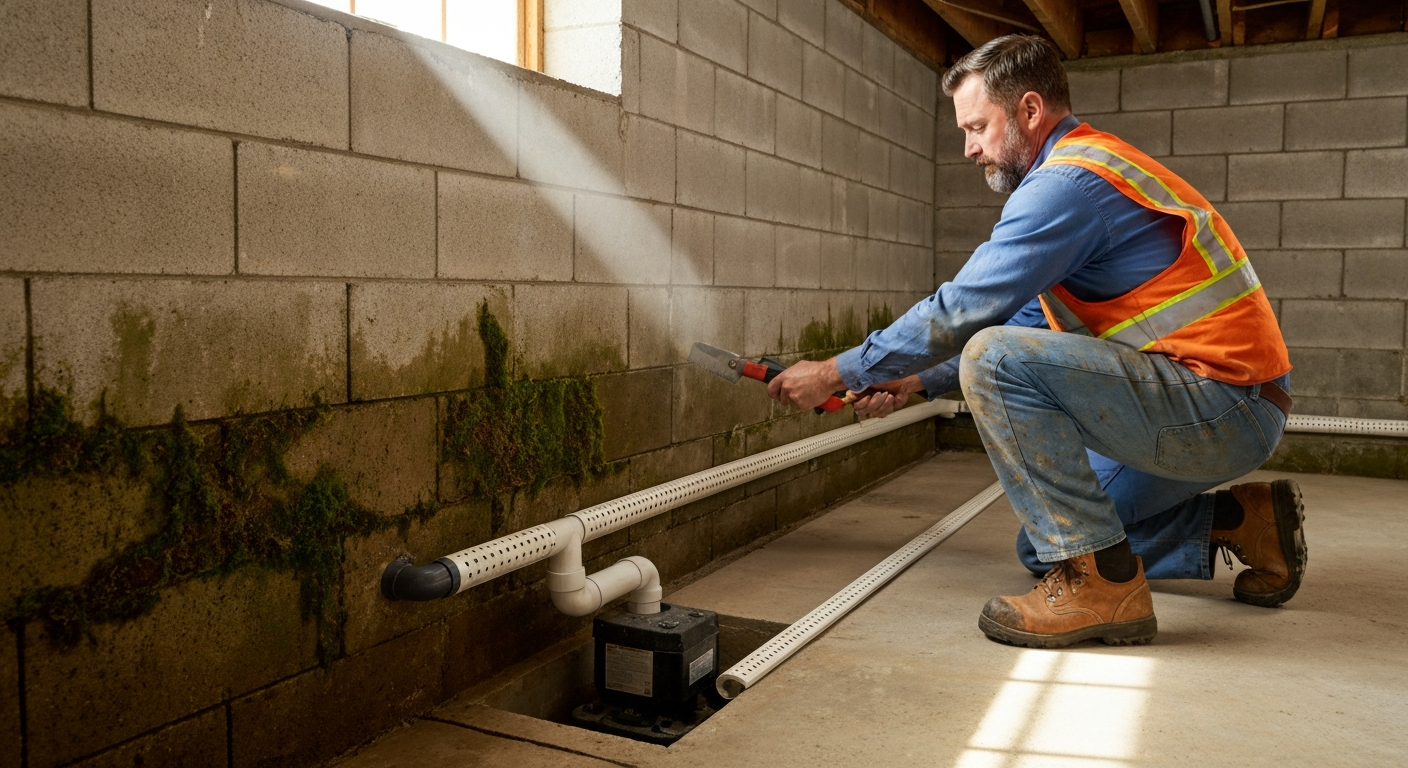
Basement waterproofing options and costs in Killarney
Killarney, Alberta has a lot of basements built through multiple eras, and waterproofing needs vary depending on when your foundation was last protected. In a city area with an overall population of 3,990 (Statistics Canada, 2021 Census), you’ll still find a mix of older homes alongside newer builds, and that “age spread” shows up in failures: many basements in established pockets rely on original weeping tile systems and historic tar-and-paper style membranes that can harden, crack, or become plugged over decades. Calgary’s cycle of freeze–thaw in southern Alberta also widens joints and cracks, so even small seepage channels can become noticeable during spring runoff.
Cost in Killarney is shaped by local access and soil behaviour. Calgary-area clay and clay-till holds water and expands when saturated, which increases lateral pressure on foundation walls and footings. That means quotes can shift based on how much excavation is needed, how deep the contractor must go to install or replace drainage tile, and whether heavy clay disposal is required. In neighbourhoods with tight lot lines and mature landscaping—common in older parts of Killarney—exterior work can take longer and require more careful protection of driveways, patios, and trees.
Below are the most common waterproofing approaches homeowners choose in Killarney, with realistic cost ranges to help you compare like-for-like scopes before you request your next itemised quote.
| Method |
What It Addresses |
Disruption Level |
Durability |
Price Range |
| Exterior excavation + new membrane + drainage tile |
Source control for hydrostatic water; new perimeter drainage and continuous membrane barrier |
High (yard excavation, backfill, landscaping restoration) |
High (often decades when drainage is properly designed) |
$9,000–$25,000 |
| Interior perimeter drain channel + sump pit |
Manages water after entry; reduces seepage at wall lines and slab edges |
Medium (partial interior demolition; sump install) |
Medium to high (depends on crack control and system maintenance) |
$5,000–$15,000 |
| Foundation crack injection (epoxy or polyurethane) |
Stops water paths through cracks/joints; improves watertightness |
Low to medium (drilling, surface patching) |
Medium to high (crack type and movement dictate product choice) |
$500–$1,800 |
| Sump pump installation (primary + battery backup) |
Controls accumulation when groundwater or runoff loads the basement |
Low to medium (core drilling; pit work) |
Medium to high (backup reduces risk during power interruptions) |
$900–$3,000 |
| Window well drain installation |
Prevents water pooling near egress windows and migrating behind the wall |
Low to medium (excavation around window wells) |
Medium (good when paired with exterior grading/downspouts) |
$1,200–$4,000 |
| Lot re-grading / downspout extension |
Redirects roof runoff away from foundation; reduces saturation of backfill |
Low (light excavation; grading adjustments) |
Low to medium (best as a first step or complement) |
$800–$3,500 |
Prices are estimates only and vary by project scope, site access and material selection.
What affects the price of waterproofing in Killarney
In Killarney (Calgary economic region), the same “type” of waterproofing can come in 30–50% apart between contractors or between two houses, even when the basement looks similar. The biggest reason is that waterproofing is designed to the water problem—not just the visible wall staining—so the quote changes with excavation depth, drainage design, disposal needs, and how complicated the foundation details are.
Three drivers separate local costs from a national average: soil type, water table conditions, and freeze–thaw. Clay-heavy soils common around Calgary retain moisture and expand when saturated, increasing lateral pressure that can worsen cracks over time—so crack injection alone may not be enough if water loading continues. In low-lying pockets and along natural drainage paths, higher seasonal groundwater can increase sump run times and require a more robust perimeter drain and dependable pump capacity. Freeze–thaw cycles typical of southern Alberta also enlarge openings and joints, meaning contractors may need additional labour to chase and seal active leak points rather than just patching.
Concrete Killarney examples: (1) a home with exterior access blocked by a concrete patio or tight fence line often forces longer, more careful excavation, which pushes exterior waterproofing toward the upper end of the $9,000–$25,000 band; (2) if your basement wall is poured concrete with hairline seepage, crack injection may fall near the $500–$1,800 range as a targeted repair before installing interior drainage; (3) if original weeping tile is 60+ years old and completely failed, interior perimeter drainage and sump work usually land in the $5,000–$15,000 band because the system has to compensate for ongoing water entry.
| Price Factor |
Why It Matters |
Cost Impact |
| Interior vs. exterior approach — interior is less disruptive but addresses symptoms |
Exterior targets the source (membrane + drainage); interior manages water after entry |
Exterior often adds major excavation and restoration costs (can move quotes by tens of thousands on complex sites) |
| Foundation type — poured concrete vs. block vs. stone vs. ICF |
Different materials respond differently to crack repair, sealing, and drainage layout |
Poured walls can take crack injection more cleanly; block/stone often require stronger drainage strategy |
| Soil type — clay expands more than sand, adding pressure |
More saturation increases lateral pressure and water pathways |
Clay sites typically require deeper/stronger drainage and more thorough backfill sequencing |
| Crack type and length — hairline vs. structural horizontal cracks |
Movement dictates whether injection will last and whether structural input is needed |
Structural/opening cracks often require additional repair steps beyond standard injection |
| Sump pump backup system — battery or water-powered backup needed |
Prevents basement flooding during power outages common during spring storms |
Backup can add meaningful cost but materially reduces risk |
| Access — landscaping, decks, or driveways must be removed for exterior |
Controls excavation time and restoration scope |
Obstructions can push the exterior scope toward higher band pricing |
| Weeping tile age — original tile (60+ years) may be completely failed |
Old systems may be collapsed, disconnected, or clogged |
Replacement may be required, increasing labour and drainage material costs |
| Mould or efflorescence remediation required before sealing |
Active moisture problems must be addressed before encapsulating and sealing |
Additional containment, cleaning, and drying can add time and materials |
Permits & regulations in Alberta
In Alberta, many homeowner waterproofing projects stay “non-structural,” but you should expect permits for work that changes drainage, alters foundations, or affects structural components. Foundation excavation near the structure, structural crack repair, and changes to lot drainage typically require a building permit. If your sump pump discharge ties into municipal storm or sanitary systems, municipal approval is usually needed—your contractor should confirm the required connection method and documentation before work begins. For structural crack repairs—especially horizontal cracks in block walls, major step cracks, or cases that suggest movement—it’s common (and prudent) to obtain an assessment from a structural engineer to determine whether underpinning, additional structural reinforcement, or other measures are necessary before sealing.
To verify a contractor in Killarney, start by confirming they have the right Alberta registrations for the type of work they’re advertising, then check their liability insurance and worker coverage (WSIB/WCB). Step-by-step: (1) ask for their certificate of insurance and verify the policy is current and names the homeowner (or indicates appropriate coverage wording); (2) request WSIB/WCB clearance or a current account status; (3) for structural repairs, ask whether they work with engineering support and whether they include engineering recommendations in the written scope; (4) check that their written proposal references permits clearly—who pulls them, what inspections are expected, and whether permit fees are included or excluded. Avoid contractors who won’t put these items in writing.
Interior vs exterior waterproofing — what does Killarney need?
Fundamentally, exterior waterproofing is source control: the contractor excavates the perimeter, installs a continuous exterior membrane, and renews perimeter drainage tile so water is collected and diverted before it can exert pressure. Interior waterproofing is best viewed as “water management after entry.” It typically uses a perimeter drain channel, sump pit, and sump pump system to capture seepage at the foundation line and relieve accumulation inside the basement—but it does not fully stop hydrostatic pressure acting on the wall.
In Killarney’s clay-and-clay-till conditions with Alberta freeze–thaw, exterior systems usually perform best when water loading is persistent or when your weeping tile system is known (or suspected) to have failed. Poured concrete walls often respond well to crack injection for targeted leak paths, but ongoing exterior saturation can still reactivate seepage if the underlying water pathway remains. Block foundations commonly benefit from interior drainage as a practical complement because block pores, mortar joints, and multi-year seepage patterns can be harder to fully seal from the inside alone.
Sump backup systems matter in Calgary-area homes because spring runoff and storm events can coincide with power interruptions. A battery backup (or other approved backup approach) reduces the chance that a brief outage turns into floor flooding, especially if you’re not home to notice rising water.
Dollar logic: if your issue is limited to one or two active cracks and light seepage, crack injection plus a sump plan may keep you closer to the $500–$1,800 range for injection, with sump costs in the $900–$3,000 band—often a justified approach. But if exterior drainage is failing and wall saturation is driving repeated seepage, interior-only work can cost less up front yet require more ongoing intervention. In those cases, exterior excavation and membrane systems—often within the $9,000–$25,000 band—can be the more complete solution.
| Method |
Best For |
Addresses Source? |
Disruption |
Lifespan |
Price Band |
| Full exterior excavation + membrane |
Persistent seepage, failed weeping tile, hydrostatic pressure concerns, long-term source control |
Yes |
High |
Long (decades when installed with proper drainage and backfill) |
$9,000–$25,000 |
| Interior French drain + sump system |
Water after entry, difficult exterior access, clay soils keeping backfill saturated |
No (managed after entry) |
Medium |
Medium to long with maintenance and backup |
$5,000–$15,000 |
| Crack injection — epoxy (structural) |
Non-moving structural cracks; where water is limited and crack movement is minimal |
Partially (seals a leak path) |
Low |
Medium to long when movement is confirmed as minimal |
$500–$1,800 |
| Crack injection — polyurethane (active leak) |
Active seepage through cracks/joints under pressure |
Partially (seals active water pathways) |
Low |
Medium (depends on ongoing pressure and crack activity) |
$800–$2,400 |
| Interior drain channel only (no sump) |
Very minor seepage or where a sump is not feasible and water volumes are low |
No |
Medium |
Short to medium (performance depends on consistent drying) |
$3,500–$9,500 |
| Re-grading + downspout extensions |
Roof runoff dumping toward foundation; early moisture symptoms that correlate with rainfall |
No (prevents a source of water) |
Low |
Short to medium (works best as a complement) |
$800–$3,500 |
How to choose a waterproofing contractor in Killarney
When you’re shopping for waterproofing in Killarney, start with proof of capability—not just testimonials. In Alberta, confirm the contractor’s licensing/registration (for the work they plan), and verify liability insurance and WSIB/WCB coverage. How to check: (1) ask for a current certificate of insurance and review the expiry date; (2) request WSIB/WCB clearance or a current status document; (3) if they’re proposing structural crack repair, ask what engineering support they provide and whether they’ll include it in the scope if required. A reputable crew should be comfortable giving you these documents before you sign.
Next, get 2–3 itemised written quotes, not lump sums. Look for a labour and materials breakdown that clearly states what’s included: excavation depth, drainage tile type, membrane/product name, sump pit sizing, discharge route, and patching/restoration scope. Also check exclusions—e.g., mould remediation, engineering fees, permit fees, concrete/asphalt saw-cutting, disposal of heavy clay spoils, and any required site drying time.
Warranty matters as much as the materials. Ask for the workmanship warranty length (and what triggers a claim), the product/manufacturer warranty, and whether the warranty is transferable to future owners. For payment schedule, never pay more than 10–15% upfront; use a holdback until the job is complete and inspected. Finally, require a start date and estimated completion timeline in writing, including weather contingencies since freeze–thaw affects excavation and membrane curing.
- Written scope that matches the diagnosis (crack injection vs drainage vs both).
- Itemised quote with materials named and quantities estimated.
- Confirmation of permit pull responsibilities and who pays fees.
- Disposal included or clearly excluded for excavated clay spoils.
- Planned discharge route for the sump (and whether any approvals are required).
- Specified sump pump model, pit sizing, check valve plan, and backup approach.
- Workmanship warranty in writing with clear claim process.
- Product/manufacturer warranty terms and whether it’s tied to installation quality.
- Certificate of insurance reviewed for currency before work starts.
- WSIB/WCB clearance or current account status provided on request.
- Payment terms: keep upfront deposit to 10–15% and hold back until completion.
- Schedule with start/completion dates and weather delays identified up front.
Red flags in Killarney: (1) quotes that “guarantee” you’ll never have moisture again without identifying the water source; (2) no mention of permits/discharge approvals for sump connections; (3) vague product descriptions (no membrane/crack injection type specified); (4) insisting on a single method for every problem without assessing weeping tile condition or crack type; (5) refusing to provide insurance, WSIB/WCB clearance, or a written warranty.
Frequently asked questions — waterproofing in Killarney
What is a weeping tile and does my Killarney home have one?
Weeping tile is the perimeter drainage system installed around or at the foundation footing to collect groundwater and redirect it away from your basement. In many older Killarney homes, it may be original and can be clay-tile or early plastic versions installed decades ago; over time they can clog, collapse, or disconnect, especially when backfill saturated with clay expands in freeze–thaw cycles. You can’t always “see” it, because it’s buried. Common ways to confirm include checking past inspection reports, locating a sump if one was added later, or having a contractor camera-inspect drainage lines if access allows. If you’re unsure, plan for the possibility that the weeping tile is failed and that the waterproofing scope may need interior drainage and a reliable pump plan.
Can I waterproof my basement in winter in Killarney?
Yes, some basement waterproofing work can happen in winter in Alberta, but it depends on what your contractor needs to do. Interior tasks such as crack injection, installing an interior drain channel, and sump pump upgrades are often feasible because they don’t require full exterior excavation. However, exterior excavation and exterior membrane work can be delayed if soil is frozen or if curing conditions can’t be maintained. In Killarney, freeze–thaw also means scheduling is critical to prevent trapped moisture from getting sealed in the wrong way. If your quote includes exterior work, ask the contractor how they handle cold weather staging, temperature control, and drying time. Often the best approach is doing interior crack sealing and sump prep in winter, then scheduling full exterior drainage when conditions improve.
What is the difference between waterproofing and damp-proofing?
Damp-proofing generally refers to measures that reduce surface dampness—like coatings or basic sealing—without guaranteeing full resistance to hydrostatic pressure. Waterproofing is designed to handle water entry and pressure more definitively, typically by controlling the source (continuous exterior membrane and perimeter drainage) or by actively managing water after entry (interior drain channel and sump pump). In Killarney’s clay-and-clay-till conditions, damp-proofing alone can fail when saturated backfill expands during freeze–thaw and increases pressure on walls. If you’re getting efflorescence or recurring seepage, you’ll usually need a system-level approach rather than just a cosmetic fix. Pricing reflects this: targeted crack work may fall near the $500–$1,800 band, while perimeter drainage and sump systems often land in the $5,000–$15,000 range because they address recurring water behaviour.
Will basement waterproofing affect my property value in Killarney?
In most cases, properly documented waterproofing can improve buyer confidence and reduce perceived risk, which helps property value. In Killarney, buyers tend to worry about recurring spring seepage, musty odours, and foundation staining—especially when freeze–thaw has already expanded cracks. That said, the value impact depends on whether the solution matches the actual water source: a well-designed exterior system with new drainage tile and a continuous membrane typically provides the strongest long-term story, while interior-only fixes may be appropriate when excavation isn’t feasible but must be maintained (e.g., sump functionality). Keep your documentation: invoices, product names, permit records, and warranty terms. If you want a benchmark, many homeowners first address active leaks with crack injection, then add drainage/pump components; those steps can be budgeted starting around the $500–$1,800 range for injection and up to the $9,000–$25,000 band if full exterior excavation is required.
What drainage issues are most common in Killarney homes?
Common issues include clogged or failed weeping tile, undersized interior drainage, and downspouts or grading that direct roof runoff toward the foundation. In Killarney, freeze–thaw cycles widen existing joints and cracks, so water can find its way in faster during spring melt and heavy rain. Clay-heavy soils around Calgary hold water and can create lateral pressure on basement walls, which can lead to seepage and efflorescence rather than catastrophic structural movement. You’ll also see localized wall leaks around penetrations (pipes, vents) and along slab edges where interior drainage is missing or has been poorly maintained. When a sump is already present but pumps frequently cycle or lacks backup, the drainage system may be overwhelmed during peak seasons. The best remedy is usually matching the drainage plan to your foundation material and the likely water pathway.
How do I choose a waterproofing contractor in Killarney?
Choose a contractor based on documentation and a scope that matches your specific leakage pattern. In Alberta, start by verifying licensing/registration for the work they plan, then confirm liability insurance is current and that they can provide WSIB/WCB clearance. Ask for 2–3 itemised quotes showing labour and materials, and check what’s included: excavation depth, disposal of heavy clay spoils, permit pull responsibility, discharge route, and whether a sump backup is included when recommended. Review the warranty: workmanship warranty length, product/manufacturer coverage, and whether warranties transfer. In Killarney, beware of “one-size-fits-all” proposals—if they don’t assess crack type (hairline vs structural movement) or drainage needs (failed weeping tile vs manageable seepage), the job may cost more later. For reference, a complete exterior system often falls in the $9,000–$25,000 range, while interior perimeter drainage and sump work is often $5,000–$15,000 depending on access and conditions.