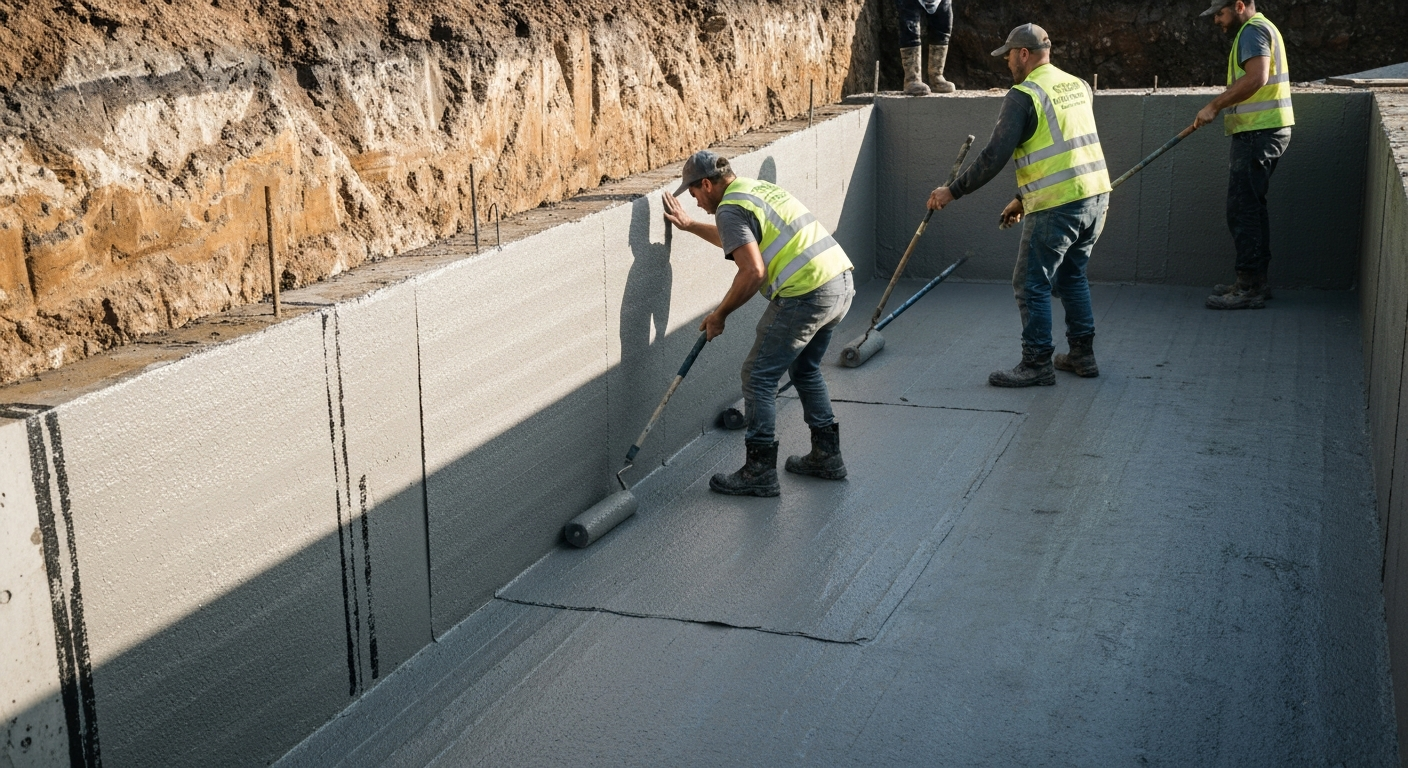
Basement waterproofing options and costs in Lloydminster
Lloydminster homeowners usually start shopping for basement waterproofing after they notice damp corners, musty odours, or tide-like water seepage following spring melt. In a city with a 2021 population of 31,582 (Statistics Canada, 2021 Census), trade availability is generally good, but pricing depends heavily on how much digging and drainage work is truly required. One reason estimates can swing fast is housing age: older homes are far more likely to have failing original tar-and-paper systems and corroded weeping tile, which means water doesn’t just “show up” inside—it was often accumulating behind the foundation for years. In the Wood Buffalo–Cold Lake market, that history is common because many basements were finished without modern drainage layers or with weeping tile that has long since settled, cracked, or blocked.
Costs here are also shaped by freeze-thaw cycling, soil that can hold water, and drainage pressure against below-grade walls. Excavation pricing trends higher when frost and saturated backfill make access difficult, while interior systems often become more attractive where groundwater seepage is persistent but full perimeter excavation isn’t feasible. In Lloydminster’s south end (near the downtown core and older residential pockets), we see higher demand because many properties have mature landscaping and tighter access for equipment—especially when exterior drainage must be restored around the full perimeter.
Below is a practical comparison of the most common waterproofing routes and what each one typically addresses, then you can match the method to your leak pattern.
| Method |
What It Addresses |
Disruption Level |
Durability |
Price Range |
| Exterior excavation + new membrane + drainage tile |
Primary water entry at the foundation perimeter; redirects groundwater with a full drainage system |
High (excavation, landscape/sidewalk impacts) |
Long-term (often the most complete source control) |
$10,000 – $22,000 |
| Interior perimeter drain channel + sump pit |
Water after it enters; reduces hydrostatic pressure and collects seepage for pump-out |
Medium (interior floor cut-out) |
High (if discharge route and pump are sized correctly) |
$7,000 – $14,000 |
| Foundation crack injection (epoxy or polyurethane) |
Crack sealing; epoxy for structural repair, polyurethane for active leaks |
Low to medium (surface prep; interior or exterior access) |
Moderate to high (depends on crack type and movement) |
$500 – $1,800 |
| Sump pump installation (primary + battery backup) |
Moves collected water out of the sump; backup protects during outages or winter/spring surges |
Low to medium (pit excavation and discharge routing) |
High (best when paired with proper drainage) |
$1,800 – $4,500 |
| Window well drain installation |
Controls surface water around egress/grade transitions; reduces seepage at window openings |
Low to medium (localized excavation) |
Moderate to high (site-dependent) |
$1,200 – $3,500 |
| Lot re-grading / downspout extension |
Redirects roof runoff away from the foundation; reduces saturation and seepage trigger points |
Low (minor excavation/landscape touch-ups) |
Moderate (works best as a supplement to drainage) |
$1,000 – $2,800 |
Prices are estimates only and vary by project scope, site access and material selection.
What affects the price of waterproofing in Lloydminster
In the Wood Buffalo–Cold Lake region, it’s common to see quotes for the “same” basement leak differ by 30–50%. The reason isn’t just contractor pricing—it’s how each company interprets the leak path and designs around soil, water movement, and access. National averages often assume typical drainage performance, but in our area the big cost separators are soil type, water table and freeze-thaw cycling. Loamy to clayey glaciolacustrine and morainal soils can hold water and create drainage pressure against below-grade walls; that pressure often shows up as widening cracks, repeating seepage after freeze-thaw, and higher labour for drainage layer work. In a place where freeze-thaw movement can widen existing cracks, a “simple” crack repair can turn into injection plus drainage and, sometimes, sump upgrades.
Concrete examples from Lloydminster: (1) Two homes with the same visible hairline crack can land in different budgets when one sits under a downspout that directs runoff toward the foundation; fixing grade and extensions can keep the repair closer to the $500 – $1,800 crack-injection band. (2) A basement with persistent seepage after spring melt typically pushes scope toward interior perimeter drainage and sump capacity, commonly overlapping the $7,000 – $14,000 interior band. (3) If a property has soft, waterlogged backfill and limited access for an excavator along the full perimeter, exterior work can drift toward the upper end of the $10,000 – $22,000 exterior excavation range due to more time and added drainage layers.
In older neighbourhood pockets—particularly where original weeping tile is long overdue—costs rise because drainage must be restored to stop the pressure cycle, not just patch symptoms.
| Price Factor |
Why It Matters |
Cost Impact |
| Interior vs. exterior approach — interior is less disruptive but addresses symptoms |
Interior systems manage water after entry; exterior reduces water entry at the source |
Interior often $7,000–$14,000; exterior often $10,000–$22,000 |
| Foundation type — poured concrete vs. block vs. stone vs. ICF |
Different crack behaviours and sealing methods; block walls frequently need complementary interior drainage |
May move a project by several thousand dollars based on prep and detailing |
| Soil type — clay expands more than sand, adding pressure |
Clayey soils hold moisture and increase lateral pressure during freeze-thaw |
Higher labour for drainage layers and sealing strategies |
| Crack type and length — hairline vs. structural horizontal cracks |
Structural horizontal cracks can indicate ongoing movement and require more rigorous repair planning |
Hairline may stay closer to $500–$1,800; structural work can push higher |
| Sump pump backup system — battery or water-powered backup needed |
Backup prevents failures during outages and winter/spring surges |
Can add $1,000–$2,500 depending on configuration |
| Access — landscaping, decks, or driveways must be removed for exterior |
Equipment time and restoration scope increase with tight lots and mature plantings |
Commonly pushes exterior quotes upward |
| Weeping tile age — original tile (60+ years) may be completely failed |
Old tile often collapses, clogs, or loses slope; water can’t route away |
Often increases excavation and drainage material quantities |
| Mould or efflorescence remediation required before sealing |
Sealers won’t bond properly on contaminated surfaces |
Adds prep time, cleaning materials, and sometimes additional drying steps |
Permits & regulations in Alberta
In Alberta, homeowners generally need to expect that foundation excavation, structural crack repair (when it relates to the stability of a wall), and changes to lot drainage may require a building permit. For sump pump installations that connect into municipal services (storm or sanitary), municipal approval is typically required because it affects how discharged water is routed. For structural crack repair—especially horizontal cracks in block walls, step cracking, or any defect that suggests movement—an assessment by a qualified professional (commonly a structural engineer) is often needed to confirm whether underpinning or other structural work is required.
Before you book, verify your waterproofing contractor carries the right coverage and support for your scope. Step-by-step in Lloydminster: (1) confirm the contractor’s Alberta business licence/registration through the appropriate provincial registry and the company’s own profile pages; (2) request a current certificate of insurance showing general liability coverage (and ask about any additional insured requirements if you have a mortgage or co-op conditions); (3) ask for WSIB/WCB clearance documentation and confirm it’s current; (4) for structural repairs or crack work that could affect stability, ask whether they have engineering support available and who will sign off if an assessment is required; and (5) get the permit responsibility spelled out in writing—whether the contractor pulls it or you do.
What typically doesn’t need a permit: localized downspout extensions, window well drainage improvements, and non-structural interior perimeter drains or sump pits where they don’t connect directly to municipal sewer systems. Still, your exact discharge route matters—so confirm it up front.
Interior vs exterior waterproofing — what does Lloydminster need?
For Lloydminster basements, the fundamental difference is simple: exterior waterproofing aims to stop water before it enters, while interior waterproofing manages water after it comes in. Exterior work—full excavation, membrane, and new drainage tile—addresses the source of groundwater seepage and redirects it away from the wall. It’s the most complete solution when the soil conditions are saturated, when the weeping tile has failed, or when you’re dealing with persistent pressure against below-grade walls. The trade-off is cost and disruption: you’re opening the perimeter and restoring landscaping, paths, or driveways.
Interior waterproofing usually involves a perimeter drain channel and sump pit, plus a sump pump sized for expected seepage. It reduces hydrostatic pressure by collecting water inside the foundation and pumping it out. It’s often less disruptive and can be more practical where excavation is difficult due to access constraints, utilities, or landscaping. However, interior systems don’t stop water pressure from acting on the wall—they reduce the consequences after entry. In our region, that matters when freeze-thaw cycling widens existing cracks; interior work often pairs best with crack sealing. For poured concrete walls, crack injection can be particularly effective—especially when paired with interior drainage to reduce ongoing moisture. For block foundations, interior drainage is frequently a practical complement because block joints and mortar lines can allow moisture pathways.
Battery backup becomes a smart move here because spring flooding conditions and power interruptions can leave sump systems temporarily inoperative. If you’re choosing between options, a common justification is when exterior excavation pushes toward $10,000 – $22,000, but a targeted interior system can realistically address the leak for closer to $7,000 – $14,000—particularly when cracks are manageable and the main issue is recurring seepage rather than broad groundwater intrusion.
| Method |
Best For |
Addresses Source? |
Disruption |
Lifespan |
Price Band |
| Full exterior excavation + membrane |
High groundwater pressure, widespread seepage, failed original drainage, long-term source control |
Yes |
High |
Long-term (often decades with proper backfill/drainage) |
$10,000 – $22,000 |
| Interior French drain + sump system |
Persistent seepage where excavation is impractical; older homes with compromised weeping tile |
No (manages after entry) |
Medium |
High if pump discharge and drainage capacity are correct |
$7,000 – $14,000 |
| Crack injection — epoxy (structural) |
Hairline to non-moving cracks where the wall needs a structural-style seal; often poured concrete |
Partial (seals the pathway) |
Low to medium |
Moderate to high when movement is stopped |
$800 – $1,800 |
| Crack injection — polyurethane (active leak) |
Active or damp cracks with ongoing seepage; when water pressure is still present |
Partial (stops the leak pathway) |
Low to medium |
Moderate to high when combined with drainage/pump |
$500 – $1,800 |
| Interior drain channel only (no sump) |
Light seepage limited to specific areas; gravity discharge is feasible |
No (manages after entry) |
Medium |
Moderate (depends on discharge feasibility and seasonality) |
$4,000 – $9,000 |
| Re-grading + downspout extensions |
Runoff-triggered dampness near the perimeter; surface water misdirection |
Yes (for surface runoff) |
Low |
Moderate (supplementary if groundwater seepage is the real driver) |
$1,000 – $2,800 |
How to choose a waterproofing contractor in Lloydminster
Choosing a contractor is mostly about verifying proof, not promises. In Alberta, start by confirming the contractor’s Alberta licensing/registration where applicable, then request two documents you can verify: a current certificate of insurance (general liability coverage) and WSIB/WCB coverage proof. In practice, you should ask for the paperwork before the quote is finalized, and you should also check that the certificate dates are current. If your project touches structural concerns—like a horizontal crack in a block foundation—ask who coordinates the engineering assessment (if required) and whether the contractor can provide an engineering contact or documented process for structural scopes.
Next, get 2–3 itemised written quotes. Not “all-in,” but a breakdown separating labour and materials, including excavation/disposal if exterior work is planned, membrane and drainage products, and pump type. Clarify exclusions: will they pull the permit (if required), how will they handle spoils disposal, and what happens if they discover additional saturated areas or blocked tile? Warranty details matter too: ask for the workmanship warranty length, the manufacturer warranty for membranes/product systems, and whether warranties are transferable if you sell the home. For payment, never pay more than about 10–15% upfront; use holdback until completion and final inspection sign-off. Finally, ask for a written start date and realistic completion timeline that accounts for weather delays common to spring thaw in Lloydminster.
- Ask for a written scope that lists every task: prep, sealing, drain installation, membrane type, and discharge route.
- Confirm whether disposal/backfill is included for excavation and whether reinstatement is included for grass, sod, or gravel.
- Get a permit plan in writing: who pulls permits and what the contractor assumes vs homeowner responsibility.
- Require itemised pricing (labour vs materials) so you can compare apples-to-apples.
- Verify certificate of insurance (current date) and ask for general liability coverage limits.
- Request WSIB/WCB clearance proof and confirm trades are covered under the contractor’s file.
- Ask for product data sheets and confirm compatibility with your foundation material (poured concrete vs block).
- Confirm pump specs: discharge line size, check valve, and pump capacity for your expected seepage level.
- Discuss battery backup options upfront if your sump is critical during spring melt/outages.
- Ask about crack injection method selection (epoxy vs polyurethane) based on crack movement and moisture level.
- Review warranty terms: workmanship duration, what voids it, and whether it transfers to a new owner.
- Use a payment schedule: small deposit, then progress payments with holdback after key steps.
Red flags in Lloydminster: contractors who won’t provide itemised quotes; promises of “guaranteed waterproofing” without assessing soil drainage and weeping tile condition; vague discharge plans for sump pumps (especially around municipal connections); no written warranty terms for workmanship; and refusing to show current insurance/WSIB/WCB documentation.
Frequently asked questions — waterproofing in Lloydminster
How do I choose a waterproofing contractor in Lloydminster?
Start by verifying coverage and paperwork in Alberta, not just a website: ask for a current certificate of insurance and WSIB/WCB clearance, and check dates. In Lloydminster, you should also request an itemised quote that separates labour from materials and clearly states what’s included (permit pulling, disposal, backfill, and reinstatement). A good contractor will discuss whether your leak pattern suggests source water entry (often needing exterior membrane/drain tile) or mainly after-entry seepage (often interior drain channel and sump). Pricing commonly spans from targeted repairs in the $500 – $1,800 crack-injection band up to full exterior work in the $10,000 – $22,000 range, so insist the scope matches your symptom pattern—not a one-size-fits-all approach.
What is a battery backup sump pump and do I need one in Lloydminster?
A battery backup sump pump is a secondary power system that keeps the sump operating during power outages. In Lloydminster, outages can matter during spring melt when seepage increases and when water levels rise quickly. A primary sump pump handles routine pumping, while the battery backup prevents standstill if the grid goes down, reducing the chance of water backing up into the interior. You don’t always “need” it for light dampness, but you should strongly consider it if you’ve had prior flooding, if you finish basements, or if your interior drainage system depends on continuous pumping. Many homeowners budget sump upgrades around the $1,800 – $4,500 band when a backup is included. A contractor should also explain discharge routing and check valves so the system can actually move water safely.
How much does basement waterproofing cost in Lloydminster?
Basement waterproofing in Lloydminster varies mainly by whether you need interior drainage, crack repair only, or full exterior excavation. For foundation crack sealing, many projects fall in the $500 – $1,800 range depending on crack length, number of ports, and whether it’s epoxy or polyurethane. If you’re dealing with recurring seepage that needs interior perimeter drainage and a sump setup, homeowners typically land in the $7,000 – $14,000 range. If your weeping tile has failed and the soil/water pressure conditions demand source control, exterior waterproofing with excavation and new membrane/drainage tile commonly sits in the $10,000 – $22,000 band. Your quote can move up or down based on access (mature landscaping/decks), excavation difficulty, and saturation level during thaw. Always compare itemised scopes so you know what’s driving your number.
Interior vs exterior waterproofing — which is better?
“Better” depends on what’s actually causing the problem. Exterior waterproofing (excavation, membrane, and drainage tile) is best for long-term source control because it reduces or stops water entry at the foundation perimeter. It’s also typically the most disruptive option in Lloydminster, especially where excavation is tight or landscaping is mature. Interior waterproofing (perimeter drain channel, sump pit, sump pump) is best for managing water after it enters and is usually less invasive, so it can be the right move when excavation isn’t practical or when you’re dealing with localized seepage. In our freeze-thaw conditions, cracks can widen over time if hydrostatic pressure continues, so interior drainage often works best when combined with crack injection where appropriate. If you can expect exterior excavation to push into the $10,000 – $22,000 range, and the leak is mostly after-entry seepage, interior options around $7,000 – $14,000 can be the better value—provided the contractor designs pump capacity and discharge correctly.
Why is my basement leaking in Lloydminster?
Most Lloydminster basement leaks come down to water getting to the foundation and pressure building during wet periods, then freeze-thaw worsening pathways. Common causes include poor drainage around the lot (runoff and downspout water directed toward the foundation), saturated soils that hold water against below-grade walls, and older or failed weeping tile that no longer carries water away. Foundation cracks also play a big role: some cracks are just a “pathway,” and once freeze-thaw movement enlarges them, seepage becomes more frequent. If you notice water near corners, along wall joints, or after spring melt, that often points to groundwater seepage plus drainage pressure rather than a single plumbing issue. A correct waterproofing diagnosis should identify whether the water is arriving mainly from surface runoff or from groundwater/soil pressure—because that determines whether you need exterior membrane/drain tile or interior perimeter drainage and sump pumping.
How do I know if a foundation crack is serious?
Not every crack is structural, but you should treat certain crack patterns seriously in Alberta. Hairline, stable cracks that don’t grow and don’t show active seepage are often manageable with targeted crack injection—frequently within the $500 – $1,800 band depending on length and access. Serious cracks usually include horizontal cracks, significant step cracking in block walls, cracks that show signs of ongoing movement (worsening over seasons), or cracks with active dampness/efflorescence that returns quickly after drying. In Lloydminster’s freeze-thaw environment, movement can widen existing defects, so symptoms matter as much as size. A good contractor will assess crack type, wall material (poured concrete vs block), and whether polyurethane (active leak) or epoxy (structural-style sealing) is appropriate. If there’s any indication the wall is moving, ask whether an engineering assessment is needed before choosing a repair method.