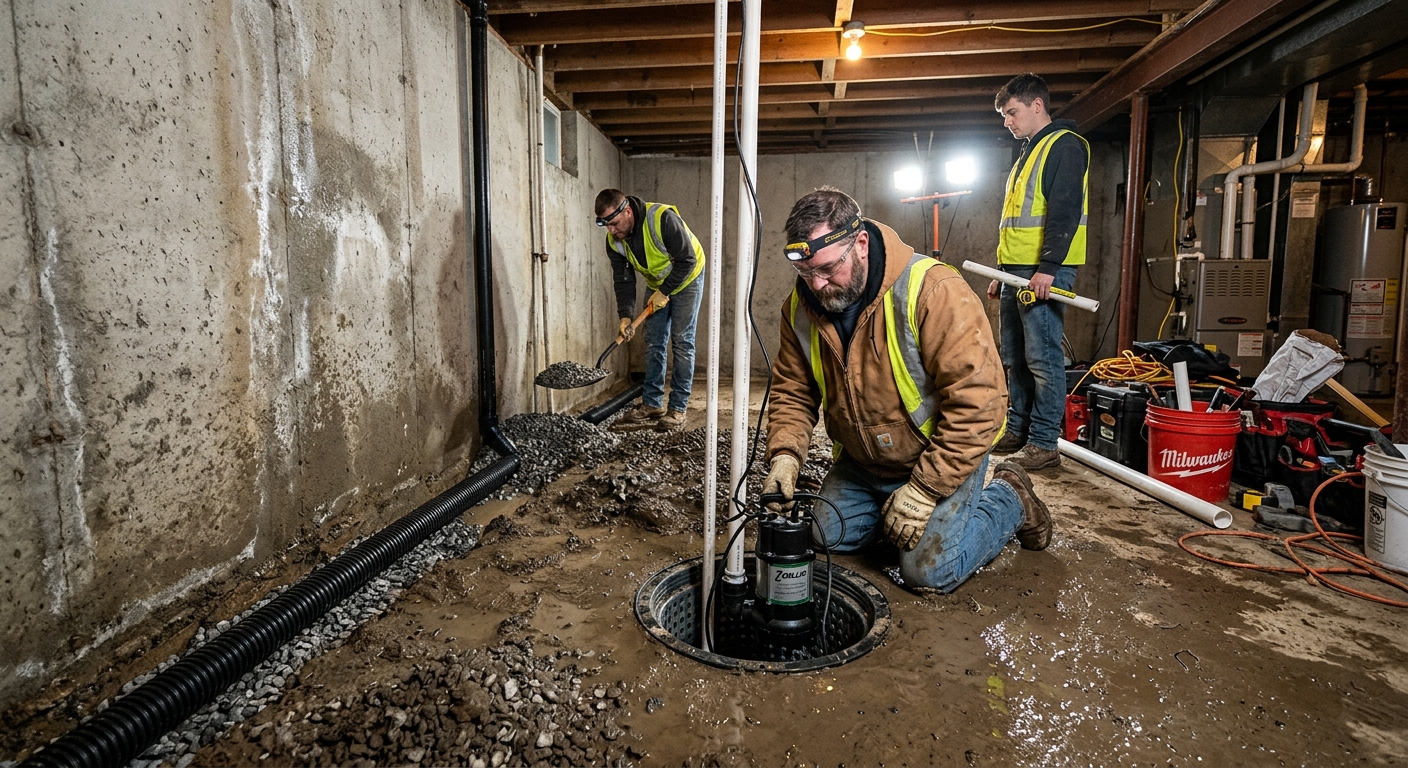
Basement waterproofing options and costs in Shawnessy
In Shawnessy, Alberta, basement waterproofing usually comes down to two realities: clay-till soils that hold water and spring freeze–thaw that widens cracks and joints. Shawnessy is a newer pocket compared with older Calgary neighbourhoods, but in the broader Calgary economic region there’s still plenty of mature housing—meaning you’ll see older original assemblies in nearby areas where tar-and-paper systems and early weeping-tile setups have failed. With a population of 9,055 in Shawnessy (Statistics Canada, 2021 Census), local demand is steady because homeowners tend to wait until seepage, damp corners, or recurring sump cycling becomes visible. By that time, the underlying drainage and crack pathways often need more than a cosmetic fix.
Calgary-area pricing is shaped by excavation logistics and access. Heavy clay soils tend to increase excavation time, spoil disposal effort, and the amount of engineered backfill needed. At the same time, freeze–thaw cycles typical of southern Alberta make it cost-effective to address both water entry routes and ongoing drainage, rather than sealing over active movement. Contractors who routinely handle deep perimeter excavations, sump retrofits, and re-grade work can be booked quickly—especially around high-demand seasons when spring melt starts overwhelming undersized drainage.
If you’re in the Shawnessy area of Creekstone (common for homeowners with older landscaping and tight backyard access), exterior projects often see the biggest scheduling push due to patio and deck removal requirements. Use the table below to compare common methods and typical ranges, then we can match the right option to your foundation type and observed leak pattern.
| Method |
What It Addresses |
Disruption Level |
Durability |
Price Range |
| Exterior excavation + new membrane + drainage tile |
Water at the foundation source; replaces failed exterior drainage and provides a continuous barrier |
High (full excavation, landscaping removal/rebuild) |
High (long-term when membrane + drain are continuous) |
$9,000 – $25,000 |
| Interior perimeter drain channel + sump pit |
Relieves hydrostatic pressure by capturing seepage inside the basement |
Medium (floor cutting/finishing impacts) |
Medium to high (depends on sump performance and discharge routing) |
$5,000 – $15,000 |
| Foundation crack injection (epoxy or polyurethane) |
Seals vertical/hairline cracks (epoxy) or active leak pathways (polyurethane) |
Low to medium (minor concrete drilling/patching) |
Medium (best when combined with proper drainage) |
$500 – $1,800 |
| Sump pump installation (primary + battery backup) |
Prevents basement flooding and reduces moisture recurrence from seepage and high water events |
Low to medium (pit excavation and electrical setup) |
High when backup is included and discharge is correct |
$900 – $3,000 |
| Window well drain installation |
Stops water inflow at basement windows where grading and eavestrough routing fail |
Low to medium (window well excavation/stonework) |
Medium to high (good maintenance of weeps and grates) |
$1,200 – $3,800 |
| Lot re-grading / downspout extension |
Reduces surface runoff and directs roof/yard water away from the foundation |
Low (minor landscaping disruption) |
Medium (depends on ongoing slope maintenance) |
$1,000 – $4,500 |
Prices are estimates only and vary by project scope, site access and material selection.
What affects the price of waterproofing in Shawnessy
In Shawnessy and the Calgary region, two quotes for the “same” waterproofing problem can differ by 30–50% because waterproofing is rarely a single trade item—it's excavation, drainage engineering, crack work, and restoration that must be matched to your soil and foundation behavior. In practice, one contractor may price only what you can see (interior sealing and a sump), while another prices the full water pathway (exterior membrane plus functioning perimeter drainage). The result is a wide spread even when homeowners report similar symptoms like damp corners, small active seepage, or efflorescence.
The three biggest drivers that separate regional costs from a national average are soil type, water table conditions, and freeze–thaw. Clay-heavy soils common across much of the Prairies hold water and expand during freeze–thaw, increasing lateral pressure on walls and worsening cracks. In low-lying pockets toward river valleys and coulees around the Calgary area, seasonal groundwater and storm events can add hydrostatic pressure, which increases the required drainage capacity and sump run times—pushing interior systems toward higher-spec pumps and backup. Meanwhile, freeze–thaw cycles in southern Alberta reliably widen joints over time, so it’s often more economical to install continuous drainage and correct surface drainage than to repeatedly seal patchy areas.
Concrete examples in Shawnessy: (1) If your basement has step cracks in a block wall, you may need interior perimeter drainage plus targeted crack repair rather than injection alone—raising labour and material scope. (2) If downspouts discharge near the foundation, a re-grading and extension plan may reduce recurrence and keep you closer to the lower end of the $1,000 – $4,500 range rather than jumping straight into full exterior costs. (3) If patio removal and deep excavation are required, exterior waterproofing typically aligns with the $9,000 – $25,000 band, especially when disposal fees and tight access add time.
| Price Factor |
Why It Matters |
Cost Impact |
| Interior vs. exterior approach — interior is less disruptive but addresses symptoms |
Interior systems manage water after it enters; exterior targets the source at the foundation face |
Interior can be 40%–60% less than exterior on many jobs, but may require larger sump capacity |
| Foundation type — poured concrete vs. block vs. stone vs. ICF |
Different foundation materials crack and move differently; sealing method and prep vary |
Block/stone often increases drainage and sealing complexity |
| Soil type — clay expands more than sand, adding pressure |
Clay saturation and expansion increase lateral pressure and leak recurrence risk |
Expect higher scope for drainage and more durable membranes where exterior work is chosen |
| Crack type and length — hairline vs. structural horizontal cracks |
Active leaks and structural movement change the repair system (and may require engineering) |
Structural cracks can push costs toward engineering review and more extensive repair |
| Sump pump backup system — battery or water-powered backup needed |
Backup prevents freeze-backs and flooding during power interruptions in spring melt events |
Commonly adds a measurable line item, often bringing sump scope toward the upper $900 – $3,000 band |
| Access — landscaping, decks, or driveways must be removed for exterior |
Excavation and membrane installation require workable sides; restoration can be substantial |
Access issues are one of the biggest reasons exterior work lands nearer $9,000 – $25,000 |
| Weeping tile age — original tile (60+ years) may be completely failed |
Clogged or collapsed tile reduces drainage capacity and increases interior seepage |
Likely increases scope to replace exterior tile or build a stronger interior drainage plan |
| Mould or efflorescence remediation required before sealing |
Sealers and membranes bond poorly over organic growth; surface treatments are required |
Can add several days of remediation and additional materials prior to sealing |
Permits & regulations in Alberta
In Alberta, certain waterproofing-related work commonly requires a building permit, especially when it affects structural elements or changes drainage away from the foundation. Foundation excavation near a footing, structural crack repair for major cracks, and changes to lot drainage (for example, altering how surface water is directed) are typical permit triggers. Sump pump installations can also require municipal approval when the discharge connects into storm or sanitary infrastructure, or when the routing changes how water leaves the property.
For structural crack repair—particularly horizontal cracks in block walls, significant step cracks, or signs that the wall is moving—an engineer’s assessment is often needed to confirm whether underpinning or other structural remedial work is required before sealing. Before work begins, verify the contractor can coordinate any engineering support and that their approach doesn’t “seal over” a movement problem.
To verify a contractor in Shawnessy step-by-step, do three things in writing: (1) Confirm licensing and standing by checking relevant provincial registry information for the contractor and any required categories for the scope. (2) Request a certificate of insurance showing liability coverage and confirm the policy is active for the job dates; ask for WSIB/WCB clearance letters where applicable. (3) If engineering is anticipated, ask which parts will be designed/assessed and whether they will provide the documentation for permit and inspection requirements.
Interior vs exterior waterproofing — what does Shawnessy need?
The fundamental difference is source control versus water management. Exterior waterproofing involves full excavation around the foundation, installing a continuous membrane, and adding functioning drainage tile and backfill that directs water away. It’s the most permanent way to address the source of water entry, but it costs more and requires landscape disruption—patios, steps, and even fencing may need removal. Interior waterproofing typically includes a perimeter drain channel, sump pit, and sump pump to collect water after it enters; it’s less invasive and often faster to complete, but it doesn’t stop hydrostatic pressure from building against the wall.
In Shawnessy’s Calgary market, soil behavior and freeze–thaw usually steer decisions. Poured concrete walls often respond well to crack injection when cracks are the primary entry path and the wall isn’t actively moving; block foundations frequently need interior drainage as a practical complement because block joints and mortar conditions can create multiple seepage routes. Where we see clay soils that stay saturated and where spring melt produces recurring seepage, homeowners typically get the best long-term results with full exterior systems—especially when weeping tile is old or non-functional.
That said, a good interior plan can be the right fit when access is limited. For example, if your main issue is damp corners and a single low spot in a basement floor, interior drainage and a sump might land closer to the $5,000 – $15,000 band, while full exterior excavation could move you toward the $9,000 – $25,000 band. The difference is justified when the source drainage is failing and the hydrostatic load is recurring. In Alberta, we also recommend sump pump backup (battery or water-powered) for peace of mind during spring flooding and occasional power interruptions.
| Method |
Best For |
Addresses Source? |
Disruption |
Lifespan |
Price Band |
| Full exterior excavation + membrane |
Frequent seepage, failed exterior tile, high seasonal pressure pockets, or multiple entry points |
Yes (primary source control) |
High |
High (continuous barrier and drainage) |
$9,000 – $25,000 |
| Interior French drain + sump system |
Interior moisture, cracking with active seepage control needs, or when excavation access is limited |
Partial (manages water after entry) |
Medium |
Medium to high (depends on sump capacity and discharge) |
$5,000 – $15,000 |
| Crack injection — epoxy (structural) |
Hairline to non-moving cracks where water entry is minimal or controlled |
No (seals crack pathway but relies on drainage) |
Low |
Medium (best paired with good lot drainage) |
$500 – $1,800 |
| Crack injection — polyurethane (active leak) |
Active seepage through cracks and joints that require a more flexible seal |
No (seals pathway, but pressure management still matters) |
Low to medium |
Medium (improves performance with perimeter drainage) |
$500 – $1,800 |
| Interior drain channel only (no sump) |
Occasional moisture where volumes are low and you can maintain drainage routing |
Partial (captures some seepage) |
Medium |
Lower to medium (risk increases in high water events) |
$3,500 – $8,500 |
| Re-grading + downspout extensions |
Surface runoff issues, poor slope, eavestrough discharge too close to foundation |
Partial (reduces added load, but doesn’t fix failed tile) |
Low |
Medium (requires ongoing maintenance) |
$1,000 – $4,500 |
How to choose a waterproofing contractor in Shawnessy
Start with compliance and insurance. In Alberta, ask for proof of liability insurance (and confirm coverage dates), plus WSIB/WCB clearance where applicable. To check the coverage, request a certificate of insurance and verify the policy is current and includes the scope of work. For licensing, ask which portion of the work is covered by their Alberta registration and check relevant provincial registry listings online using the company name and any identifying details they provide.
Then get 2–3 itemised, written quotes. You want labour and materials broken out—especially for excavation depth, drainage tile type, membrane choice, sump specifications, crack injection products, disposal, and restoration scope. A lump-sum number with no exclusions invites surprises. Confirm whether a permit is included (if required), whether disposal of heavy clay spoils is included, and whether downspout extensions and re-grading are part of the plan or “optional add-ons.”
Warranty matters in waterproofing. Ask for the workmanship warranty length and what it covers, plus the manufacturer warranty for membranes or specialty coatings. Find out if the warranty is transferable to new homeowners—important for future resale in Shawnessy. For payment scheduling, never pay more than 10–15% upfront; use progress payments and hold back a portion until completion and final inspection/documentation.
Finally, request timeline details in writing—start date and estimated completion. Waterproofing jobs can pause for weather after excavation, but a professional crew will plan sequencing and site protection.
- Provide a site plan showing where drains, sump, discharge line, and membrane transitions will go.
- List what will be removed and restored (patios, steps, landscaping, window wells).
- Specify products: membrane type, drainage board, geotextile, drain tile sizing, and sump pump model.
- Confirm whether existing weeping tile will be tied in or replaced, and how discharge will be routed.
- Include disposal and trucking for clay spoils in the quote if exterior excavation is priced.
- State whether testing is planned (hose test, inspection of tile runs, crack mapping).
- Detail crack injection method (surface prep, drilling pattern, cure time, patching system).
- Ask for backup sump plan (battery or water-powered) and whether it’s included in the price.
- Request warranty documents in writing before any deposit is taken.
- Verify insurance certificates and WSIB/WCB clearance are current and match the project scope.
- Ensure the quote includes cleanup and final surface water management (downspouts and grading).
- Set a holdback and confirm final payment is due after successful water-entry performance checks.
Red flags in Shawnessy waterproofing quotes: vague “we’ll waterproof it” language with no drainage or discharge details; no mention of weeping tile condition or hydrostatic management; insisting a sealant/injection-only approach will fix recurring leaks without addressing lot drainage; quoting exterior waterproofing without including excavation-depth assumptions, disposal, or restoration; and offering only verbal warranties or refusing to provide insurance/WSIB/WCB documentation.
Frequently asked questions — waterproofing in Shawnessy
Can I waterproof my basement in winter in Shawnessy?
Yes, you can waterproof in winter in Shawnessy, but the best approach depends on what you’re doing. Interior work—like installing a perimeter drain channel, sump pit, and sump pump—is commonly feasible because the basement is already accessible and you’re not necessarily relying on deep exterior excavation. Exterior waterproofing (full excavation and membrane installation) is typically more limited when frost is deep in southern Alberta, because digging and membrane bonding can be harder and restoration timelines can stretch. Many homeowners do interior drainage or crack repairs in winter and plan exterior work for spring thaw. If your immediate goal is to stop seepage now, interior options that typically fall in the $5,000 – $15,000 range can be the fastest path to dry walls.
What is the difference between waterproofing and damp-proofing?
In Alberta basements, damp-proofing is usually a surface treatment intended to reduce minor moisture—think of it as managing low-level dampness rather than resisting real hydrostatic pressure. Waterproofing, by contrast, is designed to address water entry routes and pressure: it usually includes drainage systems (interior drains, exterior drainage tile, sump pits) and continuous barriers, plus correct discharge. In clay-heavy Calgary-area soils, water can build pressure during freeze–thaw and spring melt, which means “damp-proofing only” can underperform when leaks recur. That’s why a professional scope often pairs sealing (such as crack injection) with drainage and lot grading. If you’re budgeting, damp-proofing claims sometimes look cheaper, but the long-term plan often needs to move toward the ranges you’ll see for interior drainage or even exterior waterproofing depending on source control.
Will basement waterproofing affect my property value in Shawnessy?
Generally, yes—especially when the work is documented and backed by a real warranty. In Shawnessy and the broader Calgary region, buyers often look for evidence that moisture issues have been solved, not just covered. Interior waterproofing with sump drainage can reduce recurring dampness and efflorescence, improving usability of basements and reducing odours. Exterior waterproofing can provide stronger “source control” messaging because it addresses the foundation face and drainage tile. The impact on value is also affected by how complete the solution is: a contractor who repairs cracks and adds functioning drainage is usually more convincing than one who only applies coatings. If you invest in a plan that’s aligned with typical pricing—interior systems often land around the $5,000 – $15,000 band and exterior projects commonly align with $9,000 – $25,000—you should receive paperwork: warranty, product details, and photos before/after. That documentation is what helps at resale.
What drainage issues are most common in Shawnessy homes?
The most common issues we see in Shawnessy involve a combination of clay soils, freeze–thaw widening of cracks/joints, and surface runoff that adds water to the foundation zone. Many basements show damp corners, recurring seepage after spring melt, and efflorescence near wall-floor seams. If original or older weeping tile is clogged or undersized, water can’t drain away properly, so it migrates toward the basement interior—especially during heavy storms. We also frequently find downspouts that discharge too close to the foundation or grading that has settled, letting water pool. In some homes, window well drainage is overlooked, leading to water tracking into the basement during thaw cycles. When we diagnose these, we’re looking for the pathway: is it cracks, wall-floor joints, failed perimeter drainage, or surface runoff?
How do I choose a waterproofing contractor in Shawnessy?
Choose a contractor based on scope clarity, compliance, and proven drainage thinking—not just price. In Alberta, ask for the company’s liability insurance certificate and current WSIB/WCB clearance where applicable, and verify licensing/standing through the relevant online registry. Then request 2–3 itemised quotes with labour and materials broken out (membrane type, drainage tile size, sump pump model, disposal, and restoration). Avoid quotes that don’t explain discharge routing or how they’ll handle hydrostatic pressure. Make sure the scope includes what is excluded—permit pulling (where required), disposal fees for clay spoils, and whether re-grading/downspouts are part of the plan. Finally, insist on written warranty terms (workmanship and product/manufacturer) and confirm whether the warranty transfers. A professional schedule is also important in winter: specify start date, estimated completion, and how they protect the site between phases.
What is a battery backup sump pump and do I need one in Shawnessy?
A battery backup sump pump is a secondary system that helps keep the sump running if the power goes out—using a battery pack (or in some setups, another backup approach) to move water away until electricity is restored or the battery runs out. In Shawnessy and Calgary-area spring conditions, power interruptions can happen during storms or freeze-related events, and basements with active seepage can flood quickly when pumps stop. Whether you need backup depends on your risk profile: frequent sump cycling, history of power disruptions in your area, and the presence of multiple seepage points. When backup is recommended, it’s often priced as an add-on within the typical sump scope, commonly aligning with the $900 – $3,000 band depending on system specs. If you’re already planning a sump installation, adding backup is usually one of the most practical “insurance” steps.