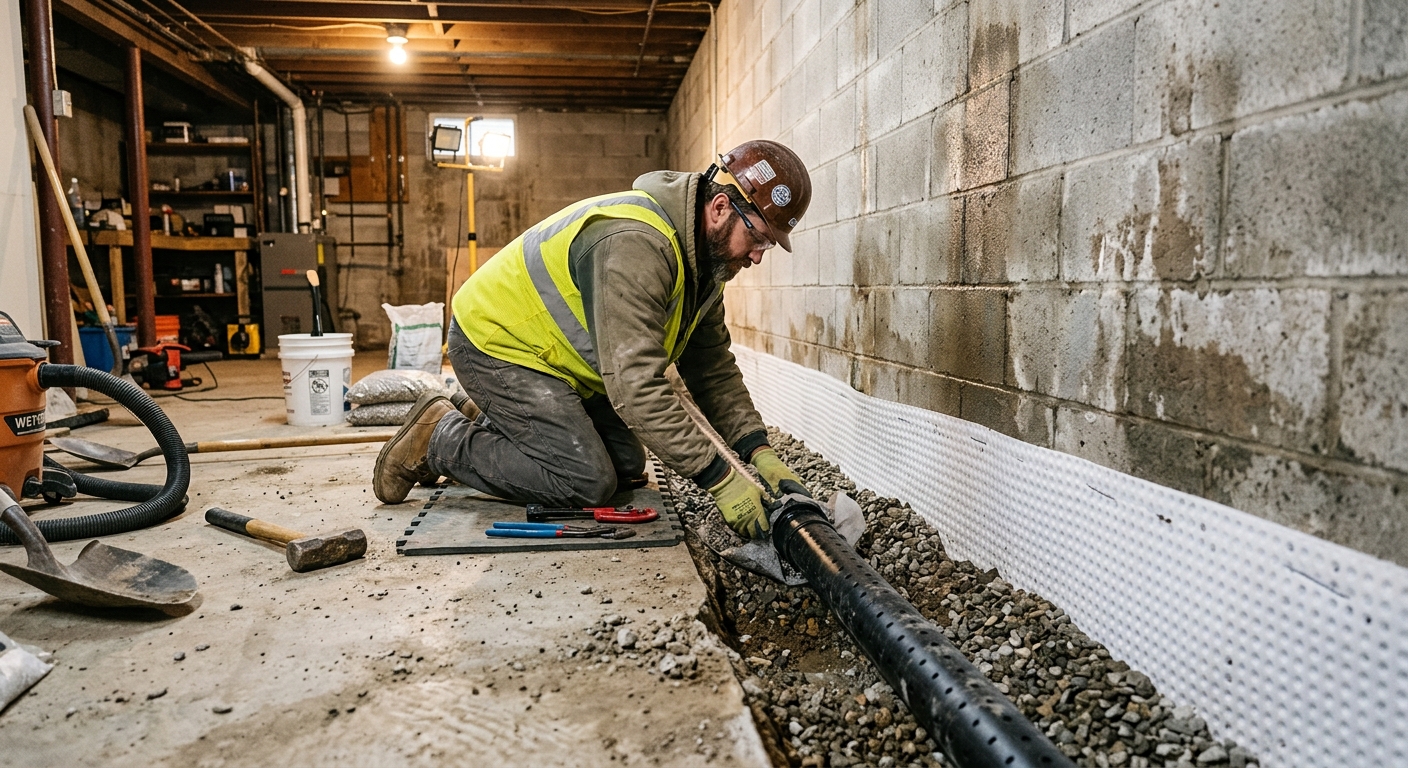
Basement waterproofing options and costs in Morley-Buckingham
In Morley-Buckingham, British Columbia, basement waterproofing usually comes down to controlling groundwater and stopping water from reaching your foundation—either at the source from the outside, or by collecting it inside. Because the population is 4,828 (Statistics Canada, 2021 Census), you’ll often notice a mix of older residential streets alongside newer infill, and that matters: older foundations are more likely to have decades-old drainage systems, corroded weeping tile, or joints that have opened up under repeated wet-season saturation. In the Lower Mainland–Southwest, contractors also price around the reality of persistent hydrostatic pressure. Coastal BC’s high water tables and prolonged rainfall keep basement walls and slabs under load for longer stretches than in many parts of Canada, so sealing-only fixes can fail sooner.
Within Morley-Buckingham, demand is especially high along the older, established residential pockets where access is tighter and perimeter drainage was installed years ago with limited sump capacity. Around the neighbourhood core near the older housing areas (and often near mature landscaping and driveways), exterior excavation is more labour-intensive because crews may need to mechanically break through tougher backfill and manage rock or uneven grades.
To help you compare what you’re actually buying, the options below show typical scopes, disruption, and budget ranges. Use the table as a baseline before you ask for itemized quotes—then we’ll break down why the same job can vary by 30–50% across the region and province.
| Method |
What It Addresses |
Disruption Level |
Durability |
Price Range |
| Exterior excavation + new membrane + drainage tile |
Water entry at foundation wall and footing; replaces failed perimeter drainage |
High (yard/sidewalk/driveway access) |
Long-term source control when installed correctly |
$15,000–$30,000 |
| Interior perimeter drain channel + sump pit |
Collects seepage after it enters; reduces hydrostatic pressure at interior surfaces |
Medium (interior floor/footing work) |
Very durable with proper sump, discharge, and maintenance |
$8,000–$18,000 |
| Foundation crack injection (epoxy or polyurethane) |
Stops water through cracks; restores continuity where appropriate |
Low to medium |
Strong for correct crack type and surface prep |
$500–$2,000 |
| Sump pump installation (primary + battery backup) |
Ensures pumping during heavy rain and power interruptions |
Low to medium |
High reliability when backed up and properly vented/discharged |
$1,000–$5,000 |
| Window well drain installation |
Manages surface water that accumulates at basement windows |
Low (small exterior/entry excavation) |
Good when drainage is routed and maintained |
$2,000–$6,500 |
| Lot re-grading / downspout extension |
Reduces roof runoff around foundation; improves drainage direction |
Low to medium |
Moderate—best as part of a system |
$3,500–$8,500 |
Prices are estimates only and vary by project scope, site access and material selection.
What affects the price of waterproofing in Morley-Buckingham
In the Lower Mainland–Southwest, you can see quotes for the same basement waterproofing scope vary by 30–50% from contractor to contractor. The biggest reason isn’t “luxury”—it’s that soil conditions and water table behaviour drive real construction effort. Two homes can both have “wet basement,” but one may only need a sump and perimeter drain channel while the other requires full exterior excavation because the source drains have failed and the soil stays saturated long after rainfall.
These three drivers separate Lower Mainland–Southwest pricing from the national average: soil type, water table, and freeze-thaw. Unlike clay-heavy, highly expansive soils in parts of Ontario and the Prairies that swell and press hard seasonally, coastal BC problems often come from persistent saturation and drainage challenges. Still, Lower Mainland freeze-thaw widens existing cracks and joints, which lets water penetrate faster and means more prep before sealing. High water tables in British Columbia raise sump pump run times and require higher-capacity pumping and discharge planning. When original drainage fails, heavy coastal rainfall saturates backfill quickly, increasing the time crews spend excavating, pumping water, and drying surfaces.
In Morley-Buckingham, concrete examples include: (1) yards with mature landscaping often increase labour for exterior excavation, because access must be staged and restored; (2) homes with older perimeter drain tile (sometimes 60+ years) can be completely collapsed, so interior-only fixes may reduce symptoms but not fully solve chronic seepage; and (3) poured-concrete wall cracks may cost less if the crack pattern is straightforward for injection, while irregular block foundation seepage often pushes budgets toward an interior weeping tile + sump approach. That’s why a full exterior system typically lands at the higher end (often aligned to the $15,000–$30,000 band), while many interior retrofits fall within the $8,000–$18,000 band depending on how far the system needs to be built.
| Price Factor |
Why It Matters |
Cost Impact |
| Interior vs. exterior approach — interior is less disruptive but addresses symptoms |
Exterior controls water at the source; interior manages after-entry seepage |
Interior often 30–60% less than exterior for similar leak locations |
| Foundation type — poured concrete vs. block vs. stone vs. ICF |
Crack behaviour and sealing strategies differ by material and joint design |
Block and older stone frequently require more extensive interior drainage |
| Soil type — clay expands more than sand, adding pressure |
Expanding soils can worsen crack activity during freeze-thaw cycles |
More lateral pressure can increase prep and sealing labour |
| Crack type and length — hairline vs. structural horizontal cracks |
Not all cracks inject the same way; structural cracks may need engineering |
Structural cracks can trigger underpinning or engineered stabilization costs |
| Sump pump backup system — battery or water-powered backup needed |
Power interruptions during wet seasons can turn seepage into overflow risk |
Backup upgrades add cost but reduce the “single-point failure” risk |
| Access — landscaping, decks, or driveways must be removed for exterior |
Excavation is slower on tight urban lots and where surfaces must be reinstated |
Often increases exterior excavation labour and disposal charges |
| Weeping tile age — original tile (60+ years) may be completely failed |
Completely failed drains require broader replacement and routing changes |
Can push you toward a full exterior replacement system |
| Mould or efflorescence remediation required before sealing |
Sealers won’t adhere well to active moisture and contaminated surfaces |
Adds drying time, cleaning, and sometimes surface repairs |
Permits & regulations in British Columbia
In British Columbia, foundation excavation, structural crack repair, and changes to lot drainage typically require a building permit. If the work involves correcting stormwater flow on your property (for example, altering grading or where downspouts discharge), permits or approvals may be required depending on the scope and how the discharge is managed. Sump pump installations that connect to the storm or sanitary sewer generally need municipal approval. For structural crack repair—especially horizontal cracks in block walls, major step cracks, or signs of movement—an assessment from a structural engineer is often required to determine whether underpinning or other structural work is necessary.
For Morley-Buckingham homeowners, start by verifying the contractor carries the right paperwork and coverage. Step-by-step: (1) ask the contractor for their British Columbia business licence details and any trade licence documentation relevant to the work; (2) request a current certificate of liability insurance—make sure it includes construction/waterproofing activities; (3) ask for confirmation of WSIB/WCB coverage, as applicable; and (4) for structural scopes, request evidence that engineering support is included or available before injection/repair begins.
Where to look: check the contractor’s online listings for licence status, review the certificate of insurance for expiry dates and coverage limits, and request clearance/coverage confirmation from their insurance and compensation providers. If they can’t provide documents clearly, treat that as a planning red flag before signing.
Interior vs exterior waterproofing — what does Morley-Buckingham need?
The fundamental difference is simple: exterior waterproofing (full excavation, new membrane, new drainage tile, then backfill) addresses the source of water entry, while interior waterproofing manages water after it gets into the basement. Exterior work is the best “permanent source control,” but it costs more and requires landscaping disruption. Interior retrofits—perimeter drain channel, sump pit, and sump pump—are less invasive, but they don’t stop hydrostatic pressure from acting on the wall itself. In Morley-Buckingham’s Lower Mainland–Southwest climate, that distinction matters because high water tables and persistent rainfall keep seepage active over longer periods.
Most homes here sit on soils that are less about dramatic seasonal swelling and more about saturation and drainage behaviour. As a result, when perimeter drainage is failing, exterior excavation is often the right fix if you want to reduce the long-term likelihood of recurring wet spots. Poured-concrete walls generally respond well to targeted crack injection when the crack pattern is stable and properly prepped. Block foundations, on the other hand, frequently need interior drainage as a practical complement because water can travel through block cores and joints even when individual cracks seem “manageable.”
Because British Columbia weather can mean wet-season surges and occasional power disruptions, a sump pump backup system is not optional for many homeowners. A battery backup can keep pumping during brief outages, reducing the chance that a heavy rain event overwhelms the system. If you’re choosing between budgets, consider this: an interior perimeter drain and sump package commonly aligns with the $8,000–$18,000 band, while exterior systems are typically $15,000–$30,000. The difference is justified when exterior drainage has failed, access is manageable, and you need source control rather than symptom control.
| Method |
Best For |
Addresses Source? |
Disruption |
Lifespan |
Price Band |
| Full exterior excavation + membrane |
Chronic seepage, failed weeping tile, exterior wall moisture |
Yes |
High |
Long-term with proper backfill and discharge routing |
$15,000–$30,000 |
| Interior French drain + sump system |
Interior seepage, tight yards, when source drainage is uncertain |
Partially (relieves pressure at interior surfaces) |
Medium |
Very durable with reliable sump and discharge |
$8,000–$18,000 |
| Crack injection — epoxy (structural) |
Stable, non-moving cracks where sealing is the goal |
Yes (for that crack pathway) |
Low |
High when crack type is correct and surfaces are prepared |
$500–$2,000 |
| Crack injection — polyurethane (active leak) |
Active water seepage through joints or cracks |
Yes (stops active pathway) |
Low |
High when injection points and moisture conditions are handled |
$1,000–$3,500 |
| Interior drain channel only (no sump) |
Minor dampness where water quantities are low |
No (does not control volume during heavy events) |
Low to medium |
Moderate; can struggle in high water-table periods |
$6,000–$12,000 |
| Re-grading + downspout extensions |
Foundation water caused primarily by roof runoff and surface pooling |
Source-linked for surface water |
Low to medium |
Moderate; depends on grading staying effective |
$3,500–$8,500 |
How to choose a waterproofing contractor in Morley-Buckingham
Choosing the right contractor is where waterproofing wins or fails—especially in Morley-Buckingham, where persistent moisture and freeze-thaw can turn a “good enough” system into a recurring problem. Start by verifying British Columbia coverage and readiness. Ask for (1) a current certificate of liability insurance (review the policy limits and confirm it covers construction activities), (2) WSIB/WCB coverage clearance or proof as applicable, and (3) documentation that the contractor is properly licensed for the scope they’re bidding. Then confirm the company understands permit triggers: whether they will handle permits or provide the documentation you’ll need for municipal approval if a sump discharge connection requires it.
Next, get 2–3 itemized written quotes. You want a labour-and-materials breakdown, not just a single lump sum. Make sure each quote clearly lists excavation/demolition scope, disposal, membrane system components, drainage tile routing, sump basin details, backflow protection, and whether they include disposal of excavated soil. Confirm exclusions: is mould remediation included if efflorescence is present? Is permit pulling included? What about landscape restoration or reinstating a driveway edge?
Warranty matters too. Ask for workmanship warranty length, product/manufacturer warranty terms, and whether warranties are transferable if you sell. Avoid large upfront payments: keep deposits around 10–15%, and hold back a portion until completion and sign-off. Finally, ask for a written start date and a realistic completion timeline, including how they’ll manage wet-season scheduling and drying.
- Ask for proof of liability insurance and confirm expiry dates.
- Request WSIB/WCB coverage confirmation appropriate to the trade.
- Check whether permits are required for your exact scope (and whether they pull them).
- Insist on itemized labour + materials (no “allowance-only” vagueness).
- Verify membrane/drainage products and their installation method, not just brand names.
- Confirm discharge routing details (where water is sent, backflow protection, and discharge point condition).
- Ask if they include sump pump backup and what type (battery vs water-powered).
- Review site logistics: how they protect landscaping, decks, and walkways.
- Clarify disposal and trucking—excavation often changes the final price.
- Get drying-time and curing-time expectations in writing (especially for crack injection).
- Confirm warranty length for workmanship and product, and whether warranties transfer.
- Set a payment schedule with 10–15% maximum upfront and holdback at completion.
Red flags to watch for in Morley-Buckingham: a contractor who won’t show insurance/coverage documents; bids that claim “one-size-fits-all” waterproofing without inspecting water entry points; vague scoping (no mention of sump discharge, drainage routing, or what happens if the weeping tile is collapsed); no clear warranty terms; and requests for most payment upfront before inspection, engineering review, or permit steps are confirmed.
Frequently asked questions — waterproofing in Morley-Buckingham
Can I waterproof my basement from the inside only?
Yes, inside-only waterproofing can work in Morley-Buckingham, especially when the main issue is minor seepage, small crack pathways, or when exterior access is limited by landscaping or walkways. Interior systems—like a perimeter drain channel and sump pit—collect water after it enters and reduce interior surface wetness. However, it won’t stop hydrostatic pressure from acting on the wall, so homes with chronically failing perimeter drainage and persistent high water conditions often benefit more from exterior source control. If your budget is tight, start with a scoped inspection and targeted repairs: crack injection and an interior sump package in the $8,000–$18,000 range can be a strong first step, but we’ll still recommend evaluating the exterior drainage if the source drains are likely failed.
What causes foundation cracks in Morley-Buckingham?
Foundation cracks in British Columbia commonly come from water and freeze-thaw cycling. In Morley-Buckingham, prolonged wet periods saturate soils and increase pressure against foundation walls; when temperatures drop, freeze-thaw widens existing joints and hairline cracks, allowing water to keep entering. Over time, that can translate into more noticeable cracking, especially near corners, around window openings, and along joints in older block and poured-concrete foundations. Another common trigger is settlement coupled with inadequate drainage—when downspouts or grading direct water toward the foundation, the basement wall experiences repeated wetting. If you have horizontal cracks in block walls or step cracking that appears to be widening, that can indicate a structural concern and may require an engineering assessment before injection.
How do I compare waterproofing quotes?
Compare quotes like you would compare a medical plan: look at the exact diagnosis, scope, and materials—not just the total price. In Morley-Buckingham, ask each contractor to explain where water is entering and how they’ll manage it during heavy rainfall. Your comparison should include: whether they’re bidding interior-only symptom control or exterior source control; whether the sump includes backup; how drainage tile is routed and where discharge goes; whether disposal and landscape reinstatement are included; and whether permits are included or required. A good quote will list labour and materials line by line. If one bid is far lower than others, it often excludes things you’ll pay later—like sump discharge planning, mould/efflorescence remediation, or mechanical excavation for rocky access.
How long does basement waterproofing take in Morley-Buckingham?
Timelines depend on the scope and, in the Lower Mainland–Southwest, on weather-driven drying conditions. Smaller interior work such as crack injection or targeted window well drainage can sometimes be completed quickly—often within days—because it requires less excavation. Interior perimeter drain work with a sump package typically takes longer due to floor/footing access and routing, and you may also need time for curing/drying before sealing surfaces. Exterior excavation projects take the most time because the crew has to remove landscaping, excavate around the foundation, install membrane and drainage tile, manage water during excavation, and then backfill and complete restoration. Expect scheduling complexity around wet seasons. If you’re comparing contractors, insist on a start date and completion estimate in writing, and confirm how they plan around the probability of prolonged rain.
What is a weeping tile and does my Morley-Buckingham home have one?
A weeping tile (perimeter drain tile) is the historic drainage system installed around the foundation—typically at or near the footing—that collects groundwater and directs it to a sump or discharge point. Many older Morley-Buckingham homes have had original perimeter drainage installed, but it may be undersized, disconnected, crushed, or filled with debris after decades, especially with persistent coastal saturation. You might have one even if your basement is currently leaking; the issue is often failure of the tile, poor slope, or insufficient pumping capacity. A contractor can usually confirm by inspecting existing cleanouts, locating sumps, using exploratory methods where feasible, or checking for visible discharge patterns. If the original tile is 60+ years old and failing, you’ll often see recommendations moving toward a full exterior system or a comprehensive interior drain + sump.
Can I waterproof my basement in winter in Morley-Buckingham?
Often, yes—winter waterproofing can be done in British Columbia, but there are practical limitations. In Morley-Buckingham, freeze-thaw and colder temperatures can slow excavation and affect how surfaces dry for crack injection or sealing. Exterior work may be harder if the ground is frozen, and contractors may need additional time for thawing logistics and drying/curing windows. Interior work can still proceed because it’s indoors and less dependent on frozen soil, but you may still need careful moisture management to ensure products bond correctly. The key is whether the contractor can provide a plan for curing times, surface readiness, and sump discharge routing even in colder conditions. For many homeowners, an interior approach with a sump and controlled crack repair can be scheduled even during winter, aligning more closely to the $8,000–$18,000 interior band—while full exterior excavation may be deferred if conditions are too restrictive.