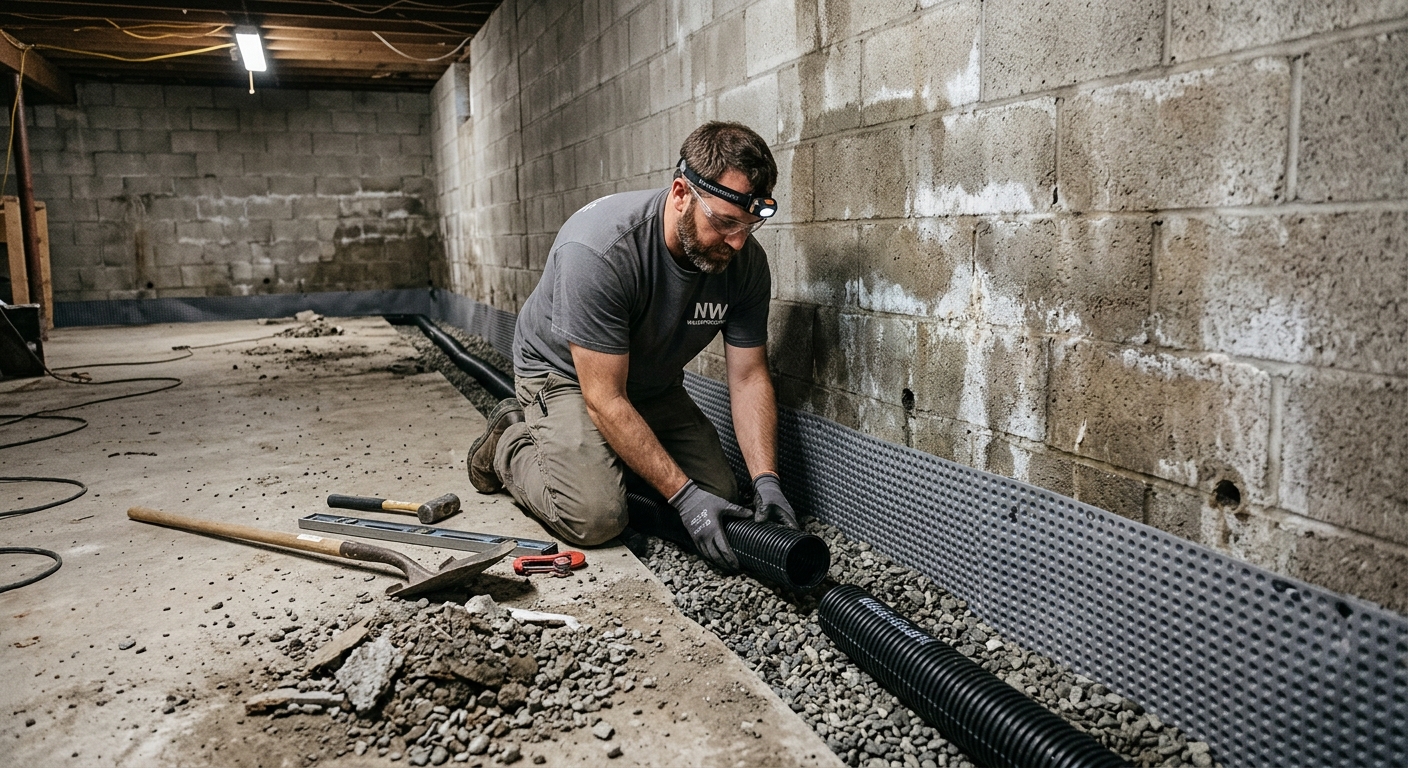
Basement waterproofing options and costs in Duncan
Duncan homeowners often face the same frustrating pattern: water appears after heavy rain, then returns during spring storms, even when the basement floor looks “dry enough.” In Duncan, the big question is whether the leak is coming from exterior hydrostatic pressure against the foundation or whether water is entering and then needs to be managed inside. That matters because most Duncan housing stock is older—about 61.3% of homes were built before 1981—and older foundations are more likely to have failed original waterproofing and corroded weeping tile. In addition, with only 5,047 people in the community (Statistics Canada, 2021 Census), the local contractor pool can be smaller than larger urban centres, so excavation scheduling and material lead times can influence your final cost.
On Vancouver Island and the Coast, water movement around the foundation is the main cost driver: high rainfall, higher groundwater, and drainage issues mean exterior work is more labour-intensive. Excavation, membrane installation, perimeter drainage, and backfilling are typically priced higher than interior fixes because access is often tight (mature landscaping, walkways, and retaining edges). Still, interior systems can be a smart choice when the goal is to stop recurring seepage and protect stored items—especially in older homes where opening up the full perimeter isn’t practical. In Duncan’s popular residential pockets like the Cedarvale area, exterior access is frequently complicated by established gardens and drainage paths, which is why many homeowners choose a staged approach.
Use the table below to compare common methods by what they address, how disruptive they are, and what you’ll usually budget for a typical Duncan project before we talk about what drives quote differences.
| Method |
What It Addresses |
Disruption Level |
Durability |
Price Range |
| Exterior excavation + new membrane + drainage tile |
Source water entry from the exterior; re-establishes perimeter drainage and waterproof barrier |
High (excavation, landscaping restoration, debris haul-away) |
Long (when installed with correct drainage slope and backfill) |
$7,000–$18,000 |
| Interior perimeter drain channel + sump pit |
Water that enters anyway; relieves hydrostatic pressure at the floor/footing area |
Medium (floor cutting along perimeter, sump discharge line work) |
Good (depends on proper sump sizing and discharge routing) |
$3,000–$10,000 |
| Foundation crack injection (epoxy or polyurethane) |
Crack seepage pathway; stops water movement through specific cracks |
Low to Medium (minor surface prep; access needed) |
Medium to Long (crack type and wall movement matter) |
$250–$800 |
| Sump pump installation (primary + battery backup) |
Manages collected water during heavy rain and high water table periods |
Low to Medium (pit/coring, electrical tie-in) |
Good (improves reliability during outages) |
$800–$2,500 |
| Window well drain installation |
Localized seepage from around basement window assemblies |
Low to Medium (excavation around window well) |
Medium (depends on correct routing and filter fabric) |
$1,200–$3,900 |
| Lot re-grading / downspout extension |
Moves roof/lot water away from foundation to reduce seepage triggers |
Low (minor soil work; restoration) |
Short to Medium (needs maintenance of grading and eaves) |
$1,000–$4,500 |
Prices are estimates only and vary by project scope, site access and material selection.
What affects the price of waterproofing in Duncan
In Duncan, it’s common to see the “same” basement waterproofing problem quoted 30–50% apart across Vancouver Island and Coast and other parts of British Columbia. The reason isn’t just contractor overhead—it’s the amount of exterior work required to stop water at the source versus how much of the solution can be handled after water enters. On Vancouver Island and the Coast, exterior systems often cost more because excavation, membrane labour, and perimeter drainage are more intensive when drainage fails and the surrounding soil stays saturated. When comparing quotes, ask what they are actually fixing: the exterior water pathway, the crack pathway, or the interior water management pathway.
Three drivers separate regional costs from a national average. First, soil type and freeze-thaw: clay-heavy soils hold water and can increase pressure against foundation walls, and trapped moisture can widen cracks over time when temperatures shift. Second, groundwater and the water table: higher groundwater levels increase sump pump run time and the amount of drainage work needed. Third, heavy coastal rainfall saturates backfill quickly when original drainage systems fail—so contractors often plan for more robust routing and higher-capacity discharge.
Two local examples that commonly change pricing in Duncan: (1) homes built before 1981 frequently have original perimeter drains that are 60+ years old and completely failed, pushing homeowners from “interior only” budgets toward the $7,000–$18,000 exterior band when a true perimeter fix is required; and (2) when a basement has recurring dampness near a specific crack line, crack injection alone (often in the $250–$800 range for repair) may reduce leaks, but a full exterior or interior drainage plan may still be needed if water is bypassing around the crack during heavy storms.
| Price Factor |
Why It Matters |
Cost Impact |
| Interior vs. exterior approach — interior is less disruptive but addresses symptoms |
Interior systems manage water after entry; exterior stops source water movement |
Interior often saves on disruption; exterior can add excavation + membrane costs |
| Foundation type — poured concrete vs. block vs. stone vs. ICF |
Wall composition changes crack behaviour and what sealing methods work best |
Block/stone may require more targeted drainage and crack protocols |
| Soil type — clay expands more than sand, adding pressure |
More water retention can raise lateral pressure and worsen recurring seepage |
Higher risk means more durable systems; can push toward exterior work |
| Crack type and length — hairline vs. structural horizontal cracks |
Injectable hairline cracks respond differently than structural movement |
Structural cracks can trigger engineering/underpinning scope and cost |
| Sump pump backup system — battery or water-powered backup needed |
BC power interruptions during storm/flood periods raise failure risk |
Backup adds cost but protects against recurrence when outages happen |
| Access — landscaping, decks, or driveways must be removed for exterior |
Excavation access drives labour, restoration, and protection measures |
More restoration can increase the exterior band substantially |
| Weeping tile age — original tile (60+ years) may be completely failed |
Failed tile often contributes to persistent groundwater pooling |
May require perimeter drainage replacement or interior sump strategy |
| Mould or efflorescence remediation required before sealing |
Moisture stains and salts can mean active moisture behind surfaces |
Remediation adds steps and may delay waterproofing until conditions stabilize |
Permits & regulations in British Columbia
In British Columbia, some waterproofing-related work requires a permit—especially when you’re altering foundation elements, structural components, or lot drainage patterns. Foundation excavation (especially when it changes how the foundation is exposed or affects drainage routes), structural crack repair, and changes to lot drainage commonly fall under permit requirements. If a sump pump discharge line connects to a storm or sanitary system, municipal approval is typically required, since that affects existing servicing infrastructure. For structural crack repair—like horizontal cracks in block walls or any signs of structural movement—a structural engineer’s assessment is often necessary to determine whether underpinning or other structural work is needed. Your contractor should be able to coordinate engineering support for structural repairs and provide documentation that shows how the plan addresses structural stability, not just surface sealing.
To verify a contractor in Duncan before work starts, follow a simple checklist. First, confirm the right licence/registration through the Government of British Columbia licensing/registry resources (search the contractor’s legal name). Second, request a certificate of liability insurance that covers the specific work (ask for the effective dates). Third, confirm WSIB/WCB coverage—ask for the clearance letter or proof of account status, depending on the type of work and company category. If they can’t provide documentation promptly, that’s a red flag.
Next, ask whether the permit pull is included in the quote and which party submits it. A competent contractor will tell you exactly what will be permitted, what won’t, and who is responsible for approvals before excavation begins.
Interior vs exterior waterproofing — what does Duncan need?
The fundamental difference is source versus management. Exterior waterproofing—full excavation, new membrane, new perimeter drainage tile, and backfill—targets water before it reaches your foundation wall. It costs significantly more and requires landscaping disruption, but when it’s done correctly, it’s the most complete way to reduce hydrostatic pressure against the wall. Interior waterproofing—perimeter drain channel, sump pit, and sump pump—handles water after it enters. It’s usually less invasive and can be faster for homeowners who need results in a confined footprint, but it does not fully stop water pressure from building against the foundation wall itself.
In Duncan, that choice depends on how your home is performing during storms and what your foundation is made from. Poured concrete walls typically respond well to crack injection combined with interior drainage when cracks are the dominant pathway. Block foundations often have more complex moisture pathways through joints and small voids, and many homeowners still benefit from interior drainage as a practical complement to any targeted crack repair. Because Vancouver Island and the Coast experience heavy rainfall with prolonged wet backfill, sump systems often need to be sized for sustained run times, not just short bursts. That’s why backup systems matter—spring flooding and storm-related power disruptions can turn a “working” sump into a liability if the pump fails during an outage.
For cost justification, consider this: if your basement is repeatedly damp at the same exterior wall line and the perimeter drain has failed, an exterior approach in the $7,000–$18,000 band can be justified. If, however, dampness is limited and you have manageable drainage, interior waterproofing in the $3,000–$10,000 band plus crack injection can be a more budget-aligned way to protect finishes and reduce recurrence without full yard disturbance.
| Method |
Best For |
Addresses Source? |
Disruption |
Lifespan |
Price Band |
| Full exterior excavation + membrane |
Recurring seepage from exterior, failed perimeter drainage, and cases where you want a long-term source solution |
Yes |
High (excavation + landscaping restoration) |
Long-term (with correct drainage slope and backfill) |
$7,000–$18,000 |
| Interior French drain + sump system |
Homes where excavation is difficult or interior control is the most practical option |
No (manages water after entry) |
Medium (perimeter floor work, sump pit install) |
Good (depends on pump performance and discharge routing) |
$3,000–$10,000 |
| Crack injection — epoxy (structural) |
Non-moving, structural cracks where you want a rigid seal |
Partial (stops crack pathway if stable) |
Low to Medium (surface prep; holes drilled) |
Medium to Long (when movement is not ongoing) |
$400–$900 |
| Crack injection — polyurethane (active leak) |
Active seepage or cracks with ongoing minor movement |
Partial (stops active pathways) |
Low to Medium (prep and injection control) |
Medium (may need follow-up if water bypasses elsewhere) |
$300–$1,000 |
| Interior drain channel only (no sump) |
Light seepage where gravity drainage is feasible and water volumes are low |
No (still relies on interior collection) |
Medium (cutting along perimeter) |
Medium (risk rises in higher water table conditions) |
$2,000–$6,500 |
| Re-grading + downspout extensions |
Surface-water problems near the foundation and maintenance upgrades |
Helps reduce source load (not full waterproofing) |
Low to Medium (soil work, minor landscaping restoration) |
Short to Medium (requires ongoing maintenance) |
$1,000–$4,500 |
How to choose a waterproofing contractor in Duncan
Start by verifying credentials the same way you’d vet any tradesperson, but be specific about waterproofing. In British Columbia, ask for proof of the correct licence/registration for the contractor’s scope, a current certificate of liability insurance, and WSIB/WCB clearance or proof of coverage. Check the licence/registry online using the contractor’s legal name, and confirm the insurance dates match your project timeline. If they won’t show paperwork, don’t move forward—waterproofing is a system, not a patch job.
Next, get 2–3 itemised written quotes, not lump sums. You want a breakdown that separates labour from materials (membrane, drainage tile, sump components, backfill, discharge piping) and explains what’s included for site protection and disposal. Carefully read exclusions: Are permits included? Is excavation limited to certain areas? Is landscaping restoration part of the scope or “allowance only”? For basements that show mould or salts, confirm whether remediation steps are included before any sealing product is installed.
Warranty matters. Look for a workmanship warranty (length and what’s covered), plus the product/manufacturer warranty details. Ask whether the warranty is transferable to future owners—some homeowners plan to sell soon after repairs. For payments, never pay more than 10–15% upfront; hold back a portion until key milestones are complete and you’ve received documentation. Finally, insist on a written start date and completion estimate, including weather-sensitive allowances for excavation on Vancouver Island.
- Provide scope drawings/photos of your specific problem area, not generic brochures.
- List material brands and specifications (membrane type, drainage board, tile diameter).
- Confirm discharge location for sump pump water (and that it’s compliant).
- State how they handle removal and disposal of old tile/failed materials.
- Explain crack injection method by crack type and whether it’s stable.
- Include an interior/exterior boundary plan: what is repaired, sealed, and what is left accessible.
- Specify slope/grading targets and downspout discharge details.
- Detail excavation access protection (deck/landscape protection) and restoration responsibility.
- Show pump specifications if a sump is included (capacity, floats, backup type).
- Provide insurance and WSIB/WCB clearance before scheduling equipment.
- Confirm permit responsibility and timing (who pulls it, if required).
- Include milestone-based payment schedule and final walkthrough requirements.
Red flags in Duncan include: contractors who promise “100% waterproofing” without diagnosing the source pathway; quotes that omit discharge routing details for sump systems; crack injection offered as a complete solution when exterior drainage failures are likely; unusually low pricing that doesn’t include excavation, disposal, or restoration; and workers who can’t provide insurance/WSIB/WCB documentation when requested.
Frequently asked questions — waterproofing in Duncan
How do I compare waterproofing quotes?
Start by comparing scope line-by-line. Ask each contractor whether they’re solving the exterior source (excavation, membrane, new drainage tile) or managing interior water (perimeter drain channel, sump pit, sump pump). On Vancouver Island and the Coast, exterior work is usually the cost driver because excavation and membrane labour are intensive—so a quote in the $7,000–$18,000 band should clearly include excavation, membrane, drainage tile replacement, and discharge routing, not just “sealing.” Also compare what’s included: disposal, permit pull (if required), landscape restoration, and how they handle failing older weeping tile. Finally, verify credentials—licence/registration, liability insurance, and WSIB/WCB coverage—so you know you’re comparing real, buildable work.
How long does basement waterproofing take in Duncan?
Typical timelines in Duncan depend on whether you’re doing exterior excavation or interior work. Interior perimeter drains and sump installs are often faster because they avoid full yard excavation, but they still require concrete cutting, drainage piping placement, pump setup, and curing time for sealants. Exterior jobs generally take longer due to excavation, membrane installation, drainage tile work, and careful backfilling, plus landscaping and re-grading restoration. Weather matters: heavy rainfall can slow excavation and backfill sequencing when soils stay saturated. Most homeowners should plan for multiple days on-site, and longer if engineering assessments are needed for structural cracks. A solid contractor will provide a written start date, a completion estimate, and weather allowances for the Vancouver Island and Coast conditions.
What is a weeping tile and does my Duncan home have one?
A weeping tile (or perimeter drainage tile) is a sloped drainage system installed around the foundation to collect groundwater and seepage, then route it to a discharge point—often historically it was connected to a sump or daylight outlet. In many older Duncan homes (Statistics Canada, 2021 Census notes 61.3% built before 1981), original weeping tile may still be present but frequently fails from age and corrosion, leaving water no place to go. You might not “see” it unless a contractor exposes the perimeter during excavation, or you locate signs like recurring dampness along specific wall lines. If you’re unsure, ask what inspection steps they use—camera inspection during excavation, targeted probing, or checking historical build details—before selecting interior-only versus exterior-source repairs.
Can I waterproof my basement in winter in Duncan?
It can be possible, but it depends on conditions and the scope. In winter on Vancouver Island and the Coast, rainfall and saturated soils can still make exterior excavation messy and slower, even when there’s less freeze-thaw than colder provinces. Interior waterproofing is often more feasible because it avoids full exterior excavation; however, concrete cutting and sealing require surfaces to be workable and as dry as practical for the products being used. If your contractor is planning crack injection, they’ll still want to control ongoing seepage at the time of injection. A reputable Duncan contractor will explain the risks of sealing during very wet conditions and how they’ll manage drying/stabilization before applying membrane or sealants. If engineering or permit work is involved, winter scheduling may also affect lead times.
What is the difference between waterproofing and damp-proofing?
In everyday terms, waterproofing is intended to stop or control water entry and manage hydrostatic pressure—typically through systems like exterior membranes, perimeter drainage tile, interior drain channels, and sump pump setups. Damp-proofing is more about reducing moisture transmission and staining, often relying on coatings without fully addressing water pressure or drainage. In Duncan, because heavy coastal rainfall and higher groundwater can keep backfill saturated, damp-proofing alone can miss the root cause—especially if older weeping tile has failed or if cracks provide a leakage pathway. That’s why homeowners sometimes see “surface improvements” fail during the next storm season. When you get a quote, ask which standard they’re using and whether the solution includes drainage routing and a plan for crack seepage, not just a wall coating.
Will basement waterproofing affect my property value in Duncan?
Basement waterproofing can improve property value indirectly by protecting finishes, reducing recurring moisture issues, and lowering the risk of damage that scares buyers. In a community of 1,415 homeowner households (Statistics Canada, 2021 Census), maintenance and reliability are big selling points—especially for older homes where 61.3% were built before 1981. That said, the value boost depends on how complete the fix is and how well it matches the source problem. A partial approach can still help if it’s properly designed—for example, crack injection and sump upgrades might be appropriate when symptoms are localized, while a full exterior system may be justified when perimeter drainage failure is the primary driver. Buyers also value documentation: photos, warranty details, and proof of permit work where required.