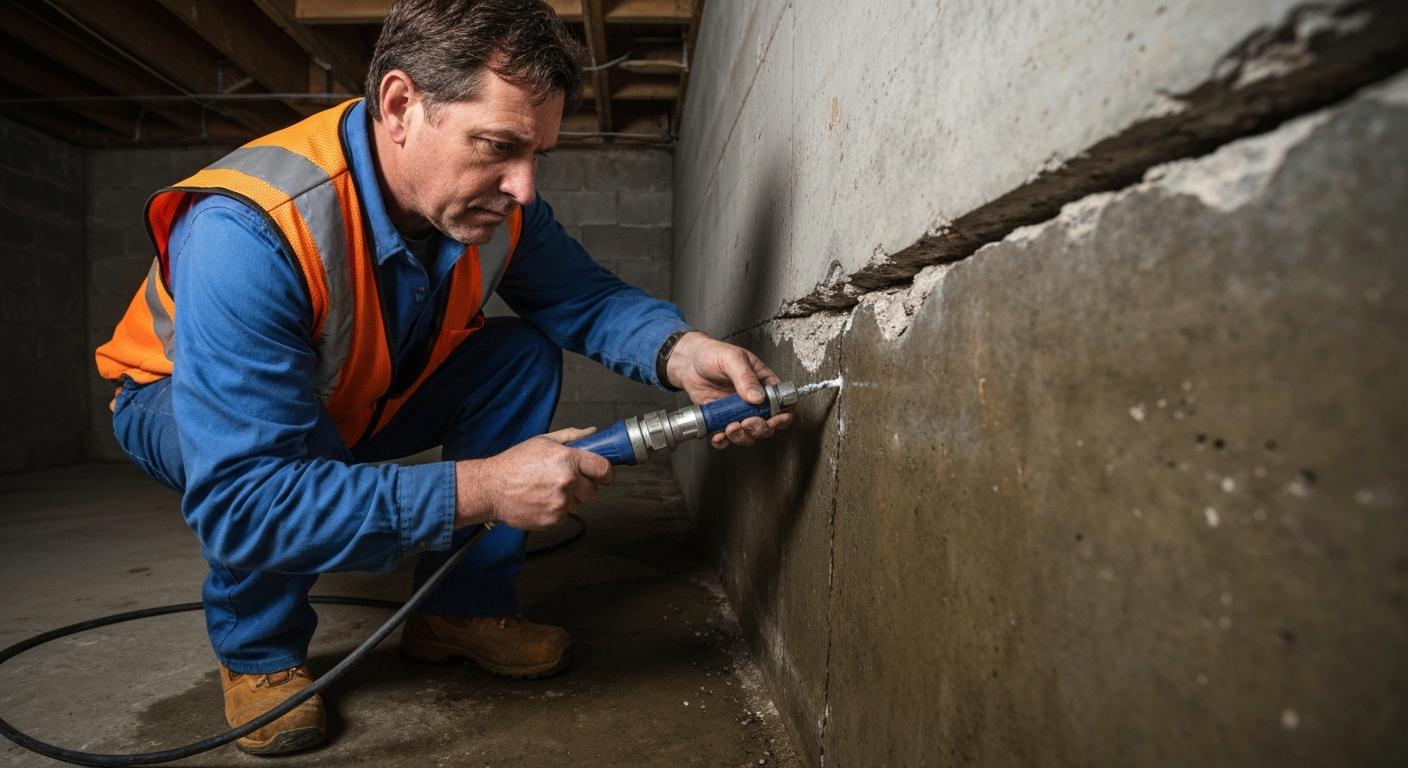
Basement waterproofing options and costs in Richmond
Richmond homeowners typically choose between exterior waterproofing and interior drainage, depending on how water is entering and how much disruption you can tolerate. In Richmond, the housing mix matters: with 25.9% of homes built before 1981 (Statistics Canada, 2021 Census), it’s common to run into older tar-and-paper style systems, tired backfill, and perimeter drain lines that have lost capacity or failed over decades. That’s why you’ll often see higher demand in neighbourhoods with older stock and established landscaping, including parts of Steveston and the older central Richmond areas.
In the Lower Mainland–Southwest, soil conditions and persistent saturation are the primary cost drivers. Coastal BC rainfall can keep backfill and footing areas saturated for long stretches, creating steady hydrostatic pressure against basement walls and slab edges. Even when cracks look small, freeze-thaw cycles in our wet, mild winters widen joints and allow water pathways to grow. Add in tight urban access and occasional rocky excavation that requires mechanical breaking, and costs rise quickly for full-perimeter work. Labour availability is also a factor during the busier spring and early-summer window, when many basements are inspected after winter moisture peaks.
For many Richmond homes, exterior excavation + membrane and drainage tile is the “source control” option, while interior perimeter drainage and sump upgrades are the “manage the water after entry” option. Use the table below to compare typical scopes and budget ranges, then we’ll walk through what changes a quote by hundreds—or tens of thousands.
| Method |
What It Addresses |
Disruption Level |
Durability |
Price Range |
| Exterior excavation + new membrane + drainage tile |
Source of seepage by waterproofing foundation exterior and adding properly graded drainage tile |
High (yard excavation, sidewalk/driveway impacts possible) |
High (decades when installed to grade and backfilled correctly) |
$15,000–$30,000 |
| Interior perimeter drain channel + sump pit |
Water that enters at footing cracks and slab edges by collecting and pumping |
Medium (floor/area impacts, limited exterior disturbance) |
Good to high (depends on pump selection and discharge path) |
$8,000–$18,000 |
| Foundation crack injection (epoxy or polyurethane) |
Stops leakage through cracks; epoxy typically for non-moving cracks, polyurethane for active seepage |
Low to medium (interior access; patching and curing time) |
Moderate to high (best when combined with drainage control where needed) |
$500–$2,000 |
| Sump pump installation (primary + battery backup) |
Prevents flooding and reduces basement moisture from pump failure during outages |
Low to medium (pit cut, discharge routing) |
High when paired with a reliable backup system |
$1,000–$5,000 |
| Window well drain installation |
Manages surface water and seepage around basement egress windows |
Low to medium (excavation in a localized area) |
Good (when the grading and weep/drain path are maintained) |
$1,500–$4,000 |
| Lot re-grading / downspout extension |
Reduces surface runoff and directs roof water away from foundation |
Low to medium (minor landscaping and drainage adjustments) |
Moderate (best for early-stage seepage or as a supplement) |
$1,200–$3,500 |
Prices are estimates only and vary by project scope, site access and material selection.
What affects the price of waterproofing in Richmond
In Richmond and the broader Lower Mainland–Southwest, the same “type” of waterproofing can come in 30–50% apart between contractors. The difference usually isn’t brand loyalty—it’s the site variables each crew measures (and whether they build a full drainage plan instead of a patch). In practice, those job-cost swings also connect to how Lower Mainland conditions differ from the national average: many homeowners compare local quotes to pricing in other provinces and assume the scope is identical, but in Richmond, persistent saturation and higher groundwater pressure often force more complete excavation and drainage detailing.
The three biggest drivers that separate British Columbia costs from the national average are soil conditions, water table, and freeze-thaw. First, soil type: while some Canadian regions deal with clay expansion during cold snaps, Lower Mainland challenges more often stem from prolonged saturation—still, expansive soils can contribute to pressure when they hold water. Second, water table: higher groundwater levels mean sump pump run times increase, discharge work may be more involved, and interiors may require more robust pump and backup planning. Third, freeze-thaw: wet winters and repeated temperature swings widen existing cracks and joints, letting water access expand. If your home is part of the 25.9% built before 1981 (Statistics Canada, 2021 Census), there’s also a higher chance that perimeter drain lines are undersized, clogged, or completely failed—particularly when original weeping tile systems were never upgraded.
Concrete examples from Richmond pricing: (1) if exterior excavation requires breaking through rocky sections, exterior excavation can push toward the top end of the $15,000–$30,000 band; (2) homes with only localized seepage at a crack may fit within the $500–$2,000 crack repair range, but if that seepage is caused by ongoing water pressure, an interior perimeter drain plan often moves the budget toward $8,000–$18,000. In short, “how the water gets in” usually determines whether you’re treating a symptom or stopping a continuous water source.
| Price Factor |
Why It Matters |
Cost Impact |
| Interior vs. exterior approach — interior is less disruptive but addresses symptoms |
Exterior targets the water entry point; interior manages water after entry |
Interior can cost ~30–50% less than full exterior in many Richmond lots, but may not eliminate hydrostatic pressure |
| Foundation type — poured concrete vs. block vs. stone vs. ICF |
Crack behaviour and water pathways differ by material |
Poured concrete often accepts crack injection more predictably; block foundations frequently need interior drainage complement |
| Soil type — clay expands more than sand, adding pressure |
Water retention increases pressure and aggravates movement at joints/cracks |
More water-holding soils can increase excavation depth and drainage complexity |
| Crack type and length — hairline vs. structural horizontal cracks |
Structural cracks may indicate movement and require engineer review or additional structural work |
Structural conditions can shift a project from $500–$2,000 injections to full interior/exterior drainage plans |
| Sump pump backup system — battery or water-powered backup needed |
BC outages and spring flooding cycles can turn a “working” sump into a liability |
Backup upgrades commonly add meaningful cost but reduce flood risk during power loss |
| Access — landscaping, decks, or driveways must be removed for exterior |
Tight lots increase labour, disposal, and rework |
Access constraints can push exterior pricing toward the upper portion of the regional band |
| Weeping tile age — original tile (60+ years) may be completely failed |
Failed perimeter drains can force redesign of collection, outlet, and pump sizing |
When replacement is needed, budgets typically move toward interior $8,000–$18,000 or exterior $15,000–$30,000 scopes |
| Mould or efflorescence remediation required before sealing |
Moisture damage must be addressed before sealing to avoid trapping contaminants |
May add remediation labour and affect sealing schedule |
Permits & regulations in British Columbia
In British Columbia, waterproofing-related work is sometimes treated as a “building envelope” and sometimes as “drainage/structural,” so permits can apply depending on the changes you’re making. Foundation excavation for full exterior waterproofing, work that involves structural crack repair (particularly major horizontal cracks or signs of movement), and changes to lot drainage that affect how water is collected or discharged typically require a building permit. If your sump discharge connects into municipal storm or sanitary services, you’ll also need municipal approval as part of the plumbing/drainage compliance process.
For structural crack repairs—especially where there are block wall failures, major step cracks, or any indication that the wall is moving—an assessment by a structural engineer is often required to determine whether additional structural measures (like underpinning or other reinforcement) are necessary. A reputable contractor should be able to explain whether your situation is “water management only” or “structural/engineering review,” and whether they can coordinate engineering support.
To verify a contractor in Richmond, start with three checks: (1) licence/registration using the appropriate online registry listings for contractors working in BC, (2) certificate of insurance for liability (request it and confirm active coverage), and (3) WSIB/WCB clearance documentation where applicable. Ask for these documents before signing the contract, and keep copies for your records. For permit work, confirm who pulls the permit and whether it’s included in the quoted scope.
Interior vs exterior waterproofing — what does Richmond need?
The core difference is source control versus water management. Exterior waterproofing (full excavation, new membrane, new drainage tile, and backfill) addresses water entry by correcting how the foundation is protected and by collecting groundwater before it presses against your basement walls. It’s more expensive and disruptive because it requires digging around the foundation—often impacting landscaping, fences, and sometimes driveways or walkways.
Interior waterproofing (perimeter drain channel, sump pit, sump pump) collects water once it has entered through cracks or slab edges and pumps it away. Interior solutions are generally less invasive and can be the right choice when access for excavation is limited or when moisture is mainly at the interior perimeter. However, interior work doesn’t stop hydrostatic pressure from acting on the wall; it manages the consequences.
Given Richmond’s Lower Mainland–Southwest climate—persistent saturation from frequent rainfall plus wet freeze-thaw—many homeowners with older foundations find that the most reliable long-term outcomes come from matching the method to the foundation behaviour. Poured concrete walls often seal more predictably with crack injection (especially for stable cracks), but if seepage is driven by ongoing groundwater pressure, interior drainage and sump upgrades become essential. Block foundations are frequently more irregular at joints, so interior drainage is often the practical complement even when targeted crack work is done.
A typical budget justification example: if your inspection shows a single localized crack and you don’t have active saturation, crack repair may land in the $500–$2,000 range. But if the same crack is producing continuous seepage during winter rains, interior perimeter drainage often becomes the safer plan in the $8,000–$18,000 band—because it controls the water load the crack is dealing with. For British Columbia’s spring flooding patterns and occasional power outages, planning for a sump backup system is a key resilience step.
| Method |
Best For |
Addresses Source? |
Disruption |
Lifespan |
Price Band |
| Full exterior excavation + membrane |
Homes with persistent seepage, failed weeping tile, and workable exterior access |
Yes (typically best source control) |
High |
Long-term (often decades with proper installation) |
$15,000–$30,000 |
| Interior French drain + sump system |
Basements with interior seepage, limited exterior access, or older drainage systems |
No (water management after entry) |
Medium |
Good to high with strong discharge and backup planning |
$8,000–$18,000 |
| Crack injection — epoxy (structural) |
Stable, non-moving cracks in poured concrete or properly assessed masonry |
Partial (stops leakage through the crack, but not groundwater pressure) |
Low |
Moderate to high for stable cracks |
$500–$2,000 |
| Crack injection — polyurethane (active leak) |
Active seepage through cracks, joints, or irregular leak points |
Partial (treats active pathways, often paired with drainage) |
Low to medium |
Moderate (best when water load is also controlled) |
$600–$2,200 |
| Interior drain channel only (no sump) |
Light seepage where water can be gravity-handled and pump isn’t needed |
No (manages entry water, limited by discharge method) |
Low to medium |
Moderate (depends on consistent drainage) |
$4,500–$10,000 |
| Re-grading + downspout extensions |
Early-stage moisture linked to surface runoff |
Sometimes (addresses surface water, not groundwater pressure) |
Low |
Moderate (must be maintained) |
$1,200–$3,500 |
How to choose a waterproofing contractor in Richmond
Choosing the right waterproofing contractor in Richmond comes down to proof of capability—not just a good sales pitch. Start by verifying British Columbia coverage: request the contractor’s certificate of insurance for liability (and confirm it’s current and matches your address/job type), and obtain proof of WSIB/WCB coverage where applicable. Many homeowners ask for these at quote time; do it early so you aren’t forced into last-minute decisions.
Next, insist on 2–3 itemised written quotes. A proper quote breaks labour and materials out by line item (excavation/disposal, membrane, drain tile, sump basin, pump, backup system, restoration of affected finishes) rather than burying details in a single lump sum. Carefully read exclusions: confirm whether permits are included, whether site cleanup and disposal are included, and what happens if conditions differ (for example, if rocky excavation increases time and equipment).
Warranty matters in waterproofing because leaks often reappear after freeze-thaw seasons if workmanship or drainage grade was off. Ask for: (1) the workmanship warranty length and what it covers, (2) product/manufacturer warranty details for membrane, pumps, and backup systems, and (3) whether the warranty is transferable to a future owner (important for resale).
Payment schedules should protect you. Never pay more than about 10–15% upfront; hold back remaining funds until key milestones and completion verification. Finally, get the timeline in writing with a start date and an estimated completion window, recognizing weather can affect excavation and curing times in the Lower Mainland.
- Ask for a site visit and a moisture/leak-path assessment before quoting.
- Require the quote to include labour and materials as separate line items.
- Confirm whether a permit is needed and who pulls it.
- Verify disposal costs (soil/rock removal) are included for excavation scopes.
- Check that the discharge plan is clearly described (where sump water goes).
- Ask if backup power is included for the sump (battery backup, water-powered backup, or both).
- Request pump model/specs, not just “a sump pump.”
- Confirm waterproofing materials match the method (membrane + drainage, or targeted injection products).
- Ask how they handle active leaks vs stable cracks (polyurethane vs epoxy selection).
- Get a written warranty for workmanship and product components.
- Verify insurance and WSIB/WCB clearance documentation before work begins.
- Agree on a payment schedule with a holdback until completion and inspection.
Red flags in Richmond include: quoting full exterior or interior work without explaining the drainage grade/discharge plan; refusing to provide insurance/WSIB/WCB paperwork; providing only a lump-sum estimate with no itemized scope; dismissing structural crack signs that may require engineer input; and asking for a large upfront payment with no milestone-based holdback.
Frequently asked questions — waterproofing in Richmond
How do I compare waterproofing quotes?
Start by comparing the scope, not the total. Ask each contractor to list exactly what they’ll do: whether they’re addressing exterior source control (excavation, membrane, drainage tile) or interior management (perimeter drain channel, sump pit, pump, discharge route). In Richmond, the Lower Mainland–Southwest’s persistent saturation often means interior “fixes” alone may not stop hydrostatic pressure, so look for whether the plan includes proper drainage detailing. Also compare line items for access, disposal, and restoration, since tight lots and rocky excavation can change labour time. Finally, confirm the warranty terms and whether permits are included; one quote may look cheaper until you add a permit or missing sump backup. If a quote claims it can fix everything for a $500–$2,000 injection-style budget without assessing water load, be cautious.
How long does basement waterproofing take in Richmond?
Typical timelines in Richmond depend on whether the job is interior or exterior. Interior perimeter drainage and sump installation often takes less overall time than full exterior work because there’s no foundation-wide excavation around the yard. For exterior excavation + membrane, production time is longer due to excavation, mechanical breaking where needed, membrane installation, drainage tile setup, backfilling/compaction, and restoring landscaping and hardscape. Weather also affects outdoor phases in BC—heavy rain can delay excavation and membrane protection. A realistic approach is to plan for multiple days of interior demo and installation, with additional cure/restoration time for materials. Your contractor should give you a written start date and completion estimate, and explain what happens if conditions change mid-project.
What is a weeping tile and does my Richmond home have one?
Weeping tile is the older perimeter drainage system (often a sub-grade drain line) designed to collect groundwater around the foundation and carry it to a discharge point, typically with a sump or outlet. Many Richmond homes built before major modern standards—especially within the 25.9% of homes constructed before 1981 (Statistics Canada, 2021 Census)—may have original weeping tile, but it’s also common to find that it’s clogged, undersized, disconnected, or effectively failed after decades. If your home has basement moisture that worsens during wet winters, the perimeter system may no longer be functioning as intended. You can confirm it indirectly through inspection records and locally by asking a contractor to locate discharge points, check for existing sump basins, and assess drainage pipe condition during excavation or interior drain access.
Can I waterproof my basement in winter in Richmond?
It’s often possible to do parts of basement waterproofing in winter in Richmond, but full exterior excavation may be limited by wet ground, rain, and scheduling constraints. Lower Mainland winters are usually mild, yet freeze-thaw cycles can still widen cracks and complicate outdoor work, and contractors may prioritize interior projects when conditions aren’t workable for excavation. Interior drainage and sump retrofits, crack injection, and localized window well drainage are commonly feasible when your basement is accessible and you can manage indoor drying and cure times for products. Your contractor should explain material cure requirements and how they’ll protect surfaces during installation. In practice, many homeowners find spring and early summer are best for exterior work, while winter is a strong window for interior leak-path treatment—especially if water is actively entering.
What is the difference between waterproofing and damp-proofing?
In everyday terms, waterproofing aims to stop or manage water under pressure so a basement stays dry during wet conditions. Damp-proofing generally focuses on reducing moisture migration and may not be designed to handle hydrostatic pressure for long periods. In Richmond, where coastal rainfall can saturate soils and increase pressure against basement walls, damp-proofing alone may not address the real cause if your foundation is experiencing continuous seepage. For example, a crack injection might be “water-stopping” when it’s properly selected for active leaks (polyurethane) or stable cracks (epoxy), but if groundwater pressure remains high, interior perimeter drainage and sump pumping are often required as a practical complement. That’s why a correct assessment matters: the right solution for a minor moisture issue might be re-grading or downspout extensions, while persistent saturation may push a project toward interior $8,000–$18,000 or exterior $15,000–$30,000 scopes.
Will basement waterproofing affect my property value in Richmond?
Yes, properly done waterproofing can improve property value and resale confidence in Richmond, particularly when moisture issues are documented and corrected. Buyers often worry about foundation performance, past flooding, and the ongoing risk of wet basements during spring storms. If you can show a clear scope—such as a functioning sump system with a backup plan, repaired crack pathways, or exterior source control—many buyers view that as risk reduction. That said, value impact depends on transparency: keep copies of permits, warranties, pump specs, and photos before/after. Interior-only solutions can still be valuable, especially when exterior access is limited, but homeowners should understand that interior systems manage water entry rather than eliminating hydrostatic pressure. If your home is older (for example, within the 25.9% built before 1981), addressing failing drainage and visible seepage can be a strong investment compared to continuing repairs year after year.