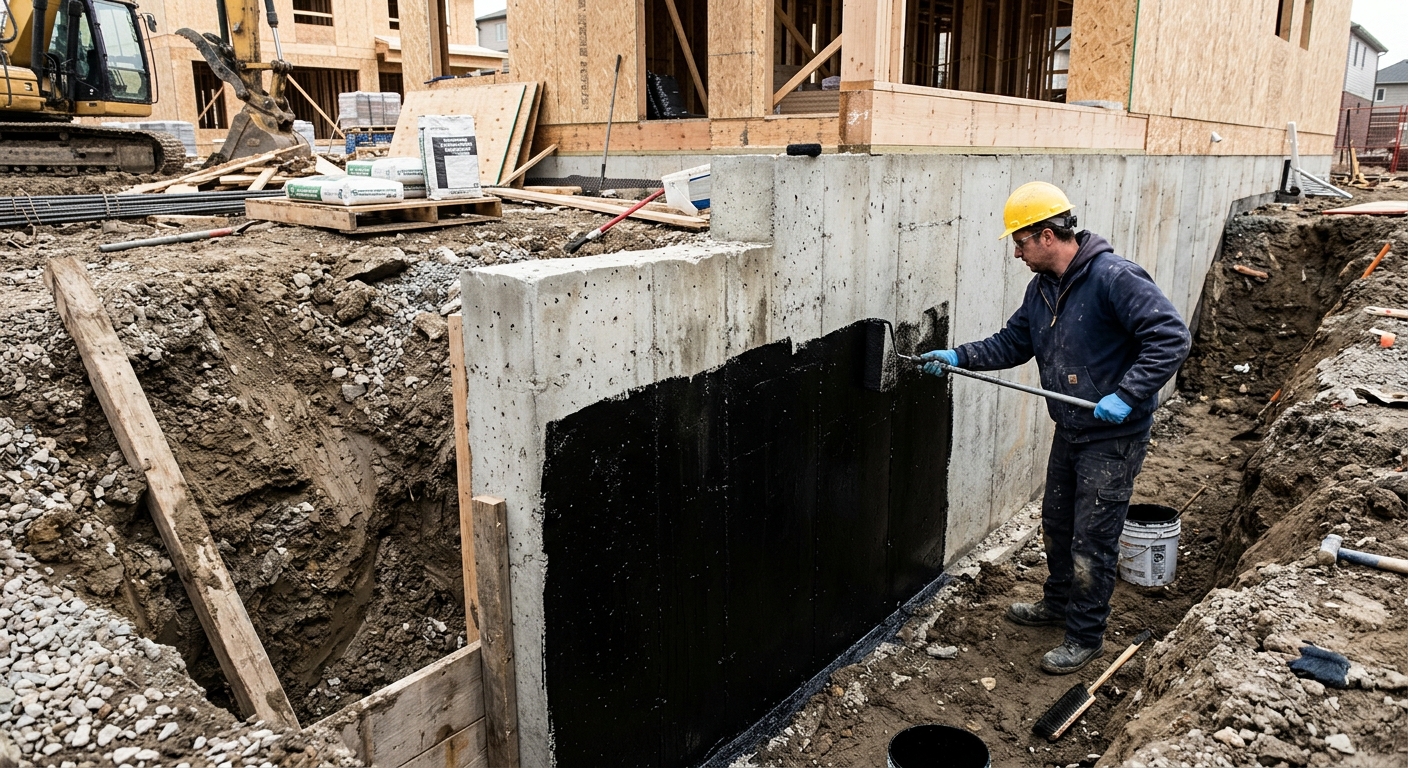
Basement waterproofing options and costs in Stouffville
Stouffville homeowners typically run into basement moisture for a simple reason: water finds the path of least resistance at the foundation edge, then turns small defects into leaks after Ontario’s freeze–thaw cycles. With a population of 36,753 (Statistics Canada, 2021 Census), the Greater Toronto housing market supports a steady pool of basement-waterproofing crews, but demand in peak seasons can still tighten scheduling and influence labour rates.
In Stouffville, a large portion of the housing stock is post-war through the 1960–1970s period, when original waterproofing methods were often tar-and-paper systems or early clay weeping tile setups. Those systems are frequently paired with concrete or block foundations whose hairline cracks, tie holes, and aging weepers can start to fail. When they do, Toronto-area soil—often glacial till and dense clay pockets—can hold water against the wall and exert lateral pressure as it saturates and expands.
Because of those factors, you’ll usually see two “routes” in quotes: exterior excavation with a new membrane and drainage tile to address the water entry point, or interior drainage (perimeter drain and/or sump) to manage water after it enters. In popular Stouffville pockets such as northeast areas near the older established neighbourhoods, contractors are especially busy because lot sizes and older landscaping can limit easy access and increase hand-dig time.
The next table compares the common options, what they target, how disruptive they are, and typical cost bands so you can compare like-for-like before calling for a site visit.
| Method |
What It Addresses |
Disruption Level |
Durability |
Price Range |
| Exterior excavation + new membrane + drainage tile |
Lateral water pressure, failed exterior weeping tile, membrane failure, and water entry through foundation perimeter |
High (excavation, temporary landscaping/driveway impacts) |
High (source control when properly detailed) |
$7,000–$25,000 |
| Interior perimeter drain channel + sump pit |
Chronic seepage, damp basements, water pooling at the perimeter, clogged/failed exterior drains where replacement isn’t feasible |
Medium (interior concrete cutting, sump installation) |
Medium-to-High (depends on wall condition and sealing of active leaks) |
$3,500–$15,000 |
| Foundation crack injection (epoxy or polyurethane) |
Isolated cracks and cold-joint seepage; selects the product based on whether the crack is actively leaking |
Low (targeted drilling at crack line) |
Medium-to-High (best for stable cracks; active leaks may require more) |
$600–$3,000 |
| Sump pump installation (primary + battery backup) |
Water accumulation control during spring saturation and freeze-up periods; reduces hydrostatic effects inside |
Low-to-Medium (pit + discharge piping routing) |
Medium-to-High (system reliability is critical) |
$800–$3,500 |
| Window well drain installation |
Water entry through basement window wells, clogged downspout discharge near openings, localized exterior seepage |
Low-to-Medium (excavation at wells) |
Medium (good detailing prevents repeat backups) |
$1,000–$4,200 |
| Lot re-grading / downspout extension |
Surface water management to reduce runoff against the foundation |
Low (minor landscaping) |
Medium (works best when combined with other measures) |
$650–$3,800 |
Prices are estimates only and vary by project scope, site access and material selection.
What affects the price of waterproofing in Stouffville
In Stouffville and the wider Toronto area, two homeowners can receive bids that differ by 30–50% for the “same” basement moisture issue because the real scope is rarely the same once the crew maps the water path. A contractor’s pricing hinges on what they find behind the drywall or inside the slab: failed exterior drainage, active seepage locations, and whether the foundation wall is poured concrete, block, or a mix. It’s also affected by how much excavation is realistically possible on a tight lot.
The three biggest drivers that set Toronto-area pricing apart from many national averages are soil type, water table, and freeze–thaw. Dense clay pockets in glacial till landscapes can hold water and then expand during freeze–thaw, increasing lateral pressure against foundation walls and worsening cracks over multiple winters. Where groundwater or the effective water table is high, interior systems may need longer pump run times and additional discharge routing—pushing you toward a sump package rather than a “drying-only” approach. By contrast, in regions with lighter, freer-draining soils, the same crack injection can last longer with less mechanical pumping.
Local examples that commonly raise cost in Stouffville include: (1) a basement wall with multiple active seepage points where polyurethane injection is required in several locations rather than one epoxy repair; (2) an exterior job where a deck, narrow walkway, or shared driveway forces more hand-digging and temporary removal of stairs; and (3) a lot where original clay weeping tile is partially collapsed, meaning the “small” drainage repair becomes a full replacement trench. On the other hand, if the issue is limited to surface runoff—such as grading that directs roof water at the foundation—simple re-grading and downspout extensions can keep costs closer to the lower end, while full excavation and membrane work typically lands in the higher exterior band (often within the $7,000–$25,000 range).
When water is active, you’ll also see cost escalation from a basic perimeter drain to include pump backup. In practice, a properly sized sump with backup often becomes justified because spring saturation and power disruptions can occur during Ontario’s wet cycles, making reliability part of the waterproofing system.
| Price Factor |
Why It Matters |
Cost Impact |
| Interior vs. exterior approach — interior is less disruptive but addresses symptoms |
Interior systems manage water after entry; exterior controls the source and usually needs more excavation |
Interior often saves upfront but may add recurring maintenance; exterior commonly costs more (e.g., exterior bands often in the $7,000–$25,000 range) |
| Foundation type — poured concrete vs. block vs. stone vs. ICF |
Concrete typically seals differently than block; block joints can demand interior drainage and targeted crack work |
Block/stone frequently needs more interior measures; poured concrete may respond well to sealing plus drainage |
| Soil type — clay expands more than sand, adding pressure |
Clay holds water against the wall and increases hydrostatic stress during freeze–thaw |
Higher likelihood of active leaks and wider crack stabilization scope |
| Crack type and length — hairline vs. structural horizontal cracks |
Active seepage, longer crack lines, and horizontal displacement can require additional structural assessment |
Structural evaluation can add cost; injection quantity increases with crack length |
| Sump pump backup system — battery or water-powered backup needed |
In spring saturation, power interruptions can mean water rises before the primary pump recovers |
Backup typically adds to the system budget (sump packages often fall within the $800–$3,500 band) |
| Access — landscaping, decks, or driveways must be removed for exterior |
Working space determines excavation speed and increases crew labour time |
Access constraints can push excavation toward the high end of the exterior band |
| Weeping tile age — original tile (60+ years) may be completely failed |
Old tile systems often clog or collapse; partial repairs may not stop the water path |
May require replacement trenching and more disposal/loading |
| Mould or efflorescence remediation required before sealing |
Sealers and membranes perform best when the wall is clean, stable, and dry enough for adhesion |
Remediation increases labour and material line items before waterproofing begins |
Permits & regulations in Ontario
In Ontario, many basement waterproofing activities are straightforward trades work, but certain work types do require permits—especially when you’re changing drainage patterns or involving structural risk. Generally, foundation excavation near a basement wall, structural crack repair that addresses movement or potential structural concerns, and changes to lot drainage (for example, altering discharge routing that affects drainage of the property) typically require a building permit. Also, sump pump discharge that connects into storm or sanitary service usually needs municipal approval.
If you have cracks that suggest movement—like major step cracking in block, widening horizontal cracks, or signs that a wall is shifting—an engineer’s assessment is often needed to determine whether underpinning or additional structural work is required before waterproofing proceeds. That’s why a credible contractor should be able to explain whether they’re doing “water control” only or recommending engineering involvement.
For Stouffville homeowners, the verification process is practical and quick: (1) confirm the contractor’s Ontario licence/registration information is publicly available through appropriate online registry tools; (2) ask for a current certificate of insurance and verify the policy covers the scope of exterior excavation and interior concrete cutting; (3) ask for WSIB/WCB clearance documentation to ensure the contractor can legally employ workers on site; and (4) for structural repairs, confirm they have engineering support in place (either through an in-house partner or a clearly named external engineer). Do this before signing, not after.
Interior vs exterior waterproofing — what does Stouffville need?
The fundamental difference is source control versus water management. Exterior waterproofing (full excavation, new membrane, new drainage tile, and careful backfill) addresses where water enters the foundation system. That’s the most permanent fix when the problem is consistent lateral seepage and when exterior drains are clogged or failed. The trade-off is disruption: excavation can require removing landscaping, working around patios/decks, and potentially reworking portions of a driveway or walkway.
Interior waterproofing (perimeter drain channel, sump pit and sump pump) manages water after it enters. It’s less invasive and often the right choice when exterior access is limited, when the home has mature landscaping, or when only the basement perimeter shows symptoms. However, it does not stop hydrostatic pressure against the wall; instead, it reduces the risk of pooling and flooding by collecting and pumping water away from the foundation perimeter.
In Stouffville’s clay-prone areas, exterior solutions typically perform best when you confirm the exterior weeping tile is failing and that water pressure is active. Poured concrete walls often respond well to crack injection combined with drainage (the crack injection can be relatively targeted), while block foundations often benefit from interior drainage as a practical complement because mortar joints and block seams can create persistent paths for seepage.
Ontario’s spring flooding risk also makes pump reliability a real design decision. Battery backup or a robust backup plan can be the difference between “wet” and “flooded” during outage events when soils are saturated.
For example, if you have a localized crack with minor seepage, crack injection (often in the $600–$3,000 range) may be justified without triggering a full exterior dig. But if your inspection shows long-duration perimeter seepage tied to failing exterior drainage, moving toward an exterior excavation and membrane approach can be worth it—often within the $7,000–$25,000 exterior range—because you’re treating the water entry point rather than repeatedly coping with it indoors.
| Method |
Best For |
Addresses Source? |
Disruption |
Lifespan |
Price Band |
| Full exterior excavation + membrane |
Chronic seepage, failed exterior weeping tile, high lateral pressure in clay pockets |
Yes |
High |
Long (many years when detailed and backfilled correctly) |
$7,000–$25,000 |
| Interior French drain + sump system |
Interior dampness or pooling; exterior access is limited; clay-heavy soils pushing water inward |
No (manages water after entry) |
Medium |
Medium-to-Long with proper pump and discharge detailing |
$3,500–$15,000 |
| Crack injection — epoxy (structural) |
Stable, non-moving cracks or where sealing is needed to restore continuity |
Partially (seals crack path; not a substitute for perimeter drainage) |
Low |
Medium-to-Long when the crack is stable |
$600–$3,000 |
| Crack injection — polyurethane (active leak) |
Active seepage through cracks and cold joints |
Yes (stops that crack’s water path) |
Low |
Medium-to-Long if the surrounding wall is stable and water pressure is addressed |
$1,000–$3,500 |
| Interior drain channel only (no sump) |
Light seepage where gravity drainage to a safe location is possible |
No (still relies on water paths; not ideal for pooling) |
Low-to-Medium |
Short-to-Medium depending on drainage direction and blockage risk |
$2,000–$8,500 |
| Re-grading + downspout extensions |
Surface runoff problems and foundation wetting limited to certain seasons |
No (addresses surface water, not groundwater/lateral pressure) |
Low |
Medium (best as part of a combined system) |
$650–$3,800 |
How to choose a waterproofing contractor in Stouffville
Start by verifying the contractor’s ability to work legally and safely. In Ontario, ask for proof of the appropriate licence/registration details available through online registry sources, then request a current certificate of insurance showing general liability coverage (and confirm it matches the scope—exterior excavation, interior cutting, and equipment use). Next, obtain WSIB/WCB clearance documentation so you know the contractor can employ workers on site. If they mention engineering for structural repairs, confirm they either have an engineering partner or named engineer support ready before recommending major interventions.
Then get 2–3 itemised written quotes—not lump sums. A good quote breaks down labour and materials (excavation, membrane products, drainage tile, filter fabric, sump basin and piping, pumps, disposal, patching, and any mould/efflorescence remediation). Check whether permits are included or clearly excluded, whether the contractor handles disposal/haul-away, and what restoration is included (backfill, topsoil, seeding, or concrete patching). In Stouffville, access constraints can change everything, so quotes should describe how they’ll work around decks, shrubs, and driveways and how they’ll protect nearby structures.
Warranty matters in waterproofing: ask for the workmanship warranty length, the product/manufacturer warranty, and whether the warranty transfers to future owners. Finally, manage cash flow—never pay more than about 10–15% upfront, and use a holdback until the job is complete and you’ve reviewed the handover documents.
Ask for a start date and completion estimate in writing, and expect a site visit that includes an explanation of crack/water pathways, not just a quick “drain it and you’re done” recommendation.
- Confirm Ontario licence/registration details from an online registry before you sign.
- Request certificate of insurance and verify it covers the actual scope (excavation and interior cutting).
- Provide WSIB/WCB clearance documentation (no exceptions).
- Get 2–3 itemised quotes with labour + materials breakdown (not one lump number).
- Ensure the scope states what’s included for permits and municipal approvals (if applicable).
- Ask what’s excluded: e.g., landscaping restoration, permit fees, engineered reports, or additional leaks discovered after opening.
- Look for a clear drainage discharge plan and how discharge avoids re-wetting the foundation.
- Confirm warranty terms: workmanship duration, product warranty length, and transferability.
- Review the payment schedule: keep upfront payments at 10–15% and hold back until completion.
- Require a detailed timeline and start/completion dates in writing.
- Check that they match injection product type to whether a crack is actively leaking.
- Ask who will do the post-work clean-up, disposal, and final patching/restoration.
Red flags I see in Stouffville waterproofing deals include: vague scopes (“we’ll make it dry” without naming drains/pumps/membranes), quotes that don’t discuss whether an issue is exterior-source versus interior-management, refusal to provide proof of insurance/WSIB/WCB, payments front-loaded beyond 10–15% without a signed schedule, and warranties that are only “product-only” with no meaningful workmanship coverage.
Frequently asked questions — waterproofing in Stouffville
What is a weeping tile and does my Stouffville home have one?
A weeping tile is a perimeter drainage system installed around the foundation footprint to collect groundwater and channel it to a discharge point, historically using clay tile and later plastic. Many homes in the Stouffville/Toronto region—especially post-war builds—originally had clay weeping tile, but it may now be clogged, cracked, or partially collapsed after decades of freeze–thaw and soil movement. (In the Toronto economic area, glacial till and dense clay pockets can also hold water against the wall longer.) To confirm if your home has it, start with your home’s original drawings if available, then ask for a camera inspection or an inspection opening near a known sump or discharge point. If you have interior dampness, efflorescence, or basement flooding that worsens in spring, a failing weeping tile is a common cause—even if there was never an obvious exterior failure. If you’re unsure, we can inspect and map the likely water path before choosing between exterior drainage replacement or interior perimeter drainage and sump installation.
Can I waterproof my basement in winter in Stouffville?
Yes, waterproofing can be done in winter in Stouffville, but the approach depends on temperature, access, and what materials are being installed. Exterior excavation is often constrained when frost is deep, and some membrane installation details require controlled conditions to ensure proper adhesion and correct backfill compaction. Interior work—like perimeter drain installation, sump pump systems, and targeted crack injection—can often proceed more reliably because it avoids large-scale exterior exposure. That said, if you have active seepage, injection (often within the $600–$3,000 crack repair band) can still be appropriate, while interior drainage and sump installation (commonly within the $3,500–$15,000 interior range when paired with a complete drain system) is designed to manage water during freeze-prone seasons. The key is to coordinate timing: if water is actively entering, stopping active leaks quickly can reduce damage while you plan a warmer-season exterior excavation. Always ask a contractor to explain their cold-weather method and cure/adhesion plan.
What is the difference between waterproofing and damp-proofing?
Damp-proofing generally focuses on controlling minor moisture and surface dampness using coatings or barriers designed for low hydrostatic conditions. Waterproofing is intended to handle more significant water pressure and frequent moisture events—especially when groundwater or lateral pressure is pushing against foundation walls. In Stouffville, where dense clay soils can hold water and freeze–thaw can widen defects in concrete and block foundations, “damp-proofing only” often isn’t enough for chronic seepage or spring flooding. That’s why contractors talk about whether the issue is water entry at the perimeter (exterior source control) or water after it enters (interior drainage and sump management). For example, an interior perimeter drain with a sump can be a practical waterproofing strategy when exterior access is limited and when you need reliable pumping during spring saturation. If the water entry point is the exterior wall perimeter due to failed weeping tile and membrane, true exterior waterproofing (often in the $7,000–$25,000 exterior range) is usually the more permanent solution.
Will basement waterproofing affect my property value in Stouffville?
It often helps, but it depends on how the work is done and how clearly it’s documented. In Stouffville, buyers care about usable basement space, evidence of prior water events, and whether moisture issues are controlled. A properly designed system—with clear scope, photos/inspection notes, and a transferable warranty—can reduce perceived risk and may make the home easier to finance and insure because it shows an informed response to the region’s common clay-and-freeze issues. Exterior waterproofing tends to be viewed as stronger source control when it’s truly addressing failed drains and water entry paths, while interior solutions can still perform well for chronic seepage if the sump and discharge are designed correctly. If your basement only had minor condensation, damp-proofing may not carry the same confidence as a full perimeter drainage approach. The best way to protect value is to match the solution to the water path, not just the symptom. If your contractor can explain whether you’re dealing with active leaks, failed weeping tile, or surface runoff—and document the repair—value impact is typically positive.
What drainage issues are most common in Stouffville homes?
The most common issues in the Stouffville/Toronto market are perimeter seepage related to aging foundation drainage (often failing weeping tile or blocked/obsolete drainage pathways), cracks at cold joints, and water that pools after spring saturation. Dense clay pockets in glacial till landscapes can increase lateral pressure against foundation walls and lead to seepage through cracks, tie holes, or small block/concrete defects. Many homeowners also notice exterior-driven problems: downspouts discharging too close to the foundation, grading that directs runoff toward the basement wall, or window wells that become water entry points during heavy rains. If your basement has efflorescence and dampness near corners or along wall edges, that often points to a perimeter water path rather than a single isolated crack. A re-grading or downspout correction can help when the problem is primarily surface runoff (often in the $650–$3,800 band), while chronic dampness and flooding usually justify an interior perimeter drain and sump strategy (commonly within the $3,500–$15,000 interior range) or a full exterior membrane approach if exterior access and source control are required.
How do I choose a waterproofing contractor in Stouffville?
Choose a contractor based on verification, scope clarity, and system design—not just a price. In Ontario, ask for proof of appropriate licence/registration details through online registry sources, a current certificate of insurance, and WSIB/WCB clearance. Then request 2–3 itemised written quotes that separate labour and materials, and that explain whether the fix targets source water entry (often exterior excavation and membrane work) or manages water after entry (interior perimeter drain and sump). For example, if you’re seeing active seepage, ask how they’ll select crack injection materials and confirm product suitability for the condition. Make sure the quote specifies inclusions and exclusions: permit pull responsibility, disposal/haul-away, sump discharge routing, and what restoration is included. Review warranties: workmanship warranty length and whether product warranties transfer if you sell. Keep payment structured—avoid large upfront payments beyond about 10–15%—and use a holdback until completion. Finally, insist on a start date and completion estimate in writing, because waterproofing schedules affect how long your home is exposed to moisture during site preparation.