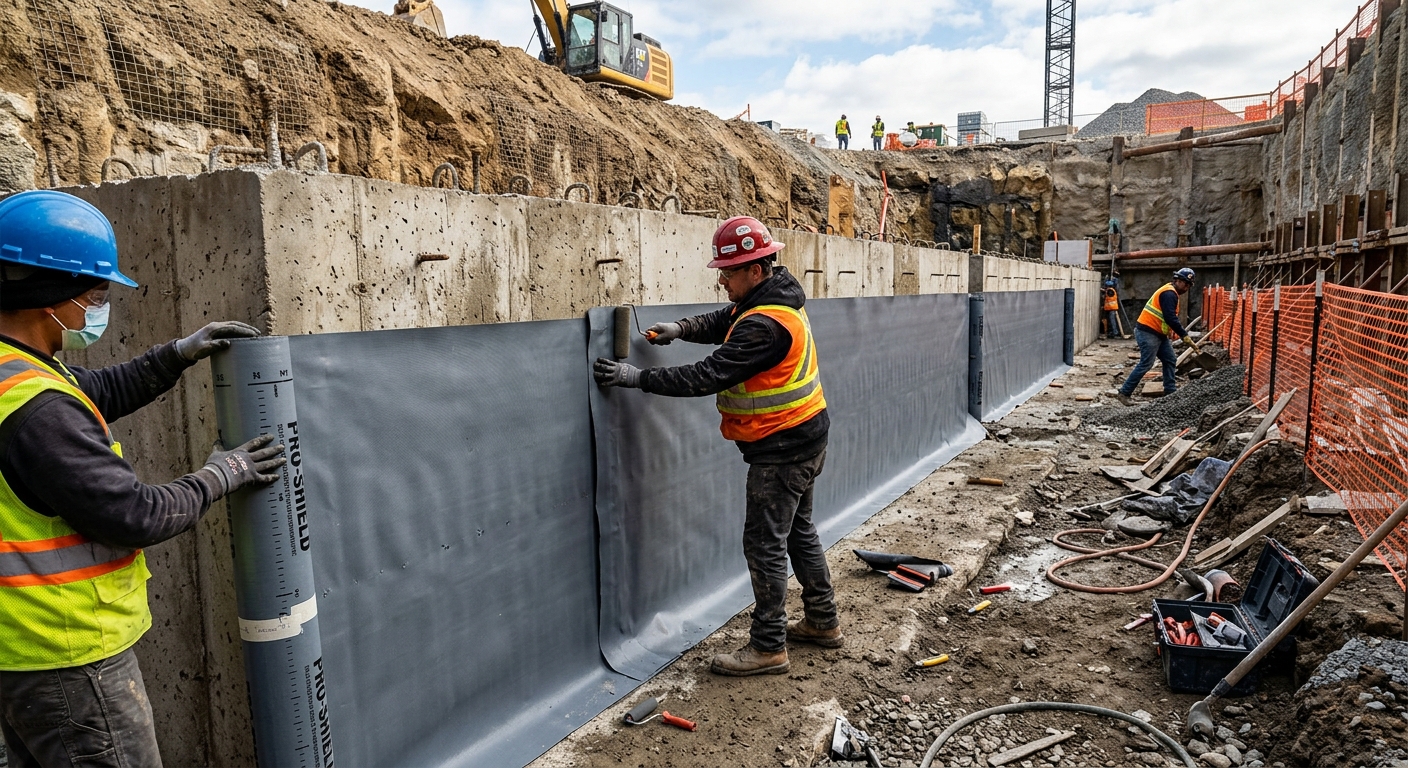
Basement waterproofing options and costs in Calmar
Calmar homeowners usually start by asking the same question: “What’s the right waterproofing approach and what will it cost?” The answer depends on how water is getting into the basement, how long it has been happening, and what your foundation and lot do during Edmonton-region freeze–thaw cycles. In Calmar, with 39.3% of homes built before 1981 (Statistics Canada, 2021 Census), many basements are sitting on systems that were never designed for today’s patterns of clay-silt moisture retention and repeated winter widening of cracks. That older housing stock is more likely to have aging weeping tile, clogged drainage stone, or mineral deposits (efflorescence) that tell us water has been migrating for years.
In the Edmonton economic region, contractor pricing and scheduling can also swing because excavation scope is harder when yards are tight, services are closer to the foundation, and soils hold water during spring. Clay-heavy soils can swell and press laterally on foundation walls, so an interior “manage-the-water” plan may be cheaper upfront but won’t fully stop hydrostatic pressure. Work near established neighbourhood pockets of Calmar—especially where residents have mature landscaping and infill lots—tends to drive higher labour and restoration costs.
Below are the most common waterproofing options we see in Calmar and the typical cost ranges, so you can compare apples to apples before you request quotes.
| Method |
What It Addresses |
Disruption Level |
Durability |
Price Range |
| Exterior excavation + new membrane + drainage tile |
Source water entry (hydrostatic pressure), replaces failed drainage system |
High (yard excavation, landscaping restoration, backfill) |
Highest when installed to code with proper discharge |
$12,000–$25,000 |
| Interior perimeter drain channel + sump pit |
Captures seepage after water enters, reduces wall/floor edge dampness |
Medium (partial floor cutting, interior cleanup) |
High when paired with reliable discharge and cleanouts |
$8,000–$18,000 |
| Foundation crack injection (epoxy or polyurethane) |
Seals cracks; polyurethane can stop active leaks |
Low to Medium (limited drilling; interior access varies) |
Good to Very High depending on crack type and moisture conditions |
$600–$2,500 |
| Sump pump installation (primary + battery backup) |
Reliable water removal; battery backup supports spring surges |
Low to Medium (drainage work and pit cutting) |
High when discharge is correctly designed |
$1,800–$3,800 |
| Window well drain installation |
Prevents water pooling at basement windows and seeping around openings |
Medium (window well access and yard/stone work) |
Good, especially when paired with downspout routing |
$1,200–$3,000 |
| Lot re-grading / downspout extension |
Moves roof runoff away from the foundation to reduce water load |
Low to Medium (soil movement and exterior work) |
Moderate (best for prevention and when drainage is already functioning) |
$800–$2,500 |
Prices are estimates only and vary by project scope, site access and material selection.
What affects the price of waterproofing in Calmar
In Calmar and the wider Edmonton-area market, two homeowners can get quotes that differ by 30–50% for the “same” basement leak—and it usually isn’t the contractor being sloppy. It’s scope clarity. The big cost drivers are soil and water behaviour (what your foundation has to fight), freeze–thaw (how often it gets stressed), and how much excavation or interior demolition is required to reach the failure point.
Three factors separate Calmar pricing from many national averages: soil type, water table dynamics, and freeze–thaw cycling. Clay-rich and silty soils common across the Prairies hold water like a sponge; when saturated, they can expand and press laterally on foundation walls, worsening crack openings over time. In high-moisture sites, the sump pump runs longer, which increases discharge planning and often leads to higher costs for a properly sized pit, check valves, and backup power. Freeze–thaw also widens existing joints and hairline cracks each winter, turning a “damp corner” into active seepage—meaning an early-stage repair can stay affordable, while a late-stage problem often needs a larger system (interior drains, or full exterior).
Concrete examples we see in Calmar: (1) If your weeping tile is original and clogged, replacing it externally typically moves a project toward the $12,000–$25,000 band, but if drainage is mostly intact and water is entering through floor perimeter seepage, interior options can land closer to $8,000–$18,000. (2) A basement with efflorescence and multiple wall areas often requires preparation and additional drainage planning before sealing, which adds labour. (3) Homes built in the pre-1981 era (39.3% of the local stock; Statistics Canada, 2021 Census) frequently have earlier drainage designs that don’t cope well with today’s saturated soils during spring recharge.
| Price Factor |
Why It Matters |
Cost Impact |
| Interior vs. exterior approach — interior is less disruptive but addresses symptoms |
Exterior stops the water source; interior captures it after entry |
Interior often 30–50% less upfront; exterior costs more due to excavation and restoration |
| Foundation type — poured concrete vs. block vs. stone vs. ICF |
Crack geometry and sealing strategy differ; block often needs interior drainage complement |
Block/stone sites can require additional drainage components and more testing |
| Soil type — clay expands more than sand, adding pressure |
Higher lateral pressure increases failure rate of patch-only repairs |
Can push scope toward exterior drainage/membrane design |
| Crack type and length — hairline vs. structural horizontal cracks |
Active, long, or horizontal cracks need more verification and different materials |
Structural cracks can add engineering/monitoring and raise overall costs |
| Sump pump backup system — battery or water-powered backup needed |
Spring surges and outages require continued discharge |
Backup increases cost but reduces risk of flooding and mildew |
| Access — landscaping, decks, or driveways must be removed for exterior |
More removal/restoration increases labour and disposal |
Often adds thousands if exterior access is tight |
| Weeping tile age — original tile (60+ years) may be completely failed |
Failure can cause chronic seepage and necessitate full system replacement |
Replacement drives higher exterior pricing |
| Mould or efflorescence remediation required before sealing |
Sealers won’t bond well over contamination and mineral deposits |
Adds prep and sometimes specialized cleaning and drying time |
Permits & regulations in Alberta
In Alberta, some waterproofing-adjacent work typically requires a building permit, especially when it touches structural elements or changes how water is managed on the lot. Foundation excavation to install or replace drainage systems, structural crack repair where the foundation wall is being strengthened, and changes to lot drainage/discharge pathways commonly fall into permit-requirement territory. Sump pump installations that connect to the storm or sanitary sewer generally require municipal approval and may need site-specific discharge direction reviewed.
For structural crack repair—particularly horizontal cracks in block walls, major step cracks, or signs the wall is moving—an engineer’s assessment is often required to determine whether underpinning, reinforcement, or other structural work is needed. A reputable Calmar contractor should also be able to describe the engineering involvement upfront and provide clear documentation for the permit process.
Step-by-step: (1) Ask the contractor what exact permit(s) they will pull for your address and which scope items trigger the permit. (2) Verify their Alberta licence/registration if applicable to the work they’re performing, using the provincial online registry they reference. (3) Request a current certificate of insurance (liability) and confirm it covers foundation and excavation-related work. (4) Confirm WSIB/WCB coverage for their employees; ask for the clearance letter/coverage proof and check the effective date. (5) For structural scope, confirm they include engineering support or coordinate with an engineer you can verify. If they won’t provide documentation, that’s a red flag.
Interior vs exterior waterproofing — what does Calmar need?
For Calmar basements, the fundamental difference is simple. Exterior waterproofing—full excavation, new membrane, new drainage tile, and properly engineered backfill—targets the source by relieving hydrostatic pressure at the foundation wall. It’s the “stop water before it enters” approach, but it costs more and requires major yard disruption and restoration. Interior waterproofing—perimeter drain channel, sump pit, and a sump pump system—manages water after it enters. It’s often less invasive and faster, but it doesn’t prevent pressure from building behind the wall in clay-silt conditions.
In Edmonton-area freeze–thaw cycles, exterior systems tend to perform best when the lot soils are prone to saturation or when weeping tile is failing. However, interior systems can be a practical solution when excavation is constrained or when the leak pathway is mainly at the slab perimeter or floor edge. In Calmar, poured concrete walls generally respond well to targeted crack injection strategies (when the crack type is suitable), while block foundations often need interior drainage as a dependable complement—because block mortar joints and voids can retain moisture and reintroduce dampness even after localized sealing.
Sump pump design also matters in Alberta. During spring melt and rapid freeze events, power can be unreliable; that’s why many homeowners consider a battery backup alongside the primary sump pump to reduce the risk of water accumulation. For example, when the root issue is deep drainage failure, exterior work in the $12,000–$25,000 band may be justified because it replaces the failed drainage path. If you’re seeing localized dampness and your external drainage is mostly functional, an interior system in the $8,000–$18,000 band can be the better value—especially if you add backup and correct roof runoff routing.
| Method |
Best For |
Addresses Source? |
Disruption |
Lifespan |
Price Band |
| Full exterior excavation + membrane |
Chronic seepage, failing weeping tile, clay-silt pressure, multiple leak zones |
Yes |
High |
Long (often decades with proper discharge) |
$12,000–$25,000 |
| Interior French drain + sump system |
Basement dampness, floor edge seepage, interior access only |
No (captures water after entry) |
Medium |
Long with maintained pump discharge |
$8,000–$18,000 |
| Crack injection — epoxy (structural) |
Cracks that are not actively flowing and require structural sealing |
Partial (seals crack pathway) |
Low to Medium |
Good to Very High when conditions are stable |
$600–$2,500 |
| Crack injection — polyurethane (active leak) |
Active seepage through cracks where water is still moving |
Partial (stops the active flow path) |
Low to Medium |
Good (performance depends on ongoing water pressure) |
$700–$2,800 |
| Interior drain channel only (no sump) |
Light seepage where drainage can gravity-discharge to an engineered outlet |
No |
Low to Medium |
Moderate (more sensitive to outlet performance) |
$6,000–$12,000 |
| Re-grading + downspout extensions |
Prevention and runoff-driven dampness |
Helps reduce incoming water load (not a standalone cure for hydrostatic pressure) |
Low to Medium |
Moderate (depends on maintenance) |
$800–$2,500 |
How to choose a waterproofing contractor in Calmar
Choosing the right waterproofing contractor in Calmar is mostly about verifying documentation and making sure your scope is complete. Start with Alberta coverage: ask for their liability insurance certificate and confirm the work they’re bidding (excavation, foundation drainage, crack repair) is covered. Then verify WSIB/WCB coverage by requesting the clearance letter or proof of active coverage and checking it’s current. Don’t accept “we’re insured” without paperwork—get the certificate number and effective dates.
Next, ask for 2–3 itemised written quotes. You want a breakdown of labour versus materials (membrane, drainage tile, fabric, sump basin and discharge components), plus what’s included in site protection, disposal, and restoration. Confirm whether the contractor will pull permits if needed, whether labour includes patching and finishing after interior work, and whether they address roof runoff (downspout extensions) or only the basement.
Warranty should be written and specific: workmanship warranty length and terms, product/manufacturer warranty coverage, and whether it’s transferable if you sell the home. Payment schedules should be reasonable; never pay more than 10–15% upfront, and keep a holdback until key milestones and final cleanup are complete. Finally, get a start date and estimated completion timeline in writing, including drying time assumptions for prep and sealants in Alberta’s changing shoulder seasons.
- Request their current liability insurance certificate and confirm effective dates.
- Verify WSIB/WCB clearance and coverage proof (not verbal confirmation).
- Ask what permits are required for your specific scope and who pulls them.
- Get an itemised quote: labour, materials, disposal, and restoration.
- Confirm how discharge is routed for exterior drainage and sump discharge for interior work.
- Ask whether they test/inspect weeping tile function or rely on assumptions.
- Confirm crack repair method matches crack type (epoxy for stable; polyurethane for active seepage).
- Ensure efflorescence/mould remediation is included if observed during inspection.
- Ask about sump pump redundancy (battery backup and alarms if applicable).
- Check that warranty is written with workmanship and product terms.
- Agree on a payment schedule with 10–15% max upfront and a holdback until completion.
- Get a written timeline and note access restrictions and restoration scope.
Red flags in the Calmar market: they refuse to provide insurance/coverage documentation; they quote “one price” without inspecting crack patterns or drainage pathways; they promise to “stop all water” without addressing hydrostatic pressure and soil saturation; they recommend excavation-free sealing even when there are multiple damp wall areas and efflorescence; or they install a sump without discussing discharge design and backup power options.
Frequently asked questions — waterproofing in Calmar
What is a battery backup sump pump and do I need one in Calmar?
Battery backup sump pumps use a battery system to keep pumping if the main power goes out. In Calmar and across Alberta, spring melt and freeze–thaw can increase seepage volumes quickly; during heavy melt, outages or short power dips can happen, and even a few hours can matter if your pit reaches cut-in levels. A battery backup is especially worthwhile when you’ve already got recurring floor-edge seepage, a history of active sump operation, or multiple leak points that rely on consistent discharge. If your quote includes interior drainage (typically $8,000–$18,000) it’s often cost-effective to add the backup system rather than risk a flood event and mildew. If you’re mostly seeing light dampness and no sump is running, you may not need backup.
How much does basement waterproofing cost in Calmar?
Basement waterproofing cost in Calmar usually depends on whether you’re addressing water at the source (exterior) or capturing it after it enters (interior). For interior waterproofing with a perimeter drain approach and sump pit, many projects land around $8,000–$18,000, especially when demolition, sump basin, pump components, and proper discharge planning are included. Exterior excavation and drainage tile replacement with membrane and backfill typically runs $12,000–$25,000, since excavation and yard restoration are major labour drivers. Additional line items—like window well drains, downspout extensions, or foundation crack injection (often $600–$2,500)—may apply depending on your leak pathway. The fastest way to narrow your budget is an inspection that identifies crack type, active seepage presence, and whether external drainage is functioning.
Interior vs exterior waterproofing — which is better?
Neither is “better” in every case; they solve different problems. Exterior waterproofing is best when you want to stop hydrostatic pressure at the foundation wall—full excavation, membrane, and new drainage tile do that most directly. It’s usually the most durable option for chronic seepage, especially with clay-silt soils that hold water and expand during freeze–thaw. Interior waterproofing is often the practical choice when excavation is difficult or when the leak is primarily at the slab edge or floor perimeter; it captures water after entry using a perimeter drain and sump. In Calmar’s Edmonton-area climate, freeze–thaw can widen cracks over time, so an interior-only plan may still need crack injection and reliable sump discharge. If your exterior drainage is failing, the $12,000–$25,000 exterior band can be justified because it addresses the source rather than just managing symptoms.
Why is my basement leaking in Calmar?
Basement leaks in Calmar are commonly driven by a mix of saturated soils, inadequate drainage, and freeze–thaw stress. Clay-rich and silty soils can stay wet longer and exert lateral pressure on foundation walls, especially during spring recharge and rapid temperature swings. If your home has older weeping tile, clogged drainage stone, or insufficient discharge capacity, water can migrate through cracks and along wall-floor interfaces. Foundation cracks are also a culprit: hairline cracks can become active under hydrostatic pressure once freeze–thaw has widened them. Roof runoff and downspouts can worsen the load—if water is routed toward the foundation, interior seepage becomes more frequent after rain or snowmelt. The quickest diagnosis is usually to map where dampness shows first (wall height vs floor edge), check for efflorescence, and confirm whether the sump (if present) cycles during melt.
How do I know if a foundation crack is serious?
Not every crack is structural, but severity depends on type, location, and whether it’s active. In Calmar basements, pay special attention to horizontal cracks in block walls, step cracks that widen over time, and cracks that show signs of active moisture (tide-like dampness, water staining, or mineral tracking). Hairline vertical cracks can be movement-related or shrinkage-related, but they’re less likely to indicate failure if they remain dry and stable. Efflorescence near a crack is a sign water is migrating, which makes waterproofing and crack treatment more urgent due to freeze–thaw-driven expansion. If the crack is letting water through during melt or you see displacement evidence, get an assessment before you choose only sealants. For structural crack scenarios, a structural engineer’s assessment is often needed to determine whether underpinning or reinforcement is required.
How much does foundation crack repair cost in Calmar?
Foundation crack repair costs in Calmar commonly fall around $600–$2,500, depending on how many cracks are involved, their length, and whether they’re actively leaking. The method matters too: epoxy injection is typically used for stable, non-moving cracks, while polyurethane is used for active seepage because it can react in wet conditions. Preparation requirements can change the final price—if there’s efflorescence, mould, or need for surface grinding/cleaning before injection, that adds labour and time. If you’re dealing with a serious horizontal or structural crack pattern, you may need engineering assessment before repairs, which can add cost but improves safety and durability. In many homes, crack injection is best as part of a broader waterproofing plan (like adding a sump or addressing drainage), not as a stand-alone fix when hydrostatic pressure continues.