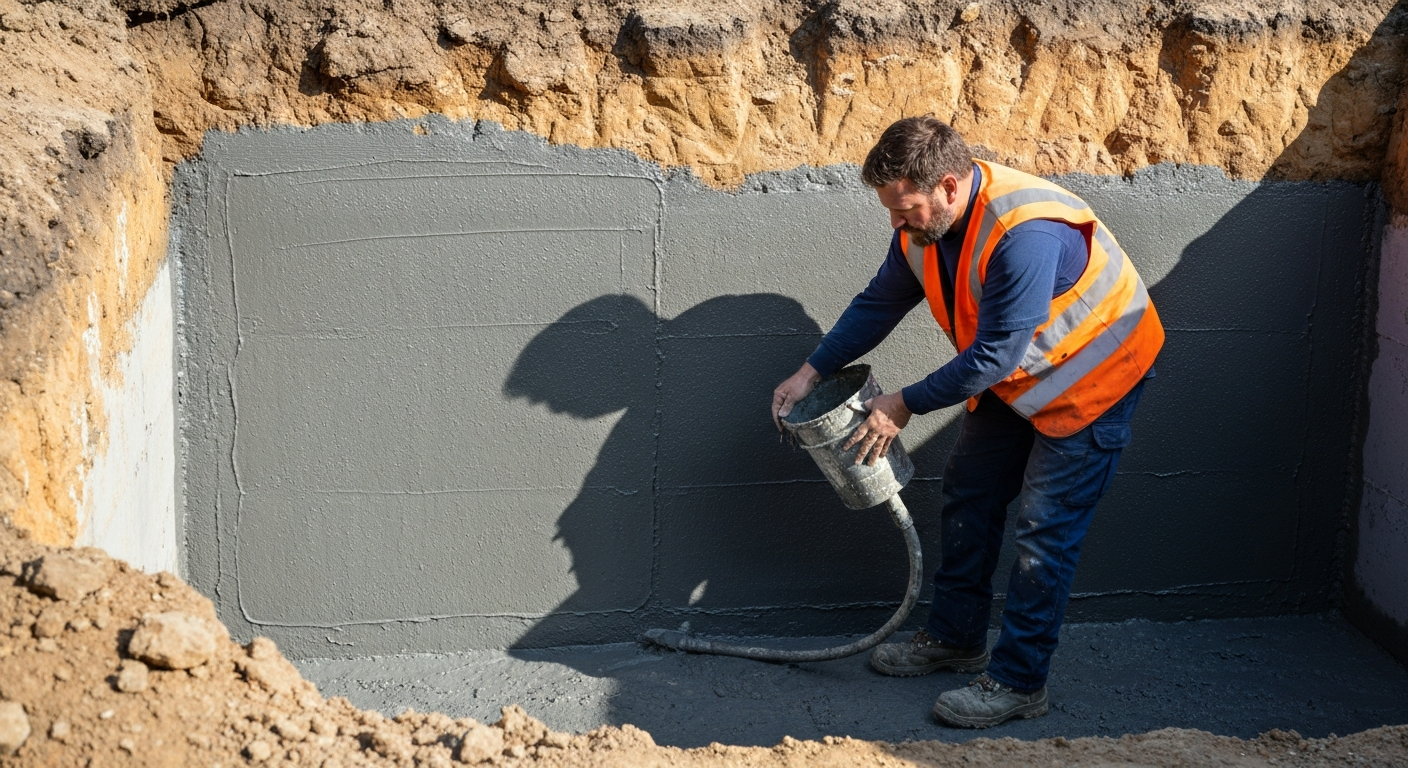
Basement waterproofing options and costs in Crossfield
Crossfield homeowners typically face waterproofing decisions because Alberta’s freeze–thaw cycles work the cracks and joints open over time, and our clay-forward soils can hold water and add lateral pressure to foundation walls. With 25.9% of homes in the wider Crossfield area built before 1981 (Statistics Canada, 2021 Census), many basements have older tar-and-paper style systems and original weeping tile that are now near the end of their service life. That matters because even small seepage paths—around wall/floor joints, weeping-tile outlets, or service penetrations—can turn into recurring spring leaks once drainage performance drops.
In Calgary and surrounding communities, pricing also reflects practical realities: deeper excavations on tight lots, disposal of heavy clay spoils, and the need to manage neighbour-side runoff all increase labour and equipment time. Contractor availability can tighten in late winter to early spring because crews are booked for emergency sump work and crack repairs after thaw. If you’re in or near the older residential pocket where basements are most common—such as the central residential core and established streets around downtown Crossfield—seasonal demand for interior drainage and foundation crack repairs tends to spike.
Below is a comparison of the most common approaches you’ll see in Crossfield quotes, including what each method addresses and what range it typically lands in.
| Method |
What It Addresses |
Disruption Level |
Durability |
Price Range |
| Exterior excavation + new membrane + drainage tile |
Bulk water entry through exterior foundation walls/footings; restores perimeter drainage |
High (landscaping/deck/driveway disruption possible) |
High (source control when properly built) |
$9,000–$25,000 |
| Interior perimeter drain channel + sump pit |
Hydrostatic pressure inside basement; collects seepage where it enters |
Medium (interior floor cutting along perimeter) |
Medium-High (depends on wall condition and drainage capacity) |
$5,000–$15,000 |
| Foundation crack injection (epoxy or polyurethane) |
Cracks at wall locations; stops active leaks or stabilizes/bridges non-moving cracks |
Low (surface prep and port drilling) |
Medium (works best with correct product selection and crack assessment) |
$500–$1,800 |
| Sump pump installation (primary + battery backup) |
Controls collected water; reduces flooding risk during storms/power loss |
Low-Medium (pit excavation and discharge line routing) |
High with backup (reliability improvement) |
$900–$3,000 |
| Window well drain installation |
Water infiltration at basement window wells; manages runoff and seepage |
Low-Medium (excavation around wells) |
Medium (site drainage dependent) |
$1,200–$4,500 |
| Lot re-grading / downspout extension |
Surface water control; reduces water loading near foundation |
Low (yard work) |
Medium (best as a supporting measure) |
$900–$3,500 |
Prices are estimates only and vary by project scope, site access and material selection.
What affects the price of waterproofing in Crossfield
In Crossfield, two homeowners can receive quotes that differ by 30–50% for what seems like the “same” basement leak. The difference usually comes down to whether the contractor is treating the true water source (exterior entry and perimeter drainage) versus managing symptoms (interior collection), plus the cost of excavation, disposal, and access constraints that change the labour hours. Product choice matters too—especially whether a crack is actively leaking and needs an active-seal polyurethane versus a structural bridge like epoxy.
Across Calgary and the broader region, the biggest price breakers compared to the national average are soil type, water table conditions, and freeze–thaw. Clay-heavy soils common to the Prairies expand when saturated and increase lateral pressure on foundation walls, worsening hairline cracks over time and accelerating the need for repairs. Where seasonal groundwater and storm runoff raise hydrostatic pressure—often during spring thaw—sump run times increase and a reliable perimeter drain capacity becomes critical. Meanwhile, freeze–thaw widens existing joints and transitions (wall/floor, utility penetrations), so a “quick fix” that misses a settlement crack or a plugged weeping-tile outlet tends to fail sooner and costs more to redo.
Concrete Crossfield examples: if your basement is in a home built before 1981 (25.9% of homes built before 1981, Statistics Canada, 2021 Census), interior-only solutions can be enough when the wall is sound, but if the perimeter drainage is likely failed, exterior systems typically swing closer to the $9,000–$25,000 band. If the issue is limited to one or two cracks and the rest of the wall is dry, crack injection often fits the $500–$1,800 range; if, however, water is streaming during snowmelt and you need a sump with dependable discharge routing, the project often grows into the $5,000–$15,000 interior drainage band.
In short: Crossfield costs aren’t random—they reflect how much water pressure you’re dealing with, how accessible your foundation is, and whether the original drainage system can realistically be salvaged.
| Price Factor |
Why It Matters |
Cost Impact |
| Interior vs. exterior approach — interior is less disruptive but addresses symptoms |
Interior manages water after it enters; exterior prevents entry at the source |
Interior often cheaper upfront (less excavation) but may require higher ongoing controls like sump reliability |
| Foundation type — poured concrete vs. block vs. stone vs. ICF |
Wall material changes crack behaviour and how water routes through the system |
Poured concrete may seal better with targeted crack work; block often needs perimeter drainage as a complement |
| Soil type — clay expands more than sand, adding pressure |
Clay holds moisture and increases lateral loads during thaw cycles |
Higher labour for drainage capacity, sealing strategy, and sometimes deeper excavation |
| Crack type and length — hairline vs. structural horizontal cracks |
Active leaks and horizontal movement require different materials and assessment |
Structural-oriented repairs can add testing, engineer involvement, and extra scopes |
| Sump pump backup system — battery or water-powered backup needed |
Hydrostatic surges can outpace a single pump during outages |
Backup increases material and install time, but reduces flood risk materially |
| Access — landscaping, decks, or driveways must be removed for exterior |
Excavation depth and machinery access drive labour and repair costs |
Restricted access can move a project up within the exterior bands quickly |
| Weeping tile age — original tile (60+ years) may be completely failed |
When tile lines are clogged or collapsed, interior measures alone can be overwhelmed |
Requires replacement or a redesigned perimeter drainage strategy |
| Mould or efflorescence remediation required before sealing |
Active moisture stains/efflorescence can reappear if not addressed with proper dry-out |
Extra prep and controlled drying adds time and product costs |
Permits & regulations in Alberta
In Alberta, certain basement waterproofing-related tasks can trigger permit requirements, especially when the work affects structural integrity or modifies lot drainage. Generally, foundation excavation, structural crack repair, and changes to lot drainage around the foundation are the kinds of work that may require a building permit. If your sump pump discharge connects into a storm or sanitary system, municipal approval is typically required. The exact trigger depends on how the discharge is routed and what is being altered, so it’s important to confirm before you start.
For structural crack repair—particularly horizontal cracks in block walls, major step cracking, or signs the wall is out of plane—an engineer’s assessment is often required to determine whether underpinning or other structural measures are needed. A reputable Crossfield contractor will be clear about whether engineer sign-off is part of the plan for your specific crack pattern, rather than assuming a “standard injection” will be sufficient.
To verify a contractor in Crossfield step-by-step:
- Check their Alberta authorization/licensing status using the relevant online registry for their trade/category.
- Ask for a current certificate of insurance (liability) and confirm the coverage limits are appropriate for excavation and structural work.
- Confirm WSIB/WCB clearance where applicable for workers on site; request proof in writing.
- For structural repairs, ask whether they work with engineering support and whether permits/engineer reviews are included when required.
- Request a written scope and confirm who pulls permits (and whether it’s included in the quote).
Interior vs exterior waterproofing — what does Crossfield need?
Interior and exterior waterproofing solve the same problem—water in the basement—but they do it at different stages. Exterior waterproofing involves full excavation, a continuous exterior membrane, new perimeter drainage tile, and controlled backfill—so it targets the source of water entry. It’s the most complete solution, but it costs more and is more disruptive because landscaping and access paths are often disturbed. Interior waterproofing is more focused: a perimeter drain channel, sump pit, and sump pump collect water after it enters and then discharge it away from the home. It’s typically less invasive and less expensive upfront, but it doesn’t stop hydrostatic pressure from acting on the wall.
In Crossfield, where clay soils can hold moisture and freeze–thaw cycles keep reopening micro-pathways, the “right” choice depends on your foundation type and what the leak evidence suggests. Poured concrete walls often respond well to properly assessed crack injection when leaks are localized—this can prevent seepage while you manage residual pressure with a sump if needed. Block foundations, by contrast, frequently benefit from interior drainage as a practical complement because water can migrate through block pores and mortar joints even when cracks aren’t obvious.
Backup sump systems matter here because Alberta power interruptions can coincide with spring surges and storm loads. A primary sump without backup may leave a home vulnerable during outages, especially if the discharge line is operating near capacity.
A realistic example: if the problem is a small, actively leaking crack and a couple of minor wall seep spots, crack injection may land near $500–$1,800, and you might add a sump upgrade of $900–$3,000 for reliability. If, however, you have widespread seepage at multiple wall sections and recurring spring flooding patterns suggesting a perimeter drainage failure, it’s often worth investing in exterior excavation and drainage systems closer to $9,000–$25,000—the added cost is justified when it eliminates the ongoing water entry route rather than repeatedly collecting it inside.
| Method |
Best For |
Addresses Source? |
Disruption |
Lifespan |
Price Band |
| Full exterior excavation + membrane |
Recurring leaks, likely perimeter drainage failure, and hydrostatic pressure concerns |
Yes (targets exterior entry) |
High |
Long (if properly installed with correct drainage) |
$9,000–$25,000 |
| Interior French drain + sump system |
Homes where exterior excavation is impractical or where leaks are mainly interior seepage routes |
No (manages water after entry) |
Medium |
Medium-Long with correct pump/discharge |
$5,000–$15,000 |
| Crack injection — epoxy (structural) |
Stable, non-moving cracks in poured concrete where the water path is limited |
Partly (can seal a crack path, but not exterior drainage) |
Low |
Medium-Long when crack condition is properly verified |
$500–$1,800 |
| Crack injection — polyurethane (active leak) |
Actively leaking cracks where the material must expand/flow into wet pathways |
Partly (seals active leak routes) |
Low |
Medium (works best with correct product selection) |
$700–$1,950 |
| Interior drain channel only (no sump) |
Minor seepage where flows are low and discharge can be managed reliably |
No |
Medium-Low |
Shorter if hydrostatic pressure increases seasonally |
$3,000–$7,500 |
| Re-grading + downspout extensions |
Surface water problems and early-stage dampness near exterior wall lines |
Yes (for surface water loading) |
Low |
Medium (depends on continued maintenance) |
$900–$3,500 |
How to choose a waterproofing contractor in Crossfield
Choosing the right waterproofing contractor in Crossfield is mostly about verification and scope clarity. First, confirm Alberta licensing/authorization for the contractor’s trade category, then verify liability insurance—request a current certificate of insurance—and ensure workers are covered through WSIB/WCB where applicable. Don’t rely on verbal assurances; ask for documents and keep them with your records.
Next, get 2–3 itemised written quotes (labour + materials breakdown, not only a lump sum). A good quote clearly separates excavation, membrane, drainage tile, sump components (including backup if specified), interior drain channel work, patching/floor reinstatement, and disposal/discharge line routing. Read the exclusions carefully: ask whether permits are included, whether disposal fees for clay spoils are covered, and whether landscaping restoration is included or billed separately.
Warranty matters just as much as price. Ask for the workmanship warranty length, the product/manufacturer warranty terms, and whether the warranty is transferable if you sell your home. For payment schedules, avoid paying more than about 10–15% upfront; use holdback until the work is complete and verified. Finally, require a start date and completion estimate in writing—especially because spring demand in the Calgary area can affect schedules.
- Ask for Alberta authorization/licensing information and check it online before signing.
- Request a COI (certificate of insurance) showing liability coverage and confirm it matches the scope (excavation, concrete cutting).
- Confirm WSIB/WCB clearance (where applicable) with proof before work begins.
- Get 2–3 itemised quotes with line-by-line labour and material pricing.
- Require a written scope: what’s included, what’s excluded, and what conditions could change pricing.
- Clarify whether permit pulling is included and who is responsible for approvals.
- Confirm disposal is included (heavy clay spoils add fees and haul time).
- Specify drainage discharge routing (and whether connection approvals are required).
- Ask how they verify crack type (active leak vs structural/static) before choosing epoxy vs polyurethane.
- Request details on sump pump model, discharge size, and whether backup power is included.
- Confirm warranty: workmanship duration, product warranty terms, and transferability.
- Agree on a payment plan with holdback (generally until completion and acceptance).
Red flags we see in Crossfield: quotes that don’t inspect and diagnose (no crack mapping or water-source assessment), “one-size-fits-all” recommendations without distinguishing epoxy vs polyurethane, missing insurance/WSIB/WCB documentation, vague scopes that don’t address discharge routing, and warranties that cover materials only (not workmanship) or are non-transferable.
Frequently asked questions — waterproofing in Crossfield
How do I choose a waterproofing contractor in Crossfield?
Start by verifying Alberta licensing/authorization for the contractor’s trade category, then confirm they carry liability insurance and provide WSIB/WCB clearance where applicable. In Crossfield, you’ll want more than a low price—request 2–3 itemised written quotes (labour + materials) and ensure the scope specifies what’s included: excavation depth, membrane and drainage tile type, disposal, and discharge routing. Ask how they diagnosed the leak (crack mapping, inspection of wall/floor joints, and whether drainage tile is likely failed). A clear warranty matters too: workmanship coverage should be included, and ideally it should be transferable if you sell. If your crack repair only is required, you might be in the $500–$1,800 band, but don’t choose a contractor solely on that if the drainage system is likely the real source of recurring spring seepage.
What is a battery backup sump pump and do I need one in Crossfield?
A battery backup sump pump is an additional power system that runs the sump when the grid power goes out. In Crossfield and surrounding Calgary-area communities, power outages can coincide with spring runoff and heavy melt events, when hydrostatic pressure spikes and the sump must run continuously. A battery backup helps prevent basement flooding during those outage windows, especially if the main pump relies on standard electricity. Whether you “need” one depends on your leak severity, sump capacity, and your basement’s history—if you’ve seen water rise quickly during storms, backup becomes much more valuable. Many homeowners choose backup as part of a sump installation that typically falls in the $900–$3,000 range, because the cost of restoring drywall, flooring, and insulation after an outage is usually far higher.
How much does basement waterproofing cost in Crossfield?
Costs in Crossfield commonly fall into several bands depending on whether you’re addressing exterior entry or managing interior seepage. If the work is limited to foundation crack repair, injection is often within $500–$1,800, assuming the crack condition matches the product (epoxy for stable cracks; polyurethane for active leaks). For interior drainage solutions—perimeter drain work plus a sump pit/pump—expect roughly $5,000–$15,000 for many typical basements. If your situation points to perimeter drainage failure and you need continuous exterior membrane and new drainage tile with excavation, projects usually land higher, around $9,000–$25,000. Price can shift depending on access (tight lots, patios/decks), disposal of clay spoils, and how complex the discharge routing is.
Interior vs exterior waterproofing — which is better?
“Better” depends on the source of water. Exterior waterproofing (full excavation, membrane, and new drainage tile) is best when you need source control—when water is entering from the exterior around the footings or walls and the original drainage is likely failing. It’s more expensive and disruptive, but it’s designed to stop the water at entry. Interior waterproofing (perimeter drain channel, sump pit and pump) is often the best choice when exterior access is limited, when you’re managing localized seepage, or when you need a practical solution quickly. It’s less invasive, but it doesn’t stop hydrostatic pressure from acting on the foundation wall. In Crossfield’s clay-forward soils and freeze–thaw conditions, many homes with older basements still benefit from combining crack work and interior collection. For example, a targeted crack injection in the $500–$1,800 range might be a good complement—but if the perimeter drainage is the real culprit, you’ll usually be looking toward exterior $9,000–$25,000 level solutions.
Why is my basement leaking in Crossfield?
Basement leaks in Crossfield are usually caused by a mix of water entry paths and seasonal pressure changes. Freeze–thaw cycles in southern Alberta can widen existing cracks and joints, so meltwater and spring runoff find their way in. Clay-heavy soils can hold moisture and expand when saturated, increasing lateral pressure on foundation walls and worsening seepage at weak points. If you have an older home—Crossfield-area housing includes a meaningful share built before 1981 (Statistics Canada, 2021 Census)—your weeping tile may be clogged, undersized, or partially failed, which can cause seepage and efflorescence near the base of walls. Common failure spots include wall/floor joints, utility penetrations, window wells, and any discharge line that has become restricted. If water shows up mainly during spring thaw, that pattern strongly points to pressure and drainage performance issues rather than just condensation.
How do I know if a foundation crack is serious?
In Alberta, the “seriousness” of a foundation crack depends on location, orientation, and whether it’s actively leaking or moving. Horizontal cracks in block walls, step cracks that widen over time, and cracks with ongoing moisture or water tracking during thaw often require deeper assessment. Hairline vertical cracks can sometimes be non-structural, but even those may need attention if they’re actively wet or if the basement repeatedly accumulates water. In Crossfield, climate-driven expansion can make older hairline cracks worse, so don’t wait for a bigger failure. A good contractor will map the crack, identify whether it’s active, and recommend the correct injection system—epoxy for stable cracks versus polyurethane for active leak routes. Minor crack work may fall in the $500–$1,800 band, but structural indicators usually require an engineer assessment before assuming a simple injection will solve the root cause.