Basement waterproofing options and costs in Dalhousie
Dalhousie homeowners typically face basement moisture problems that start small—musty odours, damp corners, or efflorescence—and grow after heavy spring rain or freeze–thaw. With a population of 8,530 (Statistics Canada, 2021 Census), Dalhousie is smaller than Calgary, but it still draws from the same contractor pool across the Calgary economic region, so pricing and availability often mirror the broader market. Many older residences in the area are also more likely to have aging original waterproofing (tar-and-paper history and corroded weeping tile), which is why solutions that address perimeter drainage and active cracks tend to be in demand.
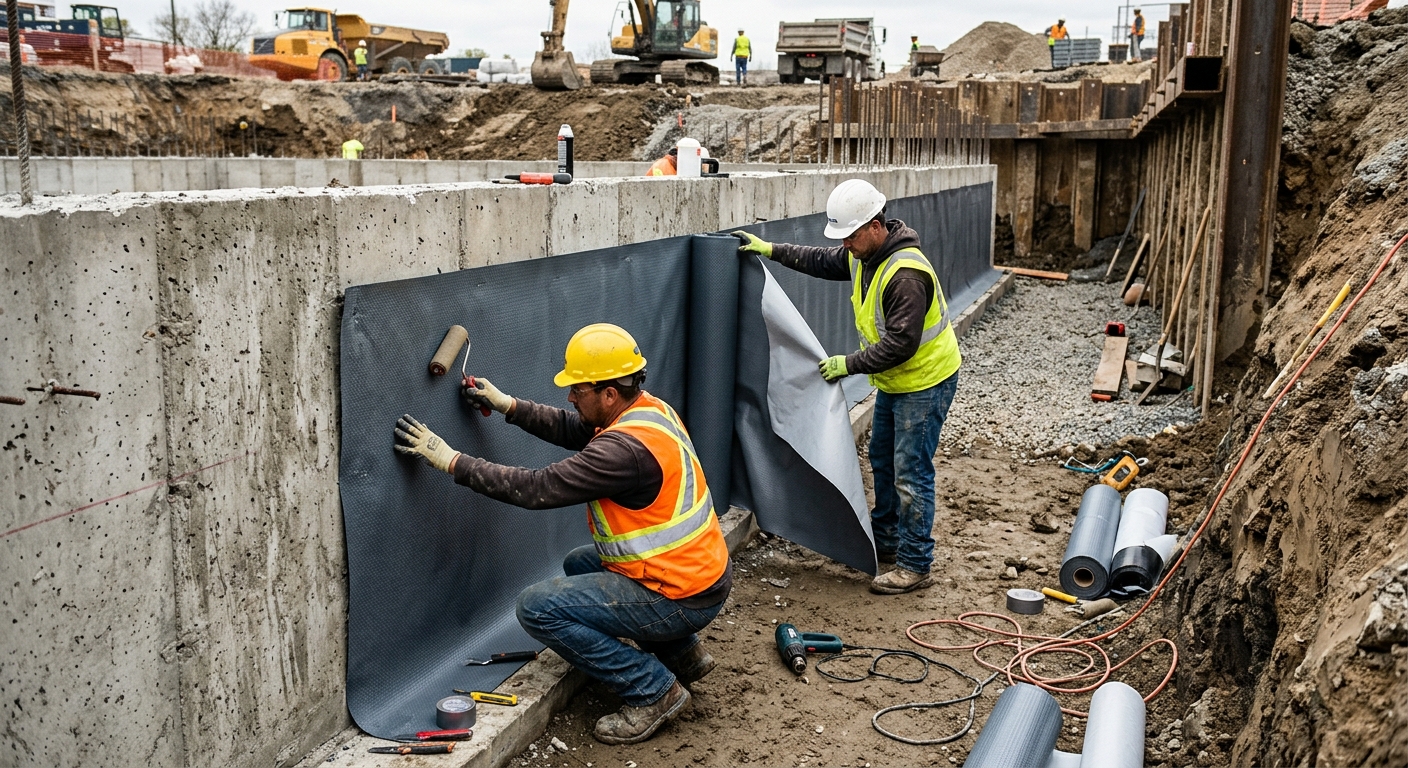
In Calgary’s clay and clay‑till soil, water is held against foundation walls and expands when saturated during freeze–thaw, increasing lateral pressure and widening joints. That’s a key reason exterior waterproofing (excavate, membrane, perimeter drainage, and new backfill) costs more but can be the most “source control” approach. Conversely, interior systems are commonly selected when excavation access is limited by patios, landscaping, or tight lot lines.
In Dalhousie, demand is especially noticeable around the newer expansions where lot grading and downspout routing aren’t always perfected after landscaping settles, and around established pockets with older drainage configurations. Below is a practical comparison of common basement waterproofing options you’ll see in Dalhousie quotes, with typical price bands to help you line up apples-to-apples before contractors price your site.
| Method |
What It Addresses |
Disruption Level |
Durability |
Price Range |
| Exterior excavation + new membrane + drainage tile |
Water at the foundation source: new exterior membrane, perimeter drainage, and proper discharge |
High (yard excavation; patios/landscaping removal) |
Long-term (often 20+ years when installed with correct backfill and drainage) |
$9,000–$25,000 |
| Interior perimeter drain channel + sump pit |
Hydrostatic water after it enters: collects seepage and pumps it away from the foundation |
Medium (interior floor cutting; dust control) |
Long-term (typically 15–25 years depending on pump and discharge) |
$5,000–$15,000 |
| Foundation crack injection (epoxy or polyurethane) |
Cracks and joints: stops leakage pathways (epoxy seals non-active cracks; polyurethane targets active leaks) |
Low to medium (patching and prep work) |
Moderate to long-term (often 10+ years; best when paired with drainage improvements) |
$500–$1,800 |
| Sump pump installation (primary + battery backup) |
Reliable evacuation during high water events; reduces risk during power interruptions |
Low to medium (pit excavation; minor interior finishes) |
Long-term (depends on maintenance and backup system health) |
$900–$3,000 |
| Window well drain installation |
Bulk water around egress/window wells; directs water away from window openings |
Low to medium (local exterior/yard work) |
Moderate to long-term (often 10+ years when drains are kept clear) |
$1,200–$4,200 |
| Lot re-grading / downspout extension |
Controls surface water so it doesn’t soak the foundation; reduces seasonal saturation |
Low (grading adjustments; minor landscaping) |
Moderate (can last several years, but depends on soil settling) |
$800–$3,500 |
Prices are estimates only and vary by project scope, site access and material selection.
What affects the price of waterproofing in Dalhousie
In Dalhousie, two quotes for the “same” basement leak can differ by 30–50% because contractors may be solving different root causes, not just applying the same product. One crew might be treating surface runoff and minor dampness, while another is addressing failed weeping tile, hydrostatic pressure, and basement wall cracking that’s being widened by freeze–thaw. Availability also varies in peak spring season, which can move labour schedules and job sequencing.
The three biggest drivers that separate Calgary-area costs from the national average are soil type, water table conditions, and freeze–thaw. Calgary’s clay-heavy soils expand during freeze–thaw and push laterally on foundation walls, which means cracks and joints can worsen over time—so crack repairs without drainage may require repeat work. In higher seasonal groundwater pockets along river valleys and low-lying coulees, sump runtime and discharge design become more demanding, especially if exterior perimeter drains need upgrades. By comparison, in regions with lighter soils, less hydrostatic pressure, or fewer repeated freeze events, contractors often spend less on excavation depth, backfill selection, and drainage sizing.
Two concrete local examples: (1) If your basement has active seepage at a horizontal joint and your foundation is block, interior perimeter drains plus a properly sized sump are usually a higher-cost “complete symptom solution” than a few spot crack injections—often pushing you into the interior range (commonly overlapping $5,000–$15,000). (2) If you have exterior access constraints like a tight lot line with a patio close to the wall, exterior membrane work can spike toward the upper end of the exterior band ($9,000–$25,000) due to careful excavation, protection of surrounding landscaping, and disposal for clay spoil. For many homeowners, solving the drainage first is the step that actually reduces labour rework later.
| Price Factor |
Why It Matters |
Cost Impact |
| Interior vs. exterior approach — interior is less disruptive but addresses symptoms |
Exterior targets water entry; interior manages water after it enters |
Exterior often 60–180% more when full excavation is required |
| Foundation type — poured concrete vs. block vs. stone vs. ICF |
Different wall permeability and crack behaviour change prep and product choice |
Block and older walls often need more drainage detail and sealing labour |
| Soil type — clay expands more than sand, adding pressure |
Clay holds water and increases wall pressure during freeze–thaw |
More robust drainage and membrane/backfill detailing increases cost |
| Crack type and length — hairline vs. structural horizontal cracks |
Active/severe cracks require more time, testing, and possibly engineering |
Structural or long-length repairs can multiply materials and labour |
| Sump pump backup system — battery or water-powered backup needed |
High-water seasons increase the risk of pump downtime during outages |
Backup commonly adds meaningful cost but reduces risk during peak events |
| Access — landscaping, decks, or driveways must be removed for exterior |
More demolition and restoration means more labour and disposal |
Tight access can push projects toward the upper exterior band |
| Weeping tile age — original tile (60+ years) may be completely failed |
Old weeping tile often clogs or breaks, forcing more water pathways |
Full perimeter work or replacement increases scope and duration |
| Mould or efflorescence remediation required before sealing |
Sealers and coatings often fail if moisture and salts aren’t removed |
Additional remediation labour and materials can add days and cost |
Permits & regulations in Alberta
In Alberta, foundation excavation and foundation work that affects drainage or structural integrity typically triggers a permit requirement. As a practical rule of thumb for Dalhousie homeowners: exterior excavation for waterproofing, structural crack repair in a way that may influence wall stability, and changes that redirect lot drainage are common categories that require a building permit. Also, sump pump installations that connect into a municipal sewer system (storm or sanitary) usually need municipal approval before you tie into existing services.
For structural crack repair—especially horizontal cracks in block walls, major step cracking, or any crack pattern that suggests movement—an engineer’s assessment is often required to confirm whether underpinning or other structural measures are necessary. A reputable contractor will tell you up front if engineering is part of the scope and will not “guess” structural conditions.
Step-by-step: (1) Ask the contractor for their Alberta business licence details and verify them through the provincial online business/contractor listings where applicable. (2) Request a current certificate of insurance (liability) showing coverage limits relevant to construction activities; keep it on file. (3) Confirm WSIB/WCB coverage (or the correct coverage status documentation for their business type) before work begins. (4) If the scope includes structural assessment or complex drainage tie-ins, ask which permits they will pull and who is listed on the permit application. (5) Get these confirmations in writing with your contract, not just in email.
Interior vs exterior waterproofing — what does Dalhousie need?
The core difference is source control versus water management. Exterior waterproofing—full excavation, new membrane, new drainage tile, and proper backfill—stops water where it enters, so it permanently reduces the pressure cycle that clay soils and freeze–thaw impose on your foundation. It’s more expensive and disruptive because the exterior wall needs access. Interior waterproofing—perimeter drain channel, sump pit, and sump pump—collects water after it gets in. It’s less invasive, and for many Dalhousie homes it’s the best fit when you can’t realistically excavate due to patios, landscaping, or tight distances to fences and driveways.
In Dalhousie’s freeze–thaw climate, interior systems still need to be sized and detailed for repeated events. Poured concrete walls often respond well to crack injection paired with reliable drainage, because the wall itself can be brought back to a sealed state when cracks are properly evaluated. Block foundations are more porous and can leak through mortar joints and weep paths, so interior drainage is frequently a practical complement even when crack injection is also used. Where hydrostatic pressure is suspected or where clay soils keep walls saturated, interior-only “patching” rarely performs as well long-term without a sump and perimeter drainage plan.
For a clear cost example: if you’re seeing dampness along one wall line, a targeted crack injection plus interior drainage may land closer to $5,000–$15,000. If that same issue is driven by failed exterior weeping tile and sustained wall saturation, you may justify moving toward $9,000–$25,000 for exterior membrane and perimeter drainage—because you’re addressing the water source rather than only controlling it indoors. Finally, because spring flooding and power interruptions can coincide, a backup sump system (battery or water-powered) is a cost that buys risk reduction during Alberta outage events.
| Method |
Best For |
Addresses Source? |
Disruption |
Lifespan |
Price Band |
| Full exterior excavation + membrane |
Widespread seepage, failed exterior drainage, high saturation risk from clay soils |
Yes |
High |
20+ years (when properly detailed) |
$9,000–$25,000 |
| Interior French drain + sump system |
Limited access to exterior walls; recurring seepage and damp floor lines |
No (manages water after entry) |
Medium |
15–25 years with good pump maintenance |
$5,000–$15,000 |
| Crack injection — epoxy (structural) |
Non-active cracks where water isn’t actively streaming |
Partially (seals pathways) |
Low |
10–20 years (best with good drainage) |
$500–$1,200 |
| Crack injection — polyurethane (active leak) |
Active seepage through cracks and joints |
Partially (seals active pathways) |
Low to medium |
10–15 years; may need re-evaluation if hydrostatic pressure persists |
$800–$1,800 |
| Interior drain channel only (no sump) |
Very minor dampness where water volumes are low |
No |
Medium |
5–12 years (depends on gravity discharge feasibility) |
$2,500–$7,500 |
| Re-grading + downspout extensions |
Surface-water problems, new landscaping settlement, minor moisture near perimeter |
Yes for surface water |
Low |
3–7 years (may need periodic adjustment) |
$800–$3,500 |
How to choose a waterproofing contractor in Dalhousie
Start by verifying Alberta compliance the right way, not by assuming. For licensing: ask the contractor to provide their Alberta business details and any relevant trade registration for the work type. For insurance: request a current certificate of liability insurance and confirm it covers construction activities and includes your address as the certificate holder if your contract requires it. For WSIB/WCB: ask whether they have active coverage and provide the clearance letter or verification reference number you can confirm through the insurer.
Next, get 2–3 itemised written quotes. You want labour and materials breakdown, including what’s being excavated (if exterior), what drainage products are included, whether disposal fees are covered, and what surface restoration is included. A common issue is seeing a “sump system” line item that excludes a backup power solution, or seeing “waterproofing membrane” without specifying thickness/type and drainage tile connections.
Warranty matters: confirm workmanship warranty length, whether it covers labour plus materials, and if product/manufacturer warranties apply directly to you or only to the original contractor. Also ask if warranties are transferable if you sell the home.
Payment schedule should be conservative—typically no more than 10–15% upfront, with the bulk paid after key milestones. Hold back a final portion until completion and cleanup are confirmed. Finally, require a written timeline: a start date target and estimated completion date, especially if excavation requires permits and delivery lead times.
- Ask for their scope in writing: exact system components, sizes, and where discharge goes.
- Confirm whether they will pull the required permit(s) for excavation/drainage changes and who is responsible.
- Get a clear “site access” plan (how decks/patios/landscaping will be protected or removed).
- Require disposal fees for clay spoils to be included or clearly excluded.
- Confirm whether basement floor cutting, concrete patching, and finishing materials are included.
- Specify sump pump model, discharge line details, and whether a backup is included.
- Ask how they evaluate active leaks (water testing, crack mapping, or hose test) before injection.
- Confirm surface prep steps for efflorescence/mould remediation before sealing.
- Verify they provide product data sheets and installation specifications for membranes/tiles.
- Ensure the warranty is in plain language with start date, coverage, and exclusions.
- Set milestone payments tied to inspections: rough-in, waterproofing stage, final cleanup.
- Ask for references from similar Dalhousie/Castleford/area conditions (clay and freeze–thaw) where possible.
Red flags we commonly see in Dalhousie-area waterproofing bids: (1) a quote that mentions “waterproofing” but doesn’t identify the leak source pathway (weeping tile failure vs. wall cracks vs. surface runoff); (2) no written sump plan where water is entering at multiple points; (3) injection-only approaches that ignore hydrostatic clay pressure and don’t recommend drainage verification; (4) missing or expired liability/WSIB/WCB documentation; and (5) no permit responsibility clarity when exterior excavation or drainage tie-ins are involved.
Frequently asked questions — waterproofing in Dalhousie
What is a weeping tile and does my Dalhousie home have one?
Weeping tile is the underground drainage pipe system installed around—or beneath—part of the foundation perimeter to collect groundwater and direct it to a sump or discharge point. In many older Calgary-area homes (and neighbouring communities like Dalhousie), original weeping tile was installed decades ago and may now be clogged, disconnected, or corroded, especially in clay-heavy soil where fine particles settle. Your home may have one even if it’s no longer functioning—signs include recurring damp corners, efflorescence, or water pooling near wall bases after spring storms. To confirm, check basement documentation or previous renovation permits, and ask for an inspection that includes camera access or probing locations. If repairs are needed, interior solutions often fall within $5,000–$15,000, while major exterior drainage rebuilds can align with $9,000–$25,000.
Can I waterproof my basement in winter in Dalhousie?
Yes, waterproofing can often be done in winter in Dalhousie, but the approach must match the conditions. Exterior excavation is limited when frost depths are deep and clay is frozen hard, which increases labour time and can damage landscaping more than in spring. Interior work—like perimeter drain channels, sump pit installation, and crack injection—can usually proceed if the basement area and slab/wall surfaces can be prepared safely and the contractor can control dust and curing conditions. For crack injection, products need proper surface readiness; for drainage, water management must be verified so you’re not sealing over active sources you haven’t mapped. If your problem peaks during freeze–thaw, starting earlier can be beneficial, but confirm with contractors about curing time, protection of exposed areas, and disposal planning. Interior sump work commonly sits around $5,000–$15,000, with sump pump installations often within $900–$3,000.
What is the difference between waterproofing and damp-proofing?
Damp-proofing is typically designed to resist minor moisture seepage under normal conditions; it may slow dampness but doesn’t reliably handle hydrostatic pressure during heavy spring events. Waterproofing is intended to manage water infiltration more comprehensively—either by sealing crack pathways and joints and/or by collecting and directing water with drainage systems like perimeter drains and sumps. In Dalhousie’s freeze–thaw environment with clay and clay‑till soils, pressure can increase when saturated backfill expands, making “damp-proofing” alone insufficient for active leaks. That’s why a basement with recurring seepage, efflorescence, or wet floor edges often requires interior drainage with a sump and backup rather than only a surface coating. When the source is exterior (failed weeping tile or saturated backfill), exterior excavation plus membrane and drainage tile provides a more complete solution and often falls in the $9,000–$25,000 band.
Will basement waterproofing affect my property value in Dalhousie?
Generally, properly documented waterproofing can support property value by reducing risk factors associated with moisture: odours, mould concerns, recurring wet floors, and visible efflorescence. In Dalhousie and the Calgary region, buyers frequently ask about basement dryness and drainage reliability—especially where older drainage systems may have failed after decades. Value impact is strongest when you can show a complete system (for example, perimeter drainage to a sump with discharge, or exterior membrane and new drainage tile), along with warranties and permits/approvals where required. If the work is only cosmetic—like painting over efflorescence—value benefits tend to be limited. A realistic budget helps: interior perimeter drainage and sump systems typically run $5,000–$15,000, while exterior source-control solutions often align with $9,000–$25,000. Keeping clear paperwork and warranty transfer details can improve buyer confidence.
What drainage issues are most common in Dalhousie homes?
The most common issues are perimeter drainage failures and surface-water mismanagement. Because Calgary-area soils are clay and clay‑till, water can stay near foundations and increase wall pressure during freeze–thaw. Many older homes have original weeping tile that is clogged, disconnected, or undersized, which can lead to seepage through mortar joints in block foundations or along construction joints. On the surface side, downspouts that discharge too close to the home, insufficient eave-to-ground distance, or grading that slopes toward the foundation can cause recurring dampness near wall bases. In some low-lying areas, seasonal groundwater and storm runoff can also increase hydrostatic pressure, making continuous exterior membrane and functioning perimeter drains critical. Interior solutions with perimeter drains and sumps are often selected when excavation access is constrained, typically within $5,000–$15,000.
How do I choose a waterproofing contractor in Dalhousie?
Choose contractors who can explain the water pathway and propose a matching system—don’t accept a one-size injection pitch for every symptom. In Alberta, verify licensing/business details, and ask for a current certificate of liability insurance. Also request proof of WSIB/WCB coverage (clearance or verification documentation) before work starts. Get 2–3 itemised written quotes showing labour and materials, and confirm what’s included: permit pulling responsibility, disposal fees for clay spoils (for exterior work), restoration scope, and whether a sump backup system is included if a sump is part of the plan. Review warranty terms for workmanship and product coverage, and confirm whether warranties are transferable. Finally, payment should be conservative—generally no more than 10–15% upfront—and you should receive a written start date and completion estimate. If quotes differ widely, ask what’s missing or excluded.