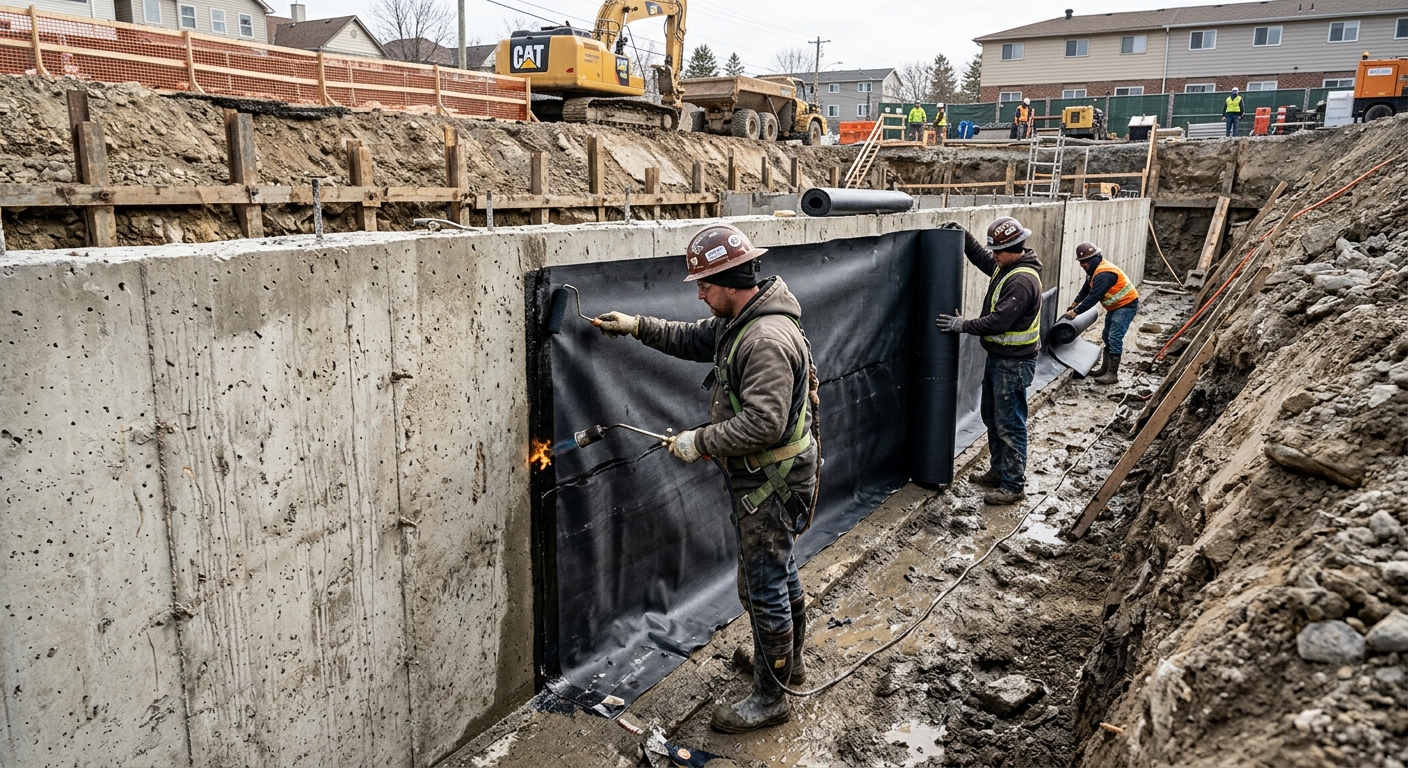
Basement waterproofing options and costs in Didsbury
Didsbury homeowners usually face basement dampness for practical reasons: older foundations, ageing drainage, and Alberta freeze–thaw cycles that widen cracks and joints over time. In Didsbury’s housing stock, 43.8% of homes were built before 1981, which matters because many of those basements originally relied on older tar-and-paper style approaches and weeping tile systems that have long since corroded, collapsed, or become clogged. With 71.7% of dwellings being single-detached homes, most of the local market is built around ground-access work—so exterior solutions are available, but excavation still depends heavily on lot layout, patios, and landscaping.
Calgary-area conditions also shape pricing. The clay-and-clay-till soils common across the Calgary economic region hold water and expand when saturated, increasing lateral pressure on foundation walls and footings. That means contractors often need more complete exterior scope when seepage is driven by hydrostatic pressure, not just minor surface seepage. Freeze–thaw then worsens symptoms season after season, particularly in spring after heavy runoff. Access constraints are a big cost driver too: in neighbourhood pockets near older commercial spurs and established residential lanes, driveways, concrete steps, and mature shrubs can increase excavation time and disposal costs.
To help you compare apples-to-apples, the table below summarises typical methods, disruption, durability expectations, and realistic cost bands for Didsbury projects.
| Method |
What It Addresses |
Disruption Level |
Durability |
Price Range |
| Exterior excavation + new membrane + drainage tile |
Source water entry (hydrostatic pressure), perimeter seepage, and footing-area wetting |
High (landscaping removal, excavation along wall, disposal) |
High (when drain + membrane are continuous and tied into a reliable outlet/sump) |
$9,000–$25,000 |
| Interior perimeter drain channel + sump pit |
Water that enters through cracks/joints and slab edges; reduces hydrostatic pressure inside |
Medium (interior jackhammering along perimeter, sump discharge work) |
High (provided discharge/backup is adequate and walls are properly prepared) |
$5,000–$15,000 |
| Foundation crack injection (epoxy or polyurethane) |
Cracks as leak paths (epoxy often for structural/crack sealing; polyurethane for active seepage) |
Low to Medium (access holes, surface preparation) |
Medium to High (depends on crack type and whether the pressure source is managed) |
$500–$1,800 |
| Sump pump installation (primary + battery backup) |
Reliable removal of collected groundwater/sump water during wet seasons |
Medium (core drilling and mechanical installation) |
Medium to High (longevity depends on discharge line, check valve, and maintenance) |
$900–$3,000 |
| Window well drain installation |
Water ingress at egress wells and grading/cover failures around windows |
Low to Medium (localized excavation and grading) |
Medium (works best paired with proper downspouts and weeping tile condition) |
$1,200–$4,000 |
| Lot re-grading / downspout extension |
Surface water management so roof runoff and landscaping drainage don’t feed foundation perimeter |
Low (light excavation; small landscape disruption) |
Low to Medium (helpful prevention; not a replacement for failed below-grade drains) |
$700–$2,500 |
Prices are estimates only and vary by project scope, site access and material selection.
What affects the price of waterproofing in Didsbury
In Didsbury (and the broader Calgary market), you can see waterproofing quotes for the “same problem” swing by roughly 30–50% once contractors price the actual cause of water entry and the site access. The difference is rarely about the membrane or the sump alone—it’s about what needs to be removed, how deep excavation must go, whether a continuous perimeter drainage system is feasible, and how reliable the discharge route will be in spring runoff.
Three drivers separate Calgary-area costs from the national average: soil type, water table conditions, and freeze–thaw. First, clay-heavy soils (common across the Prairies) expand when saturated, increasing lateral pressure on walls and pushing water through cracks and construction joints. Second, seasonal high groundwater and storm events raise sump run times and demand correct drainage sizing—sometimes including longer discharge runs and check-valve configurations. Third, freeze–thaw cycles widen existing cracks, so a “quick seal” that doesn’t manage hydrostatic pressure often fails sooner.
Concrete examples in Didsbury: (1) If your basement shows staining and dampness at multiple walls after snowmelt, exterior excavation plus new membrane and drainage tile usually costs closer to the exterior band of $9,000–$25,000, because we often need full perimeter continuity and reliable outlet drainage. (2) If you have a tight lot with patios and limited side yard access, an interior perimeter drain + sump may keep you nearer the interior band of $5,000–$15,000. (3) If the leak is concentrated in a single hairline crack, crack injection in the $500–$1,800 range can be justified—but only when testing indicates the crack is the active path rather than failed weeping tile feeding hydrostatic pressure.
Your home’s age also matters. With 43.8% of Didsbury homes built before 1981, failing older systems are a recurring cost driver, especially where original weeping tile is likely clogged and wall seepage shows up as efflorescence or persistent damp bands.
| Price Factor |
Why It Matters |
Cost Impact |
| Interior vs. exterior approach — interior is less disruptive but addresses symptoms |
Interior systems capture and manage water after it enters; exterior addresses the source |
Exterior commonly adds excavation/disposal and can raise total cost by ~40% to 150% |
| Foundation type — poured concrete vs. block vs. stone vs. ICF |
Crack behaviour and sealing methods differ by wall construction and joints |
Block and stone often require more interior drainage detail; poured walls can respond well to crack injection when pressure is controlled |
| Soil type — clay expands more than sand, adding pressure |
Saturated clay increases lateral pressure and seepage frequency |
More robust perimeter drainage and/or membrane continuity increases labour/materials |
| Crack type and length — hairline vs. structural horizontal cracks |
Structural patterns may require engineering and/or underpinning consideration |
Structural repairs can push costs beyond standard injection pricing |
| Sump pump backup system — battery or water-powered backup needed |
Spring storm surges can coincide with outages; backup prevents overflows |
Backup typically adds a meaningful line item within the $900–$3,000 range for sump-related scope |
| Access — landscaping, decks, or driveways must be removed for exterior |
Extra demolition/restoration affects labour and material waste |
Access constraints can add thousands and extend schedule |
| Weeping tile age — original tile (60+ years) may be completely failed |
Old tile may be blocked and force water into walls/slab edges |
If tile is failed, interior-only solutions may need stronger sump/discharge provisions |
| Mould or efflorescence remediation required before sealing |
Sealers don’t bond reliably to contaminated, salty, or actively wet surfaces |
Surface prep and remediation adds time and sometimes consumables |
Permits & regulations in Alberta
In Alberta, foundation excavation, structural crack repair, and changes to lot drainage often trigger permit requirements, especially when work could affect structural capacity or involves changes to how stormwater is managed near the foundation. As a practical rule for Didsbury homeowners: if the scope includes structural crack repair in a way that may relate to wall stability, underpinning, or engineered remediation, expect that a building permit and/or engineering involvement may be required. If the plan includes connecting sump discharge to storm or sanitary services, municipal approval is typically necessary before tying into any sewer system.
Work that often does not require a building permit is regular sealing of minor, non-structural surface conditions—such as installing downspout extensions, improving surface grading, or adding localized window well drainage—provided there are no structural modifications and no new connections to municipal sewer systems.
Step-by-step, verify your contractor is set up properly: (1) ask for the contractor’s Alberta business profile and licence details (where applicable) and confirm the registered business matches the contract; (2) request a certificate of insurance showing liability coverage amount and confirm it’s active for the project period; (3) confirm WSIB/WCB clearance—obtain a clearance letter or proof of coverage status; and (4) for structural crack work, ask whether they include engineering support or can coordinate an engineer’s assessment if the crack pattern suggests structural concern. A reputable contractor will give you these documents promptly before work begins.
Interior vs exterior waterproofing — what does Didsbury need?
In Didsbury, the fundamental difference is whether you address water at its source or control it after it enters. Exterior waterproofing—full excavation, new membrane, and perimeter drainage tile—aims to stop water from getting into the foundation and footing zone in the first place. It’s the most permanent approach when clay soils and spring melt runoff create recurring hydrostatic pressure. The trade-off is higher disruption: landscaping, patios, and tight side yards need careful demolition and restoration.
Interior waterproofing—perimeter drain channel, sump pit, and sump pump—manages water after it enters and reduces the risk of saturated walls and floors. It doesn’t eliminate hydrostatic pressure against the wall, so it’s especially important in southern Alberta to pair good interior drainage with proper surface grading and downspout control. For many Didsbury basements with poured concrete walls, crack injection can help seal leak paths, but it still works best when the overall water management plan reduces ongoing pressure. Block foundations often benefit from interior drainage as a practical complement because block cores and joints can allow seepage pathways.
Given Alberta power outage possibilities during spring weather swings, a backup sump system is worth considering where you’ve had near-overflow events or where the sump will run frequently. In a typical scenario, an interior system might sit in the $5,000–$15,000 range, while a full exterior perimeter solution is more likely within $9,000–$25,000. The price gap is justified when you have persistent wall seepage driven by wet clay soils, failed original drainage, and widespread staining—especially if you’re planning long-term ownership and can accommodate excavation.
| Method |
Best For |
Addresses Source? |
Disruption |
Lifespan |
Price Band |
| Full exterior excavation + membrane |
Recurring hydrostatic pressure, wet clay-driven seepage, failed weeping tile, multi-wall dampness |
Yes |
High |
Long (when continuous and properly detailed) |
$9,000–$25,000 |
| Interior French drain + sump system |
Occupied homes, limited access for excavation, moderate to heavy interior seepage |
No (manages water after entry) |
Medium |
Long (with reliable discharge and backup) |
$5,000–$15,000 |
| Crack injection — epoxy (structural) |
Non-leaking or stabilized structural crack sealing where injection is appropriate |
Partial (seals leak path if pressure is controlled) |
Low to Medium |
Medium to Long |
$500–$1,800 |
| Crack injection — polyurethane (active leak) |
Active seepage through joints and cracks where water is present at the crack |
Partial (seals active pathway, but source management still matters) |
Low to Medium |
Medium to Long |
$500–$1,800 |
| Interior drain channel only (no sump) |
Light seepage/drainage control where water can’t accumulate in a way that requires pumping |
No |
Medium |
Medium (sump-free systems are sensitive to wet-season severity) |
$4,000–$9,000 |
| Re-grading + downspout extensions |
Surface-water issues, dampness linked to roof runoff and grading around the foundation |
No (prevention, not below-grade correction) |
Low |
Short to Medium |
$700–$2,500 |
How to choose a waterproofing contractor in Didsbury
Choosing the right contractor in Didsbury is mostly about verifying responsibility and getting a scope you can trust. First, check Alberta coverage documents: request proof of liability insurance (certificate of insurance) and confirm the coverage is active and specifically includes the type of waterproofing work being performed. Next, verify WSIB/WCB status—ask for a clearance letter or current proof of coverage status before work starts. If the contractor is proposing structural crack-related scope, ask how they support engineering needs and whether they’ll coordinate assessments when required.
Then protect yourself with good paperwork. Get 2–3 itemised written quotes, where labour and materials are separated (excavation details, membrane/drain material line items, disposal, backfill, discharge piping, and pump/backup components). A lump-sum number without allowances often hides the real cost drivers. Read the scope for exclusions: will the quote include permit pulling if required, disposal fees for clay spoils, concrete patching, landscaping restoration, and cleaning/prep for efflorescence or mould? Also confirm warranty terms—workmanship warranty length, product/manufacturer warranty duration, what triggers a warranty claim, and whether the warranty is transferable to a new owner.
Payment schedule matters: keep initial deposit to about 10–15% and use holdback until completion and demonstrated performance (no active seepage, proper discharge). Finally, ask for a firm start date and an estimated completion timeline in writing.
- Ask for proof of insurance (certificate of insurance) and confirm project dates match the policy period.
- Verify WSIB/WCB clearance before scheduling demolition/excavation.
- Request an itemised quote: excavation depth, drainage route, materials, and disposal.
- Confirm whether permit/engineering coordination is included when crack work is structural.
- Ask what testing/inspection they do (hose test, crack mapping, moisture monitoring where appropriate).
- Check how they handle discharge: where sump water goes, check valves, and backflow prevention.
- For sump systems, confirm backup option (battery or water-powered) and included power protection.
- Verify warranty: workmanship duration, exclusions, and product warranty details.
- Ensure they specify continuity of membrane and how transitions are detailed at corners and joints.
- Ask who is responsible for site restoration: backfill compaction, grading, and concrete/landscape reinstatement.
- Confirm disposal and tipping fees for heavy clay spoils are stated (or explicitly excluded).
- Use a payment plan with a holdback until the work is complete and cleaned up.
Red flags we often see around Didsbury waterproofing: contractors who won’t discuss where water is going (discharge/outing) and who only talk about “sealing”; quotes that omit disposal fees for excavation; no written scope or vague allowance language; refusal to provide insurance/WSIB/WCB documents; and promises like “we’ll stop all water forever” without testing or a properly detailed drainage plan.
Frequently asked questions — waterproofing in Didsbury
Do I need a permit for foundation work in Alberta?
In Alberta, foundation excavation, structural crack repair, and changes that affect lot drainage commonly require a building permit, especially when the work could relate to structural integrity. If your sump discharge is planned to connect to a municipal sewer system (storm or sanitary), municipal approval is typically needed before any tie-in. For Didsbury homeowners, the safest approach is to ask your contractor to identify exactly what category your scope falls under and whether permits are included. Also remember: minor, non-structural work like downspout extensions or window well drainage is often treated differently than interior or exterior foundation remediation. If you’re dealing with major horizontal cracks, request an engineering assessment early—permit requirements frequently follow that recommendation.
How long does waterproofing last?
Basement waterproofing longevity depends on whether the cause of water entry is addressed and how well the system is detailed for southern Alberta conditions. Exterior systems with continuous membrane and properly functioning perimeter drainage typically perform the longest, often for decades, because they reduce the source of hydrostatic pressure. Interior perimeter drains and sump systems can also last a long time, but performance depends on reliable discharge, backup power, and whether water entry continues due to failed exterior drainage. Crack injection can be durable, but it’s not a standalone fix when clay soils and freeze–thaw keep feeding pressure through joints. For Didsbury projects, many homeowners who invest in interior solutions in the $5,000–$15,000 band plan to maintain pumps and verify discharge lines seasonally—especially during spring melt.
Can I waterproof my basement from the inside only?
Yes, many Didsbury basements can be improved using interior waterproofing only, particularly where access makes excavation difficult or the goal is to manage seepage already entering through cracks and construction joints. Interior solutions (perimeter drain channel, sump pit, sump pump) are effective at reducing the wetting cycle and protecting finishing materials. However, interior-only work does not stop hydrostatic pressure against the wall; it manages the water after entry. That’s why it’s important to pair interior measures with surface water controls like downspouts and grading, and to ensure cracks are treated appropriately (epoxy for stabilized cracks, polyurethane for active leaks). If your home shows widespread staining on multiple walls after spring runoff—common in older neighbourhoods—the long-term best value may be an exterior plan closer to the $9,000–$25,000 band.
What causes foundation cracks in Didsbury?
In Didsbury and the wider Calgary region, foundation cracks are commonly linked to soil movement and freeze–thaw. Clay-and-clay-till soils can expand when saturated after snowmelt or heavy storms, exerting lateral pressure on foundation walls and footings. When temperatures swing below and above freezing, freeze–thaw cycles can widen existing cracks and joints, giving meltwater and runoff a path into the basement. Age also plays a role: with 43.8% of homes built before 1981, older waterproofing details and drainage systems are more likely to have aged weeping tile or inadequate perimeter drainage. Poor downspout discharge and landscaping grading can also feed water toward the foundation, increasing pressure at joints. If cracks are horizontal, step-style, or growing, treat them as potentially structural and request an engineer assessment rather than only doing injection repairs.
How do I compare waterproofing quotes?
Compare quotes by scope details, not just totals. For Didsbury basements, insist on itemised pricing separating labour and materials: excavation depth (if exterior), membrane and drainage tile specifications, interior drain channel layout, sump pit and discharge piping, check valves, and disposal/tipping fees. Confirm whether permits are included when required and whether engineering support is available for structural crack patterns. Look for exclusions: some quotes omit remediation for mould/efflorescence, concrete restoration, or specify that discharge routing depends on “site conditions” without clarifying the plan. Also compare warranty: workmanship duration, product warranty terms, and transferability. A fair quote should align with typical price bands for the chosen approach, such as $5,000–$15,000 for many interior drain-and-sump projects, or $9,000–$25,000 for exterior excavation and full membrane/drain tile.
How long does basement waterproofing take in Didsbury?
Timelines vary with access, foundation type, and whether the work is interior or exterior. Interior perimeter drainage and sump installations can often be completed in roughly several working days once demolition is done, but allow time for drying, crack preparation, and curing where injection or sealing is part of the plan. Exterior excavation typically takes longer because contractors must excavate along the wall, keep the site workable, install drainage tile and membrane, then manage backfill, compaction, and restoration. In southern Alberta, spring weather can also affect schedule and sequencing due to saturated clay backfill conditions. If you’re planning a larger exterior scope closer to the $9,000–$25,000 band, ask for a written start and completion window that includes restoration. A solid contractor will also specify how they protect your basement during interim periods, especially if the basement is occupied.